




1. What is May Village Sapa?
When searching for May Village Sapa, many travelers are surprised to find that it does not refer to a single type of destination. In a tourism context, “May Village” most commonly points to Ban May, a cultural village located within the Sun World Fansipan Legend complex. This curated space recreates the lifestyle, architecture, and traditions of ethnic minority communities in Northwest Vietnam.
Rather than requiring long treks to remote villages, May Village Sapa offers a more approachable introduction to the region’s cultural diversity, allowing visitors to freely explore elements of daily life from traditional houses to crafts and cuisine in a structured yet immersive environment. For first-time visitors, it serves as an easy-to-access gateway to understanding Sapa.
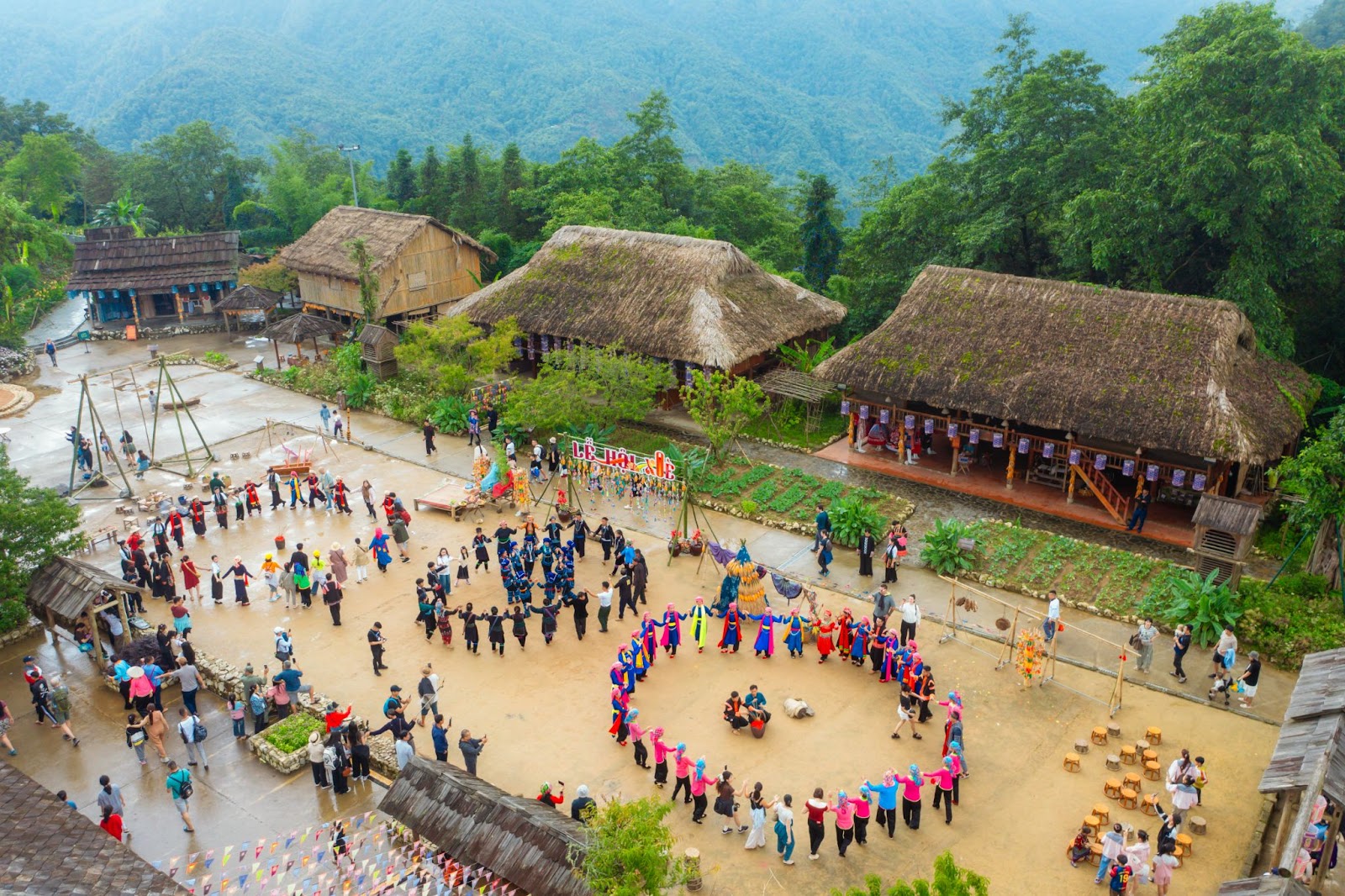
Experience vibrant traditional dances in the heart of May Village’s central courtyard (Photo: Vivu Vietnam/ Unsplash)
2. Where is May Village Sapa located?
May Village Sapa is situated at the foot of Fansipan Mountain, within the Sun World Fansipan Legend complex, one of the most visited attractions in Sapa. Its proximity to the cable car departure station makes it a practical stop, especially for travelers looking to optimize their itinerary.
From here, visitors can easily combine multiple experiences in one trip—exploring May Village Sapa, enjoying cultural performances, and continuing on to the top via the Fansipan cable car with pre-booked tickets. This well-connected setting is a key factor behind the destination’s growing popularity.
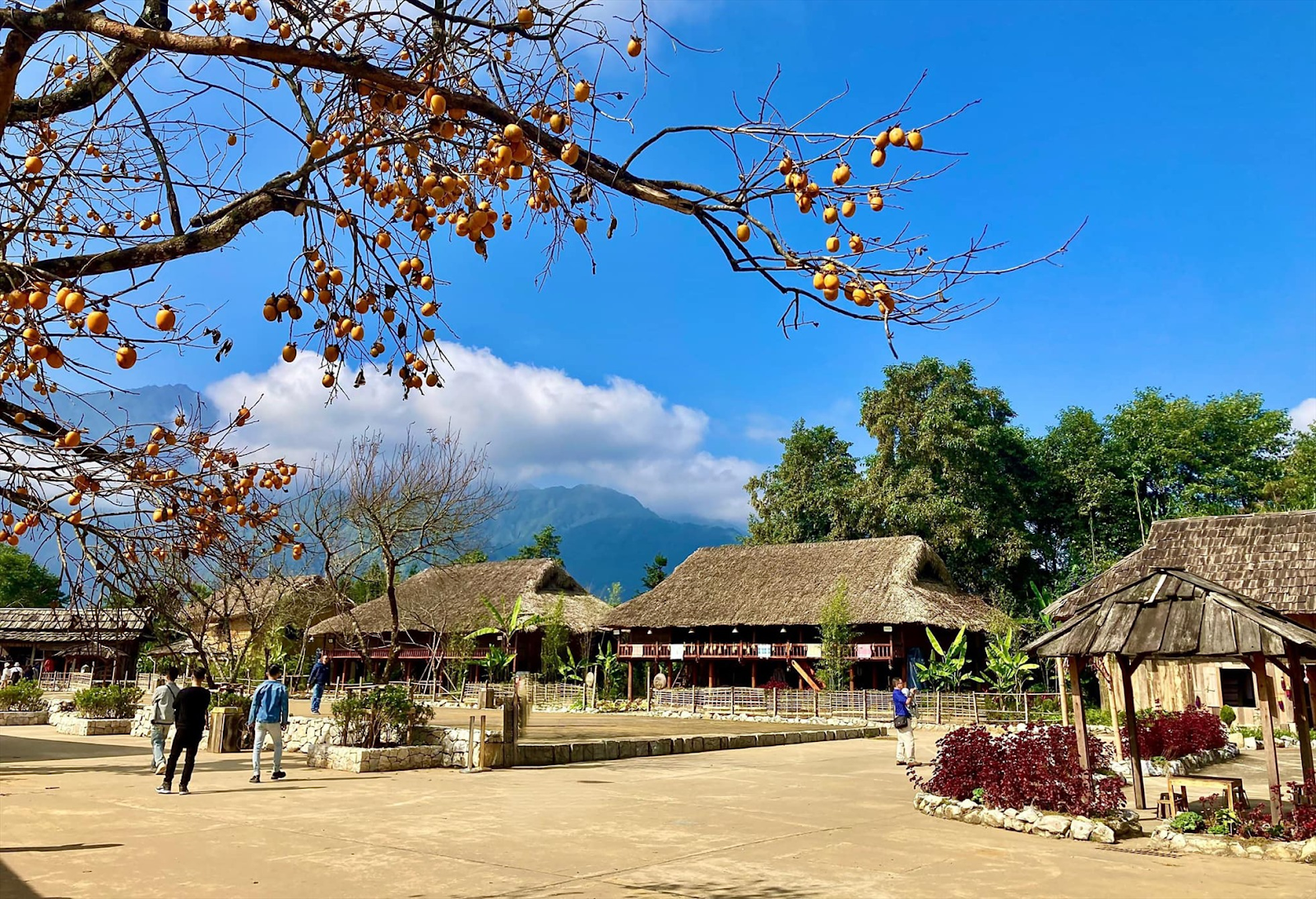
Authentic ethnic houses at the foot of Fansipan, showcasing Northwest Vietnam’s unique architecture (Photo: Collected)
3. Top things to do at May Village Sapa
2.1. Step inside the ethnic homes
At the heart of May Village Sapa is a cluster of 11 traditional houses, each carefully relocated and restored to represent nine ethnic groups in the Northwest, including H’Mong Sapa, H’Mong Dien Bien, Red Dao, Tay, Xa Pho, Giay, Thai, Ha Nhi… These structures follow original construction methods, from rammed earth walls typical of H’Mong homes to raised wooden stilt houses of the Tay and Giay. Details such as roof angles, kitchen placement, and interior divisions are preserved, illustrating how each community adapts to terrain, climate, and daily routines.
The spaces are organized to mirror real living environments. Inside, objects are arranged according to their original use: sleeping areas, cooking corners, storage spaces, and altars positioned as they would be in native villages. This allows visitors to understand not only the physical form of the houses, but also the rhythms of life within them. The result is a quieter, more architectural perspective, where identity is expressed through space and design.
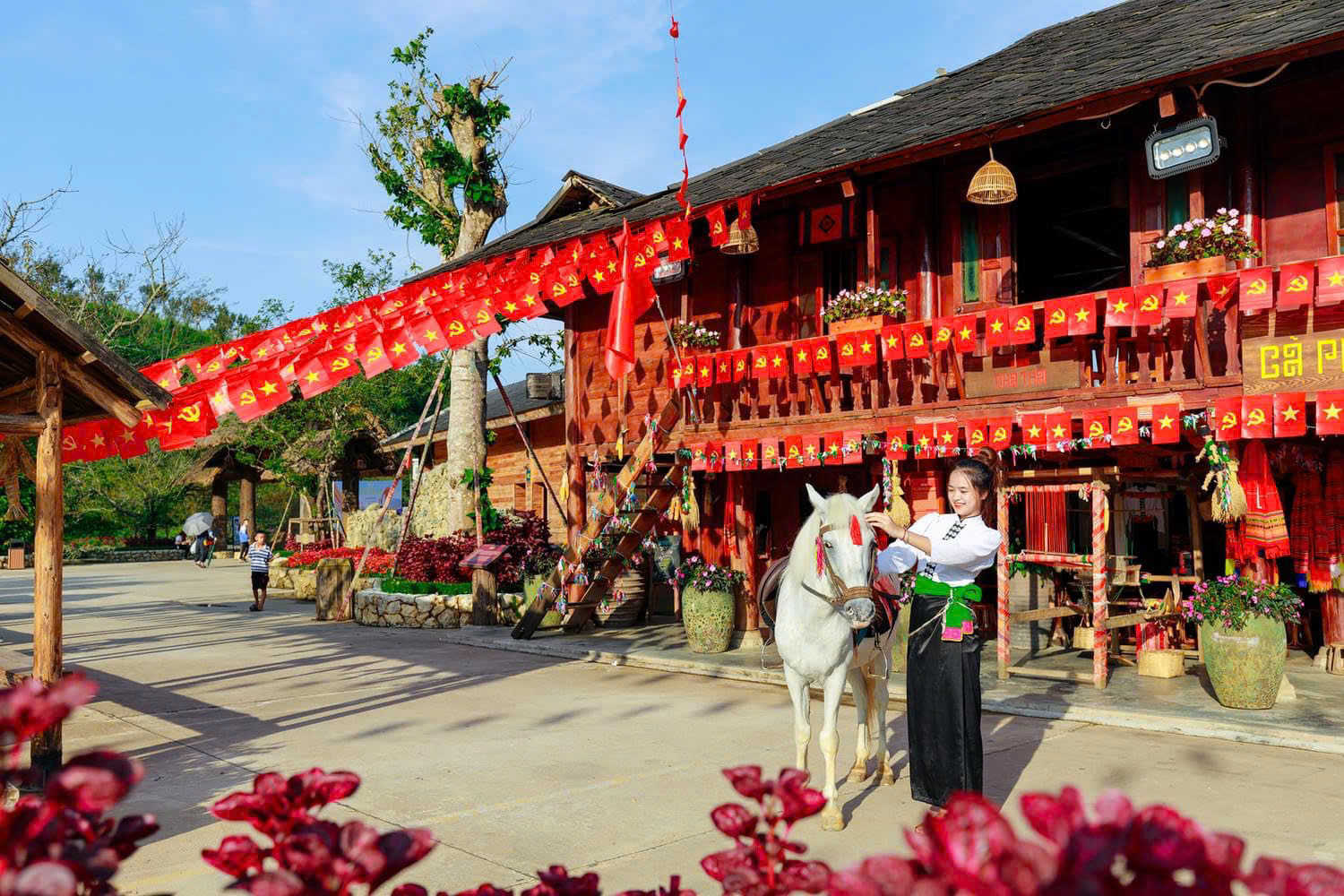
Meet local artisans and explore the rich cultural heritage of Sapa's ethnic communities (Photo: Vivu Vietnam/ Unsplash)
3.2. Immerse in traditional performances
Beyond its architectural spaces, May Village Sapa comes alive through a continuous flow of live performances. Visitors can witness H’Mong artisans perform the khen dance, Red Dao communities recreate traditional wedding rituals, and the vibrant festival drums of the Giay echo across the village. These are staged as narrative experiences, combining music, movement, and visual storytelling to reflect the cultural rhythms of ethnic communities.
If you visit during one of the eight daily performance time slots, you can step into a lively atmosphere at May Village Sapa, highlighted by two signature shows. The opening chapter of Sacred Peak Odyssey presents a theatrical interpretation of the spiritual connection to Fansipan, while Northwest in Blooming Season captures the energy of highland festivities. Together, they offer a more structured yet immersive way to experience the region’s intangible heritage.
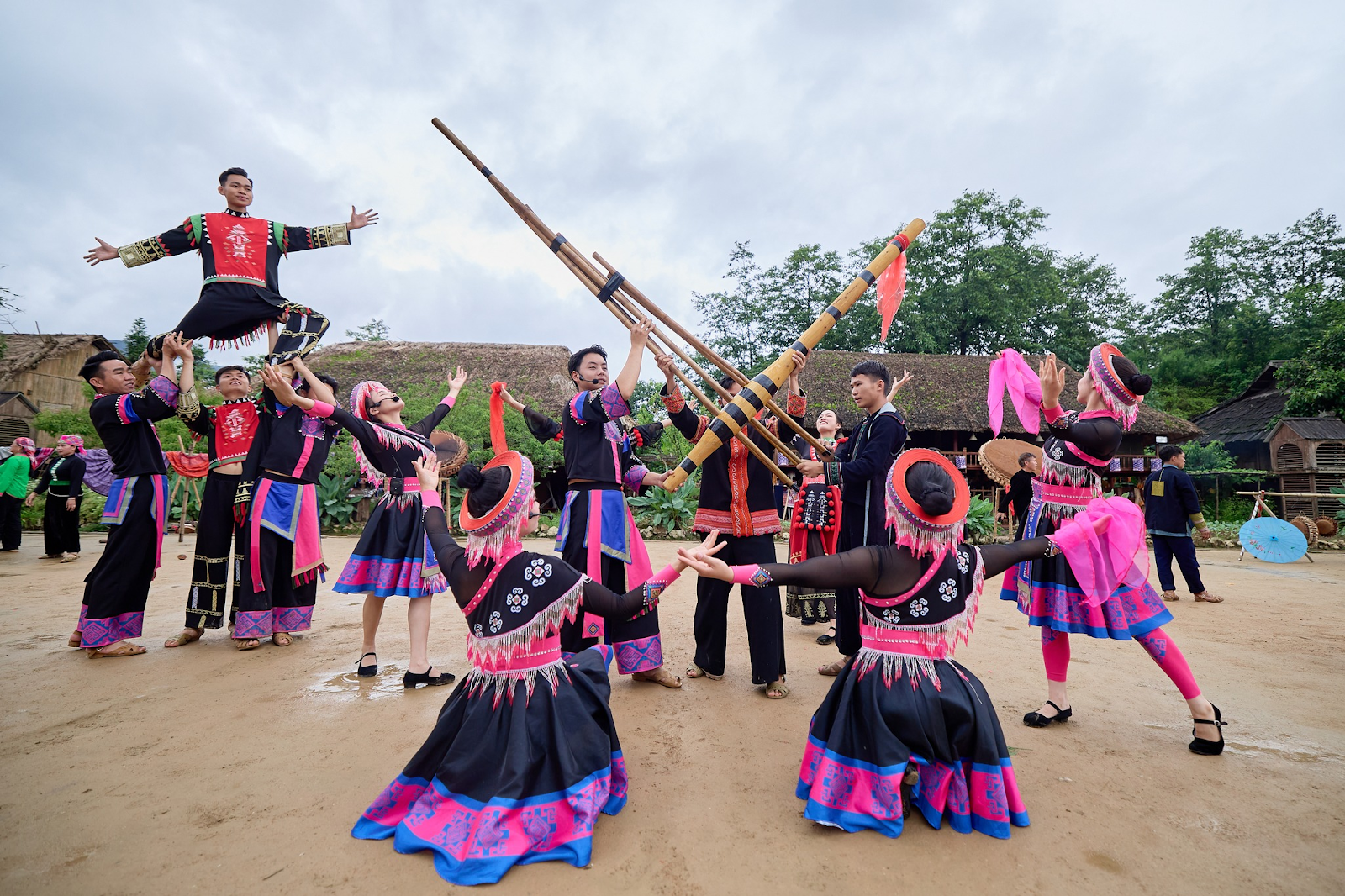
Witness the energetic H’Mong "khen" dance, a daily highlight at May Village (Photo: Collected)
3.3. Experience local crafts
At May Village Sapa, visitors can step into artisan houses to follow the full journey of brocade making, from pounding indigo leaves and natural bark for dye, to soaking, fermenting, and spinning fibers before weaving them into finished textiles. Taking part in these hands-on steps reveals the level of patience and precision behind each piece, turning what might seem like simple fabric into a deeply crafted cultural prod.
Alongside textile-making, bamboo and rattan weaving remains an essential craft in daily life. Visitors can watch artisans create items such as rice baskets, grain trays, conical hats, and other household tools, or even try making small baskets and bracelets as souvenirs. In a separate practice, traditional drums are handcrafted from wood and stretched hide, adding a rhythmic dimension to the village’s craft heritage. For a more personal connection, visitors can also try on traditional garments made by local communities, turning into something tangible and memorable.
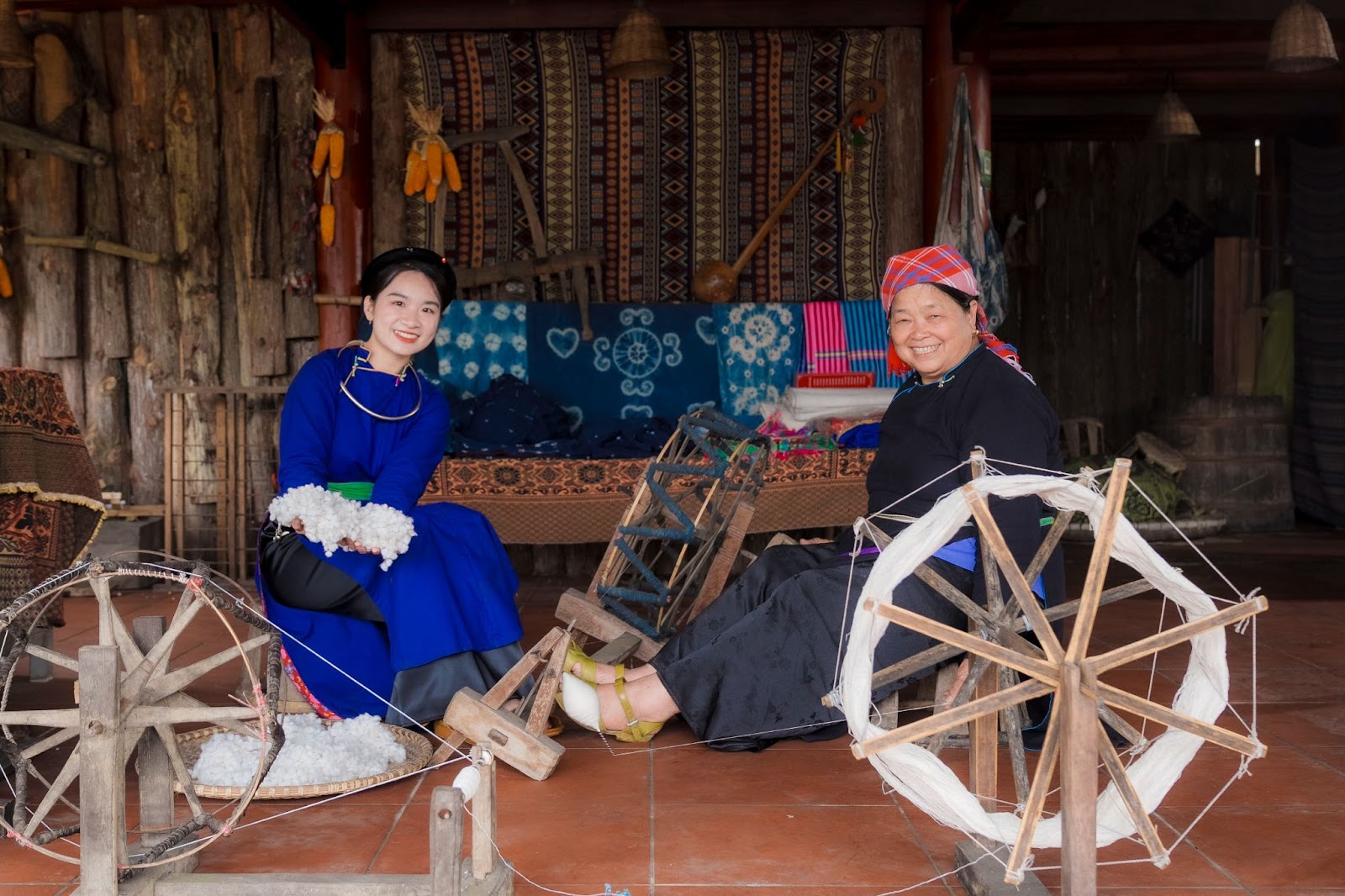
Discover the intricate art of traditional weaving and natural fabric dyeing by local women (Photo: Collected)
3.4. Enjoy Northwest cuisine
Cuisine at May Village Sapa is deeply rooted in the ingredients and cooking traditions of the highlands. Visitors can sample signature dishes such as thang co (a traditional H’Mong stew), grilled mountain pork, smoked buffalo meat, bamboo-tube sticky rice, colorful sticky rice dyed with natural leaves. These dishes are often prepared over charcoal or open fire, paired with local herbs, sip corn wine or Shan Tuyet tea, that enhance flavor without overpowering the ingredients.
During the May Village Sapa fire every Sunday morning, visitors can explore food stalls alongside local specialties, watch ingredients being prepared on the spot, and enjoy the lively exchange between communities. Combined with buffet-style dining and traditional settings, this culinary journey captures the social and cultural spirit of Northwest cuisine in a single space.
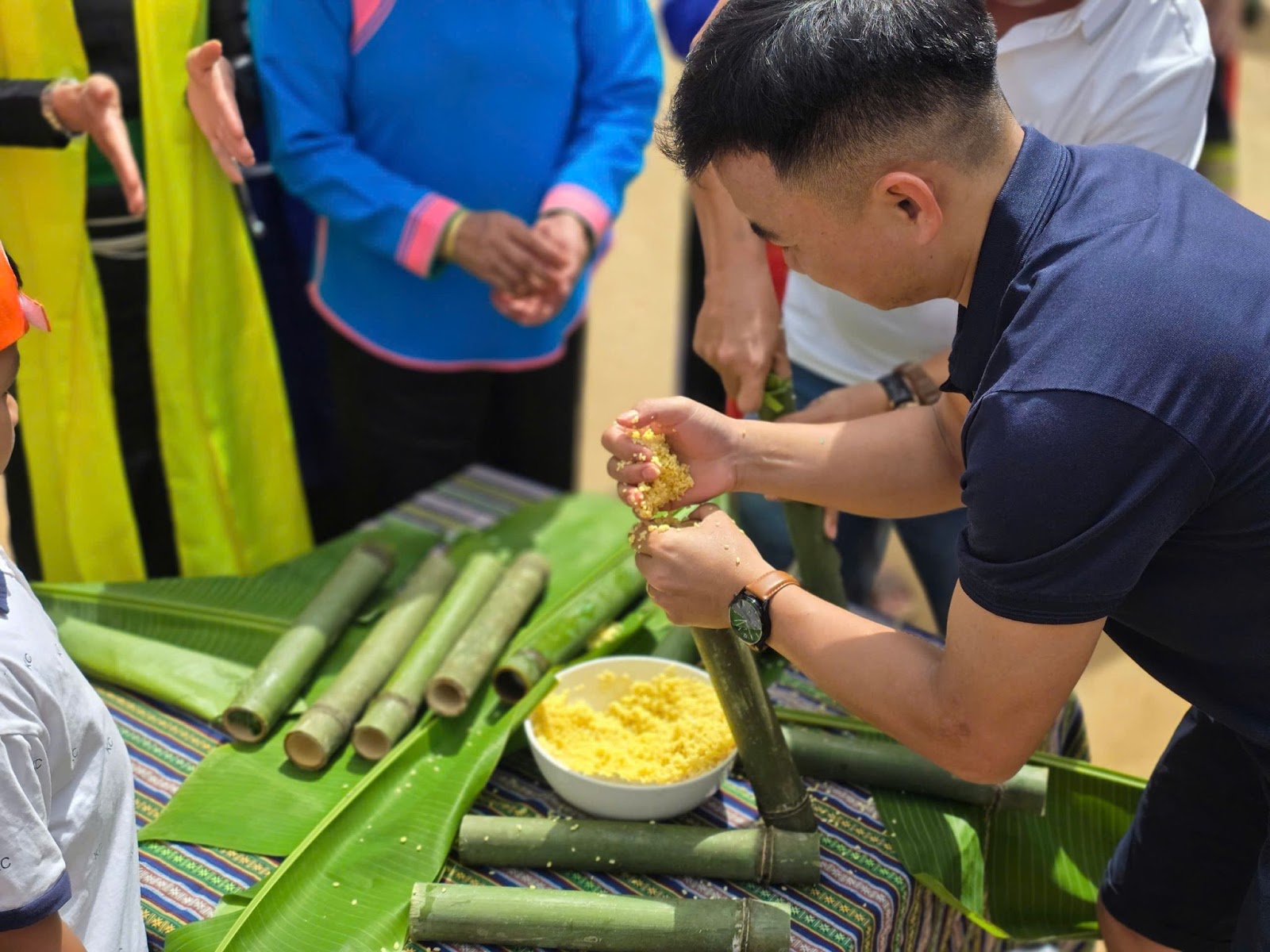
Taste authentic bamboo-tube sticky rice, a signature flavor of the Northwest highlands (Photo: Collected)
3.5. Check-in at the valley of flowers
Surrounding May Village Sapa are expansive flower fields within the Sun World Fansipan Legend complex, creating a vibrant natural backdrop throughout the year. From the Rose Valley, home to thousands of ancient Sapa rose varieties, to seasonal blooms such as rhododendrons and fields of gladioluses, the landscape continuously transforms with layers of color and texture across different times of the year.
More than just a scenic backdrop, these flower valleys are thoughtfully integrated into the experience at Ban May. The village gate, marked by intricately carved bronze drums, sets the tone as a striking first stop. A rustic stone village and a transparent glass bridge open up layered perspectives toward the Hoang Lien Son range. From here, visitors can take in sweeping views over the Muong Hoa Valley and its terraced fields, especially atmospheric in the early morning or at sunset, when natural light softens the landscape and enhances its depth.

Walk through vibrant rose valley in Sun World Fansipan Legend (Photo: Collected)
3.6. Combine with Fansipan cable car
A visit to May Village Sapa can be seamlessly combined with a journey to the Roof of Indochina. Start your day with a ride from Sapa Station to the summit, where the cable car offers sweeping aerial views over the Muong Hoa Valley and its terraced landscapes.
Upon reaching the top, visitors can explore the spiritual complex of Kim Son Bao Thang Tu, the Great Buddha Statue and the towering Great Amitabha Buddha statue, both set within a thoughtfully designed sacred landscape. Nearby lies the Arhat Path of rare ancient rhododendron trees, estimated to be 300 to 400 years old. Standing here, surrounded by mountains, the sound of temple bells blending with the wind creates a rare sense of calm and reflection.
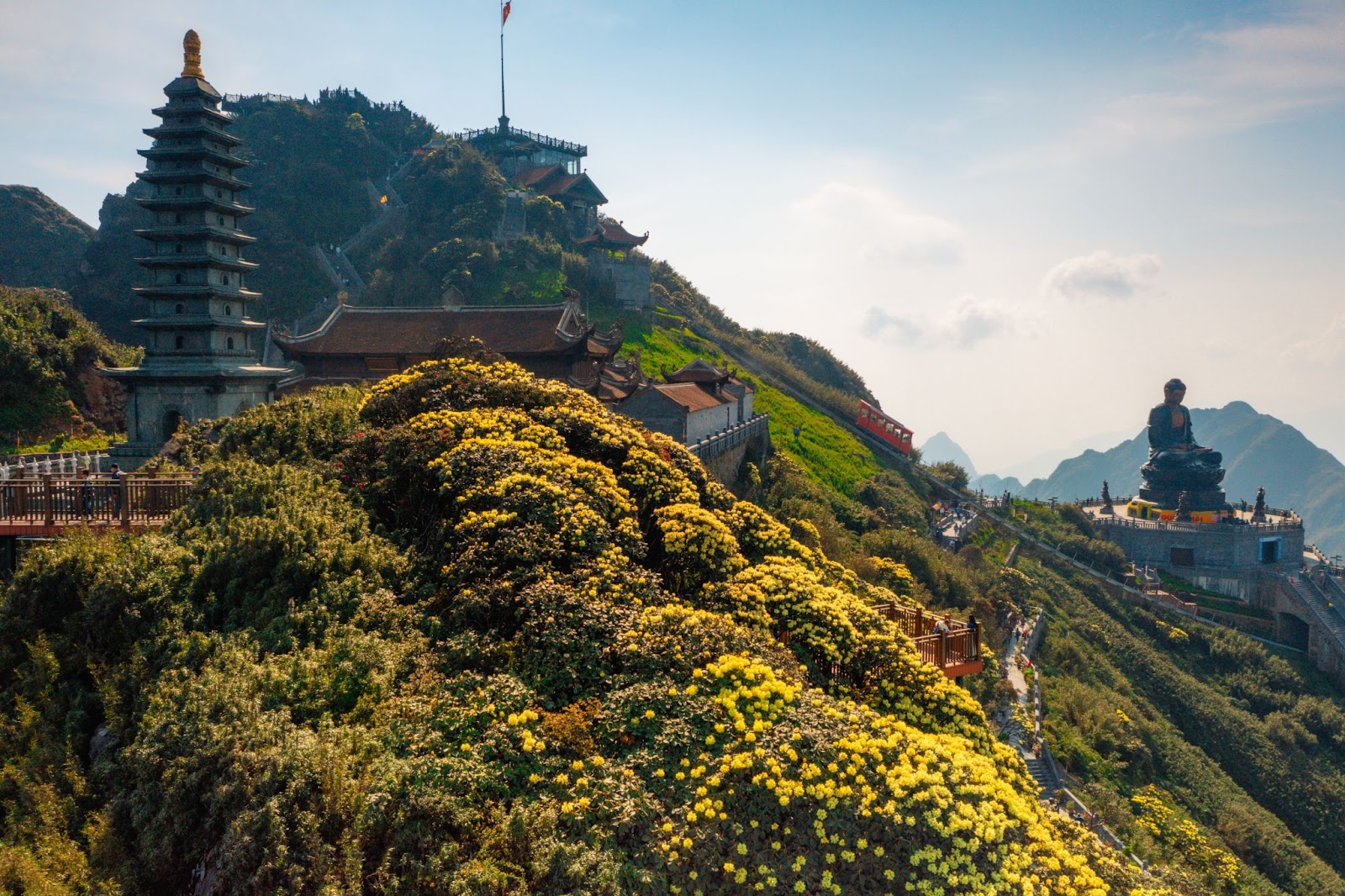
Visit the spiritual complex and the Great Buddha Statue at the “Roof of Indochina” (Photo: Vivu Vietnam/ Unsplash)
At an elevation of 3,143 meters, the flag-raising ceremony takes place several times daily, typically between 9:20 AM and 2:20 PM or 3:20 PM. Though held regularly, this moment continues to draw visitors and locals alike, becoming one of the most meaningful highlights of a journey to the summit of Fansipan.
After returning to the valley by midday, continue your visit with a buffet at Van Sam Restaurant, located on the second floor of the Hoang Lien Cable Car Station. Known for its large-scale dining space accommodating up to 1,200 guests, the restaurant stands out with a buffet featuring over 50 dishes, including signature Northwest specialties prepared by local chefs.
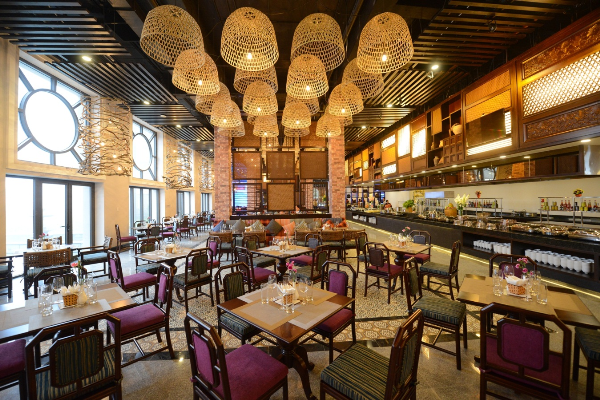
Enjoy a diverse buffet featuring over 50 regional specialties at Van Sam Restaurant (Photo: Collected)
In the afternoon, the journey slows down with opportunities to explore scenic photo spots, browse local products, and engage with artisans. This well-paced itinerary allows visitors to fully experience both the grandeur of Fansipan and the cultural richness of May Village Sapa in a single day.
4. Optional experiences & dining prices at May Village Sapa
For visitors planning to include May Village Sapa in a broader itinerary, a range of optional services is available, including cable car access and dining experiences. These services can be combined flexibly, and are not required for entry to the village itself.
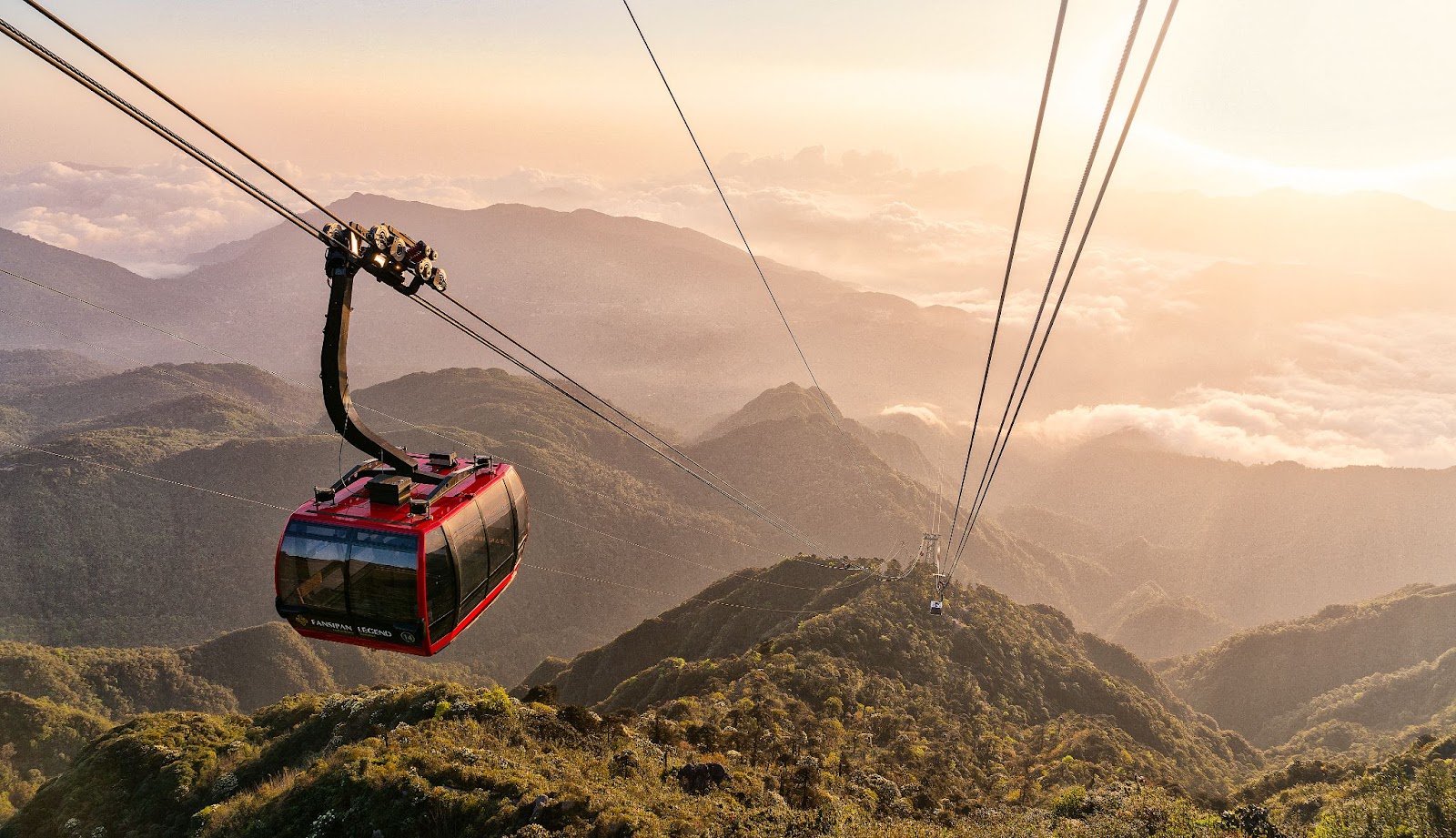
Soar above the clouds on the Fansipan cable car for breathtaking mountain views (Photo: Vivu Vietnam/ Unsplash)
The cable car and buffet combo is priced at 950,000 VND/adult and 700,000 VND for children between 1m and 1.4m. This package includes round-trip access to Sun World Fansipan Legend, buffet dining, and cultural performances, with streamlined procedures that help reduce waiting time and ensure a smooth experience.
Buffet dining at May Village Sapa is available as a standalone option at 650,000 VND per adult, with children between 1m and 1.4m charged 450,000 VND. The buffet features a wide selection of Northwest specialties alongside live cultural performances, making it a well-rounded choice for families and groups.
For a more private dining setting, the set menu offers table service with a curated selection of dishes. Prices range 650,000-850,000 VND/adult, depending on the menu, with children typically charged at 70–80% of the adult rate. It is ideal for those preferring a quieter and more tailored dining experience.
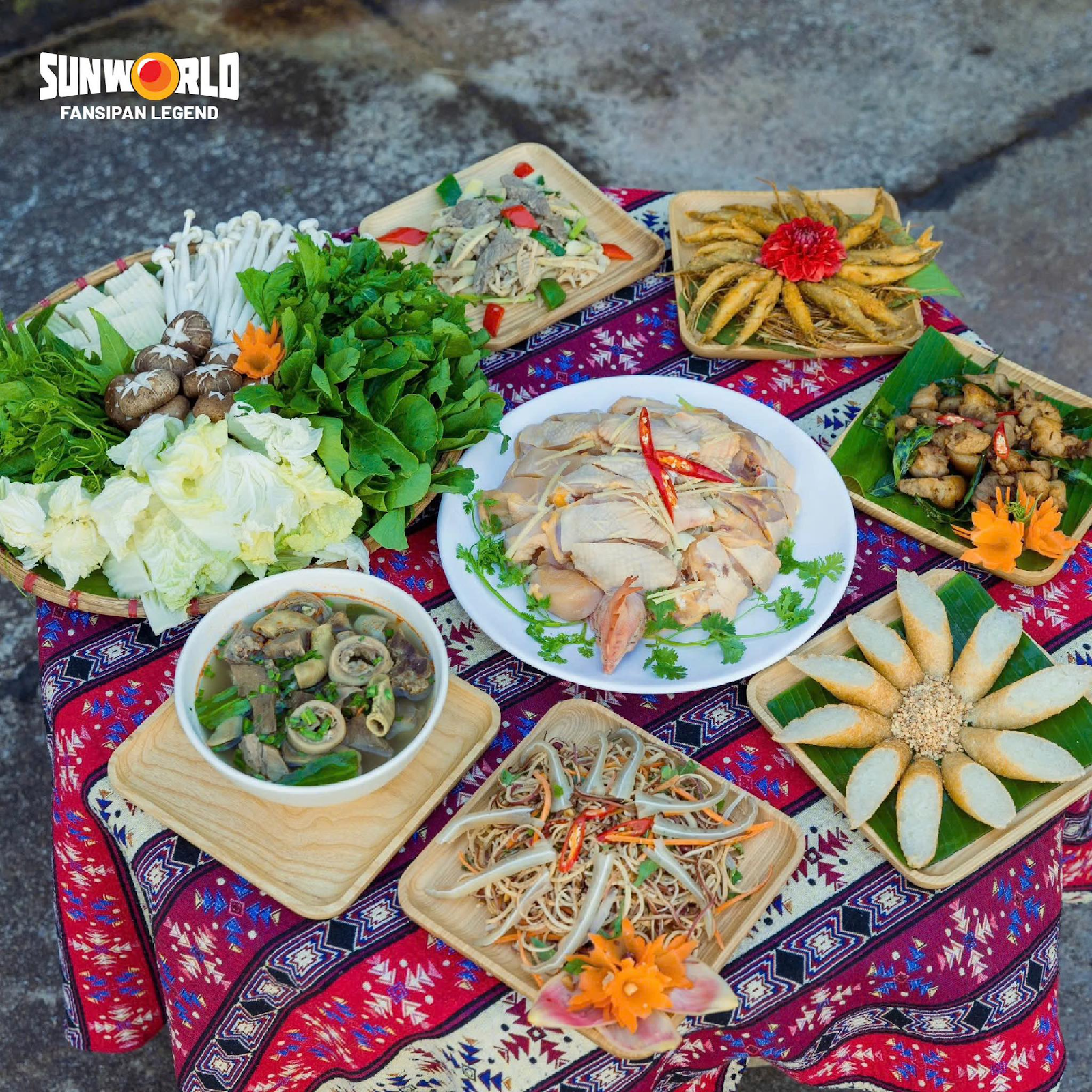
Savor a cozy, authentic meal with signature mountain dishes in a traditional stilt house (Photo: Collected)
May Village Sapa brings together culture, cuisine, and landscape in a seamless highland experience. Each activity, from exploring traditional spaces to enjoying local flavors, adds a distinct layer to the journey. A visit here is not just a stop in Sapa, but a memorable highlight that stays with you long after you leave.


