




1. Why are attractions in Sa Pa always popular?
1.1. Landscape strengths create year-round tourism advantages
Sa Pa is favored by nature with rare natural conditions, making it an attractive destination throughout the four seasons. This land is located at an ideal altitude of about over 1,500 meters above sea level, possessing a cool climate year-round with an average temperature of 18-20°C. Thanks to its favorable terrain, Sa Pa becomes an ideal stopover for tourists to relax and explore the many wonders of nature here.
Sa Pa's scenery stands out with many unique landscape layers. The majestic Hoang Lien Son mountain range, the 3,143-meter high Fansipan peak reaching for the sky and clouds, and the lush green Muong Hoa valley stretching out. Terraced fields are sculpted softly by the hands of ethnic people, painting a vivid natural picture. The O Quy Ho Pass winds around high mountain slopes, alongside waterfalls like Silver Waterfall (Thac Bac) and Cat Cat Waterfall (Thac Cat Cat) echoing in a space filled with the green of mountains and forests.
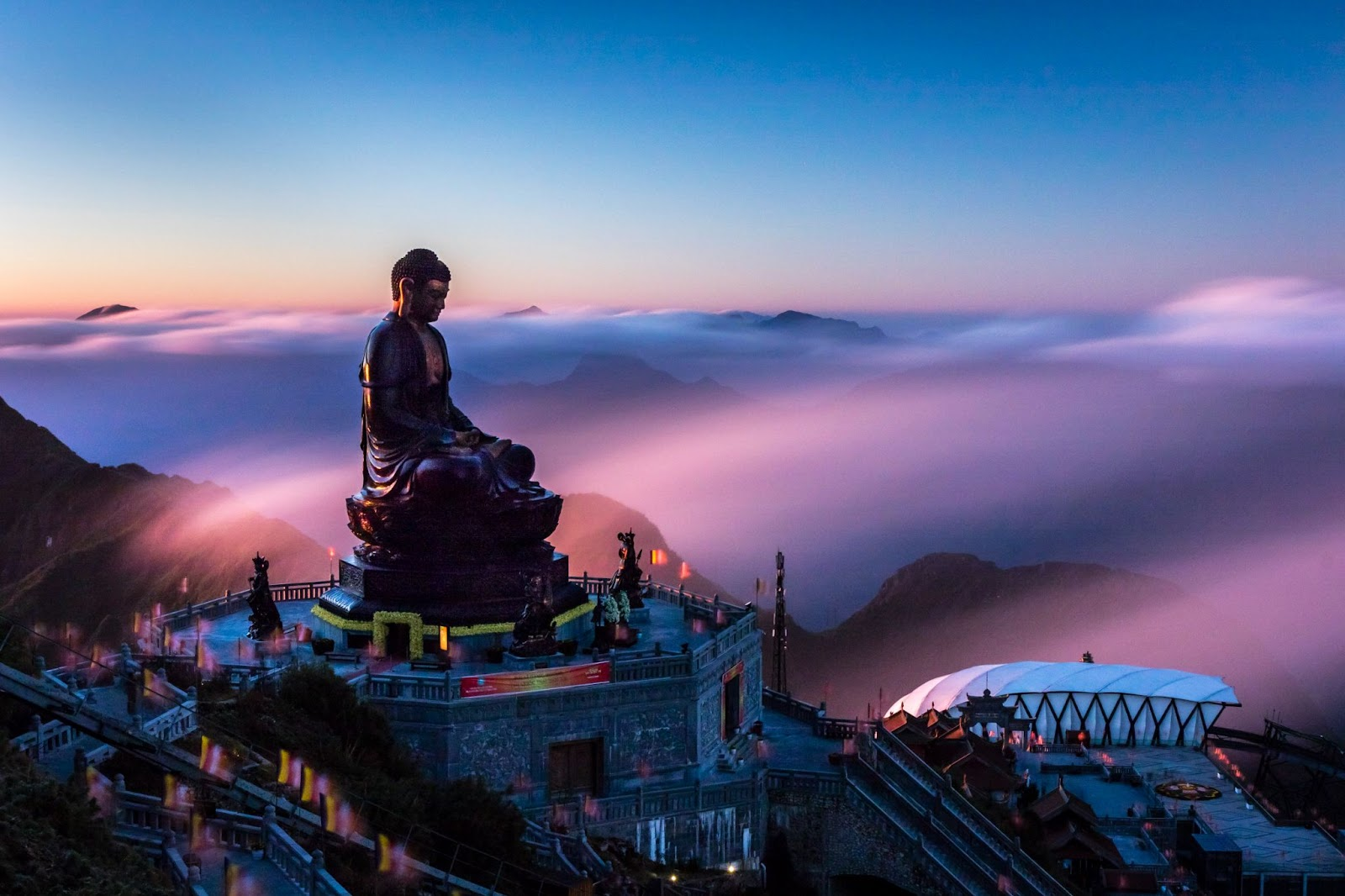
Spiritual architectural complex at Sun World Fansipan Legend. (Source: Collected)
1.2. Current Sapa Tourism Trends
Currently, Sapa tourism is developing towards prioritizing authentic experiences and immersing oneself in nature. Many tourists choose to wake up early to hunt for clouds, take gentle walks through villages, and learn about unique, intact cultural features. Instead of just sightseeing, they want to experience the lives of local people, try learning to weave brocade fabric, or enjoy traditional dishes.
For young people who love photography, Sapa has become an ideal destination with modern structures like Moana Sapa. Considered the "Bali of the Northwest," it features a large statue of a girl, stone hands, and an infinity pool, creating a unique backdrop. The blend of traditional values and modern influences has created Sapa's distinct charm in today's lifestyle.
2. Sapa Attractions Linked to Nature and Iconic Landscapes
2.1. Sun World Fansipan Legend
Sun World Fansipan Legend is a prime example of sustainable tourism development vision in Sapa. For 6 consecutive years, the resort has been honored in the category of "World's Leading Natural Wonder Destination" at the World Travel Awards, an award often referred to as the "Oscars of the global tourism industry."
Sun World Fansipan Legend is a tourism-culture-resort complex where visitors can conquer the "Roof of Indochina" at an altitude of 3,143 meters via a Guinness World Record-holding cable car system. From above, the majestic Hoang Lien Son mountain range and the poetic Muong Hoa valley unfold spectacularly, creating a rare and impressive visual experience. The resort's space is further enhanced by four-season festivals, highland cuisine, and many local cultural activities.
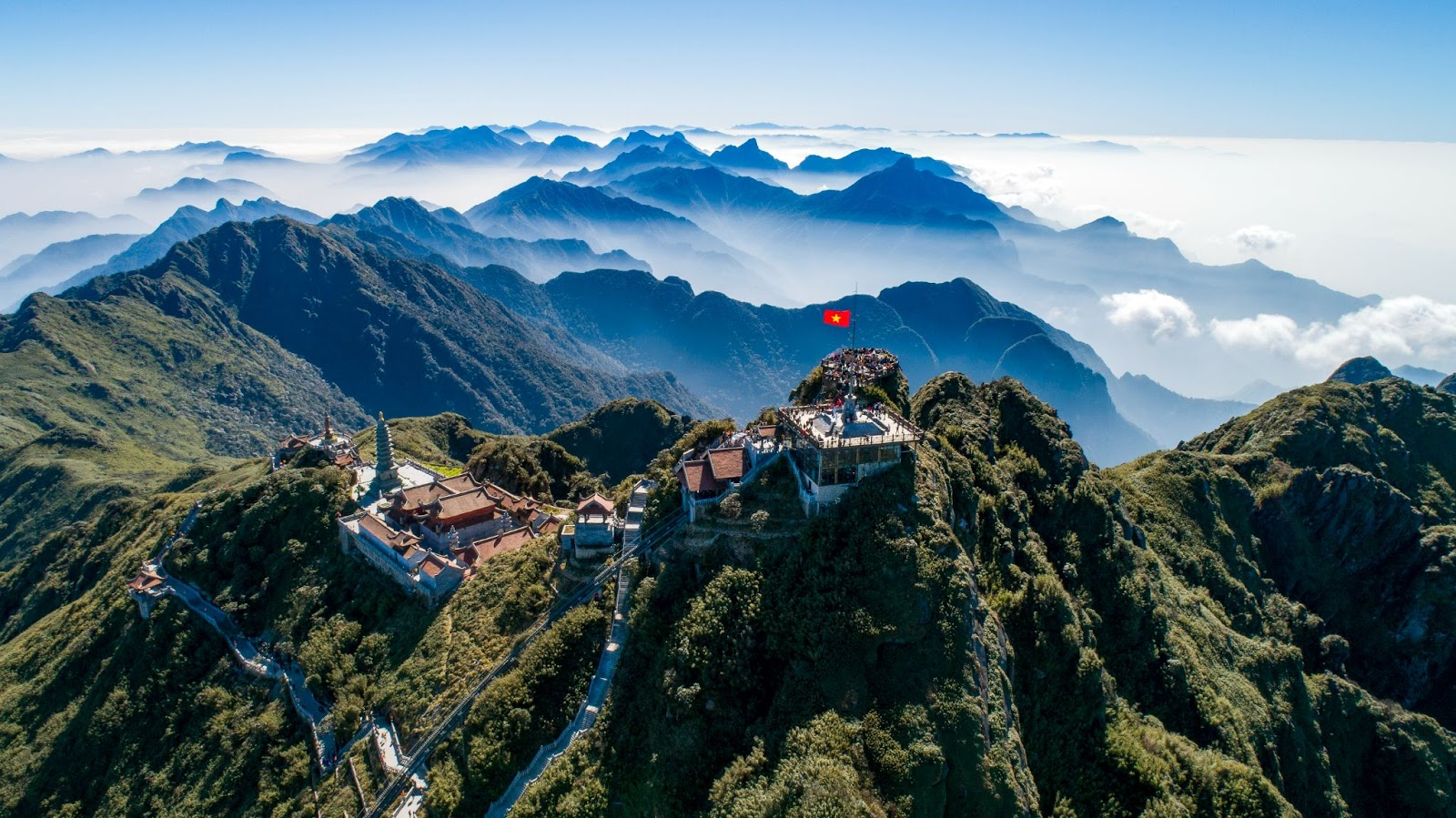
“Rooftop of Indochina” asserts its position as a natural wonder of global caliber. (Source: Collected)
The special highlight of Sun World Fansipan Legend is the spiritual architectural complex meticulously designed, following natural terrain, using sustainable materials, and recreating the quintessence of traditional Vietnamese pagoda architecture. Alongside, Ban May at the foot of Fansipan mountain becomes a space to preserve and spread the cultural values of Sa Pa's ethnic minorities, with original traditional houses restored and vibrant local life preserved.
Sun World Fansipan Legend also plays an important role in the socio-economic development of Sa Pa and Lao Cai province. Thus, Sun World Fansipan Legend is not only an international-class destination but also a symbol of the development direction of tourism combined with nature conservation and local culture.
2.2. O Quy Ho Pass and Heaven's Gate
O Quy Ho Pass is located on National Highway 4D, cutting across the Hoang Lien Son mountain range, and is one of the famous “four great passes” of the Northwest region. With an altitude of about 2,035 m above sea level and a length of nearly 50 km, this pass is considered the longest and most treacherous pass in Vietnam. The top of the pass is covered in clouds year-round, referred to by locals as Heaven's Gate, creating a majestic and enchanting landscape for anyone who sets foot there.
The special feature of O Quy Ho Pass is the distinct climate difference between the two sides of the mountain. On cold days, frost and snow may appear at the summit, making this a popular check-in spot for tourists and backpackers who love extreme nature experiences.
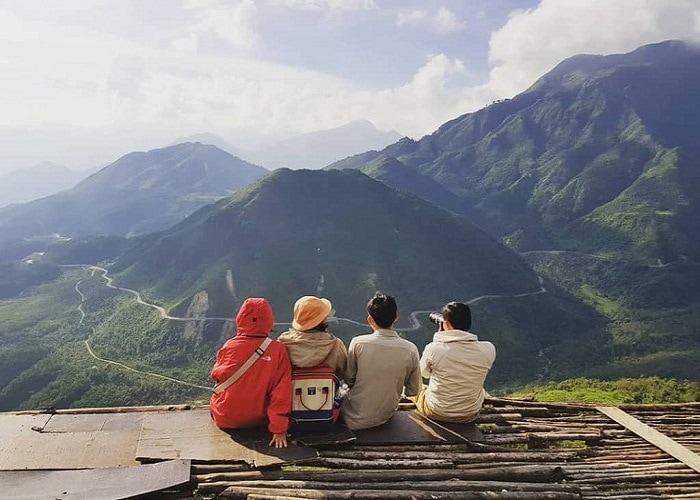
The peak is covered by clouds year-round, called the Heaven's Gate by locals. (Source: Collected)
Not only a challenging route for travel enthusiasts, O Quy Ho Pass is also a "paradise" for photographers. The scenery changes with every moment of the day, from the floating sea of clouds in the early morning, the afternoon sun dyeing the mountainsides yellow, to the brilliant sunset amidst the overlapping mountains and forests. It is the interplay of rugged terrain, unique climate, and spectacular natural beauty that makes the journey to conquer O Quy Ho Pass always leave an unforgettable impression on visitors.
2.3. Sapa Lake
Sapa Lake is a familiar landscape highlight located right in the center of Sapa, likened to a "blue gem" in the heart of the misty land. Although it has no other official name, Sapa Lake has long been a symbol associated with the local life and tourism, thanks to its peaceful, clear beauty and harmonious space with the surrounding mountains and forests.
The space around the lake is an ideal place for strolling, relaxing, and feeling the slow pace of life in Sapa. The brick-paved walking path winds around the water, lined with green trees and benches along the lake, creating a gentle and pleasant scene. Interspersed are small cafes where visitors can sit and admire the calm lake surface reflecting the sky and clouds, and the mountains hidden in the mist, especially beautiful in the early morning or when the lights come on in the evening.
The charm of Sapa Lake comes from its tranquility and unique poetic quality. The clear blue water combined with the mountain and forest scenery brings a sense of relaxation, separating visitors from the usual hustle and bustle. It is also a place chosen by many couples for walks, photos, and capturing romantic moments. Amidst the vibrant tourist life of Sapa, Sapa Lake retains its serene character, becoming a gentle stop that tourists can hardly miss.
2.4. Tien Cave - Tu San Alley
Tien Cave is located in Bac Ha, an unspoiled destination in Lao Cai. It is likened to the "Tu San Alley of Lao Cai" thanks to its scenery of towering limestone cliffs embracing jade-green water, fine white sand beaches, and a space completely separated from urban life. The stream leading into the cave is a branch of the Chay River, creating a rare natural beauty amidst the Northwest mountains.
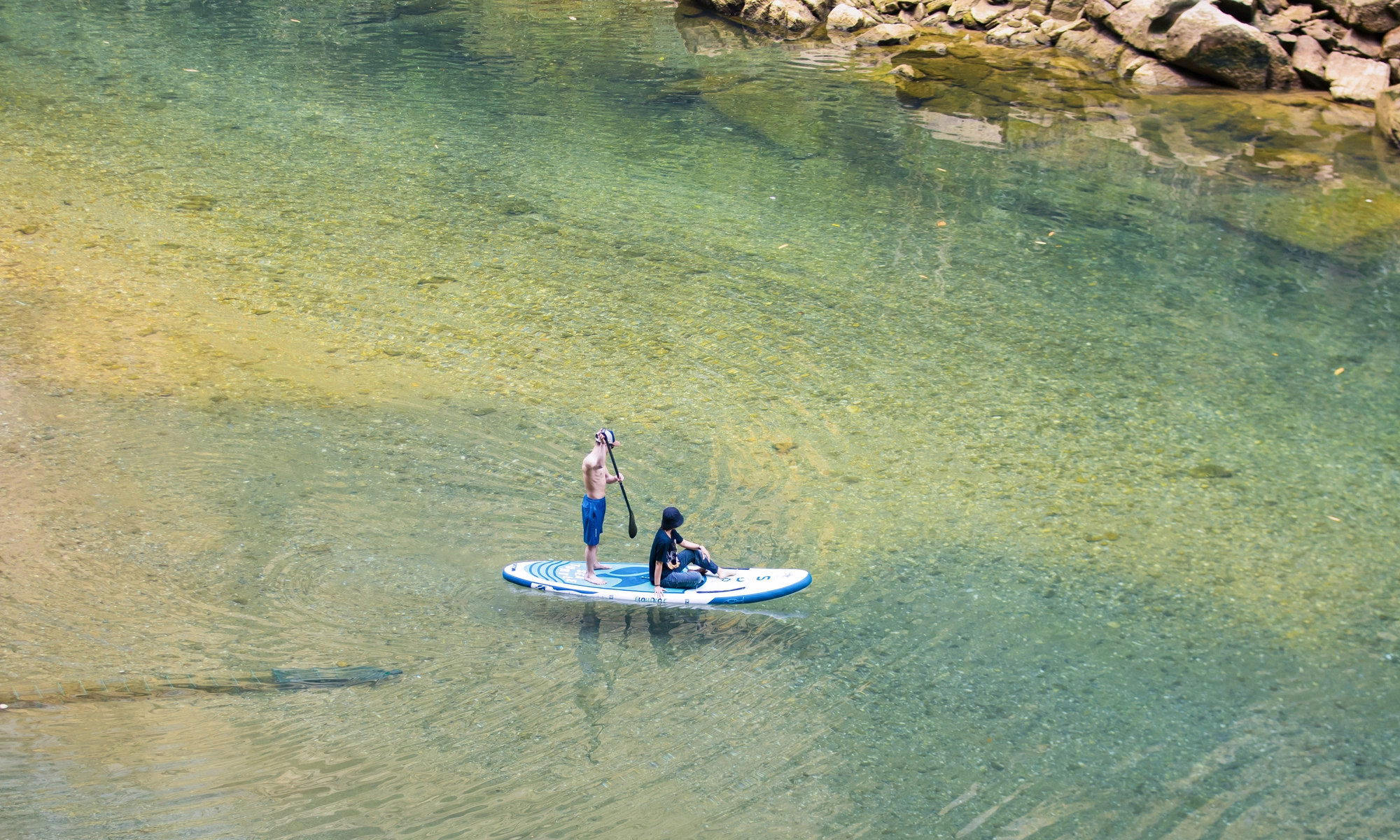
Scenery of jade-green water near Tien Cave. (Source: Collected)
The journey to Tien Cave is rich in experiential color as visitors must travel by boat upstream along the Chay River, weaving through majestic mountains. The campsite is located on a flat patch of land next to the stream, about 100m from the cave entrance, with shallow, crystal-clear water where the bottom is visible. The space here evokes a miniature Tu San gorge, quiet and pristine, with only the sounds of flowing streams, forest birds, and mountain winds remaining. Inside Tien Cave, although not very deep, the ceiling is covered with natural stalactites formed over hundreds of years, creating an interesting exploration highlight.
Tien Cave is particularly suitable for summer outdoor activities such as camping, swimming, sup boarding, or relaxing amidst cool nature. As the area has not been widely exploited for tourism, visitors need to prepare thoroughly and prioritize going with locals to ensure safety.
2.5. Oolong Tea Hill
Oolong Tea Hill in Sa Pa is located along National Highway 4D, on the road leading to O Quy Ho Pass, about 7 km from Sa Pa center. Situated at an altitude of nearly 1,800m, the tea hill appears as an endless green carpet amidst the Northwest mountains and forests, with tea rows gently winding along the hillsides. Thanks to the cool climate year-round and the fresh air, this place possesses a peaceful, expansive beauty, allowing visitors to easily "release their souls" amidst the vast nature.
Each season, the Oolong Tea Hill takes on a different hue. Especially in winter, when fog is thick and sometimes ice and snow appear, the tea hill transforms into a fairy-tale landscape, making it an ideal destination to admire the sky and clouds and capture rare natural moments.
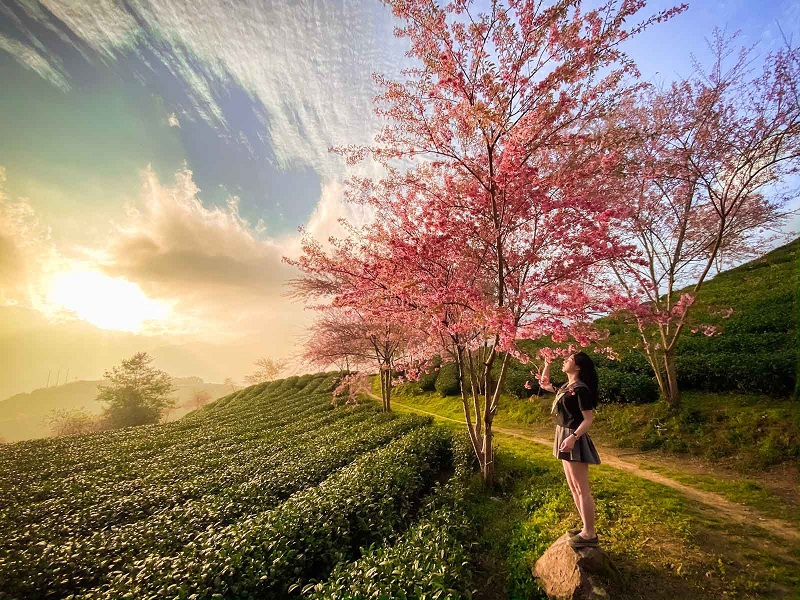
At sunset, the golden sunlight covering the tea leaves makes the space even more poetic and romantic. (Source: Collected)
O Long Tea Hill in Sa Pa is also a favorite stop for photography enthusiasts and those seeking a slow-paced experience. In the early morning or at sunset, seas of clouds drift leisurely over the green tea rows, creating a scene that is both poetic and majestic. Interspersed within this space is the simple image of local people harvesting tea, contributing to the simple, authentic, and culturally rich beauty of one of Sa Pa's most attractive destinations.
3. Tourist Attractions in Sa Pa with Strong Village and Cultural Imprints
3.1. Cat Cat Village
Cat Cat Village, located about 3 km from the center of Sa Pa, at the foot of the Hoang Lien Son mountain range, is one of the typical highlights of Lào Cai community-based tourism. Established in the mid-19th century, Cat Cat is an ancient village of the Hmong people, once chosen by the French as a resort destination due to its majestic mountain scenery and cool climate. Today, the village retains its peaceful valley atmosphere, surrounded by mountains, creating a special attraction for visitors who love nature and local culture.
The nature of Cat Cat impresses with terraced fields stretching along the mountainside, the Tiên Sa stream, Vàng stream, and Bạc stream murmuring day and night, along with Cat Cat waterfall, also known as Tiên Sa waterfall, splashing white foam. The center of the village is along a stone-paved terraced path, leading visitors across suspension bridges like Si bridge, A Lứ bridge – familiar check-in spots amidst the poetic mountain and forest scenery. All blend together to create a natural picture that is both wild and lyrical, distinctly Northwestern.
3.2. Ta Van Village
Ta Van Village is located about 12 km from the center of Sa Pa, nestled amidst the lush green Muong Hoa valley. The road winding along the Muong Hoa stream takes visitors away from the bustling city to a peaceful space, where mountains overlap, terraced fields follow one another, and a slow pace of life is present in every breath. It is this pristine beauty and fresh atmosphere that have made Ta Van an ideal stop for those seeking to return to nature.
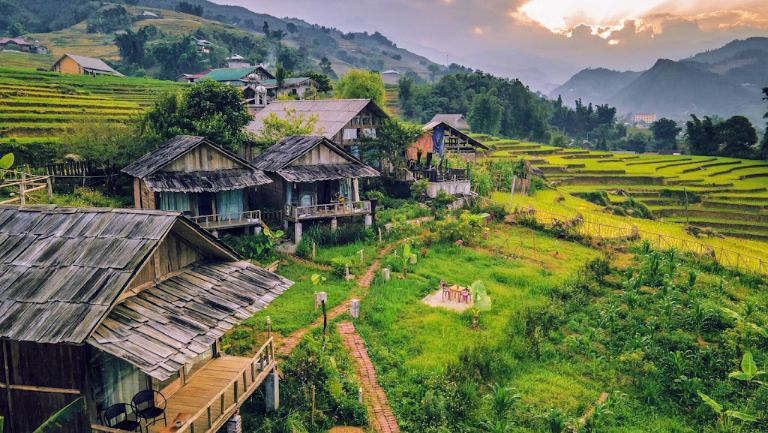
Ta Van's nature changes with the seasons, each period bringing its own unique shade. (Source: Collected)
Terraced fields stretching around the village create a soft picture beside the winding stream, especially impressive during the ripe rice season when the entire valley is dyed in warm yellow hues. Ta Van village is also home to the Mong, Giay, and Red Dao communities with their indigenous cultural traits preserved through generations. Visitors can immerse themselves in daily life, feel the simple rhythm of labor, and the harmonious connection between people and nature.
The combination of a peaceful space, characteristic terraced landscape, and diverse cultural identity has created a unique charm, making Ta Van one of Sa Pa's most experiential destinations.
3.3. Ta Phin Village
Ta Phin village is located about 11 km north of Sa Pa center, surrounded by two majestic limestone mountain ranges, almost isolated from the urban rhythm. Thanks to this special location, Ta Phin is likened to an "oasis" amidst the mountains and forests, offering a quiet, fresh, and pristine space. This has been the long-standing home of the Red Dao and H'Mong communities, who still maintain traditional lifestyles closely tied to nature.
Ta Phin's nature impresses strongly with terraced fields that gently curve along the mountainside. Interspersed within this landscape are valuable attractions such as the ancient Ta Phin Monastery – a Christian structure weathered by time with moss-covered stone walls, and Ta Phin Cave hidden within the limestone mountains, boasting a magical system of stalactites formed over millions of years. Each landmark contributes to the landscape's depth and the emotional experience of exploring the village.
The slow pace of life, the harmony between people and nature, and the intact cultural values have made Ta Phin a distinctive destination, suitable for those seeking peace and a complete experience of Sa Pa's highland life.
3.4. Y Ty
Y Ty is a border region in Bat Xat, located about 70 km from Lao Cai center. Y Ty is famous for its fresh, cool climate year-round and the characteristic floating seas of clouds of the Northwestern mountains. Due to its location bordering China and its rugged mountainous terrain, this place possesses a wild, secluded beauty, very suitable for short trips to "change the scenery".
Y Ty's greatest attraction lies in its emotionally rich natural landscape, which changes with the seasons. Places like Choan Then village or Ngai Thau Thuong – one of the highest villages in Vietnam, offer expansive views of the valleys, sky, clouds, and majestic mountains. Interspersed with this scenery is the simple local life of the Ha Nhi, Mong, and Giay people, contributing to the unique identity of this border region.
3.5. Hoang A Tuong Palace
Hoang A Tuong Palace is located right in the center of Bac Ha, and is one of the typical architectural works of Lao Cai. The palace was built in 1914 and was once the residence and workplace of Hoang Yen Tchao and Hoang A Tuong, influential figures in the Bac Ha region in the early 20th century. After more than a century, the structure still retains its imposing appearance, becoming an unmissable attraction for history and architecture enthusiasts.
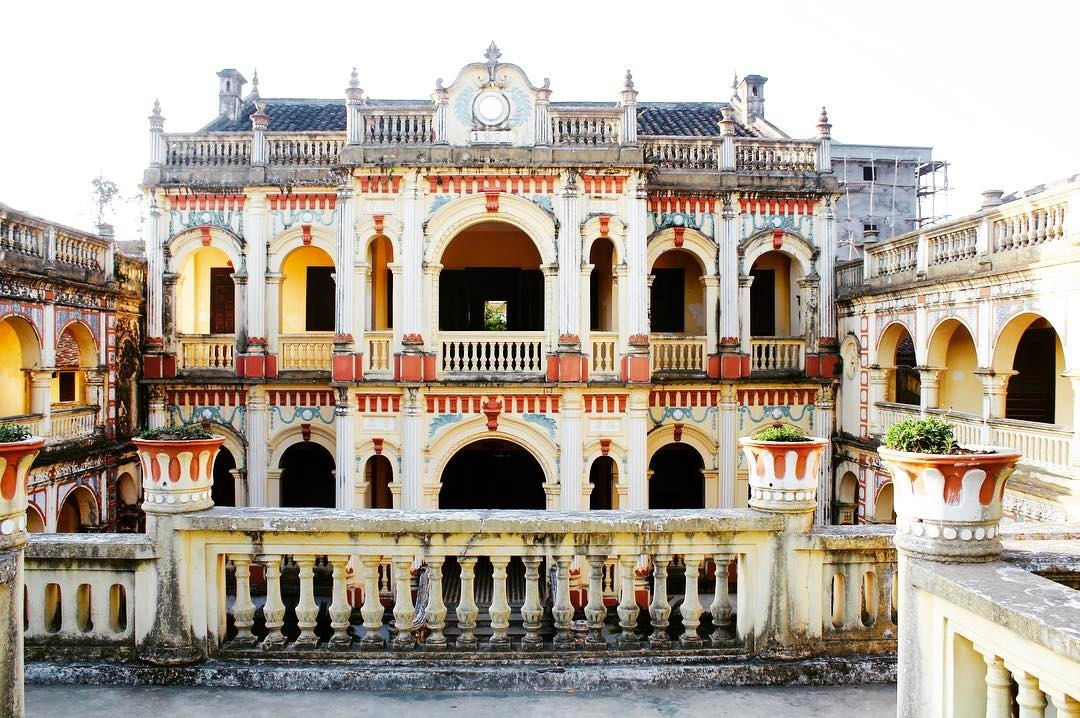
Hoang A Tuong Mansion, also known as the Mansion of the Cat King of Bac Ha. (Source: Collected)
Hoang A Tuong Mansion was built on an area of about 10,000 m², carefully selected according to feng shui principles with a high, dry terrain, backed by mountains and with a stream in front. The overall structure has a closed rectangular layout with 36 rooms, solid surrounding walls, loopholes, and a system of patrol paths and escape tunnels. The mansion's architecture is a clear intermingling of Asian and European styles, evident in the traditional yin-yang tiled roof combined with arched doorways, bow-shaped stairs, and decorative details with a Western architectural flair.
The outstanding value of Hoang A Tuong Mansion is reflected in the cultural and historical depth preserved in each space. Intricately carved motifs of grapevines, laurels, and congratulatory couplets reflect the homeowner's aspirations for prosperity. Today, the mansion serves as a space for displaying historical documents and images and has been recognized as a National Architectural Art Monument, contributing to the cultural identity and tourism appeal of the Bac Ha highlands.
Tourist attractions in Sa Pa offer a convergence of diverse experiences, from rolling mountain peaks and traditional villages to modern and attractive spaces. The combination of natural beauty, indigenous cultural values, and the convenience of modern tourism has helped Sa Pa maintain its position as a prominent destination in Asia. Don't forget to save this list to prepare for your charming journey to the Northwest!


