




1. Does Sapa rain in summer?
1.1. The answer is yes, but mainly rain showers
When planning to explore the town in the clouds during summer, many tourists wonder does Sapa rain in summer and whether the weather will affect their sightseeing itinerary. In reality, the answer is yes. From around May onwards, Sapa begins to enter a period of gradually increasing rainfall, however, most of it consists of short rain showers rather than continuous rain for many days.
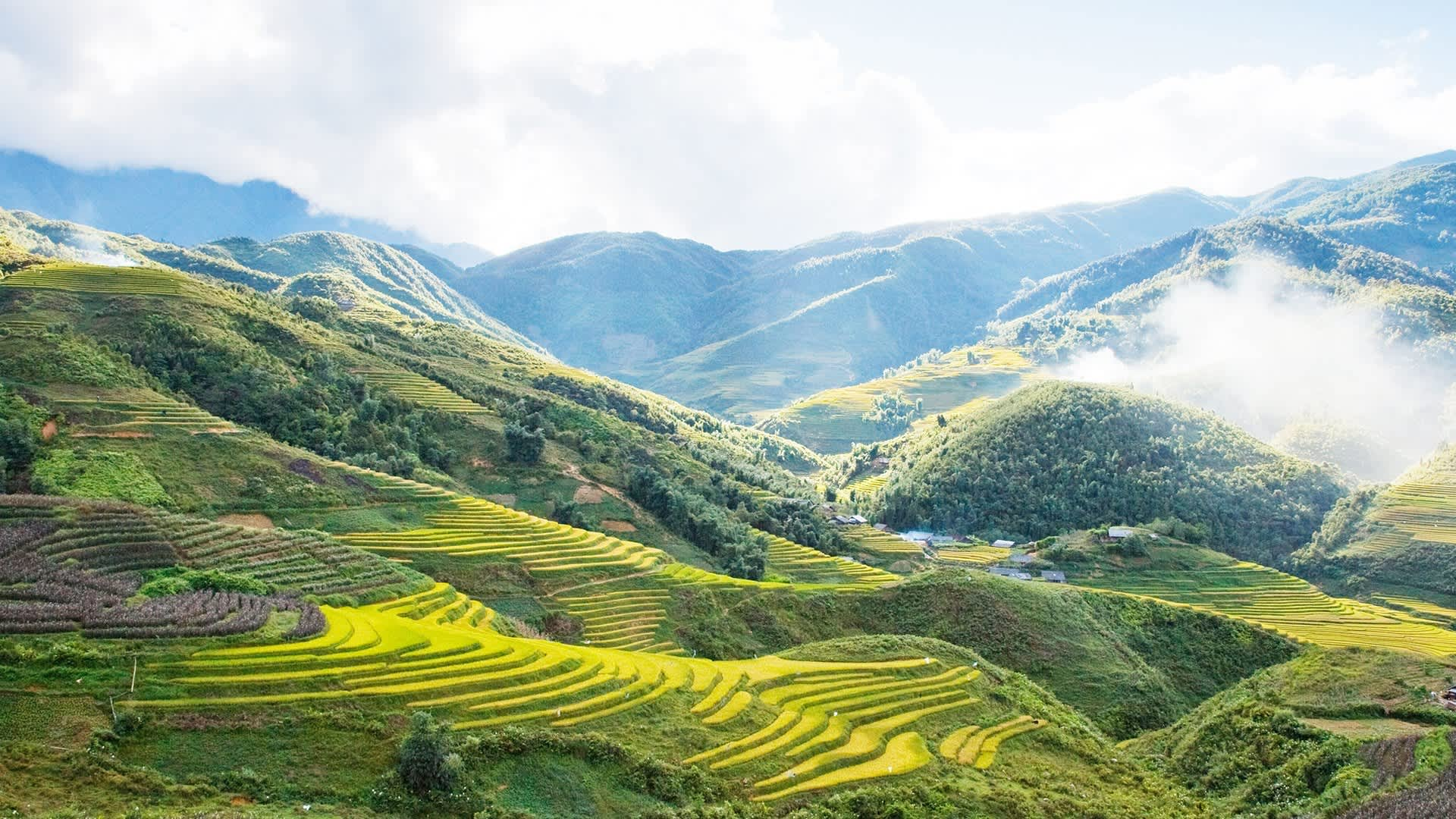
Sa Pa in summer attracts tourists with its cool climate and majestic natural scenery. (Source: Collected)
The terrain, located at an altitude of about 1,300m above sea level, causes the weather here to differ significantly from the plains. Moist air masses, when encountering the Hoang Lien Son mountain range, often create sudden rains, especially in the late afternoon or early evening. After the rain, the sky quickly clears, and the air becomes cooler and fresher.
In many cases, tourists might experience beautiful sunny weather, only for a light rain to appear about 30 minutes later and quickly stop. Therefore, summer rain in Sa Pa usually does not cause too much trouble for tourism activities if tourists are proactive in their preparations and flexible in adjusting their itineraries.
1.2. The rainy season in Sa Pa lasts from approximately June to September
According to the climate characteristics of the Northwest region, the rainy season in Sa Pa usually concentrates from around June to the end of September. Among these, July and August are the months with higher rainfall compared to other months of the year. Nevertheless, the temperature in Sa Pa remains very pleasant, commonly around 18 to 25 degrees Celsius. This temperature is significantly lower than in Hanoi and many northern provinces during the same period when temperatures can exceed 35 degrees Celsius.
Thanks to its cool climate, Sa Pa becomes a popular destination for tourists seeking to escape the heat every summer. The rain showers contribute to regulating the air, keeping the vegetation lush, and providing a comfortable atmosphere for outdoor sightseeing activities.
An important note is that tourists should monitor the weather forecast about 1 week before departure. Updating the rain trend will help them proactively book transportation, arrange their itineraries, and prepare suitable clothing for a smooth trip.
1.3. Rain creates a unique beauty for the mountain town
For many nature lovers, rain is not an obstacle but rather contributes to the unique charm of Sa Pa in the summer. Immediately after each rain, the atmosphere becomes clearer and cooler. The mountains, washed by the light rain, appear a deep green, the plants seem to be revitalized, and wisps of white mist begin to gently shroud the hillsides.
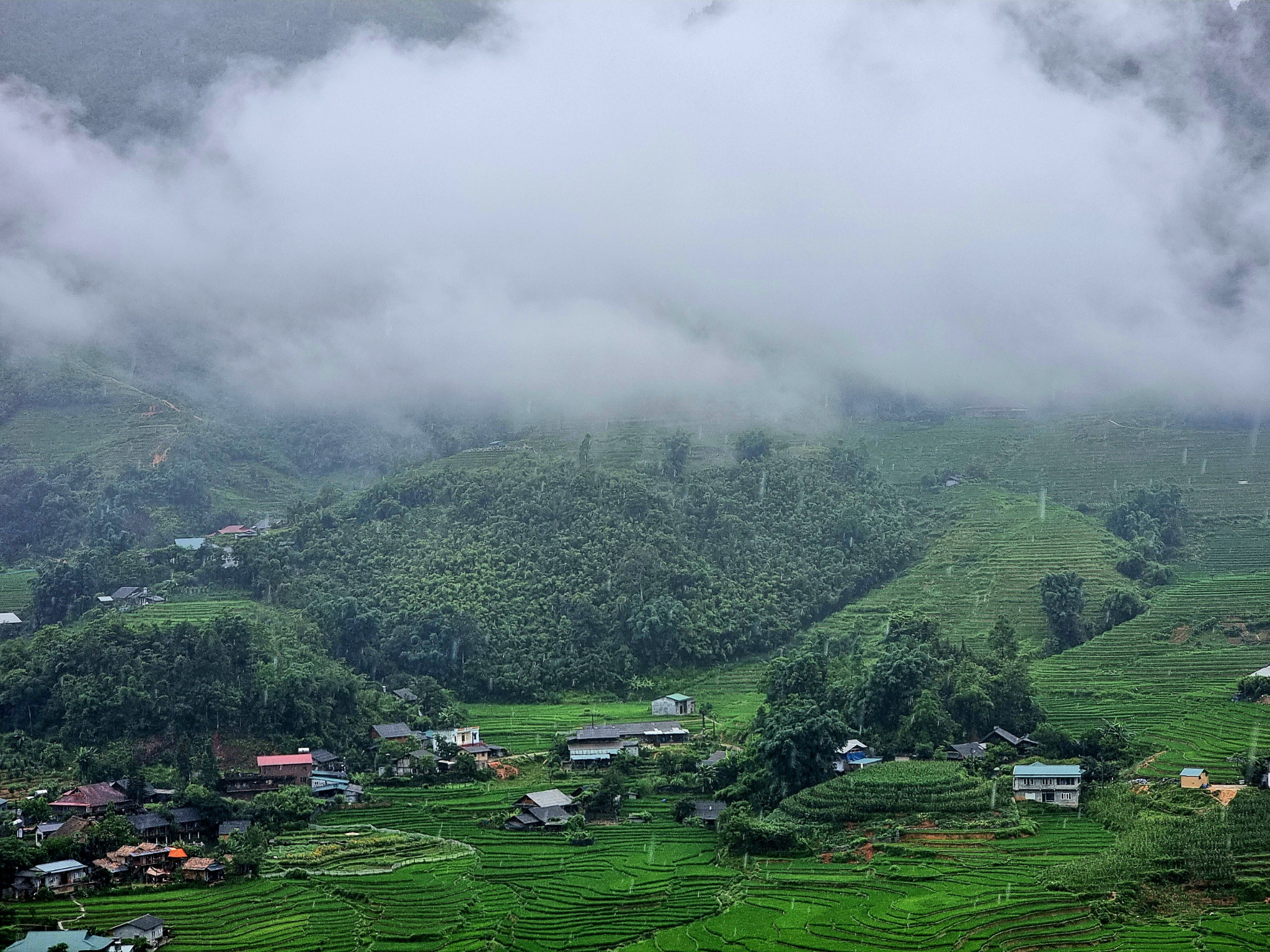
The clear, green scenery of Sapa after a quick downpour. (Source: Collected)
This is also the time when the sea of clouds appears more frequently, especially in the Fansipan area and high points around the Hoang Lien Son mountain range. The sight of clouds weaving through the mountain slopes, blending with the post-rain sunlight, creates an impressive natural painting that makes many tourists and photographers willing to wait for hours to capture the beautiful moment.
Summer is also when the terraced fields enter the irrigation phase and the rice grows lush and green. Seen from above, the field surfaces reflect the sky like giant mirrors, interspersed with the vibrant green stretching across the mountain slopes, creating a characteristic landscape that can only be found during this time.
2. What to prepare when traveling to Sapa in the rainy summer?
2.1. Bring a foldable raincoat or a personal umbrella
As the rains often appear unexpectedly, a foldable raincoat or a small umbrella is an essential item in your luggage when visiting Sapa in the summer. Lightweight raincoats can be easily folded and stored in a backpack without taking up much space. When a downpour occurs, tourists can still continue to move between attractions without interrupting their itinerary.
2.2. Choose sports shoes or non-slip shoes
The paths in Sapa, especially in the village areas or mountain trails, can become slippery after rain. A pair of sports shoes with good grip or specialized walking shoes will help reduce the risk of slips and falls and provide comfort throughout the exploration journey. Besides safety, suitable footwear also helps reduce pressure on your feet when you have to move continuously along steep or stone-paved roads characteristic of the Northwest mountains.
3. Still attractive experiences in Sapa during summer
3.1. Conquer Fansipan and admire the sea of clouds after the rain
Although many people wonder if Sapa has rain in the summer, the reality is that downpours bring the opportunity to witness one of the most beautiful scenes in the Northwest mountains. After the rain stops, the high humidity in the air combined with the special terrain of the Hoang Lien Son range often creates layers of fluffy white clouds covering the mountain slopes.
The journey begins at Sun Plaza with the Muong Hoa mountain climbing train. The striking red train slowly rolls, taking tourists through the vast valley and lush green hillsides. Through the wide glass windows, the mountain and forest scenery appears vivid with winding terraced fields, small villages nestled on the mountainsides, and white clouds drifting leisurely at eye level.
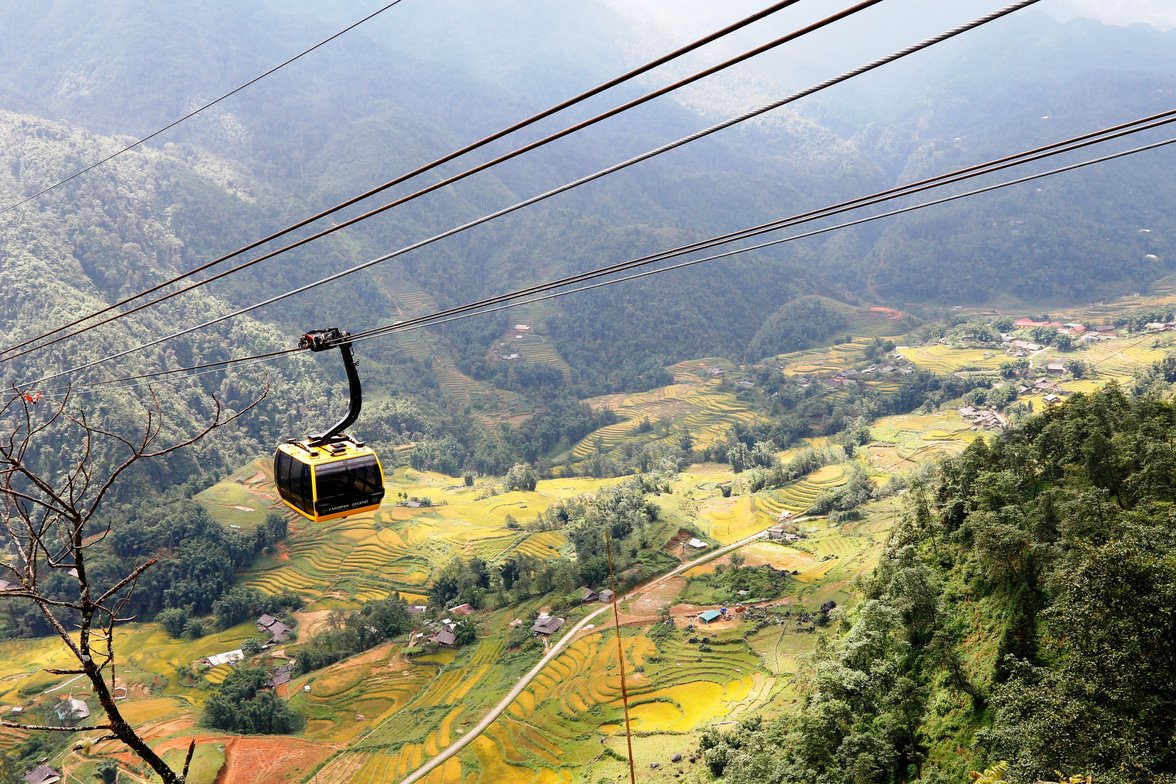
Panoramic view of the majestic Hoang Lien Mountains seen from the Fansipan cable car cabin. (Source: Collected)
After the train journey, visitors continue to experience the modern 3-wire cable car line with a length of 6,292.5m to get closer to the 3,143m high Fansipan peak. As the cabin gently glides through the air, a panoramic view of the majestic Hoang Lien Mountains unfolds before your eyes with layers of clouds interwoven between mountains and forests, creating a spectacular natural landscape. After the rain, the visibility often becomes clearer, allowing visitors to easily observe the vast beauty of the Muong Hoa valley from above.
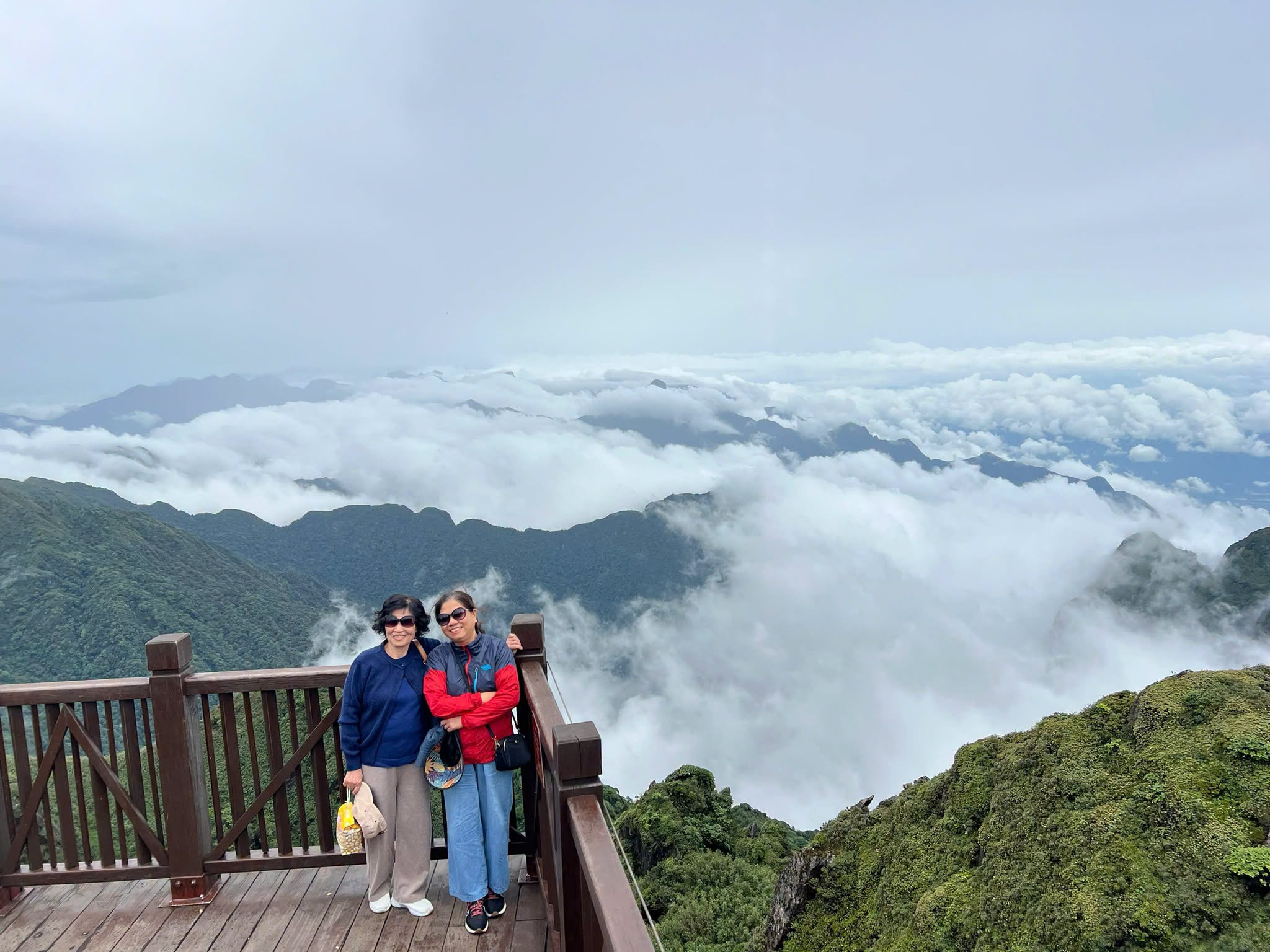
Tourists check-in with the sea of clouds at Fansipan after the rain. (Source: Collected)
Stepping onto the mountain peak area, visitors can worship and visit the spiritual cultural space at Sun World Fansipan Legend. The majestic bronze Great Buddha statue of Amitabha stands out amidst the sea of clouds, the serene Arhat path with meticulously crafted statues, along with Bich Van Thien Tu and Kim Son Bao Thang Tu, create an architectural complex blending natural beauty with traditional cultural values. Amidst the misty space of mountains and clouds after the rain, each step brings a rare sense of peace and tranquility.
👉 BOOK FANSIPAN CABLE CAR TICKETS NOW!
3.2. Visiting Sa Pa Stone Church and the Central Square
After exploring Fansipan, the center of Sa Pa town is an ideal stop to feel the rhythm of life in the mountain town. The most prominent in this area is the Sa Pa Stone Church, an ancient architectural work built in the early 20th century in Gothic style with solid stone walls and characteristic domes.
On rainy days, the thin mist surrounding the church further highlights the ancient beauty of the structure. The stone slabs weathered by time, combined with the cool air, create a poetic scene that attracts many tourists for visits and photos.
Right in front is the central square, where many cultural activities take place and is a familiar meeting point for locals and tourists alike. After the rain, the square becomes clean, with fresh and cool air, very suitable for a stroll, enjoying a hot cup of coffee, and watching people go by.
3.3. Exploring Cat Cat Village in the misty scenery
Cat Cat Village is always on the list of the most beloved destinations when visiting Sa Pa. Only about 2 km from the center, the H'Mong village appears with the simple beauty of traditional wooden houses, winding stone paths, and the babbling sound of small streams.
After each summer rain, a thin layer of mist covers the entire village, making the scenery even more magical. The giant water wheels by the stream, the colorful flower gardens, and the houses nestled under the trees create a rare peaceful natural picture.
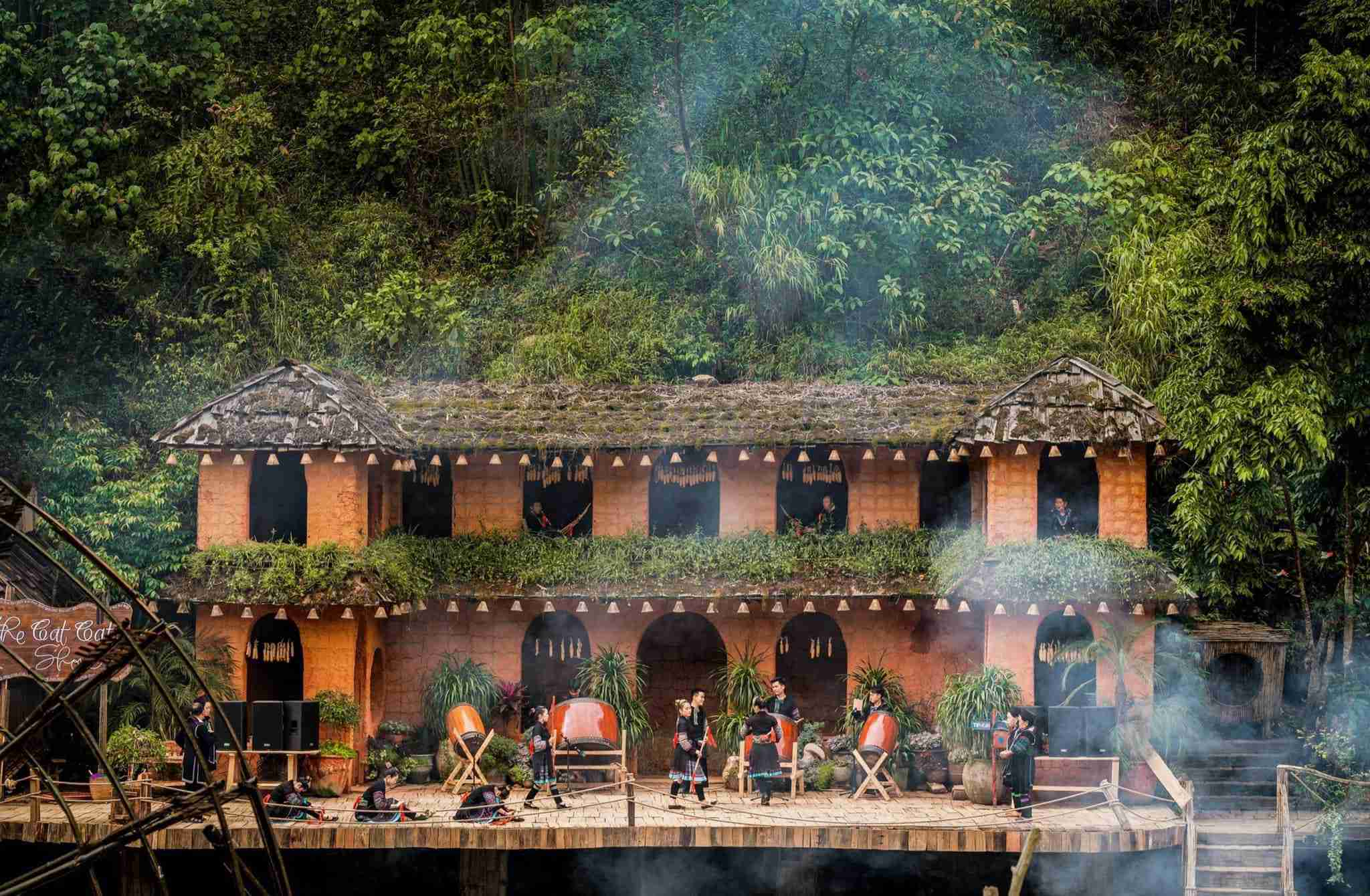
Cat Cat Village appears peacefully in the summer misty scenery. (Source: Collected)
This is also an opportunity for tourists to learn about the traditional linen weaving, indigo dyeing, and silver crafting of the H'Mong ethnic group. Handmade handicrafts not only carry cultural value but also become meaningful souvenirs for relatives and friends.
3.4. Enjoy piping hot specialties in the cool weather
One of the things that makes many tourists love Sa Pa in the summer is the feeling of enjoying hot dishes in the pleasant weather after the rain. As the mist gradually descends and the temperature drops slightly, the aroma from roadside eateries spreads throughout the town. Steaming pots of salmon hot pot, flavorful sturgeon hot pot, or golden grilled wild boar become more appealing than ever.
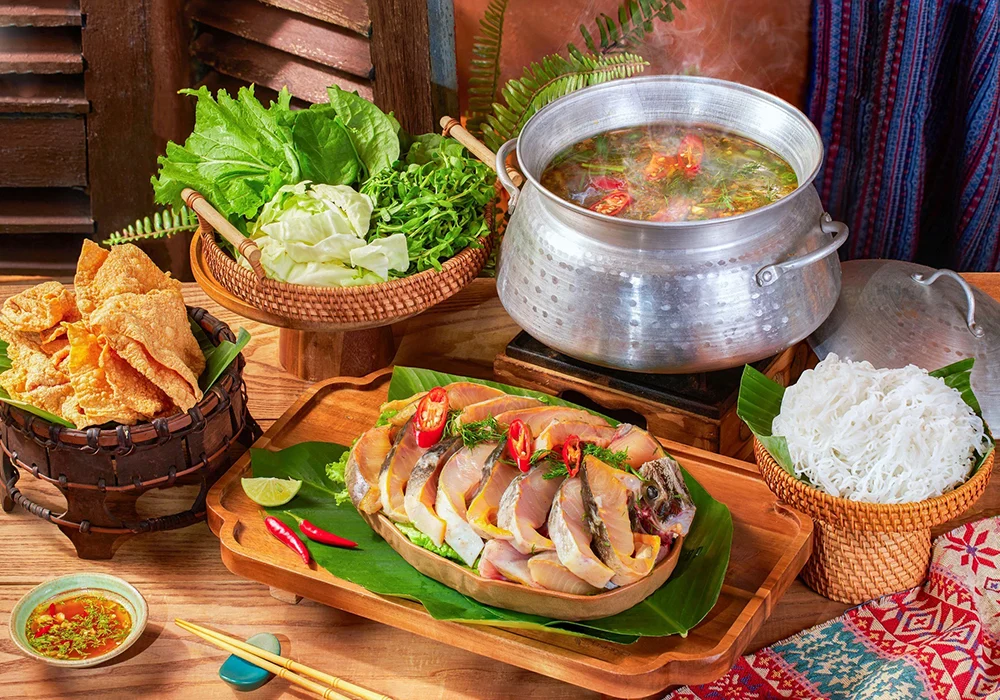
Hot sturgeon hot pot is a dish loved by many tourists amidst the cool weather of Sa Pa. (Source: Collected)
In addition, grilled sticky rice cooked in bamboo tubes (Com lam), grilled free-range chicken, boiled cat's ear vegetables dipped in egg, or seasonal wild vegetables are also dishes chosen by many diners. If you want to experience the local culinary culture, Thang co is a traditional dish with a very unique flavor of the Northwest highlands.
3.5. Admiring terraced fields in highland villages
If you are wondering if it rains in Sa Pa during summer and whether you should explore the villages at this time, the answer is absolutely yes. Summer is when many villages around Sa Pa are adorned with the fresh green color of young rice and the water-flooding season. Destinations like Ta Van, Ta Phin, or Sau Chua boast terraced fields winding along the mountainsides, creating a landscape that is both majestic and poetic, attracting a large number of tourists and photographers.
In fact, whether it rains in Sa Pa during summer is a question many tourists are concerned about before their trip. Summer in Sa Pa does experience rain showers, but they usually do not last all day. After the rain, the atmosphere becomes fresher and cooler, while the water on the terraced fields reflects the sky and sunlight, creating a sparkling scene like giant mirrors. This is also considered one of the most beautiful times to admire the charm of the terraced fields during the water-flooding season.
Interspersed with the green of the mountains and forests are small paths leading into the villages, traditional houses nestled on the mountainsides, and images of people diligently tending to their fields. All blend together to create a picture of highland life with a distinct identity, bringing a sense of peace and closeness to nature.
From the information above, it can be seen that if you ask whether it rains in Sa Pa during summer, the answer is yes. However, these are mainly short-lived rain showers that usually clear up quickly, so they do not significantly affect the travel experience. Even after each rain, Sa Pa dons a pristine beauty with floating clouds, fresh air, and lush green fields stretching across the mountainsides.


