



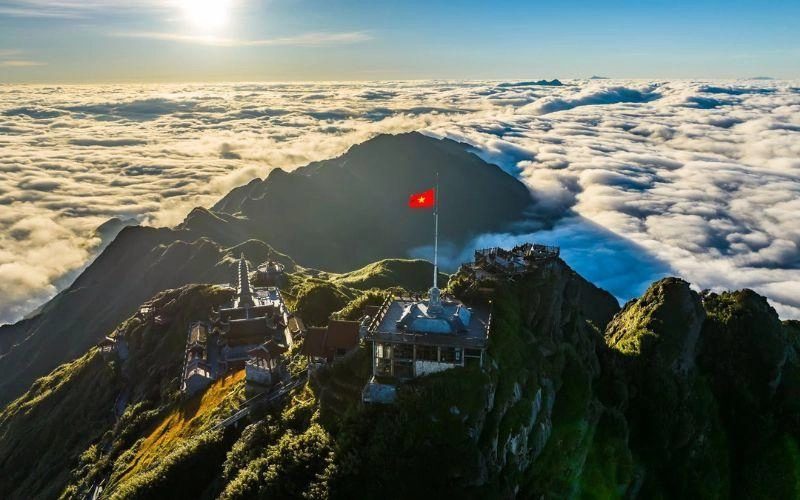
1. Is Fansipan cold? An overview of the weather on the summit of the "Roof of Indochina"
Is Fansipan cold? The answer is yes. Located at an altitude of 3,143 meters above sea level, Fansipan is known as the "Roof of Indochina" and is famous for its cool climate year-round. Due to the influence of altitude and mountainous terrain, the temperature at the summit of Fansipan is often significantly lower than in the central area of Sa Pa town. Even on summer days, you can still feel the cool air, especially in the early morning or when the wind is strong.

Fansipan peak, at an altitude of 3,143 meters, has a characteristic cold climate, sometimes experiencing frost in winter. (Source: Collected)
Temperatures on the summit of Fansipan vary significantly with the seasons. In summer, temperatures typically range from 10–20°C, providing a refreshing coolness amidst the hot days. Meanwhile, winter, from December to February, can see temperatures drop below 5°C, or even below 0°C during strong cold spells. When weather conditions are suitable, the summit can experience frost, ice, or snow, creating a rare winter landscape in Vietnam.
The feeling of cold on Fansipan is influenced not only by temperature but also by wind, humidity, and fog. On cloudy days with strong winds or drizzle, the perceived temperature can be significantly lower than the actual temperature. The weather at high altitudes can also change rapidly, from sunny to foggy in a short time. Therefore, you should not rely solely on the weather in central Sa Pa to assess conditions on the summit of Fansipan.
Despite the cold weather, Fansipan remains an attractive destination year-round thanks to its majestic mountain scenery, sea of clouds, and unique experiences at Sun World Fansipan Legend. The modern cable car system makes it easier to access areas near the summit without having to undertake a long mountain climb. However, for a comfortable and safe trip, you should check the weather forecast, prepare warm jackets, and choose clothing suitable for each season before starting their journey to conquer Fansipan.
2. Weather on Fansipan by season: When is it coldest?
Is Fansipan cold? It depends on the time of year you choose to visit. At an altitude of 3,143 meters, Fansipan peak boasts a characteristic high-altitude climate, with significant temperature changes between seasons. From the cool air of spring and the pleasant weather of summer to the biting cold and even snowy days of winter, each period offers a different experience on the "Roof of Indochina."
2.1. Spring (March–May)
Spring marks the time when Fansipan gradually transforms after the cold winter months. Temperatures at the summit typically range from 5–15°C, sometimes lower during periods of cold air. Mornings and late afternoons are often cool, accompanied by fog or clouds covering the slopes. On sunny days, the weather is more pleasant, creating favorable conditions for visitors to explore and admire the natural scenery.
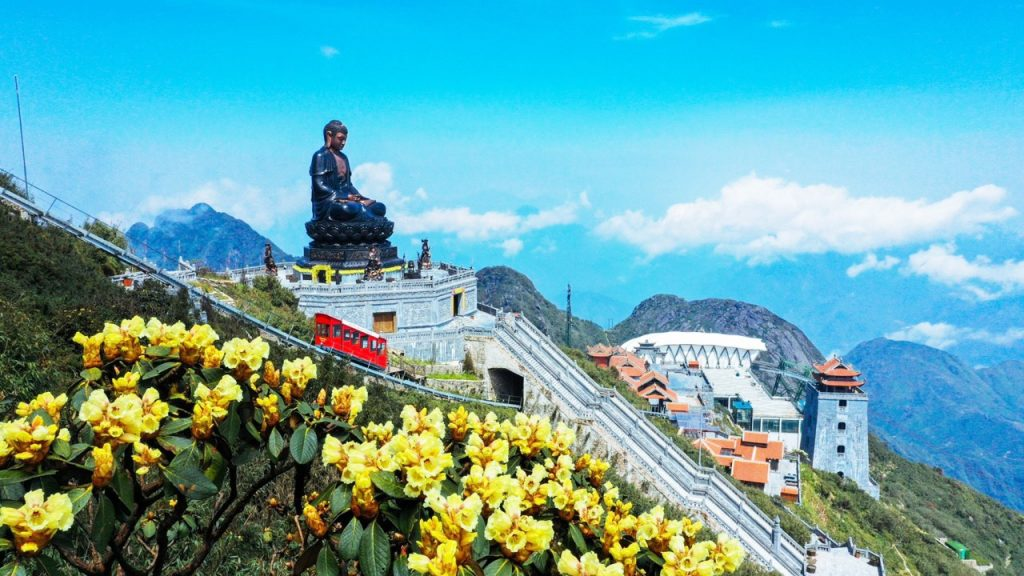
Fansipan in spring is famous for the vibrant colors of rhododendron flowers and the characteristic cool weather of the high mountains. (Source: Collected)
In particular, from around March to May, the rhododendron forests on the Hoang Lien Son mountain range begin to bloom, creating a vibrant natural landscape amidst the mountains. You can admire the striking flower displays from the Fansipan cable car cabin, while also exploring cultural and spiritual sites and flower gardens at Sun World Fansipan Legend. This is the perfect time for nature lovers who want to enjoy the fresh air and discover the beauty of Fansipan during the flowering season.
For those wondering “is Fansipan cold?” in the spring, preparing warm jackets, scarves, and non-slip athletic shoes is essential. Especially on days with drizzle or fog, you should bring an extra windproof jacket to keep dry and comfortable.
2.2. Summer (June–August)
Unlike the hot weather in Hanoi and many northern provinces, Fansipan maintains a relatively low temperature in the summer, usually fluctuating between 10–20°C. Thanks to its altitude of over 3,000 meters, the summit area has a cool climate, sometimes chilly in the early morning or when the wind is strong. Therefore, if you are wondering “is Fansipan cold?” in the summer, you can rest assured that it is an ideal destination to enjoy the cool air and escape the heat of the lowlands.

Summer on the summit of Fansipan offers a cool atmosphere amidst the lush green mountain scenery. (Source: Collected)
During the summer months, the Hoang Lien Son mountain range is covered in the lush green of forests and vegetation. From the cable car cabin, you can admire the rolling hills, deep valleys, and drifting clouds in favorable weather conditions. However, summer also coincides with the rainy season in Sa Pa, meaning that the Fansipan peak area may experience showers, thunderstorms, thick fog, or strong winds, reducing visibility.
To ensure a smooth trip, you should bring a light jacket, windproof clothing, and shoes with good grip. Additionally, it's essential to check the weather forecast and the cable car's operating status before departure, especially on days with thunderstorms.
2.3. Autumn (September–November)
Autumn brings a cool, fresh atmosphere and breathtaking natural scenery to Fansipan. From September to November, temperatures on the mountaintop gradually decrease, with a reference range of 5–15°C. Early autumn days can be relatively pleasant with sunshine, while late October and November are usually colder, especially when the first cold fronts of the season arrive.

Autumn is an attractive time to admire the sea of clouds on the summit of Fansipan when weather conditions are favorable. (Source: Collected)
One of the most captivating experiences when visiting Fansipan in autumn is cloud hunting. On days with suitable weather conditions, layers of white clouds can cover the valleys below, creating a breathtaking sea of clouds amidst the mountains. From the summit of Fansipan, you have the opportunity to admire the undulating mountain ranges against the sky, capture stunning photographs, and enjoy the unique beauty of the northwest mountainous region.
If you're wondering “is Fansipan cold?” in October or November, you should prepare warm clothing even if the weather in central Sa Pa is relatively pleasant. A moderately thick jacket, scarf, and non-slip shoes will make the trip more comfortable, especially on windy or foggy days.
2.4. Winter (December–February): Bitterly cold, with possible frost and snow
Winter is the coldest time of year for Fansipan, with temperatures at the summit typically ranging from 0–10°C and potentially dropping below 0°C during severe cold spells. Due to its high altitude, the Fansipan summit is significantly affected by cold winds, fog, and high humidity. On days with extreme weather, the actual perceived cold can be much lower than the measured temperature, requiring you to prepare thoroughly before your trip.

Winter is the coldest time of year on Fansipan, sometimes bringing frost, ice, and snow. (Source: Collected)
In particular, winter is the time when Fansipan is likely to experience rare natural phenomena in Vietnam such as frost, ice, and snow. When temperatures drop and meteorological conditions are suitable, tree branches, roofs of structures, and steps on the mountaintop can be covered with a layer of white ice. However, snow does not appear frequently and cannot be accurately predicted based solely on the tourist month. Tourists wishing to see snow should monitor weather reports and updated announcements from the tourist area.
Regarding the question of “is Fansipan cold?” in winter, you need to pay special attention to staying warm. Thick down jackets, thermal pants, wool hats, gloves, scarves, and non-slip shoes are essential items to prepare. Families with young children or elderly people should also consider your health condition, limit prolonged exposure to the elements, and prioritize resting in sheltered areas when necessary.
Generally, the matter of “is Fansipan cold?” depends on the season and specific weather conditions, but the air at the summit is usually significantly cooler or colder than in the center of Sa Pa. Spring and autumn are suitable for enjoying the cool weather, summer offers an escape from the heat, while winter is ideal for travelers who want to experience the characteristic chill of the high mountains and have the opportunity to admire ice and snow.
“Is Fansipan cold?” is no longer a difficult question to answer, as each season on the "Roof of Indochina" brings its own unique weather, from the cool air of summer to the biting cold of winter. Regardless of the time of year, you should prepare warm clothing, check the weather forecast, and plan your itinerary accordingly. Plan a trip to Sun World Fansipan Legend to experience the cable car ride through the Hoang Lien Son mountain range, chase the sea of clouds, and enjoy the spectacular beauty of Fansipan at an altitude of 3,143 meters!