




1. One Decade Redefines Sapa Tourism
In the flow of Vietnam's tourism development, few destinations have witnessed such a clear transformation as Sa Pa over the past 10 years. From a "town in the mist" associated with the image of backpackers and arduous trekking journeys, Sa Pa has entered a new era – where the Fansipan summit experience is accessible to everyone, services are elevated, and the destination's image reaches international standards. The milestone of this transformation: the Fansipan cable car line inaugurated in 2016 – when Sapa tourism was rewritten from scratch.
Before the Fansipan cable car became operational, the journey to reach the 3,143m summit – the "Roof of Indochina" – was not an easy challenge. Tourists wanting to reach the top had almost only one option: trekking through the forest, lasting at least 2 days and nights, crossing steep, slippery terrain and unpredictable weather. This was an experience requiring good physical strength, skills, and thorough preparation, so Fansipan at that time was mainly for those who loved exploration and conquest.
This geographical barrier made Sa Pa a selective destination. The number of tourists was modest, mainly backpackers or international travelers who loved exploration – before 2016, Sa Pa welcomed about 600,000–700,000 visitors per year. Services were not diverse enough, and the ecosystem was insufficient to serve a large scale. Sa Pa was beautiful and wild – but its potential remained dormant.
The turning point came in 2016, when the Fansipan cable car line officially became operational, shortening the journey to conquer the mountain from 2 days to just about 15 minutes. On its opening day, the project set 2 Guinness World Records: the world's longest 3-rope cable car (6,292.5m) and the 3-rope cable car with the largest elevation difference (1,410m). This was not just tourism infrastructure – it was a declaration of scale and aspiration.
For the first time in history, the dream of standing on the Fansipan summit became a reality for everyone – from an 80-year-old elder to a baby who couldn't yet climb hills. The "conquest" experience was no longer a privilege of physical strength; it became an emotional moment shared by millions of souls.
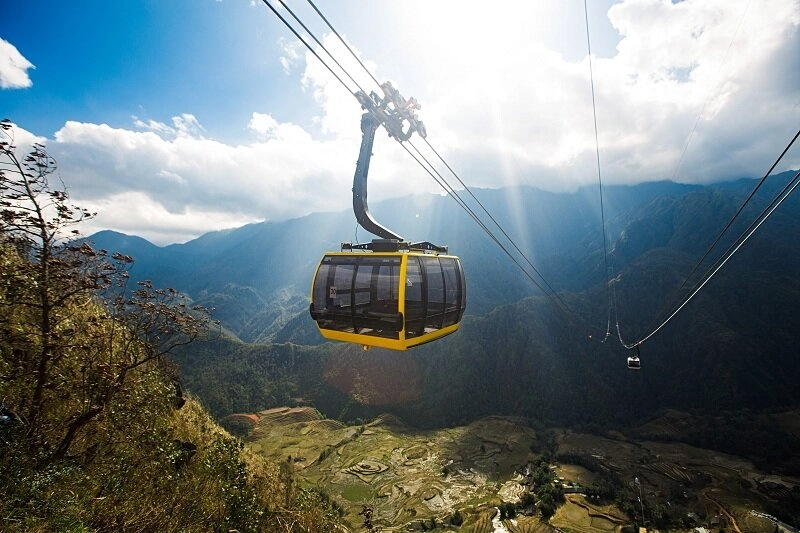
Fansipan Cable Car has had a brilliant 10-year journey
That event immediately changed travel behavior. If previously Sa Pa was a destination for solo, spontaneous trips, then now Fansipan has become a "must-visit" point in every itinerary. Right in the first year of operation (2016), the number of visitors to Sa Pa surged to nearly 970,000 – and reached over 4.3 million by 2025.
The Fansipan Cable Car not only expanded the customer base – it also attracted the formation of a professional tourism ecosystem, from international accommodation brands like Hotel de la Coupole MGallery Sa Pa to standardized tour services. Sa Pa's tourism revenue in 2025 reached VND 19,000 billion – 11 times higher than a decade ago. Sa Pa has truly emerged from the shadow of a "backpacking" destination to become a leading tourism center in the North.
2. What has kept Fansipan a sustainable icon for a decade?
2.1. "Visited Sa Pa – Must go to Fansipan": a sacred moment for millions
Among countless destinations in Sa Pa, Fansipan is the name that needs no promotion – visitor experiences themselves have spread its fame. The 3,143m milestone – simple yet embodying a spirit of conquest – has become a sacred "meeting point" that millions aspire to set foot on.
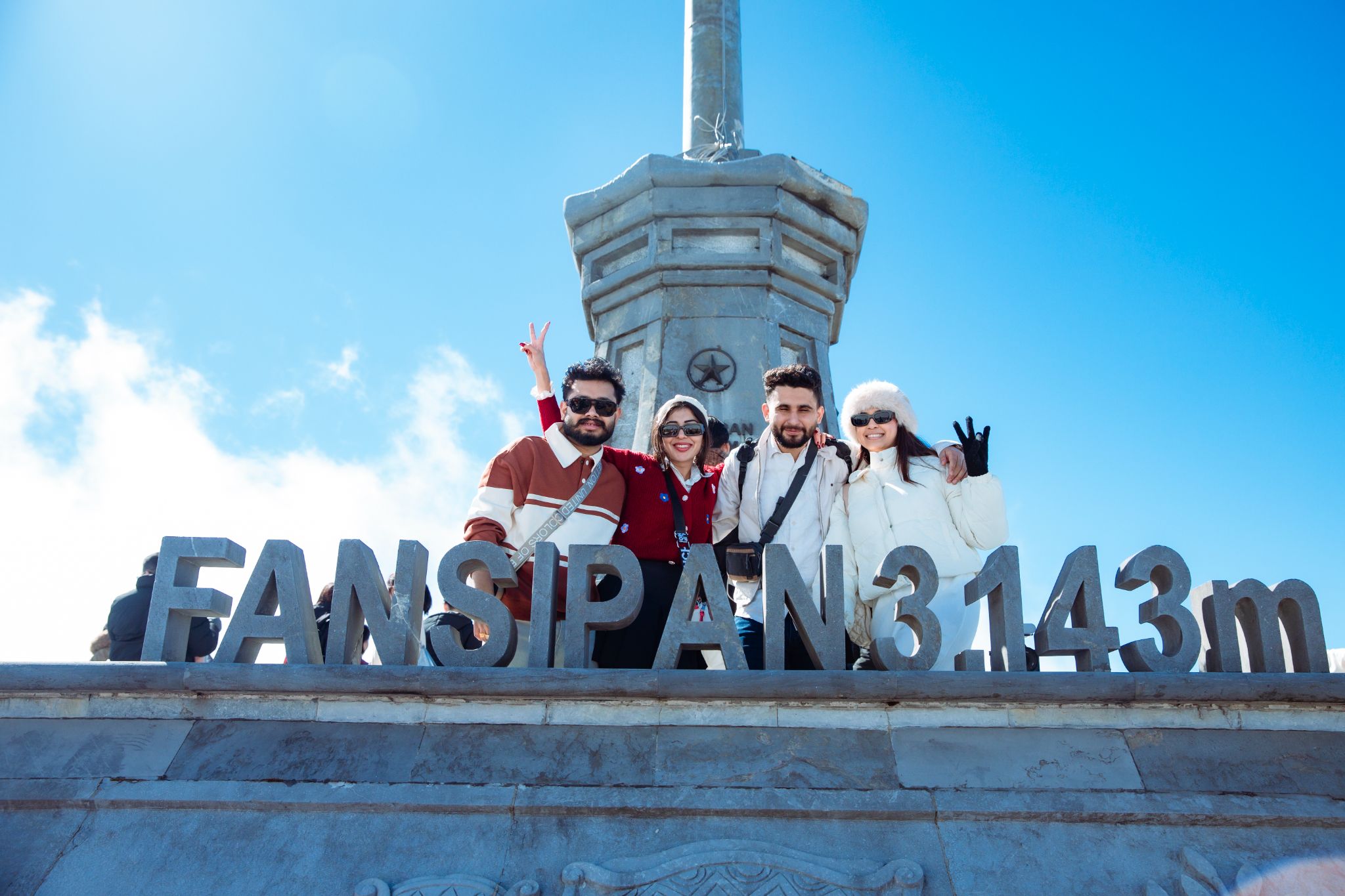
International tourists enjoy checking in on the summit of Fansipan
The allure of Fansipan lies not just in its beauty – but in the emotions. Amidst the vast open sky, a sea of floating clouds, and the red flag with a yellow star fluttering on the mountain peak, the moment of touching the milestone brings something hard to name – a bit of pride, a bit of quietude, as if having accomplished something greater than oneself. It is a feeling not every destination can offer.
Over time, as millions of tourists capture and share these moments, Fansipan has become an indispensable part of any Sa Pa journey. No marketing campaign is needed – those who have visited tell the best story: if you come to Sa Pa, you must go to Fansipan.
If it were only about beautiful scenery, Fansipan would hardly maintain its appeal for 10 years. What sets it apart lies in the journey – an almost irreplaceable experience in Vietnam. The journey begins from the cable car cabin, where visitors slowly leave the ground, gliding over Muong Hoa valley with its winding terraced fields. As the altitude increases, the landscape transforms dramatically: from villages and mountains to a sea of floating clouds. At times, the entire landscape below disappears, giving way to the sensation of "traveling through the sky" – an experience that is both breathtaking and unforgettable.
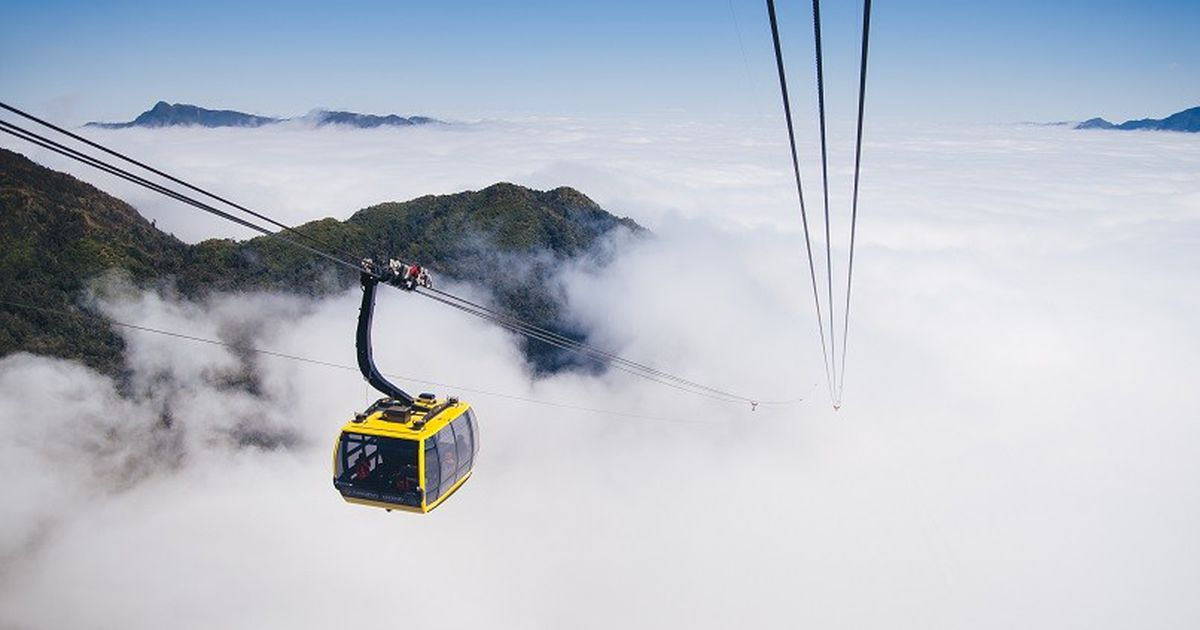
Fansipan Cable Car takes tourists "flying" over a sea of clouds
In just about 15 minutes, tourists can reach the Fansipan peak – something that previously required 2 days of arduous trekking. But the journey doesn't stop there. The stone steps leading to the summit, the national flag fluttering in the wind, the sacred space amidst clouds and sky… all create a distinct emotional climax: from excitement, awe, to quiet reflection and pride. It is these elements that make the Fansipan experience powerful enough to touch every emotional "cell", awaken all senses, and engrave itself into memory… then inspire one to return.
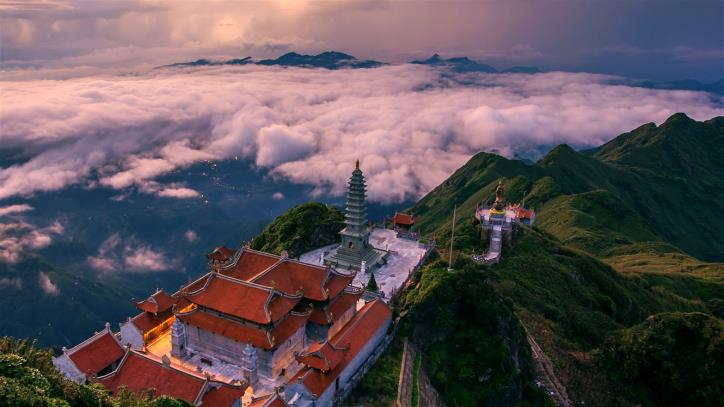
Majestic spiritual complex on the summit of Fansipan
2.2. “Touching” culture, harmonizing with the “breath” of culture
Fansipan has not “cooled down” after 10 years because it was not built as a typical tourist destination. This is not just a place for sightseeing, but a magical combination of majestic nature, unique local culture, and a tourism culture driven by heart, professionalism, and humanity.
Amidst the modern tourist space of Sun World Fansipan Legend, the culture of the Northwest is always present. A May Village at the foot of the mountain acts as a “living museum” recreating the culture of ethnic groups in the Northwest such as H'Mong, Dao, Xa Pho, Tay... Instead of static display models, this is a real living space – where visitors can clearly see, touch, and feel the local way of life.
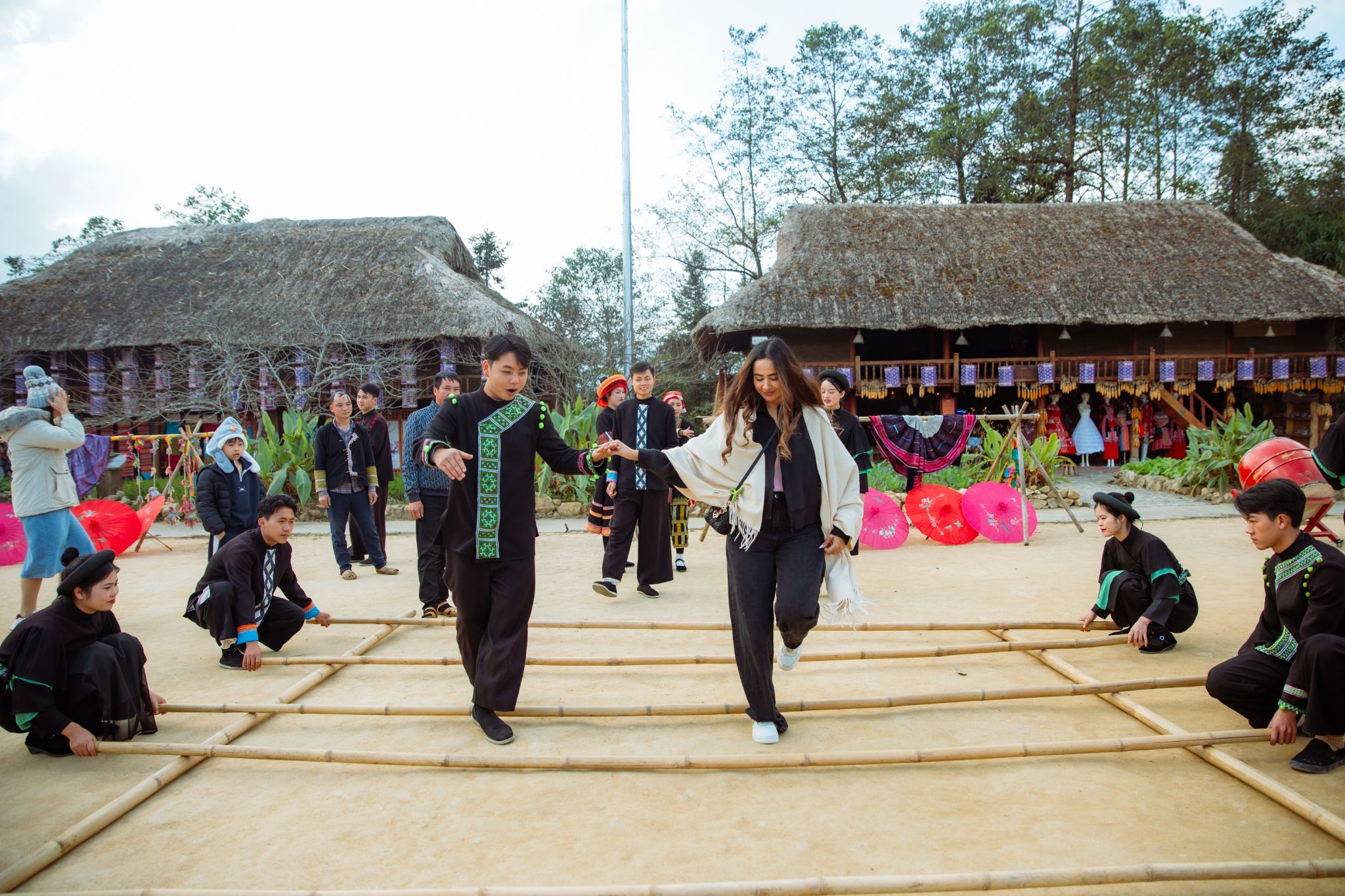
Unique ethnic cultural experiences in the Ban May area
Simple wooden houses with thatched roofs nestled amidst mountains and forests; the sound of khen, the beat of drums echoing during community gatherings; or the image of diligent women by the loom… all create a vivid picture of highland culture. Tourists can not only “watch” but also participate in daily activities such as weaving, incense making, and handicraft production – experiences that foster unique connections. Notably, traditional crafts no longer exist in isolation but are directly linked to tourism activities. This helps culture not to fade away, but on the contrary, to be “kept alive” in a new form – more intimate, more valuable, and with a wider reach.
Not stopping at preservation, the folk cultural materials of the highlands are also “retold” with a new look, through well-invested shows and festivals such as “Vudieu tren may” (Dance on the Clouds), “Le hoi Khen hoa” (Flower Khen Festival)...
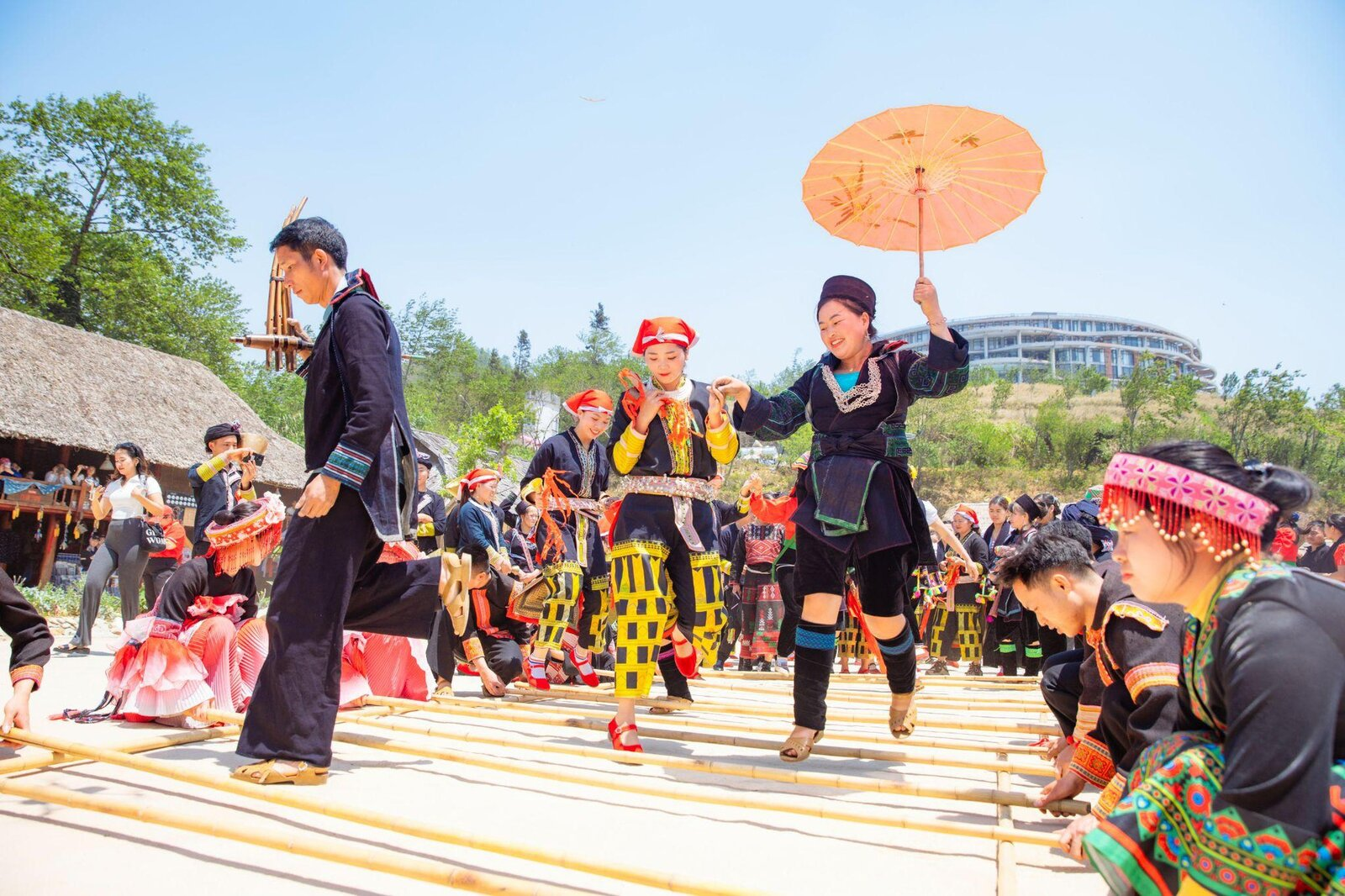
The cultural beauties of the Northwest are recreated through many festivals in Ban May
Recently, shows like “Dinh Thieng Du Ky” have continued to expand their approach, telling the story of the land and people of the Northwest through modern theatrical language. There, traditional elements are not confined to a mold, but are subtly renewed – still retaining their original spirit, while being more suitable for the tastes of domestic and international tourists. From these activities, culture is no longer limited to display or introduction, but becomes part of the experience – where tourists can feel, immerse themselves, and carry deep impressions after each journey.
2.3. Civilized - Professional - Humanistic Tourism Approach
Records can be broken. Beautiful scenery can be found in many places. But what makes tourists return and tell others – is the feeling of being welcomed with sincerity, being served with true dedication. That is the culture of tourism that Sun World Fansipan Legend has painstakingly built and preserved for a decade.
Here, tourism civilization is not a slogan on a board – but permeates every detail. From the smiles and greetings of H'Mong and Dao staff at the reception – people who work while telling the story of their homeland – to how the space is designed for tourists to feel, how each festival is organized authentically, without commercialization, without losing its soul, or how each show is staged with true respect for the folk material it draws upon…
Professionalism at Sun World Fansipan Legend is demonstrated not only through modern infrastructure or international standard operating procedures, but also through its approach to nature. The philosophy of "development without destruction" is strictly implemented: the cable car system occupies the minimum footprint on the ground; ancient trees are preserved intact; biodiversity and groundwater are not interfered with, and valleys of flowers, forests of colorful flowers are continuously created… That is civilization with nature.
Practicing humanistic tourism – the way Sun World Fansipan Legend does – is not only about employing young people from ethnic minority communities in Sa Pa, providing them with professional training to secure stable incomes and improve their lives, but also about making local people the true owners of the experiences they deliver.
That is why, after a decade, the Fansipan cable car still stands tall as a miracle of Vietnamese intellect, a symbol of Vietnamese tourism! It not only creates momentum for domestic tourism, but Fansipan also plays an important role in putting Sa Pa on the international tourism map. Recognition from prestigious awards like the World Travel Awards – often likened to the “Oscars of the tourism industry” – has shown the increasing appeal of this destination to global tourists. Titles such as “World’s Leading Cultural Destination” or “World’s Leading Natural Wonder Destination” are not just honorary, but also contribute to consolidating Sa Pa’s position on its journey to reach the region and the world. From a familiar destination, Sa Pa has gradually become a noteworthy choice for international tourists seeking experiences in Asia. And most recently, Condé Nast Traveller magazine has honored Sa Pa on its list of the 53 most beautiful towns in the world.
Its increasing presence on rankings, tourism platforms, and international media campaigns shows that Fansipan not only attracts global tourists but also plays a crucial role in positioning the destination's brand. From a project that once set 2 world records, the Fansipan cable car has, over time, transcended its initial value to become a national-level tourism icon. This is the "sweet fruit" of a decade of systematic investment and consistent development, transforming the Fansipan cable car and Sun World Fansipan Legend from a tourism infrastructure into a long-term "brand asset," contributing to elevating the image of Vietnamese tourism on the international stage.


