




1. General Introduction to the Temple of King Dinh Tien Hoang
Located within the Hoa Lu Ancient Capital complex, in Tay Hoa Lu ward, Ninh Binh province, the Temple of King Dinh Tien Hoang is an important spiritual site, closely associated with the formation and development of the feudal state of Vietnam. The temple worships King Dinh Bo Linh – the hero who quelled the twelve warlords, unified the country, and founded the Dai Co Viet state in the 10th century, opening an era of self-determination for the nation. Amidst the majestic scenery of Ma Yen mountain, the tranquil lake, and moss-covered temple roofs, the Temple of King Dinh Tien Hoang exudes an ancient and solemn atmosphere, making visitors feel as if they are returning to the thousand-year historical space of the Hoa Lu Ancient Capital.
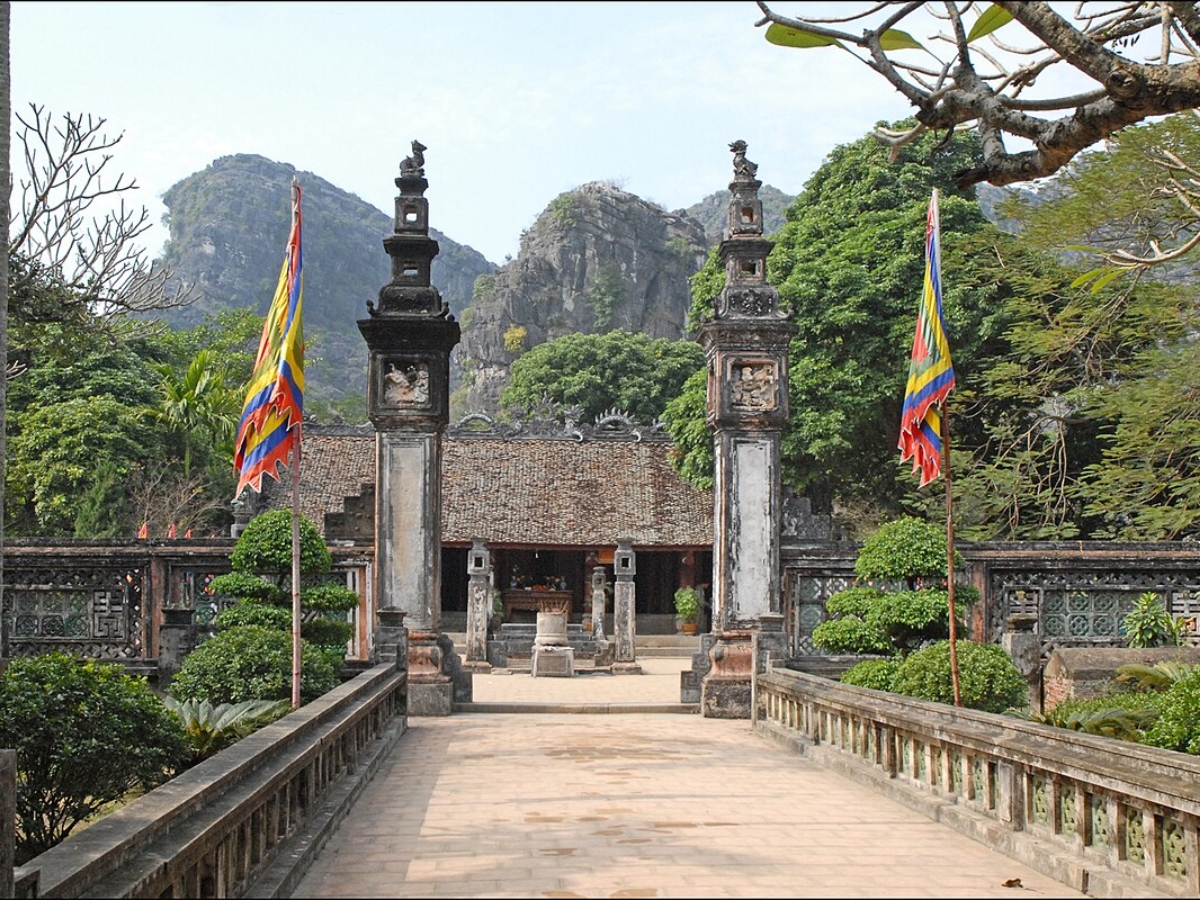
Temple of King Dinh Tien Hoang is located within the Hoa Lu Ancient Capital historical complex, in Tay Hoa Lu ward. (Source: Collected)
When visiting the Temple of King Dinh Tien Hoang, visitors not only admire a unique architectural work but also feel the sacred, solemn atmosphere of the ancient capital land. The exquisite carved lines, ancient statues, and fragrant incense smoke in the quiet space calm the soul, evoking memories of the founding king's merit in nation-building.
2. History of the formation of the Temple of King Dinh Tien Hoang
Legend has it that after King Dinh Tien Hoang and his son Dinh Lien were assassinated by the assassin Do Thich in 979, the court organized a posthumous conferment ceremony and established a temple in their hometown Hoa Lu to commemorate the merit of the founding king. Over more than a millennium, the temple has become a symbol of reverence and national pride, where people express their gratitude to the one who brought peace and unity to the country.
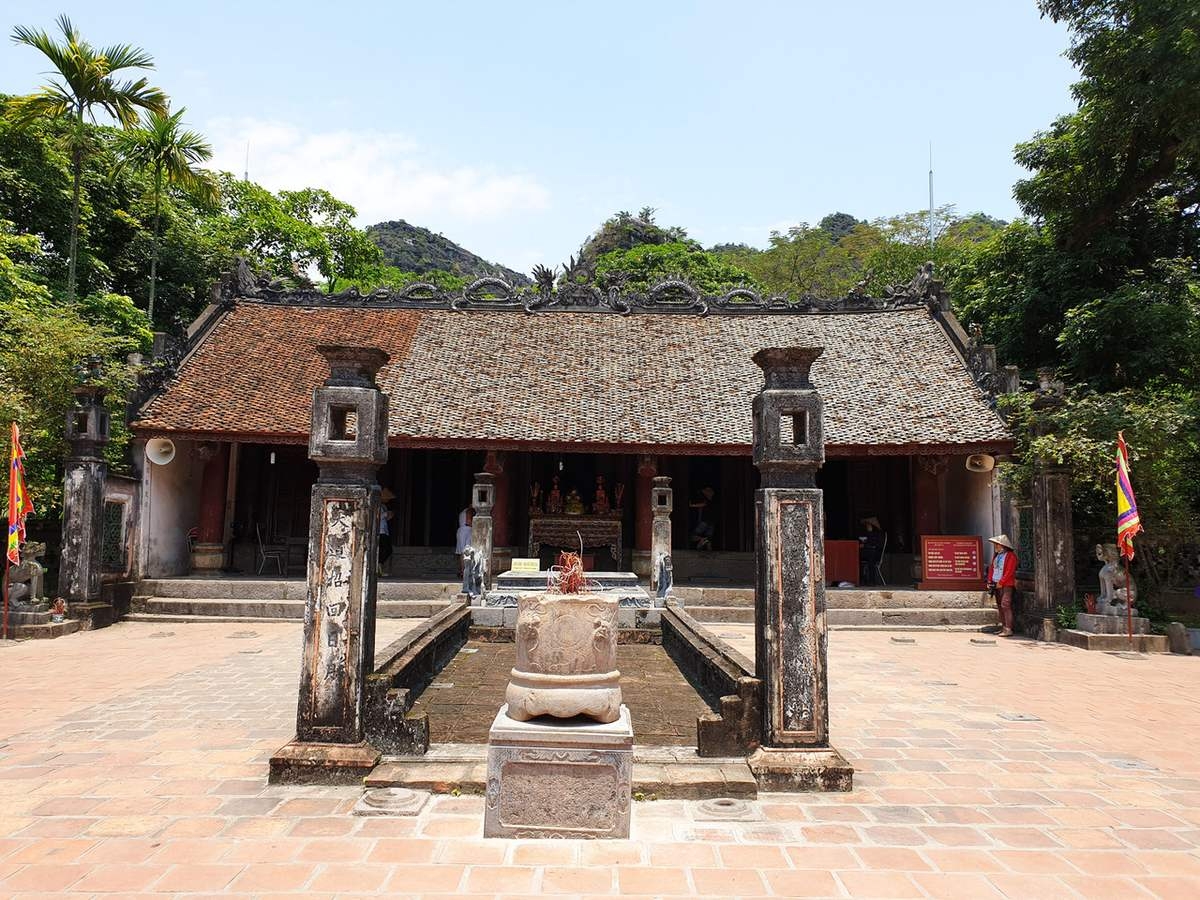
The people of Hoa Lu built a temple to King Dinh Tien Hoang to commemorate the merits of the founding king. (Source: Collected)
The Temple of King Dinh Tien Hoang is currently located within the Hoa Lu Ancient Capital relic complex, the former political, economic, and cultural center of Dai Co Viet. Despite many changes over time, the temple still retains its majestic and ancient appearance with moss-covered tiled roofs, sturdy ironwood columns, and exquisite carvings bearing the strong imprint of folk art.
3. Unique Architectural Art of the Temple of King Dinh Tien Hoang
The Temple of King Dinh Tien Hoang is a representative work of ancient Vietnamese architectural art, bearing the strong imprint of the royal court style of the Hau Le dynasty. The entire temple is built in the 'nội công ngoại quốc' style, with a layout harmoniously arranged between the sacred space and the surrounding landscape. Inside, the rooms are arranged in the shape of the character 'Cong' (工), symbolizing solidity, while the surrounding corridor forms the frame of the character 'Quoc' (國), expressing national spirit and loyalty. The main path of the temple connects from the half-moon lake in front to the Main Hall behind, arranged in a straight and balanced line. This arrangement creates a solemn and peaceful atmosphere amidst the majestic surrounding mountains.
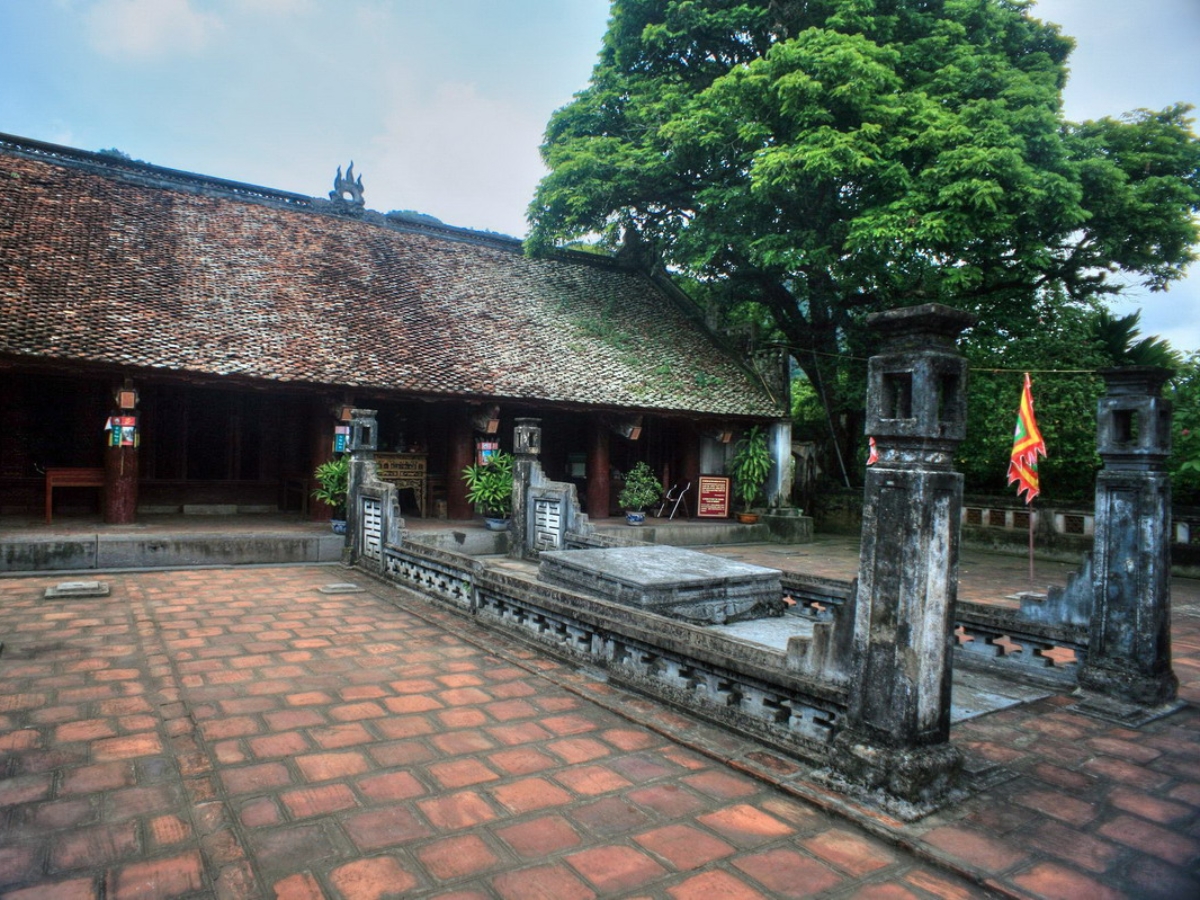
The architecture of the temple bears the strong imprint of the royal court style of the Hau Le Dynasty. (Source: Collected)
When passing through the Ngo Mon Quan gate, visitors will encounter four Chinese characters 'Bac mon toa thuoc' engraved on the gate arch, demonstrating the majesty and solemnity of the temple. Looking out from the inside, the inscription 'Tien trieu phuong cac' serves as a gentle reminder of the glorious era of the ancient dynasty. In front lies a clear blue half-moon lake, its surface calm, reflecting the graceful shape of the curved tiled roofs, creating a harmonious, peaceful scene imbued with ancient charm.
Moving deeper into the central area, visitors will admire the three main halls: Bai Duong, Thieu Huong, and Chinh Cung. Standing out in the courtyard is a dragon stone platform made from a single block of bluestone, intricately carved with coiling dragons, symbolizing power and wisdom. Inside Chinh Cung is a gilded statue of King Dinh Tien Hoang, wearing a Binh Thien hat, seated majestically on a stone platform, exuding the aura of a wise ruler who founded the nation. Flanking the statue are figures of princes, evoking the spirit of filial piety and the continuation of the Dinh lineage. All these elements blend with the beauty of nature, making the Temple of King Dinh Tien Hoang radiate both the majesty of royal court architecture and a close, harmonious connection with the picturesque landscape of Hoa Lu.
4. Festival Experience at the Temple of King Dinh Tien Hoang
Every third lunar month, when the vibrant red silk cotton flowers bloom on the mountainsides, the people of the ancient capital Hoa Lu eagerly prepare for the festival at the Temple of King Dinh Tien Hoang. Held from the 8th to the 10th day of the third lunar month, the festival is an occasion to commemorate the great contributions of King Dinh Bo Linh. Within the sacred space of the ancient capital, the festival carries deep spiritual significance and is a source of cultural pride for the people of Ninh Binh.
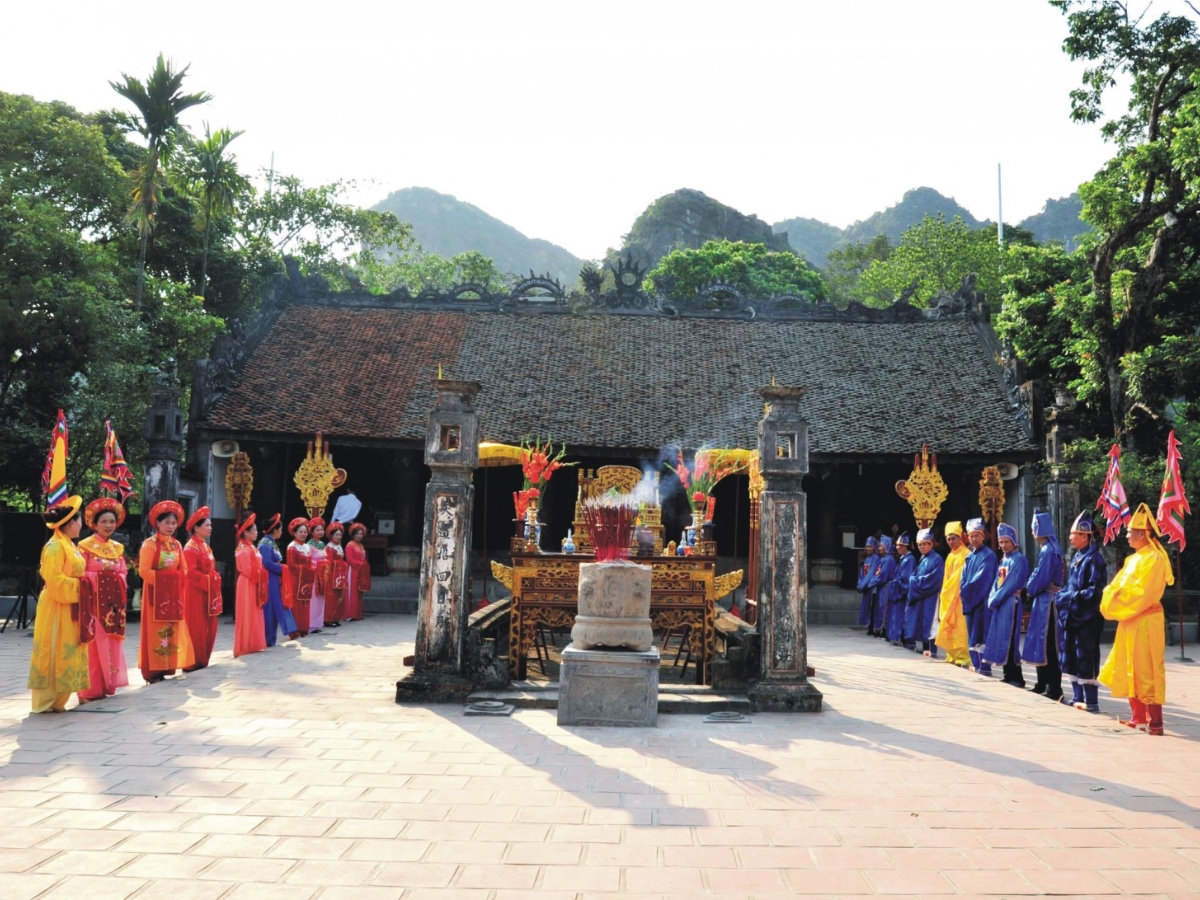
The King Dinh Tien Hoang Temple Festival is solemnly held annually. (Source: Collected)
The ceremony is solemnly organized with many traditional rituals: water procession, bathing ceremony, incense offering, king worship, and especially the "Flag Folding Training" ritual recreating the image of King Dinh's youth. Drumbeats and gongs echo amidst the solemn mountains and forests, as if taking visitors back in time to the glorious period of nation-building. In that space, colorful flags and flowers, the scent of incense spreads, pilgrims solemnly advance, all blending together to create a sacred festival scene that is still rich in traditional colors.
Following the ceremony is a vibrant festival with a series of unique folk activities: boat racing on the Sao Khe River, wrestling, dragon dance, lion dance, and many other traditional games. Cheerful laughter mixes with the resounding festival drums, making the entire Hoa Lu land burst with new vitality. Participating in the King Dinh Tien Hoang Temple Festival, visitors not only immerse themselves in the joyful, exciting atmosphere but also deeply feel the martial spirit, gratitude to ancestors, and national pride passed down through generations.
5. Useful tips for visiting King Dinh Tien Hoang Temple
5.1. Ideal time to visit King Dinh Tien Hoang Temple
The best time to visit the temple is from the 2nd to the 4th lunar month, when Ninh Binh's weather is cool, with little rain, and the mountain scenery is lush green. Especially, if you want to immerse yourself in the traditional festival atmosphere, visitors can come around the 8th-10th day of the 3rd lunar month, when the King Dinh Tien Hoang Temple Festival takes place with many special rituals and activities. Additionally, autumn from September to November is also an ideal time to admire the peaceful, solemn beauty of the ancient capital region.
5.2. Prepare suitable clothing and items
When visiting the temple, visitors should choose neat, polite, and modest clothing to show respect for the sacred place. Visitors should wear flat shoes or sneakers for convenient movement, as the temple area has many stairs and stone paths. Additionally, bring a hat, umbrella, drinking water, and a camera to capture memorable moments amidst the ancient scenery of the temple and the majestic nature of Hoa Lu.
5.3. Notes on demeanor and rules of conduct
When entering the temple, visitors should maintain a solemn attitude and speak softly, and not arbitrarily film or photograph in the worship area without permission. Visitors must absolutely not litter, avoid climbing, or leaning on statues or ancient artifacts. Furthermore, visitors should also follow the guidance of the heritage management board to contribute to preserving the sacred space and general landscape.
5.4. Combine visits to famous places in Ninh Binh
After visiting King Dinh Tien Hoang Temple, visitors can continue their journey to explore the ancient capital region with many attractive experiences. Just a few hundred meters from the temple is King Le Dai Hanh Temple – the place that worships the wise king who succeeded the Dinh dynasty, continuing the nation-building cause. From here, visitors can travel to Trang An tourist area to take a boat trip through magical caves, admiring the mountains, rivers, and water blending into a picturesque landscape. If you love natural beauty, Tam Coc - Bich Dong or Hang Mua are also ideal stops to admire the panoramic view of Hoa Lu from above, especially during the golden ripe rice season.
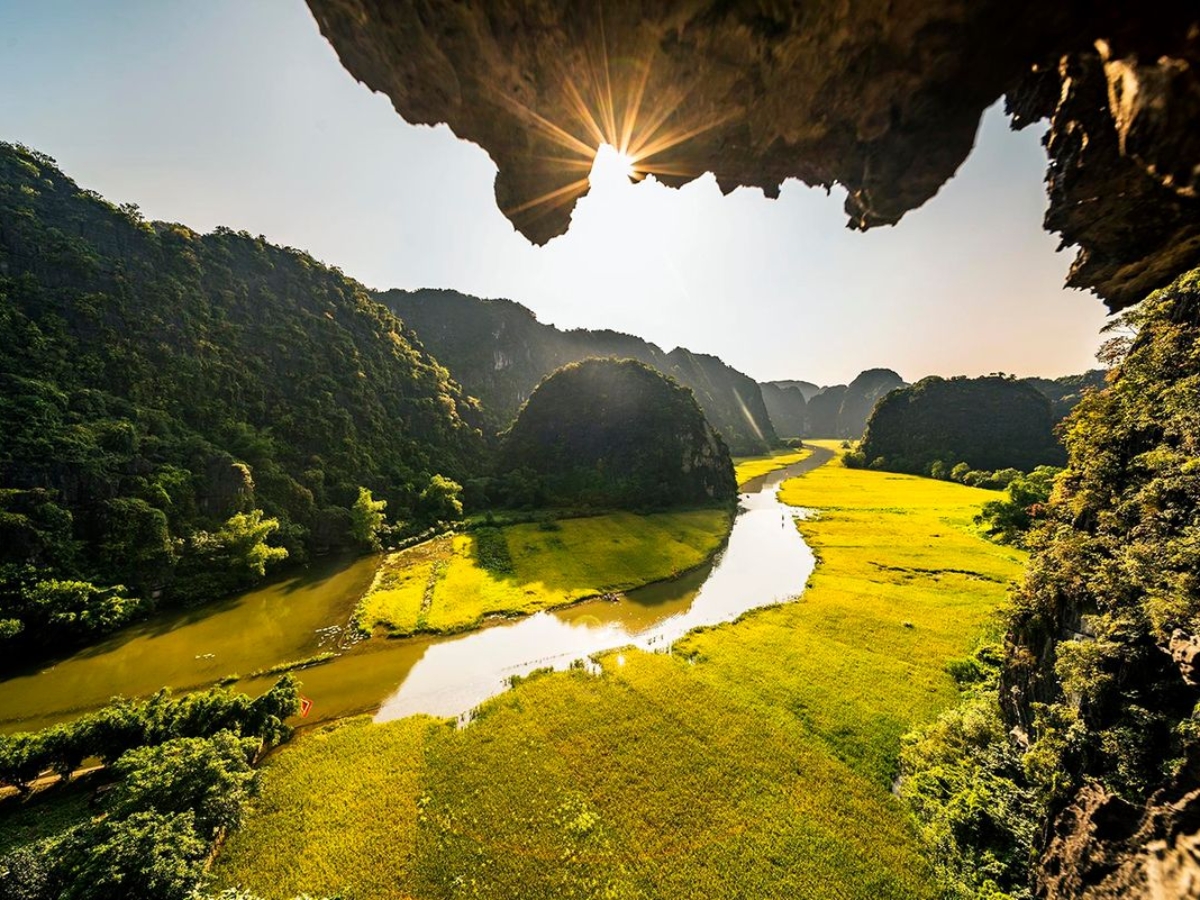
The scenery of Tam Coc Bich Dong is picturesque. (Source: Collected)
Additionally, visitors can combine their trip with a visit to Sun World Ha Nam tourist area – one of the most modern and attractive entertainment destinations in the North. The tourist area is built with a model combining a water park and indoor game zones, offering a rich variety of experiences for both children and adults. Visitors can challenge themselves with high-speed water slides, relax on the lazy river, enjoy traditional water puppet shows, or explore the unique cuisine of many regions in a vibrantly decorated space. After a journey of worship and heritage exploration in the ancient capital of Hoa Lu, Sun World Ha Nam is the perfect stop for visitors to rest, play, and fully enjoy their Ninh Binh trip.
The journey to visit the Temple of King Dinh Tien Hoang not only helps visitors learn about the glorious history of the nation but also brings a sense of peace amidst the sacred space of the ancient capital. From the moss-covered tiled roofs, intricately carved ironwood pillars to the resonant bells amidst the serene mountains, all evoke pride and reverence for the founding king. If you are looking for a destination that offers both cultural value and peaceful scenery to relax your soul, plan a visit to the Temple of King Dinh Tien Hoang, a place that preserves the essence of Vietnamese history and national spirit.


