




1. Sa Pa Plum – Renowned specialty of the Northwest mountainous region
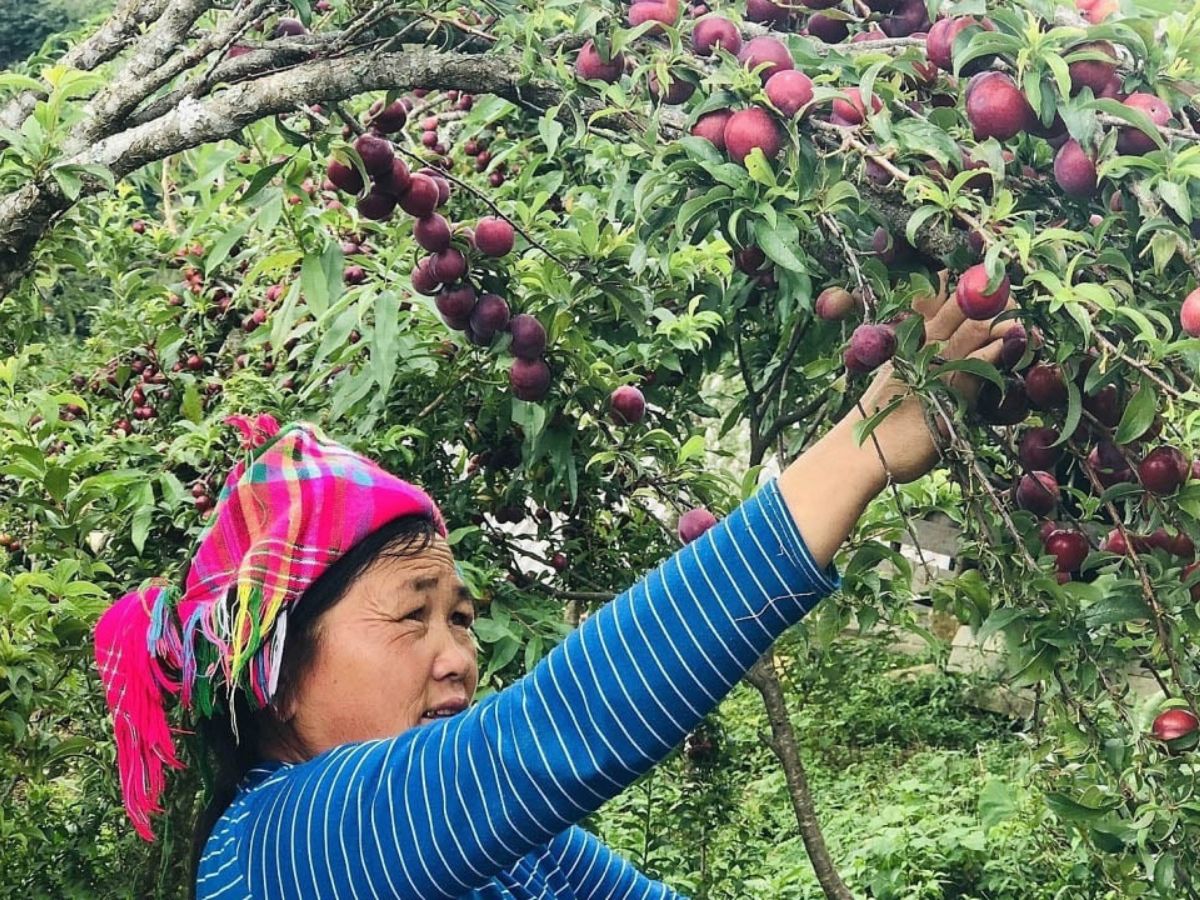
Sa Pa plums are a famous specialty of the Northwestern region. (Source: Collected)
Amidst the majestic mountains of the Northwest, Sa Pa plums have become a characteristic symbol of the highland summer. More than a century ago, the French, upon arriving in Sa Pa, brought temperate plum varieties, and since then, this fruit has taken deep root, integrating into the rural life of the region.
The origin of Sa Pa plums dates back to the early 20th century, when French colonists imported European temperate fruit tree varieties into Vietnam. Thanks to the year-round cool climate, well-draining rocky soil, and an altitude of over 1,500 meters above sea level, plum trees thrive. The H'Mong and Red Dao ethnic communities quickly learned cultivation techniques, transforming Sa Pa plums into a key economic crop for the region.
With the development of tourism since the 1990s, Sa Pa plums have gradually become a famous brand in Vietnamese cuisine. The plums have a natural, delicate sweetness, a slight tartness, and a distinctive aroma, along with a faint white bloom on the skin – a sign of freshness and quality.
Today, Sa Pa plums are not only a specialty to buy as gifts but also a cultural bridge between the mountains and the lowlands. Each plum season, visitors to Sa Pa not only enjoy the ripe, juicy fruit but also experience rural life and the traditional plum cultivation methods of the ethnic communities.
2. Identifying genuine Sa Pa plums
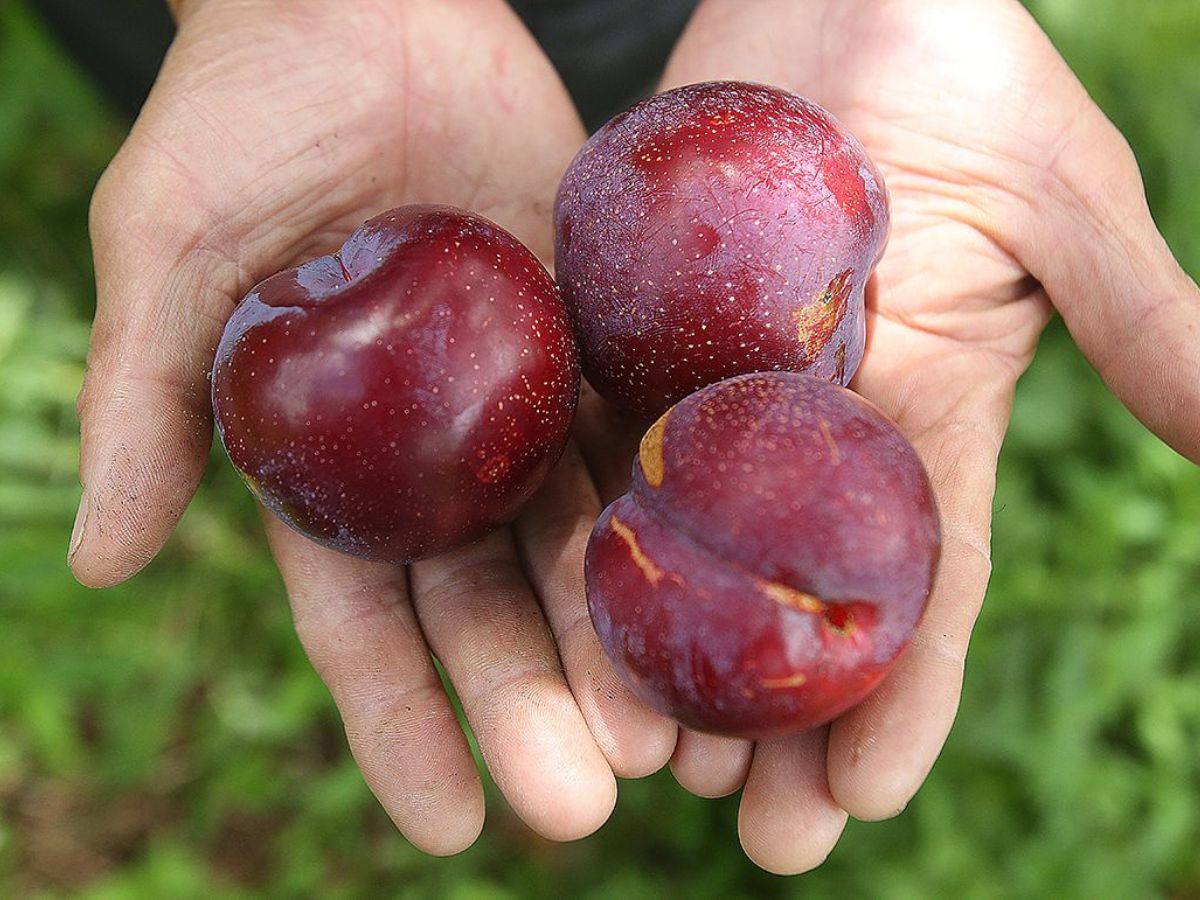
Sa Pa Plums have the characteristic flavor of the highlands. (Source: Collected)
Authentic Sa Pa Plums are distinguished by their natural shape, fine white powdery bloom, and characteristic sweet and crisp taste, helping visitors easily identify and fully enjoy the highland flavor. Knowing the peak harvest season from May to July will help you enjoy the freshest, most delicious plums, and plan for a complete picking and tasting experience.
2.1. Appearance and Flavor Characteristics
To distinguish genuine Sa Pa Plums, visitors should pay attention to their appearance and color. Mận hậu or Sa Pa purple plums typically have a diameter of 4–5 cm, are round or slightly elongated, with a dark purple or deep red skin that is naturally shiny, not overly smooth like industrial varieties.
The most distinctive feature is the light white powdery bloom on the skin, which helps preserve moisture and keep the fruit fresh longer. When held, Sa Pa Plums feel firm, neither too soft nor too hard. The flesh is pale yellow to deep yellow, thick, with a seed that separates easily. In terms of flavor, Sa Pa Plums are known for their rich natural sweetness, slight tartness, crispness, juiciness, and a distinctive aroma – a refreshing experience that lingers after tasting.
2.2. Sa Pa Plum Season 2026
Knowing the Sa Pa Plum season helps visitors plan their trips and enjoy the freshest fruit. In 2025, early plums begin to ripen from late April, with a slightly tart taste; the ideal time to enjoy the natural sweetness of the plums is from early May to late July.
Among the famous plum-growing areas, Ô Quý Hồ leads in quality and scale thanks to its mild climate and nutrient-rich soil. Tả Phìn and Lao Chải are also excellent choices for visitors who want to pick plums while exploring local culture. After July, most plums on the market are imported or grown elsewhere. Therefore, to enjoy authentic Sa Pa Plums, visitors should prioritize the May to July season and choose reputable vendors to ensure quality.
3. Distinguishing Sa Pa Plums from Chinese Plums
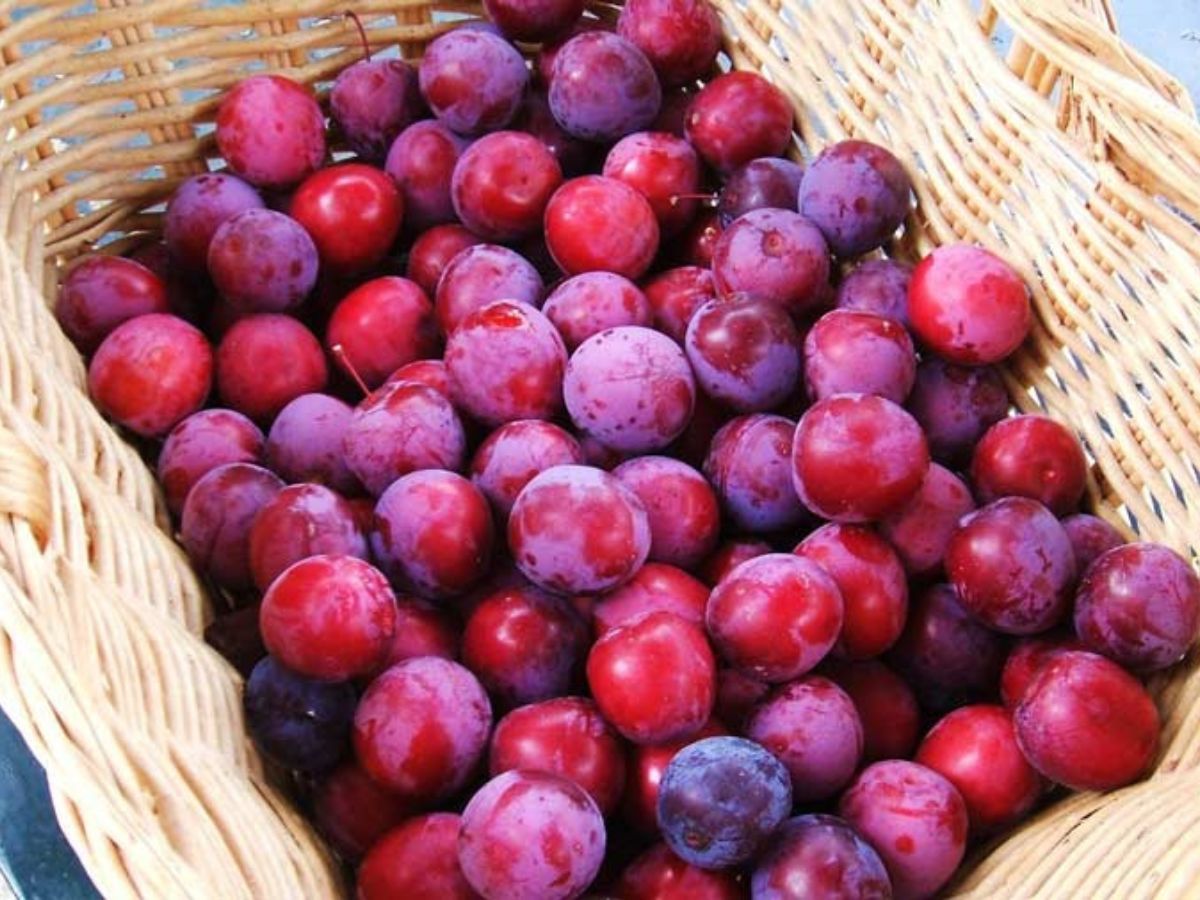
Sa Pa plums have a natural sweetness from the Northwest mountains. (Source: Collected)
Distinguishing Sa Pa plums from Chinese plums helps tourists and consumers choose fresh, delicious plums of the correct origin. By recognizing them through shape, color, flavor, and feel when held, you can easily avoid mistakenly buying poor-quality imported plums.
3.1. Distinguishing by appearance and feel
In today's market, distinguishing genuine Sa Pa plums from plums imported from China is very important. Sa Pa plums are usually medium-sized, with irregular shapes, reflecting their natural development. In contrast, Chinese plums are often large, uniform, shiny, visually appealing but less natural.
In terms of color, Sa Pa plums stand out with a deep purple or dark red color accompanied by a natural white powdery bloom, while Chinese plums have a bright red or vibrant purple color, a smooth shiny skin, and no powdery bloom. When cut open, the flesh of Sa Pa plums ranges from light yellow to dark yellow, firm and crisp, whereas Chinese plums typically have light yellow flesh, are soft, and have less natural aroma.
Flavor and shelf life also differ significantly. Sa Pa plums are delicately sweet, slightly tart, and mildly fragrant, and can be kept for 3–4 days at room temperature. Conversely, Chinese plums are often bland, less fragrant, and less crisp but can be preserved longer due to the use of preservatives, lasting for 1–2 weeks.
3.2. Practical tips to avoid buying the wrong Sa Pa plums
When choosing Sa Pa plums, prioritize those that fit comfortably in your hand, have skin that is not too smooth, and possess a natural white powdery bloom. Avoid selecting plums that are too large, overly shiny, or look "too perfect." When held, genuine Sa Pa plums often feel firm and heavy for their size.
Natural aroma is also an important factor. Sa Pa plums emit a gentle fragrance, while imported varieties often have little to no smell or a faint chemical odor. It is advisable to choose plums in season, from May to July, to ensure sweetness and freshness, and to avoid off-season fruits.
Regarding price, Sa Pa plums are usually more expensive than imported ones, especially at the beginning of the season. Do not opt for unusually cheap plums to avoid low-quality products. It is best to buy directly from the orchard, reputable specialty stores, or points of sale with controlled origins. When buying online, prioritize suppliers with a clear address in Sa Pa and numerous positive customer reviews.
4. Experience of picking Sa Pa plums at the garden 2026
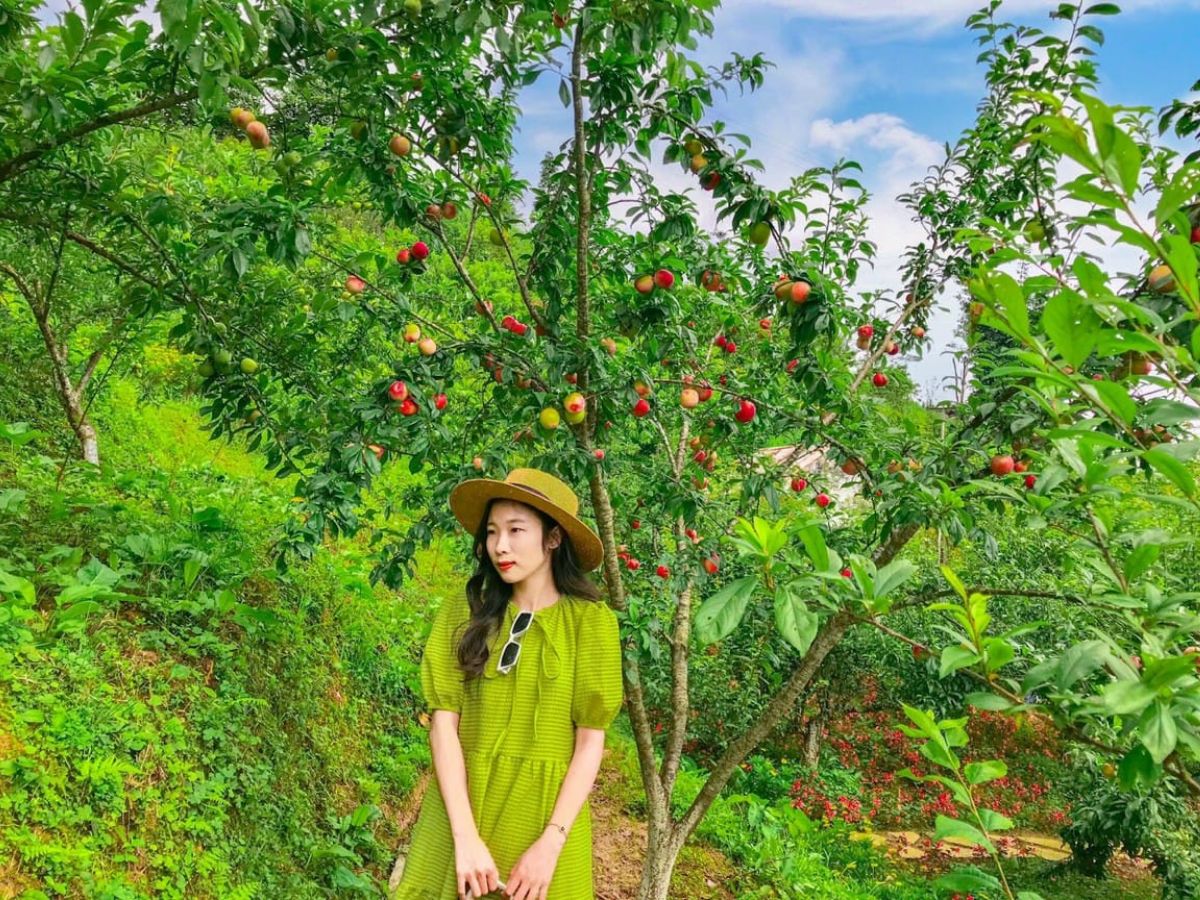
Plum picking experience, immerse yourself in the beautiful nature of Sa Pa. (Source: Collected)
The plum picking activity in Sa Pa not only offers an experience of connecting with nature but also a chance to enjoy the taste of fresh fruit right in the garden. With some experience and tips on fruit selection, preservation, and attire, visitors will have a safe, convenient, and memorable plum picking journey.
4.1. Top Sa Pa plum gardens open for visitors and plum picking
Direct plum picking activity in the garden is becoming an attractive experience every summer in Sa Pa.
The O Quy Ho plum garden stands out with its large area and delicious plum quality, located on the road connecting Sa Pa – Lai Chau. Visitors can not only pick plums but also enjoy the majestic mountain scenery. The entrance fee is about 30,000 – 50,000 VND/person, including guidance on plum picking and tasting in the garden.
Plum gardens in Ta Phin and Lao Chai offer an experience of connecting with local culture. Visitors can pick plums while learning about the customs and daily life of the Red Dao and H'Mong people. The entrance fee here ranges from 20,000 – 40,000 VND/person, providing a close and authentic feeling.
Some gardens also collaborate with travel companies to offer package tours, including transportation, tour guides, local specialty lunches, and ideal photo spots. Tour prices range from 200,000 – 400,000 VND/person depending on the program.
4.2. Itinerary and actual experience when picking plums in Sa Pa
The plum picking journey in Sa Pa usually starts early in the morning to avoid the harsh sun and enjoy the cool mountain air. After booking in advance, you can travel by motorbike, private car, or join a group. Upon arrival at the garden, the owner or guide will introduce the plum varieties, how to identify ripe fruit, and the correct picking techniques.
Plum picking is not just about harvesting but also a chance to relax amidst nature. Visitors can stroll through the garden, select ripe, juicy plums, and enjoy them under the cool green trees. The scenery with birdsong and rolling mountains is also an ideal place to capture memorable photos.
The plum picking experience can be combined with a visit to Sun World Fansipan Legend, conquering the "roof of Indochina," visiting Cat Cat village to learn about traditional stilt houses, or visiting the Sa Pa stone church. Many tourists choose a full day: picking plums in the morning, exploring Fansipan in the afternoon, and strolling through the old town in the evening.
4.3. Notes and tips for participating in Sa Pa plum picking tours
To have a complete plum picking experience in Sa Pa, thorough preparation regarding attire, tools, and picking methods is essential. Small tips on fruit selection, preservation, and packaging will help visitors fully enjoy the fresh, sweet, and crisp taste characteristic of highland plums.
Preparing suitable attire is important. You should wear long pants, long-sleeved shirts, shoes with good grip, and a wide-brimmed hat for sun protection. It is advisable to bring drinking water, sunscreen, insect repellent, and thin gloves to protect your hands while picking plums.
When picking, gently twist the fruit before detaching it from the branch, avoiding strong pulling. Choose fruits that are ripe, dark in color, and slightly soft to the touch for the best taste. After picking, let the plums dry from dew before packing, use a styrofoam box lined with soft paper or a mesh bag, arrange the plums in layers, and avoid stacking them.
If traveling a long distance, prioritize plums that are ripe but not too soft to minimize bruising. It is best to consume them within 3-4 days of picking to fully appreciate the sweet, tart, and characteristic aroma of Sa Pa plums.
5. Sa Pa Plum Prices 2026
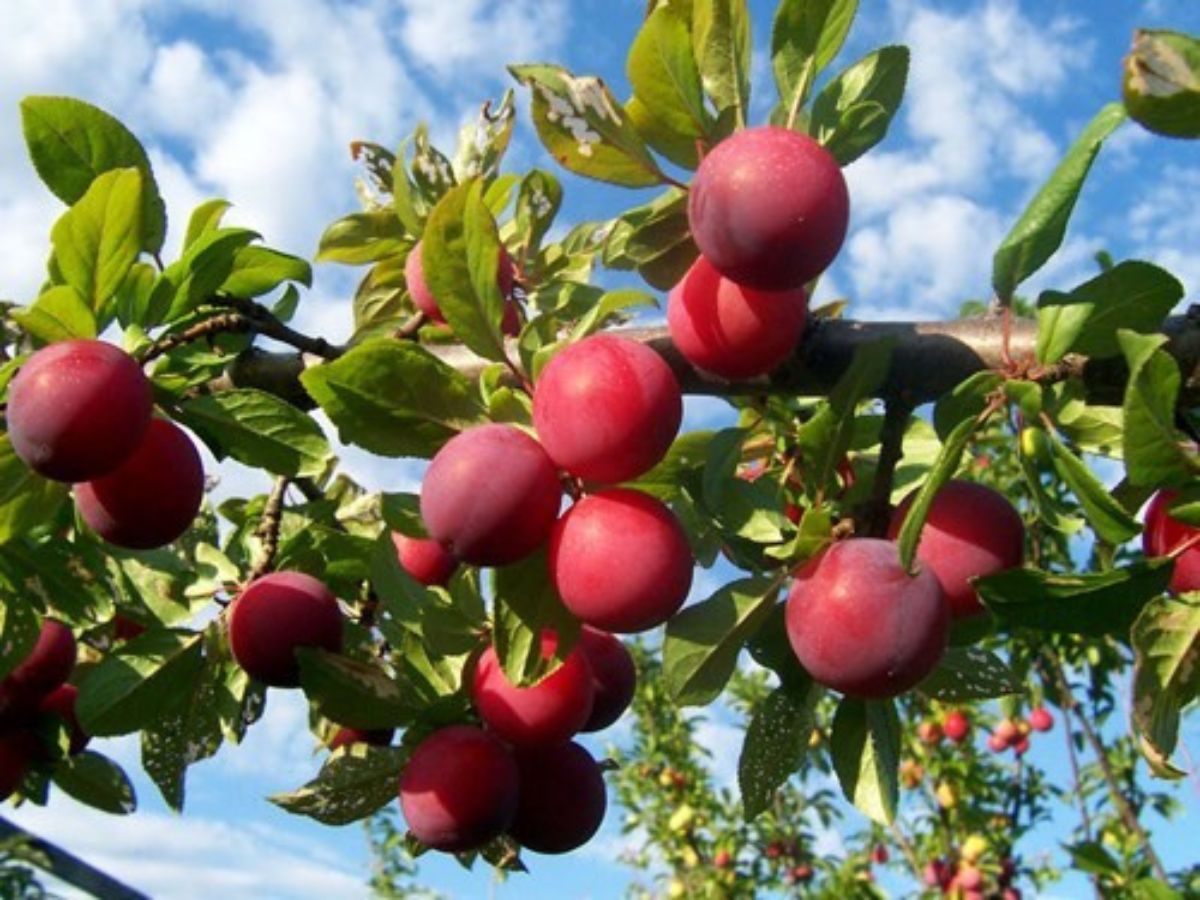
Large, juicy plums from Sa Pa, retaining the natural sweetness of the mountains. (Source: Collected)
The price of Sa Pa plums in 2025 fluctuates according to season, quality, and type of plum.
At the orchards, fresh plums usually cost 25,000 – 40,000 VND/kg, depending on the variety and time of season. Early season (May), plum prices are higher due to limited production and high visitor numbers; in June – July, prices are more stable when supply is abundant.
At central markets like Cau May Market (Sa Pa), common plums cost 35,000 – 60,000 VND/kg for regular types. Specifically, premium Sa Pa plums (Type A), large size, high quality, can cost up to 70,000 – 100,000 VND/kg, especially at the beginning of the season. Retail prices at markets are usually higher than buying directly from orchards due to transportation and preservation costs.
When buying plums online and shipping to major cities, prices range from approximately 45,000 – 80,000 VND/kg, excluding delivery fees.
Products with origin certificates or traceability tags are usually priced 10,000 – 15,000 VND/kg higher than plums with unclear origins. Prices may vary by year, plum quality, and supplier reputation.
6. Cultural Stories and Imprints of Highland Specialties
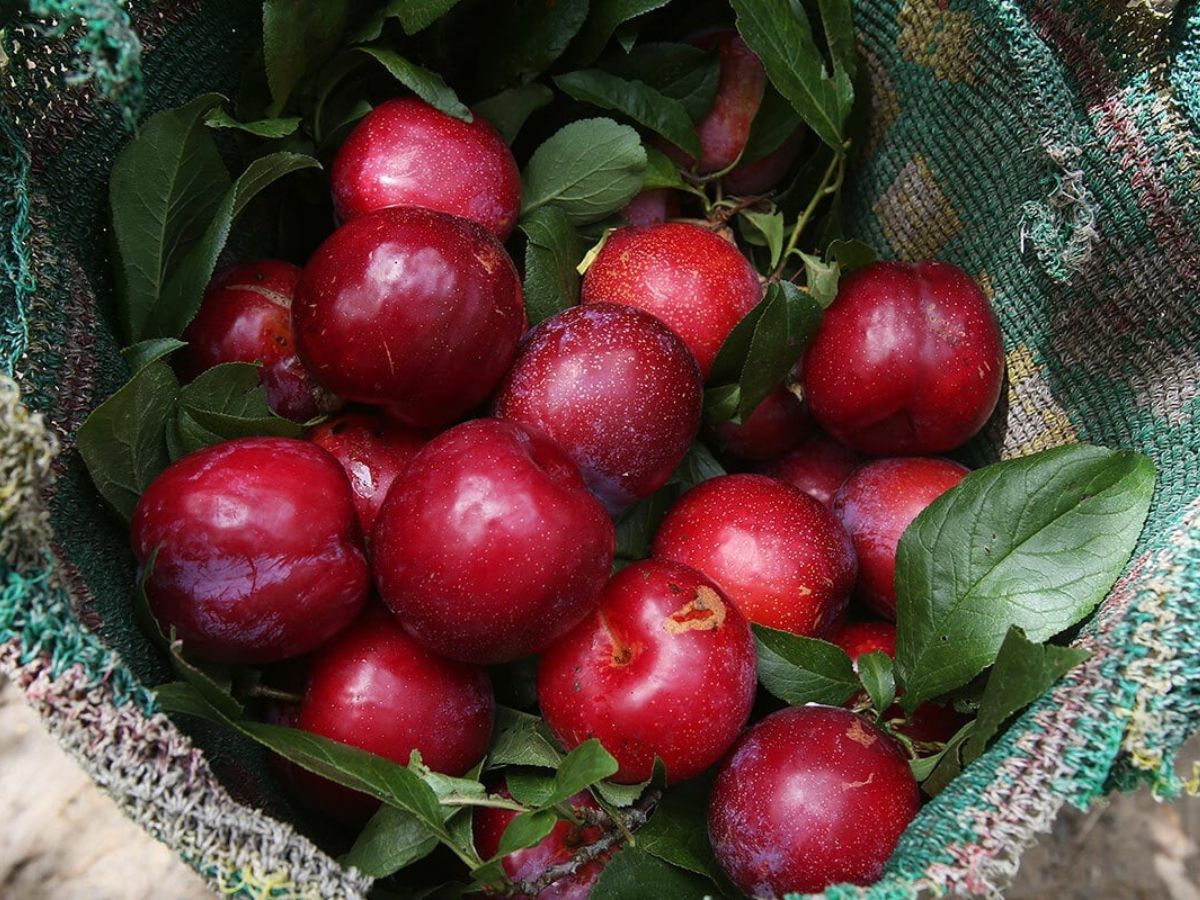
Sa Pa Plum – wonderful flavor, spiritual cultural symbol of the highlands. (Source: Collected)
In the ethnic communities of the Northwest, Sa Pa plums are not just delicious fruits but also carry deep spiritual cultural values. When the plum season is in full bloom, many villages organize ceremonies to worship heaven and earth, praying for a bountiful harvest. Selected plums are often used to offer to ancestors, to welcome distinguished guests, demonstrating the tradition of hospitality and gratitude to their roots.
The story of Sa Pa plum growers also reflects development linked to tourism. As shared by Mr. Sung A Trang, a H'Mong person in Lao Chai village, his family used to sell plums to traders at low prices. But since opening their garden to welcome visitors and for on-site plum picking, their income has tripled, while tourists get to experience and learn about the unique culture and customs of the local community.
Today, Sa Pa plums have become a symbol of agricultural products from the Northwest highlands, contributing to the promotion of tourism and the brand of Vietnamese specialties. From a product serving the local area, Sa Pa plums are now sought after by domestic and international tourists, while also inspiring the development of other specialty products like Sa Pa peaches and Sa Pa pears, helping the highland agricultural brand become increasingly sustainable and prominent.
7. Suggested 1-day Sa Pa Plum Season Experience Itinerary

Travel experience at Sun World Fansipan Legend. (Source: Compilation)
Discovering the plum season in Sa Pa in one day offers an experience of immersing yourself in beautiful nature and unique highland culture. From picking plums at the garden, enjoying local specialties to admiring the sea of clouds on Fansipan peak, the journey will leave unforgettable memories.
A complete journey to discover the Sa Pa plum season should start at 6:00 AM, when the fresh air and gentle morning sunlight fill the mountains and forests. In the morning, travel to the plum gardens in O Quy Ho or Ta Phin, participate in direct plum picking at the garden and enjoy fresh fruit. Plum picking lasts about 2-3 hours, allowing you to experience selecting and picking, as well as capture beautiful photos amidst the majestic natural scenery.
At noon, visit nearby villages to enjoy Sa Pa specialties such as grilled mountain pig, salmon, wild vegetables, and bamboo-tube rice. This is the ideal time to chat and learn about the lives and customs of the local people. Many families also share traditional plum growing and care techniques, offering a memorable cultural experience.
In the afternoon, you can visit Sun World Fansipan Legend, experience the modern cable car system to Fansipan peak to admire the floating sea of clouds and rolling mountains. When night falls, stroll around Sa Pa ancient town, visit the night market to buy fresh plums and plum-based products like jams and syrups as gifts for family and friends, concluding a complete and memorable day of experience.
8. Experience preserving and transporting Sa Pa plums to keep their delicious taste
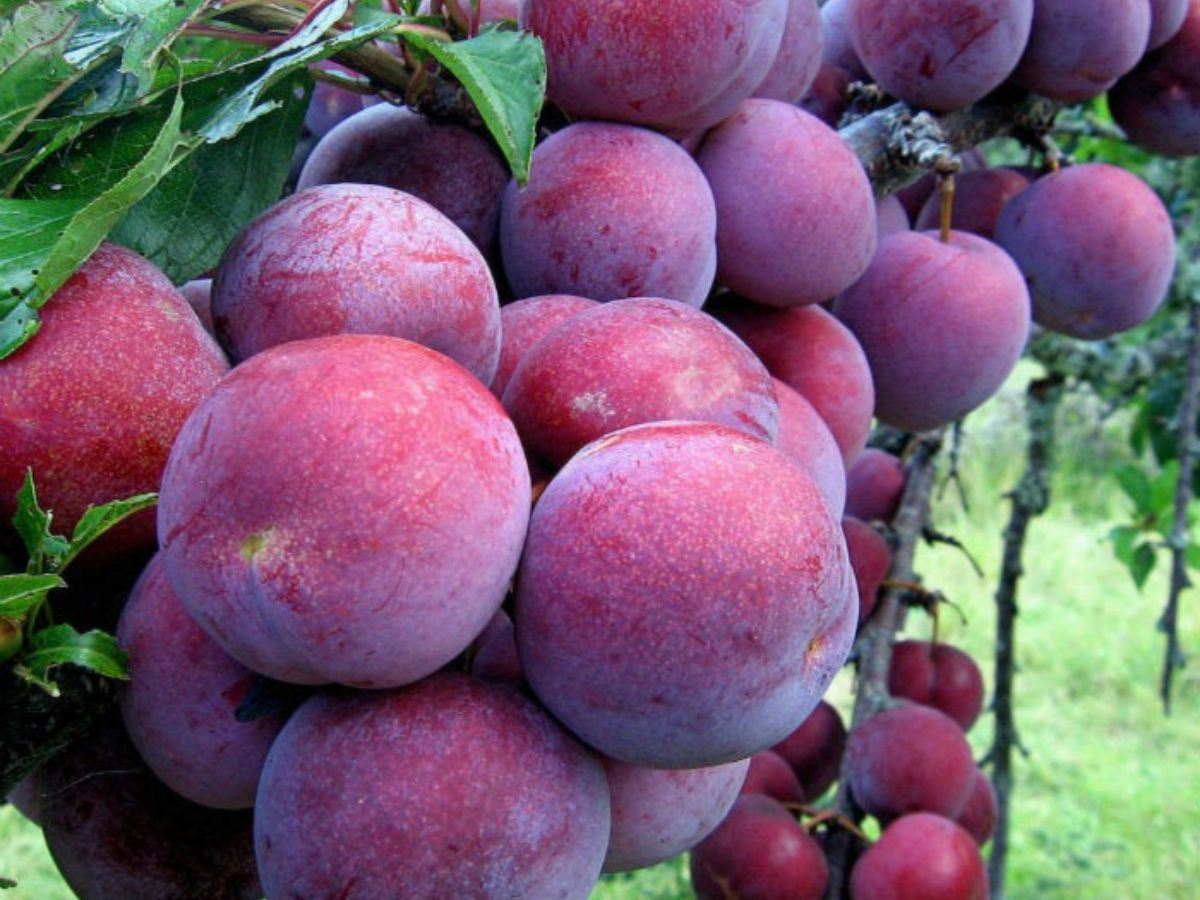
Sa Pa plums picked from the garden to bring home as gifts. (Source: Collected)
To ensure Sa Pa plums retain their fresh flavor when brought home, tourists need to pay attention to careful selection and packaging. Proper preservation during transportation and at home will help the plums retain their characteristic crispness and aroma, for a complete tasting experience.
To ensure Sa Pa plums retain their freshness when brought home, the selection and packaging process is crucial. Choose firm fruits that are not fully ripe, without bruises or cracks, and absolutely do not wash them before packaging to prevent spoilage.
An effective preservation method is to wrap each fruit in soft paper or newspaper, then arrange them in a styrofoam box or carton with cushioning. Soft materials should be placed between layers of plums to reduce impact during transportation. If sending plums by plane, opt for checked baggage and label it "Fragile" for careful handling.
Upon arrival home, store the plums in the refrigerator's cool compartment (7 – 10°C) and consume them within 4 – 5 days. Before eating, wash each plum and gently wipe it with a clean cloth. Sa Pa plums can be enjoyed fresh or processed into smoothies, salads, jams, but avoid exposing them to direct sunlight or high temperatures to maintain the crispness and unique flavor of this highland specialty.
The Sa Pa plum season is a wonderful time to enjoy fresh fruit while exploring the poetic mountain scenery. With this detailed travel guide for the Sa Pa plum season, tourists can plan their plum-picking experience, visit orchards, take photos, and savor the unique highland cuisine. Add the plum season itinerary to your travel plans to fully enjoy the natural beauty and unforgettable experiences in Sa Pa.


