




1. Sin Chai Village: "The hidden gem" of Sa Pa
1.1. Where is Sin Chai Village? Location and landscape characteristics
Located about 5 km from the center of Sa Pa town, Sin Chai village is known as the largest village in the region. Located right next to the famous Cat Cat village, the road leading to Sin Chai has only one way – to get to the town, visitors must go through Cat Cat and then follow the mountainside to arrive.
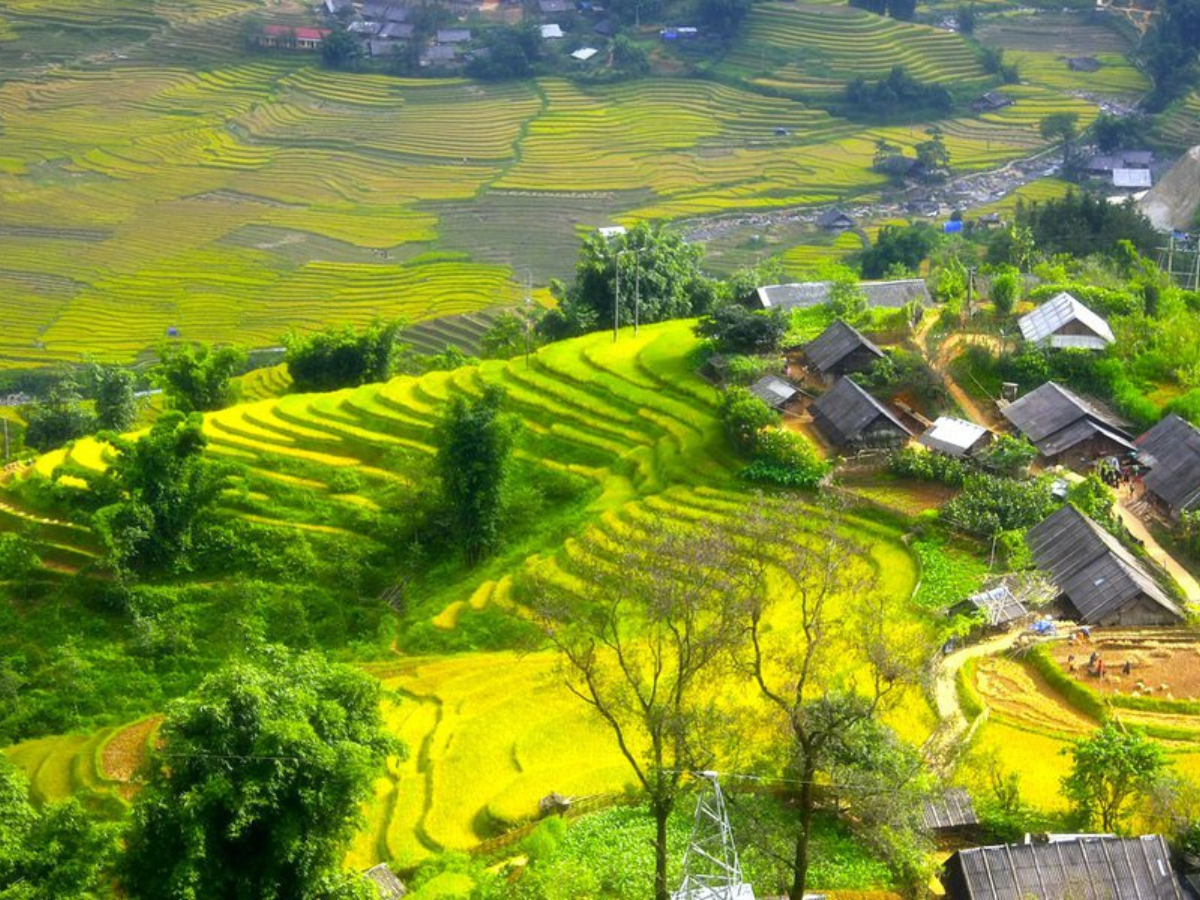
Sin Chai Village - a "hidden gem" amidst the mountains and forests of Sa Pa. (Source: Collected)
The village lies at the foot of the majestic Hoang Lien Son mountain range, year-round shrouded in mist. The people here mainly engage in farming and animal husbandry, their lives closely tied to rice fields, wooden houses, and a simple rhythm of life amidst nature.
Currently, Sin Chai is home to about 1,600 H'Mong ethnic people, so from the moment you arrive, you will clearly feel the breath of H'Mong culture woven into every detail, from the rammed earth house architecture, colorful brocade costumes, to the sound of the khen flute and children's laughter echoing through the mountains.
What makes Sin Chai's unique charm is its rare authenticity. The village has been little affected by mass tourism, thus retaining its slow, tranquil pace of life. Amidst the ethereal mountain mist and fog, Sin Chai appears as a genuine and peaceful slice of Sa Pa – rustic, beautiful in its own unique way, without needing embellishment.
1.2. Culture of the Black H'Mong in Sin Chai Village
In Sin Chai village, about 1,600 Black H'Mong people live together amidst the landscape of the Hoang Lien Son mountains. They are one of the largest ethnic minority communities in Sa Pa, steadfastly preserving their customs, traditions, and traditional way of life through generations.
The wooden pơ mu houses are a familiar sight in Sin Chai. The roofs are covered with wood or palm leaves, with a sturdy structure to withstand the cold highland climate. Houses are usually square or rectangular, designed to receive sunlight, block wind, and retain warmth. In the center of the house, there is always a warm hearth – not just for cooking or heating, but also the heart of the home, where the whole family gathers and places their spiritual beliefs.
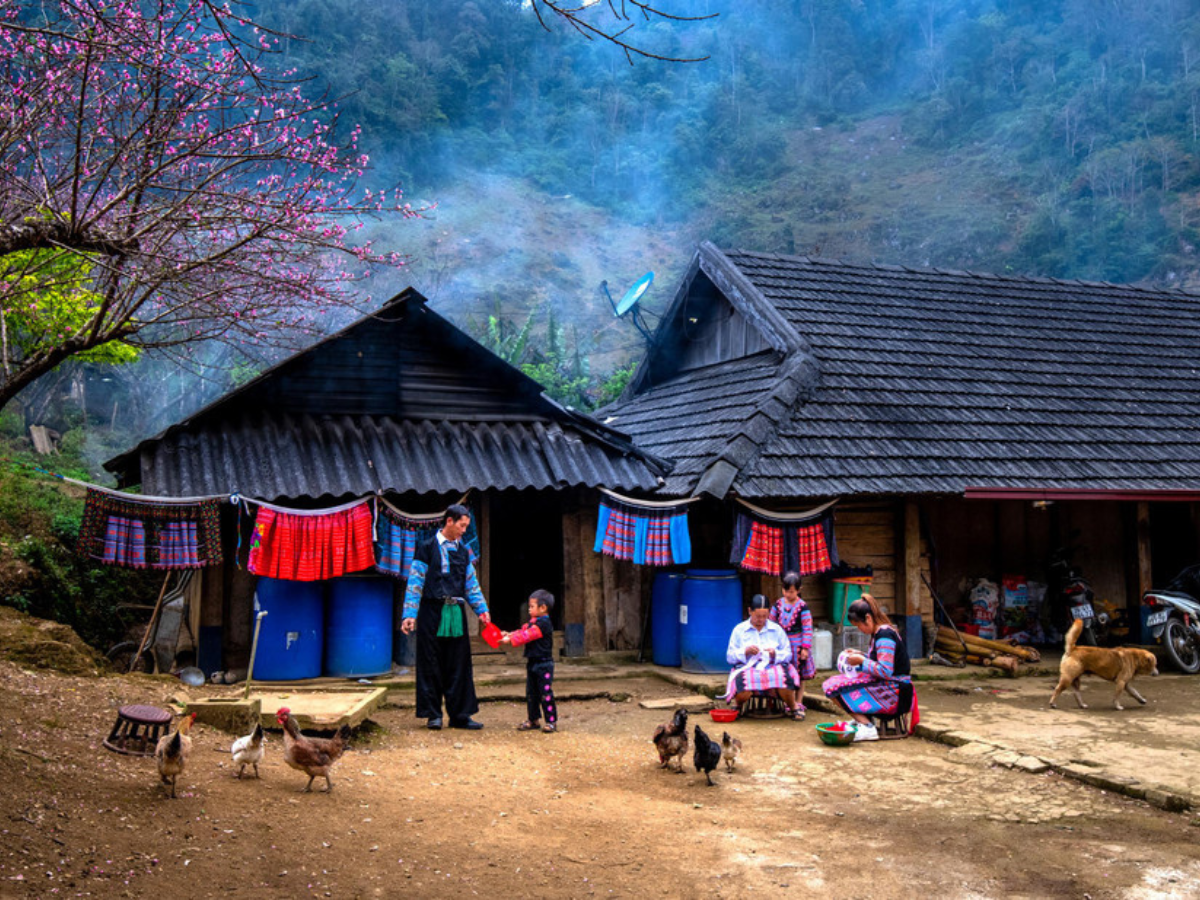
Pơ mu wooden house of the Black Hmong people - an architectural imprint amidst the mountains and forests of the Northwest. (Source: Collected)
Life here remains closely tied to farming and animal husbandry. The people cultivate rice, corn, and cardamom on terraced fields left by their ancestors. Black Hmong women are particularly skillful; they grow flax, spin yarn, weave fabric, dye it with indigo, and meticulously sew traditional costumes. The brocade pieces created are not just products of labor but also works of art deeply imbued with ethnic cultural identity.
What is commendable about the Black Hmong community in Sin Chai is their awareness of heritage preservation. Brocade products are rarely sold, usually only used as dowry or gifts within the clan. Their language, rituals, customs, and traditional costumes are also strictly taught to the younger generation.
2. How to get to Sin Chai Village
2.1. Choosing transportation from Hanoi to Sa Pa
The most popular means of transport from Hanoi to Sa Pa is by bus, with frequent departures from My Dinh, Gia Lam, and Nuoc Ngam bus stations. The average travel time is 5-6 hours, with ticket prices ranging from 270,000 to 400,000 VND depending on the type and time of travel.
Tourists can also take an overnight train on the Hanoi - Lao Cai route. This option offers a relaxing experience amidst the mountainous terrain, with a travel time of about 8 hours. Upon arrival at Lao Cai station, you will continue to Sa Pa by bus or taxi, which takes about another 1 hour. Train ticket prices range from 180,000 to 700,000 VND depending on the seat class and cabin.
If you are using a private car, you can drive yourself along the Noi Bai – Lao Cai expressway, then follow National Highway 4D to Sa Pa. The journey takes about 5-6 hours, allowing for convenient stops to rest, enjoy the scenery, or savor local delicacies along the way.
2.2. Traveling from Sa Pa center to Sin Chai Village
The distance from Sa Pa center to Sin Chai Village is about 5-7 km, offering various transportation options and experiences. Motorbikes are preferred by many for their flexibility, allowing easy stops to admire the scenery and take photos on the winding mountain roads.
The trekking route from the town, passing through Cat Cat village to Sin Chai Village, is an option for those who love physical activity and experiencing authentic mountain life. The walk takes about 30 minutes, passing through terraced fields and meeting local people.
Tourist electric vehicles are suitable for small groups, convenient, and environmentally friendly, but require advance booking and depend on the overall tour schedule.
3. Unmissable experiences in Sin Chai Village
3.1. Trekking and checking in at the terraced fields in Sin Chai
The trekking route Sa Pa – Cat Cat – Sin Chai, approximately 7 km long, is considered one of the most rewarding journeys in the highlands. The small path winds along the mountainside, crossing terraced fields that stretch to the horizon. Along the way, you will encounter babbling streams and wooden houses nestled peacefully in the clouds.
The two most beautiful times to admire the terraced fields in Sin Chai are the water-flooding season (April–June) and the ripe rice season (September–October). During the water-flooding season, the fields shimmer with the sky's reflection, mirroring the blue clouds, creating a dreamy, picturesque scene. In the ripe rice season, the entire village turns a brilliant golden yellow, making everyone want to linger and admire the view.
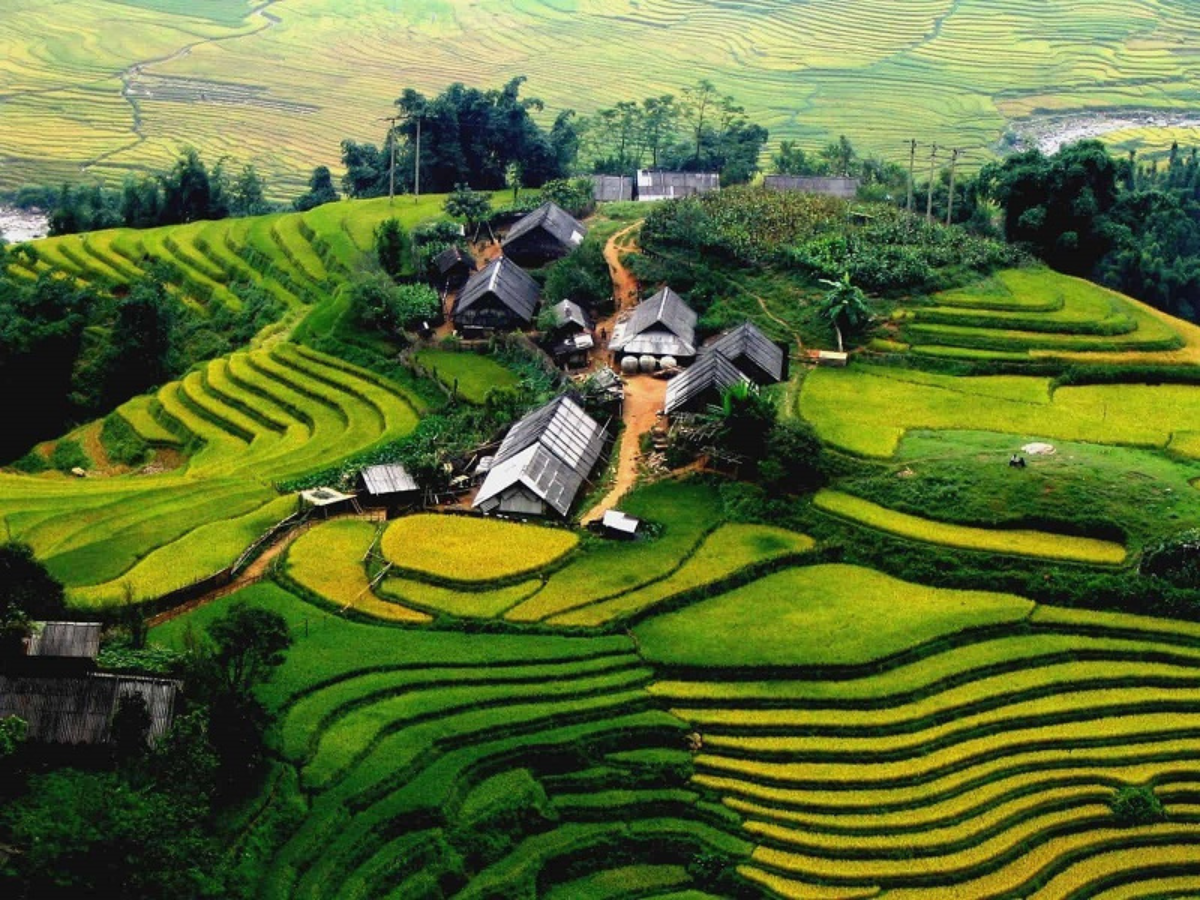
Terraced fields in Sin Chai - a golden season painting amidst the clouds. (Source: Collected)
A small tip for trekking enthusiasts: prepare non-slip shoes, drinking water, and a camera so you don't miss any moment. The "golden" time for photography is early morning, when mist still lingers on the mountains, or late afternoon, when sunlight pierces through the fields, casting a captivating warm glow over the landscape.
3.2. Participate in festivals and experience the Mong Den culture
The Mong Den people in Sin Chai still maintain many traditional festivals throughout the year, most notably the traditional Tet (December of the solar calendar) and the Gau Tao Festival (January of the lunar calendar). On these days, the village is filled with the sounds of khen flutes, dances, folk games, and colorful traditional dresses, making the atmosphere burst with life amidst the mountains and forests.
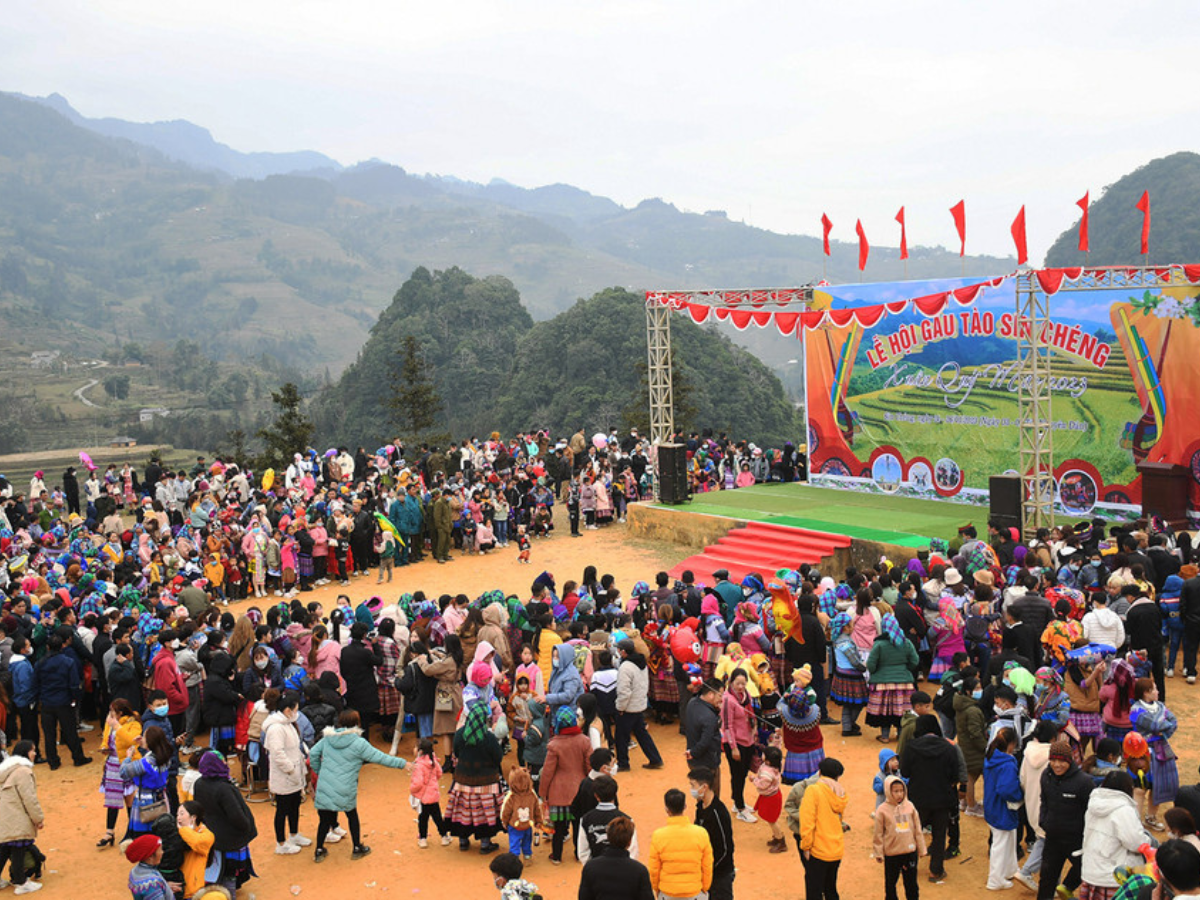
Vibrant atmosphere at the Gau Tao festival of the Mong ethnic group. (Source: collected)
In Sin Chai, you can experience linen weaving, indigo dyeing, and brocade weaving with the Black Mong women. They will meticulously guide you through each step, from processing flax fibers to producing a complete piece of fabric. Especially, trying on traditional costumes and hearing about the meaning of the patterns is an unforgettable cultural experience.
Not only festivals or costumes, but every detail in daily life - from the hearth, food preparation methods, to daily rituals - reflects the deep culture of the Black Mong people. If you come with an open and respectful spirit, the local people will welcome you with sincere and warm smiles.
3.3. Sin Chai Village Cuisine
The cuisine in Sin Chai carries the strong flavors of the mountains and forests, rustic yet incredibly distinctive. Thang Co is the most famous traditional dish, cooked from horse meat and offal with many secret spices. Its rich aroma, fatty taste, and mild spiciness make anyone who tries it remember it forever.
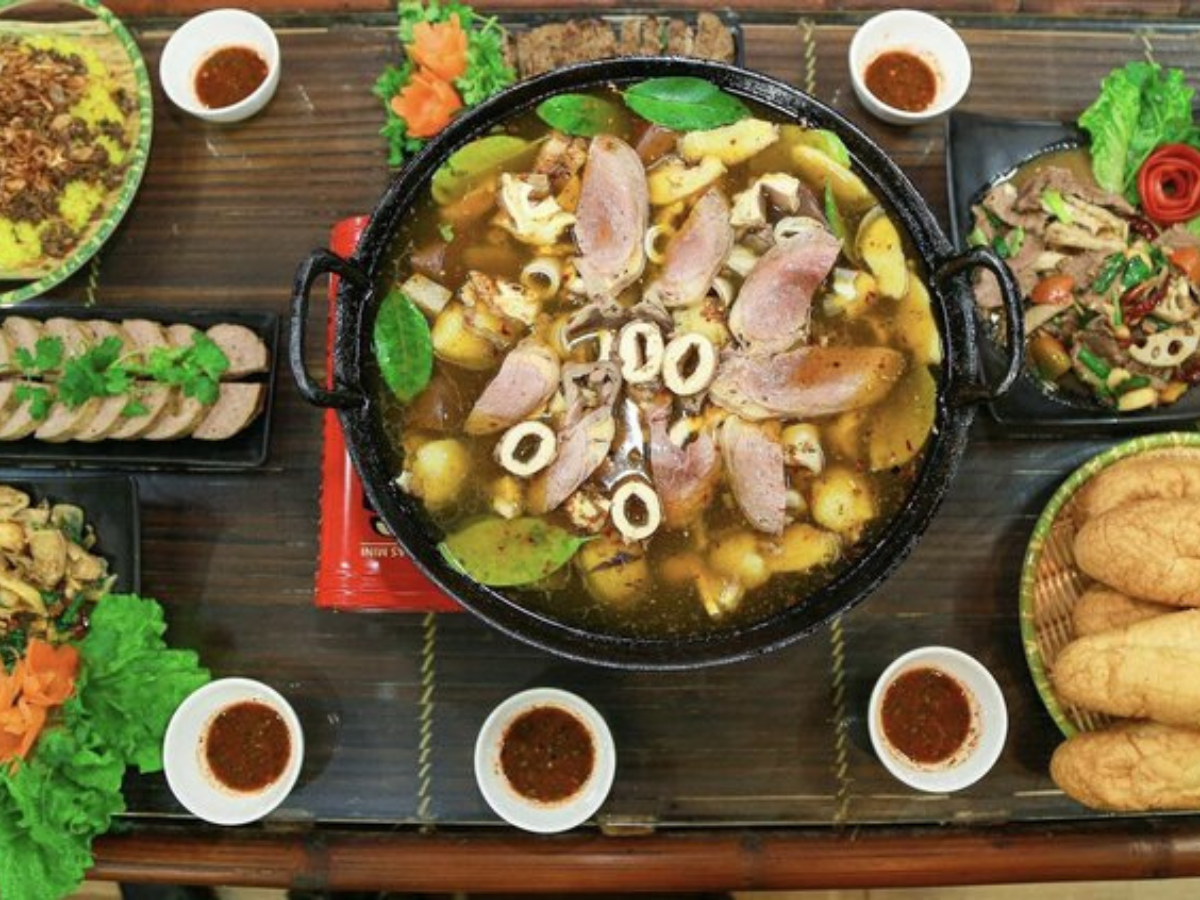
Thang co specialty offers visitors a novel taste experience. (Source: Collected)
Besides that is men men - a steamed corn flour dish, golden, soft, chewy, with a delicate aroma, usually eaten with wild vegetables or grilled meat. Or grilled stream fish, fresh fish caught right from the stream around the village, grilled over red embers with an attractive aroma.
And of course, corn wine is the "soul" of the local cuisine. A cup of spicy corn wine not only warms the hearts of visitors but also serves as a bridge in every gathering and festival. You can enjoy these characteristic dishes at local homes, weekend markets, or homestays - where meals are not just about food, but also about the cultural stories of the Black Hmong people in the heart of Sin Chai.
4. Suggested Itinerary for Exploring Sin Chai Village 3 Days 2 Nights
- Day 1:
After arriving in Sa Pa, start your trip by visiting Cat Cat village - a place that preserves many characteristic cultural aspects of the Hmong people. From here, you can trek further into Sin Chai Village, a path of about 5–7 km with majestic terraced fields and mountain scenery.
In the afternoon, choose to stay at a homestay in the village to feel the slow pace of local life. When the sun has softened, you can stroll among the terraced fields, chat with locals, or listen to interesting stories about the customs, traditions, and life here.
- Day 2:
Wake up early to welcome the dawn and hunt for clouds, witnessing the moment when the sky and earth of Sin Chai blend with clouds, mountains, and the morning sun. After breakfast, you can experience weaving, indigo dyeing, or learn to make brocade with the Black Hmong women. If you visit during a festival, don't miss the chance to immerse yourself in the Gau Tao Festival or traditional Tet, where the sounds of flutes, drums, and dances fill the village.
At noon, enjoy a rustic meal with thang co, men men, wild vegetables, and corn wine. In the afternoon, visit the lush cardamom gardens, then relax in the fresh, cool air amidst the mountains and forests.
- Day 3:
The journey concludes with an unforgettable experience: conquering the "roof of Indochina". The cable car system of Sun World Fansipan Legend will take you through seas of white clouds, leading to an overwhelming emotion when you touch the sacred milestone.
Before leaving Sa Pa, you can wander around the town center, buy some brocade items or specialties as souvenirs. If you have time, visit the lush Muong Hoa Valley or the majestic Silver Waterfall, and in the evening, don't forget to experience the Sa Pa love market - where flute melodies call out to you amidst the night mist.
A trip combining the pristine beauty of Sin Chai Village and the modern destinations of Sa Pa will surely bring you an emotional journey.
5. Experience and tips when traveling to Sin Chai Village
5.1. Prepare clothes and personal belongings
Mountain weather can change quickly, so pack warm clothes and raincoats. Sturdy trekking shoes will make your movement safer and more comfortable. Prepare a compact backpack and a personal water bottle to make trekking lighter and more mobile.
Some electronic items like power banks are very useful as electricity in the village can be unstable at times. Make sure your camera or phone is always ready to capture beautiful moments. Don't forget to bring cold medicine and pain relief patches in case of need.
5.2. Notes on culture and customs when entering the village
When visiting local homes, you should ask permission from the host to show respect for customs. Do not arbitrarily touch sacred objects or the kitchen area – these are spaces with special meaning for the Hmong people. Taking photos with children and the elderly also requires prior consent.
A friendly attitude and polite greetings will help you quickly integrate into the village. Please be mindful of environmental protection, do not litter; maintain quietness and respect the living space of the local people when visiting Sin Chai Village.
5.3. Tips for taking beautiful photos and checking in at Sin Chai Village
Sunrise or sunset moments offer the best light for memorable photos in Sin Chai. The ripe rice season (September to October) and the water-flooding season (April to June) bring two completely different types of scenery, each with its own charm.
Ideal spots for photography include high vantage points overlooking the entire village, terraced fields interspersed with small streams, or traditional stilt houses hidden amidst seas of clouds. Be patient waiting for the right lighting conditions and cloud formations to get a beautiful photo album in Sin Chai.
Sin Chai Village in Sa Pa is a promising destination offering many experiences for those who wish to explore the natural beauty and unique culture of the Black Hmong people. Be well-prepared for your trip and don't miss the opportunity to discover this "hidden gem" in the Northwest mountains during your journey to Sa Pa.


