




1. Introduction to Phu Quoc Prison
Amidst the azure beaches and lush primeval forests of Ngoc Island, Phu Quoc Prison stands as a vivid testament to history. This place was once a "hell on earth" imprisoning tens of thousands of revolutionary soldiers during the war resistance period. Although more than half a century has passed, the walls, iron bars, and tiger cages still bear the marks of the painful yet resilient days of the Vietnamese nation. Today, the relic is not only a famous tourist destination but also a place for every child of Vietnam to reflect, remember, and express gratitude to previous generations.
1.1. Where is Phu Quoc Prison?
Phu Quoc Prison is located at 350 Nguyen Van Cu Street, Phu Quoc Special Administrative Region, An Giang Province. From the old center of Duong Dong (now Phu Quoc Special Administrative Region), visitors travel about 28 km to the south, taking approximately 30-40 minutes by motorbike or car. The road to this place is very easy to travel, running along the coast with the peaceful scenery of fishing villages and shady coconut trees. Near the relic site, there are also several other famous attractions such as Sao Beach, Ho Quoc Pagoda, and An Thoi Port, so visitors can combine sightseeing in the same itinerary.
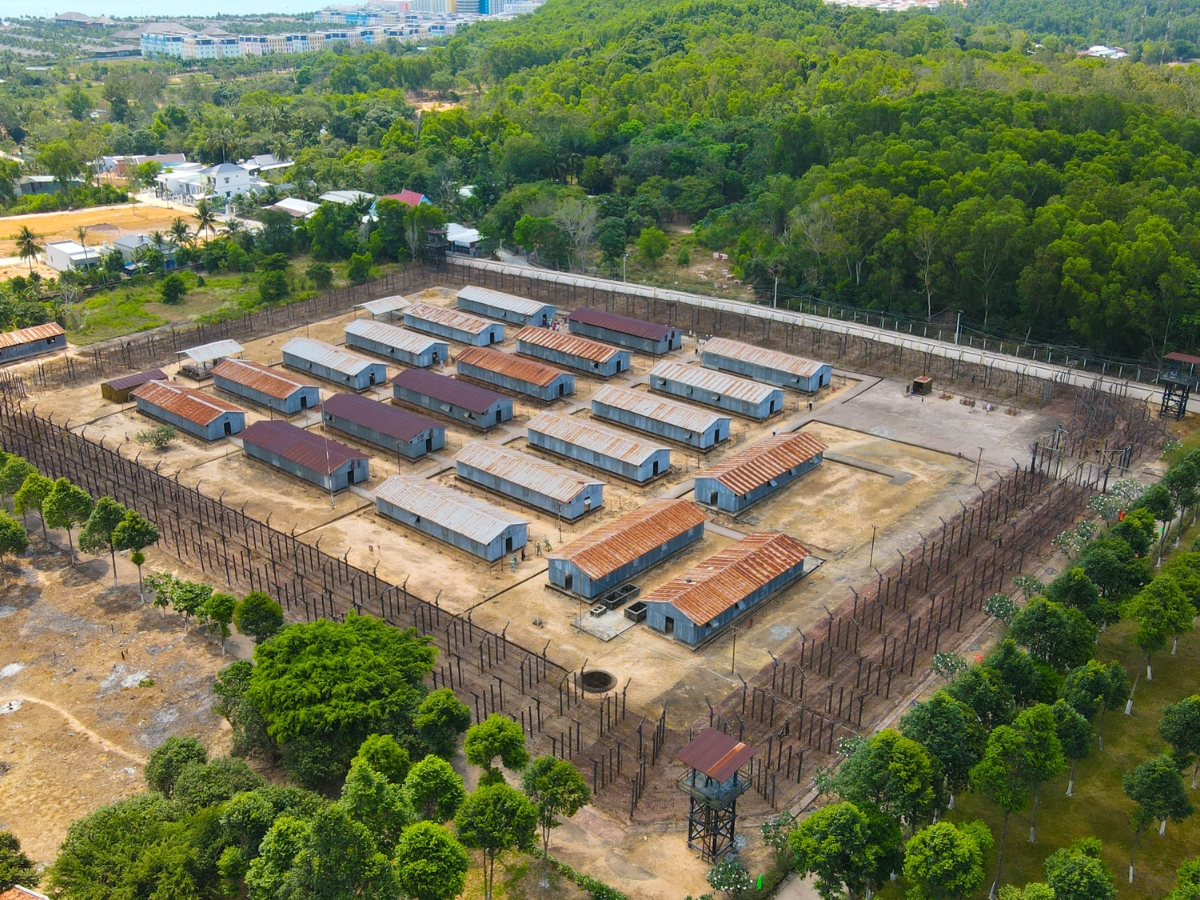
Phu Quoc Prison is located at 350 Nguyen Van Cu Street, Phu Quoc Special Administrative Region. (Source: VTV.vn)
1.2. Ticket prices and opening hours
Phu Quoc Prison is open from 7:30 AM to 11:30 AM (morning) and from 1:30 PM to 5:00 PM (afternoon) daily, including weekends and holidays. Visitors can enter freely as entrance tickets are completely free. Additionally, the historical site offers tour guide services and detailed introduction boards to help visitors easily learn about each area and historical story. If traveling in groups, visitors should contact the site management in advance to arrange for a guide, making the visit more lively and meaningful.
2. Learn about the history of Phu Quoc Prison
Phu Quoc Prison is one of the special historical sites associated with the two most fierce war periods of the Vietnamese nation. It is not only a symbol of pain and loss but also a vivid testament to the steadfast and indomitable spirit of the revolutionary soldiers. Spanning two periods: French colonial rule and the US-backed Saigon regime, the prison became a "hell on earth" that evokes deep emotion and sorrow in anyone who hears of it.
2.1. Phu Quoc Prison during French colonial rule
Phu Quoc Prison was built during the French colonial period in 1946. At that time, the French colonialists called this place "Nha Lao Cay Dua" (Coconut Tree Prison), used to detain revolutionary soldiers and patriotic citizens captured during the resistance against France. The prison area covered about 40 hectares, divided into 4 main sections: A, B, C, and D, with an extremely strict security system. The prison was surrounded by dense barbed wire fences, tall watchtowers, and lighting systems that shone throughout the night, creating a fortress isolated amidst the sea and sky of Phu Quoc.
Inside, thousands of revolutionary soldiers were imprisoned under harsh conditions. Prisoners had to live in cramped, airless rooms, were frequently starved and brutally tortured. Despite this, amidst the darkness and the iron rods, they maintained the spirit of soldiers, remaining resilient to all torture. As of April 1954, the prison had held over 14,000 inmates, among whom 99 communist soldiers bravely sacrificed their lives, leaving behind pages of history soaked in blood and tears but also shining with patriotism.
After the Geneva Accords in July 1954, the French colonialists withdrew from Vietnam, handing over the management of the prison to the Vietnamese authorities. It was thought that this place would close its brutal chapter, but in reality, it opened a new nightmare. Nha Lao Cay Dua entered the US-Saigon regime period, continuing to expand its scale and becoming a "hell on earth" with even deeper suffering than before.
2.2. Phu Quoc Prison during the US-Saigon regime
During the resistance war against the US, Phu Quoc Prison became a notorious detention center, marking a tragic yet resilient chapter in the nation's history. In 1967, the US-Saigon regime expanded the prison area and renamed it "Phu Quoc Communist Prisoner Camp." From then on, the peaceful island in the Gulf of Thailand became a true "hell on earth," where tens of thousands of revolutionary soldiers were imprisoned and tortured.
During the period 1967-1973, the camp at times held over 40,000 prisoners, most of whom were Southern liberation soldiers captured in major campaigns. Inside, torture methods were carried out with unprecedented brutality, such as beatings with electric batons, burning with embers, clamping with barbed wire, electric shocks, starvation, forced sun exposure, or waterboarding. The purpose of these tortures was not only to extract information but also to crush the fighting spirit of the revolutionary soldiers.
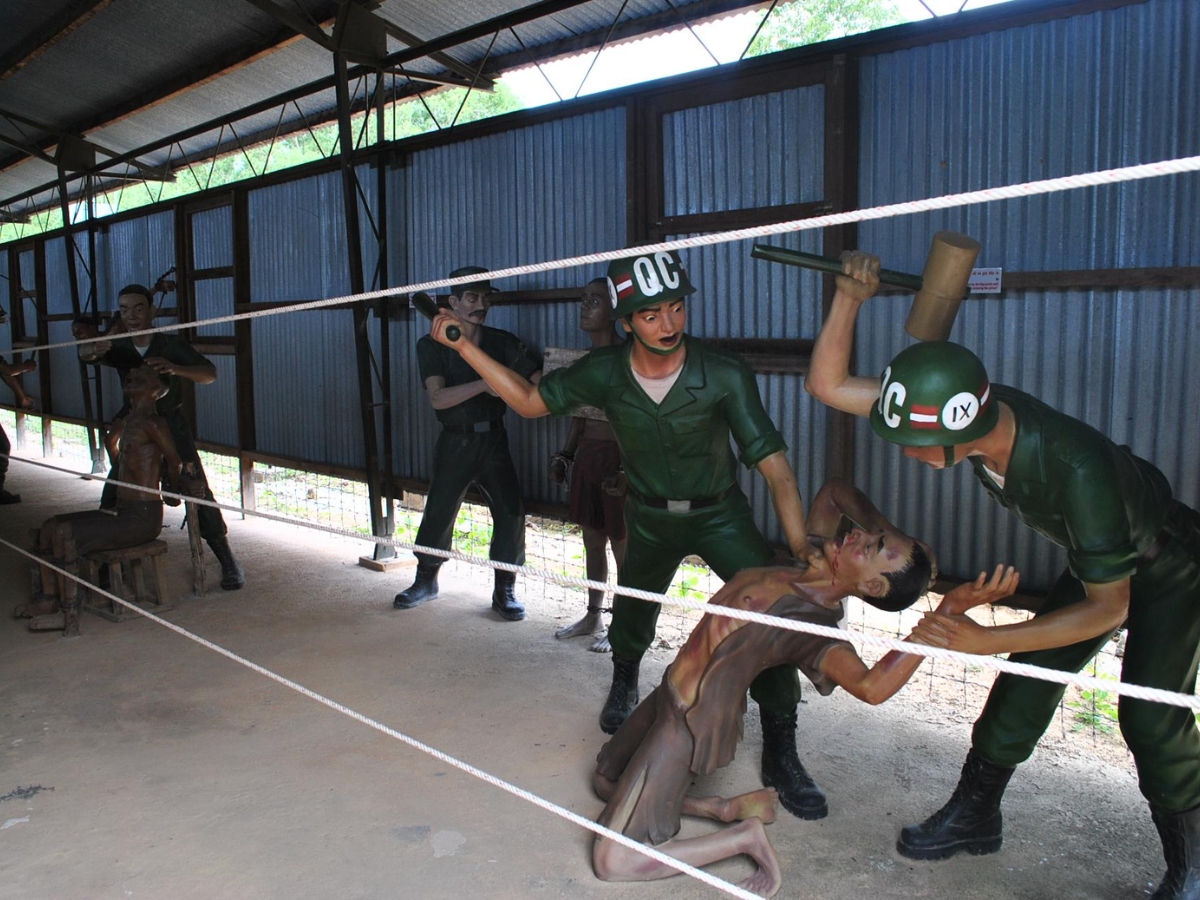
Prisoners endured unprecedented brutal torture. (Source: Collection)
Despite physical and mental torment, the prisoners maintained their faith in the ideal of freedom. They secretly passed messages, shared food, and comforted each other through pain. Many even successfully organized escapes to return to fight and continue the revolutionary path.
2.3. Meaning and Value of Phu Quoc Prison Historical Site
Today, Phu Quoc Prison is not only a famous tourist attraction but also a sacred historical witness of the Vietnamese nation. It preserves the tragic yet heroic stories of tens of thousands of revolutionary soldiers who were imprisoned and tortured during the two resistance wars. Every wall, iron bar, tiger cage, or solitary confinement cell is living proof of an indomitable spirit, an unyielding will against brutality.
The greatest value of Phu Quoc Prison lies in its profound humanistic meaning. From the former "hell on earth," the relic site has become a symbol of courage and the aspiration for freedom. Standing within this space, visitors can clearly feel the change between two eras. Where once the groans of pain echoed, now the bells of gratitude and national pride resonate. This is also a "living lesson" for younger generations, helping them understand that today's peace was bought with the blood and tears of their ancestors.
Beyond its historical and educational value, Phu Quoc Prison also plays an important role in reminding humanity of the devastating consequences of war. The recreated models, preserved images, and artifacts here serve as a cautionary voice, urging people to cherish peace, be grateful for the past, and look towards the future with compassion and solidarity.
3. Journey to Discover Phu Quoc Prison Historical Site
Stepping into Phu Quoc Prison , visitors enter a vivid chapter of history, a place that witnessed immense pain and loss, yet is also imbued with the nation's spirit of loyalty. The entire relic site is divided into various visiting sections, each area telling its own story, realistically depicting the harsh life and indomitable will of the revolutionary soldiers imprisoned in this "hell on earth." Every path, every wall, every recreated model evokes deep emotion and reflection in visitors.
3.1. Gate of Military Police Battalion 8
The Gate of Military Police Battalion 8 is the main entrance to Phu Quoc Prison , once strictly guarded by military police. The gate is solidly built, surrounded by dense barbed wire fences, with a high watchtower above and a lighting system operating all night to monitor every movement within the prison. This area was once a checkpoint for all incoming and outgoing activities, clearly reflecting the harshness and brutality of the ruling regime at the time.
Today, passing through the Gate of Military Police Battalion 8, visitors can clearly feel the heavy and chilling atmosphere of the past. Although only walls and ruins remain, this place still evokes a shiver at the scale and severity of the prison system. At the same time, it serves as the starting point for a journey of understanding, helping visitors gain deeper insight into the tragic years of the nation's history.
3.2. Prisoner of War Cemetery
Within the grounds of Phu Quoc Prison , there is a place that silences everyone who visits: the Prisoner of War Cemetery, the resting place of thousands of revolutionary soldiers who sacrificed their lives during the most brutal years of the war. The cemetery is situated amidst a tranquil landscape, surrounded by green trees and neatly arranged tombstones. Many of these graves remain anonymous, marked only by a small stone bearing the inscription "Unknown Martyr."
This place is the clearest testament to the brutality of war and the atrocities committed by the enemy. Each grave tells a story, a life cut short in its prime, yet their spirit and ideals live on. Visitors to the Prisoner of War Cemetery often pause for a long time, light incense in remembrance, and bow their heads in gratitude to those who fell so that the nation could achieve peace today.
3.3. Kien Van Church
Amidst the harsh conditions of Phu Quoc Prison , which held tens of thousands of revolutionary soldiers, Kien Van Church stands as a special symbol of faith and hope. Despite living in extreme deprivation, the prisoners came together to build a small church from wood, bamboo, and leaves. It was simple yet held immense spiritual strength. This was not only a place for prayer but also a sanctuary where they could share, encourage each other, and maintain their will during those arduous years.
Upon entering Kien Van Church, visitors will clearly feel the solemn and sacred atmosphere of this place. Every crack, every wooden beam seems to tell the story of the steadfastness and indomitable spirit of the soldiers who were once imprisoned. It was their faith in the nation's eventual freedom, in the victory of justice, that helped them overcome suffering and maintain their will to continue fighting.
3.4. Supplementary Exhibition House of the Relic Site
During the exploration of Phu Quoc Prison , the supplementary exhibition house of the relic site is the stop that evokes the most emotion in visitors. This place preserves hundreds of precious images, artifacts, and documents from the arduous resistance years. Each item, from labor tools and daily necessities to the torture instruments used by the enemy, is carefully displayed, allowing viewers to better grasp the pain and resilient spirit of the revolutionary prisoners.
More than just a repository of artifacts, the exhibition house also recreates stories, memories, and accounts from living witnesses, making visitors feel as if they have returned to the past. Every photograph, every line of text, every artifact carries the power of memory, evoking respect, gratitude, and national pride. Here, visitors not only learn about history but also listen to the heartbeat of the souls who lived, fought, and died for their homeland.
3.5. B2 Area in Phu Quoc Island Prison
The B2 area was one of the most critical and harsh detention zones. This area is recreated with cramped cells, thick brick walls, no windows, only small slits for light to enter. It is surrounded by dense barbed wire fences and high watchtowers where guards were stationed day and night. The entire space evokes a suffocating, tense atmosphere where life seemed to be strangled amidst violence and fear.
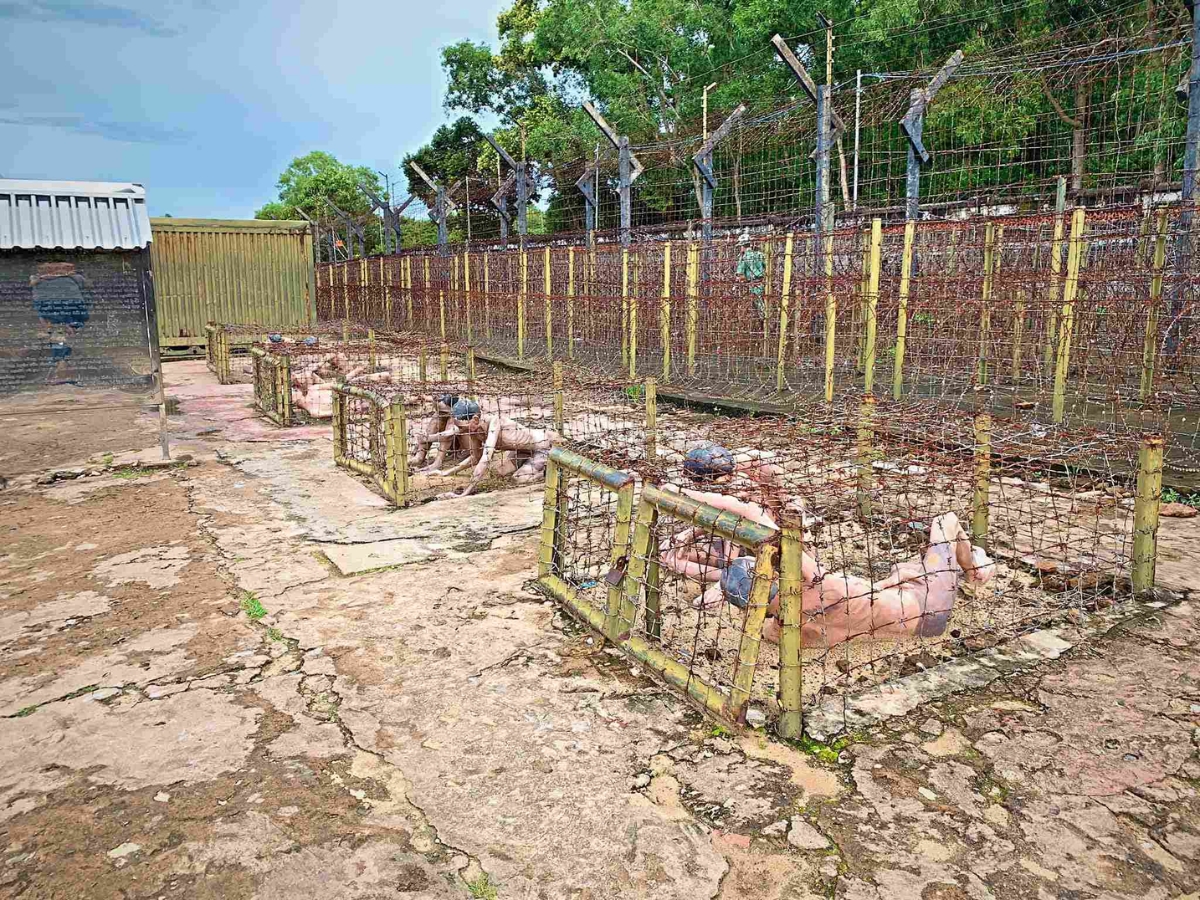
Witness brutal torture methods at the prison (Photo: Collection)
Prisoners detained in sub-area B2 endured forced labor, lacked adequate food, and constantly faced brutal torture methods. Despite physical and mental torment, they maintained their faith and solidarity, overcoming the painful days in the dark prison together. When visiting this area, tourists can clearly feel the suffering that revolutionary soldiers once experienced, and better understand the value of peace and the courage of the previous generation.
3.6. Phu Quoc Prison Martyrs' Memorial
The Martyrs' Memorial of Phu Quoc Prison is located on a high hill, surrounded by clusters of purple sim flowers that bloom year-round. The structure is designed solemnly with a large bas-relief depicting resilient revolutionary soldiers and a stone tablet inscribed with the names of martyrs, creating a sacred and solemn space amidst the sun and wind of Phu Quoc.
Here, visitors can light incense to remember and express deep gratitude to those who sacrificed their lives for the nation's independence and freedom. Every step on the path leading to the memorial reminds us of the noble sacrifices and the price of today's peace. Amidst the peaceful scenery, the memorial becomes a place for everyone to reflect, honor the past, and cherish the present.
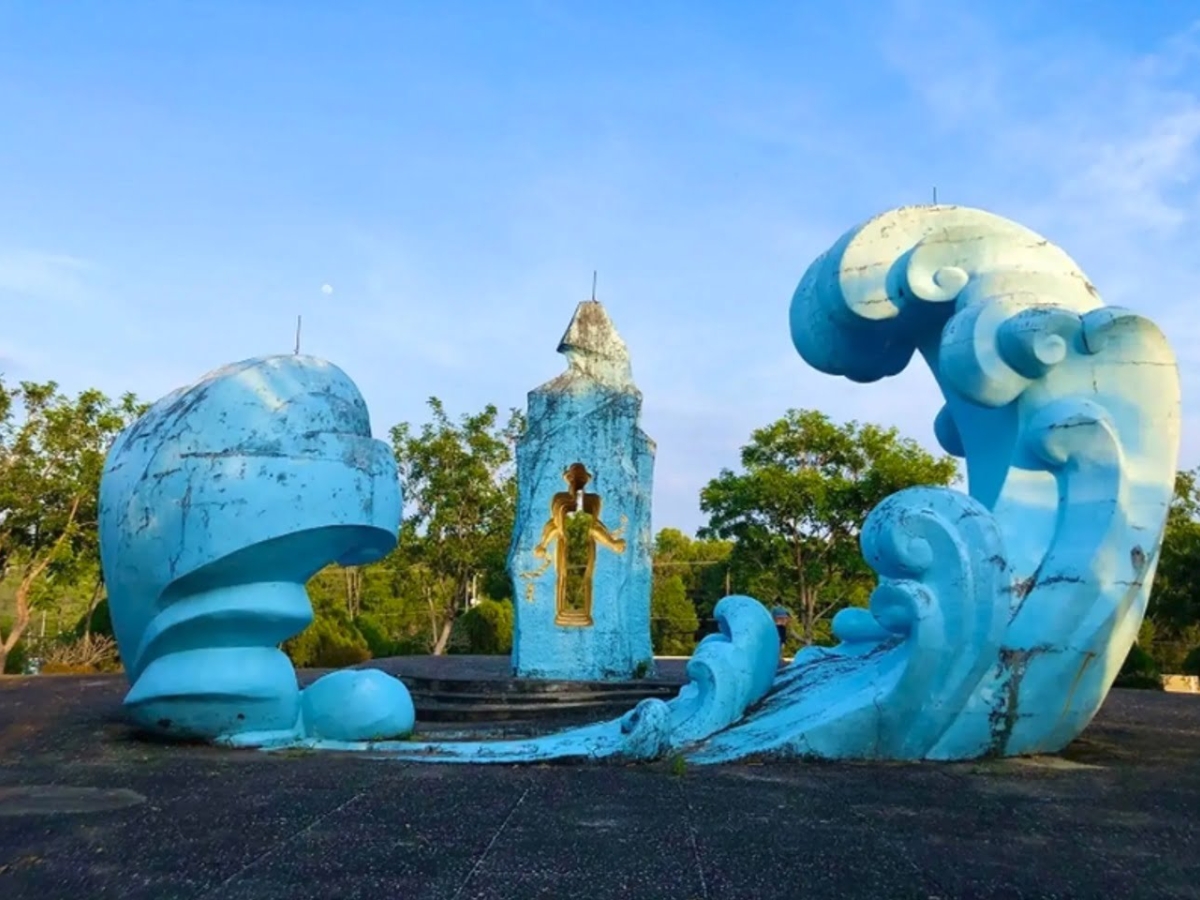
Visitors can light incense sticks to commemorate the soldiers at the Memorial. (Source: Collected)
3.7. Gate of the 7th Military Police Battalion
The Gate of the 7th Military Police Battalion is one of the important entrances and exits of Phu Quoc Prison , once strictly guarded with high watchtowers, permanent guards, and a solid barrier system. This was the area that controlled the movement of prisoners between sub-sections within the detention camp, ensuring all activities were under the close supervision of the military police.
Today, the Gate of the 7th Military Police Battalion has been restored and preserved as an important part of the historical relic Phu Quoc Prison . Standing before this gate, visitors can better visualize the structure of the former detention camp and feel the tense, harsh atmosphere that revolutionary soldiers had to endure during the painful years of war.
4. Some notes when visiting Phu Quoc Prison
When visiting Phu Quoc Prison , visitors should note the following points to make the trip both historically meaningful and respectful of this sacred space.
Polite attire: When visiting the prison, visitors should wear modest, polite clothing to show respect for the sacred place.
Maintain order: Throughout the visit, visitors should maintain order, avoid talking loudly or laughing excessively, as this is a place of remembrance and gratitude.
Do not touch exhibits: The exhibits and models need to be preserved, so visitors must not touch them to avoid damage.
Follow instructions: Visitors should follow the guided route, do not arbitrarily separate from the group or enter restricted areas.
Protect the environment: Maintain general hygiene, do not litter within the historical site.
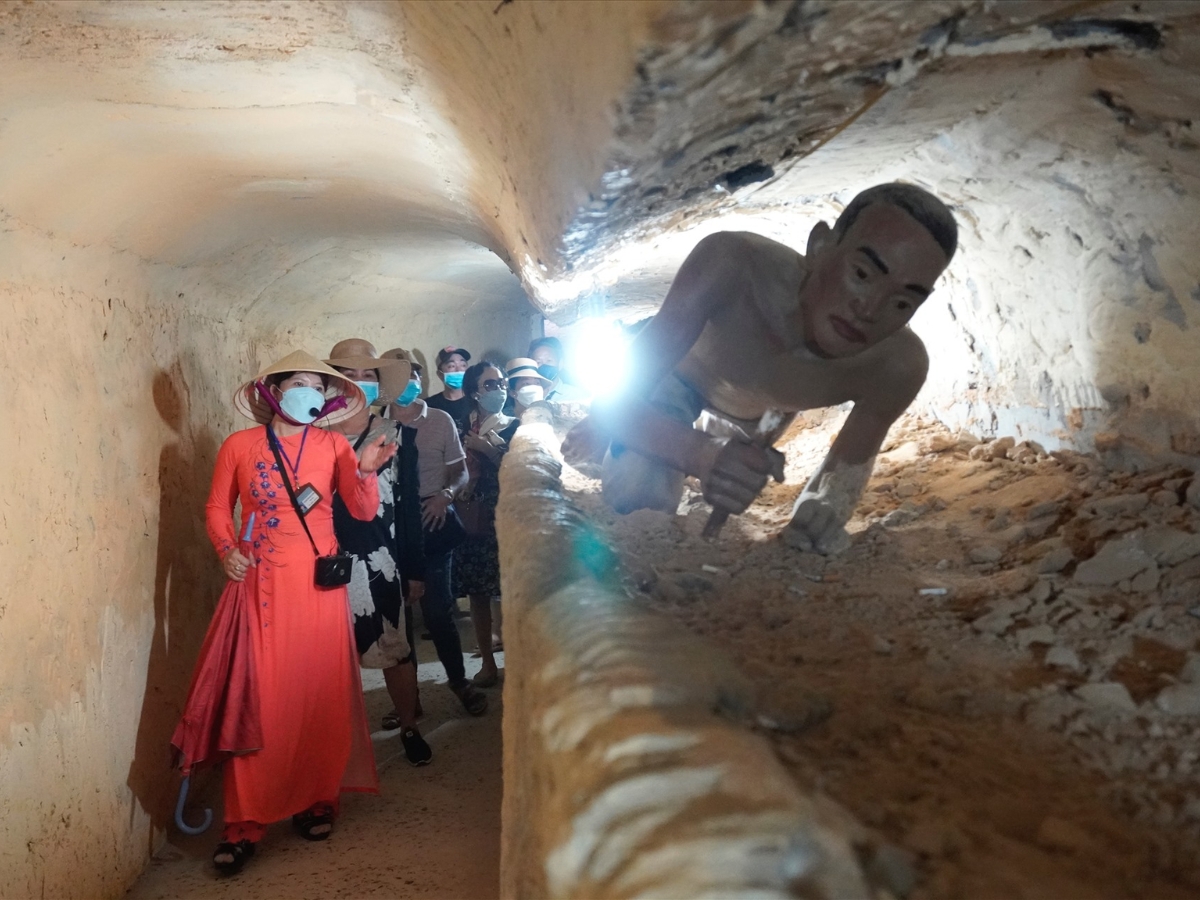
Visitors should maintain a polite and respectful attitude when visiting Phu Quoc Prison. (Source: Bao Lao Dong Newspaper)
5. Suggested itinerary for visiting Phu Quoc Prison combined with famous spots in the South of the island in 1 day
If you only have one day to explore the southern part of the island, this is an ideal itinerary for visitors to have a trip that is both rich in historical significance and full of fun and culinary experiences.
- Morning:
Start the journey with a visit to Phu Quoc Prison – the island's most famous historical relic. Here, visitors will be given a detailed explanation of the resilient fighting years of the revolutionary soldiers, witness recreated models with their own eyes, and take souvenir photos at the gate of the 8th Military Police Battalion or the martyrs' memorial. This is an ideal time to pause, feel the depth of history amidst the sacred space of the former "hell on earth".
- Noon:
After leaving the prison, visitors can visit Bai Sao or Bai Khem, two famous beaches with clear blue waters and fine white sand. Spend time enjoying fresh seafood such as Ham Ninh crab, slipper lobster, or grilled barracuda with chili salt at beachfront restaurants, while resting and enjoying the fresh air of the South of the island.
- Afternoon:
Continue the journey with the Hon Thom cable car experience – the world's longest three-rope sea-crossing cable car. From above, visitors can admire the beautiful scenery of the South of the island. Upon arrival, spend time playing at Sun World Hon Thom, challenge yourself with thrilling games, or relax on the beach. As the sun begins to set, head to Sunset Town to witness the sunset moment amidst the romantic sea and sky of Phu Quoc.

Travel by cable car and admire the panoramic view of the sea and islands from above. (Source: Collected)
- Evening:
Conclude the long day with dinner at Sun Bavaria GastroPub, enjoying European – Asian cuisine and sipping authentic German craft beer. Afterwards, don't miss the spectacular Kiss of the Sea show with its unique light, water, fire, and fireworks effects. Finally, stroll around Vui Phet night market to shop for souvenirs, enjoy snacks, and feel the vibrant nightlife of Ngoc Island at night.
The journey to explore Phu Quoc Prison is not just a visit to a historical relic, but also a journey back in time to better appreciate the value of peace and freedom today. Every corner, every story here reminds us of the courage and steadfast spirit of the Vietnamese people. If you have the chance to visit Ngoc Island, don't forget to spend time visiting Phu Quoc Prison to listen to the echoes of the past, honor the previous generations, and love your country even more.


