




1. Overview of Nam Cang Village (Sa Pa)
1.1. Geographical location and prominent features
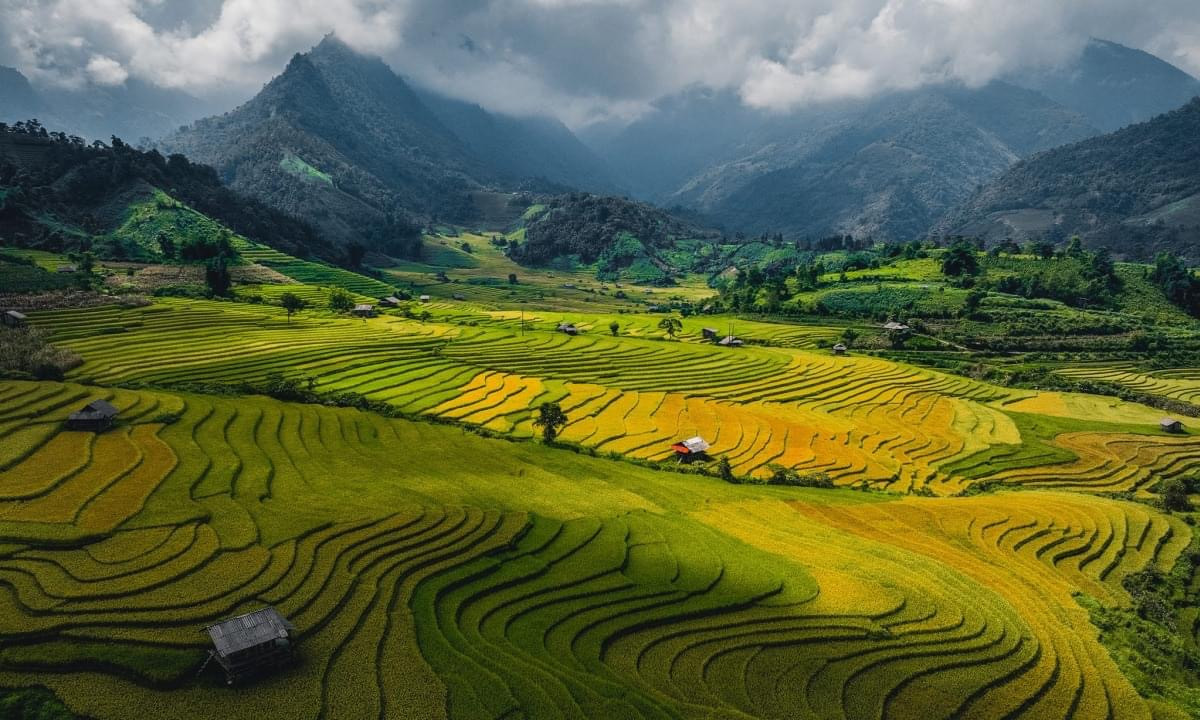
Nam Cang village attracts tourists with its vast terraced fields and peaceful scenery. (Source: Collected)
Sa Pa is nicknamed the land where heaven and earth meet, located at an altitude of over 1,500 m above sea level. It attracts tourists with its majestic natural scenery, where clouds and sky blend with fertile terraced fields winding around the mountainside. In contrast to the bustling and vibrant center of Sa Pa, the villages here offer a unique beauty – rustic, peaceful, and rich in highland identity.
Nam Cang village belongs to Lien Minh commune, about 36.5 km southeast of Sa Pa center. Nestled amidst the majestic Hoang Lien Son mountains, surrounded by clear streams, bamboo forests, and lush green terraced fields, Nam Cang is likened to a "rough gem" that has retained its natural beauty untouched by commercialization.
1.2. The pristine and peaceful beauty of Nam Cang village
Unlike the hustle and bustle of Cat Cat or Ta Van villages, Nam Cang (Sa Pa) village still retains the rustic and wild beauty of a peaceful highland region. This is the main residence of the Red Dao and Black H'mong ethnic groups, with less than 300 households and over 1,500 people. The lives of the ethnic people here are tied to the forests, fields, and traditional crafts such as weaving, indigo dyeing, and making traditional medicine.
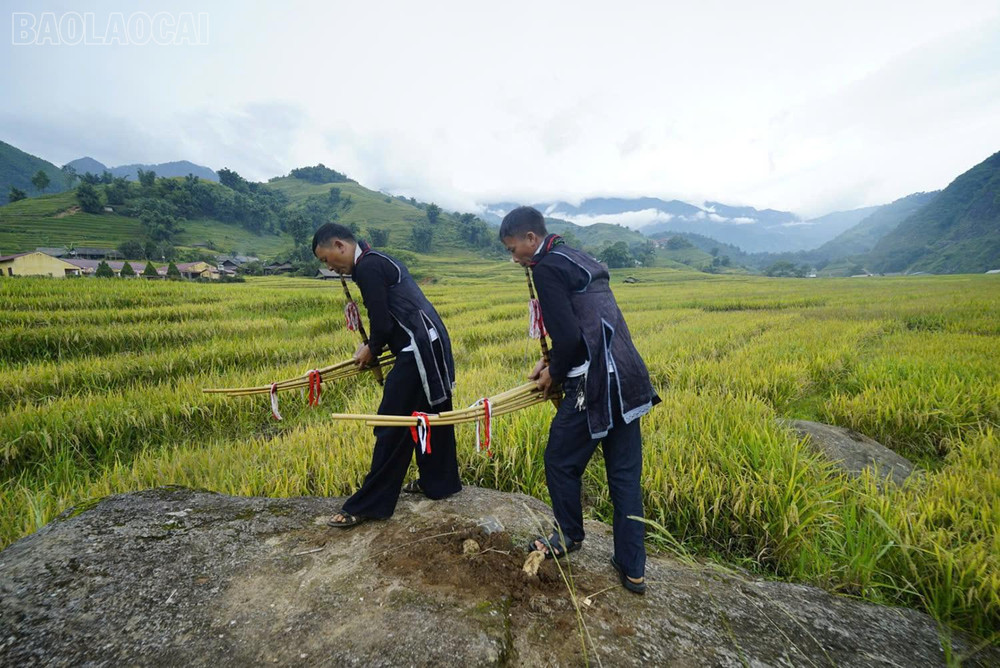
Nam Cang Village is the main residence of the Red Dao ethnic group. (Source: Collected)
Amidst the quiet space, the babbling sound of the stream blends with the clacking sound of the loom in each house, creating a peaceful picture, making visitors clearly feel the slow and peaceful pace of life in the Sa Pa highlands.
2. How to get to Nam Cang Village (Sa Pa)
2.1. Getting to Sa Pa center
Average travel time: From 5 to 6 hours (Depending on the means of transport and the visitor's departure point).
The distance from Hanoi to Sa Pa is about 315 km if traveling along the Noi Bai – Lao Cai expressway, then turning onto National Highway 4D to reach Sa Pa center.
From Hanoi, visitors can choose various means of transport to reach Sa Pa center, such as limousine buses, trains, or private cars. Limousine buses are a popular choice due to their comfort and convenience, while the train offers a relaxing experience, allowing you to admire the scenery of the Northwest mountains and forests throughout the journey.

Visitors can choose to travel to Sa Pa by train. (Source: Collected)
2.2. From Sa Pa center to Nam Cang village
The most suitable means of transport is a motorbike, allowing you to easily navigate narrow, winding roads and stop to admire the scenery along the way. However, visitors should have a firm grip as the road has many winding turns. Alternatively, you can hire local drivers who are familiar with the route for a safer journey.
Detailed itinerary:
From Sa Pa center, start your journey about 9 km southeast. Starting from Thach Son street, turn into Cau May street, then continue along Muong Hoa street to Provincial Road 152. This route will take you to the Sa Pa ancient stone field.
Leaving the ancient stone field, continue straight along Provincial Road 152, then turn slightly left onto Su Pan village road. The journey takes about 1 hour, offering visitors a sense of peace, relaxation, and completeness before arriving at Nam Cang village.
3. Ideal time to explore Nam Cang village (Sa Pa)
3.1. Water pouring season
From April to June, Nam Cang dons the pristine beauty of the water pouring season. The dry terraced fields after harvest are irrigated by locals from streams, creating shimmering fields like mirrors.
The water surface reflects the blue sky, white clouds, and majestic mountains, surrounded by Red Dao and H'Mong people busy planting young rice seedlings.
3.2. Rice ripening season
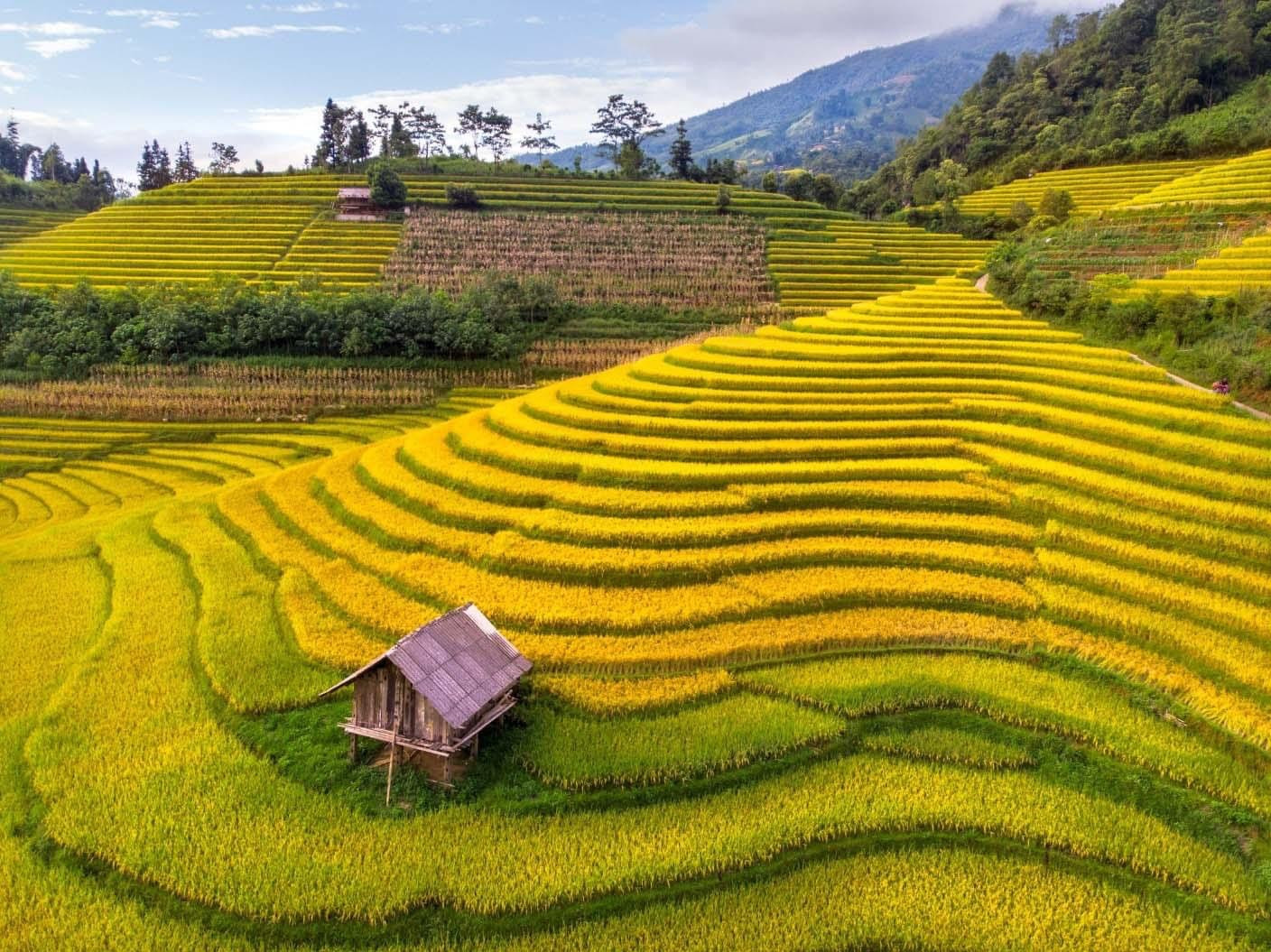
Abundant golden hues on the terraced fields of Nam Cang village. (Source: Compiled)
Around September to November, Nam Cang village (Sa Pa) enters its most brilliant golden season of the year. The entire valley seems to light up in the golden hue of ripe rice, as gentle autumn sunlight shines down, making the terraced fields even more shimmering and warm. This is the ideal time for tourists to stroll along the small paths beside the fields, inhale the scent of new rice, and admire the peaceful scenery of the highland village.
4. Unforgettable experiences in Nam Cang village (Sa Pa)
4.1. Strolling through terraced fields and the Nam Cang suspension bridge
One of the most interesting experiences when visiting Nam Cang is strolling amidst the peaceful natural scenery. Small paths wind through the undulating terraced fields, where the green of young rice seedlings or the golden hue of ripe rice blends with the babbling sound of the stream.
Standing out amidst that scenery is the Nam Cang suspension bridge – a small bridge crossing the stream, shimmering and reflecting its image under the clear water. From here, visitors can gaze at the rolling mountains and take beautiful souvenir photos.
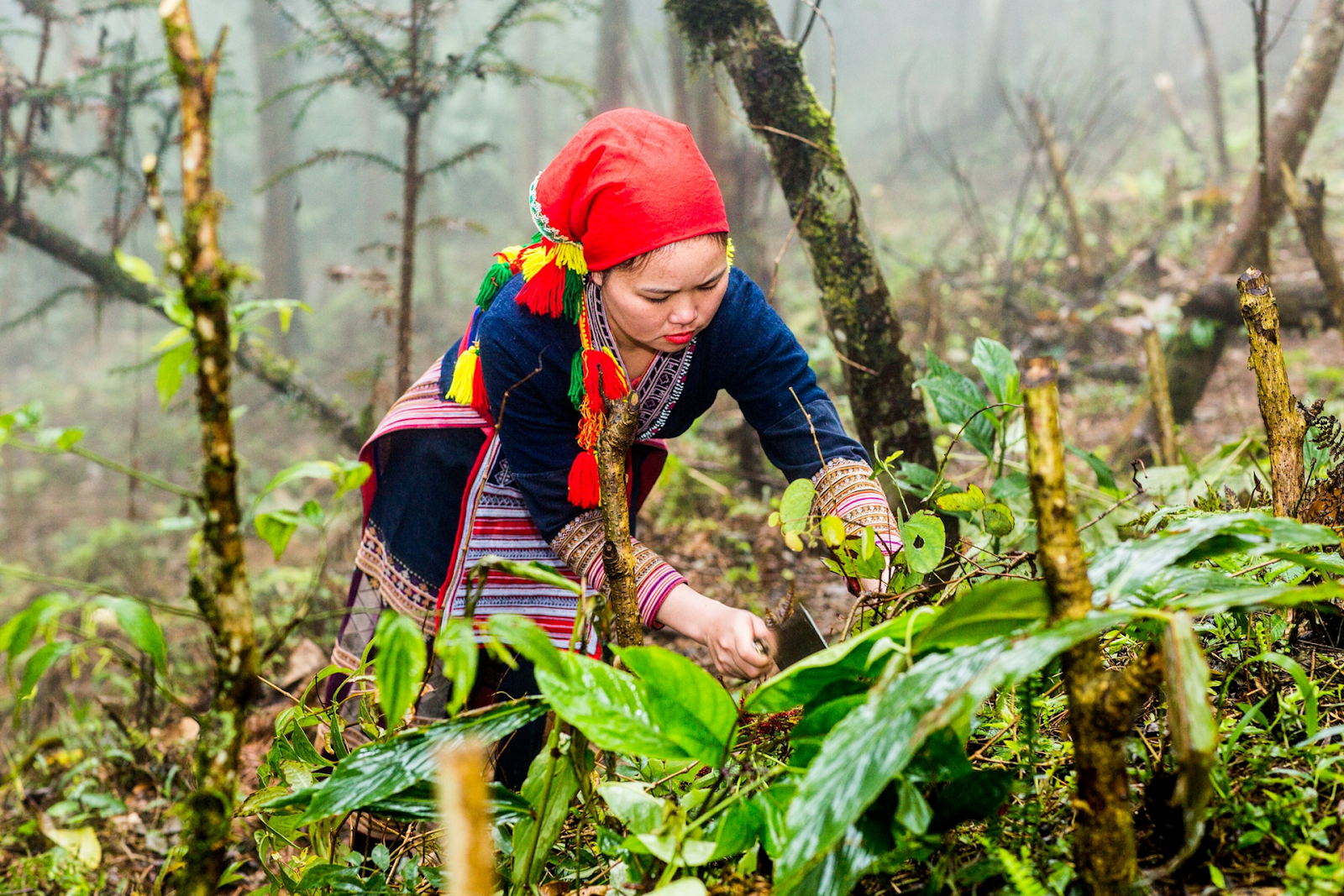
Herbal bath leaves are precious medicinal herbs, picked by the locals from deep mountain areas. (Source: Collected)
When you come to Nam Cang, don't miss the opportunity to experience the herbal bath of the Red Dao people – a famous traditional method that helps relax the body, improve blood circulation, and restore health after long journeys. After bathing, visitors can enjoy dishes rich in mountain flavors such as Thang Co, grilled stream fish, black chicken, bamboo-tube rice, and potent corn wine brewed with local yeast.
4.3. Discover the culture of the Red Dao people
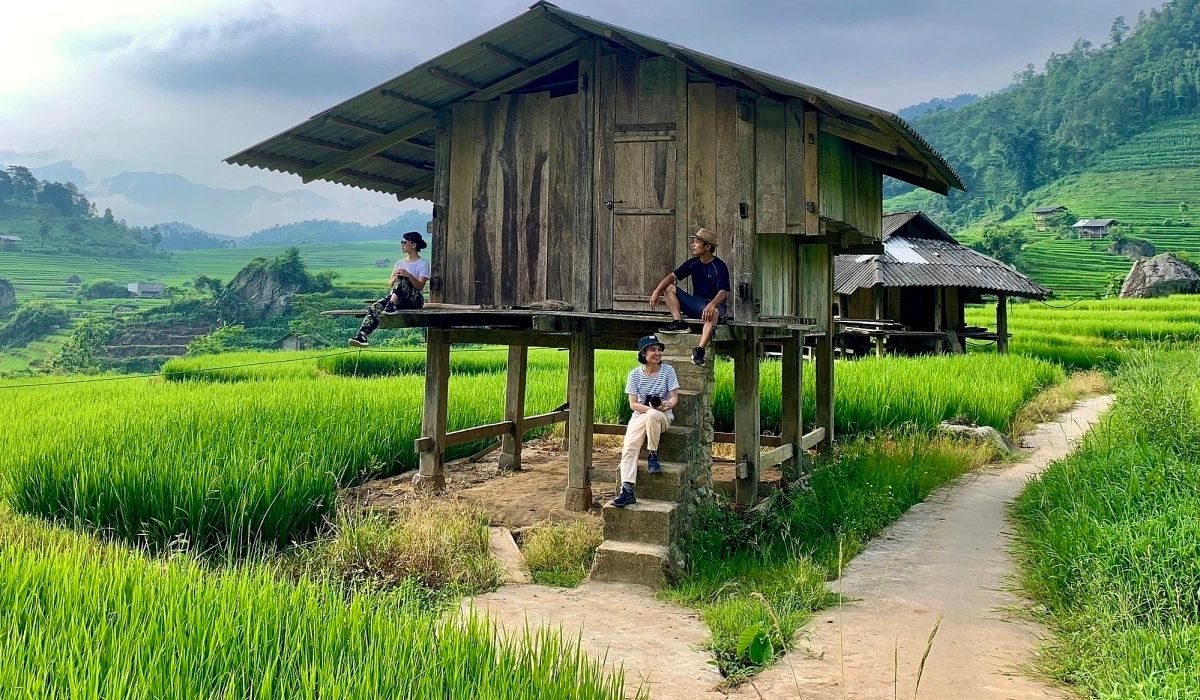
Visitors explore the traditional houses of the Nam Cang community. (Source: Collection)
Nam Cang is primarily inhabited by the Red Dao ethnic group, known for their gentle, hospitable nature and rich cultural traditions. Visitors can learn about brocade weaving, traditional medicine preparation, or listen to stories about traditional customs and festivals passed down through generations.
5. Suggested famous tourist destinations to combine with exploring Nam Cang village (Sapa)
5.1. Sun World Fansipan Legend
After exploring the pristine beauty of Nam Cang village, visitors can combine their trip with a visit to Sun World Fansipan Legend to make it more complete and enjoyable. The journey begins with the Muong Hoa mountain train, taking visitors across valleys and majestic mountains before reaching the cable car station.
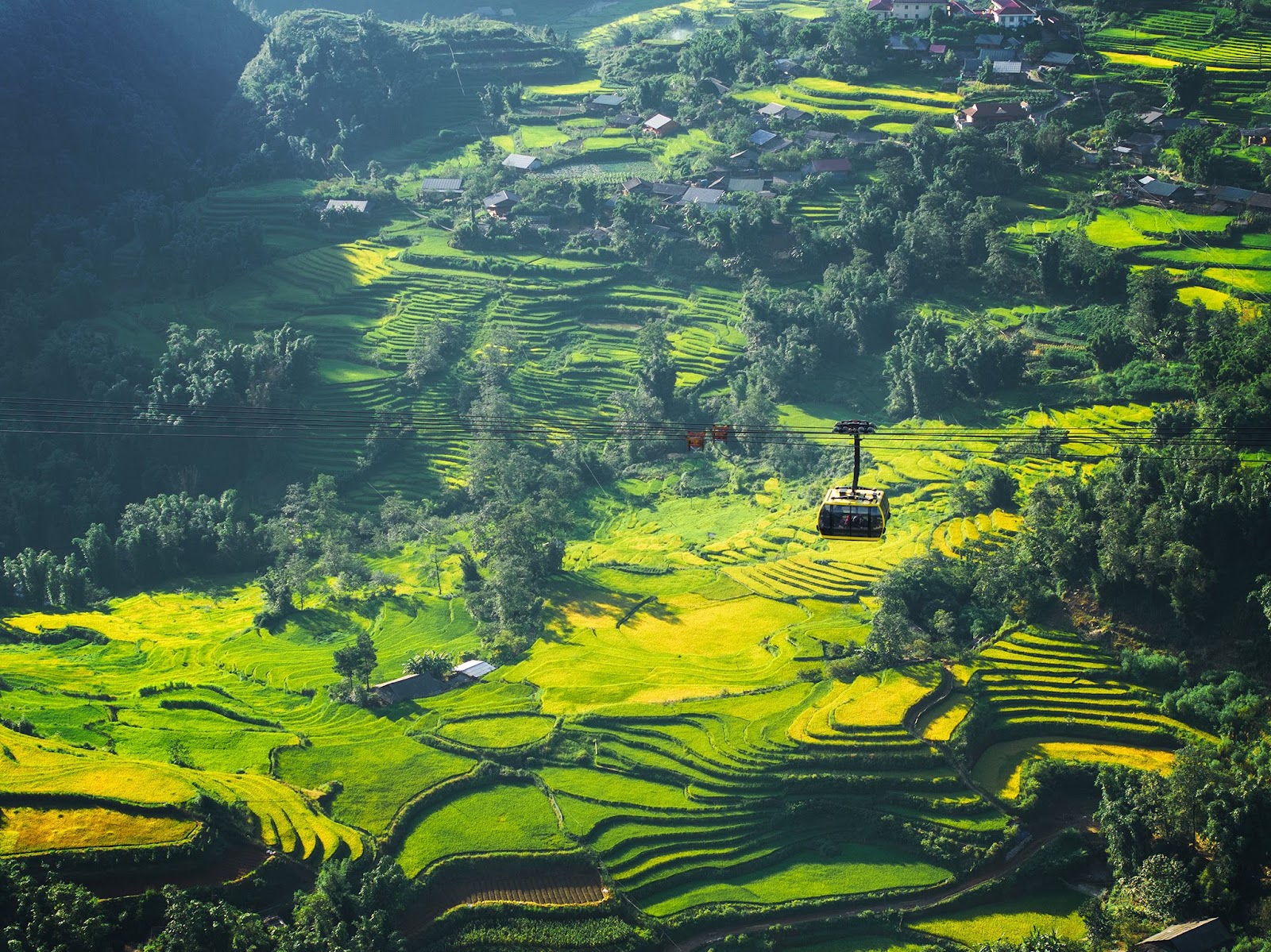
Visitors can admire the majestic mountain and forest scenery from the cable car cabin. (Source: Collection)
After that, you will experience the modern 3-wire cable car system to conquer the roof of Indochina. From the impressive height of the cable car cabin, a panoramic view opens up to the majestic Hoang Lien Son mountain range and the poetic Muong Hoa valley. Upon reaching the summit, visitors can worship in the majestic spiritual complex amidst the clouds and sky of the Northwest with outstanding structures such as Bao An Zen Monastery, Great Buddha Amitabha, La Han Path, or Kim Son Bao Thang Pagoda.
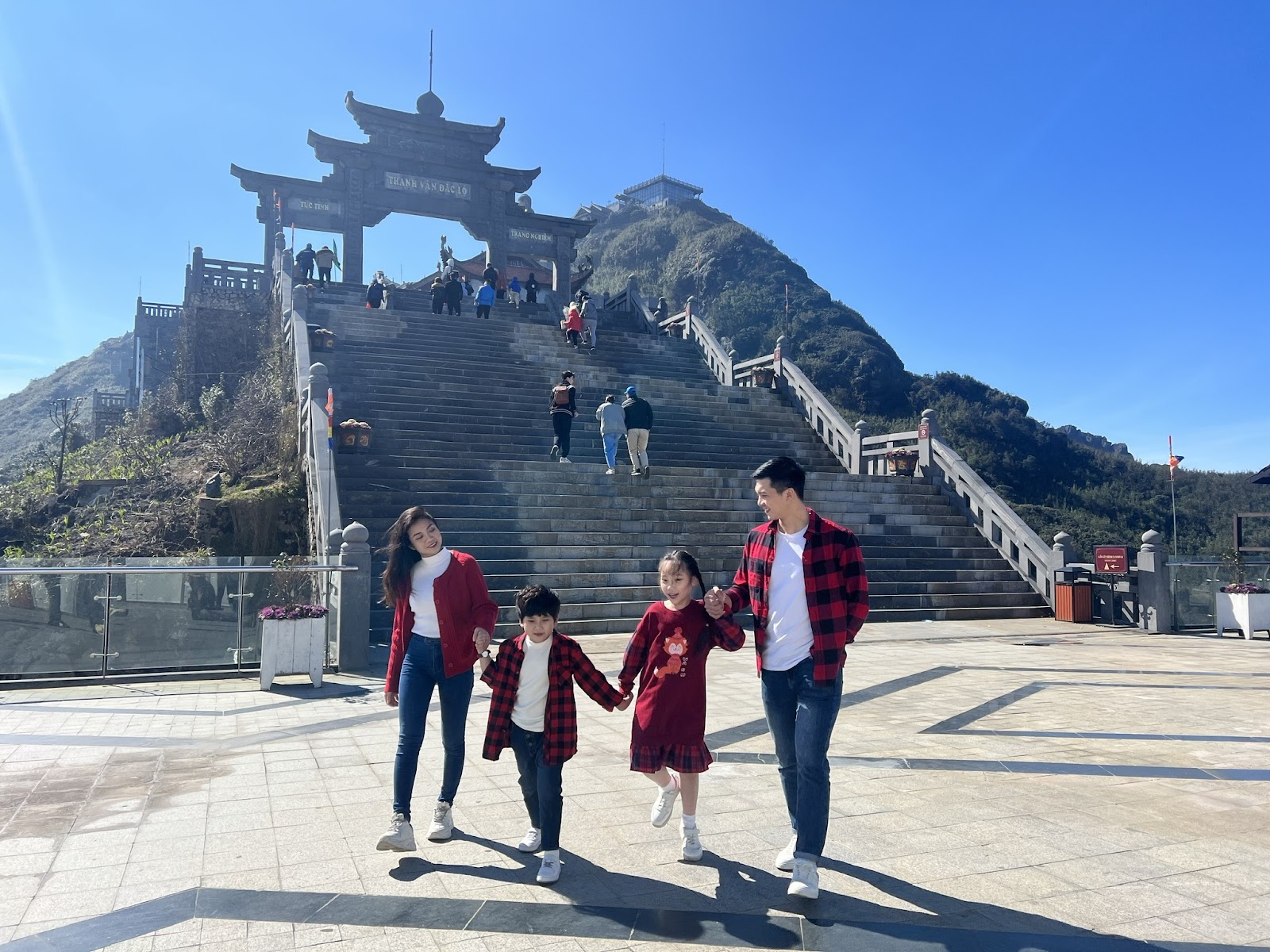
Visitors explore spiritual structures at Sun World Fansipan Legend. (Source: Compilation)
Additionally, visitors should not forget to check in at the Fatherland flagpole flying amidst the clouds and the 3,143m Fansipan peak marker – the sacred symbol of the roof of Indochina.
5.2. Sa Pa Stone Church
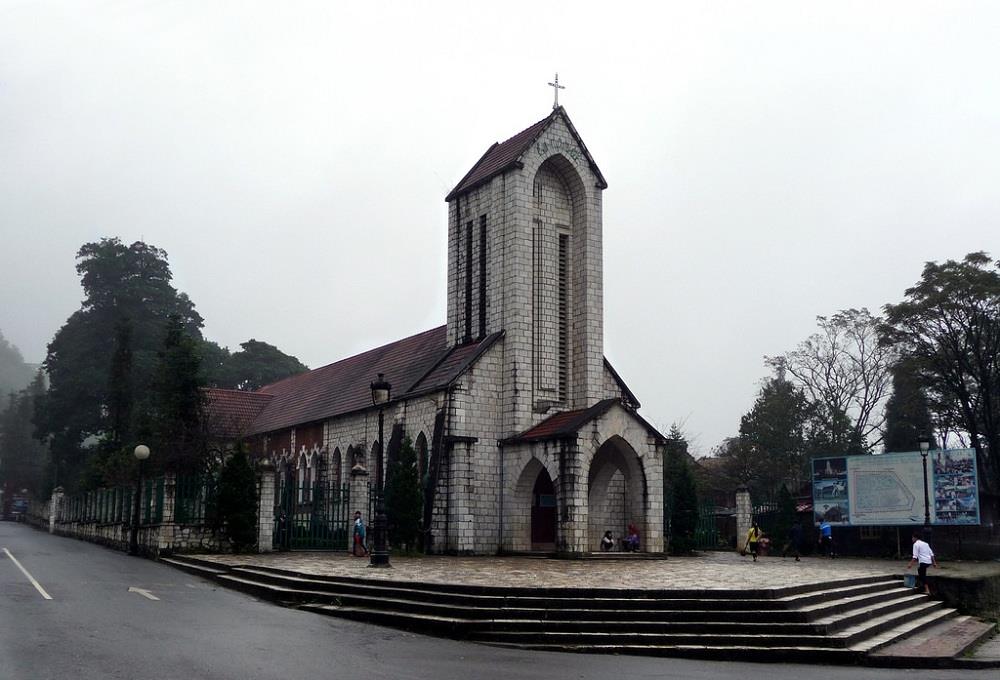
The Stone Church is a symbol of the city of a thousand mists, Sa Pa. (Source: Collected)
Located right in the town center, Sa Pa Stone Church is a long-standing symbol associated with the ancient beauty of the misty land. The structure was built from the early 20th century using hand-hewn stone, bearing the imprint of European Gothic architecture with its vaulted roof, bell tower, and mystical stained-glass windows.
Amidst the misty space, the church bells ring melodiously, creating a sense of peace and tranquility. This is also a place where tourists can stroll, take photos, or immerse themselves in the bustling atmosphere of Sa Pa central square every weekend evening.
5.3. Sa Pa Museum
If you love learning about culture, Sa Pa Museum is an ideal stop. Here are displayed hundreds of artifacts, images, and models recreating the life, customs and traditions of the ethnic minorities of the Northwest region such as H'Mong, Dao, Tay, Giay, Xa Pho…
The exhibition space is designed vividly, harmoniously combining tradition and modernity, helping visitors feel more deeply about the formation history of Sa Pa and the unique cultural identity of the people here.
5.4. Sa Pa Night Market
When night falls, Sa Pa night market is ablaze with lights, filled with the scents and colors of the highlands. This is an ideal place for tourists to enjoy local cuisine such as grilled meat, thang co, grilled eggs, corn wine… and to buy exquisite handicrafts hand-woven and embroidered by the H'Mong and Red Dao people.
5.5. Seo My Ty Lake
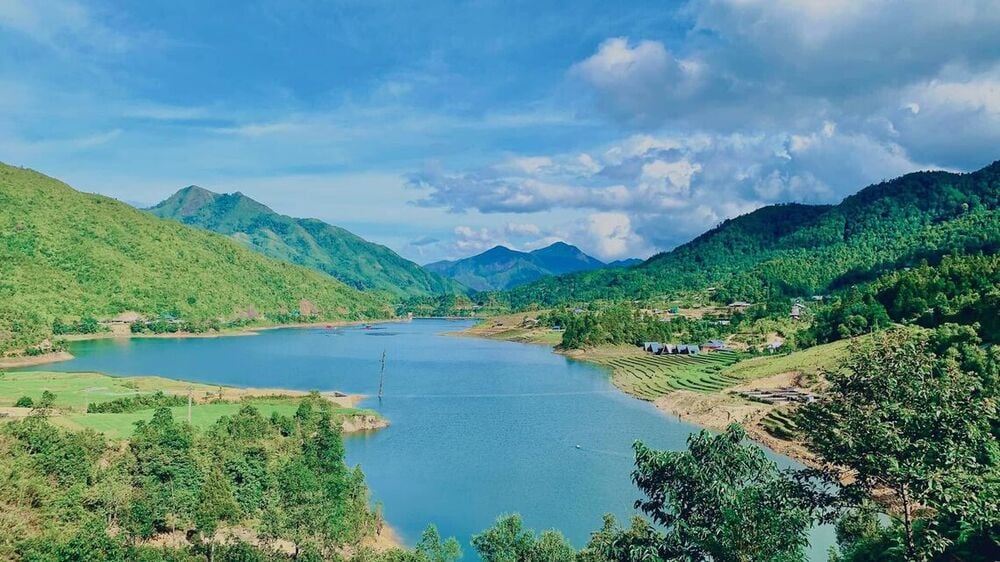
Seo My Ty Lake attracts tourists with its majestic natural scenery. (Source: Collected)
About 20 km from the center of Sa Pa, Seo My Ty Lake lies hidden amidst a valley in Ta Van commune, likened to a "gem amidst the Hoang Lien mountain range". The lake's surface is as calm as a mirror, reflecting the sky and clouds and the surrounding majestic mountains, creating a strangely peaceful scene.
Here, visitors can experience fishing, camping, or simply breathe in the fresh air, enjoying the rare tranquility. Seo My Ty is the perfect destination for those who want to find a bit of peace after a journey exploring the bustling Sa Pa.
Nam Cang Village (Sa Pa) is the perfect choice for those who want to return to a land that retains its simple and pristine beauty. A trip to Nam Cang village is not just a sightseeing journey but also an opportunity to feel the slow pace of life, in harmony with nature, of the Sa Pa highlands.


