




1. What is the Xen Ban, Xen Muong Festival? Meaning, historical origins
1.1. The Xen Ban, Xen Muong Festival in Thai culture
The Xen Ban, Xen Muong Festival is one of the sacred folk rituals, especially among the Thai community, particularly the Black Thai in the northern mountainous provinces such as Dien Bien, Son La, Yen Bai, and Hoa Binh. The word "Xen" in Thai means "deity" or "spirit", while "Ban" and "Muong" are traditional residential organizations of the Thai people. Therefore, this festival deeply embodies the cultural identity and beliefs of the Thai community.
The entire village community is the organizer of the festival, with the shaman and village elders playing leading roles. The Xen Ban, Xen Muong Festival is held to pray for the protection of the deities for abundant harvests, favorable weather, and to ward off diseases. It is also an occasion for community members to gather, build strong solidarity, with everyone from old to young participating, demonstrating community strength.
1.2. Core meaning and traditional values
The Xen Ban, Xen Muong Festival carries many important meanings in the cultural and spiritual life of the Thai people. Firstly, it is an occasion for people to pray for peace and blessings for the entire community, expressing faith in the deities to bring a peaceful life, prosperous harvests, and protection from risks. The rituals of worship and offering sacrifices during the festival are not only prayers but also a way to honor and express gratitude to the village spirits, muong spirits, and ancestors who cleared the land and established the villages.
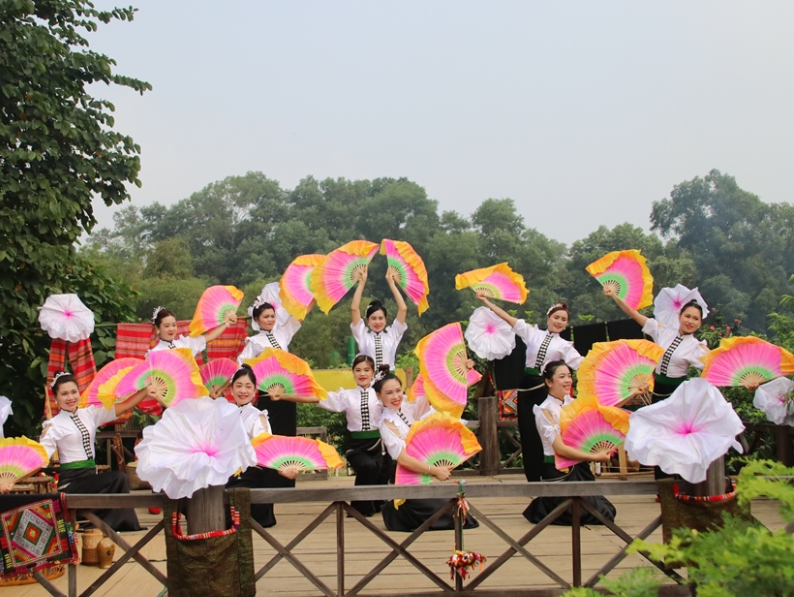
Xen Ban, Xen Muong Festival carries many important meanings in the cultural and spiritual life of the Thai people. (Source: Collected)
Additionally, the festival is also a symbol of harmony between humans and nature, between the Thai community and the vast universe. The offerings also express gratitude towards previous generations, those who built the homeland and the nation's traditions.
1.3. Origin and differences across Northwestern regions
The origin of the Xen Ban, Xen Muong festival is linked to the belief in worshipping village spirits (ma ban), community spirits (ma muong) of the Thai people, stemming from traditional agricultural life. The rituals are usually held in early spring, associated with beliefs in deities and the prosperity of crops.
The Xen Ban, Xen Muong festival has many variations depending on the locality. In Bung Lao commune (Dien Bien), the ritual is held at the shrine in the middle of the village, with offerings such as pigs, roosters, and fresh stream fish. In Son La, the Xen Ban, Xen Muong festival is held in Pac Nga commune (Bac Yen) and Chien Coi ward, notably with the Xen Muong procession during the bauhinia flower season, combined with water splashing rituals for blessings and the procession of Nang Tanh.
In Yen Bai and Lao Cai, the festival has a Xen Dong variation, held at Cau Thia, Muong Lo, with a forest worship ritual under large ancient trees and the main offering being buffalo. In Hoa Binh, especially in Mai Chau, the Xen Ban, Xen Muong festival is highlighted by a procession led by Tao Phia, with two brightly decorated buffaloes as the main offerings. The differences between regions are evident in the chosen offerings, the organization space, and the supplementary rituals.
The Xen Ban, Xen Muong festival is an important part of the Thai people's cultural life, with worship rituals expressing gratitude to deities, ancestors, and harmony between humans and nature. Each region has its unique characteristics in organizing the festival, but with a common purpose of praying for blessings and peace for the entire community.
2. Time and location of the Xen Ban, Xen Muong festival
2.1. When does the Xen Ban, Xen Muong festival take place?
The Xen Ban, Xen Muong festival is usually held from the first to the third lunar month, marking the beginning of the new crop season and the new year in the Thai community. The timing of the festival may vary depending on each village, as it will be adjusted to suit the actual conditions and agricultural calendar of each region.
2.2. Venue and scope of community participation
The Xen Ban, Xen Muong festival usually takes place in sacred spaces with special spiritual significance for the Thai community. Popular venues include village squares and community shrines. These areas are considered the spiritual centers of the village, where people often gather to pray and perform spiritual rituals.
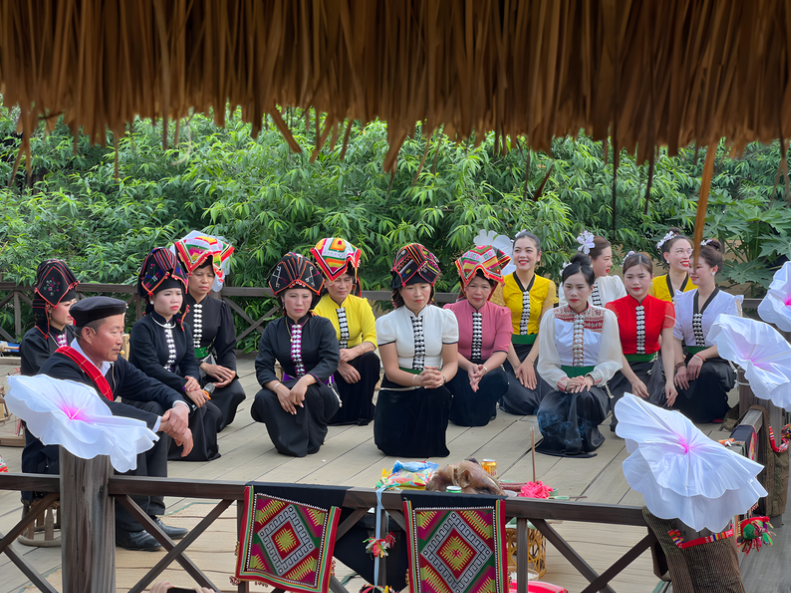
Xen Ban, Xen Muong Festival usually takes place in sacred spaces. (Source: Collected)
The village and hamlet communities are the main participants in the festival, from clan elders, shamans, to each family in the village. Everyone prepares offerings together, participates in worship rituals, and gathers for feasting after the ceremony, creating an atmosphere of solidarity, strengthening the bonds between community members. The Xen Ban, Xen Muong Festival is not only an occasion to pray for peace and blessings but also an opportunity for people to consolidate and maintain a strong community spirit, clearly demonstrated through the participation of everyone.
3. Ritual Sequence of Xen Ban, Xen Muong: From Procession to Celebration
3.1. The Ceremony Part: Main Rituals
The Xen Ban, Xen Muong Festival is meticulously prepared many days before it takes place. The village community carries out cleaning and tidying of the village, repairs the shrine, and prepares solemn offerings. Essential traditional offerings in the ritual will vary by location, such as buffalo, black pigs, boiled chicken, eggs, rice, fermented rice wine, along with local products characteristic of the village.
Next is a group of young people carrying gongs, drums, and trumpets, followed by the elders, village chief, and security forces. The procession carries two buffaloes decorated with colorful paper flowers, heading towards the shrine. The shaman, wearing traditional Thai ethnic attire, performs the ritual of inviting the deities Pu Then, Pu Muong, Pu Ban to witness for the community.
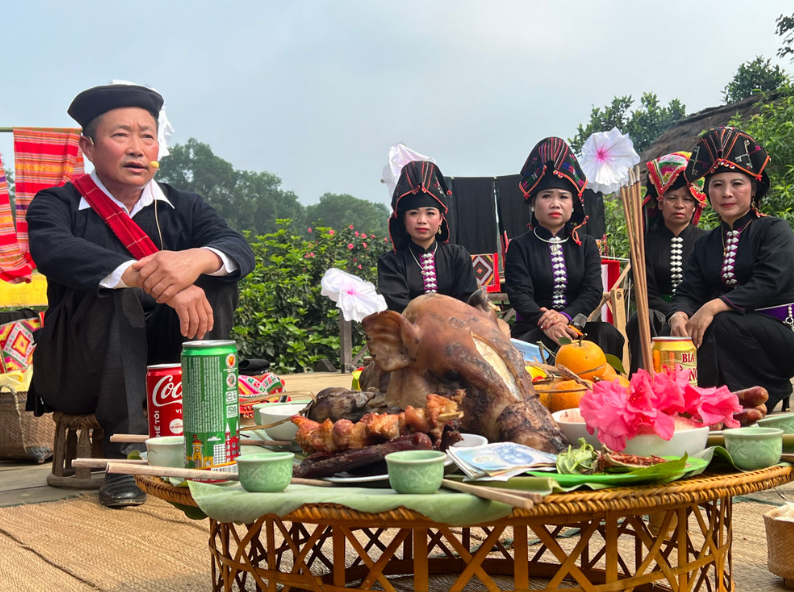
Traditional offerings often include characteristic local products of the village. (Source: Collected)
In the ritual part, the shaman rings the bell beside the buffalo and performs the bamboo-tossing ritual to check for good omens, believing that if the bamboo falls in the "xieng" shape (one piece of bamboo face down, the other face up), it is a good omen. The ritual usually lasts about 30 minutes and concludes with the ritual of lowering the offering tray, followed by sharing blessings and drinking ruou can wine together, creating a joyful and united atmosphere.
3.2. Festival Part: Play and Community Activities
When the gongs and drums sound, marking the beginning of the festival part, the atmosphere in the village becomes lively with many unique folk games. The Xen Ban, Xen Muong Festival becomes vibrant with colors with activities such as con ball throwing, tug of war, the "to ma le" game, spinning tops, stick pushing, crossbow shooting,.... These games not only bring joy but also create opportunities for villagers to bond, while demonstrating a healthy, cheerful competitive spirit.
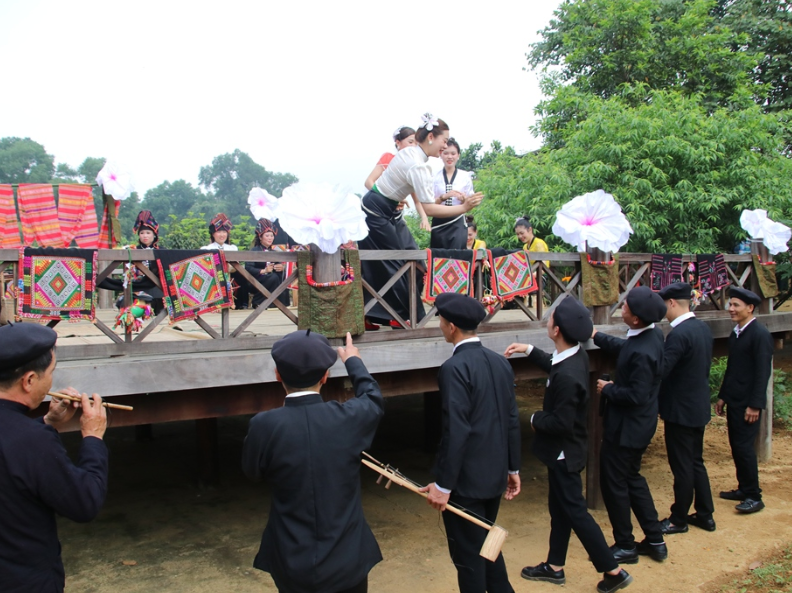
The atmosphere in the village becomes lively with many unique folk games. (Source: Collected)
In addition, the festival also includes traditional artistic activities such as call-and-response singing, flute playing, and khen playing, which is an opportunity for young men and women to get acquainted and interact. The khăn xòe dances and the lively sound of luống drumming create a joyful and vibrant atmosphere. This is also an opportunity for the younger generation to remember, preserve, and learn the precious cultural values of the nation, while fostering solidarity and bonding among community members.
4. Cultural, Social, and Tourism Values of the Xên Bản, Xên Mường Festival
4.1. Cultural Preservation, Community Cohesion
The Xên Bản, Xên Mường Festival is an indispensable part of preserving the intangible cultural values of the Thai people. From generation to generation, the festival has become a bridge, helping children and youth learn about the ways of preparing offerings and traditional dance art. This is an opportunity for the younger generation to understand and feel more deeply about national identity, and to create a vibrant environment for cultural values to be preserved and promoted.
Each year, the Xên Bản, Xên Mường Festival becomes a strong source of inspiration, passing on love and pride for Thai culture. Children are not only exposed to the language, costumes, and music, but also live in the community's characteristic cultural space. Local authorities and organizations also always focus on supporting the preservation of the festival, to help the younger generation preserve this heritage.
4.2. The Xên Bản, Xên Mường Festival and the Development of Northwest Tourism
The Xên Bản, Xên Mường Festival has been recognized as a national intangible cultural heritage, a testament to its importance in the nation's cultural heritage. This recognition has contributed to enhancing the festival's value, not only within the Thai community but also in the context of Vietnam's cultural tourism.
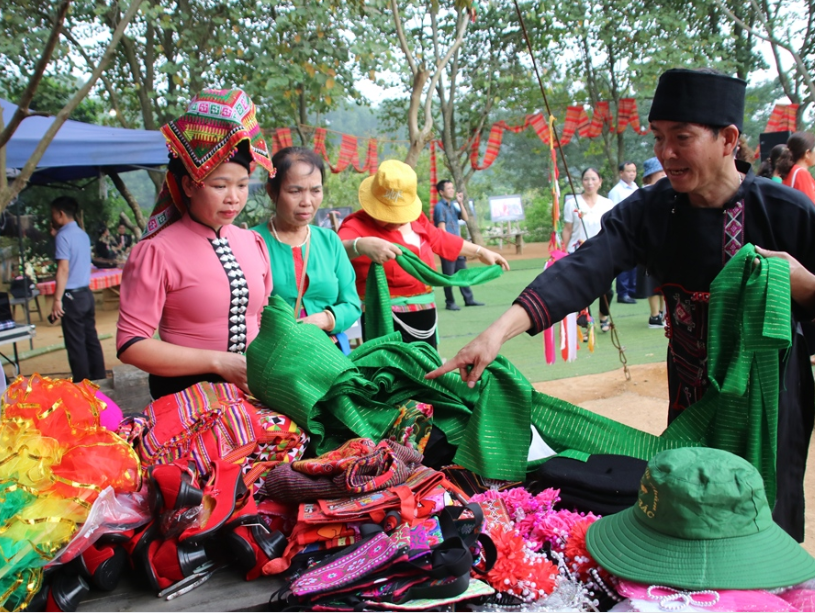
Xen Ban, Xen Muong Festival attracts many domestic and international tourists. (Source: Compilation)
Tourists participating in the festival can immerse themselves in the joyful atmosphere of the village festival. Lively activities such as Xoe dance, folk games, and rituals worshipping deities offer a unique and unforgettable cultural experience.
Xen Ban, Xen Muong Festival not only attracts domestic tourists but also appeals to international visitors, creating an opportunity to promote the image of Northwest Vietnam tourism to the world. The combination of spiritual and traditional values with a vibrant festive atmosphere has created a strong attraction, especially for those who love exploring local culture.
4.3. Communicating the message of conservation and sustainable development of villages
Besides cultural and tourism values, the Xen Ban, Xen Muong Festival also carries a strong message about environmental protection and sustainable development. Through the rituals and activities during the festival, the Thai people remind the community to express gratitude to ancestors and nature for nurturing and protecting their lives.
The festival also emphasizes the spirit of protecting the forests, streams, and sacred water sources of the villages. These values not only reflect the deep connection between humans and nature but also affirm the strong bond between humans and their surrounding environment. Through this, the Xen Ban, Xen Muong Festival also conveys a message of solidarity, cooperation, and sustainable development, aiming for a stable, prosperous life for the entire community and protecting the long-lasting cultural values of the nation.
5. Suggested Itinerary for Experiencing the Festival Combined with a Visit to Sun World Fansipan Legend
Exploring Northwest Vietnam through festivals and majestic natural scenery
With a day trip itinerary, tourists can fully participate in the Xen Ban, Xen Muong Festival and combine it with exploring famous Thai villages such as Pac Nga and Mai Chau. This is an opportunity for tourists to experience Northwest Vietnam's mountain forest ecosystem with its majestic natural scenery, terraced fields, misty fog, and fresh air.
After participating in the festival, tourists also have the opportunity to learn about the traditional brocade weaving craft of the Thai people, enjoy delicious local specialties such as grilled fish and sticky rice cooked in bamboo tubes, and explore the simple yet rich life of the ethnic community.
Combining with Sun World Fansipan Legend
To make the trip more complete, tourists can combine a visit to the Sun World Fansipan Legend tourist area, where they can not only enjoy a high-class resort space but also have the opportunity to experience the cable car journey to conquer Fansipan peak - the Roof of Indochina, located at an altitude of 3,143m. Here, you will admire the panoramic view of the majestic Hoang Lien Son mountain range and the poetic Muong Hoa valley, immersing yourself in the unique spiritual space of the Fansipan peak area.
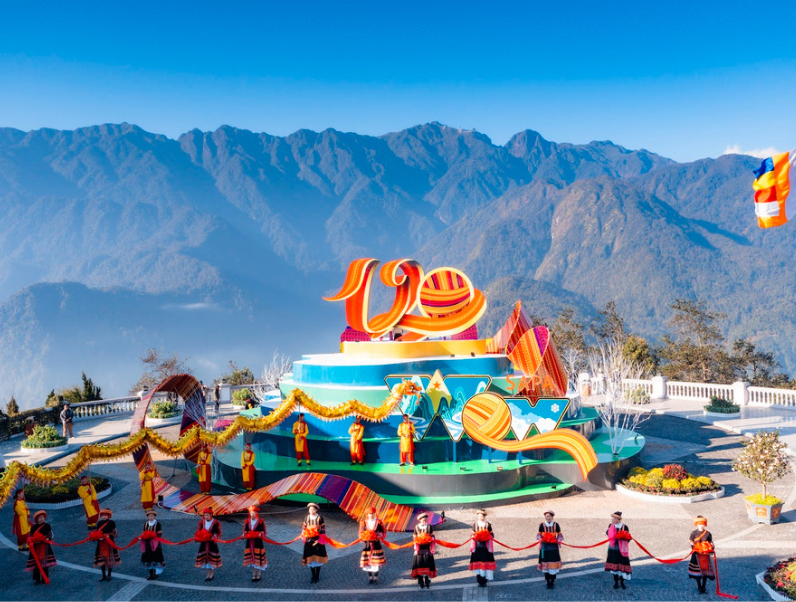
Opening of the Khèn Hoa Festival on the sacred peak of Fansipan. (Source: Collected)
The resort also possesses majestic spiritual structures, diverse culinary spaces, and cultural festivals imbued with the flavors of the Northwest. Especially, Ban May at Sun World Fansipan Legend is a place that vividly recreates the ethnic minorities of the Northwest, along with the largest rose valley in Vietnam, offering a promising experience full of cultural colors.
6. Experiences and notes when participating in the Xên Bản, Xên Mường festival
While participating in the rituals, visitors should note maintaining solemnity, especially during the ceremony part. When taking photos, especially near the shamans and village dignitaries, remember to ask for permission beforehand to show respect. Avoid crowding or making noise while the ritual is taking place, as this space requires reverence for the community's spiritual rites.
When participating in the festival, visitors should pay special attention not to touch the offerings or sacred objects, as these are items of great significance in the ritual. Especially, when taking photos near shamans or dignitaries during the festival, avoid using flash, as this can diminish the sacredness of the space. At the same time, always maintain a respectful, silent, and solemn attitude when near altars or areas where rituals are taking place.
Furthermore, for the festival participation to be profound and meaningful, visitors should also learn about the traditions, historical stories behind the Xên Bản, Xên Mường festival. This will help you better understand in the journey of preserving and promoting the unique cultural values of the Thai community.
The Xên Bản, Xên Mường festival is truly a unique cultural symbol of the Thai people of the Northwest with deep spiritual and community values, from praying for good harvests to fostering village unity. Come and experience the festival to immerse yourself in the unique Northwest identity amidst the majestic mountain and forest scenery!


