




1. Overview of the Temple of Le Hoan
1.1 Where is the Temple of Le Hoan?
Located in the heart of the Chu River Delta region, the Temple of Le Hoan is solemnly situated in Trung Lap village, Xuan Lap commune, Thanh Hoa province. The relic complex covers an area of nearly 4 hectares, about 50km northwest of Thanh Hoa city center. This is the land that witnessed the early years of the famous Emperor Le Dai Hanh.
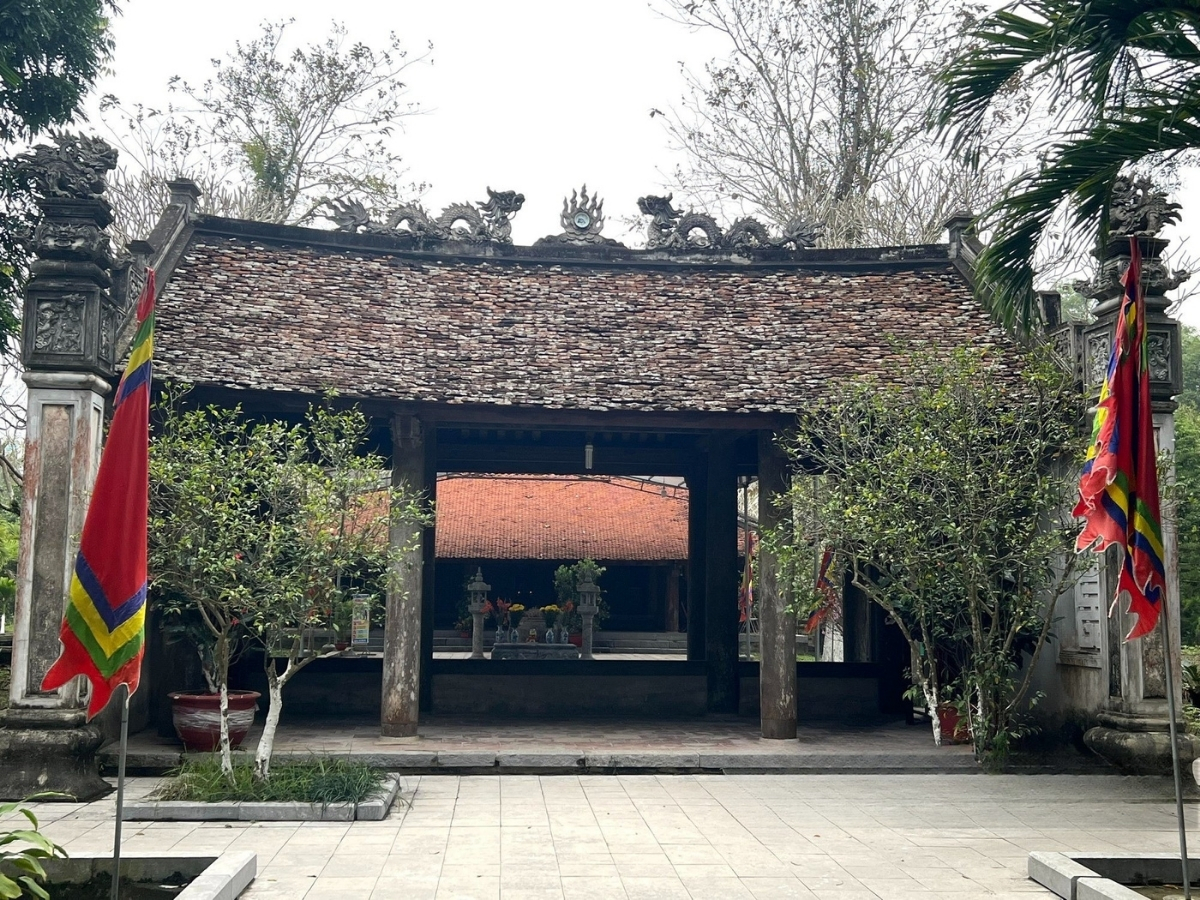
Le Hoan Temple is located in Xuan Lap commune, Thanh Hoa province. (Source: Collected)
It was on this sacred land that Le Hoan was born, who is known as the spirited founding king of the Early Le dynasty. The space around the temple still retains the peaceful, simple beauty of a rural area in the North Central region of Vietnam, with lush green rice fields and the gently winding Chu River.
1.2 Origin and historical significance
According to legend, King Le Hoan's mother gave birth to a handsome baby boy with bright eyes and a resounding cry while she was out collecting snails. In his childhood, he was associated with the omen of a golden dragon coiling around him, a sign of a sovereign. Thanks to his intelligence, love for learning, and martial prowess, Le Hoan was soon trusted by King Dinh Tien Hoang, who appointed him as Thap dao tuong quan and Dien tien do chi huy su. After the incident where King Dinh was assassinated, the country fell into chaos and was threatened by the Tong and Chiem Thanh invaders, Le Hoan was enthroned to protect the nation and bring peace to the people.
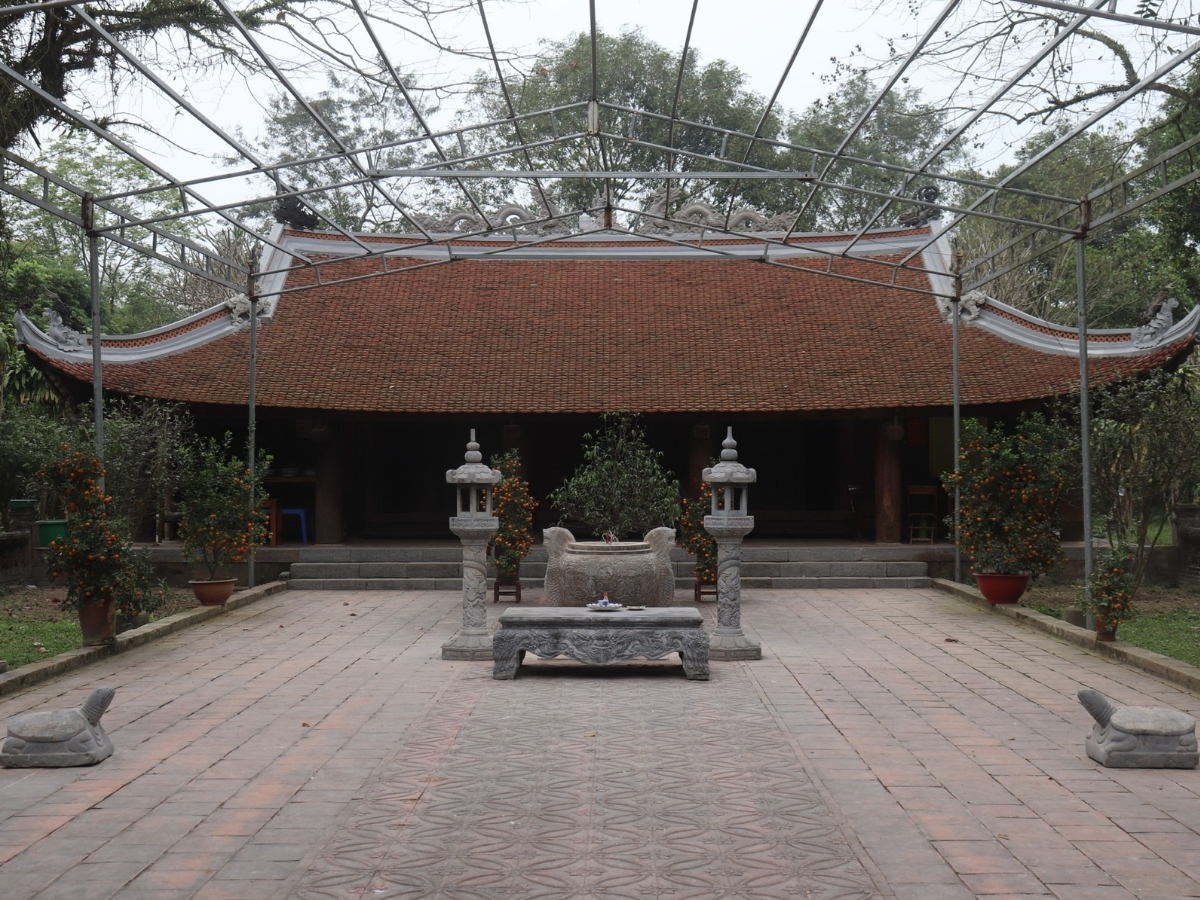
The temple was built by the people of Xuan Lap area to commemorate King Le Hoan. (Source: Collected)
In just a few years of reign, he achieved victory at Bach Dang in 981, defeating the Song army. This event officially affirmed Dai Co Viet as an independent nation. Under the Tien Le dynasty, the country prospered, agriculture developed, and culture was emphasized. When the king passed away, the people of his hometown, Xuan Lap commune, built a temple to commemorate King Le Hoan. Through many dynasties, the temple of Le Hoan has been renovated, becoming a sacred relic, a symbol of reverence for the national hero.
1.3 Architecture and spiritual space
The Le Hoan Temple is a special national relic, comprising a complex of worship architecture associated with the life and family of King Le Hoan, including the Sinh Thanh foundation, the Queen Mother's tomb, Hoang Khao's tomb, and Le Dot's tomb.
The structure is designed with a Chu Cong layout, consisting of 13 connected bays: the front hall, middle hall, and rear sanctuary. The truss structure is characteristic of Tien Le period architecture, with a system of gia chieng, chong ruong, ke bay, and keo goc tightly connected, creating a sturdy and harmonious whole. The intricately carved sections, including openwork, bas-relief, and high-relief carving, are inspired by flowers, leaves, and mythical creatures, embodying the traditional art of the Thanh region.
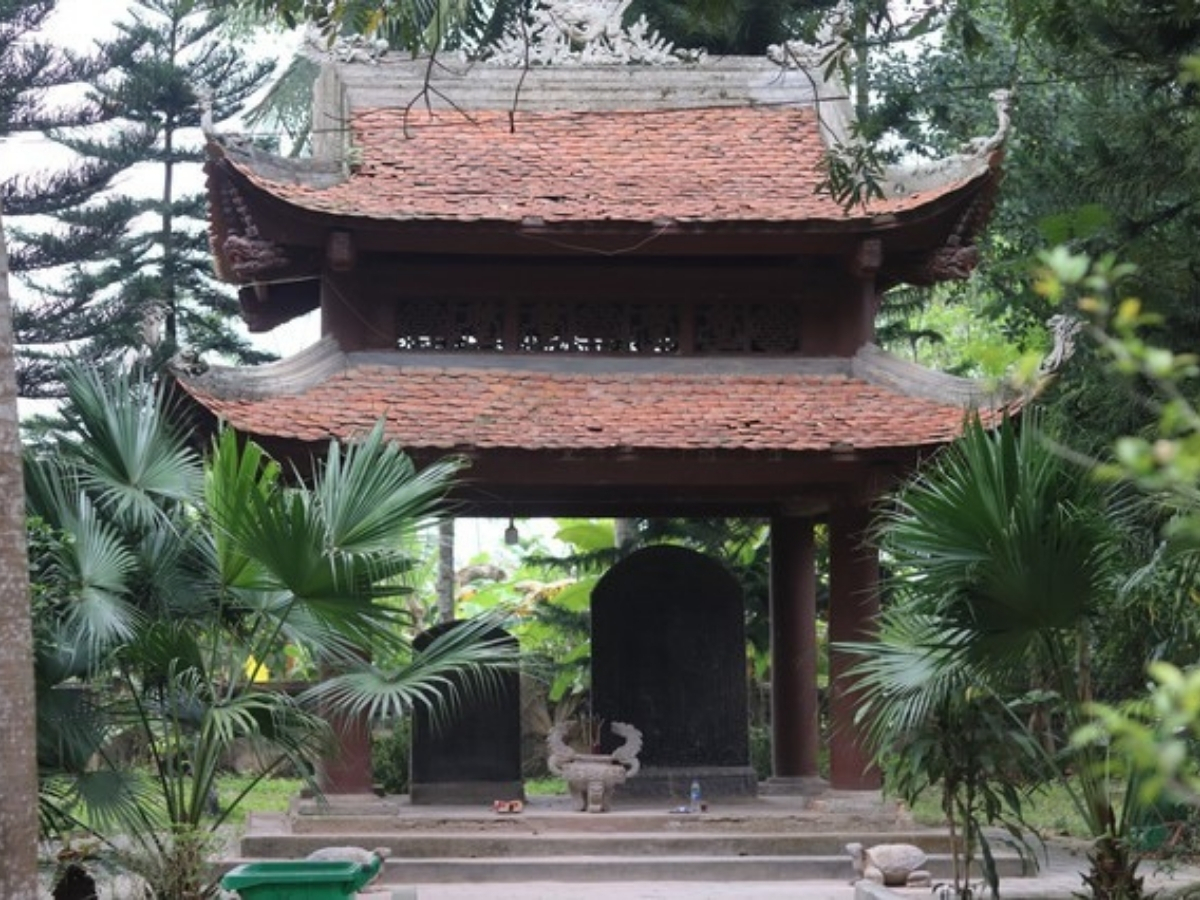
Two stone steles dating back hundreds of years at Le Hoan Temple. (Source: Collected)
The temple still preserves many precious artifacts, including two 17th-century stone steles recording the king's life and career, and ancestral worship land, along with 14 royal decrees from the Le and Nguyen dynasties, and ancient horizontal lacquered boards and couplets. These relics not only have artistic and historical value, but also clearly demonstrate the spirit of 'drinking water remembering its source' and the characteristic spiritual life of the people of Thanh Hoa region.
2. How to travel and experience the journey
2.1 From Hanoi to Le Hoan Temple
The route from Hanoi to Le Hoan Temple is about 170-180km long, with travel time usually taking 3 to 4 hours. Visitors have many means of transport to choose from when wishing to visit this spiritual land.
For private cars, it is recommended to travel along the Ninh Binh - Thanh Hoa expressway, then turn onto National Highway 47 to Tho Xuan, and then follow the signs into Xuan Lap commune. Travelers who prefer rail can take a train to Thanh Hoa station, then take a bus or taxi to Le Hoan Temple. Along the journey, peaceful rural scenes of the North Central region appear, offering a memorable experience for the trip.
2.2 From Thanh Hoa City Center to Tho Xuan
From Thanh Hoa city center to Le Hoan Temple is a 50km distance which many consider one of the attractive exploration routes of Thanh Hoa. The most convenient route is to follow National Highway 47, then follow local signs to Trung Lap village, Xuan Lap commune.
On the way, visitors will encounter vast rice fields, peaceful villages, and the gentle Chu River. Ancient houses interspersed with the serene landscape create a characteristic picture of the Vietnamese countryside.
2.3 Notes on traveling and visiting
The ideal time to visit Le Hoan Temple is early in the morning, when the weather is fresh, cool, and the sunlight is gentle. Starting early will help avoid the midday sun and provide an experience of the sacred space in tranquility.
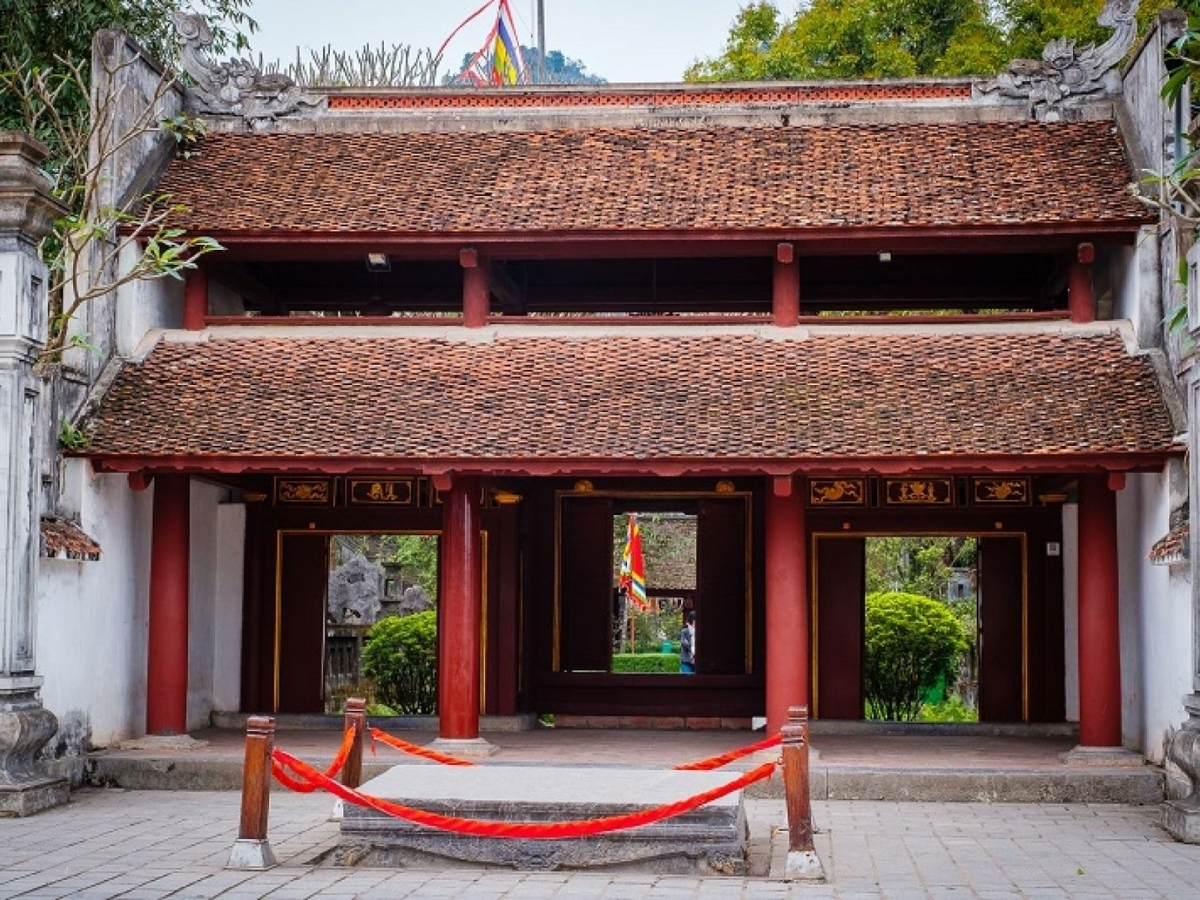
Solemn scene at the Le Hoan Temple. (Source: Collected)
When entering the relic site, visitors should dress neatly and politely to show respect for the place of worship. This is also a way to show civilized awareness in a spiritual space.
The relic management board always supports and reminds visitors to maintain order, general hygiene, and comply with photography regulations. The cooperation of each person will contribute to preserving the beauty and sustainable value for the Le Hoan Temple .
3. Outstanding experiences at the Le Hoan Temple
3.1 Le Hoan Temple Festival
Annually, from the 7th to the 9th day of the 3rd lunar month, the Le Hoan Temple becomes the venue for a traditional festival to commemorate the merits of King Le Dai Hanh. The main festival day, the 8th day of the 3rd lunar month, is the anniversary of the king's death, attracting a large number of people and visitors to offer incense and pay respects.
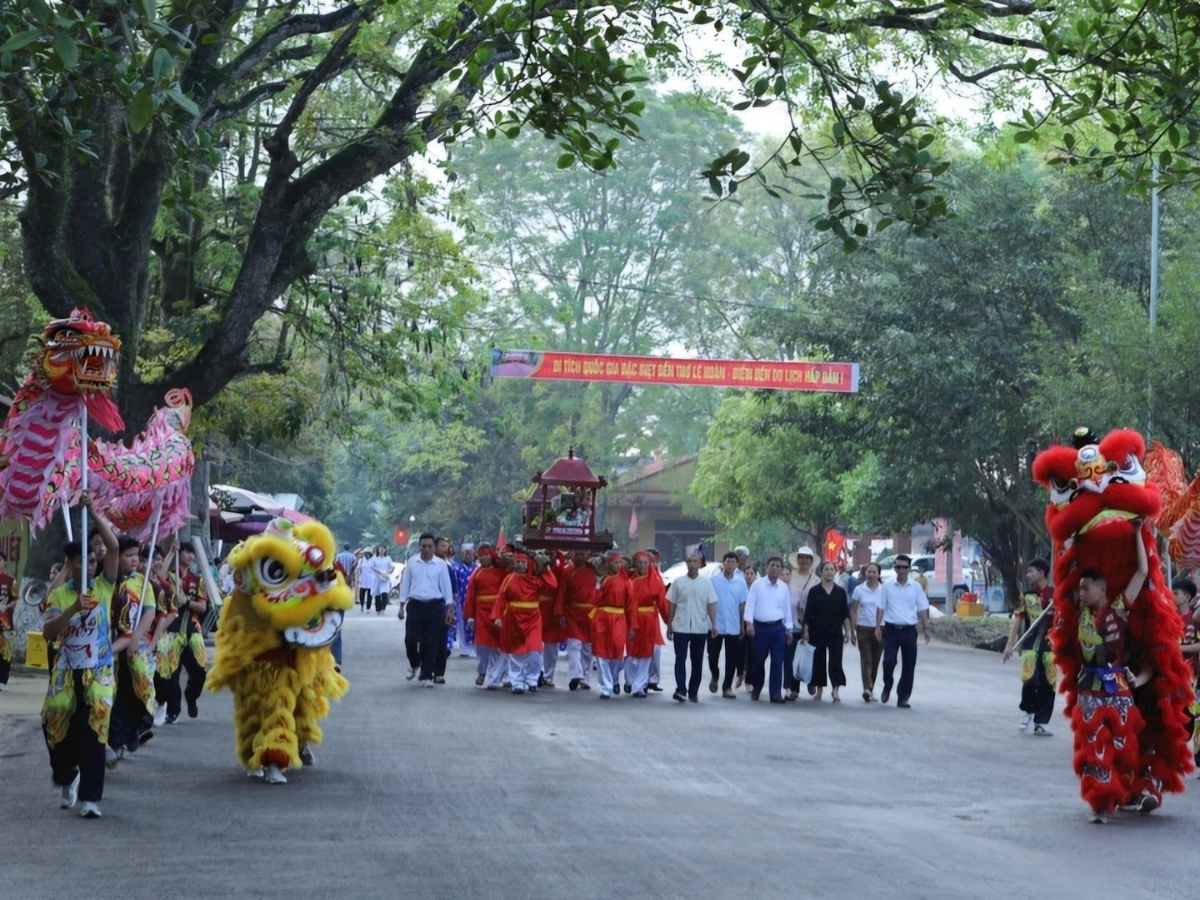
The festival of Le Hoan Temple is held in the 3rd lunar month. (Source: Collected)
The festival atmosphere is filled with traditional cultural colors. The sacrificial ceremony is performed solemnly according to ancient rituals, followed by a grand palanquin procession around the temple area. Folk art performances such as Quan Ho singing, dragon dance, and lion dance contribute to creating a lively atmosphere and community connection.
Although not very large in scale, the festival at the Le Hoan Temple carries the distinct characteristics of the Chu River delta region and Thanh Hoa. It is also an occasion for people to pray for abundant harvests and peace for the country, while also educating the younger generation about patriotism.
3.2 Pilgrimage – Praying for Peace and Prosperity
Upon entering the space of the Le Hoan Temple, a sense of purity and solemnity easily spreads thanks to the combination of ancient architecture and the sacred aura passed down through generations. Incense smoke blends into the air, and the shimmering light from candles creates an impressively sacred scene.
The activity of offering incense to pray for peace and prosperity takes place year-round, welcoming many local people and visitors from afar. Many families come here not only to pray but also to hear stories about the heroic history of King Le Hoan and to feel the resilient spirit of the nation.
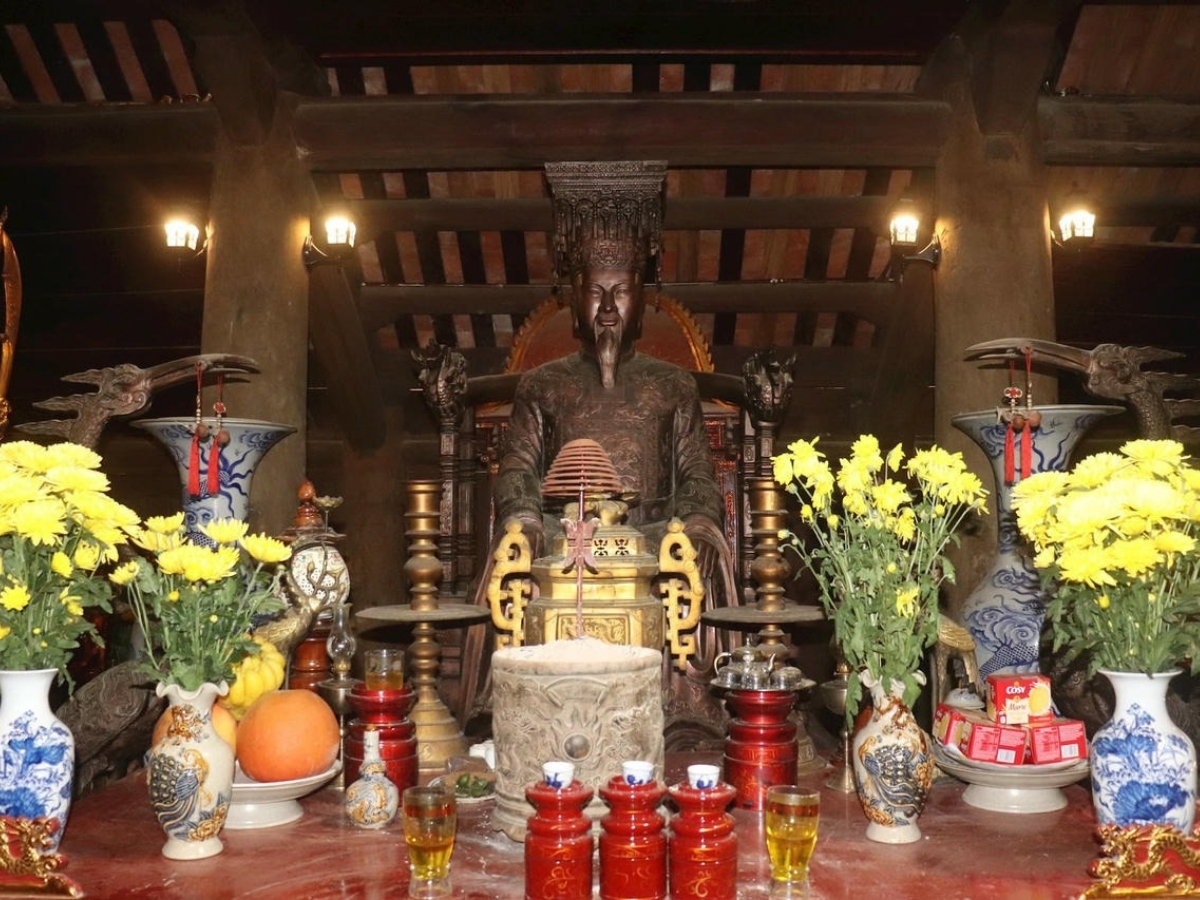
Statue of King Le Hoan at the temple. (Source: Compilation)
When admiring precious artifacts such as royal decrees, lacquered boards with parallel sentences, and couplets, visitors feel as if they are living in a thousand-year historical atmosphere. Stories about the life and career of King Le Dai Hanh, told by elders, help inspire, foster pride, and cultivate a sense of preserving tradition for the next generation.
4. Combining tourist destinations in Thanh Hoa
4.1 Sam Son Beach
Located about 65km from Le Hoan Temple, Sam Son Beach is an ideal choice to end a day exploring the land of Thanh Hoa. This beach is famous for its fine white sand, gentle waves, and modern tourism services. After visiting the spiritual space, visitors can enjoy the fresh sea air and savor delicious seafood with family and friends.
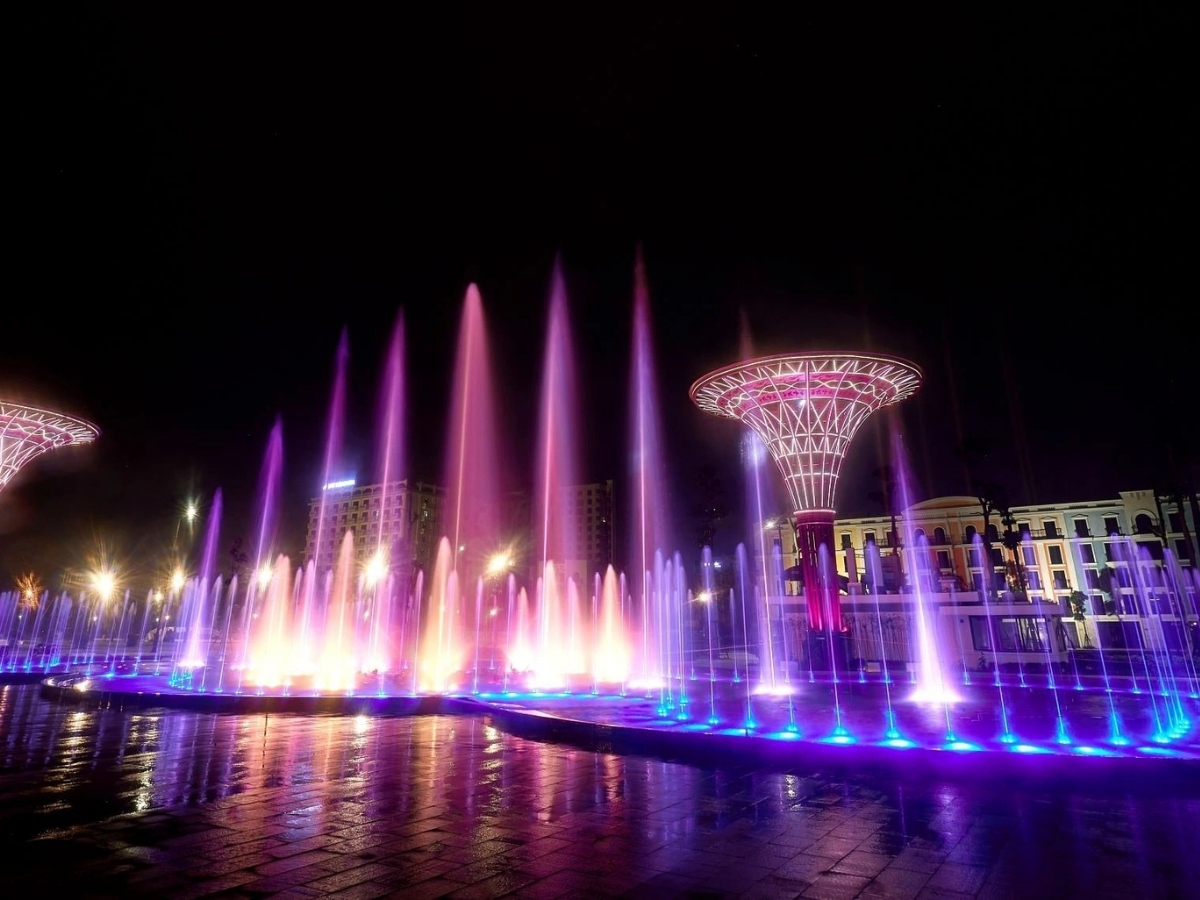
Sam Son Sea Square is beautifully shimmering when lit up. (Source: Collected)
And speaking of Sam Son, visitors can also visit the famous sea square area. Sam Son Sea Square is the central highlight of the coastal city, including prominent features such as a monument, a walking street, a fountain, and a green system creating a modern landscape. Located on a 15-hectare festival landscape axis, the square can accommodate over 10,000 people, serving as the most vibrant space for cultural events, festivals, and community activities in Sam Son.
4.2 Cam Luong Sacred Fish Stream
About 20km from Tho Xuan, Cam Luong Sacred Fish Stream is a unique destination with its sacred fish in Ngoc village stream. This place is attractive due to sacred legends about fish that are never caught, alongside beautiful, pristine natural scenery.
Visiting the sacred fish stream, visitors can not only admire the picturesque landscape but also hear mystical legends about mountain and stream spirits associated with the spiritual life of the Muong people. Combining a visit to the temple of King Le Hoan and Cam Luong Sacred Fish Stream will provide a complete cultural-spiritual experience, rich in the identity of Thanh Hoa land.
4.3 Nui Nua - Am Tien Mountain
The relic complex of Nui Nua - Am Tien mountain, about 25-30km from the temple of King Le Hoan, is associated with the image of the heroine Ba Trieu. The natural scenery here is highlighted by majestic limestone mountain ranges, fascinating caves, and a fresh, cool atmosphere.
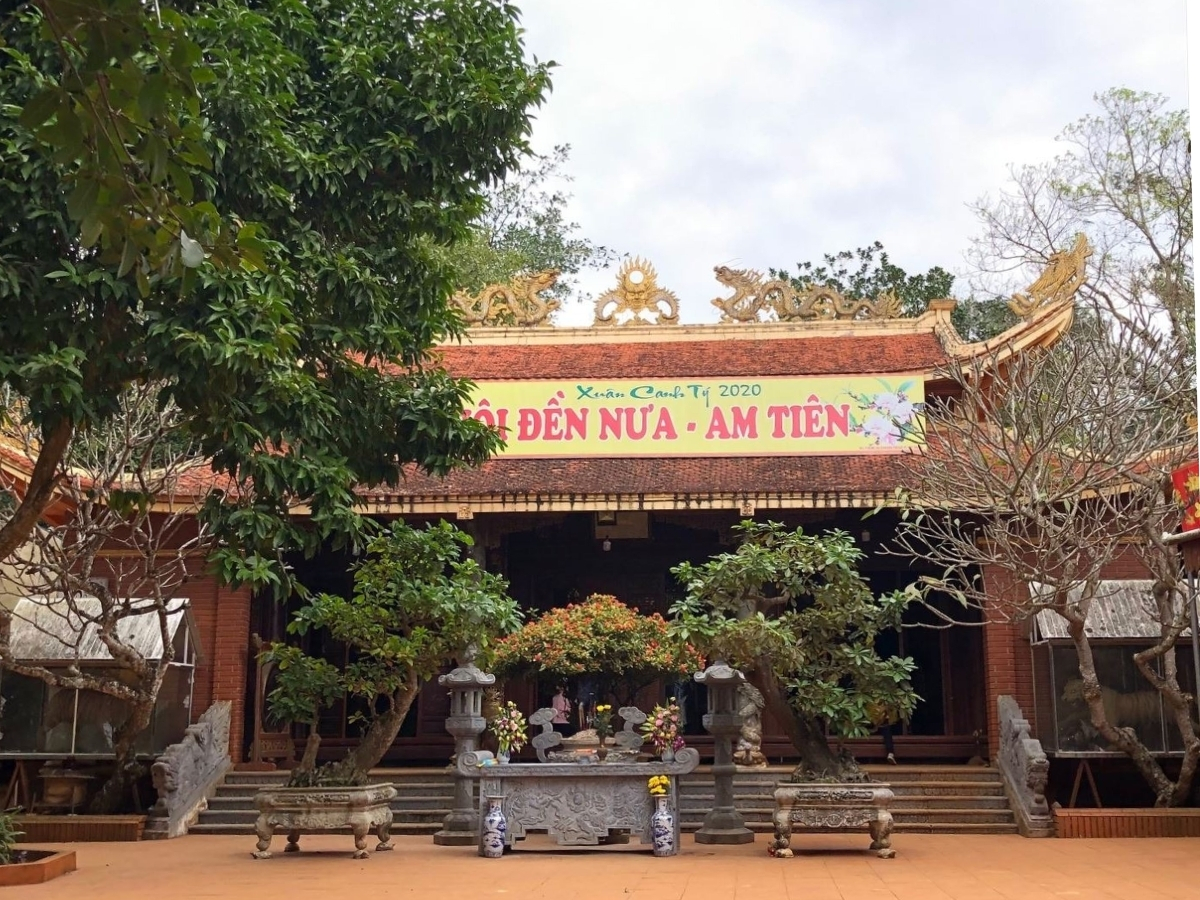
Temple Nua is a top spiritual destination in Thanh Hoa. (Source: Collected)
Reaching the mountaintop, visitors feel like they are entering a sacred, mystical space amidst the vast forest. From here, gazing into the distance, one can admire the panoramic view of the vast Thanh Hoa plain, stretching out in the green hues of fields and mountains. Nui Nua - Am Tien is not only a historical relic but also an ideal destination to reconnect with nature, find peace, and feel the strong vitality of this heroic land.
Le Hoan Temple is not only an architectural work of historical value but also a center for preserving spiritual culture, symbolizing the tradition of "drinking water, remembering its source". It is also a testament to the resilience, patriotism, and cultural beauty of the Thanh region, worthy of being an unmissable stop when exploring the tradition-rich land of Thanh Hoa.


