




1. Fansipan Cable Car – an iconic experience in the Sa Pa travel journey
When mentioning Sa Pa tourism , one of the experiences that almost always appears in every itinerary is the Fansipan Cable Car . More than just a means of transport to the mountaintop, this cable car route has become a prominent tourist icon of the Northwest region, offering visitors the opportunity to conquer the “Roof of Indochina” easily and impressively.
Previously, to reach the summit of Fansipan, which is 3,143m high, visitors had to spend 2–3 days trekking through the Hoang Lien Son forest with quite challenging terrain. However, since the Fansipan Cable Car became operational, the journey to conquer the highest peak in Indochina now takes only about 15 minutes. Thanks to this, anyone – from the elderly, families with young children, to tourists with limited time – can experience the feeling of standing on the legendary mountaintop.
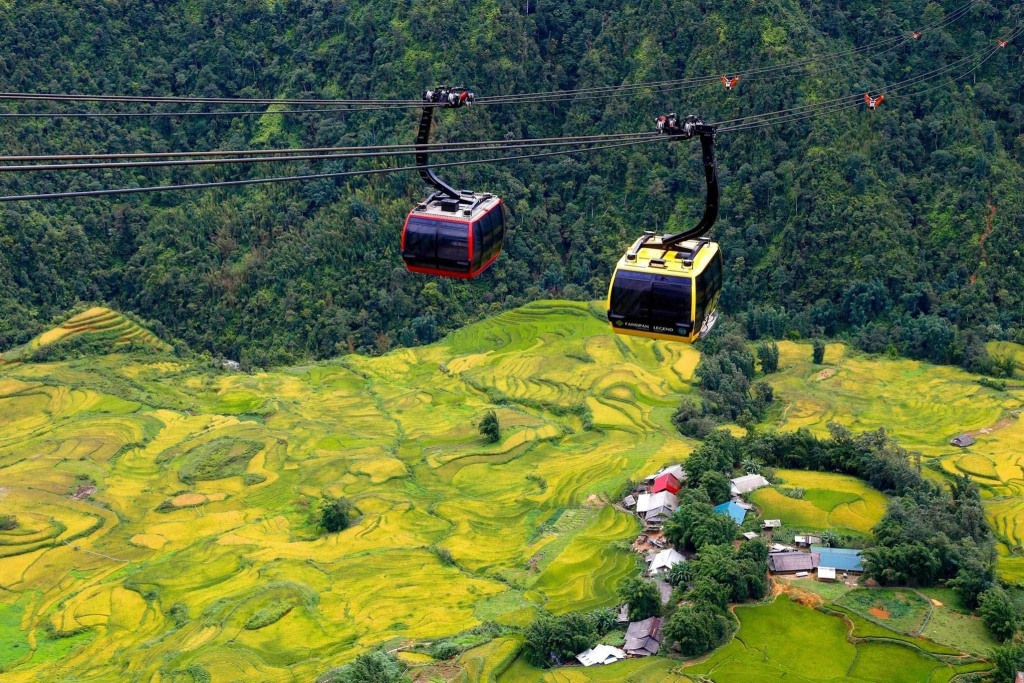
Fansipan Cable Car is one of the leading tourist symbols of Sa Pa (Source: Collected)
The special point that makes the Fansipan Cable Car always included in Sa Pa tour itineraries is the spectacular scenic journey from above. Throughout the trip, the cable car cabin takes visitors gliding over lush green valleys, the Hoang Lien Son primeval forest, and the characteristic floating sea of clouds of the Northwest mountainous region. On clear days, the scenery of terraced fields and villages appearing beneath the mountains creates a majestic natural picture that leaves many tourists in awe.
Beyond just the sightseeing experience, the Fansipan Cable Car journey also opens up a unique tourist-spiritual complex on the mountaintop. From the arrival station, visitors can continue to explore the large-scale spiritual structures such as the Amitabha Buddha statue, the Great Buddha statue, Kim Son Bao Thang Pagoda, or conquer the 3,143m milestone – marking the “Roof of Indochina”. It is the combination of magnificent natural landscapes and unique cultural-spiritual spaces that makes this experience an indispensable highlight of any Sa Pa exploration.
By converging landscape elements, unique experiences, and symbolic value, the Fansipan Cable Car is not just a means of transportation but also an emotional exploration journey. Therefore, for most tourists visiting Sa Pa, the trip will be incomplete without experiencing this special cable car route at least once.
2. The 10-year journey of Fansipan Cable Car – from engineering marvel to Sa Pa's tourism icon
2.1. The birth of Fansipan Cable Car – a world record-breaking project
The construction of the Fansipan Cable Car began in November 2013 and was officially inaugurated on February 2, 2016, marking a major turning point in the history of Sa Pa's tourism development. It was the most modern three-rope cable car system in the world at that time, invested by Sun Group with a total capital of trillions of Vietnamese dong, connecting Muong Hoa Valley with Fansipan peak at 3,143m.
Immediately upon its launch, the Fansipan Cable Car set two Guinness World Records: the world's longest three-rope cable car (6,292.5m) and the world's largest elevation difference between the departure and arrival stations (1,410m). With a system of 33 cabins, each accommodating about 30–35 passengers and a transport capacity of up to 2,000 passengers/hour, this project opened up the opportunity to conquer the “Roof of Indochina” in just about 15 minutes.
The appearance of the cable car was not only an engineering marvel amidst the challenging terrain of the Hoang Lien Son range but also turned the dream of reaching Fansipan peak – previously only for professional trekkers – into an accessible experience for all tourists.
2.2. A boost that changed the face of Sa Pa tourism
After becoming operational, the Fansipan Cable Car quickly became a major driving force for the strong development of Sa Pa tourism. If before 2016, the misty town welcomed only about 600,000–700,000 visitors annually, after the cable car line began operating, the number of visitors increased rapidly and continuously set new records.
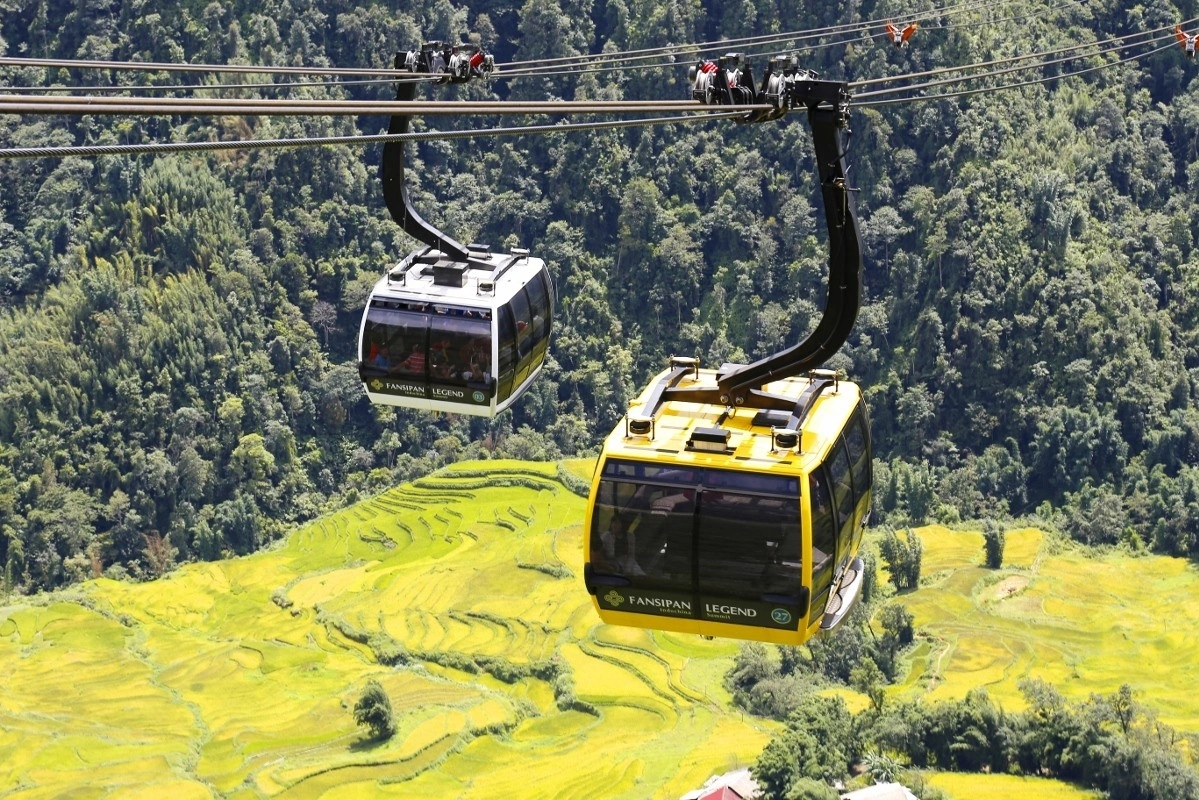
10 years of operation of the Fansipan cable car has contributed to changing Sapa tourism (Source: Collected)
By 2025, after nearly a decade of operation, Sapa has welcomed over 4.3 million tourist arrivals per year, a 4–5 fold increase compared to the period before the cable car. The local tourism revenue has also increased sharply, reaching about 19,000 billion VND – more than 10 times higher than in the period before 2016.
Not only bringing economic benefits, the cable car route has also contributed to changing how tourists experience Sapa. From a destination mainly for trekking and nature exploration, Sapa has developed into a diverse tourist resort with many new experiences such as visiting the spiritual complex on the Fansipan peak, highland cultural festivals, or cloud-watching and photo-hunting activities from an altitude of over 3,000m.
2.3. A 10-year journey making Fansipan a symbol of Vietnamese tourism
After nearly a decade of operation, the Fansipan cable car has become not only a tourist transportation facility but also a new symbol of Sapa. The cable car system along with Sun World Fansipan Legend tourist area has contributed to making Sapa one of the fastest-growing destinations in Asia, attracting domestic and international tourists.
Today, the journey to conquer Fansipan by cable car has become a "must-try" experience when visiting Sapa. From cabins suspended amidst clouds, tourists can admire the majestic panoramic view of the Hoang Lien Son mountain range, the poetic Muong Hoa valley, and the dreamy sea of clouds characteristic of the Northwest region.
After 10 years of operation, the Fansipan cable car has not only helped millions of people reach the "Roof of Indochina" but also contributed to promoting Sapa's image to the world, making it one of Vietnam's prominent tourism symbols.
3. What's special about the Fansipan cable car experience?
3.1. A "flight amidst the sea of clouds" journey to admire the entire Hoang Lien Son range
One of the reasons why the Fansipan cable car is always included in Sapa travel itineraries is the spectacular scenery from above. In just about 15 minutes of travel, the cable car cabin takes tourists gliding over Muong Hoa valley, the Hoang Lien Son primeval forest, and the characteristic steep mountain slopes of the Northwest region.
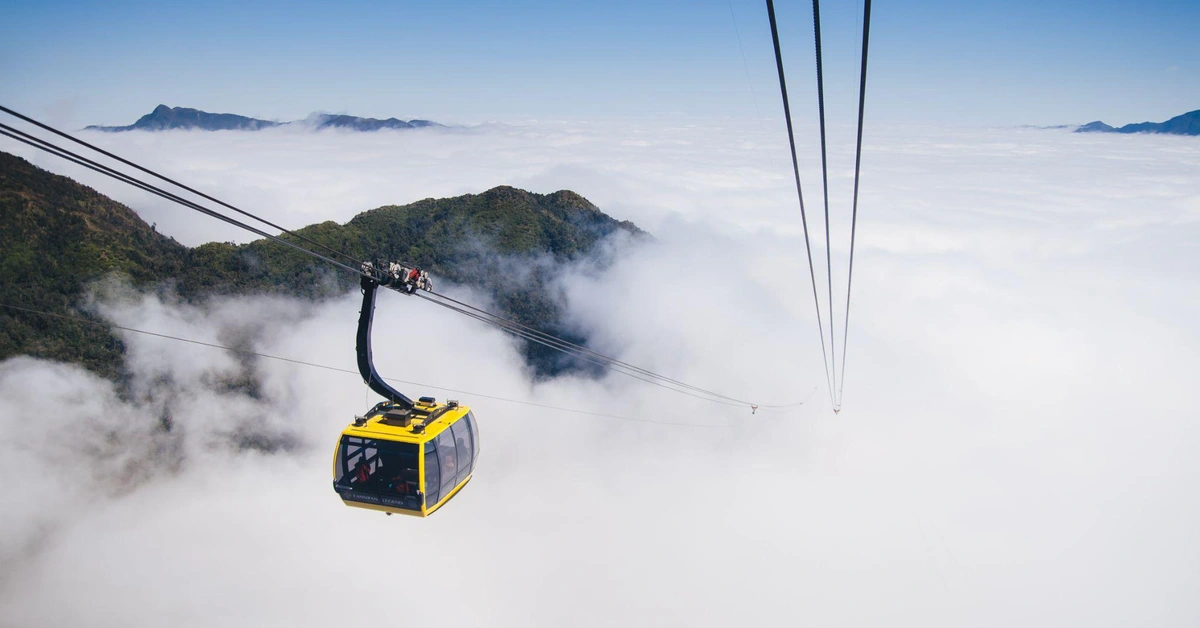
Tourists have the opportunity to "fly" over the sea of clouds thanks to the Fansipan cable car (Source: Collected)
From an altitude of over 3,000m, the natural scenery appears like a majestic painting. On sunny days, tourists can see winding terraced fields, small villages hidden in the valley. During winter or early mornings, a white, fluffy sea of clouds covers the mountains and forests, creating a feeling of "flying amidst the sky and clouds". This very moment makes the Fansipan cable car journey a memorable experience for many tourists.
3.2. Conquering the "Roof of Indochina" with ease
If previously conquering Fansipan required a multi-day trekking journey with quite challenging terrain, now the Fansipan cable car has made this journey easier than ever. After just one cable car ride and a few minutes of travel by mountain train or climbing stone steps, tourists can set foot on the 3,143m milestone – the place known as the "Roof of Indochina".
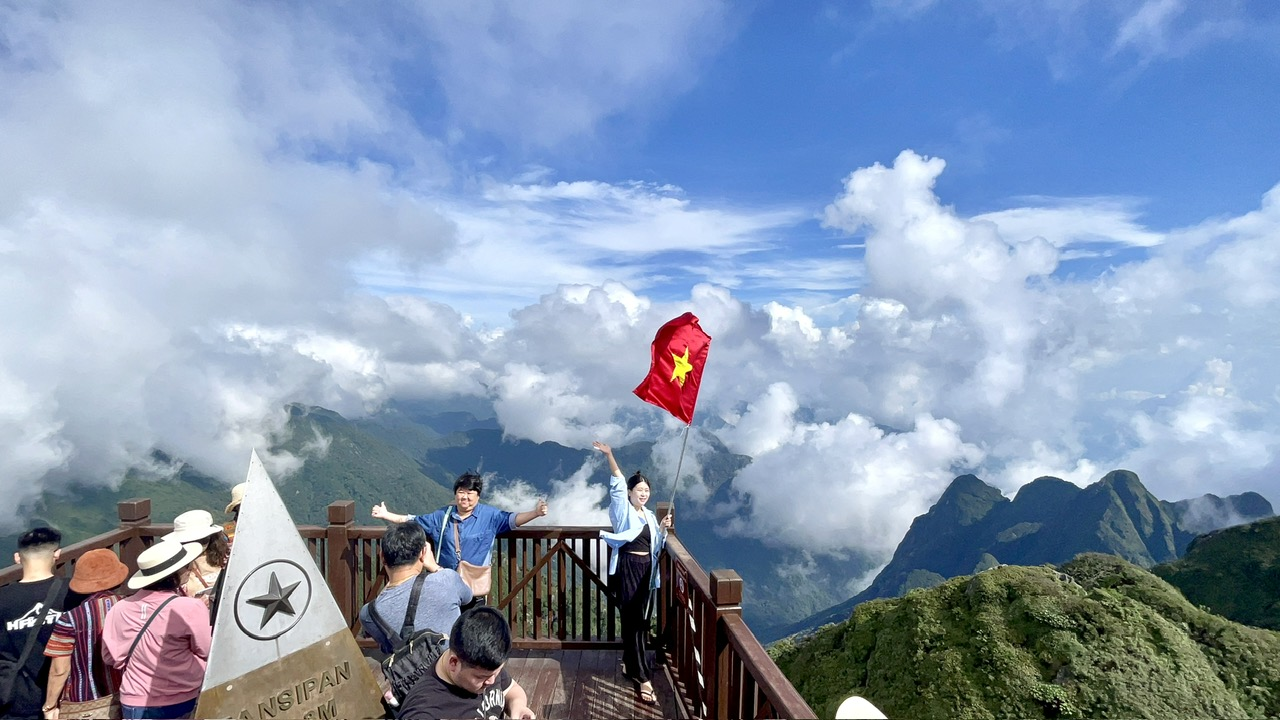
Tourists can easily conquer Fansipan peak thanks to the modern cable car system (Source: Collected)
The moment of standing on the top of Fansipan, looking out in all directions at the sea of clouds and majestic mountains, brings a special sense of conquest that not all destinations can offer. This is also why many tourists consider the Fansipan cable car experience an indispensable milestone when visiting Sa Pa.
3.3. Explore the cultural - spiritual complex on the mountaintop
Not only does it have impressive natural landscapes, but the Fansipan cable car journey also opens up opportunities to explore a large-scale cultural and spiritual complex on the mountaintop. This area is built with architecture bearing the strong imprint of Buddhist culture and traditional Vietnamese pagoda style amidst the Northwest mountain scenery.
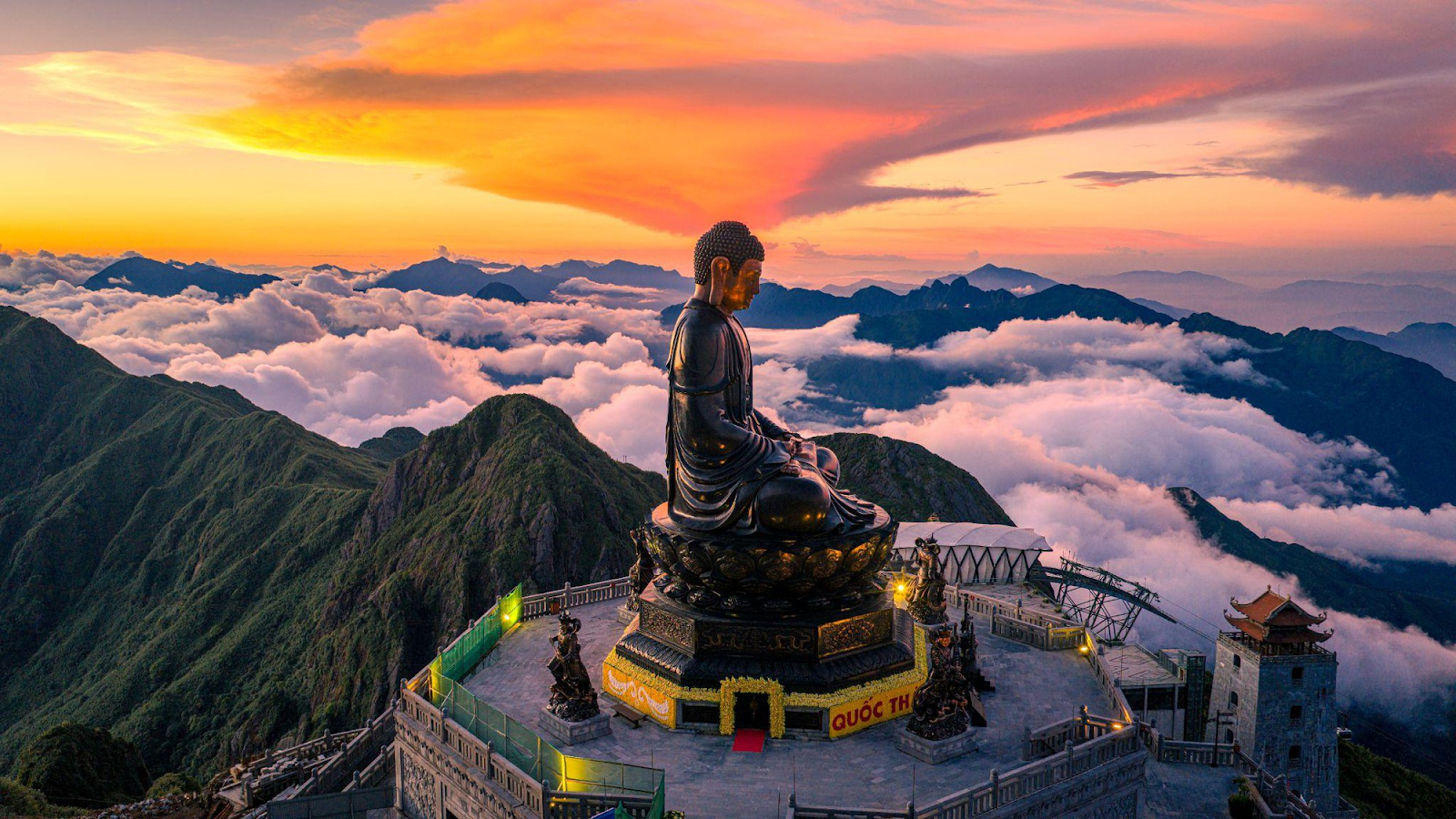
Majestic spiritual complex on Fansipan peak (Source: Collected)
Visitors can visit many outstanding structures such as the giant bronze Amitabha Buddha statue tens of meters high, Kim Son Bao Thang Pagoda, Bich Van Zen Monastery, or the Arhat path leading to Fansipan peak. In the sacred space of clouds and mountains, many people come here not only to visit but also to seek peace, worship, and pray for good luck.
This combination of majestic nature, the experience of conquering the summit, and a unique cultural-spiritual space has made the Fansipan cable car one of the most attractive activities in the journey to explore Sa Pa.
4. Experience using the Fansipan cable car for a complete journey
4.1. Choose the ideal time for cloud hunting and sightseeing
The most beautiful time to experience the Fansipan cable car is usually early morning or early afternoon, when Sa Pa's weather is quite stable and visibility is clear. Early morning is when the sea of clouds appears most frequently, creating a dreamy scene amidst the Hoang Lien Son mountains. This is also the time many tourists choose for cloud hunting and photography.
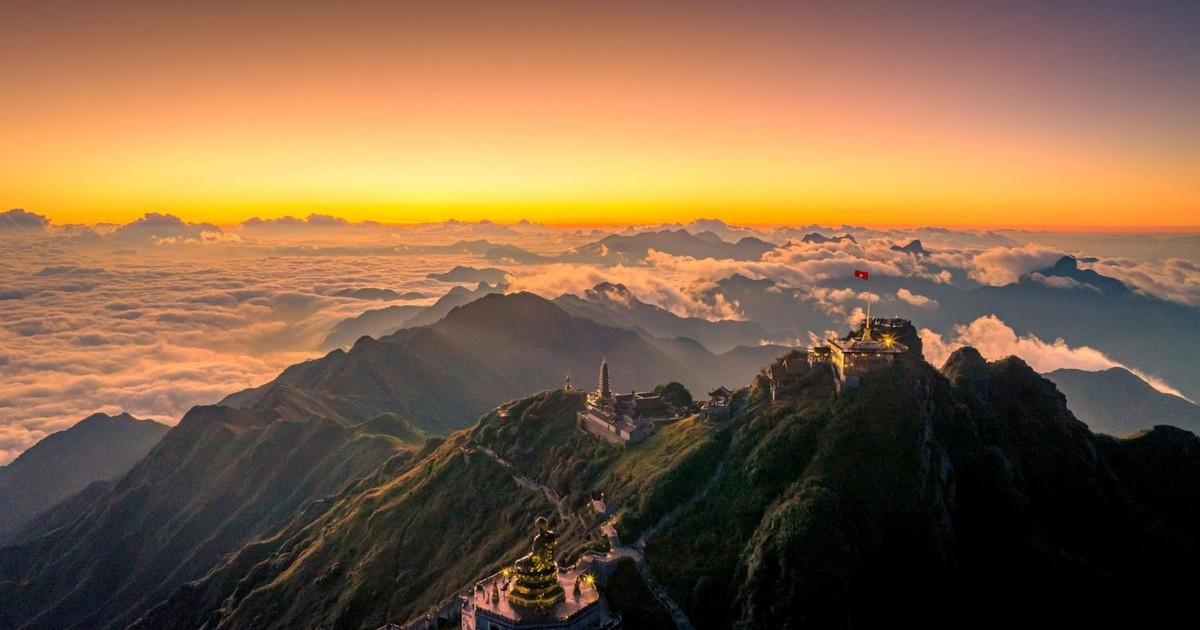
Sea of white clouds covering Fansipan peak (Source: Collected)
Regarding the seasons of the year, Sa Pa has its own beauty at each time when traveling by cable car. Spring has peach blossoms and azaleas blooming vibrantly on the mountainside; summer is the green of forests and terraced fields; autumn stands out with fresh air and long-distance views; while winter often features frost or snow – a very special experience when standing on Fansipan peak.
4.2. Prepare suitable clothing when going to Fansipan peak
Due to its altitude of over 3,000m above sea level, the temperature on Fansipan peak is usually 5–10°C lower than in Sa Pa town. Therefore, when traveling by Fansipan cable car, visitors should prepare warm jackets, especially in the early morning or during winter.
In addition, moving from the cable car station to the mountain peak still requires walking up stone steps or using the funicular. Therefore, sports shoes or shoes with good grip will make the visit more comfortable and safer.
4.3. Combine sightseeing of outstanding spots in the Fansipan complex
To make the trip more complete, visitors should combine the Fansipan cable car experience with the attractions within the Fansipan Legend tourist area. From the departure station in Muong Hoa valley, you can visit the funicular station area with its classic European architecture, check in at Sun Plaza square, or explore the highland cultural space.
After reaching the peak station, the sightseeing journey can continue through prominent spiritual structures such as Bich Van Zen Monastery, the Great Buddha Statue of Amitabha, the Arhat path, or conquer the 3,143m milestone. Combining multiple experiences in one trip will help visitors fully appreciate the natural, cultural, and spiritual beauty of the “Roof of Indochina”.
With these small tips, the journey to explore the Fansipan cable car will become more convenient and memorable, making the Sa Pa trip more complete.
After nearly a decade of operation, the Fansipan cable car has not only been a means to take visitors to the “Roof of Indochina” but has also become a prominent tourist symbol of Sa Pa. The journey flying amidst the sea of clouds, admiring the majestic Hoang Lien Son mountain range, and conquering the 3,143m peak offers an unforgettable experience for anyone who sets foot in the Northwest mountains. Therefore, in most Sa Pa exploration itineraries, the Fansipan cable car is always an indispensable stop, where visitors can both enjoy the majestic nature and fully experience the cultural and spiritual beauty on the highest peak in Indochina.


