




1. Overview of the Sapa Fansipan tour for Indian tourists
1.1. The appeal of Sapa to Indian tourists
Located at an altitude of over 1,500 meters above sea level in Lao Cai province, Sapa is famous for its cool climate year-round, especially pleasant in summer when temperatures range from 18 to 25 degrees Celsius.
Sapa also attracts tourists with its terraced rice fields stretching along the mountain slopes in Muong Hoa valley, creating a landscape that changes with the seasons, from lush green during the rainy season to golden yellow during the rice harvest. This combination of nature and culture has made Sapa a prominent destination on the Vietnamese tourism map for international visitors.
In recent years, the number of Indian tourists visiting Sapa has steadily increased thanks to the development of high-end accommodation services, restaurants serving vegetarian and Halal cuisine, as well as customized Sapa Fansipan tours designed for families and groups of friends.
1.2. Fansipan is a must-see destination on any trip to Sapa
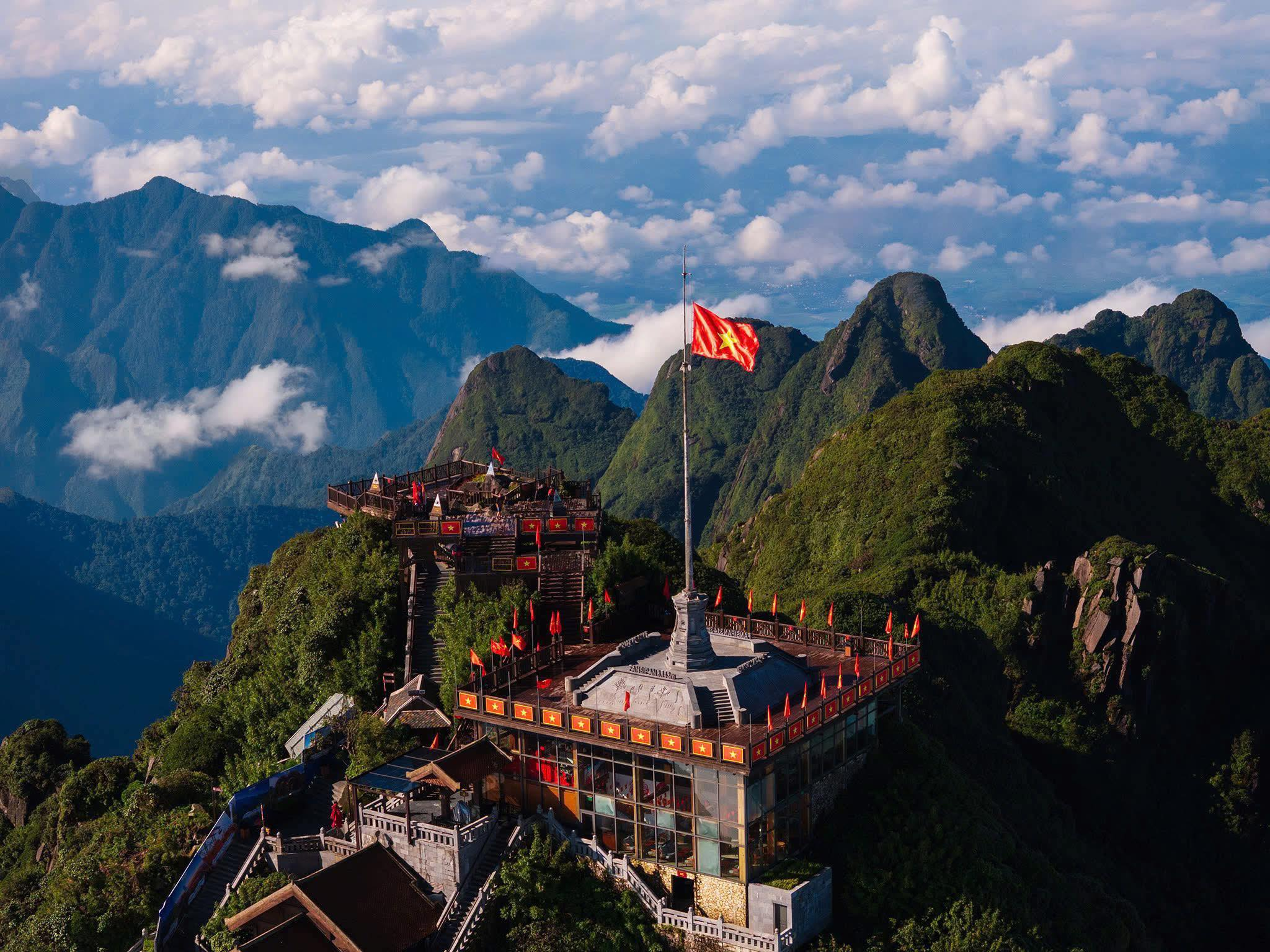
Fansipan is the highest mountain peak in Southeast Asia. (Source: Collected)
Throughout the entire Sapa journey, Fansipan plays a central role as a symbol of conquering nature. At 3,143 meters above sea, it is the highest mountain in Vietnam and is known as the "roof of Indochina".
The development of the modern 3-wire cable car system has made the journey to conquer Fansipan peak a suitable experience for all tourists, including families with young children and the elderly. As a result, the Sapa Fansipan tour has become a popular choice because it ensures safety while providing a short but emotionally rich experience of conquering the peak.
👉 Book Fansipan cable car ticket now!
2. Exciting experiences on the Sapa Fansipan tour
2.1. Traveling by cable car
One of the most outstanding experiences of the Sapa Fansipan tour is the journey on the Sun World Fansipan Legend cable car. This cable car line was once recognized by Guinness as one of the three-wire cable car lines with the greatest elevation difference in the world.
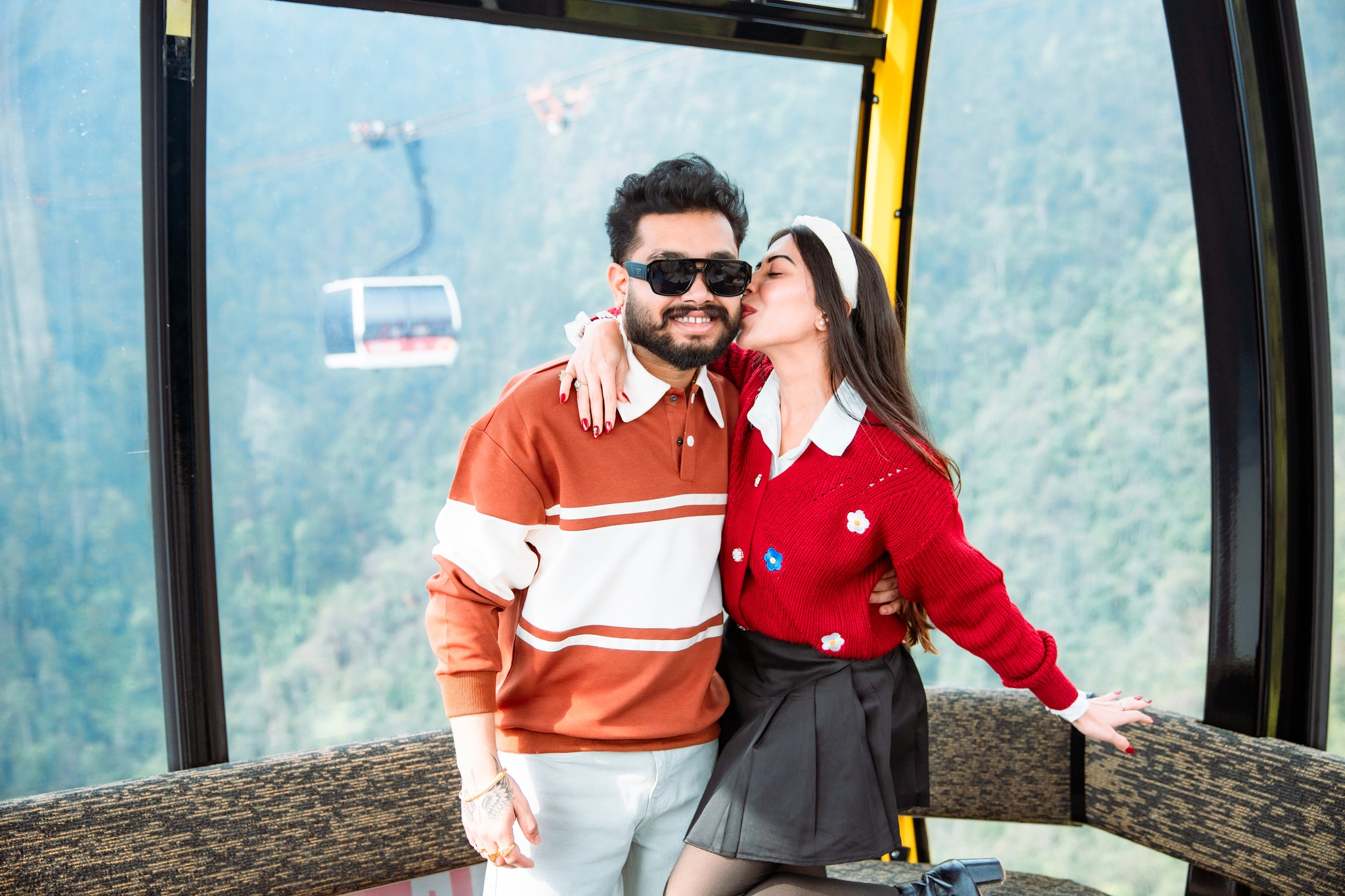
The Fansipan cable car offers a unique journey to admire the mountain scenery from above. (Source: Collected)
From Muong Hoa valley, it only takes about 15 minutes to reach near the summit of Fansipan. Throughout the journey, the cable car travels through a sea of white clouds, revealing the majestic Hoang Lien Son mountain range with its continuous layers of mountains. On clear days, visitors can see the entire Sapa valley from above, a rare experience that few destinations in Southeast Asia can offer.
2.2. Visiting famous spiritual sites
The most striking highlight is the majestic 21.5-meter-tall bronze statue of Amitabha Buddha, standing proudly amidst a sea of clouds, evoking a sense of both solemnity and tranquility. From this vantage point, you can enjoy a panoramic view of the Hoang Lien Son mountain range, where white clouds drift slowly at the foot of the mountains, creating a scene that is both awe-inspiring and serene.
Nearby is Bich Van Zen Monastery, a structure bearing the distinctive mark of Vietnamese Buddhist architecture, built exquisitely amidst the high mountain terrain. The space here offers a feeling of tranquility and peace, like a stopping point to self-reflect after your journey uphill.
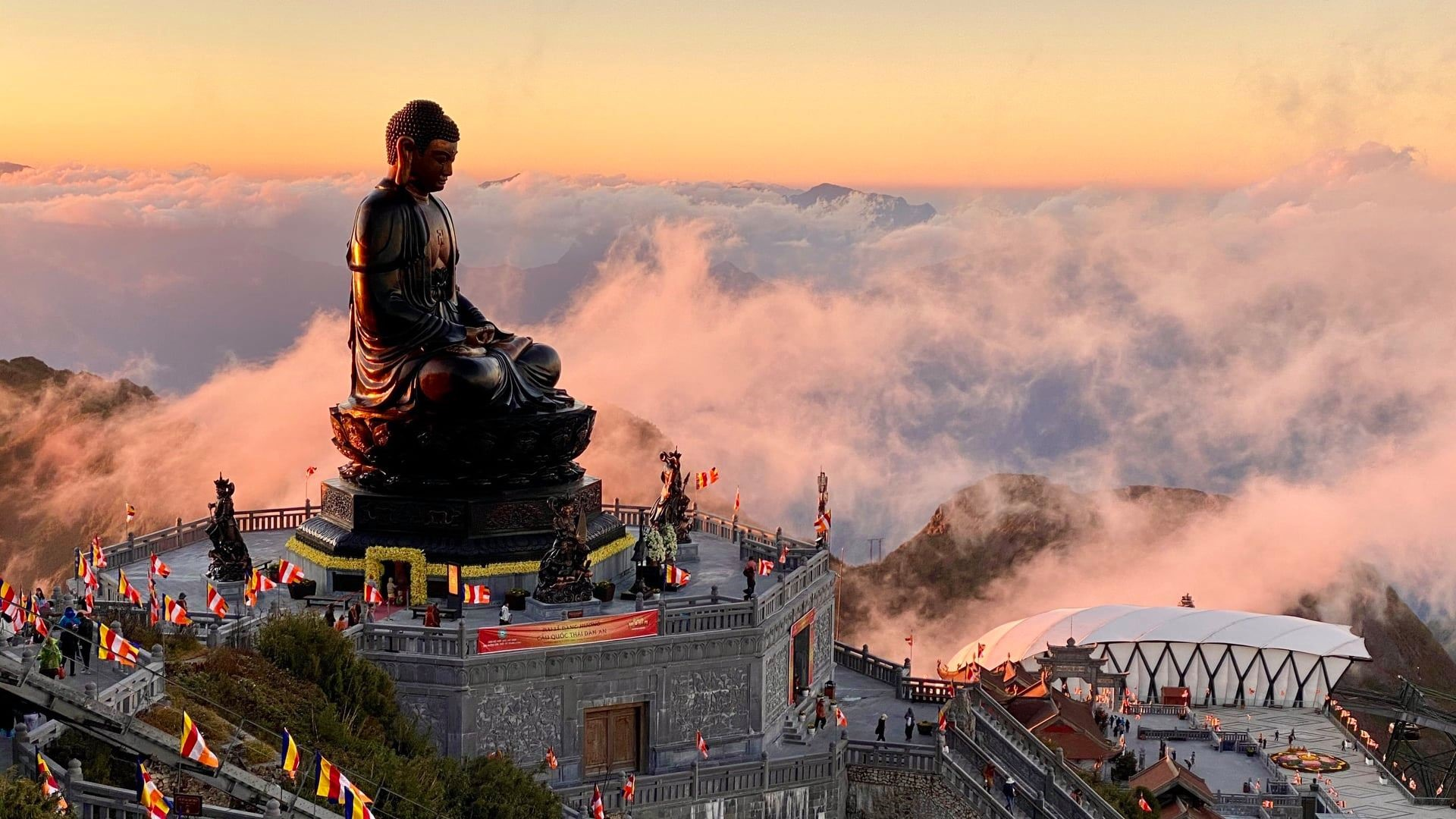
The giant bronze statue of Amitabha Buddha stands 21.5 meters tall. (Source: Collected)
Along the mountainside pathways are a system of temples, statues, and miniature landscapes arranged harmoniously at different altitudes, guiding visitors through a range of emotions, from admiring the scenery to experiencing inner tranquility.
2.3. Checking-in at the Rose Valley in Sapa
The Rose Valley in Sapa is one of the new tourist destinations that has attracted many visitors in recent years. It boasts approximately 300,000 rose bushes, meticulously cultivated and cared for across an area of about 50,000 square meters. With over 150 different rose varieties, from the ancient Sapa roses to rare foreign varieties, the valley offers a vibrant display of color year-round.
2.4. Exploring the ethnic groups’ cultures in May Village
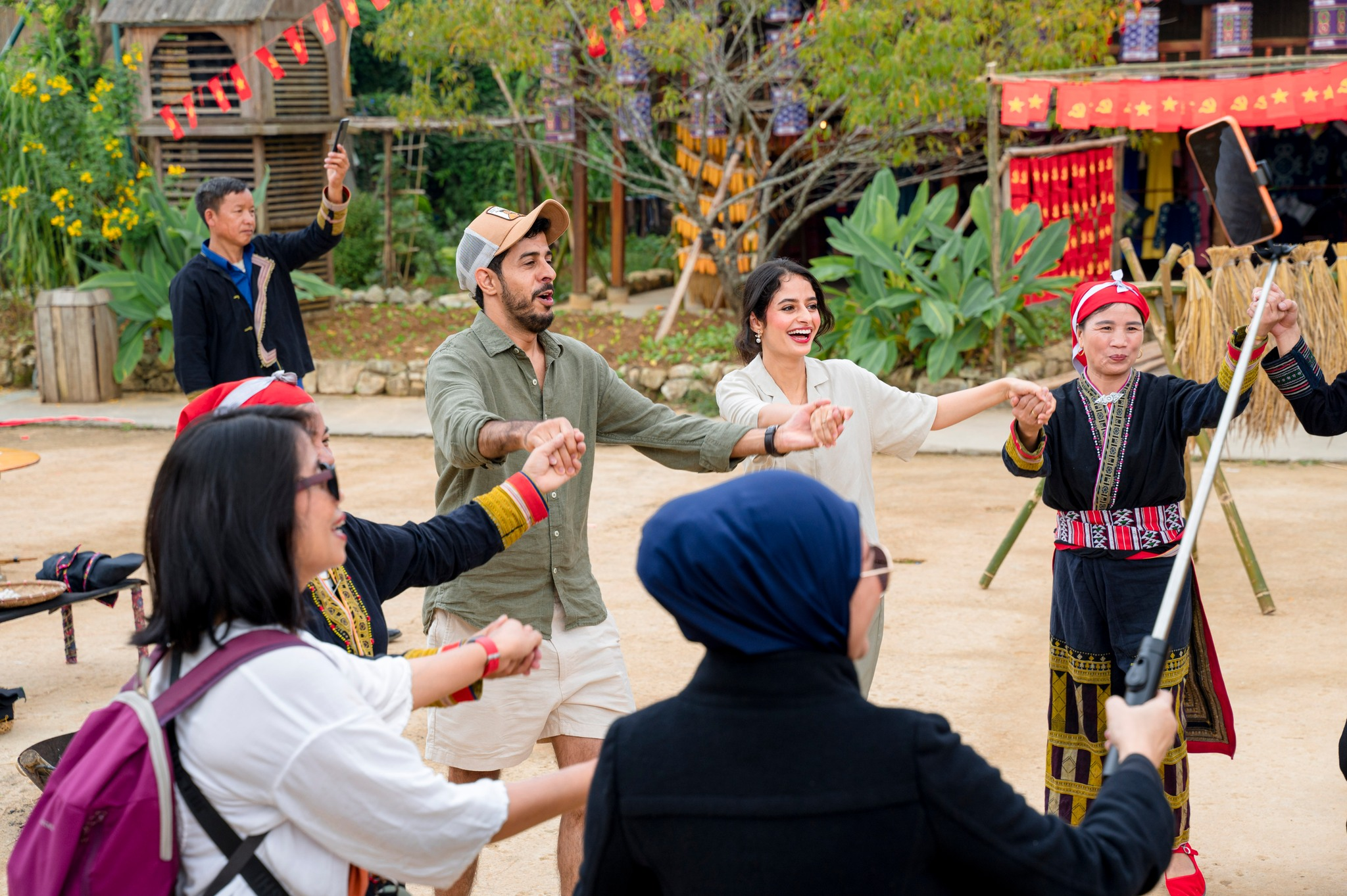
Tourists visit and learn about the culture of the ethnic groups in May Village. (Source: Collected)
May Village is a unique cultural space that brings together the architecture and lifestyles of many mountainous ethnic groups such as the H'mong, Dao, Tay, Giay, Xa Pho, Dien Bien Mong, and Ha Nhi. Traditional houses have been restored and collected from many villages in Sapa, creating a vibrant cultural complex.
Inside each house is a unique cultural living space where local artisans showcase their crafts, traditional costumes, music, and local cuisine. Indian tourists participating in the Sapa Fansipan tour can directly experience cultural exchange activities, thereby gaining a deeper understanding of the lives of ethnic minority communities in Vietnam.
3. Sapa village culture tour for Indian tourists
3.1. Cat Cat Village
Cat Cat Village is one of the villages closest to the center of Sapa, only about 2 to 3 km away. It is home to the H'mong people, featuring traditional wooden houses, waterfalls, and a long-standing system of handicrafts. You can observe the traditional processes of linen weaving, indigo dyeing, and silver crafting.
3.2. Ta Van Village
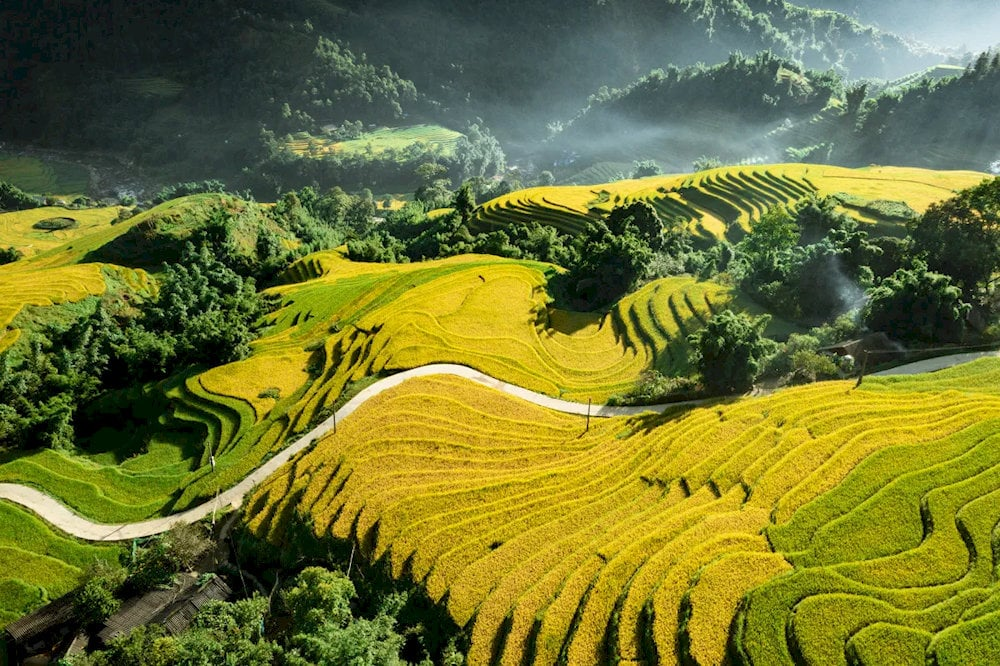
The golden terraced rice fields in Ta Van Village. (Source: Collected)
Ta Van Village, nestled deep in Muong Hoa valley and about 10-12 km from the center of Sapa, is primarily inhabited by the Giay people, along with some H’mong and Dao communities. The road leading to the village winds along the mountainside, revealing terraced rice fields stretching across the valley, changing color with the seasons from vibrant green to brilliant golden yellow. Traditional wooden houses are scattered on the hillsides, interspersed with small gardens and the Muong Hoa stream flowing through the village.
3.3. Ta Phin Village
Located about 12 km from the center of Sapa, Ta Phin Village is home to the Red Dao ethnic community. The road to the village winds through mountain slopes and lush green forests, offering a sense of unspoiled tranquility.
The most distinctive feature of Ta Phin is the Red Dao herbal bath service, a traditional health care method using more than 10 types of forest herbs. This experience is especially popular with Indian tourists after long journeys or climbing to Fansipan peak.
4. Luxury resort tour in Sapa
4.1. 5-star hotels in the center of Sapa
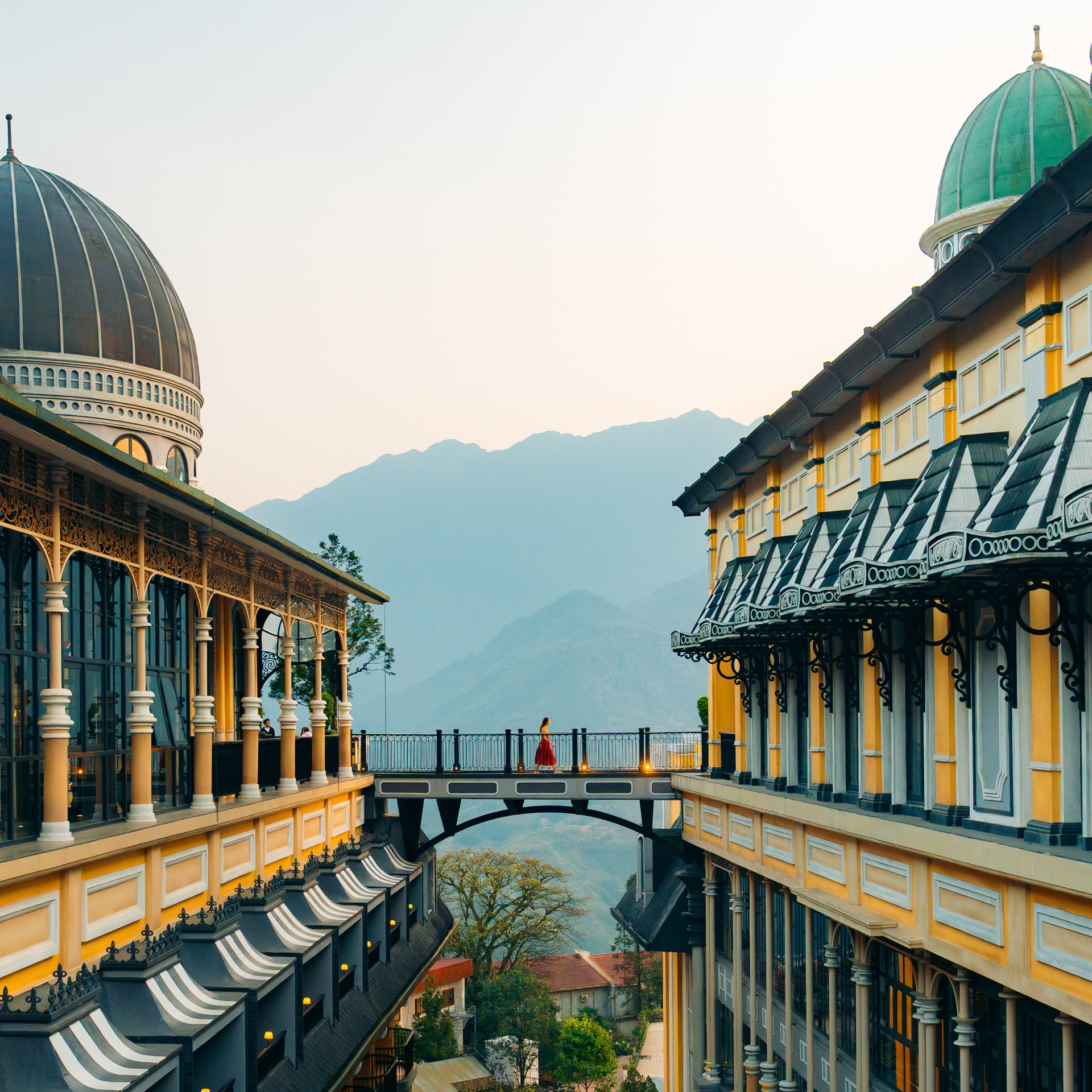
The unique and luxurious architecture of Hotel de la Coupole - MGallery. (Source: Collected)
Sapa currently boasts many high-end hotels meeting international standards. Hotel de la Coupole - MGallery is considered an icon of luxury resort living, featuring classic French architecture blended with highland culture. Pao's Sapa Leisure Hotel, meanwhile, offers expansive views of Muong Hoa valley. KK Sapa Hotel, on the other hand, has a modern style and convenient location; or Silk Path Grand Resort & Spa Sapa is situated on a hilltop, providing a tranquil atmosphere and impressive mountain scenery.
4.2. Resorts with mountain and valley views
Sapa Jade Hill boasts a European village style nestled amidst the mountains. Ville De Mont Mountain Sapa stands out with its classic design and private atmosphere. Lady Hill Sapa is situated at a high altitude, often offering stunning morning views of the sea of clouds. Sapa Cat Cat Hills Resort & Spa is located near Cat Cat Village, conveniently combining relaxation and exploring local culture during a Sapa Fansipan tour.
5. Sapa and Fansipan travel tips for Indian tourists
5.1. Visa and travel procedures to Sapa
Indian tourists currently can apply for a Vietnamese e-visa online with a passport valid for at least 6 months, a passport-sized photograph, and travel information. Processing time is usually 3 to 5 business days; once approved, the visa will be printed for entry.
Indian tourists need to fly from major cities such as Delhi, Mumbai, or Kolkata to Noi Bai International Airport in Hanoi, the main air gateway to begin your journey to explore Sapa and Fansipan. From Noi Bai airport, you can continue your journey by car or train to Sapa.
There are two main ways to travel from Hanoi to Sapa:
- Overnight train: From Hanoi station to Lao Cai station (7–8 hours), then a 1-hour (35 km) car ride to Sapa. It's suitable for travelers who want to relax on the train.
- High-speed car/limousine bus: Following the Noi Bai – Lao Cai route, the travel time is approximately 5–6 hours, convenient for passengers who have just landed or are traveling directly from Hanoi.
5.2. The best time to visit Sapa
Indian tourists visiting Sapa should choose the period from March to May or September to November for beautiful weather and the best cloud-watching opportunities. Booking services such as the Fansipan cable car, hotels, and tours in advance is recommended to ensure a convenient experience. Additionally, choosing packages that include vegetarian or Halal meals will make the trip more comfortable, especially for families and groups with specific dietary requirements.
As can be seen, the Sapa Fansipan tour offers many flexible options for Indian tourists, from conquering Fansipan peak by modern cable car, exploring unique cultural villages, relaxing at high-end hotels and resorts, to experiencing cloud hunting and spiritual tourism. The diversity of services, especially the combo packages combining the Fansipan cable car, local experiences, and vegetarian or Halal culinary choices, makes Sapa a safe, convenient, and suitable destination for the whole family.


