




1. Fansipan spiritual complex – A sacred journey above the clouds
The Fansipan spiritual complex is one of the most distinctive cultural and architectural experiences on the summit of Fansipan, Vietnam’s highest mountain at 3,143 metres above sea level. Located within the Sun World Fansipan Legend complex, the spiritual area combines Buddhist architecture, religious symbols and dramatic mountain scenery, creating a setting where visitors can experience the cultural and spiritual character of Northwest Vietnam at high altitude.
The journey begins as travellers ascend Fansipan by cable car, gradually moving from the valleys and forests of the Hoang Lien Son range towards the summit. From the cable car, the landscape opens into views of rugged mountains, deep valleys and changing clouds. As visitors continue towards the spiritual complex, stone pathways, stairways, temples and Buddhist statues become part of the mountain landscape, creating a gradual transition from a sightseeing journey to a more contemplative experience. One of the defining features of the Fansipan spiritual complex is the way its architecture responds to the natural environment. Buildings, stone steps and religious structures are arranged along the mountain rather than placed on a conventional flat site. This creates a distinctive relationship between architecture and terrain, with different viewpoints revealing layers of temples, statues and surrounding peaks.
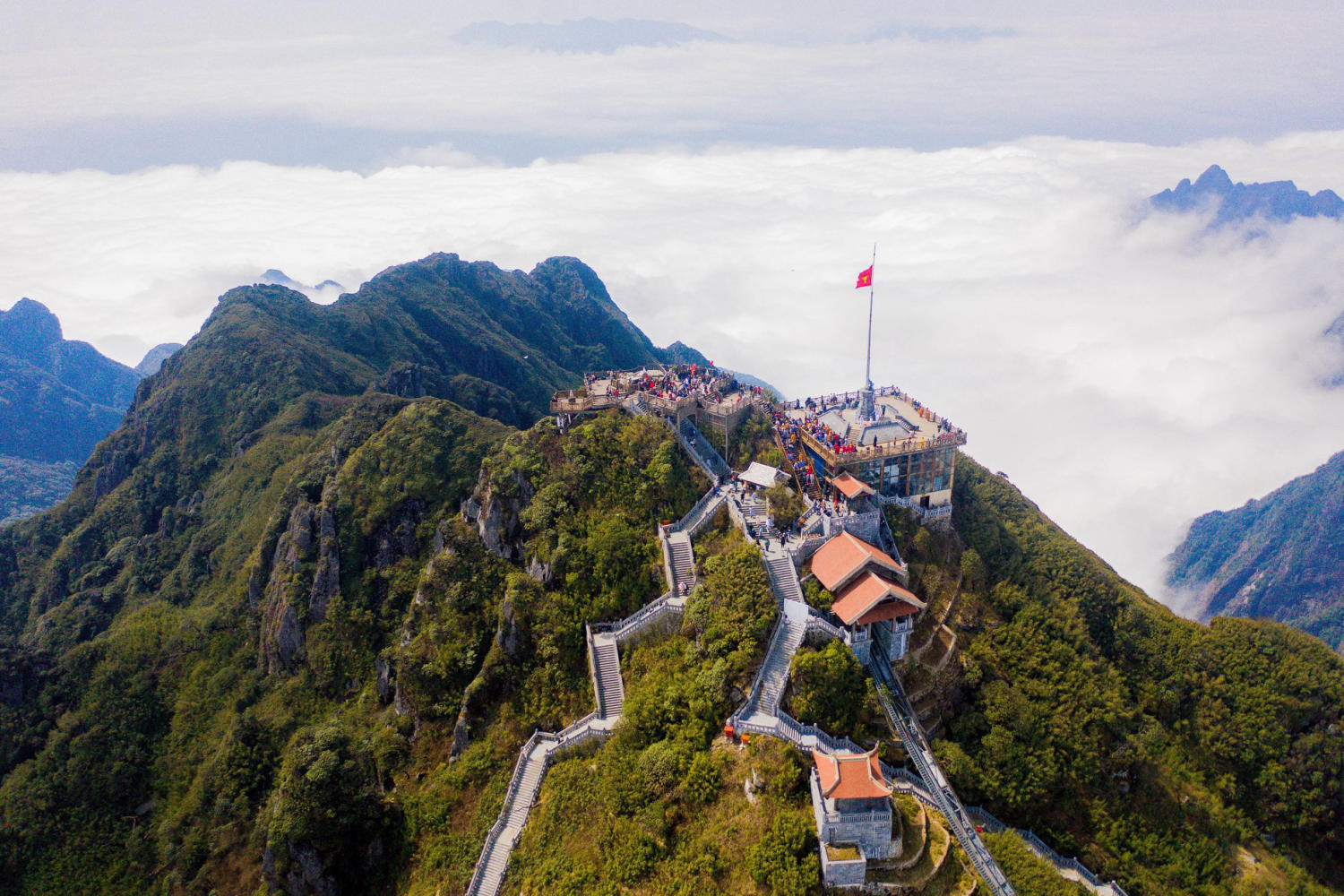
The spiritual complex at the summit of Fansipan (Source: Collected)
The complex includes several notable Buddhist landmarks, including the Great Buddha Amitabha, the Great Buddha of Fansipan and the Arhat Road. These structures and pathways introduce visitors to Buddhist imagery while also providing viewpoints across the Hoang Lien Son mountains. The combination of religious architecture and high-altitude scenery gives the experience a character that is different from visiting a conventional temple complex in a city or lowland setting. Beyond its architectural significance, the Fansipan spiritual complex reflects the connection between mountain landscapes and spiritual traditions in Vietnam. For many visitors, the ascent itself becomes part of the experience: travelling above the clouds, walking along stone stairways and encountering temples and statues surrounded by the natural landscape creates a sense of journey and discovery.
For international travellers, the spiritual complex offers an opportunity to explore another side of Fansipan beyond its status as Vietnam’s highest peak. A visit can combine mountain scenery, Buddhist architecture, cultural heritage and quiet moments of reflection, making the summit experience more than simply reaching an impressive altitude.
Whether approached as a cultural journey, an architectural exploration or a peaceful mountain experience, the Fansipan spiritual complex provides a distinctive way to discover the spiritual character of northern Vietnam. Its combination of sacred spaces and the dramatic Hoang Lien Son landscape makes it one of the most memorable cultural experiences on a Sapa itinerary.
2. Highlights of the Fansipan spiritual complex
2.1 Admire the Great Buddha Statue
The Great Buddha Statue is one of the most prominent spiritual landmarks visitors encounter on Fansipan. Rising high above the mountain landscape, the monumental statue creates a powerful visual focal point while reflecting the importance of The Great Buddha Statue in Vietnamese Buddhist tradition. Its elevated position also allows visitors to experience the statue against the dramatic backdrop of the Hoang Lien Son range.
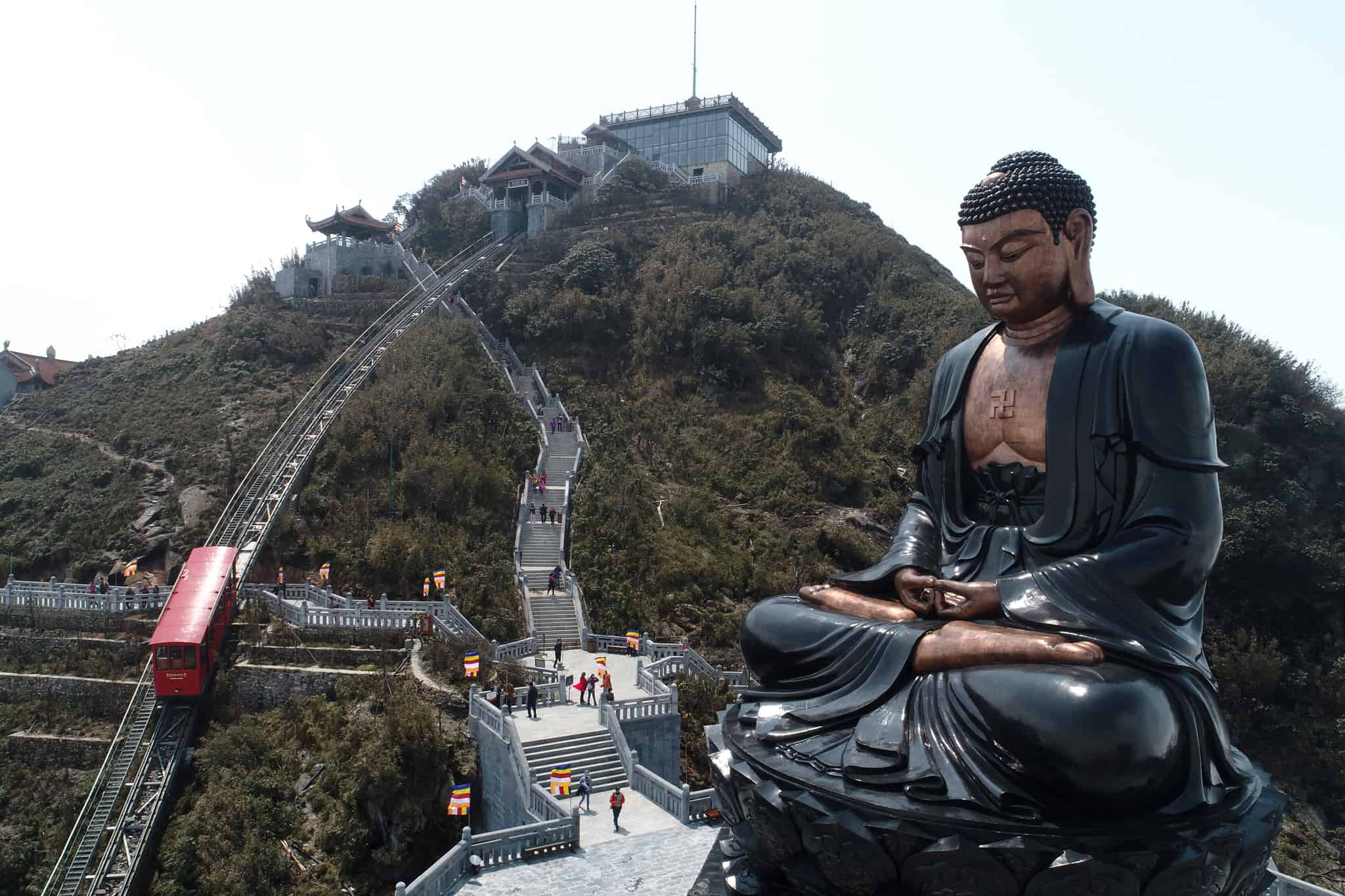
The majestic Great Buddha Statue atop Fansipan (Source: Collected)
The statue is particularly striking because of its setting. Rather than being surrounded by an urban temple complex, it stands amid mountain slopes, clouds and open sky. As weather conditions change, the statue can appear surrounded by mist or illuminated by sunlight, creating a different atmosphere throughout the day.
For international visitors, the Great Buddha Statue offers an opportunity to encounter Buddhist architecture and symbolism within a distinctly Vietnamese mountain environment. Taking time to observe the statue and its surroundings can make the visit more meaningful than simply treating it as a photography stop.
2.2 Explore the spiritual path through stone stairways
Stone stairways are an essential part of the experience at the Fansipan spiritual complex. The pathways connect different religious landmarks across the mountain and require visitors to gradually move through the complex rather than viewing its architecture from a single point. Walking these routes creates a sense of progression that complements the physical ascent towards the summit.
The stairways also reveal how the architecture has been integrated into the natural terrain. Stone paths follow the contours of the mountain, while temples, statues and landscaped areas appear at different elevations. Along the way, visitors can pause to look back towards the surrounding peaks and valleys, creating a continuous connection between the spiritual spaces and the landscape.
For travellers, walking rather than rushing through the complex allows more time to appreciate the details. The combination of stone architecture, mountain vegetation and changing clouds creates a distinctive atmosphere that is closely tied to Fansipan's high-altitude setting.
2.3 Discover the Arhat Road and Buddhist statues
The Arhat Road is another distinctive feature of the Fansipan spiritual complex. Along the route, visitors encounter a series of large stone Arhat statues representing different expressions and postures. Set among the mountain landscape, the statues create a symbolic pathway that introduces travellers to Buddhist imagery while offering a memorable walking experience.
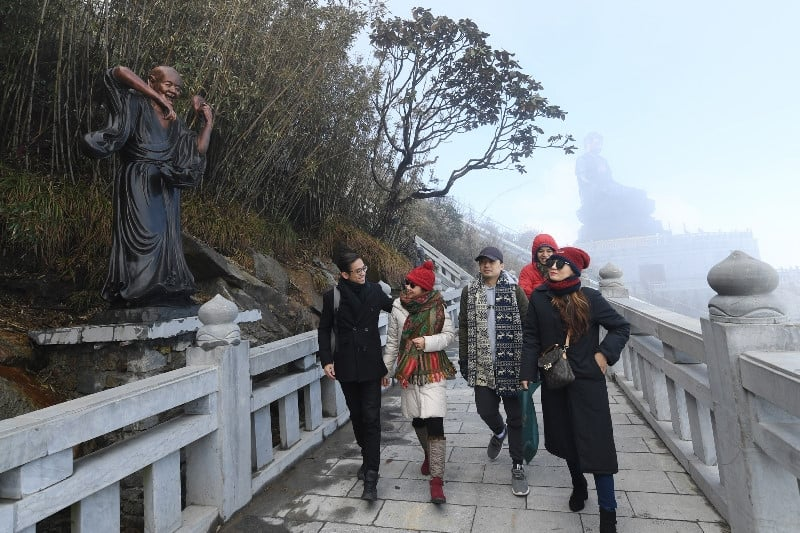
Visitors explore the Arhat Road (Source: Collected)
The route is also notable for its relationship with the surrounding vegetation. Ancient rhododendron trees grow along parts of the pathway, adding a natural layer to the architectural setting. During the appropriate flowering season, the combination of stone statues, mature trees and mountain scenery creates a particularly atmospheric landscape.
Rather than viewing each statue separately, travellers can experience the Arhat Road as a continuous journey through the mountain. The changing perspective of the statues and surrounding peaks encourages visitors to slow down and observe the details of the space.
2.4 Experience the temples and traditional Buddhist architecture
The temples within the Fansipan spiritual complex introduce traditional Vietnamese Buddhist architectural elements to a high-altitude mountain environment. Dark wooden structures, curved rooflines, stone foundations and ornamental details create a visual language that contrasts with the rugged natural landscape around them.
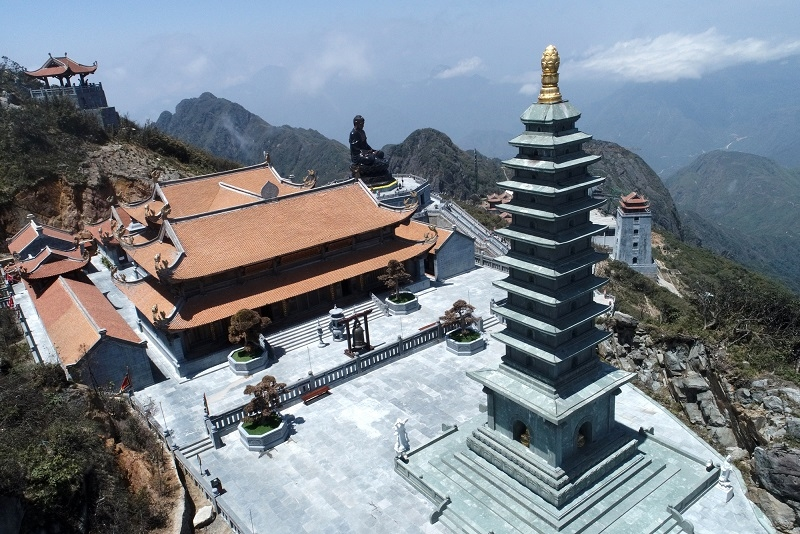
The sacred pagodas atop Fansipan (Source: Compiled)
The architectural style is particularly effective when viewed together with the mountain terrain. Roofs and towers emerge from slopes and clouds, while stone paths connect one structure to another. This arrangement creates the impression that the religious architecture belongs naturally within the mountain rather than functioning as an isolated collection of buildings.
Visitors interested in Vietnamese architecture can pay attention to roof forms, wooden details, stonework and the positioning of each structure. These details provide a different perspective on Fansipan and demonstrate how traditional architectural references can be adapted to a dramatic natural setting.
2.5 Visit the summit and connect the spiritual journey with Fansipan
The spiritual experience ultimately connects with the summit of Fansipan, where visitors reach an altitude of 3,143 metres. Reaching the highest point of Vietnam provides a natural conclusion to the journey through the surrounding spiritual landscape, combining a sense of achievement with the cultural and architectural experiences encountered along the way.
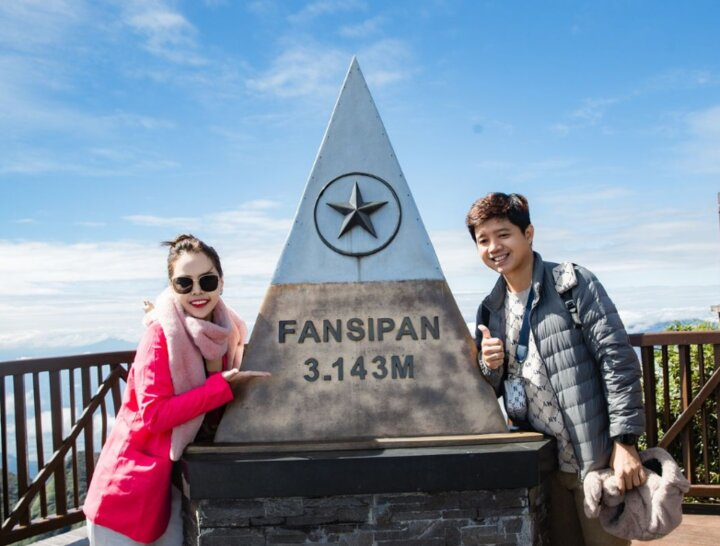
Tourists take memorable photos at the 3,143m landmark (Source: Collected)
The summit area offers expansive views when weather conditions are favourable. Clouds can move rapidly across the Hoang Lien Son range, while clear periods may reveal distant mountain ridges and deep valleys below. These changing conditions are part of the character of a high-altitude destination and add another dimension to the visit.
For international travellers, combining the summit with the spiritual complex creates a more complete Fansipan experience. Instead of focusing solely on reaching the highest point, visitors can take time to explore the temples, statues, stone pathways and surrounding landscape, turning the ascent into a cultural and spiritual journey as well as a mountain adventure.
3. How to experience the Fansipan spiritual complex
3.1 Take the cable car for a scenic introduction to Fansipan
The journey to the Fansipan spiritual complex can begin with the cable car from the Hoang Lien cable car station. Instead of approaching the mountain entirely on foot, visitors can gradually ascend above the valleys and forests, gaining a wider perspective of the Hoang Lien Son landscape along the way.
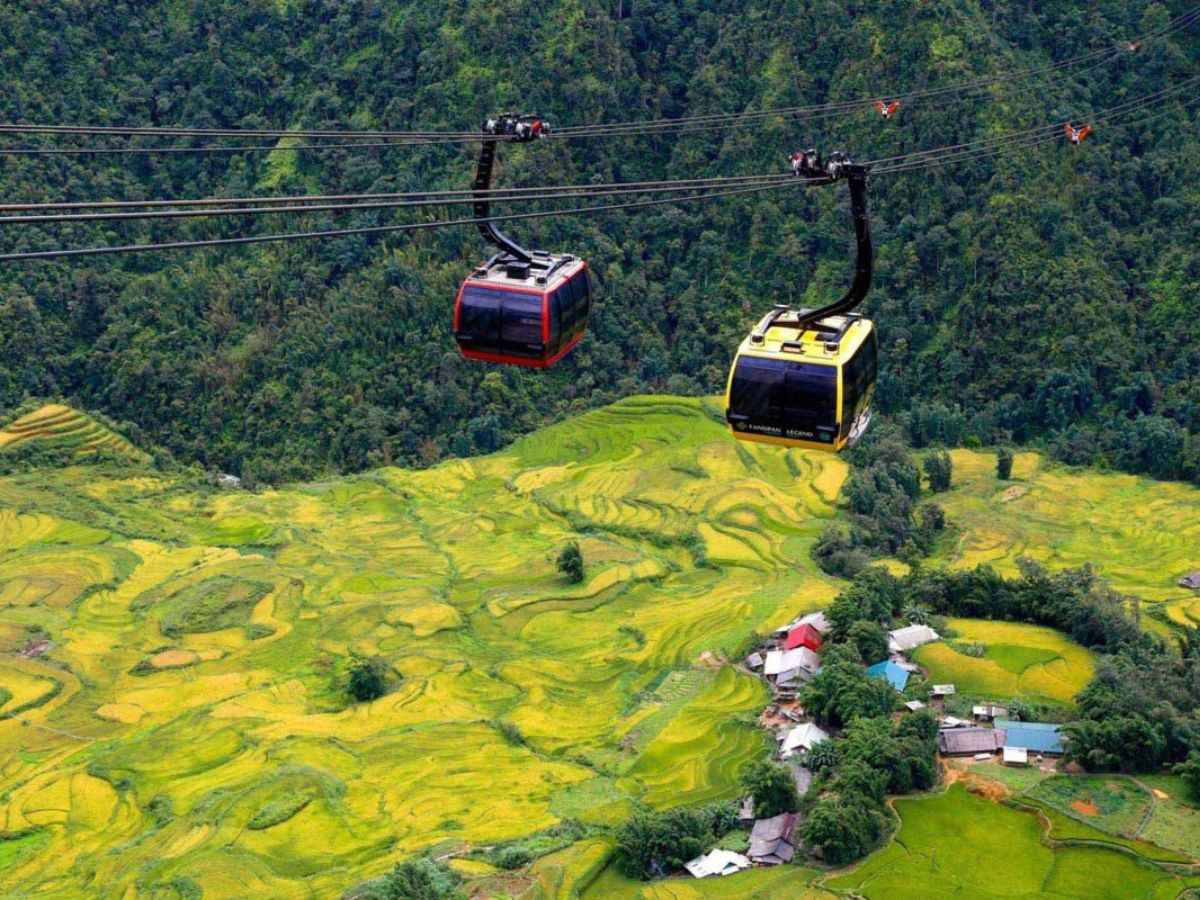
The Fansipan cable car takes visitors across majestic natural landscapes (Source: Collected)
The cable car journey is also a useful introduction to the geographical setting of Fansipan. As the cabin rises, the scenery changes from green valleys and dense vegetation to higher mountain terrain, giving travellers a sense of the dramatic elevation before they reach the spiritual complex.
For international visitors, taking the cable car also makes it easier to combine several experiences within one trip, including the spiritual landmarks, summit area, mountain scenery and cultural attractions around Fansipan.
3.2 Allow enough time to walk through the spiritual complex
The Fansipan spiritual complex is best experienced at a relaxed pace. Rather than moving directly between the most recognisable landmarks, visitors can follow the stone pathways, explore the temples and observe the statues and architectural details along the route.
Walking through the complex also allows travellers to appreciate how each element interacts with the surrounding landscape. The atmosphere can change noticeably as clouds move across the mountain, while different viewpoints reveal temples, statues and distant peaks from new perspectives.
Comfortable footwear is recommended because the experience involves walking on stone paths and stairways. Visitors should also allow additional time if they want to stop for photography, enjoy the views or explore the different spiritual spaces without rushing.
3.3 Visit early and prepare for changing mountain weather
Weather is an important part of any visit to the Fansipan spiritual complex. At an altitude of 3,143 metres, conditions can be considerably cooler and more changeable than in Sapa town. Clouds, mist, wind and sunlight can appear within a relatively short period.
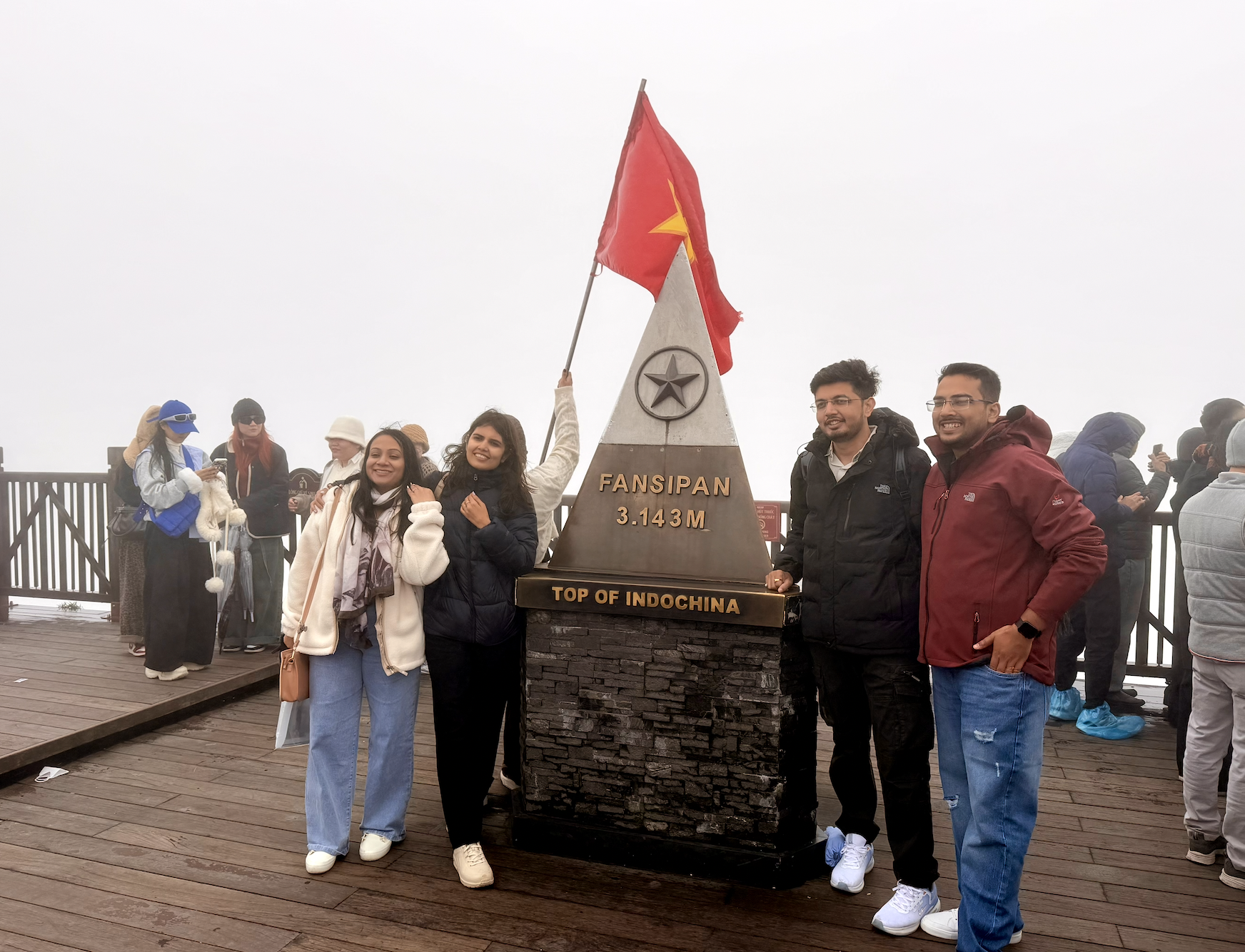
Visitors should prepare warm clothing to safeguard their health when ascending to the summit of Fansipan (Source: Collected)
Visiting earlier in the day can provide more flexibility for exploring the complex before afternoon weather changes. However, conditions vary by season, so travellers should check the forecast before departure and prepare for both cool temperatures and possible mist. A light jacket, comfortable walking shoes and protection from rain are useful additions to a Fansipan day trip. With suitable preparation, visitors can focus more comfortably on the architecture, spiritual landmarks and mountain scenery.
3.4 Take time to appreciate the spiritual atmosphere
Beyond its architecture and sightseeing value, the Fansipan spiritual complex offers an atmosphere that encourages visitors to slow down. The combination of high-altitude scenery, stone architecture, Buddhist statues, temples and changing mountain weather creates a setting that feels distinctly different from everyday urban environments.
Visitors do not need to be Buddhist to appreciate this aspect of the destination. Observing the architecture, learning about Buddhist traditions and experiencing the quiet mountain surroundings can provide a meaningful cultural perspective for travellers from different backgrounds.
Approaching the complex with respect is equally important. Visitors should follow local guidelines around religious spaces, dress appropriately and avoid disruptive behaviour when other people are praying or participating in spiritual activities. This allows everyone to experience Fansipan as both a cultural destination and a place of spiritual significance.
A visit to the Fansipan spiritual complex offers more than a journey to the highest point in Vietnam. Its temples, Buddhist statues, stone stairways and mountain pathways create a distinctive cultural landscape where architecture and nature exist in harmony. By combining the spiritual complex with the summit, Muong Hoa mountain train and May Village, travellers can experience Fansipan through its scenery, heritage and living culture, creating a memorable journey in the mountains of northern Vietnam.


