




1. Overview of Yen Tu pilgrimage at the beginning of the year
1.1. Geographical location and spiritual value
Yen Tu is a large spiritual relic complex in Vietnam, located in Quang Ninh province, with a peak 1,068 m high. This place is known as the cradle of the Truc Lam Zen school, a Buddhist sect with strong Vietnamese identity, founded by King-Monk Tran Nhan Tong in the 13th century.
The meaning of the Yen Tu pilgrimage at the beginning of the year becomes even more profound because Yen Tu is considered the "ancestral land of Vietnamese Buddhism". The relic complex includes over 20 pagodas, towers, and ancient hermitages such as Dong Pagoda, To Tower, Hoa Yen Pagoda... creating a solemn spiritual space. Each structure is associated with the stories of King-Monk Tran Nhan Tong's spiritual practice from his renunciation to his passing.
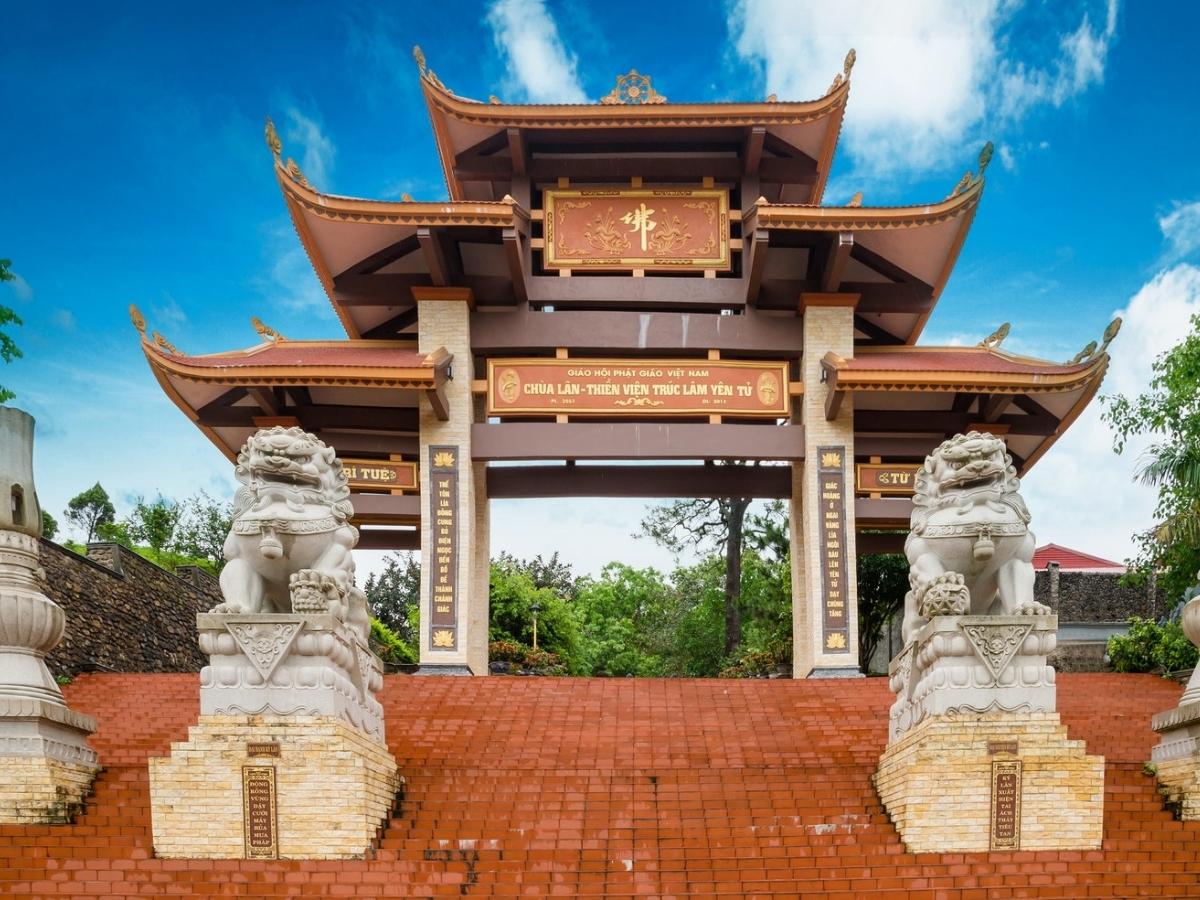
The meaning of the Yen Tu pilgrimage at the beginning of the year becomes even deeper because Yen Tu is considered the "ancestral land of Vietnamese Buddhism". (Source: Collected)
1.2. Why should you pilgrimage to Yen Tu
The attraction of the Yen Tu pilgrimage at the beginning of the year lies in the blend of spiritual elements and natural scenery. Pilgrims not only come to pray for peace and turn their hearts towards good deeds at the start of the year but also experience the journey of trekking through ancient pine forests hundreds of years old. The sacred atmosphere emanating from the pagodas, the sound of bells echoing in the early mist, creates a sense of peace, helping to dispel the worries left over from the old year.
During spring, Yen Tu is also captivating with its vibrant festival atmosphere, attracting a large number of tourists and Buddhists. This gathering brings positive energy, highlighting the beauty of community solidarity and the aspiration for a new year filled with good things.
2. Ideal timing and notable events at the beginning of the year
2.1. Yen Tu Festival at the beginning of the year
The Yen Tu Festival is held annually from the 10th day of the first lunar month until the end of March, making it one of the major spiritual events in the Northern region. The opening ceremony takes place solemnly at Chua Trinh ( trình pagoda) with the presence of government representatives and numerous Buddhists.
Within the framework of the festival, activities such as prayer ceremonies at the pagodas, especially at Chua Dong (Dong pagoda) on the peak of Yen Tu, always attract a large number of participants. The procession ritual simulates the spiritual path of Emperor Tran Nhan Tong from the foot of the mountain to the summit. Additionally, at the Buddha Emperor's square, many folk art programs, dragon dances, and Quan Ho singing performances are held, creating a festival atmosphere rich in tradition.
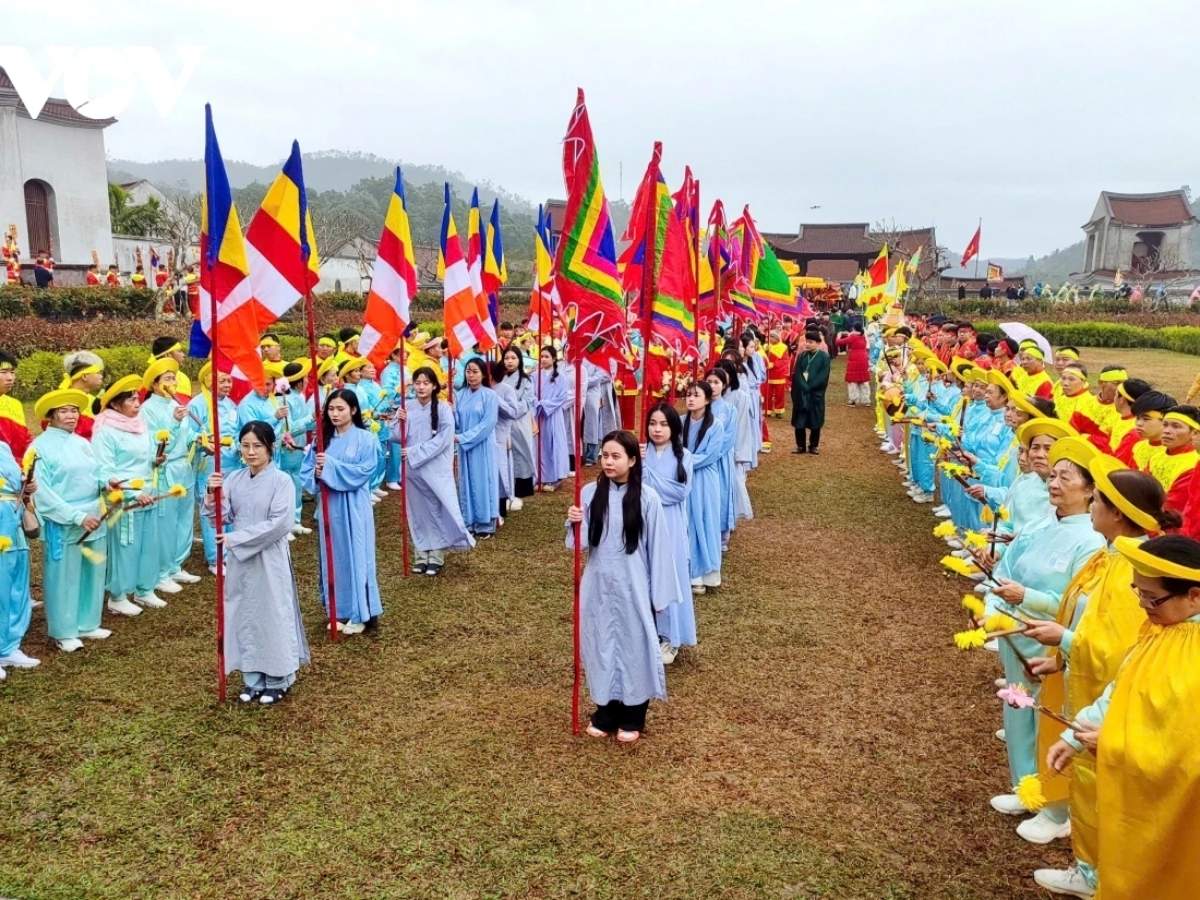
The Yen Tu Festival is held from the 10th day of Lunar January until the end of Lunar March each year, and is one of the major spiritual events in the Northern region. (Source: Collected)
2.2. Why visit Yen Tu in spring
Embarking on an early year pilgrimage to Yen Tu in spring is the most ideal choice when the weather is pleasant, with temperatures ranging from 15-20°C, favorable for mountain climbing activities. Especially in the morning, mist covers the mountains and forests, creating a mystical atmosphere that enhances the sacredness of the ancient pagodas.
The spring scenery is vibrant with azaleas blooming along the paths, accompanied by the lush green of ancient pine trees. The cool, fresh air of the mountains and forests invigorates visitors, helping them start the new year with plenty of energy. This is also the period when the number of visitors to Yen Tu is highest throughout the year, contributing to an exciting pilgrimage atmosphere and fostering a sense of community among Buddhists.
3. How to get to Yen Tu
3.1. From Hanoi to Yen Tu
The distance from Hanoi to Yen Tu is about 140 km, with a travel time of 3 to 4 hours depending on the mode of transport and traffic conditions. If you choose a bus, the ticket price is around 100,000-150,000 VND/person, departing from Giap Bat and My Dinh bus stations on the Hanoi - Uong Bi route. From Uong Bi city, visitors can travel an additional 15 km by motorbike taxi or taxi to reach the Yen Tu relic site.
Limousine buses and private cars offer a more comfortable experience, with limousine ticket prices ranging from 200,000-300,000 VND/person, and renting a 7-seater car for a full day costing from 1.5 to 2 million VND. The route mainly follows the Hanoi - Hai Phong expressway, then continues on National Highway 18 to Uong Bi. Especially during the peak season of early year pilgrimage to Yen Tu, it is advisable to book tickets at least 1-2 weeks in advance to ensure a seat.
3.2. From Ho Chi Minh City, Da Nang to Yen Tu
People from Ho Chi Minh City can travel by air to Noi Bai Airport. Then, continue the journey by bus or taxi to Yen Tu, with a total travel time of about 5-6 hours, including waiting time at the airport.
Trains are a popular choice for long-distance travel due to their reasonable cost and stable schedule. The routes from Ho Chi Minh City or Da Nang to Hanoi have a long travel time but are suitable for those who want to rest during the journey. From Hanoi, visitors can conveniently travel to Yen Tu by road. In addition to traveling independently, many travel agencies also organize early year Yen Tu pilgrimage tours departing from major cities. These tours include round-trip transportation, accommodation, and sightseeing, suitable for tourists who prefer a relaxed trip without having to arrange their own itinerary.
3.3. Transportation within the Yen Tu relic site
From the parking lot, visitors have three options to access the spiritual sites on the mountain. Electric vehicles travel from the parking lot to cable car station 1 for 30,000 VND/trip, convenient for the initial part of the journey. The cable car system is 1.2 km long, with round-trip ticket prices from 360,000 - 430,000 VND/person, shortening the time to reach the summit to about 4 hours.
If you choose to walk the entire 6 km distance, visitors will have the opportunity to stop at each spiritual site, with climbing time ranging from 6-8 hours depending on physical condition. The combo package of electric vehicles and cable cars is suitable for families with young children or the elderly, making the early year pilgrimage to Yen Tu more relaxed.
4. Itinerary for the early year Yen Tu pilgrimage
4.1. Must-visit spiritual stops
Suoi Giai Oan (Absolution Stream) is the starting point for the early year pilgrimage to Yen Tu, just 300 meters from the parking lot. The stream flows year-round and is associated with the legend of the loyalty of the palace maids to Emperor Tran Nhan Tong. Many people stop to wash their hands and face in the stream to begin their journey in a pure state.
Thap To (Ancestor Pagoda) and Chua Hoa Yen (Hoa Yen Pagoda) are the next important stops, housing the relics of Emperor Tran Nhan Tong and over 40 other stupas. Six stupas are arranged in a hexagonal shape, with the main stupa in the center standing 15 meters high. The architecture is in the 13th-century style with exquisite carvings, creating a solemn space for pilgrims.
Chua Dong (Bronze Pagoda) is located on a mountain peak at an altitude of 1,068 meters and is the final destination of the journey. The pagoda is made entirely of bronze, with a bronze Buddha statue inside. From this vantage point, pilgrims can gaze at the entire Dong Trieu mountain range and Uong Bi city in the distance. The air at this altitude is fresh and cool, and the sound of the wind rustling through the pine trees enhances the sense of peace.
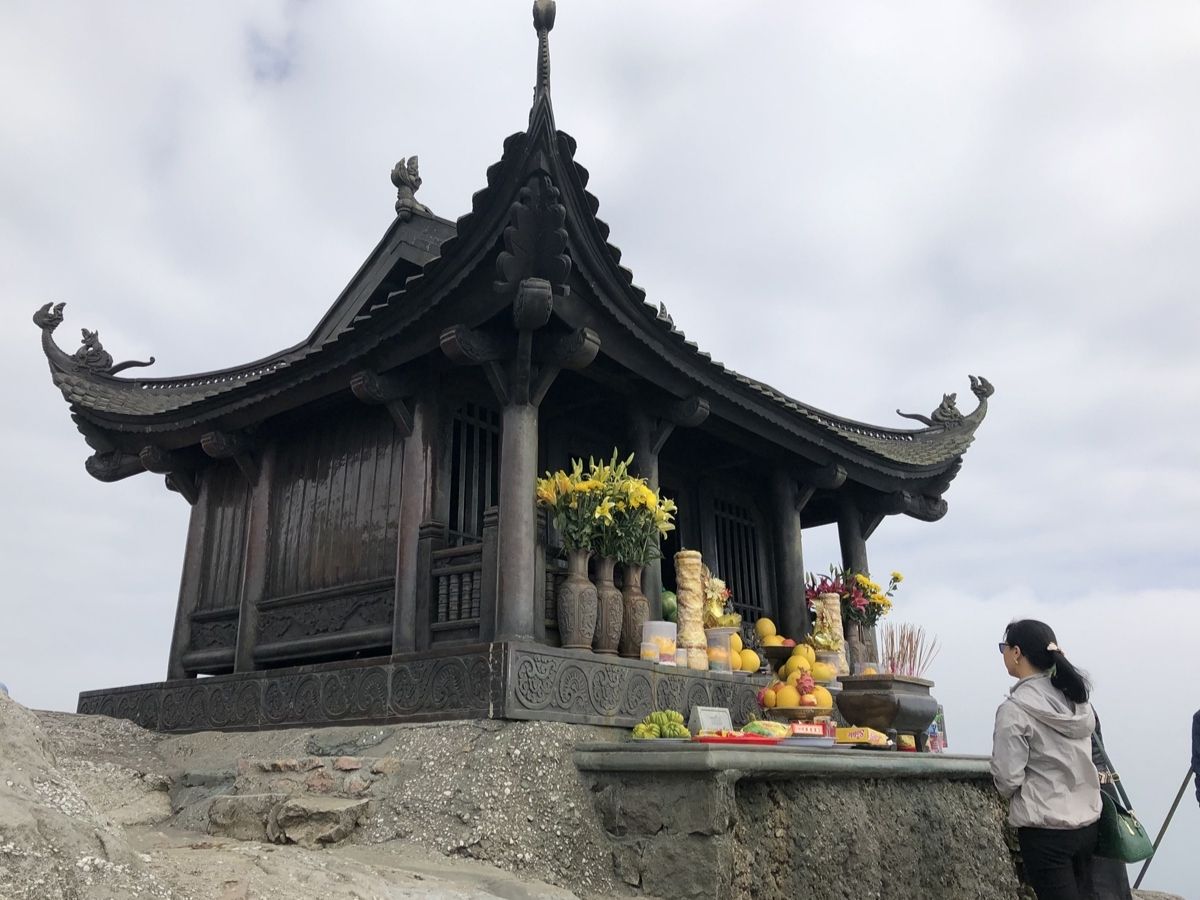
Chua Dong (Copper Pagoda) is located on a mountain peak at an altitude of 1,068 m and is the final destination of the journey. (Source: Collected)
4.2. The Ancient Pine Path, over 700 years old
One of the highlights of the Yen Tu pilgrimage at the beginning of the year is the ancient pine path with over 237 pine trees aged over 700 years. The trunks are large, requiring 3-4 people to embrace, and the canopy spreads shade over almost the entire mountain path. According to historical records, these pine trees were planted during the time when Emperor Tran Nhan Tong practiced Buddhism at Yen Tu.
Walking under the dense canopy, light filters through each leaf gap, creating beautiful golden sunbeams. The cool air, mixed with the gentle fragrance of pine and tree sap, helps travelers dispel all fatigue and gain motivation to continue their journey. This is also an ideal place to rest, enjoy the scenery, or capture memorable photos.
5. Transportation during the Yen Tu pilgrimage at the beginning of the year
5.1. Hiking journey
Hiking the entire distance from the foot of the mountain to Chua Dong is the most complete way to experience the Yen Tu pilgrimage at the beginning of the year. The travel time is about 6-8 hours, depending on each person's physical strength. The path is divided into many sections with varying slopes, from gentle at the beginning to a real challenge when nearing the summit.
Important resting points include Suoi Giai Oan (300 m away), the ancient pine area (2-3 km), Chua Hoa Yen (4 km), and the final destination, Chua Dong. The last section from Chua Hoa Yen to Chua Dong is quite steep, but it offers the most beautiful scenery with a vast panoramic view. You should prepare quality shoes, drinking water, and light snacks to replenish energy throughout the journey.
5.2. Modern cable car
The cable car system at Yen Tu is 1.2 km long, operating at an altitude of 450 m, and is considered one of the most modern in Vietnam. With a speed of 5 m/s, the cable car takes visitors from station number 1 near Chua Hoa Yen to near Chua Dong in just 10 minutes. The round-trip ticket price is 360,000 - 420,000 VND/person.
While sitting on the cable car, visitors have the opportunity to admire the entire landscape of Yen Tu's mountains and forests from above. Green mountain ranges, deep valleys, and ancient pagodas appear clearly below, creating a majestic scene. Using the cable car shortens the time for the Yen Tu pilgrimage at the beginning of the year to about 4 hours, suitable for those with limited physical strength or time.
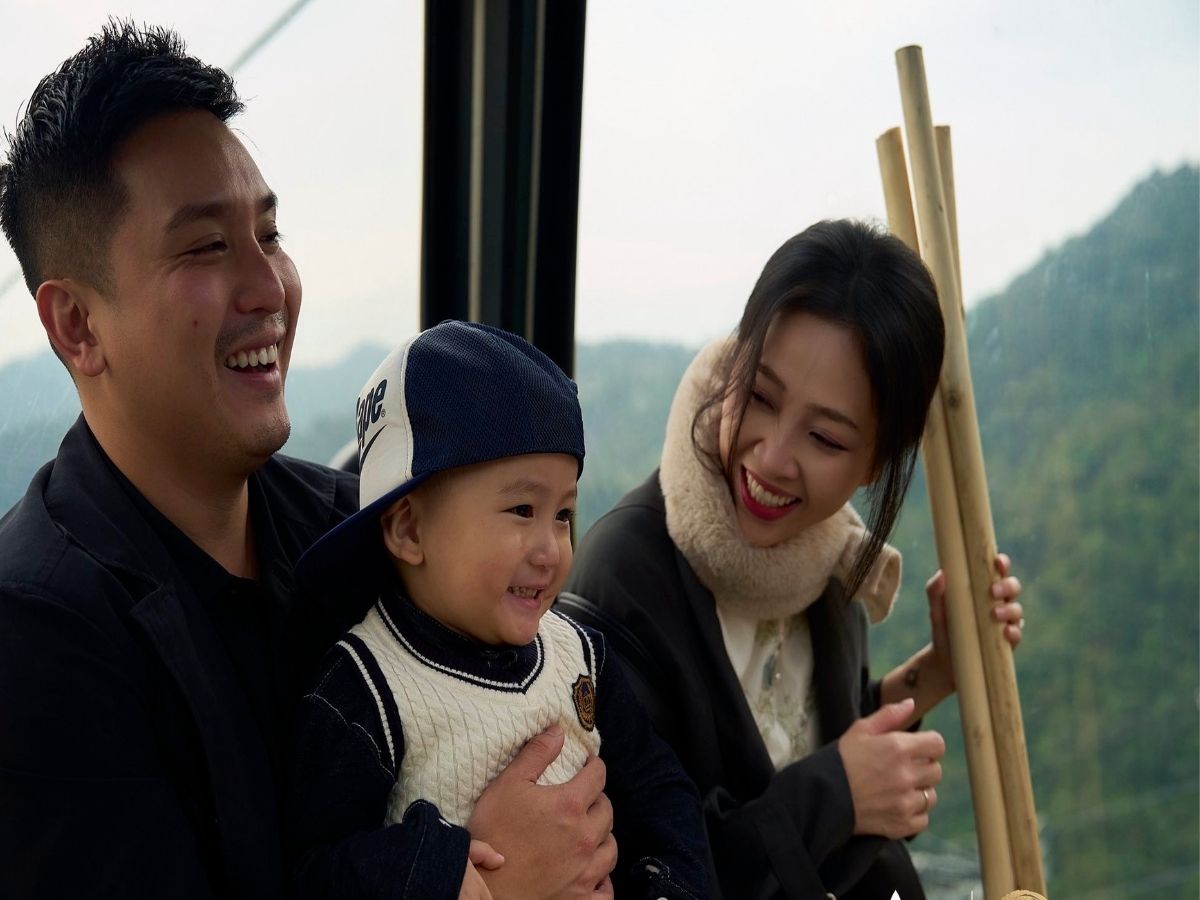
When sitting on the cable car, visitors have the opportunity to admire the entire landscape of Yen Tu mountain and forest from above. (Source: Collected)
5.3. Combining Cable Car and Trekking
Combining electric cars, cable cars, and trekking is a reasonable choice for early year Yen Tu pilgrimage. Start with an electric car ride from the parking lot to cable car station 1, then take the cable car up near Hoa Yen Pagoda, continue the rest by walking for about 2 hours to reach Dong Pagoda. This method saves energy on easy sections while still preserving the meaning of the mountain climbing journey on the most important parts.
This option is very suitable for families with elderly people or young children, ensuring everyone can participate in the journey without getting too tired. The estimated time is from 4 to 5 hours, including time for worship and rest.
6. Suggested Yen Tu Pilgrimage Itinerary for Early Year: 1 Day / 2 Days
6.1. 1-Day Itinerary Departing from Hanoi
The one-day early year Yen Tu pilgrimage begins at 6:30 AM in Hanoi's Old Quarter and at the Opera House. The bus departs at 7:30 AM, traveling for about 3 hours, with a 15-minute break at a service station on the highway. Arriving at 10:30 AM, visitors will have a light breakfast and prepare suitable attire.
From 11:00 AM to 3:30 PM is time to visit spiritual sites such as Trinh Pagoda, Suoi Giai Oan, then choose to take the cable car or trek to Hoa Yen Pagoda and Dong Pagoda. Lunch is served at a local restaurant with dishes like pork rib porridge and grilled chicken. The group starts descending the mountain from 3:30 PM, gathers at the parking lot at 4:30 PM, and returns to Hanoi around 7:30 PM.
6.2. 2-Day 1-Night Itinerary
A two-day itinerary makes the early year Yen Tu pilgrimage more comfortable and profound. On the first day, the group departs from Hanoi at 12:00 PM, arrives at Yen Tu at 3:00 PM, checks into Muong Thanh Uong Bi Hotel or Yen Tu Hotel, rests before continuing with afternoon and evening activities, such as visiting Trinh Pagoda, the foot of the mountain, and participating in festivals (if the timing is right).
On the second day, breakfast starts at 6:00 AM at the hotel. From 7:00 AM to 1:00 PM is dedicated to mountain climbing and visiting spiritual sites; you can trek the entire way or combine it with the cable car. Lunch is at Yen Tu restaurant with a view of the mountains and forests. At 2:30 PM, the group departs for Hanoi, concluding the journey at 6:00 PM.
6.3. Suggested Sightseeing Combinations
A trip to Yen Tu will be more complete when combined with Sun World Ha Long and Yoko Onsen Quang Hanh within the same itinerary. After a time of pilgrimage and temple visits during Tet to pray for peace and find tranquility, visitors can travel to Ha Long to immerse themselves in the vibrant atmosphere at Sun World Ha Long . Experiences such as the Queen Cable Car overlooking the bay from above, Dragon Park, Sun Wheel, or the European-style check-in area offer a perfect balance between spirituality and modern entertainment.
At the end of the journey, Yoko Onsen Quang Hanh is an ideal stop for relaxation and energy recovery. The onsen space, with its distinct Japanese style and natural hot mineral springs, helps the body relax after days of continuous travel and sightseeing. The combination of Yen Tu – Sun World Ha Long – Yoko Onsen Quang Hanh creates a harmonious itinerary blending spirituality, entertainment, and relaxation, suitable for families, friends, or couples who want to enjoy a gentle New Year's spring trip with diverse experiences.
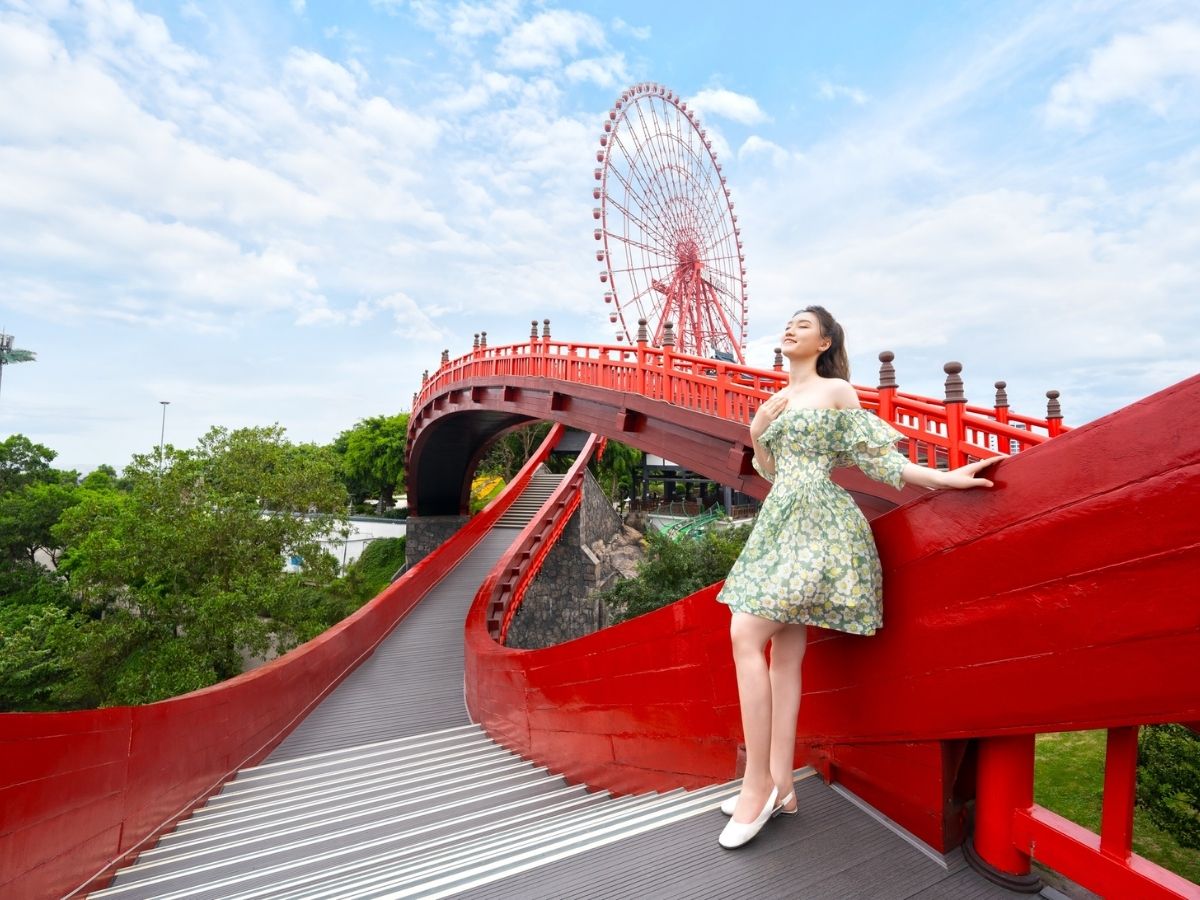
Traveling to Yen Tu will be more complete when combined with Sun World Ha Long and Yoko Onsen Quang Hanh in the same itinerary.
7. Useful experiences and tips for the Yen Tu pilgrimage at the beginning of the year
7.1. Attire and personal preparation
When pilgrimaging to Yen Tu at the beginning of the year, you should choose modest attire suitable for the sacred space. Men should wear long pants and sleeved shirts; shorts or tank tops should be avoided. Women should choose long-sleeved tops, long pants, or skirts that go past the knee, avoiding outfits that expose shoulders or have deep necklines. The color of the attire should be in muted tones such as black, blue, or brown, and avoid overly bright colors.
Hiking shoes with non-slip soles are essential, helping you move safely on rocky or wet paths. Luggage should include a light backpack containing 2-3 liters of water, biscuits, or energy-boosting candies. Raincoats and light jackets should be brought as the weather in mountainous areas is always unpredictable. Don't forget to bring a sweat towel, a sun hat, and sunglasses to stay comfortable throughout the journey.
7.2. Notes on customs and spiritual culture
When participating in the Yen Tu pilgrimage at the beginning of the year, maintaining a respectful attitude is paramount. When entering pagodas, you should remove your hat and bow before entering, and remain silent in the worship area. When lighting incense, you should only use 1 or 3 sticks, and not too many, to avoid waste and environmental impact. Offerings should be placed in the pagoda's donation box, not given directly to unauthorized individuals.
When taking photos, ask for permission beforehand and choose an appropriate spot, avoiding taking pictures at altars or while others are praying. Do not litter along the way, especially paper offerings. Also, avoid crowding at important spiritual sites; wait your turn civilly.
7.3. Experience visiting during peak season
During the peak season for the Yen Tu pilgrimage at the beginning of the year, from the 10th day of the first lunar month to the end of March, the number of visitors is usually very large, especially on weekends. Therefore, you should depart from Hanoi before 7 AM to avoid crowds. Purchasing cable car tickets online in advance helps save a lot of queuing time, especially on full moon days or at the end of the lunar month.
Cars should be parked in official parking lots, avoiding unofficial spots. It is advisable to prepare small change for convenience when buying incense or drinks, to avoid exchanging money at high prices. Phones should be fully charged, and a power bank should be carried as mobile phone signals are weak in many areas on the mountain.
7.4. Suggestions for check-in spots and photo tips
The ancient cypress path is an ideal place to capture beautiful moments during the Yen Tu pilgrimage at the beginning of the year, with the majestic scenery of ancient cypress trees. It is best to take photos around 8-9 AM when the gentle sunlight filters through the leaves, creating an impressive lighting effect. From Dong Pagoda on the summit, you can capture panoramic views of the distant Dong Trieu mountains and forests, which are especially beautiful when the sky is clear.
To Tower and Hoa Yen Pagoda are suitable for those who love photographing ancient architecture with unique perspectives of the six hexagonal stupas. Photos taken at Suoi Giai Oan bring a sense of peace, with the clear stream and open scenery as the background. If traveling in a group, take advantage of less crowded times to have a comfortable space. Use the continuous shooting mode as the mountain scenery changes constantly with the light throughout the day.
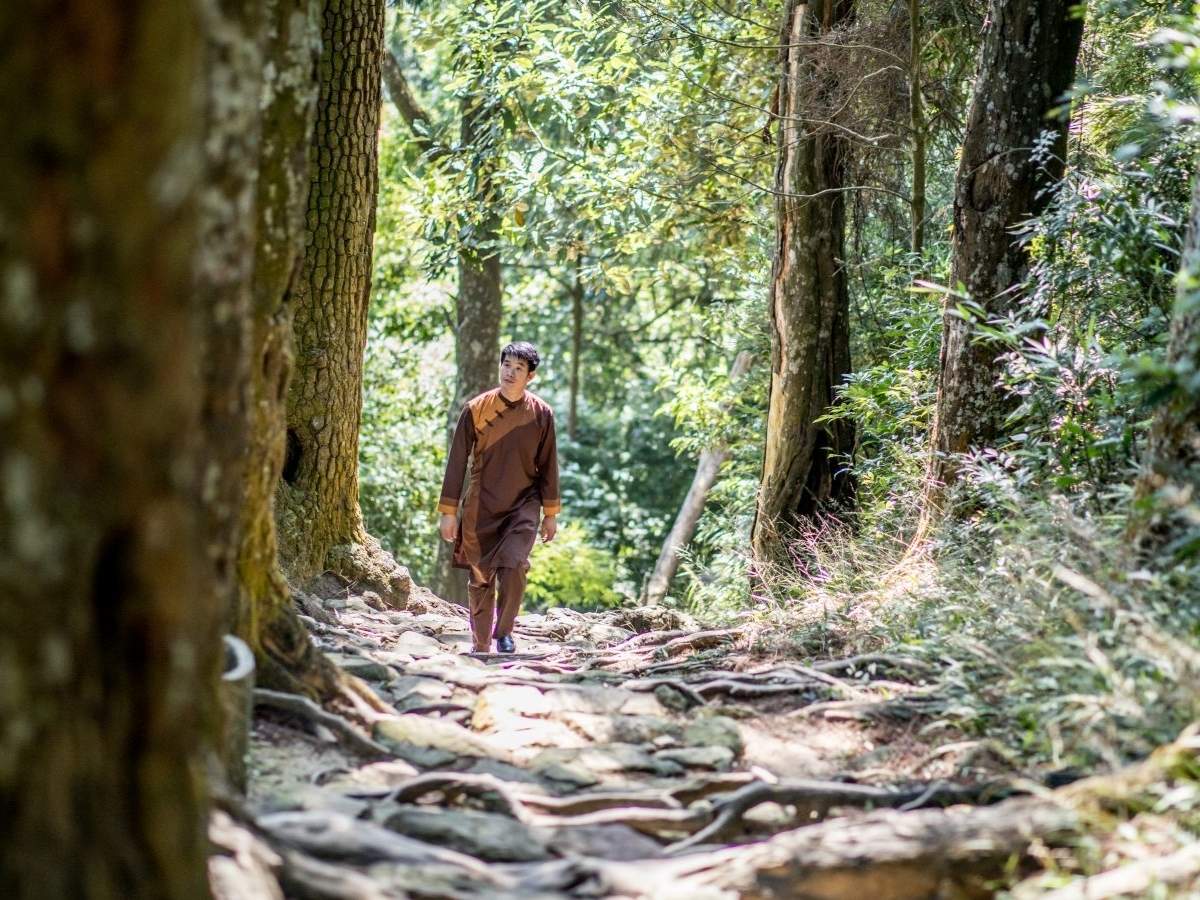
The ancient pine path is an ideal place to capture beautiful moments during the New Year pilgrimage to Yen Tu. (Source: Collected)
8. Cuisine around Yen Tu and Specialties to Try
8.1. Yen Tu Regional Specialties
The New Year pilgrimage to Yen Tu will be more interesting if you enjoy local specialties from the Dong Trieu region. Gat gu cake is famous for its crispy crust, rich and creamy green bean filling, handcrafted according to traditional secrets. Dong noodles eaten with spicy and sour broth are both delicious and help quench thirst after the mountain climbing journey. Grilled free-range chicken wrapped in banana leaves, with firm, fragrant, and sweet meat, is a specialty of the mountainous region around Yen Tu. Stir-fried bamboo shoots with pork belly is a rustic dish, crispy and sweet, highlighting the flavors of the mountainous nature.
8.2. Tips for eating reasonably when visiting Yen Tu at the beginning of the year
To maintain health throughout the New Year pilgrimage to Yen Tu, it is advisable to have breakfast with dishes such as rice, pho, or banh mi. Avoid eating too much or drinking a lot of water just before departure to avoid discomfort while climbing.
It is recommended to bring biscuits, energy candies, and dried bananas for quick replenishment when feeling tired. For drinks, prioritize filtered water over carbonated soft drinks. When choosing eateries around the relic site, prioritize places that are crowded or known for their quality, ensuring the food is always fresh and clean. Yen Tu Restaurant on the way up the mountain and Huong Sen Rice Restaurant near the parking lot are two trusted choices for many.
The New Year pilgrimage to Yen Tu is not only an occasion to turn towards spirituality but also a journey to deeply understand the culture, history, and nature of the sacred Buddhist land. With detailed information on the itinerary, transportation, and practical experiences, your trip will be complete and meaningful. Plan your trip to welcome a peaceful and lucky New Year!


