




Located on the highest peak of the Yen Tu mountain range, Dong Yen Tu Pagoda is a sacred destination that anyone making a pilgrimage to the land of Buddha wishes to visit at least once. Amidst the clouds, sky, and mountain winds, the solid bronze pagoda appears small yet solemn, evoking a sense of tranquility and sacredness. The journey to Dong Pagoda is not just an exploration, but also a journey to calm the soul, seeking peace amidst the sacred Yen Tu mountains.
1. General Introduction to Dong Yen Tu Pagoda
1.1. Where is Dong Yen Tu Pagoda?
Dong Yen Tu Pagoda is located on Yen Son peak, at an altitude of 1,068m above sea level, in Yen Tu ward, Quang Ninh province, the highest position of the Yen Tu mountain range. From the mountaintop, visitors can gaze out at the overlapping mountains and hills, and the year-round floating sea of clouds, creating a mystical scene like a "paradise" between the borders of Quang Ninh and Bac Giang. This special location makes the journey to Dong Pagoda a complete experience of conquest and pilgrimage.
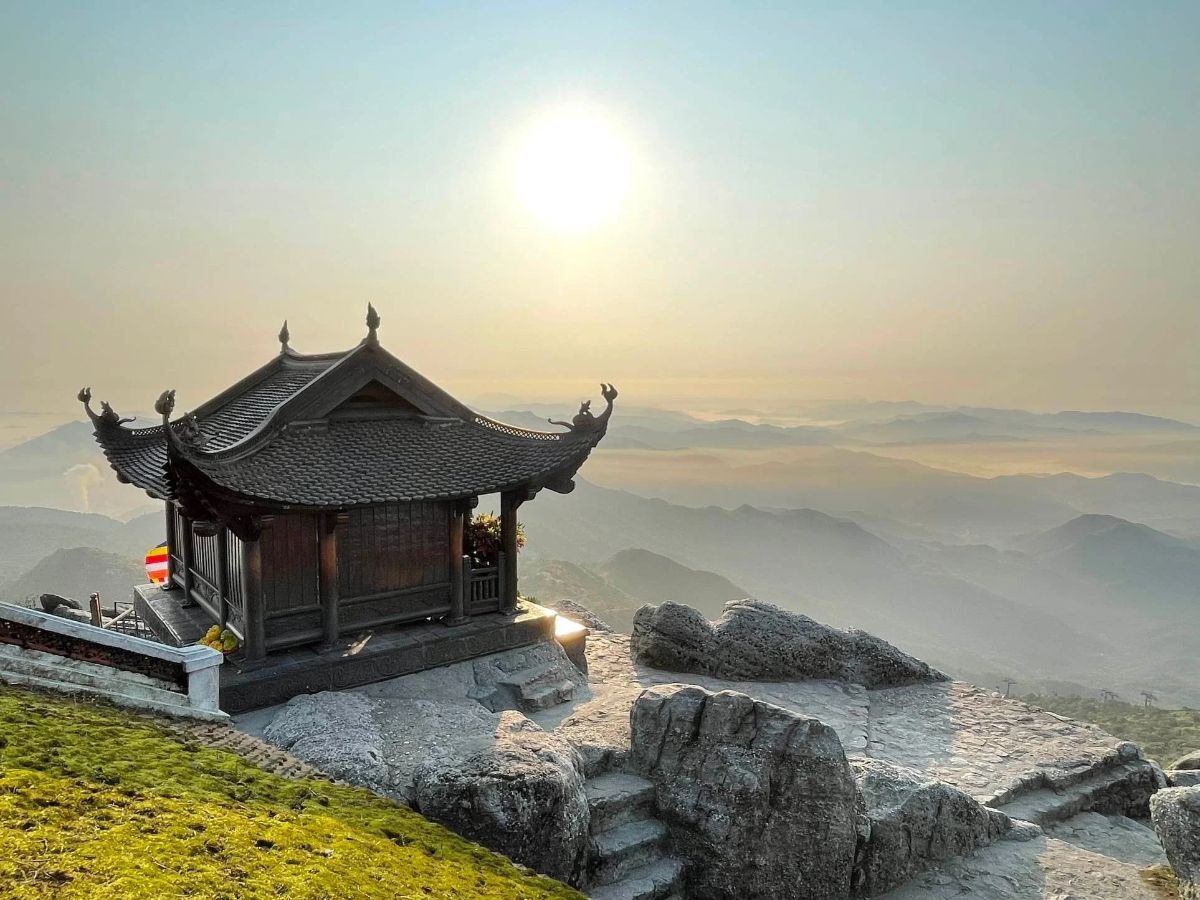
Yen Tu Copper Temple is located on the peak of Yen Son mountain, at an altitude of 1,068m. (Source: Collected)
1.2. Reasons why Yen Tu Copper Temple becomes a spiritual symbol
Not only located at the highest altitude, Yen Tu Copper Temple is also the final destination of the journey of over 6,000 stone steps to pilgrimage Yen Tu, a place associated with the meditation process and the founding of the Truc Lam Zen School by Emperor-Buddha Tran Nhan Tong. The temple is cast entirely from pure copper with a total weight of about 70 tons, demonstrating the eternal spirit of Buddhism against the harsh climate at the high mountain peak. It is the combination of history, spirituality, and unique architecture that has made the Copper Temple the most sacred symbol of Vietnamese Buddhism.
1.3. Role of Yen Tu Copper Temple in the Yen Tu scenic complex
Holding the supreme position in the system of over 20 pagodas and towers on Yen Tu mountain, Yen Tu Copper Temple is considered the spiritual convergence point of the entire scenic complex. This is where many pilgrimage activities and major festivals take place annually, especially during the festival season from the 10th day of the first lunar month to the end of the third lunar month, attracting millions of Buddhists and tourists. Located on the pilgrimage route Giai Oan – Hoa Yen – Mot Mai – Dong, the temple not only affirms its value as a special national relic but also fully embodies the spirit of Tran Dynasty Buddhism and national cultural identity.
2. History of formation and development of Yen Tu Copper Temple
2.1. Construction phase and important renovation milestones
The history of Yen Tu Copper Temple has gone through many construction and renovation periods, linked to the ups and downs of national history. The first temple was built in the 17th century during the Later Le Dynasty, by a consort of Lord Trinh as a donation, with a small scale, an iron frame, and a copper roof like a shrine. In 1740, the temple was completely destroyed by a large storm during the reign of King Le Canh Hung.
The second temple was built in 1930 and inaugurated in 1931 with reinforced concrete and copper. In 1994, the third temple weighing 36 tons was installed but only lasted 12 years. The current temple was completely recast during the period 2006–2007, inaugurated in September 2007, weighing 70 tons, with an area of 200m², designed by architect Tran Quoc Tuan.
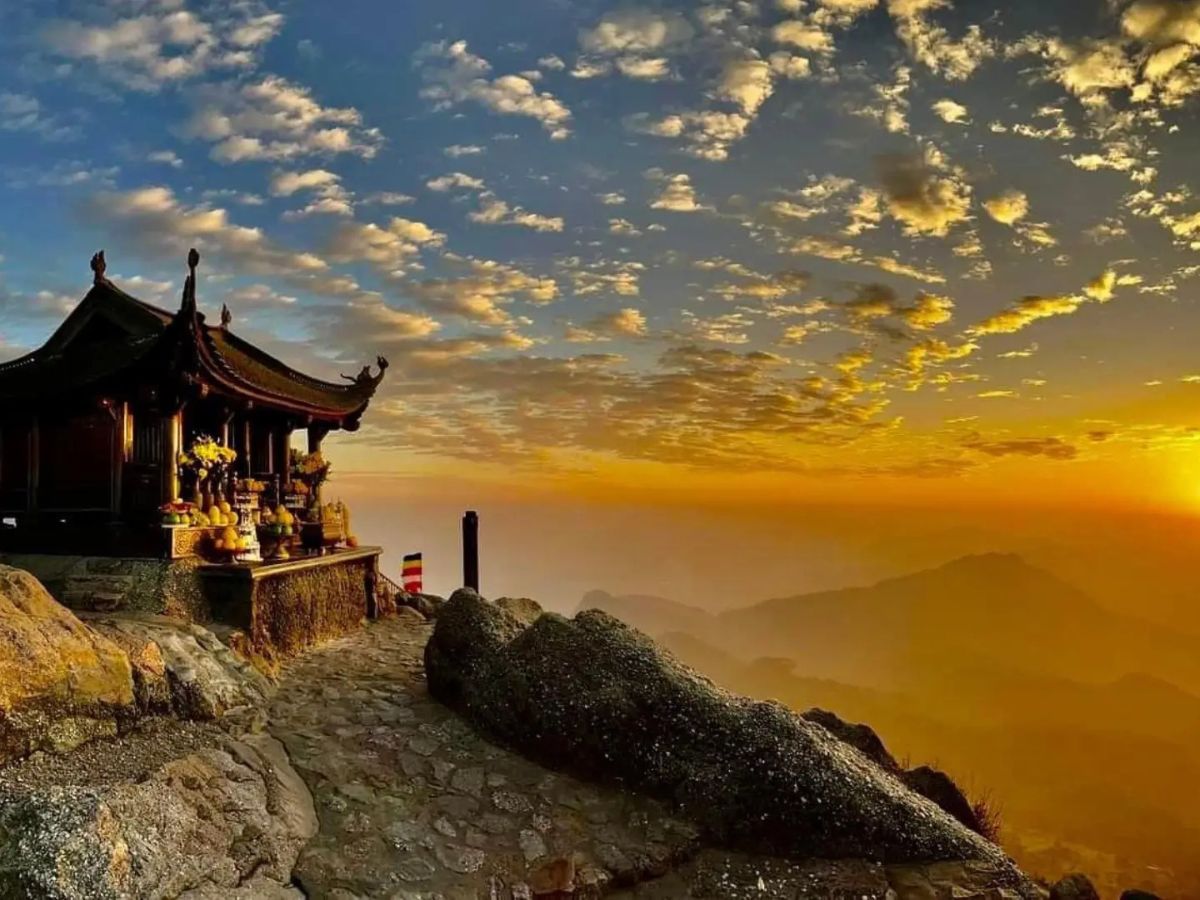
Dong Yen Tu Pagoda has undergone many constructions and renovations. (Source: Collected)
2.2. Historical events and the significance of restoration
Located at an altitude of 1,068m, Dong Yen Tu Pagoda has been repeatedly damaged by storms, floods, harsh climate, and the impact of war, at one point only stone column base pits remained. The decision to restore the pagoda with solid copper of 99.99% purity, with corrosion resistance up to 500 years, is not just a technical solution but also carries profound symbolic meaning. This is a testament to the determination to preserve the spiritual heritage of Vietnamese Buddhism, combining modern casting technology with the Trúc Lâm Zen spirit of worldly engagement, so that the Copper Pagoda endures amidst the clouds and sky of Yen Tu.
2.3. Titles and records of Dong Yen Tu Pagoda
With its special scale and location, Dong Yen Tu Pagoda is recognized as the largest copper pagoda in Asia, with an area of 200m² and a height of about 9m, and is also the copper pagoda located at the highest altitude in Vietnam, 1,068m above sea level.
The pagoda is part of the Yen Tu Historical Site complex, classified as a Special National Historical Site by Decision No. 238-VH/2001 and belongs to the Mixed Cultural and Natural World Heritage area recognized by UNESCO. These titles affirm the unique position of Dong Yen Tu Pagoda in the history and life of Vietnamese Buddhism.
3. Architecture and construction materials of Dong Yen Tu Pagoda
3.1. Typical architectural features
Dong Yen Tu Pagoda features a traditional architectural style with a square 'Dinh' shaped floor plan, modest yet balanced dimensions, measuring 4.6m long, 3.6m wide, and 3.35m high. The four curved roof tiles extend to create a wide eave, with dragon-carved finials in the Tran Dynasty style, both powerful and elegant. The three solid walls are made of tightly fitted copper plates, decorated with soft lotus flowers and leaves, combined with bamboo-patterned railings, creating a sturdy yet graceful overall structure, like a copper lotus blooming amidst the stone base with fish-belly pedestals on the sacred mountain peak.
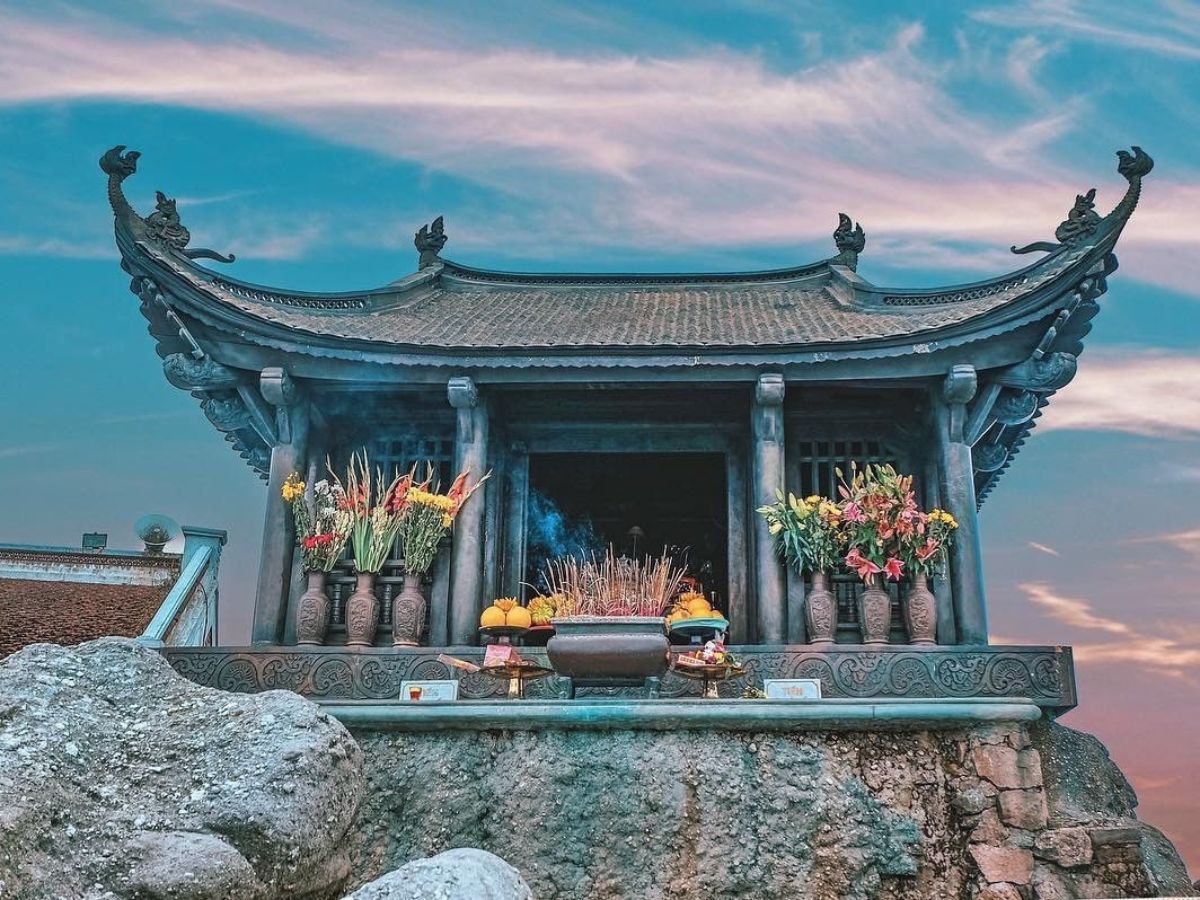
Dong Yen Tu Pagoda features a traditional architectural style with a square 'Dinh' shaped floor plan. (Source: Collected)
3.2. Pure Copper Material and Scale of Construction
The entire Dong Yen Tu Pagoda is cast from high-purity pure copper, possessing corrosion resistance for hundreds of years against harsh weather conditions at an altitude of 1,068m. The structure has a total weight of approximately 70 tons and a usable area of 20m², making it the largest copper pagoda in Asia. Inside, the pagoda enshrines the Three Bodies of the Buddha and Shakyamuni Buddha. From the pillars and domes to every decorative pattern, all were meticulously handcrafted by skilled artisans using traditional methods, showcasing the peak of Vietnamese Buddhist craftsmanship.
3.3. Construction and Installation Process on Yen Tu Peak
The construction process of Dong Yen Tu Pagoda is a rare feat in modern Buddhist architecture. Large copper sections were cast separately at the workshop, then transported to the mountain peak using a cable car system combined with manual methods. The structure was assembled during the period 2006–2007 under the direction of Venerable Thich Thanh Quyet and architect Tran Quoc Tuan, with the participation of over 100 artisans and engineers. Components were fitted tightly without welds and specially reinforced to withstand level 12 storms. It was officially inaugurated in September 2007, becoming a proud technical milestone for Vietnamese Buddhism.
4. Visiting Dong Yen Tu Pagoda
4.1. The Journey to Conquer Yen Tu Peak
The journey to Dong Yen Tu Pagoda is a combination of conquest and pilgrimage, suitable for various fitness levels. Visitors can choose between two cable car routes: Hoang Long (Giai Oan – Hoa Yen, approximately 1,200m long) and Bach Long (Mot Mai – An Ky Sinh, approximately 900m long), followed by a final trek to the summit, taking about 2 hours in total.
For those who wish for a complete experience, the 6km trekking route with over 6,000 stone steps offers a challenging 4–6 hour journey. A popular option is to take the cable car to Hoa Yen, visit Mot Mai Pagoda, then trek for about 30–45 minutes to Dong Pagoda, saving energy while fully immersing in the rhythm of the Yen Tu mountains.
4.2. Buddhist Worship and Meditation on Dong Pagoda Peak
Upon arriving at Dong Yen Tu Pagoda, visitors can easily feel the rare sacred and tranquil atmosphere on the highest mountain peak. Amidst the whistling mountain winds and surrounding white clouds, Buddhists offer incense before the altar of the Three Bodies of the Buddha, praying for national peace and family well-being. Many choose to sit in meditation, practicing mindfulness in moments of communion between heaven and earth, allowing their minds to settle after the long journey. Sunrise and sunset times further enhance the profound and memorable pilgrimage experience.
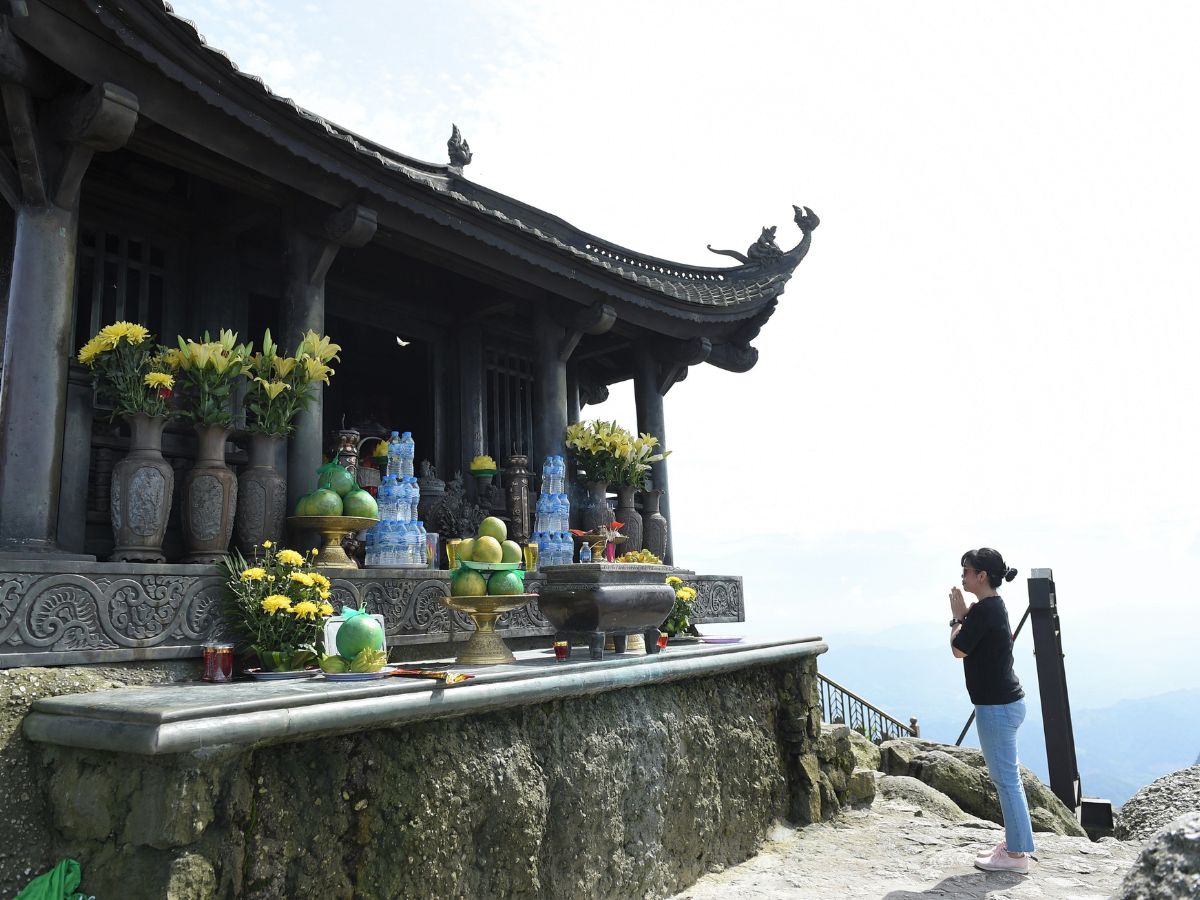
Buddhist worship at Dong Yen Tu Pagoda is a sacred experience. (Source: Collected)
4.3. Scenery viewpoints and marking the journey
From the courtyard of Dong Yen Tu Pagoda, visitors can take in a 360-degree view of the billowing sea of clouds, overlapping mountains, and the hazy Quang Ninh horizon, which is especially beautiful in the winter-spring season. The image of the small bronze pagoda sparkling under the early sun or twilight is a precious moment to mark the journey. However, when taking photos and visiting, tourists should maintain a solemn attitude, wear modest clothing, avoid laughing or jostling during the festival season, to respect the spiritual space on the sacred Yen Tu mountain peak.
5. How to get to Dong Yen Tu Pagoda
5.1. From Hanoi and surrounding provinces to Yen Tu
From Hanoi, visitors can choose buses departing from My Dinh, Giap Bat, or Luong Yen stations with companies like Kumho Samco, Phuc Xuyen, at a price of about 200,000–250,000 VND, with a travel time of 3–4 hours along National Highway 18 through Bac Ninh, stopping at the Yen Tu Trinh Temple area. From here, continue by taxi or motorbike taxi for about 10km to the foot of the mountain.
For visitors departing from Hai Phong, the distance is about 50km along National Highway 10, taking 1–2 hours. Nearby provinces such as Bac Ninh, Hai Duong, Quang Ninh can travel directly via National Highway 18 or use private cars, limousines to be flexible with time, especially convenient during the peak festival season.
5.2. From the foot of Yen Tu mountain to Dong Pagoda
From the Trinh Temple area, visitors can choose to walk the entire journey of about 6km with over 6,000 stone steps, taking 4–6 hours depending on physical condition, suitable for those with endurance and who want to fully experience the pilgrimage. A more popular option is a combination of transport: take an electric car to the Giai Oan cable car station, use cable car line 1 to Hoa Yen Pagoda, then walk a short distance of about 200m to Mot Mai Pagoda, continue with cable car line 2 to An Ky Sinh and trek the final 1km to reach Dong Yen Tu Pagoda. For families with young children or the elderly, choosing a round-trip cable car helps save energy and ensure safety throughout the journey.
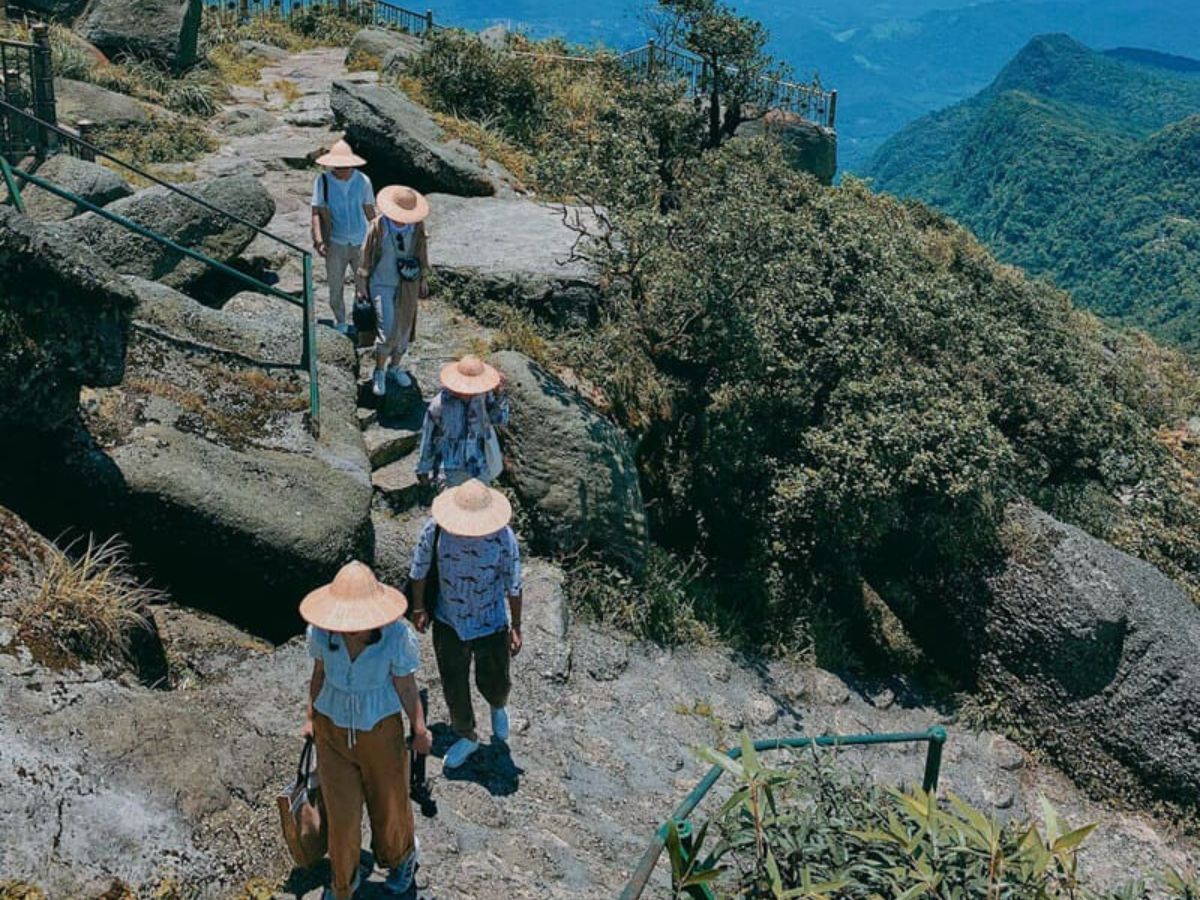
After the cable car ride, visitors walk the final 1 km to Dong Yen Tu Pagoda. (Source: Collected)
5.3. Notable stops on the journey
The journey to Dong Yen Tu Pagoda is not just a trip to the destination, but also an experience through many special spiritual sites. Starting from Trinh Pagoda – the sacred entrance to Yen Tu, visitors continue to Giai Oan with its stream associated with ancient legends, then to Hoa Yen Pagoda, a major monastic center with ancient stupas honoring Emperor-Monk Tran Nhan Tong. Along the way, Mot Mai Pagoda with its "half-heavenly temple" architecture, the Emperor-Monk's stupa, and lush bamboo forests create a series of stops that are both sacred and rich in landscape value, making the pilgrimage journey more complete and memorable.
6. Festivals and spiritual activities at Dong Yen Tu Pagoda
6.1. Yen Tu Spring Festival
The Yen Tu Spring Festival officially opens on the 10th day of the first lunar month, marking the beginning of the largest pilgrimage season of the year to Dong Yen Tu Pagoda. The solemn palanquin procession from Trinh Temple to the mountain peak recreates the monastic journey of Emperor-Monk Tran Nhan Tong, combined with traditional rituals such as Buddha bathing, releasing doves, offering incense before the Tam The Buddha altar, and praying for national peace and prosperity. Alongside the solemn ceremonies, the festival features vibrant folk cultural activities, traditional martial arts performances, camping, and community exchanges, creating a sacred yet familiar atmosphere amidst the sacred Yen Tu mountains.
6.2. Scale and attraction of the festival
The Yen Tu Spring Opening Festival 2025 recorded nearly 20,000 visitors and Buddhists attending in the first few days of the year, demonstrating the special attraction of the pilgrimage to Dong Yen Tu Pagoda. It is not only a major spiritual event but also a cultural gathering place at the beginning of spring, where visitors can worship, pray for peace, and immerse themselves in the sacred atmosphere of Yen Tu mountain. The event contributes to spreading the values of the Truc Lam Zen school, affirming Yen Tu's role as a leading center for Buddhism and spiritual tourism in the North.
7. Itinerary for visiting Dong Yen Tu Pagoda
With a one-day timeframe, visitors can start their journey early in the morning to travel to the Yen Tu relic site, purchase tickets, and ascend the mountain by cable car or a combination of walking. The morning is the ideal time to pilgrimage through important sites like Trinh Pagoda, Giai Oan, and Hoa Yen Pagoda, when the air is still fresh and the crowds are not yet too large. From Hoa Yen, continue to Mot Mai Pagoda to experience the tranquil space before conquering Dong Pagoda on the highest peak.
At noon, visitors can rest and enjoy a light vegetarian meal in the Hoa Yen area or at the foot of the mountain to regain strength. The afternoon is suitable for continuing the journey to Dong Yen Tu Pagoda, worshipping, sightseeing, and taking photos of the sea of clouds if the weather is favorable. After completing the rituals and sightseeing, visitors return by cable car or along their chosen route, concluding the day's pilgrimage with a complete experience of both spirituality and natural scenery.
After visiting the pagoda, visitors can return to Bai Chay center to travel and experience the modern entertainment complex Sun World Ha Long with thrilling games and a playground for families.
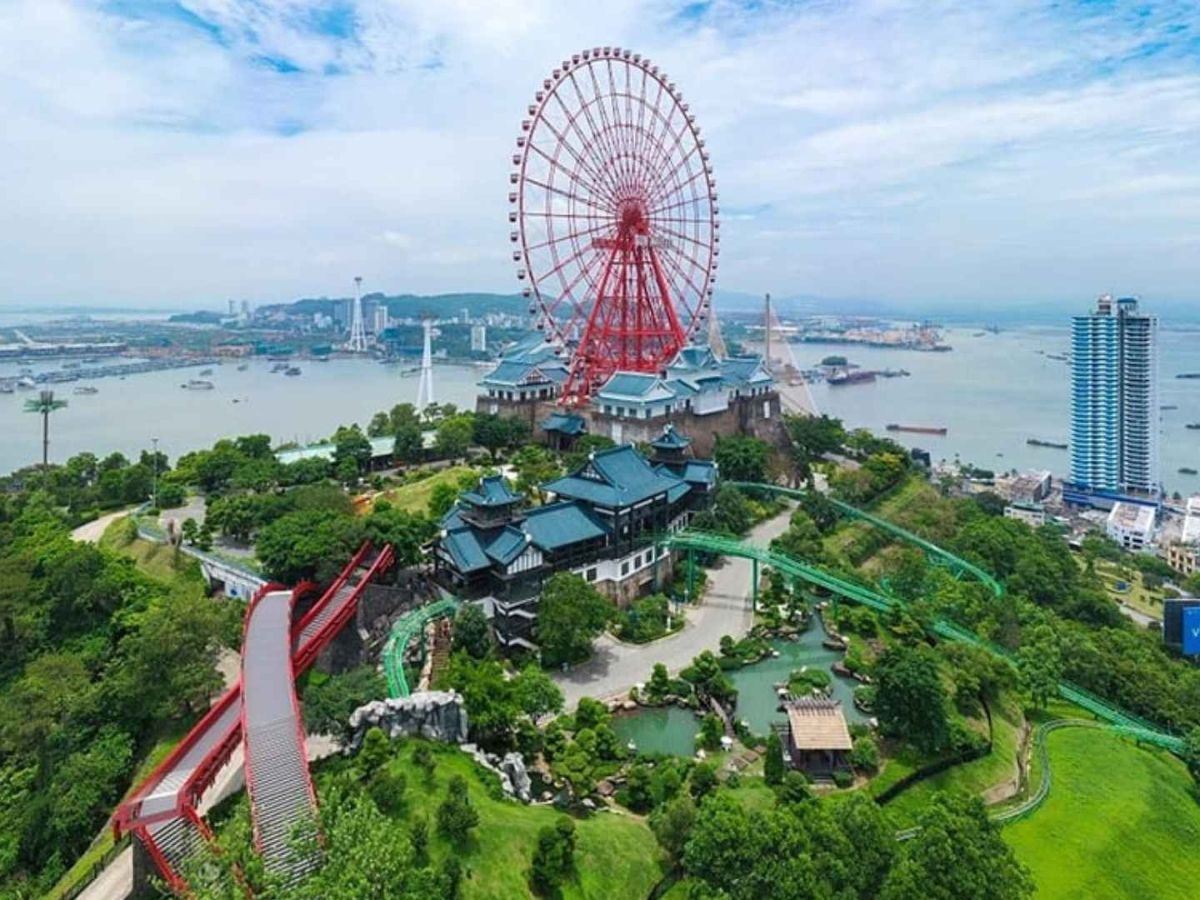
Sun World Ha Long continues the spiritual pilgrimage and tourism journey in Quang Ninh. (Source: Collected)
8. Pilgrimage Experience and Important Notes
To ensure a smooth trip to Dong Pagoda Yen Tu, visitors should prepare discreet and polite attire, prioritizing lightweight, absorbent clothing and hiking shoes or sports shoes with good grip. Bringing drinking water, a light warm jacket, and a light raincoat is essential, as the weather on the mountaintop often changes rapidly, especially during winter and spring. A compact backpack will make the trekking journey more comfortable and safer.
When visiting and worshipping, visitors must maintain order, avoid speaking loudly, not litter, and absolutely refrain from touching offerings or pushing when performing rituals. The best times to visit Dong Pagoda are early morning or late afternoon, when the clouds are misty and the light is gentle. Conversely, it is advisable to avoid days with heavy rain, thick fog, or strong winds to ensure safety and have a complete experience in the sacred Yen Tu mountain.
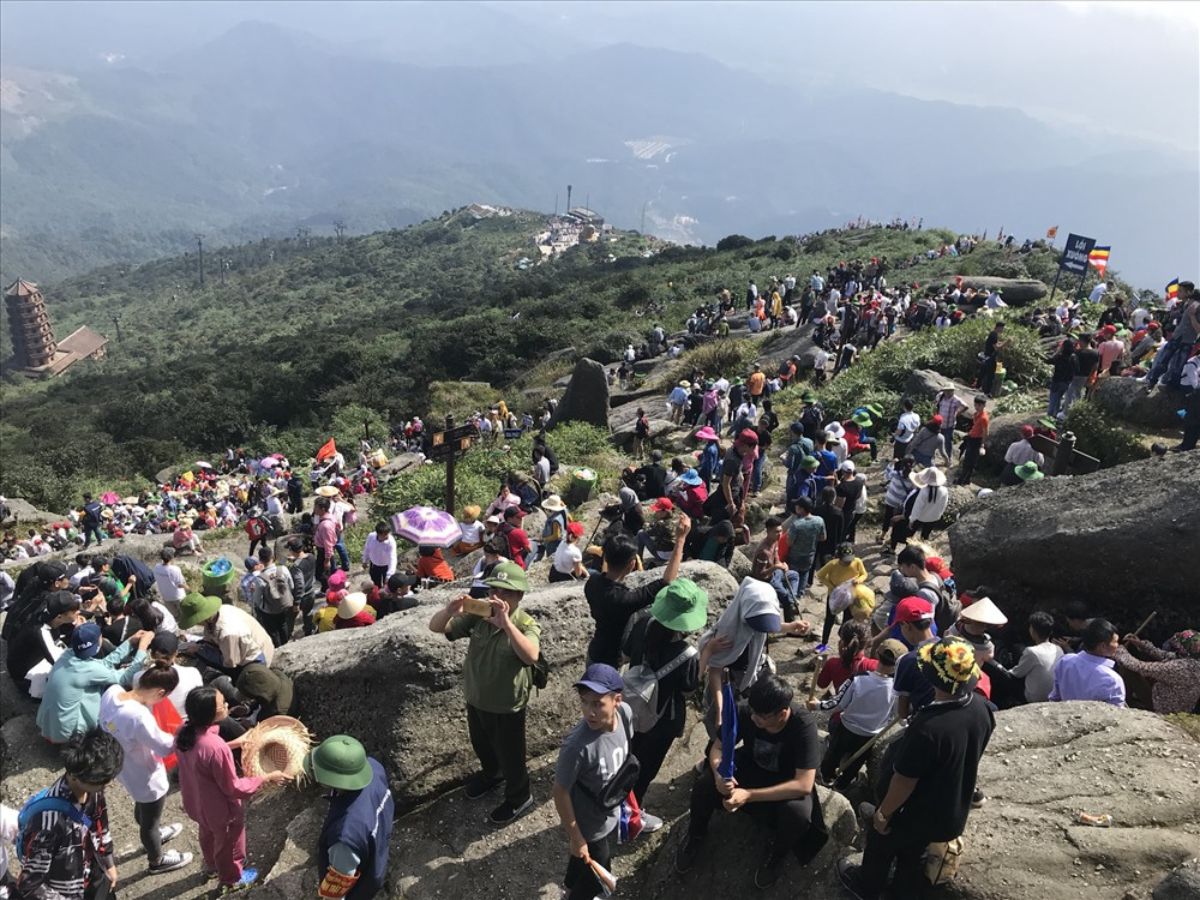
Tourists must adhere to safety regulations when visiting Yen Tu Copper Pagoda. (Source: Collected)
Nestled on the highest peak of the sacred mountain, Yen Tu Copper Pagoda is not only a special spiritual symbol of Vietnamese Buddhism but also a convergence of history, architecture, and majestic nature. The pilgrimage journey to the pagoda is an opportunity for everyone to pause amidst the clouds and sky of Yen Tu, to worship, meditate, and deeply feel the spirit of the Truc Lam Zen school. Whether coming to pray for peace or to explore, the Copper Pagoda always leaves a sacred and unforgettable impression.


