




1. Overview of Nam Son Pagoda Da Nang
1.1. Where is Nam Son Pagoda Da Nang located?
Nam Son Pagoda Da Nang is located at Nguyen Kha Trac street, Cam Nam village, Hoa Xuan ward, Da Nang city. This is the southwestern suburban area of the city, about 10 km from the center of Da Nang. Thanks to this location, the pagoda is close enough for tourists to travel easily, and secluded enough to maintain the quiet, serene atmosphere befitting a Buddhist sanctuary. The travel time from the city center to Nam Son Pagoda Da Nang takes only about 20 - 25 minutes by motorbike or car, depending on the route and traffic density.
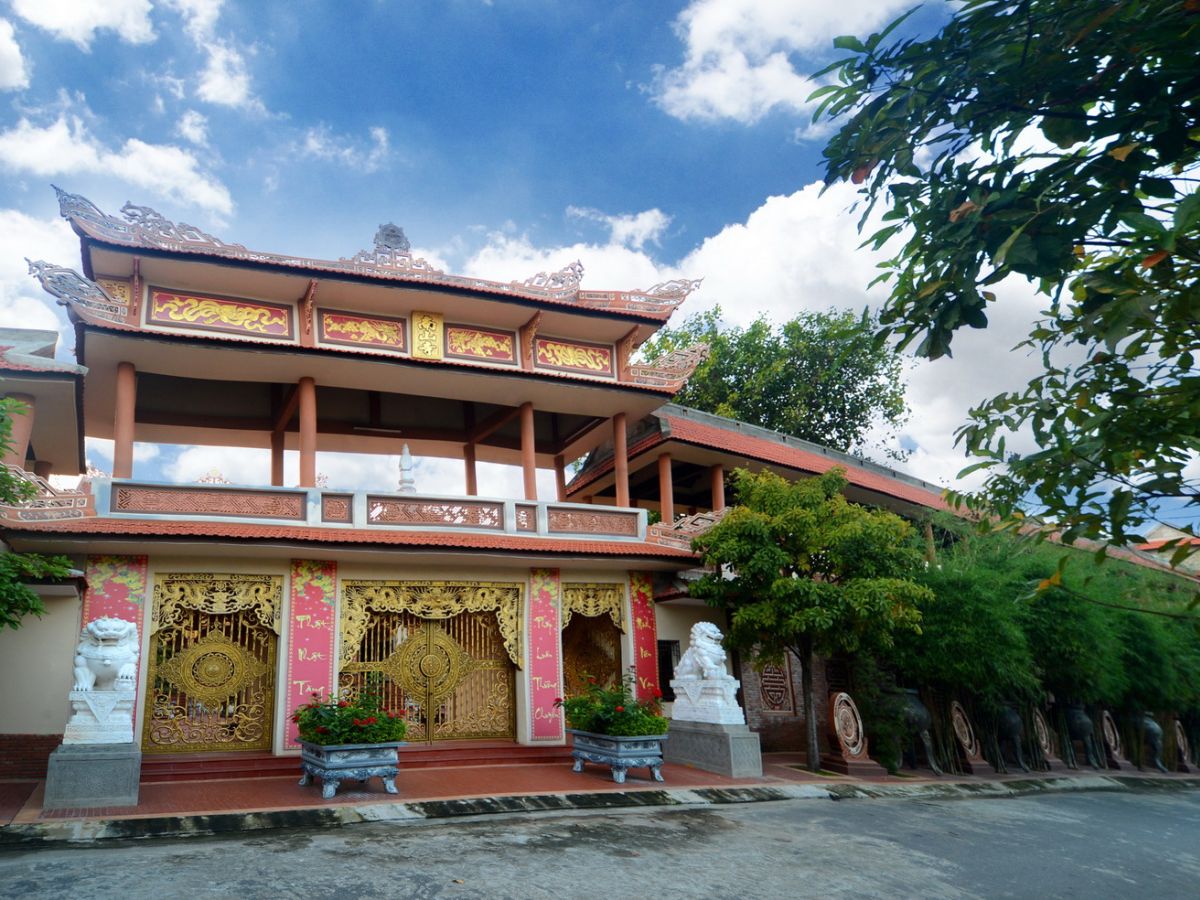
Nam Son Pagoda is about 10km from the center of Da Nang city and is a famous spiritual cultural destination. (Source: Collected)
The pagoda is surrounded by sparsely populated residential areas, interspersed with fields and natural green spaces, creating a fresh, cool atmosphere year-round. This characteristic helps Nam Son Pagoda Da Nang be highly regarded by many tourists as an ideal destination to find peace and escape the noisy urban rhythm. The pagoda's location is also convenient for combining visits to other famous Da Nang attractions such as Marble Mountains, riverside areas, or the Hòa Vang countryside.
Regarding visiting hours, Nam Son Pagoda Da Nang is open daily from 5:00 AM to 9:00 PM and does not charge an entrance fee. Visitors can proactively arrange their schedules to visit, admire the scenery, pay respects to Buddha, or take photos in the unique and serene architectural space of this pagoda.
1.2. History of Formation and Development of Nam Son Pagoda Da Nang
Beginning its formation in 1962, Nam Son Pagoda Da Nang is the result of the efforts and creativity of Buddhist follower Nguyễn Văn Châu and his disciples in the area. The initial design was by Venerable Thích Huệ Phong - the current abbot, inspired by ancient Central Vietnamese traditional architecture. The initial purpose was to create a place for spiritual activities, Buddhist study, and to meet the religious needs of the local community.
In its early stages, the pagoda was small and named Cẩm Nam Pagoda, after the name of the village where it was located. Over a long period of operation, Nam Son Pagoda Da Nang was gradually expanded and many important sections were renovated. Structures such as the main hall, guesthouse, release pond, and landscape areas were formed step by step, creating a harmonious and solemn architectural complex. This development process reflects the joint contributions of monks, nuns, Buddhists, and local people over many generations.
Throughout more than 60 years of formation and development, Nam Son Pagoda Da Nang has undergone several renovations to suit usage conditions and the overall landscape. Notably, under the guidance of Venerable Thích Huệ Phong, the current abbot, the pagoda was re-planned in the traditional Buddhist architectural style, combined with Eastern artistic elements. As a result, the pagoda not only retains its spiritual value but also becomes a prominent cultural destination in Da Nang. Its sustained development history has contributed to affirming the position of Nam Son Pagoda Da Nang in the spiritual life of the people and visitors from all directions.
1.3. Cultural and Spiritual Significance of Nam Son Pagoda Da Nang
Nam Son Pagoda Da Nang holds special cultural and spiritual significance in the spiritual life of local people as well as visitors from all directions. It is not only a place for Buddhist worship and rituals but also a space that helps people find inner peace amidst the pressures of modern life. Since its establishment, the pagoda has become a familiar destination for Buddhist ceremonies, incense offerings, prayers for peace, prayers for the deceased, and releasing animals, especially during major Buddhist festivals and the first and fifteenth days of each lunar month.
The serene atmosphere is a prominent value that creates the spiritual depth of Nam Son Pagoda Da Nang. The pagoda grounds are spacious, harmonizing architecture with natural landscapes. The Release Pond, green gardens, and auxiliary structures create a quiet environment suitable for meditation and contemplation. Many visitors come here not only to worship but also to relax their minds, balance their emotions, and find lightness in their thoughts.
Besides its spiritual value, the pagoda also carries profound cultural significance. The traditional Buddhist architecture combined with decorative art bearing strong Eastern imprints contributes to preserving and spreading Buddhist cultural identity in Da Nang. The pagoda's space is often likened to a "fairyland" amidst everyday life, helping visitors clearly feel the connection between people, beliefs, and nature.
1.4. Why is Nam Son Pagoda Attractive to Tourists?
What makes Nam Son Pagoda Da Nang attractive is its prominent large-scale architecture amidst the plains, with vibrant colors and impressive design. With a total area of over 10,000 square meters, the pagoda boasts spacious grounds, abundant greenery, and scientifically arranged facilities, creating a sense of peace from the very first steps. This space helps visitors temporarily escape the noisy rhythm of life to find inner tranquility.
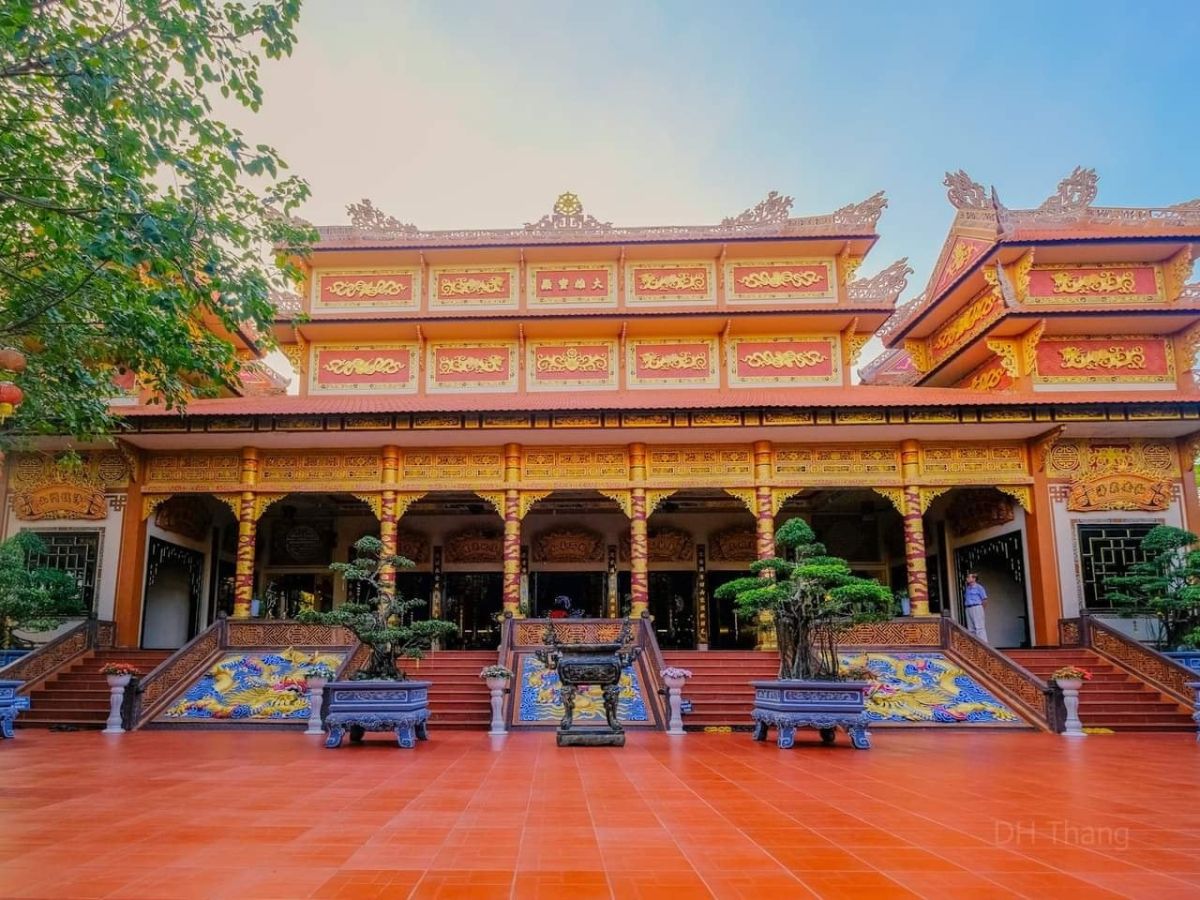
Nam Son Pagoda features a purely Vietnamese architectural style with a harmonious blend of ancient and modern features. (Source: Collected)
One of the reasons Nam Son Pagoda Da Nang is chosen by many is its unique architecture with a strong East Asian style. Prominent structures such as the main hall, Tam Tang Bridge, Vong Nguyet Communal House, and Phongsanh Lake are all meticulously cared for. The main colors are red, yellow, and brown, creating a solemn yet approachable appearance. Details of dragon and phoenix carvings along with traditional curved tiled roofs contribute to highlighting its aesthetic and Buddhist cultural values.
Besides its sightseeing value, the pagoda is also a familiar spiritual gathering place for local residents. Tourists often come here to worship Buddha, offer incense, pray for peace, and participate in Buddhist activities on major holidays. Thanks to its quiet atmosphere and beautiful scenery, it is also chosen by many for sightseeing, meditation, and taking souvenir photos.
2. How to get to Nam Son Pagoda Da Nang
Nam Son Pagoda Da Nang is located about 10 km from the city center, making it convenient to travel to by various means. If you are traveling by personal motorbike or car, the easiest route is to start from the city center following 2/9 Street. Then, you cross Hoa Xuan Bridge and follow Thang Long Street. When you reach the intersection of Pham Hung – Me Thuy, turn right. After that, continue turning into Nguyen Kha Trac Street, and you will reach the pagoda grounds. This journey usually takes about 20-25 minutes depending on traffic flow.
In addition to self-driving, tourists can choose public buses to get to Nam Son Pagoda Da Nang. Some bus routes such as route number 07 or 08 stop near the Pham Hung area. After getting off the bus, you only need to walk a few hundred meters following the signs to reach the pagoda gate. This option is very suitable for tourists who want to save on travel costs.
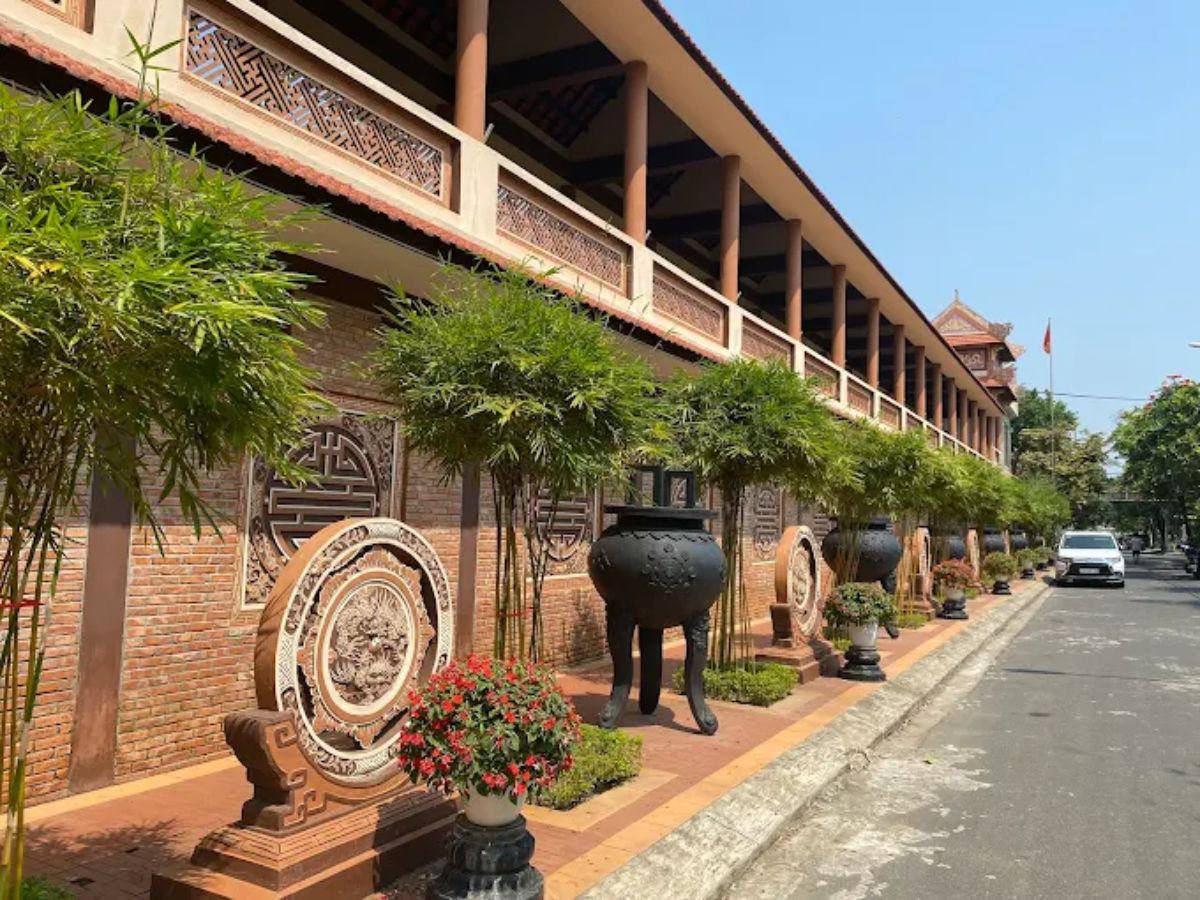
The way to Nam Son Pagoda is convenient for visitors to choose various means of transport. (Source: Collected)
If you want to travel faster and more comfortably, taxis or ride-hailing services are also convenient options. These vehicles take you directly to the pagoda gate without needing to find directions or park. Upon arrival, Nam Son Pagoda Da Nang has a free parking area for both motorbikes and cars. The pagoda is open from early morning until late evening, so you can flexibly arrange your time to visit during the day.
3. Suitable time to visit Nam Son Pagoda Da Nang
Choosing the right time plays an important role in the experience of visiting Nam Son Pagoda Da Nang, especially for visitors who love a tranquil space and beautiful scenery. The pagoda is open from 5 AM to 9 PM daily and does not charge an entrance fee, so visitors can proactively arrange their visiting time without being limited by cost or fixed hours.
Considering the time of year, the dry season in Da Nang, lasting from about April to August, is considered the most ideal for visiting the pagoda. The weather during this period is relatively stable, with light sunshine, little rain, and fresh air. Favorable weather conditions make travel easier, while also creating ideal conditions for sightseeing, worshiping, and capturing beautiful moments within the pagoda grounds. Conversely, the rainy season from October to about February of the following year often experiences heavy rain and strong winds, which may affect the visiting experience if weather forecasts are not closely monitored.
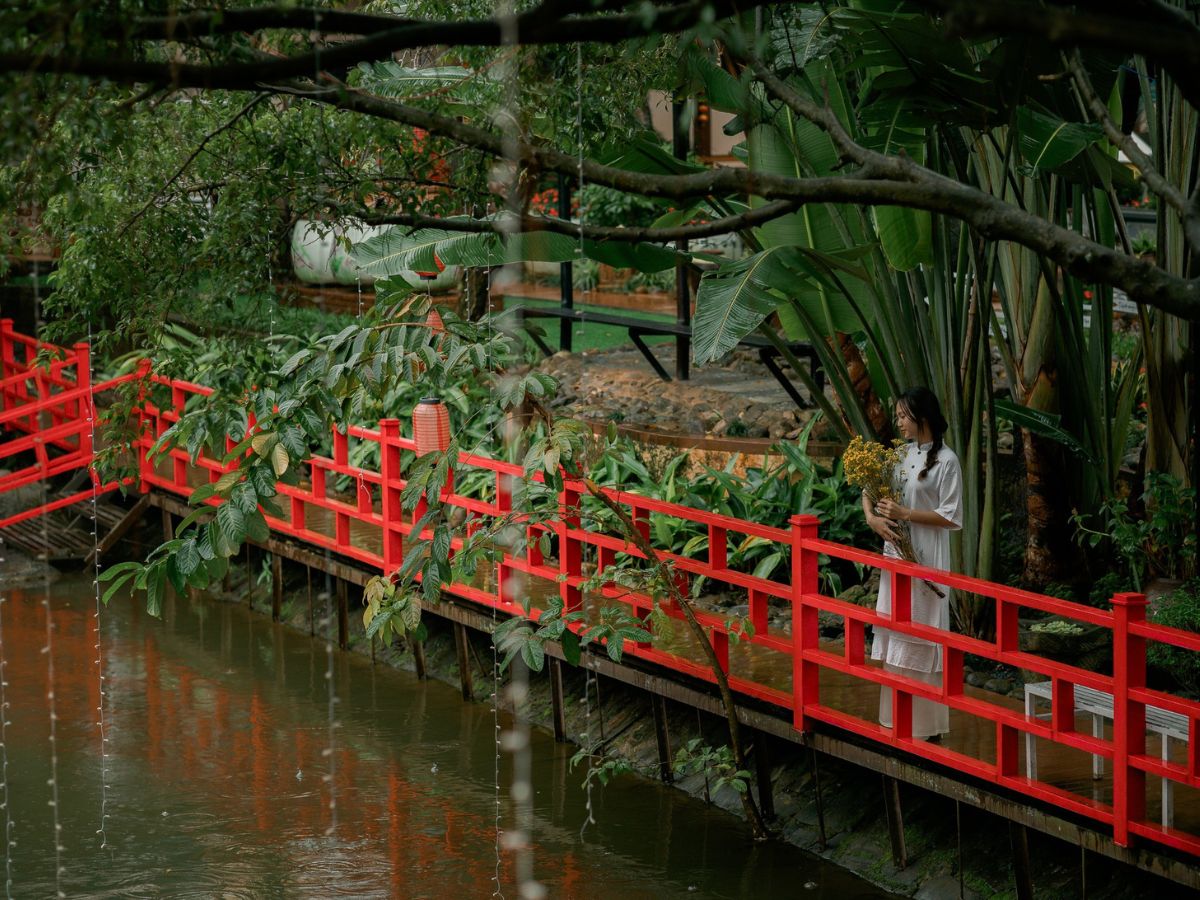
The best time to visit, take photos, and enjoy the tranquility is in the early morning or late afternoon on weekdays. (Source: Collected)
Regarding the time of day, early morning from 5 AM to 7 AM is the time chosen by many when visiting Nam Son Da Nang Pagoda . At this time, the pagoda's atmosphere is quiet, the number of visitors is not yet large, and the soft light is very suitable for worshipping Buddha, meditating, or taking photos. Late afternoon is also a reasonable choice if visitors want to combine visiting the pagoda after exploring other tourist attractions during the day.
4. Discover the architecture and outstanding features of Nam Son Da Nang Pagoda
4.1. Overall architecture
The overall architecture is what creates the special impression for Nam Son Da Nang Pagoda , making it a prominent destination for both spirituality and scenery. The pagoda is built on a spacious campus of about 10,000 square meters with a well-planned and harmonious spatial layout. The items within the pagoda are arranged along a clear axis, guiding visitors from the Tam Quan gate, the pagoda yard, the Phóng Sanh lake to the main hall and surrounding auxiliary structures.
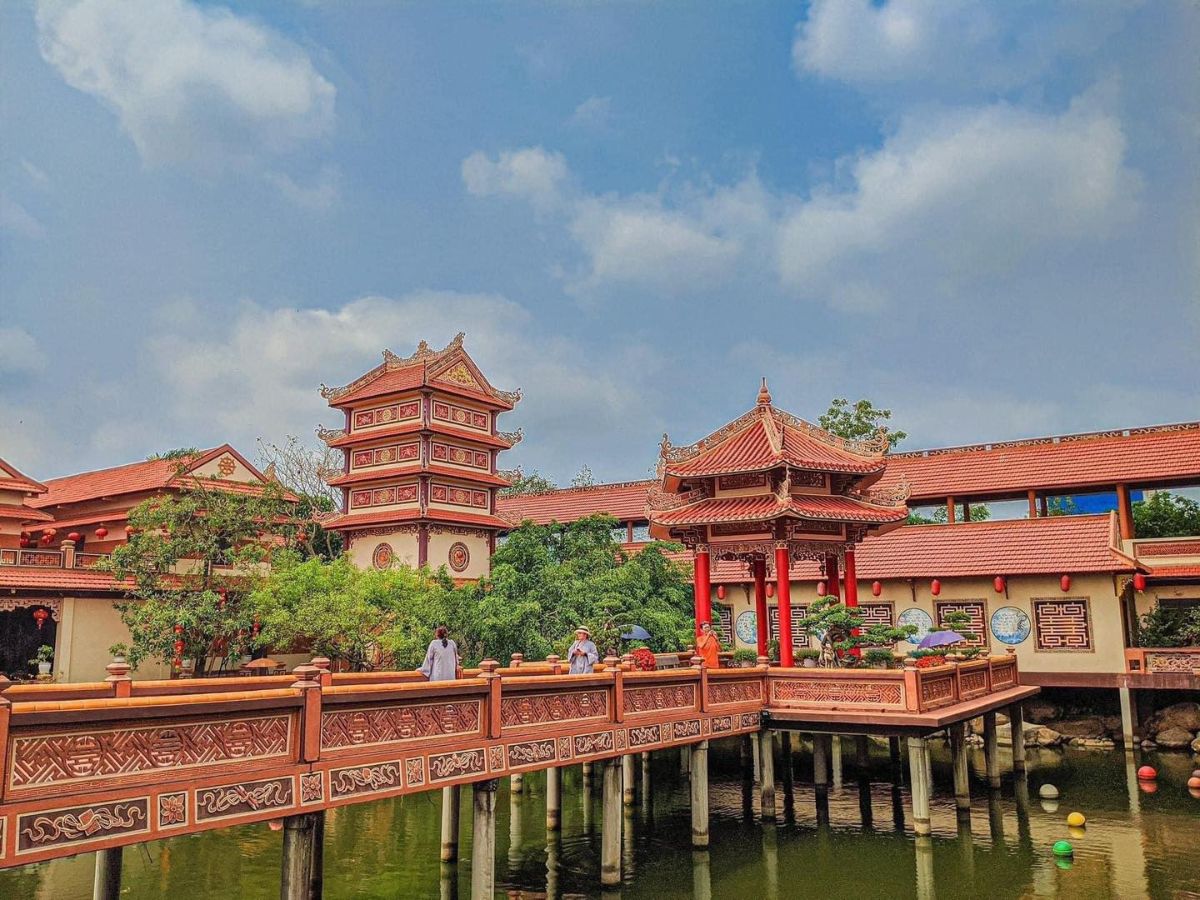
Nam Son Pagoda boasts a unique architecture with a delicate interplay between ancient imperial style and modern garden space. (Source: Collected)
Regarding architectural style, the pagoda bears the strong imprint of traditional East Asian Buddhism. Curved tiled roofs, sturdy pillars, and warm, deep tones create an ancient, solemn appearance for the entire structure. Decorative details such as dragon and phoenix motifs, carved patterns, and a lantern system are delicately arranged, contributing to enhancing the aesthetic value of the overall architecture. The pagoda's space does not feel heavy but is designed to be open, creating an airy and intimate atmosphere. Another highlight in the overall architecture is the harmonious combination of the structure and nature. Ponds, green trees, and stone-paved paths are arranged alternately, helping the space remain cool and peaceful.
4.2. Nam Son Pagoda Main Hall, Da Nang
The Main Hall serves as the most central and sacred area within the architectural complex of Nam Son Pagoda, Da Nang. This is the primary space where important Buddhist rituals take place and also where devotees and visitors gather for worship when visiting the pagoda. The Main Hall is built in the traditional three-bay architectural style, deeply reflecting Vietnamese Buddhism. The overall structure exudes solemnity yet remains approachable due to its balanced layout and harmonious spatial organization.
The exterior of the Main Hall impresses with its multi-layered curved tiled roof, large pillars, and traditional color scheme. Decorative details such as dragon and phoenix patterns, folk motifs, and exquisite carved sections are appropriately arranged, contributing to the aesthetic value and cultural depth of the structure. Upon entering, the space becomes quiet and solemn. The Buddha statue is placed in the center with a dignified arrangement. Altars and worship items are neatly organized, creating a sense of purity for visitors. Thanks to the harmonious combination of traditional architecture and open space, the Main Hall is not only a place for worship but also a resting spot that helps visitors find peace of mind.
4.3. Guesthouse Area
Within the overall architectural components of Nam Son Pagoda, Da Nang, the guesthouse area plays an important role in serving the resting and general living needs of visitors from all walks of life. This structure is located near the main courtyard, providing convenience for visitors during their movement and worship. The open location ensures the space is always airy, while also harmoniously connecting with the surrounding landscape of the pagoda.
The guesthouse is designed in a traditional style, primarily using wood materials. Sets of tables and chairs are neatly arranged, suitable for resting, drinking tea, or having a light vegetarian meal. The space here offers a quiet and intimate feeling, helping visitors easily relax their minds after visiting the larger architectural sections of the pagoda. From the guesthouse, visitors can overlook the lush green campus and admire the overall beauty of Nam Son Pagoda, Da Nang.
In addition to its reception function, the guesthouse is also a place where many visitors choose to read, chat, or capture peaceful moments during their pagoda visit. The combination of traditional architecture and open living space has contributed to completing the spiritual visiting experience. As a result, the guesthouse has become an indispensable stop when exploring the entire architectural complex of the pagoda.
4.4. Phóng Sanh Pond
Located within the vast architectural complex, Phóng Sanh Pond is a feature with special landscape and spiritual value of Nam Son Pagoda, Da Nang. The pond is situated in the center of the campus, creating a harmonious focal point between nature and the surrounding Buddhist structures. The space here offers a sense of purity as soon as visitors arrive, making it very suitable for a tour and worship at the pagoda.
Phóng Sanh Pond has a considerable area with clear blue water, clearly reflecting the pagoda's architecture and the surrounding trees. Beneath the water, a school of fish lives naturally, swimming regularly, creating a lively scene while maintaining peace. The gentle sound of water combined with the airy space helps visitors easily feel relaxation and peace of mind.
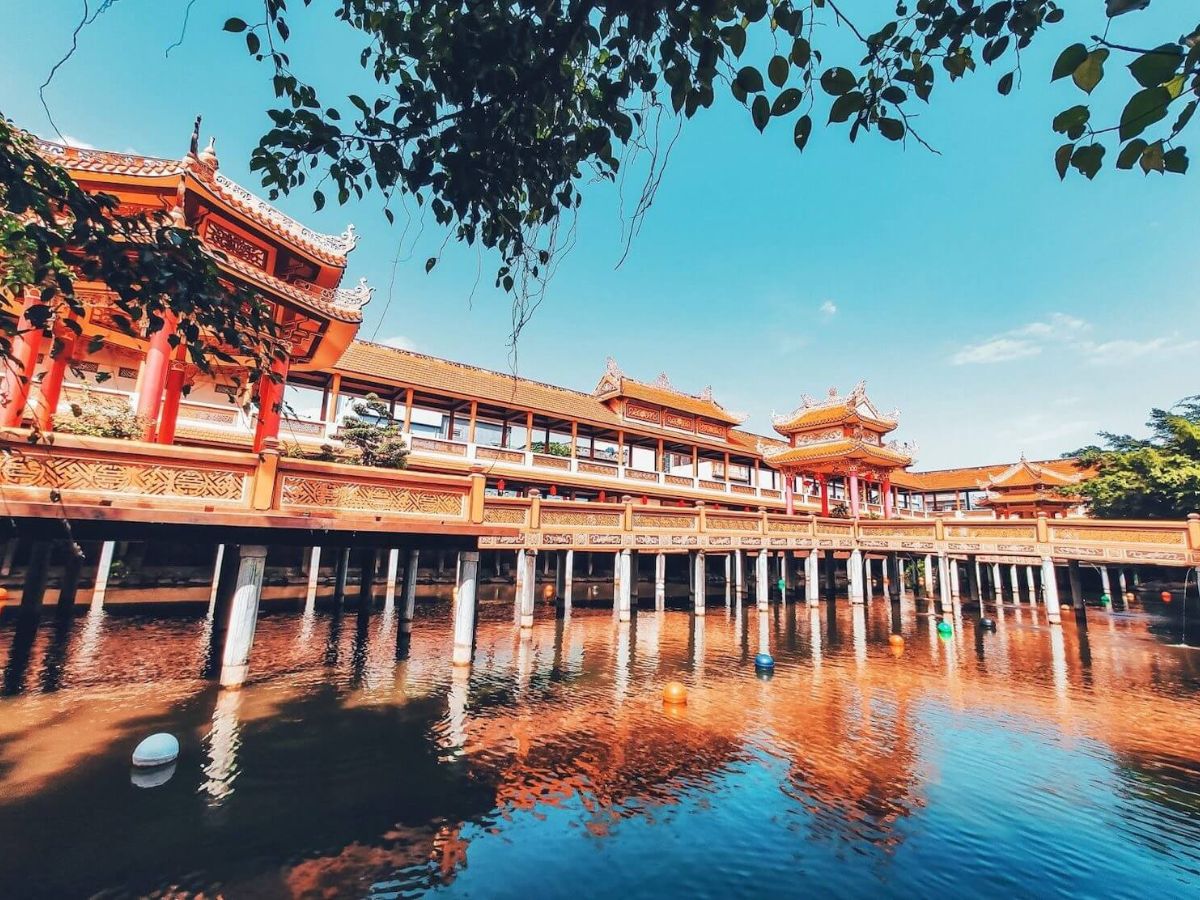
The spacious lake view at Nam Son Pagoda Da Nang. (Source: Collected)
According to Buddhist beliefs, the act of releasing living beings into the lake carries profound humanistic meaning. It is an action that expresses compassion, helps liberate sentient beings, and guides people towards virtuous deeds. Therefore, many Buddhist followers and tourists visiting Nam Son Pagoda Da Nang often choose the Life Release Lake (Ho Phong Sanh) as a place to stop for peace, mental tranquility, or to participate in spiritual rituals. Beyond its spiritual value, the Life Release Lake is also a popular spot for sightseeing and photography among many visitors.
4.5. Tam Tang Bridge
Tam Tang Bridge is a landscape feature rich in aesthetic value and symbolic meaning within the architectural complex of Nam Son Pagoda Da Nang. Right from the entrance of the bridge, the space opens up with a sense of tranquility and balance, in line with the Zen spirit that the pagoda aims for. The bridge is designed with a gentle curve, spanning over a clear blue lake, creating a harmonious transition between the different areas within the pagoda grounds. The overall architecture of the bridge embodies a traditional East Asian style, using natural materials and subdued colors, helping the structure blend seamlessly with the surrounding greenery and water.
The name Tam Tang is associated with the Buddhist Tripitaka, comprising Sutras, Vinaya, and Abhidharma. This meaning reflects the path of cultivation and wisdom accumulation in Buddhism. Naming the bridge not only serves a symbolic purpose but also helps guide visitors' emotions as they move through each space. Walking across the bridge, many people feel their pace of life slow down, making it easier to find peace and contemplation. The railings on both sides of the bridge are often decorated with Buddhist motifs, creating a subtle yet understated accent. Besides serving as a connecting pathway, Tam Tang Bridge is also a location many visitors choose to pause, admire the scenery, and take photos. From here, one can overlook the life release lake, the gardens, and the surrounding structures.
4.6. Vong Nguyet Pavilion
Vong Nguyet Pavilion is a landscape feature imbued with Zen characteristics and spiritual relaxation value within the architectural complex of Nam Son Pagoda Da Nang. From its name, this structure evokes the meaning of moon gazing, contemplation, and introspection. The pavilion is situated in an open area, near the lake and green gardens, creating an open, tranquil space separate from external noise. This is an ideal spot for visitors to rest after touring the main attractions within the pagoda.
In terms of architecture, Vong Nguyet Pavilion follows a traditional East Asian style with a harmonious structure, gently curved roof, and materials close to nature. The overall structure is not overly grand but evokes a sense of grace, balance, and comfort. The area around the pavilion is neatly arranged, combining water surfaces, greenery, and stone-paved paths, making the landscape harmonious and aesthetically rich. Standing here, visitors can gaze at the life release lake, observe the pagoda grounds, and clearly feel the characteristic tranquility of a Buddhist sanctuary. Vong Nguyet Pavilion not only serves as a scenic spot but also carries profound spiritual significance. Many people choose this space for meditation, reflection, or to regain mental balance.
4.7. Lantern Tree
During the journey to explore the architecture and prominent features of Nam Son Pagoda Da Nang, Vong Nguyet Pavilion is a stop that offers significant value in terms of both space and spiritual experience. This structure is built in an open area, near the lake and surrounded by abundant greenery, creating a peaceful atmosphere separate from external noise. The name Vong Nguyet signifies moon gazing, directing the human soul towards tranquility and relaxation. This is also why this place is often chosen by visitors to stop and rest after touring the major attractions within the pagoda.
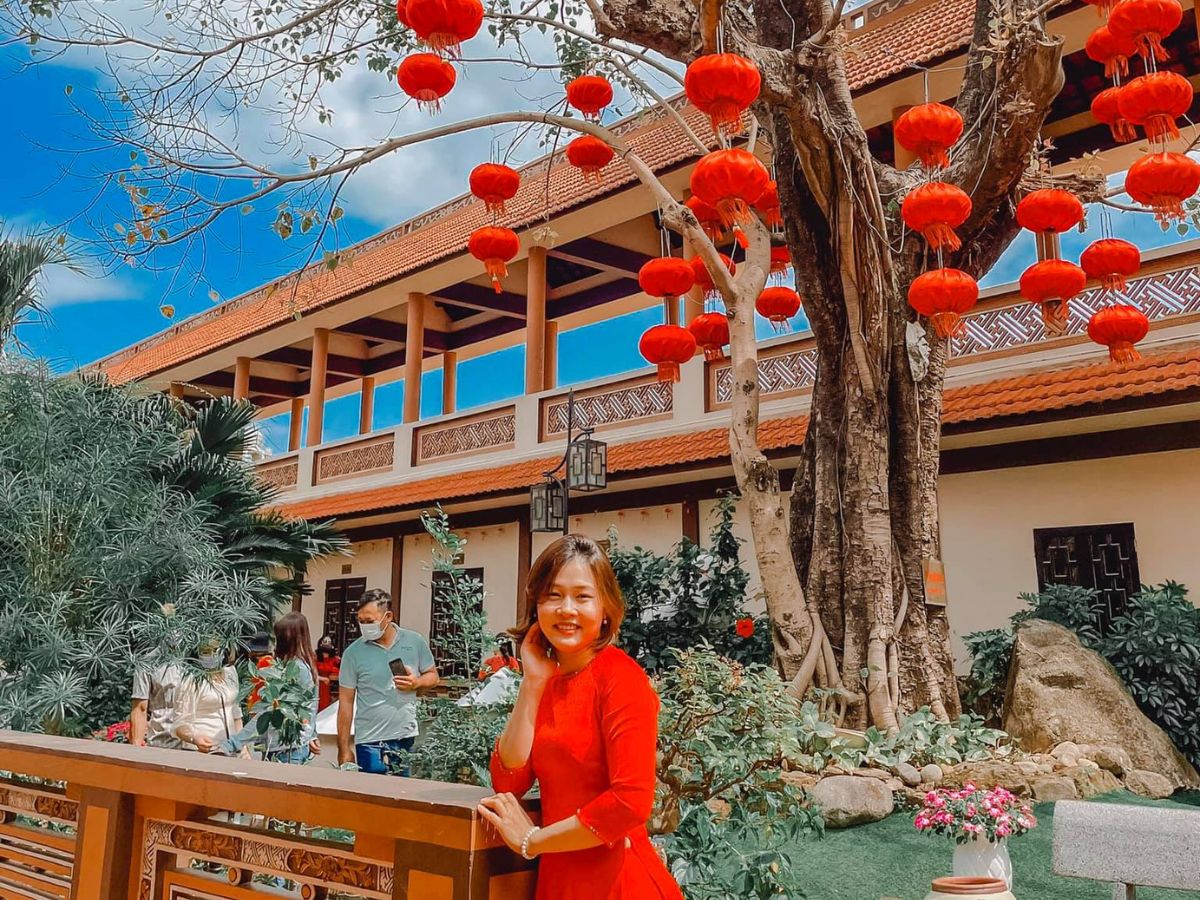
The lantern tree at Nam Son Pagoda Da Nang is a prominent check-in spot loved by tourists. (Source: Collected)
The space at Vong Nguyet Communal House possesses a gentle beauty, harmonizing with the overall landscape of Nam Son Pagoda Da Nang. From the pavilion's location, visitors can gaze out at the tranquil lake, admire the surrounding nature, and clearly feel the characteristic peace of a Buddhist sanctuary. Many people come here to calm their minds, reflect, or simply enjoy slow moments amidst the serene scenery. With a design that is unpretentious yet rich in symbolism, Vong Nguyet Communal House contributes to completing the overall architectural beauty of the pagoda.
4.8. Nam Son Pagoda Garden
The Nam Son Pagoda garden is an important landscape space, contributing to the overall beauty of the architectural complex of Nam Son Pagoda Da Nang. The garden is planned to be spacious, harmonizing greenery, flowers, and stone-paved paths, creating a sense of tranquility from the very first steps. The trees in the garden are diverse, including shade trees, ornamental plants, and some fruit trees, keeping the space perpetually green and close to nature.
The paths in the garden are arranged logically, gently winding through lawns and flower beds, providing a convenient environment for visitors to stroll and relax. In some areas, small water features combined with greenery and natural stones create a peaceful feeling, making the pagoda garden lively yet maintaining the inherent solemnity of a Buddhist sanctuary. The gentle sound of flowing water and the wind rustling through the trees help soothe the visitor's mind.
5. Outstanding Experiences at Nam Son Pagoda Da Nang
5.1. Notable Spiritual Activities
At Nam Son Pagoda Da Nang, many notable spiritual activities attract Buddhists and tourists from both within and outside the country, making it a destination not only for sightseeing but also for worship and meditation. Upon entering the pagoda grounds, many people begin by offering incense and paying homage to Buddha at the main hall. This is the primary space to express reverence to Buddha and pray for peace for family, health, and good fortune in life. The main hall is solemn with many large and small Buddha statues, altars, and incense burners, creating a pure and respectful atmosphere.
Besides the ritual of worshipping Buddha, the act of releasing living creatures at the Phóng Sanh Lake is also performed by many visitors. This activity symbolizes nurturing compassion and embodying the Buddhist principle of saving sentient beings. The spacious and clean lake provides an environment for Buddhists to practice spiritual rituals while finding inner peace.
Furthermore, many tourists choose to spend time meditating or finding tranquility in quiet areas such as Vong Nguyet Communal House, the pagoda garden, or along the internal paths. These areas feature lush greenery, open spaces, and minimal noise, allowing visitors to easily balance their emotions and relieve daily stress. On major holidays such as Buddha's Birthday, Vu Lan, or full moon days, Nam Son Pagoda Da Nang also organizes many meaningful spiritual activities, contributing to the Buddhist cultural beauty and fostering a connection within the local Buddhist community.
5.2. Relaxing Sightseeing and Meditation at Nam Son Pagoda Da Nang
One of the memorable spiritual experiences when visiting Nam Son Pagoda Da Nang is the activity of relaxing sightseeing and meditation amidst the serene atmosphere and lush greenery. After offering incense and paying homage at the main hall, many visitors choose to stroll around the pagoda's vast grounds to feel the peaceful ambiance. The pagoda grounds are planned with stone paths, shade trees, and water features, making each step feel light and relaxing. The calm surface of Phóng Sanh Lake and the gentle sound of flowing water contribute to a tranquil environment, very suitable for those seeking mental balance.
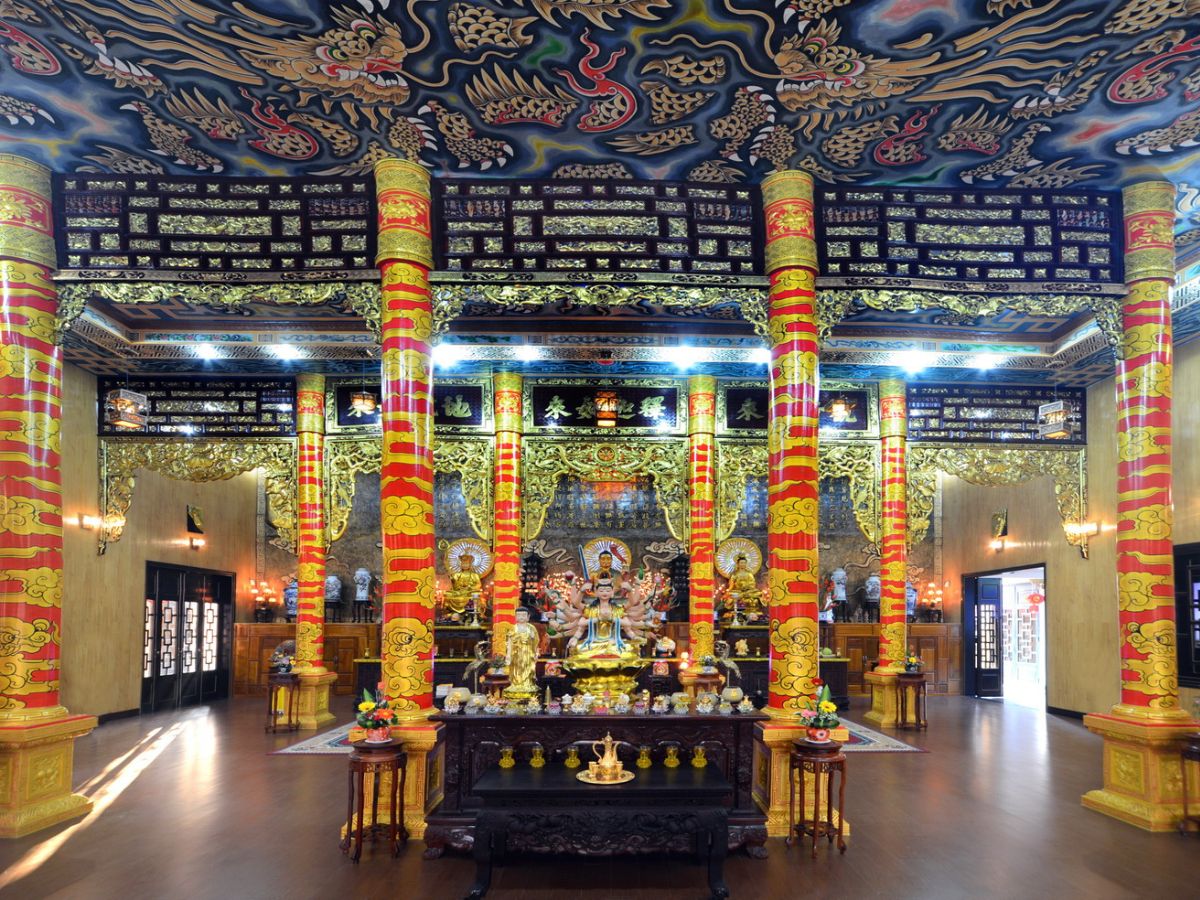
The sacred space inside Nam Son Pagoda is where visitors come to offer incense and pay homage. (Source: Collected)
Besides strolling, many people seek quiet areas like Vong Nguyet Pavilion or near Tam Tang Bridge for meditation. These spots are usually less noisy, creating good conditions for focused contemplation or meditation. The feeling of immersing oneself in nature, hearing birdsong and the wind rustling through the trees, helps visitors easily let go of worries and find inner peace. The pagoda garden is also an ideal spot for resting after sightseeing. Visitors can sit on stone benches, enjoy the fresh air, and listen to the sound of water and the subtle sounds of the surrounding scenery.
5.3. Sightseeing and Photography
Sightseeing and photography are experiences many visitors enjoy when visiting Nam Son Pagoda Da Nang. It harmoniously blends a spiritual space with unique traditional architecture. As soon as you enter the pagoda grounds, visitors can leisurely stroll through areas like the main hall, the Phóng Sanh Pond, Vong Nguyet Pavilion, and the meticulously cared-for lush green garden. Each area possesses its own architectural style, creating many beautiful viewpoints suitable for capturing memorable moments.
The outdoor spaces with curved tiled roofs, wooden pillars, and East Asian-style decorative details help visitors easily capture photos with a classic aesthetic. Many people choose to wear the traditional Vietnamese ao dai or simple attire for photos to match the spiritual setting. Photography is encouraged in the pagoda courtyard, gardens, and pathways. However, in the main hall and sacred worship areas, visitors should refrain from taking photos to maintain solemnity and respect the pagoda's regulations. Early morning or late afternoon are considered ideal times for visiting and photographing Nam Son Pagoda Da Nang. The natural light at these times is gentle, not too harsh, and makes the scenery appear more harmonious.
6. Important Tips and Notes When Visiting Nam Son Pagoda Da Nang
6.1. Notes on Pagoda Visit Regulations
When visiting Nam Son Pagoda Da Nang, you should be aware of some important regulations and notes to show respect for the sacred site and have a complete visiting experience. The pagoda is a solemn spiritual space, so visitors need to dress politely and modestly, avoiding revealing clothing such as shorts, short skirts, or sleeveless tops. Appropriate attire helps everyone show respect for the Buddha worship space and aligns with Buddhist culture.
Within the pagoda grounds, you should speak softly and maintain order. This is a place where people come to worship and find peace, so speaking loudly, shouting, or running around will disturb the general tranquility. Visitors are also encouraged to maintain cleanliness while walking around, not littering, to protect the pagoda's clean and green landscape.
Regarding photography, you can take pictures in outdoor areas such as the pagoda courtyard, gardens, ponds, and beautiful architectural pathways. However, in worship areas like the main hall and side halls, photography and videography are generally not permitted to maintain a solemn and respectful atmosphere. Visitors should pay attention to signage or ask support staff if needed.
Nam Son Pagoda Da Nang is open daily from 5:00 AM to 9:00 PM and does not charge entrance or parking fees. Therefore, you can flexibly arrange your visit time for early morning or late afternoon to avoid harsh sun and have the most peaceful experience.
6.2. Tips for Beautiful Photos at Nam Son Pagoda Da Nang
Besides sightseeing and worship, photography is also an experience many visitors enjoy when visiting Nam Son Pagoda Da Nang. To get beautiful photos that harmonize with the spiritual space, visitors should choose suitable times for photography. Early morning or late afternoon are the two most ideal periods. The light at these times is soft, allowing the architectural lines and the colors of the ancient tiled roofs to appear clearly, without harsh glare or strong shadows. The pagoda's atmosphere during these hours is also quieter, facilitating panoramic photography.
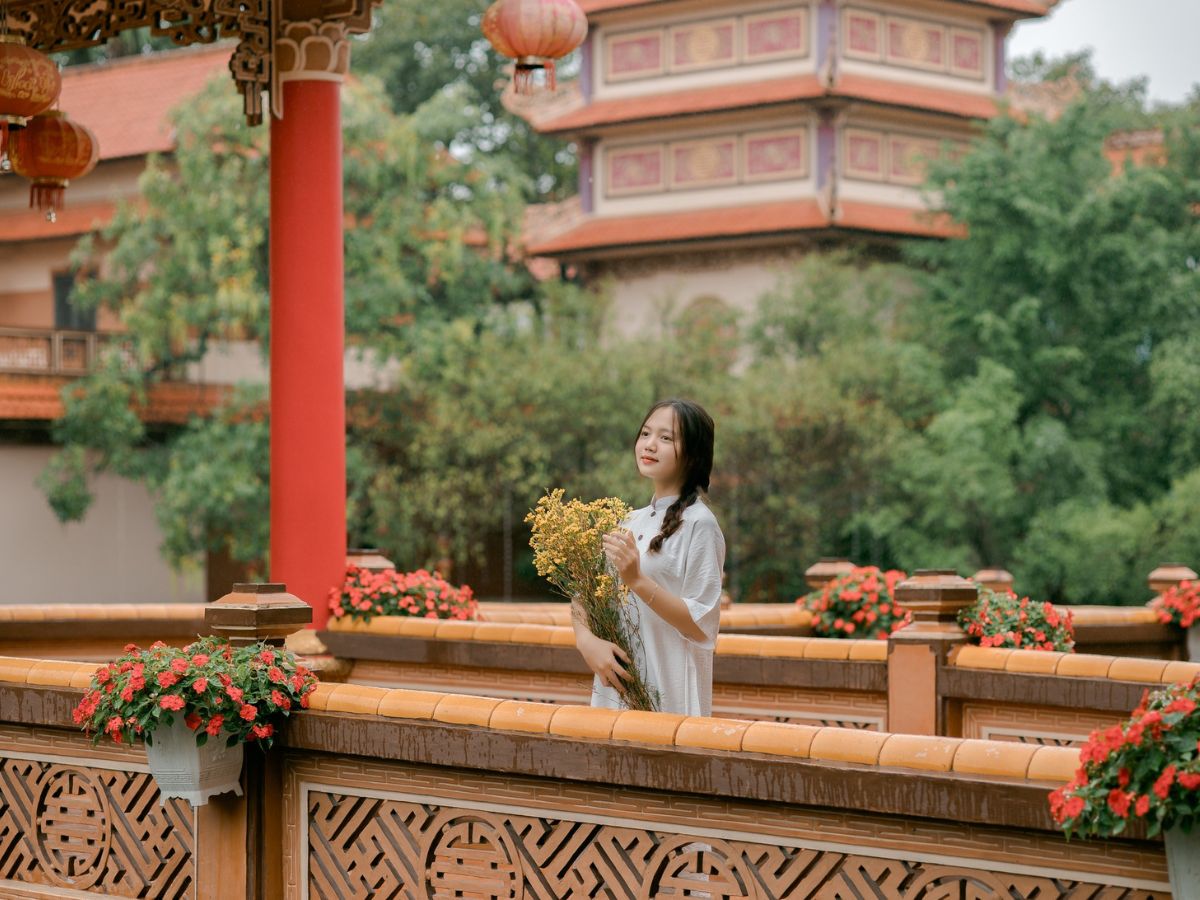
At Nam Son Pagoda, there are many beautiful photo spots for visitors to keep as souvenirs. (Source: Collected)
Attire for taking photos at the pagoda should also be noted. Many visitors choose the traditional ao dai to harmonize with the East Asian-style architecture. This type of attire is both polite and helps the photos carry a strong cultural essence. When posing, you should prioritize outdoor areas such as the three-gate entrance, the pagoda yard, the pond, and the garden. These are areas where photography is permitted and offer many beautiful angles.
However, when taking photos at Nam Son Pagoda Da Nang, visitors must comply with the general regulations of the pagoda. Photography in the main hall or indoor worship areas is often restricted to maintain solemnity. Visitors should observe the signage or ask the management when necessary. A gentle and respectful attitude towards the spiritual space will make the visit and photo experience more complete.
7. Suggested Itinerary for Visiting Nam Son Pagoda Combined with Exploring Da Nang Tourist Attractions
A 2-day itinerary to explore Da Nang can start gently with destinations that have spiritual and natural colors. In the morning, visitors should head to Nam Son Pagoda Da Nang, which is not too far from the city center, making it convenient to travel by motorbike or car. The period from 8 AM to 10 AM is when the pagoda is quiet, suitable for visiting, strolling through the garden, admiring the architecture, and relaxing the mind. Visitors can spend time taking photos, meditating lightly, or simply enjoying peace in the tranquil atmosphere.
After leaving Nam Son Pagoda, visitors can return to the city center for lunch. Specialty dishes such as Mi Quang, Bun Cha Ca, or Banh Trang Cuon Thit Heo are easy to eat and popular choices. In the afternoon, the itinerary continues with Son Tra Peninsula. Visitors can visit Linh Ung Pagoda, admire the Quan Am Buddha statue, and enjoy panoramic city views from above. On the way back, stop at My Khe Beach for swimming, strolling, or watching the sunset. In the evening, visitors can enjoy seafood by the coast and stay overnight at a hotel in the city center or along the coast.
The second day should be dedicated to outstanding entertainment and sightseeing experiences. In the morning, visitors should depart early for Sun World Ba Na Hills to avoid crowds. Here, you can experience the cable car, visit the Golden Bridge, French Village, flower gardens, and indoor amusement areas. For lunch, visitors can dine at the tourist area to save travel time.
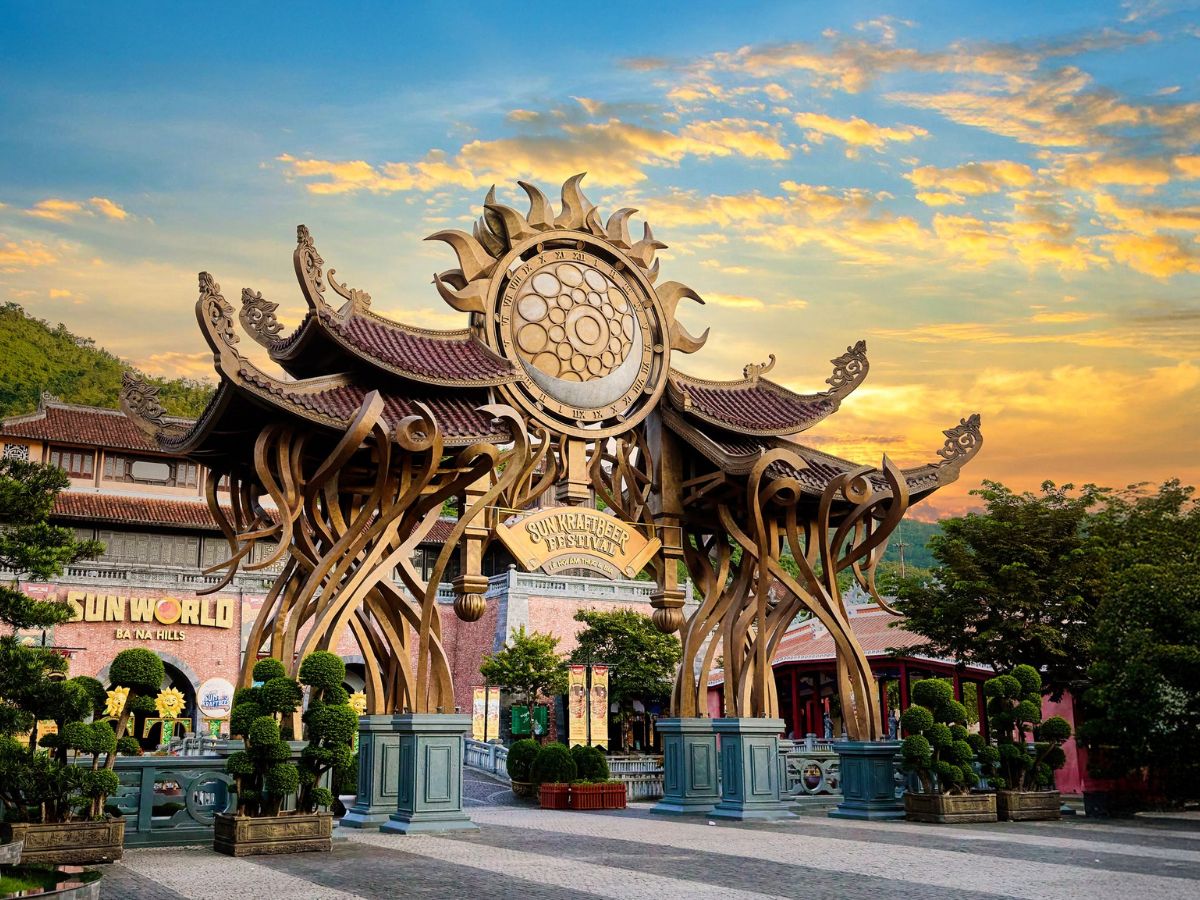
There are many experiences from entertainment to spirituality at Ba Na Hills for tourists to choose from. (Source: Collected)
In the afternoon, after leaving Ba Na Hills, tourists return to the city and can visit Han Market or Con Market to buy local specialties as gifts. Before ending the journey, a light dinner by the Han River or a stroll along Dragon Bridge at night will be the perfect conclusion to a 2-day trip exploring Da Nang, offering both relaxation and a complete experience.
Hopefully, the above sharing will help you have a more complete view of the journey to explore Nam Son Pagoda Da Nang combined with visiting the city's nổi bật tourist attractions. With a reasonable itinerary, diverse experiences, and a space that is both peaceful and vibrant, the trip promises to bring many memorable emotions. If you are planning a trip to Da Nang, don't forget to save this itinerary and start your exploration journey today.


