




1. Introduction to Pho Da Pagoda Da Nang
1.1. Location and overview
Located in the vibrant city center, Pho Da Pagoda Da Nang is one of the ancient pagodas with the most convenient and accessible location today. The pagoda is located at 340 Phan Chau Trinh Street, Hai Chau Ward, right on an important transportation axis connecting many inner-city areas. From Da Nang International Airport, visitors only take about 10 to 15 minutes by car or motorbike to reach the pagoda. Convenient connection with major roads such as Nguyen Van Linh or Duy Tan makes the journey of visiting and worshipping easy, suitable for both locals and tourists.
The pagoda is open daily from early morning to evening, creating conditions for Buddhists to worship, pray for peace, or visit during flexible hours. The pagoda does not charge an entrance fee, mainly serving religious needs, study, and Buddhist activities. This is also a place where religious activities and dharma talks are frequently held for monks, nuns, and Buddhists in the area.
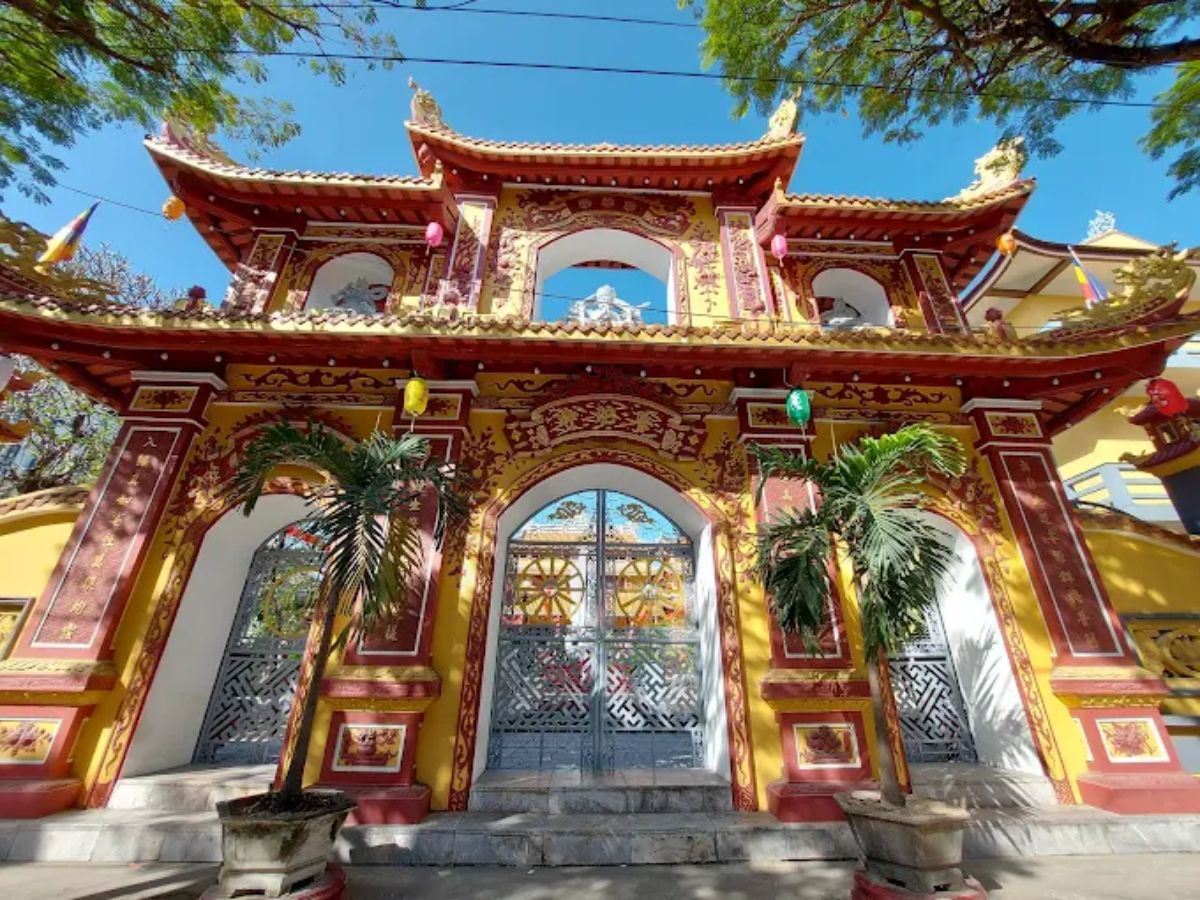
Pho Da Da Nang Pagoda is located right in the city center, on a busy and easy-to-find street. (Source: Collected)
Overall, Pho Da Da Nang Pagoda is not only a familiar spiritual destination for Hai Chau district but also plays an important role in the city's Buddhist life. The pagoda's space possesses a rare tranquility amidst the bustling city. This makes it an ideal stopover for those who wish to find peace and calm their souls before continuing their journey to explore Da Nang.
1.2. History of Formation and Development of Pho Da Da Nang Pagoda
Having existed for over a century, Pho Da Da Nang Pagoda is a typical pagoda associated with the development of Buddhism in the Central region. The pagoda was commenced in the year Binh Thin (1915) on land belonging to the former Binh Thuan commune, now Hai Chau district. In the early period, the pagoda was named Pho Thien and was directly founded, presided over, and built by Most Venerable Thich Ton Thang. In the context of the Central region's Buddhism facing many difficulties, the establishment of this pagoda laid an important foundation for religious activities in Da Nang.
From the 1930s, Most Venerable Thich Ton Thang gradually developed the pagoda into a center for training monks and nuns. In 1933, the first Buddhist academy in Da Nang was established within the pagoda's premises, contributing significantly to the Buddhist revival movement. By 1958, the Most Venerable donated the pagoda to the Buddhist Church of Central Vietnam. From then on, the pagoda officially bore the name Pho Da and played a key role in the region's Buddhist affairs.
In parallel with propagation activities, Pho Da Da Nang Pagoda was continuously renovated and expanded. In 1962, the pagoda built a Buddhist academy for training purposes. In 1970, an open-air Quan The Am (Avalokitesvara) statue was erected, creating an important spiritual highlight. After many renovations, by 2000, the front hall and ancestral hall were extensively renovated, giving it the magnificent appearance it has today.
After Most Venerable Thich Ton Thang passed away in 1976, Most Venerable Thich Tu Man succeeded as abbot and continued to maintain and develop the pagoda's historical, cultural, and Buddhist values. As a result, Pho Da Da Nang Pagoda remains a long-standing spiritual symbol in the heart of the modern city.
1.3. Reasons why Pho Da Da Nang Pagoda is a prominent spiritual stopover
Amidst the increasingly vibrant urban life, Pho Da Da Nang Pagoda still maintains its position as a spiritual stopover chosen by many. The first reason is its rare tranquility right in the city center. The pagoda's grounds are harmoniously arranged with greenery and solemn worship facilities. Upon entering the pagoda gate, the outside noise seems to subside. This helps Buddhists and visitors easily calm their minds, pray for peace, and find inner peace.
Besides the quiet space, the pagoda also holds deep spiritual value thanks to its over 100 years of formation and development. Through many ups and downs, the pagoda has maintained an important role in the Buddhist life in Da Nang. It is not only a place of worship but also a center associated with propagation activities, training of monks and nuns, and religious life of the Central Vietnamese Buddhist community. This historical depth creates the solemnity and special attraction of the pagoda.
Furthermore, Pho Da Da Nang Pagoda is also highly regarded for its regular and well-organized Buddhist activities. Regular chanting sessions, Buddhist ceremonies, and major festivals like Buddha's Birthday or Vu Lan attract a large number of Buddhists. These activities not only hold religious significance but also help connect the community and spread the humanistic values of Buddhism.
2. Directions to Pho Da Da Nang Pagoda
Pho Da Da Nang Pagoda is located at 340 Phan Chau Trinh Street, right in the city center. This location allows visitors to easily access it by various means of transportation. If starting from Da Nang International Airport, follow Nguyen Van Linh Street, turn right onto Hoang Dieu, and continue on Phan Chau Trinh. After about 2.5 km, you will see the pagoda on your right. This route usually has stable traffic density, so you won't spend much time traveling to the center.
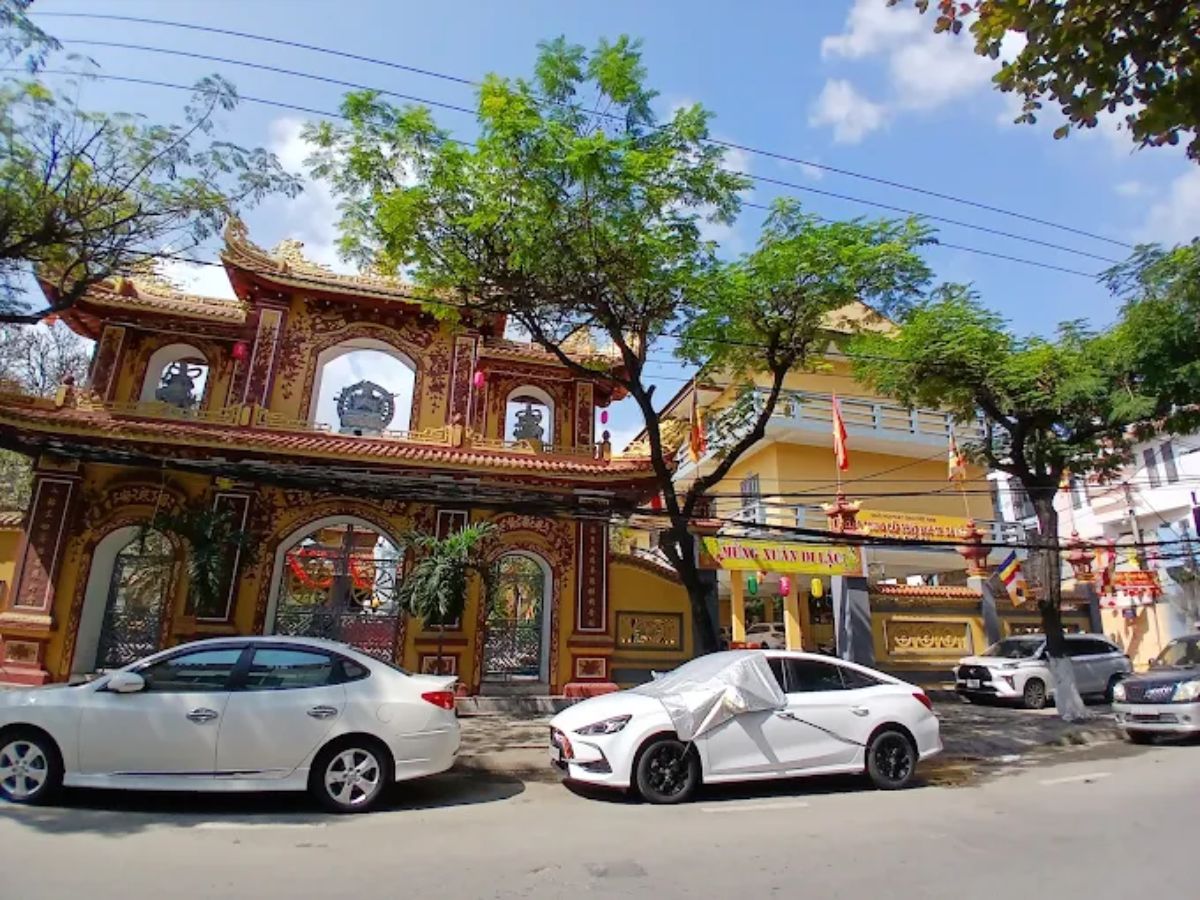
Visitors can easily travel to Pho Da Pagoda Da Nang by various means. (Source: Collected)
For visitors using taxis or ride-hailing services, setting the destination on the app is the most convenient option. In this area, vehicles like Grab or traditional taxis operate frequently and are ready to serve most of the day. For those who prefer traveling by public bus, you can choose routes passing through Phan Chau Trinh, then walk a short distance to the pagoda. Bus routes serving the city center usually have stops near this area for the convenience of residents and visitors.
As you get closer to the pagoda, you should also pay attention to parking locations. For motorbikes, you can park them within the premises or nearby areas with careful supervision. If traveling by car, you should find designated parking lots nearby to ensure safety and comply with traffic laws.
3. Best Time to Visit Pho Da Pagoda Da Nang
The most chosen time to visit Pho Da Pagoda Da Nang is on the full moon and the first day of the lunar month. On these occasions, the pagoda is filled with a sacred atmosphere, with chanting echoing far and the scent of incense permeating everywhere. Buddhists from all over gather here to offer incense, adding to the solemnity of the pagoda.
Early morning from 6 AM to 8 AM is a quiet time with fresh air. At that time, gentle sunlight filters through the leaves, creating a truly poetic scene. Morning sunbeams shine on the open-air statue of Avalokitesvara Bodhisattva, highlighting the pagoda's special solemnity. From 4 PM to 6 PM is also when the pagoda becomes poetic under the sunset. The curved tiled roofs reflect the end-of-day light, adding to the ancient atmosphere. This is an ideal time for those seeking tranquility and contemplation amidst the sound of bells ringing in the afternoon breeze.
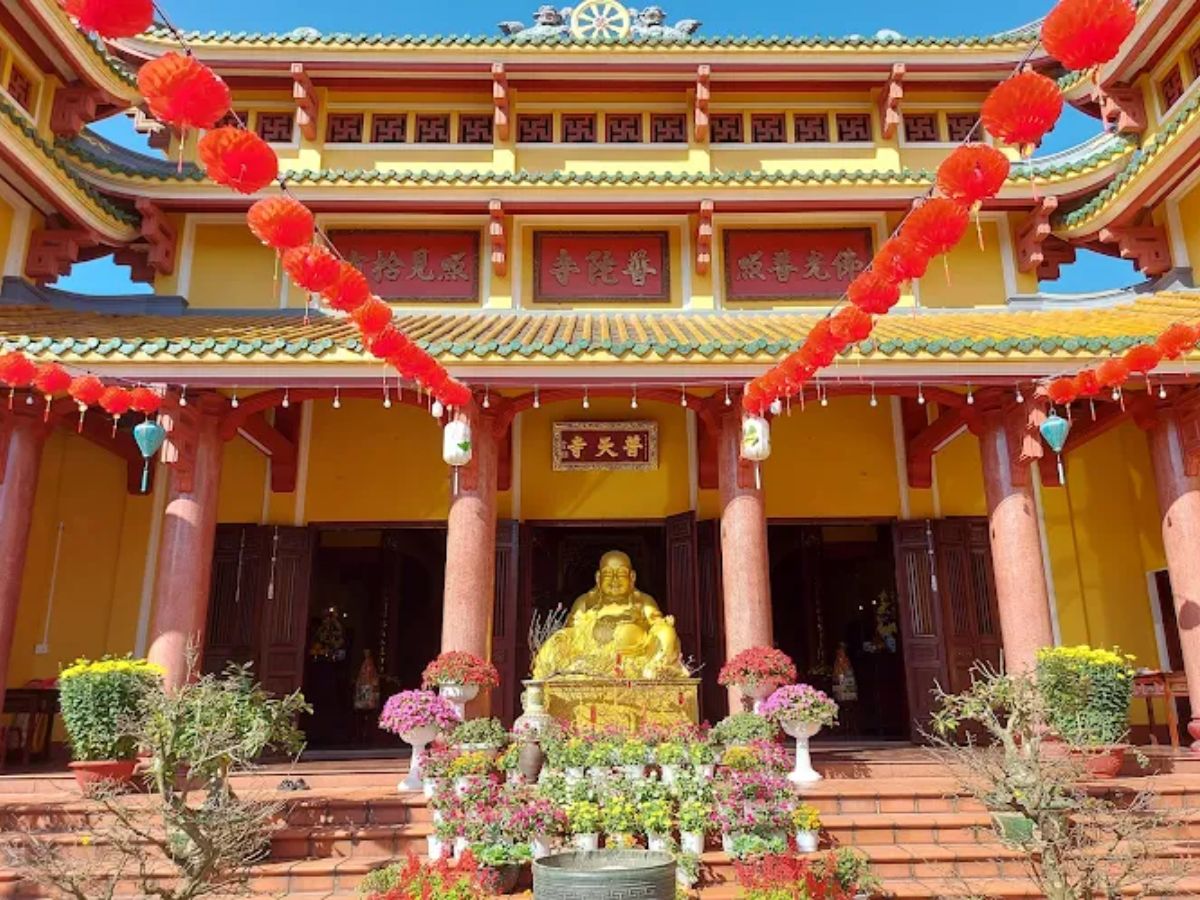
Choosing the right time to visit Pho Da Pagoda helps visitors comfortably worship and sightsee. (Source: Collected)
Major holidays such as Buddha's Birthday in the 4th lunar month and Vu Lan in the 7th lunar month are also suitable times to better feel the traditional Buddhist cultural nuances. Pho Da Da Nang Pagoda often organizes many meaningful activities and rituals to help visitors fully explore the spiritual values here.
4. Unique Architecture at Pho Da Da Nang Pagoda
4.1. General Characteristic Architecture
The overall architecture of Pho Da Da Nang Pagoda bears the strong imprint of Vietnamese Mahayana Buddhism traditions, reflecting solemnity and harmony in each construction item. The pagoda is built according to the 'Khẩu' (mouth) character layout, meaning the main structures are arranged in a closed and balanced manner within the same space. This arrangement carries spiritual protective significance and creates a close connection between the worship areas and Buddhist activities.
Entering from the three-gate entrance (tam quan), the architectural axis guides visitors sequentially through the front hall, main sanctuary, and rear ancestral area. Each section is placed in the correct position, helping the pagoda's space maintain solemnity and tranquility. Throughout its development, the pagoda has undergone several important renovations. Notably, the repair in 1983 and the completion phase of the front hall – rear ancestral area in 2000, built in a three-story, one-roof style, contributed to making the overall architecture more magnificent while retaining its inherent ancient charm.
The center of the worship space is the main sanctuary with the bronze Amitabha Buddha Triad statue cast in 1947. The set includes Amitabha Buddha along with two Bodhisattvas, Avalokitesvara and Mahasthamaprapta, arranged harmoniously and solemnly. Surrounding the main structures are brick-paved walkways, gardens, and lush miniature landscapes. These elements help the architecture of Pho Da Da Nang Pagoda achieve harmony between Buddhist art, natural space, and enduring spiritual value over time.
4.2. Outstanding Architectural Features
The architectural features at Pho Da Da Nang Pagoda are built and arranged harmoniously, creating a solemn worship space in the heart of the city. Most prominent in the architectural complex is the main sanctuary, which houses the bronze Amitabha Buddha Triad statue cast in 1947. The set includes Amitabha Buddha in the center, flanked by Bodhisattva Avalokitesvara and Bodhisattva Mahasthamaprapta. The statues are arranged symmetrically, clearly demonstrating the sculptural artistic value and the compassionate ideology in Mahayana Buddhism.
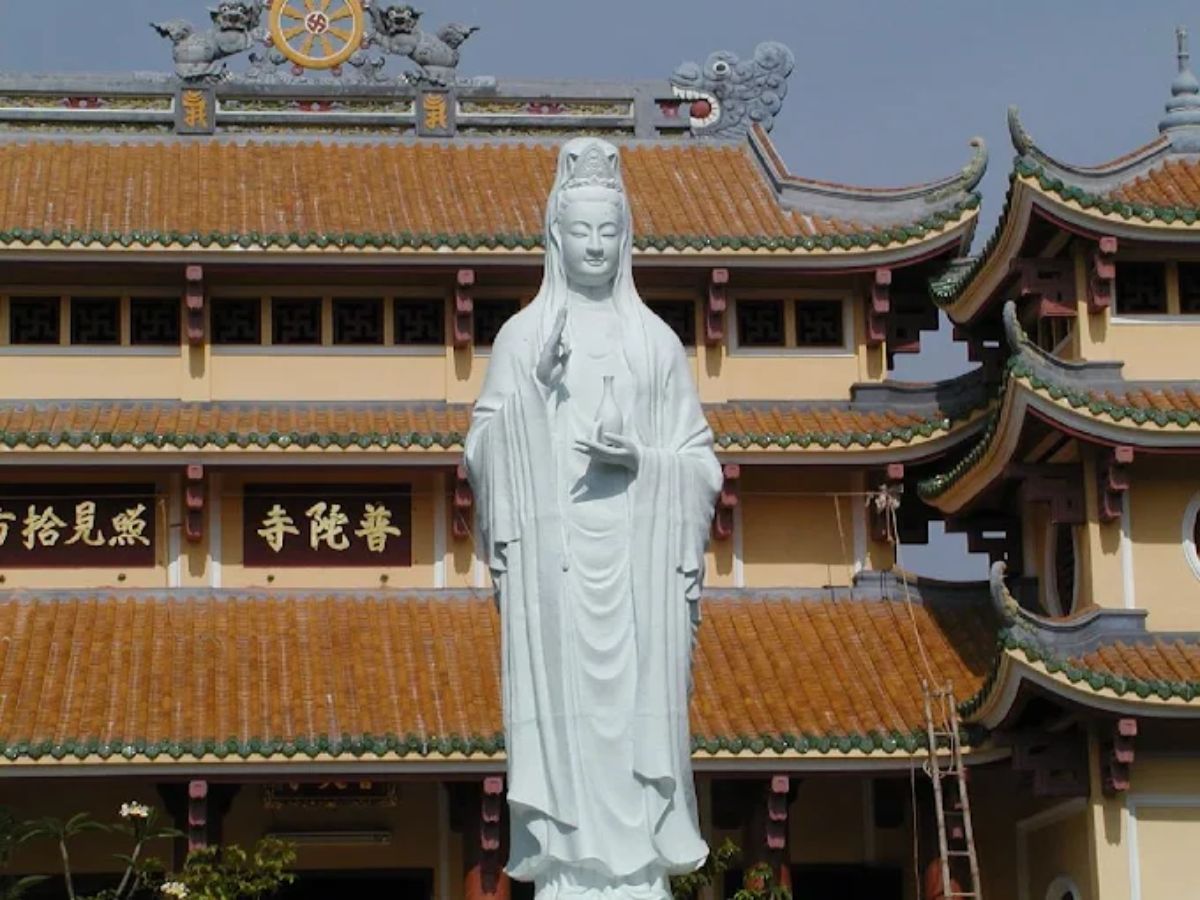
The Quan The Am Buddha statue is an important architectural highlight of Pho Da Da Nang pagoda. (Source: Collected)
Next to the main hall, the outdoor Quan The Am Buddha statue is an important architectural highlight of the pagoda. This structure was built around 1970, featuring a statue of Bodhisattva Quan Am standing on a high pedestal, facing the open space. The Buddha statue symbolizes compassion and salvation from suffering, while also creating a recognizable architectural feature as visitors enter the pagoda grounds. Besides the main structures, Pho Da Da Nang pagoda also has a front hall, a rear ancestral hall, a lecture hall, and a living area for local monks, nuns, and Buddhists. These structures are arranged seamlessly along the common architectural axis, convenient for religious activities and the organization of meditation retreats.
5. Outstanding Experiences When Visiting Pho Da Da Nang Pagoda
5.1. Offering Incense to Buddha, Praying for Peace, and Listening to Buddhist Sermons
When visiting Pho Da Da Nang pagoda, the experience of offering incense to Buddha and praying for peace is the spiritual activity most chosen by many people. Buddhists usually prepare offerings such as incense, flowers, and fresh fruit to offer before the Buddha statues in the main hall and worship areas. The act of offering incense is not only a ritual to honor the Buddha but also a way to express wishes for peace, health, and good fortune for oneself and one's family. This activity takes place daily but is especially crowded on the first and fifteenth days of the lunar month and during major festivals of the year.
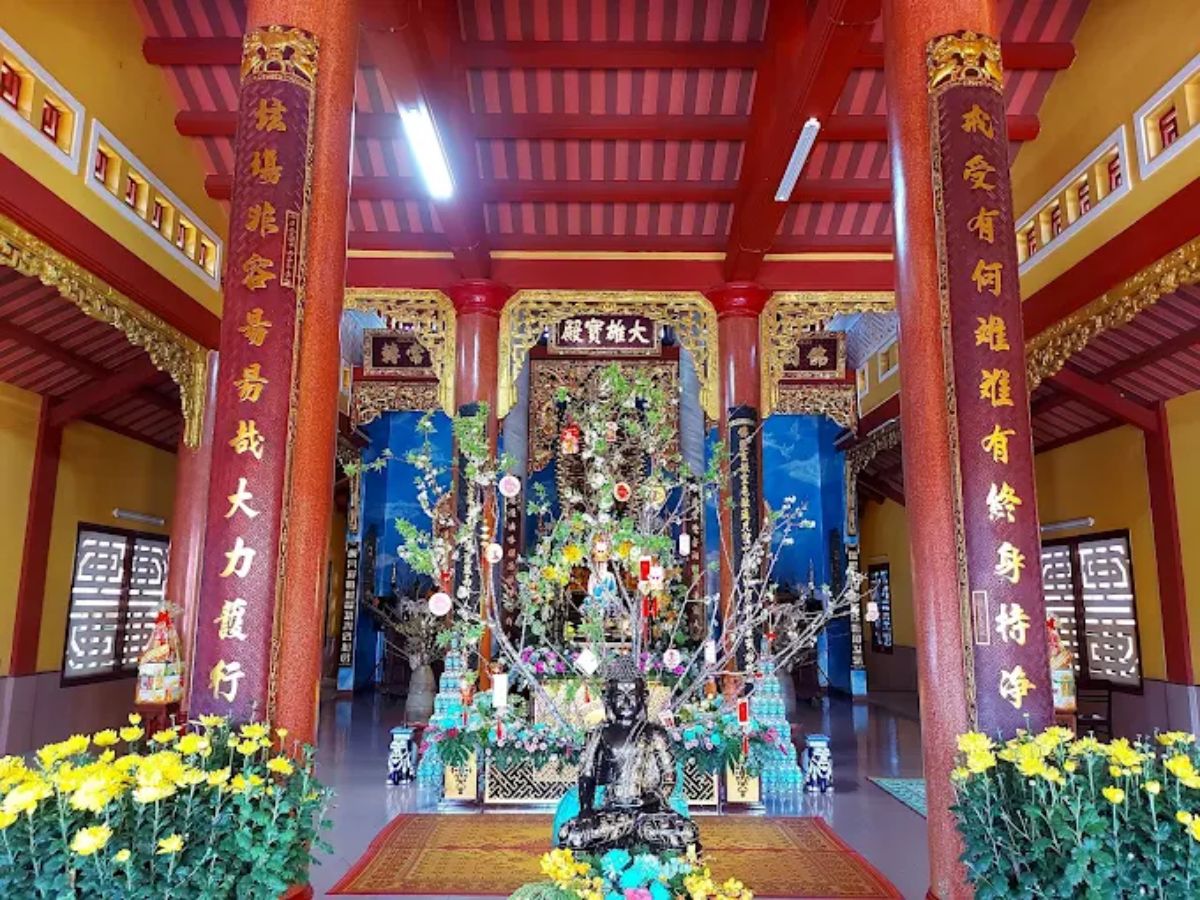
Inside the pagoda, there is a solemn main hall space arranged for visitors to offer incense and pay homage. (Source: Collected)
Besides worshipping Buddha, many visitors and Buddhists also spend time listening to chanting and Buddhist dharma talks conducted by the monks and nuns in the pagoda. Chanting sessions usually begin in the morning and evening with a solemn and warm atmosphere. Dharma talks help attendees understand Buddhist teachings better, the way to live peacefully, and moral lessons in life. The teachings are conveyed simply, understandably, and suitable for those new to Buddhism. Thanks to these spiritual activities, Pho Da Pagoda Da Nang is not only a place of worship but also a space for Buddhists and visitors to find peace and regain balance in life.
5.2. Participating in Retreats and Major Buddhist Ceremonies
Besides its role as a spiritual destination, Pho Da Pagoda Da Nang is also a venue for many important Buddhist study and ceremony activities, contributing to nurturing the spiritual life of Buddhists and local people. Here, the pagoda regularly organizes short-term retreats for lay Buddhists, teenagers, and those new to Buddhism. The content of the retreats focuses on seated meditation, walking meditation, chanting, and listening to basic dharma teachings. Through this, participants have the opportunity to practice mindfulness, learn to let go of stress, and find balance in modern life. The study space is organized solemnly with clear schedules, suitable for both the elderly and the young.
Alongside the retreats, Pho Da Pagoda Da Nang is also the venue for many major Buddhist ceremonies throughout the year according to Vietnamese Buddhist tradition. Notable events include the Vu Lan (Parents' Day) ceremony, ceremonies for peace and remembrance, and memorial ceremonies for former Venerable Abbots. These events often feature the participation of monks and nuns from the Buddhist Sangha of Da Nang City, along with a large number of Buddhists, creating a solemn and spiritually meaningful atmosphere. Additionally, on the 1st and 15th days of the lunar month, the pagoda maintains regular chanting sessions, considered short retreats helping Buddhists find peace and connect with the community.
6. Experience and Notes When Visiting Pho Da Pagoda Da Nang
6.1. Appropriate Dress Code
When visiting Buddhist establishments, the dress code is always a top priority to maintain the solemnity of the spiritual space. At Pho Da Pagoda Da Nang, visitors are encouraged to choose polite, modest attire and suitable for Vietnamese customs and traditions. Long pants or skirts below the knee are a safe choice, helping to create a serious impression when entering the pagoda grounds. Shirts should have sleeves, not be off-the-shoulder, have a modest neckline, and avoid overly tight designs. This is a common requirement at many pagodas and is strictly applied at Pho Da Pagoda Da Nang, especially in the main hall and worship areas.
In case visitors wear short attire due to travel or weather, preparing an extra light jacket or shawl to cover shoulders and knees is very necessary. This preparation helps visitors be more proactive and avoid feeling embarrassed when entering the sacred space. Additionally, when entering the main hall area, visitors should remove hats, caps, and sunglasses to show respect to the Triple Gem (Buddha, Dharma, Sangha) as well as the Buddhists worshipping around.
6.2. Respecting Etiquette and Civil Behavior Rules at the Pagoda
Adhering to etiquette and civilized behavior rules is important for maintaining the solemnity of the Buddhist space. From the moment of entering the pagoda grounds, visitors should maintain a serious attitude, speak softly, and minimize noise. This helps maintain a pure atmosphere, while also showing respect to the monks, Buddhists, and those performing rituals. In the main hall area, visitors should turn off phone ringers or set them to silent mode to avoid interrupting chanting and prayer sessions.
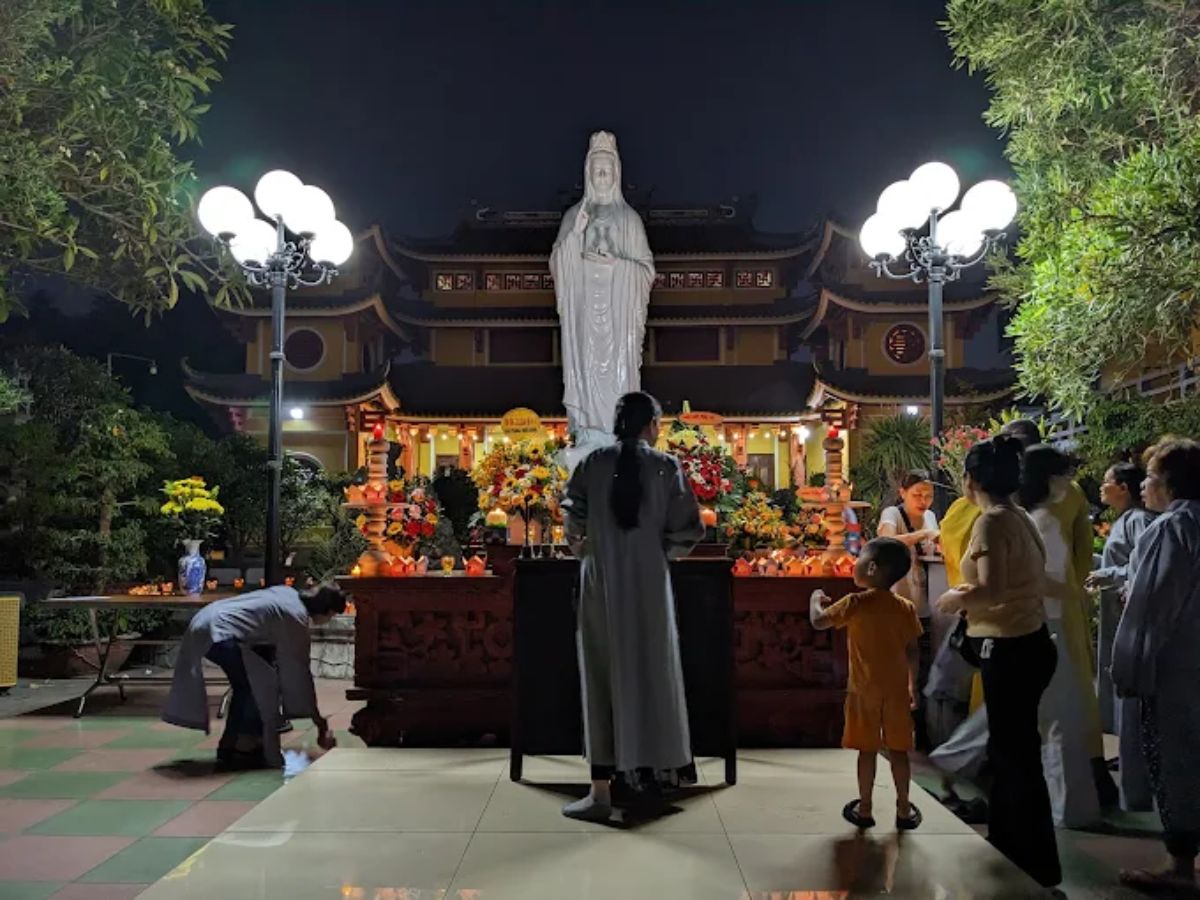
Visitors should dress politely and maintain a polite attitude when visiting Pho Da Pagoda. (Source: Collected)
When offering incense to worship Buddha at Pho Da Pagoda Da Nang, offerings and donations should be placed in the designated area. Scattering small change on the altar or placing it incorrectly is an inappropriate behavior with Buddhist practices. Visitors should also not touch Buddha statues, ritual objects, or religious artifacts without permission. If you wish to take photos, please observe the pagoda's instructions and avoid using flash in the worship area.
Furthermore, eating, smoking, or littering within the pagoda grounds should be strictly avoided. When encountering people praying or meditating, visitors should walk quietly, avoid walking directly in front of them to avoid interrupting the rituals.
7. Suggested itinerary for visiting Pho Da Pagoda combined with nearby destinations in Da Nang
Visitors should start their journey from around 7:30 - 8:00 AM for a full experience. The first stop is Pho Da Pagoda Da Nang, a place offering a serene and peaceful atmosphere in the heart of the city. Here, visitors can offer incense to worship Buddha, pray for peace, and visit the pagoda's typical architectural features. The ideal visiting time is about 60–90 minutes, enough to fully appreciate the spiritual value and the rare tranquility.
After leaving Pho Da Pagoda, visitors can move to Linh Ung Ngu Hanh Son Pagoda to continue the spiritual journey, combining sightseeing of mountains and learning more about Buddhist culture in Da Nang. Around 11:30 AM, visitors can stop for lunch in the central area and enjoy local specialties such as Mi Quang, pork rolled with rice paper, or a light vegetarian meal to maintain energy for the afternoon.
Around 1:00 - 1:30 PM, visitors can travel to Sun World Ba Na Hills. This is a highlight of the itinerary with diverse experiences. Visitors can explore the Golden Bridge, French Village, Le Jardin D’Amour flower garden, and enjoy activities at Fantasy Park. The cool weather on Ba Na peak makes the afternoon journey more pleasant and relaxing. After descending the mountain, visitors return to the city center. In the evening, you can stroll along Dragon Bridge – Han River, enjoy a seafood dinner, or explore local cuisine. Conclude the day of sightseeing with a gentle stroll along My Khe Beach will make the trip more complete.

Ba Na Hills is a famous entertainment suggestion when tourists visit Da Nang. (Source: Collected)
Pho Da Pagoda Da Nang converges outstanding cultural, historical, and architectural values and brings a special spiritual experience right in the bustling city of Da Nang. Take time to return to this place to feel peace, admire the ancient beauty, and send good wishes for yourself and your family.


