




1. Why does Fansipan in Vietnam attract Indian tourists?
1.1. A destination that combines nature and spirituality
Located at an altitude of 3,143 meters above sea level, Fansipan in Vietnam is the highest mountain in Vietnam and is also known as the "roof of Indochina". Not only famous for its majestic mountain scenery, it also impresses with its peaceful atmosphere amidst the clouds of northwest Vietnam. For many Indian tourists who enjoy travel combined with spiritual relaxation, Fansipan offers a different feeling compared to the crowded urban destinations in Asia.
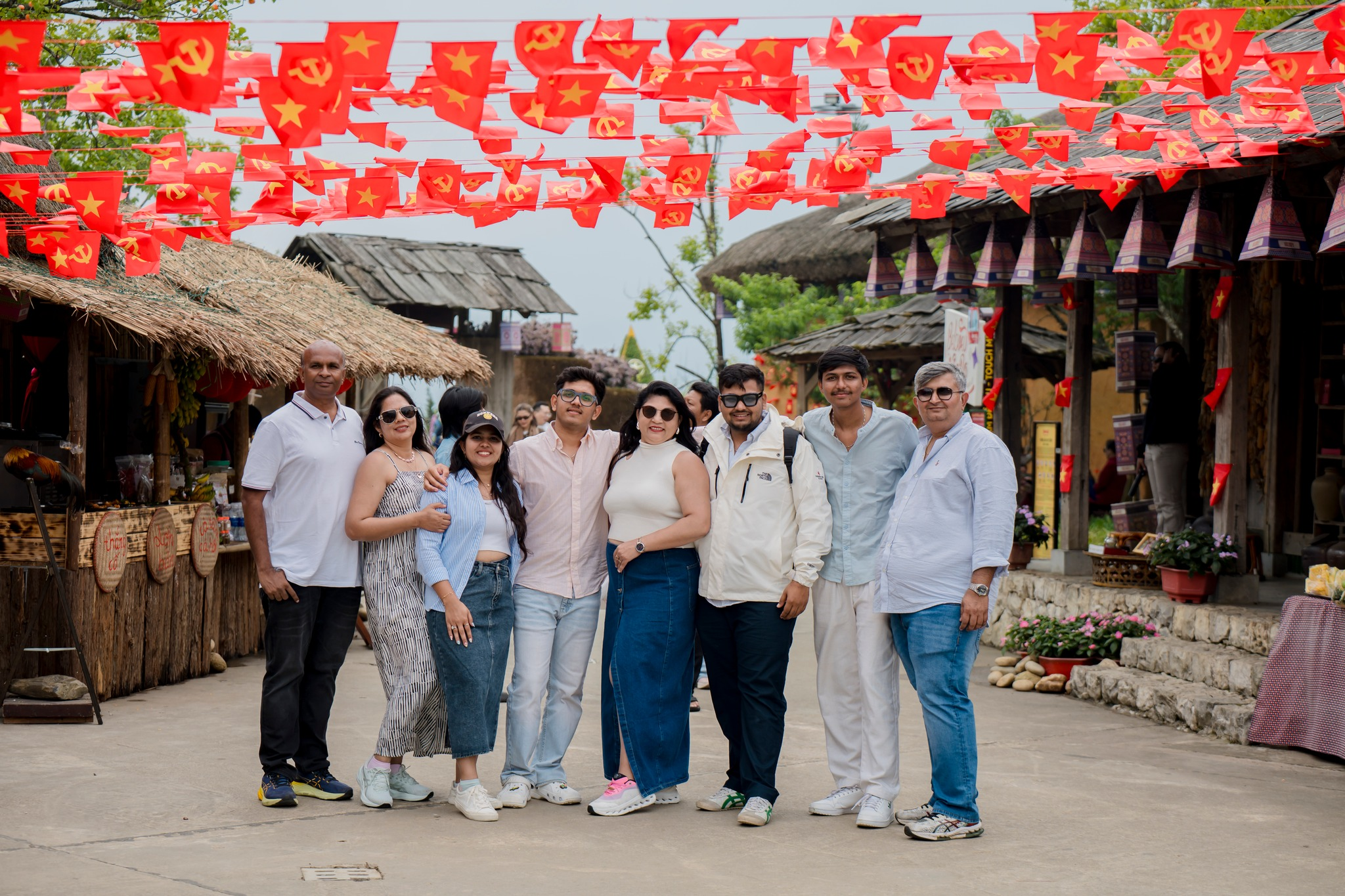
Indian tourists enjoy the fresh and cool air on the summit of Fansipan. (Source: Collected)
The climate in Sapa and Fansipan is also a big plus for Indian tourists, especially during the summer. Fansipan’s temperatures typically range from 18 to 25 degrees Celsius. The cool air, pleasant humidity, and lush green nature make the exploration journey more enjoyable.
1.2. Large-scale Buddhist complex on the mountaintop
One of the factors that makes Fansipan in Vietnam attractive to international tourists is its spiritual complex nestled amidst the mountains of northwest Vietnam. At Sun World Fansipan Legend, many Buddhist structures are built in harmony with nature, creating a space that is both solemn and welcoming.
Most notable is the bronze Great Buddha Statue which is situated at an altitude of over 3,000 meters. This massive structure is nestled amidst a sea of clouds, creating a truly unique scene. Other notable sites include Bich Van Zen Monastery, Kim Son Bao Thang Pagoda, and the Alahat Path stretching along the mountainside. These structures not only possess architectural value but also form a pilgrimage route deeply rooted in Vietnamese culture.
👉 Book Fansipan cable car ticket now!
2. Outstanding spiritual experiences at Fansipan in Vietnam
2.1. Paying homage to the Great Buddha Statue
The 21-meter-tall Great Buddha Statue is one of the most prominent landmarks at Fansipan in Vietnam. The statue is situated amidst a vast mountain landscape and is often surrounded by a sea of clouds in the mornings.
Many visitors choose to stop here to pray for peace, health, and good fortune for their families. The area around the statue is quite peaceful, suitable for resting and relaxing after a long journey up the mountain.
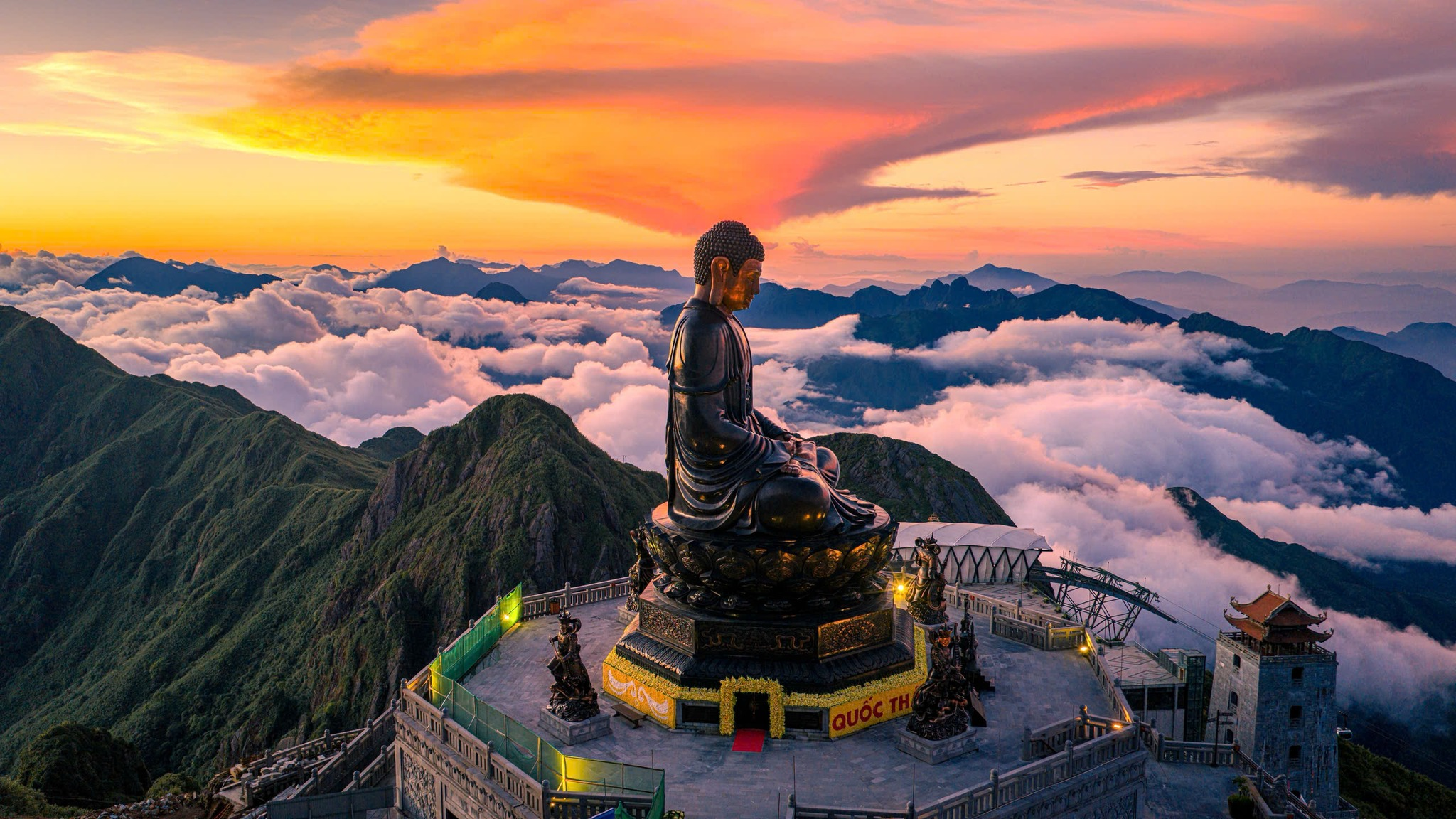
The majestic Great Buddha Statue atop Fansipan peak. (Source: Collected)
2.2. Exploring Bich Van Zen Monastery
Bich Van Zen Monastery is situated in a high location with expansive views of the northwest mountains. The temple is designed in the traditional Vietnamese architectural style with curved roofs, a stone courtyard, and a serene atmosphere amidst the clouds.
Morning is the best time to visit this place. When a thin mist still hangs over the temple roofs and the gentle sound of bells echoes through the mountains, the entire atmosphere feels very peaceful. This is also a place many tourists choose to meditate or spend time relaxing during their trip.
2.3. Strolling along the Alahat Path
The Alahat Path is one of the most popular attractions for international tourists visiting Fansipan in Vietnam. Along the path are rows of bronze Alahat statues arranged amidst greenery and stone steps winding along the mountainside. The space here is deeply imbued with Buddhist influences but still maintains a close connection with nature. When a light mist appears around the path, the entire scene becomes more mystical and tranquil.
2.4. Visiting spiritual sites on the summit of Fansipan
Besides highlights like the Great Buddha Statue and Bich Van Zen Monastery, Fansipan in Vietnam also boasts many other spiritual structures that are rich in Vietnamese cultural value. Kim Son Bao Thang Pagoda is one of the most visited destinations thanks to its beautiful location amidst a sea of clouds and its distinctive traditional architecture.
The structures here are built in harmony with the natural landscape of the Hoang Lien Son mountain range. The ancient temple roofs, the mist-covered stone steps, and the spacious courtyards overlooking the valley create an atmosphere that is both solemn and welcoming.
For Indian tourists, exploring the spiritual sites at Fansipan is not only a travel experience but also an opportunity to learn more about Buddhist culture and beliefs in Vietnam.
3. Experience nature and enjoy the scenery at Fansipan in Vietnam
3.1. Taking a cable car ride through the sea of clouds
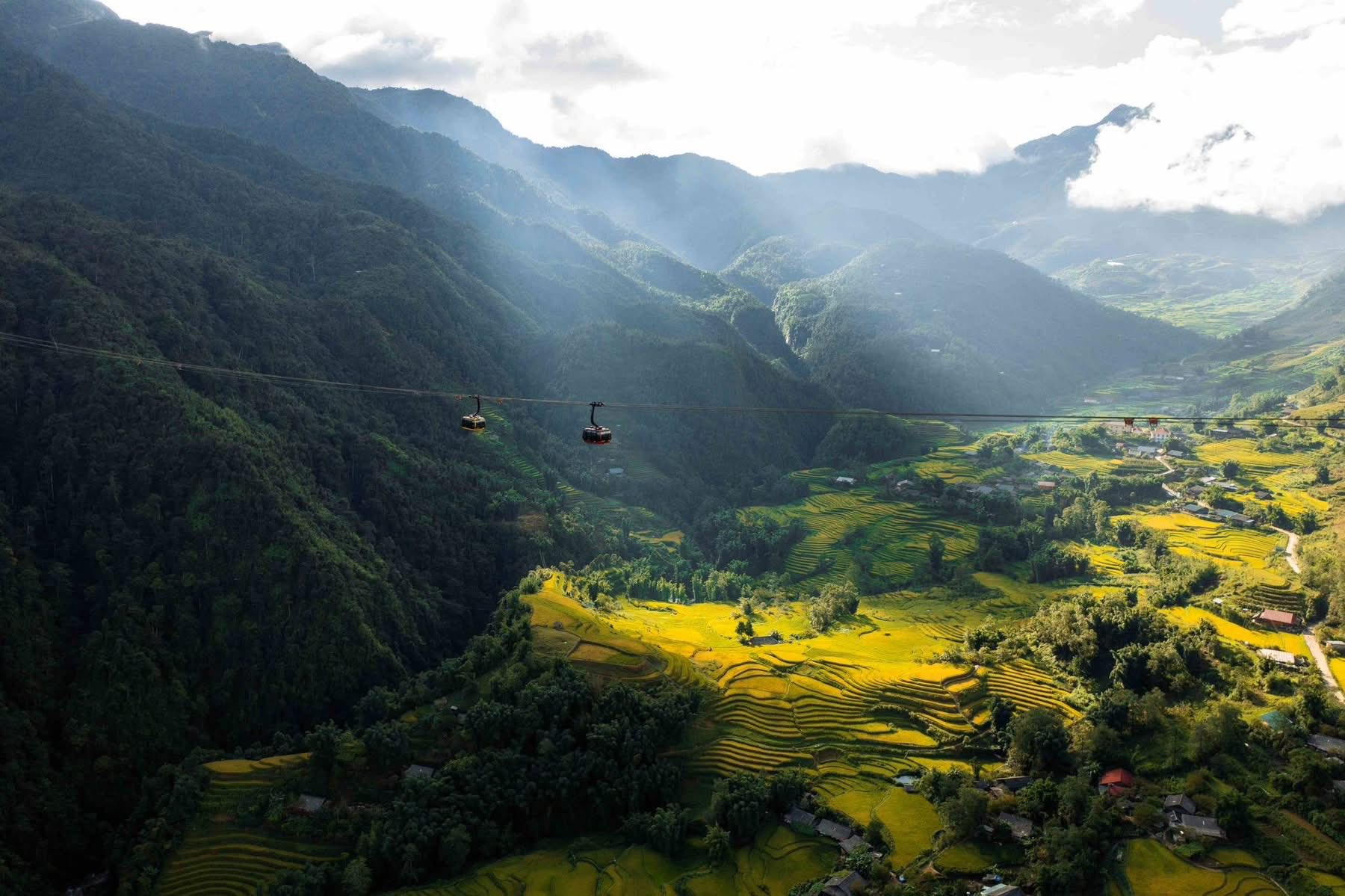
The Fansipan cable car takes visitors across the majestic Hoang Lien Son valley. (Source: Collected)
One of the most memorable experiences at Fansipan in Vietnam is the cable car ride through the sea of clouds. The modern 3-wire cable car system allows you easy access to the summit while enjoying panoramic views of the northwest region from above. In just about 15 minutes, the cabin takes you across the Muong Hoa Valley and the continuous mountain ranges of the Hoang Lien Son Mountains.
3.2. Conquering Fansipan peak
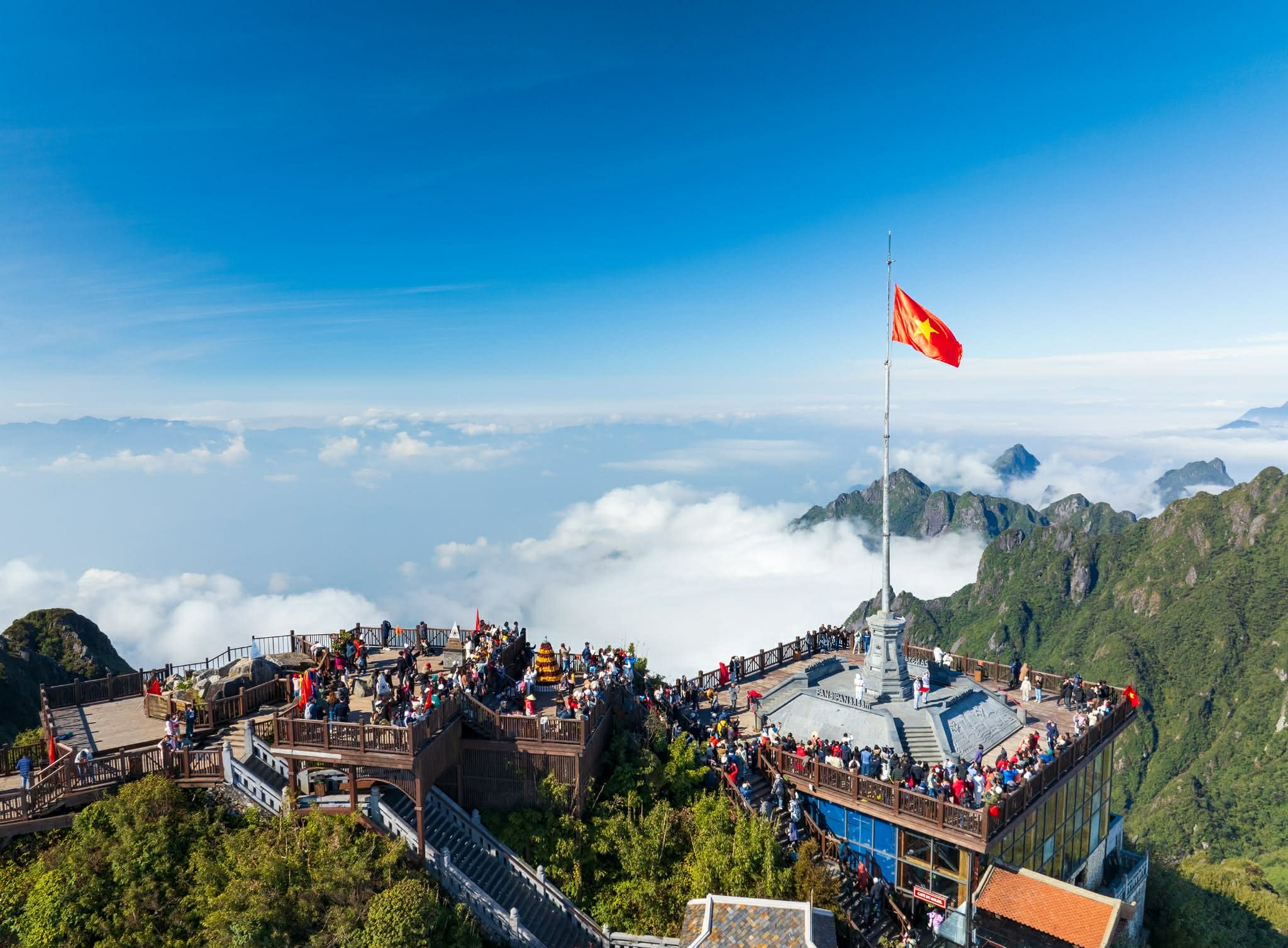
Fansipan peak is a must-see check-in spot. (Source: Collected)
After the cable car ride, you continue walking to reach the 3,143m mark on the summit of Fansipan. This is the most anticipated moment of the trip for many. Standing on the highest peak in Vietnam, you can see the entire Hoang Lien Son mountain range stretching amidst a sea of clouds. Checking in at the Fansipan marker is an essential experience for international tourists visiting Sapa. For Indian tourists, this is not only a journey of exploring nature but also a meaningful conquest and a way to create unforgettable memories in Vietnam.
4. Exploring the local culture in Sapa
Besides its natural beauty and spiritual atmosphere, Sapa is also famous for the diverse cultural identity of the local ethnic groups such as the H'Mong, Red Dao, Tay, and Giay. Near the Fansipan area, there are many traditional villages where you can learn about local life, such as Cat Cat Village, Ta Van Village, and Ta Phin Village, etc.
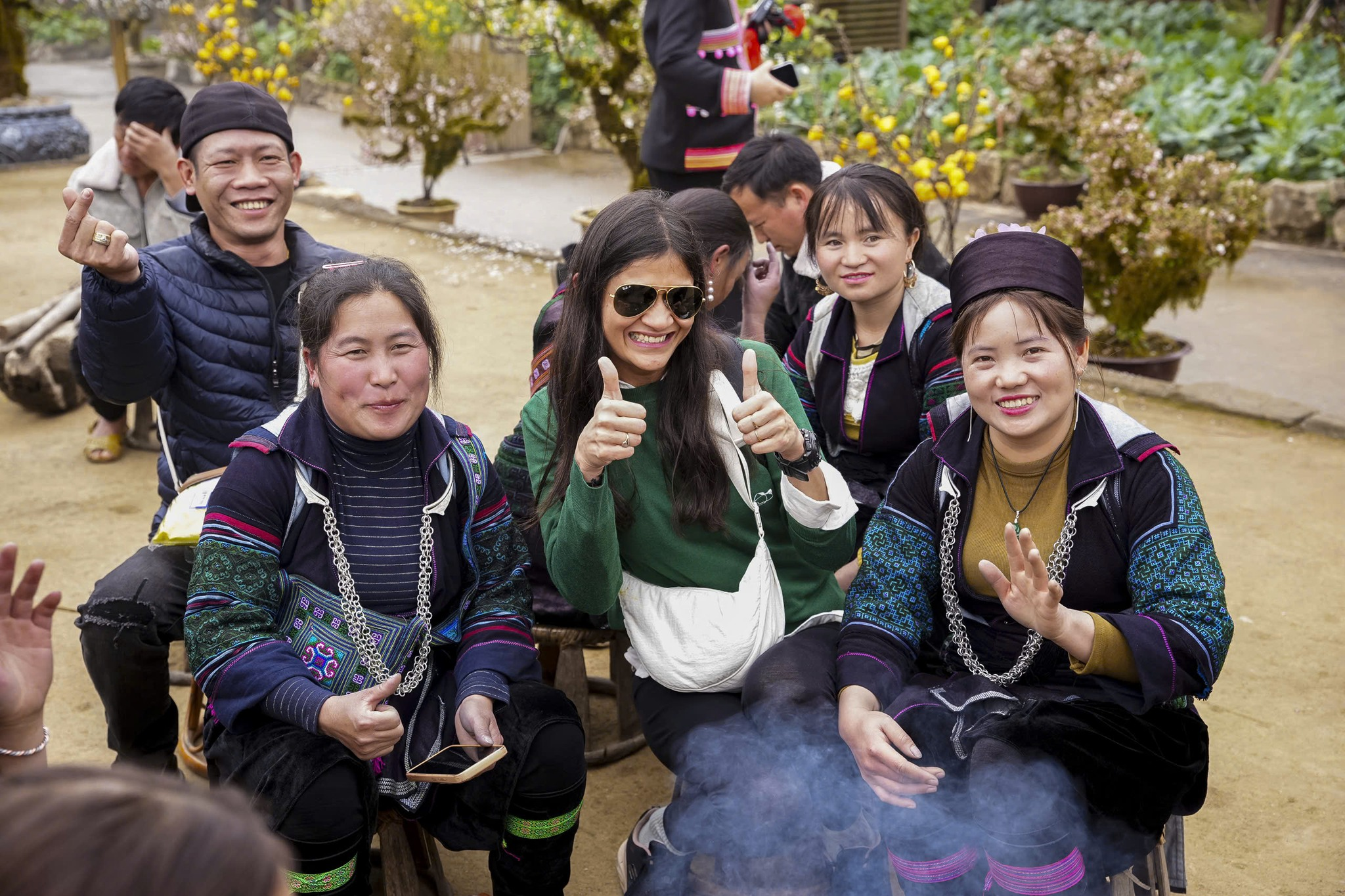
Tourists can explore the unique culture of the ethnic groups in the northwest mountainous region. (Source: Collected)
Wooden houses, colorful brocade costumes, and traditional crafts create a unique character for the northwest region of Vietnam. Activities such as weaving, handicraft making, and performances of traditional musical instruments are often organized for visit. This helps Indian tourists better understand the life and culture of the people in Vietnam's mountainous regions.
The cuisine in Sapa is increasingly diverse, offering many options suitable for Indian tourists, especially vegetarian dishes and menus using fresh ingredients from the high mountains. At Sun World Fansipan Legend, Sharia restaurant offers a Halal dining experience amidst the mountainous landscape and sea of clouds of northwest Vietnam. This is a popular stop for many tourists to enjoy authentic Halal dishes during their exploration of Fansipan in Vietnam.
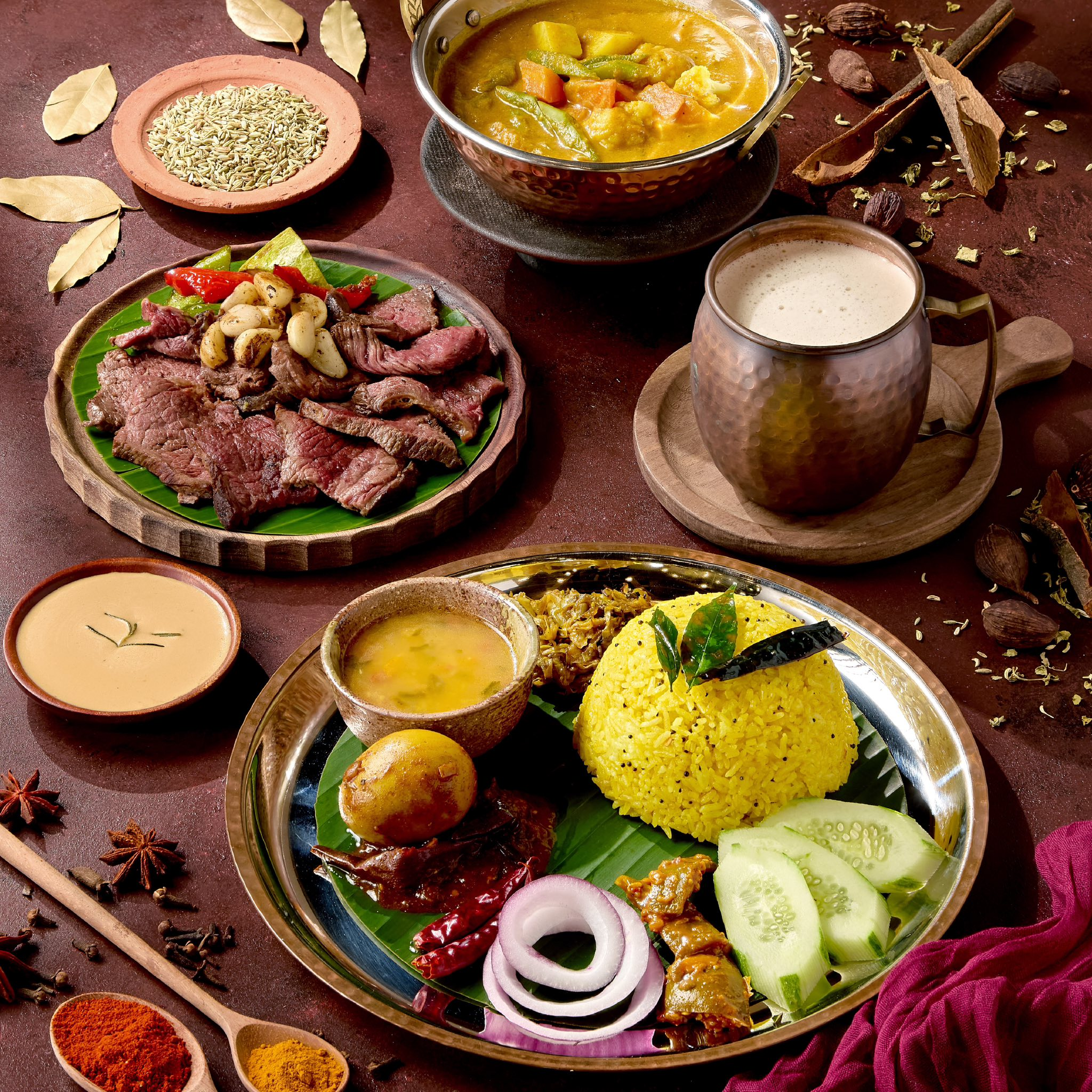
Delicious Halal dishes at Sharia restaurants. (Source: Collected)
5. Travel tips for Indian tourists visiting Fansipan in Vietnam
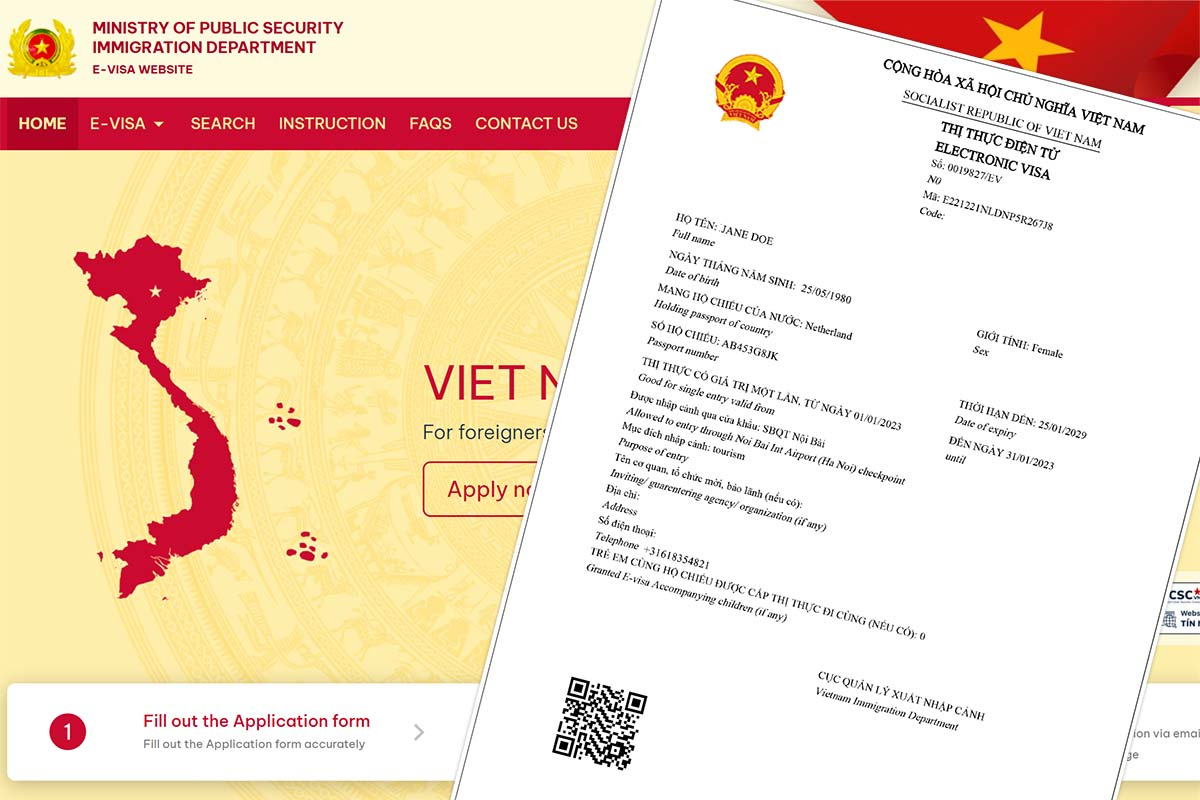
Indian tourists can easily complete immigration procedures into Vietnam thanks to the e-visa policy. (Source: Collected)
Currently, Indian citizens can conveniently apply for an e-visa to enter Vietnam. Processing time typically takes 3 to 7 working days from the date of application and payment. E-visas are commonly used for tourism, visiting relatives, or short-term business trips. The most common visa validity period is up to 90 days, suitable for many travel itineraries in Vietnam.
To apply for a Vietnamese entry visa, you need a passport valid for at least 6 months from the date of entry and with at least 2 blank pages. Additionally, you must not be on the list of those prohibited from entering Vietnam and must complete the application process while outside of Vietnam.
After arriving in Vietnam and landing at Noi Bai International Airport, you can travel to Sapa by sleeper bus, train, or convenient shuttle service. The travel time from Hanoi to Sapa is usually about 5 to 6 hours depending on the mode of transport. With the increasingly developed transportation system, the journey to Fansipan in Vietnam is now quite easy for international tourists, including Indian tourists visiting Vietnam for the first time.
When planning a trip to Vietnam's Fansipan, you should prepare a light jacket as temperatures at the summit are often lower than in the center of Sapa. Morning is the ideal time to take the cable car and see the sea of clouds because the weather is usually more stable. For families traveling with children or elderly people, it is advisable to prioritize non-slip shoes, move slowly on the rocky steps at the summit, and allow sufficient rest time to ensure a more comfortable journey.
Fansipan in Vietnam is not only a famous destination for its stunning mountain scenery but also offers a unique cultural exploration of Vietnam. From Buddhist structures amidst the sea of clouds and the serene atmosphere on the mountaintop to experiencing the nature and villages of northwest Vietnam, every moment here creates a sense of relaxation and unforgettable memories. For Indian tourists seeking a journey that combines tourism, culture, and spirituality, Fansipan in Vietnam is definitely a very worthwhile destination.


