




1. Reasons why the ancient pagodas of Hoa Lu Ninh Binh become a destination attracting visitors from all walks of life?
For generations, the land of Hoa Lu Ninh Binh has been considered the cradle of Vietnamese culture and Buddhism. This place is home to many ancient pagodas, each pagoda bearing the mark of time, imbued with the breath of the ancient capital. The moss-covered roofs, ancient statues, and the sound of bells echoing amidst the majestic mountains evoke a sense of both sacredness and tranquility in visitors. It is precisely the profound spiritual value and rich history that have made this land a familiar resting place for those seeking peace.
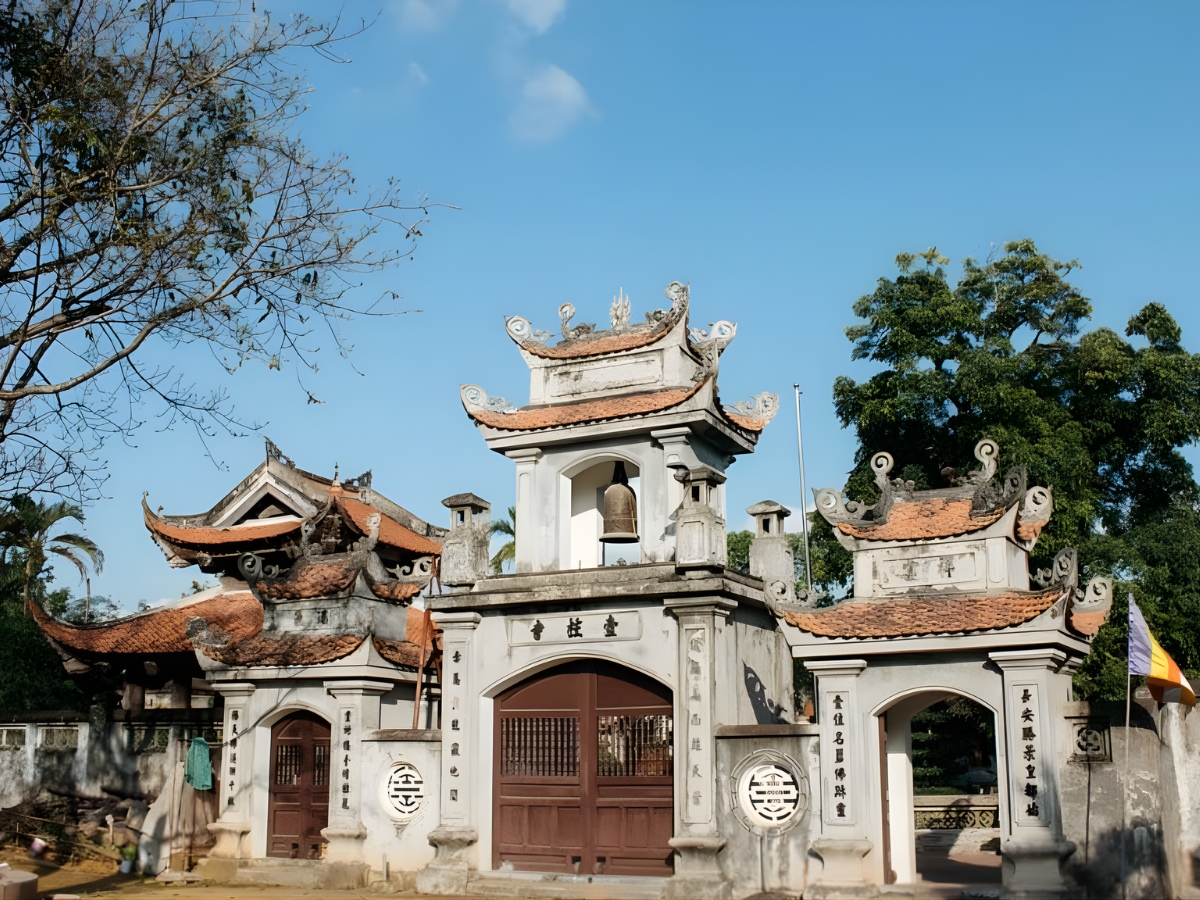
The land of Hoa Lu Ninh Binh is a convergence of many ancient, sacred pagodas. (Source: Collected)
Not only possessing unique cultural and architectural heritage, the ancient pagodas in Hoa Lu Ninh Binh are nestled amidst picturesque natural scenery with majestic limestone mountains, winding rivers and streams, and vast rice fields. Each pagoda is a part of an overall harmonious picture between humans and nature, between the past and the present. Today, preserving and promoting the value of ancient relics not only contributes to safeguarding spiritual beauty but also fosters sustainable cultural tourism development, allowing visitors to both sightsee, worship, and feel the cultural depth of the ancient capital land.
2. Top 5 most famous and sacred ancient pagodas in Hoa Lu Ninh Binh
2.1. Bai Dinh Pagoda
Amidst the lush green mountains of Hoa Lu, Bai Dinh Pagoda is a famous destination that almost everyone visiting Ninh Binh wishes to visit at least once. From afar, the pagoda appears amidst the early mist, its curved roofs harmonizing with the majestic mountain and forest scenery. The path leading up to the pagoda is gently sloping, with trees rustling in the wind on both sides, bringing a sense of peace and relaxation to anyone who sets foot there.
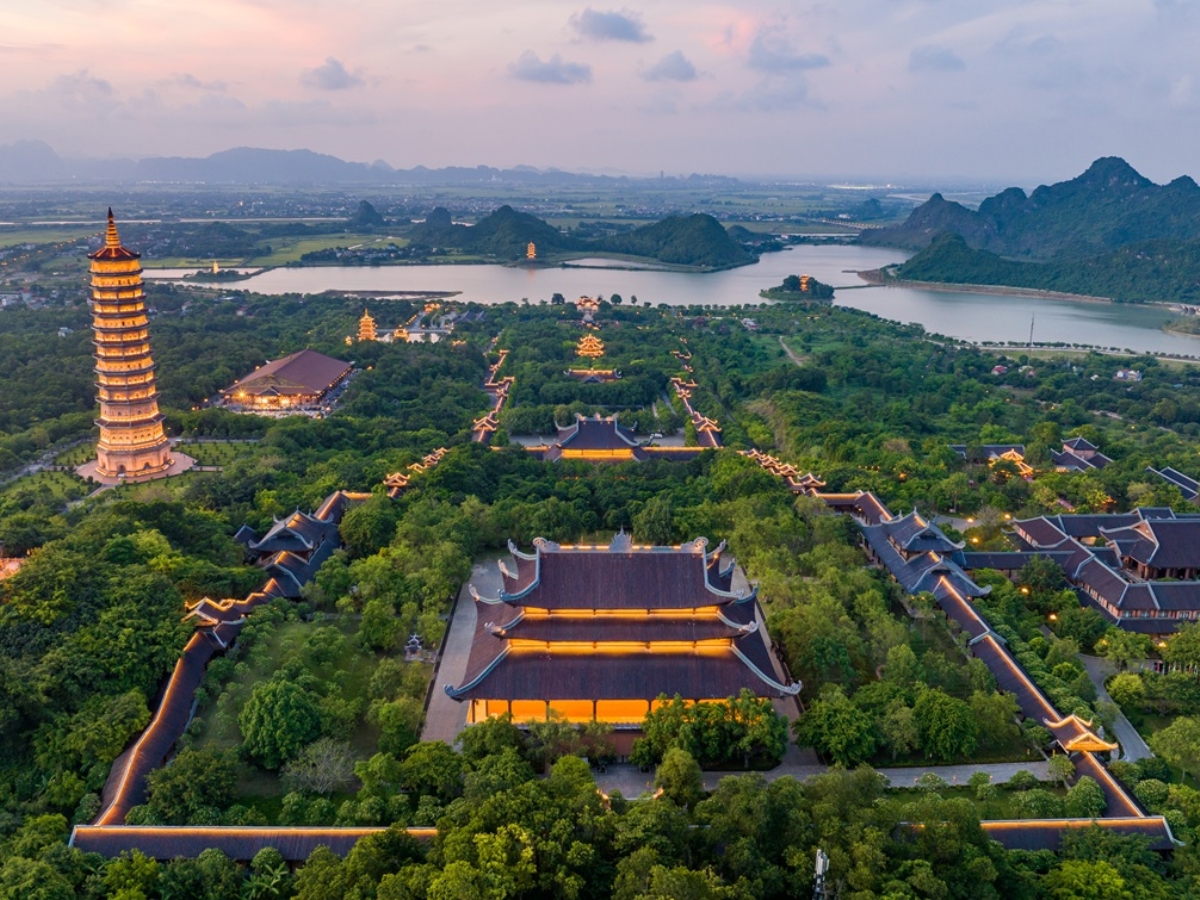
Bai Dinh Pagoda is the largest pagoda in Southeast Asia. (Source: Collected)
Bai Dinh Pagoda consists of two areas: the ancient pagoda nestled deep within the mountain and the new pagoda, vast and majestic. The ancient pagoda area possesses an ancient, serene charm with natural caves dedicated to Buddha and deities. Meanwhile, the new pagoda area stands out with its grand scale, the Arhat corridor over a kilometer long, a giant bronze Maitreya Buddha statue, and a massive bell weighing tens of tons. Each architectural detail reflects the skillful hands of humans harmonizing with the beauty of nature.
When visiting Bai Dinh Pagoda, visitors often stroll leisurely under the stone corridors, feeling the faint scent of incense in the wind and listening to the echoing bells amidst the valley. All worries seem to melt away, leaving only a sense of peace spreading through the soul.
2.2. Nhat Tru Pagoda
Amidst the Hoa Lu Ancient Capital relic complex, Nhat Tru Pagoda is one of the ancient pagodas deeply imbued with the history and culture of Vietnamese Buddhism. The pagoda was built in 995 during the reign of King Le Dai Hanh. After more than a thousand years, the pagoda still retains its ancient, serene beauty amidst the peaceful mountainous landscape of Hoa Lu, attracting visitors from near and far to explore and worship.
The name "Nhat Tru" means "one pillar," originating from the octagonal stone scripture pillar, over 4 meters high, erected right in the center of the pagoda's courtyard. The pillar is inscribed with Buddhist scriptures in ancient Han characters, reflecting the profound compassion and wisdom of Buddhism. Despite the ravages of time, the scripture pillar still stands tall in the courtyard, like a symbol of eternity and a vivid testament to the ancient Hoa Lu culture.
The architecture of Nhat Tru Pagoda is characteristic of the Tien Le period, with a "dinh"-shaped layout comprising the Linga scripture pillar, the main hall, the ancestral house, and small stupas around. The old moss-covered tiled roof, the dark brick walls, and the ancient trees create a tranquil and peaceful scene. Here, visitors not only admire the ancient beauty but also feel the purity and slowness of time.
2.3. Am Tien Pagoda
Nestled in a valley surrounded by majestic limestone mountains, Am Tien Pagoda is like a world separate from the noisy life outside. The path leading to the pagoda winds around a clear blue lake, reflecting the mountains and clouds, making the scenery here likened to a "forbidden love valley" in the heart of the ancient capital. The space is quiet, with only the chirping of birds, the sound of wind rustling through the cliffs, and the echoing temple bells, making anyone who arrives feel peace from the very first moment.
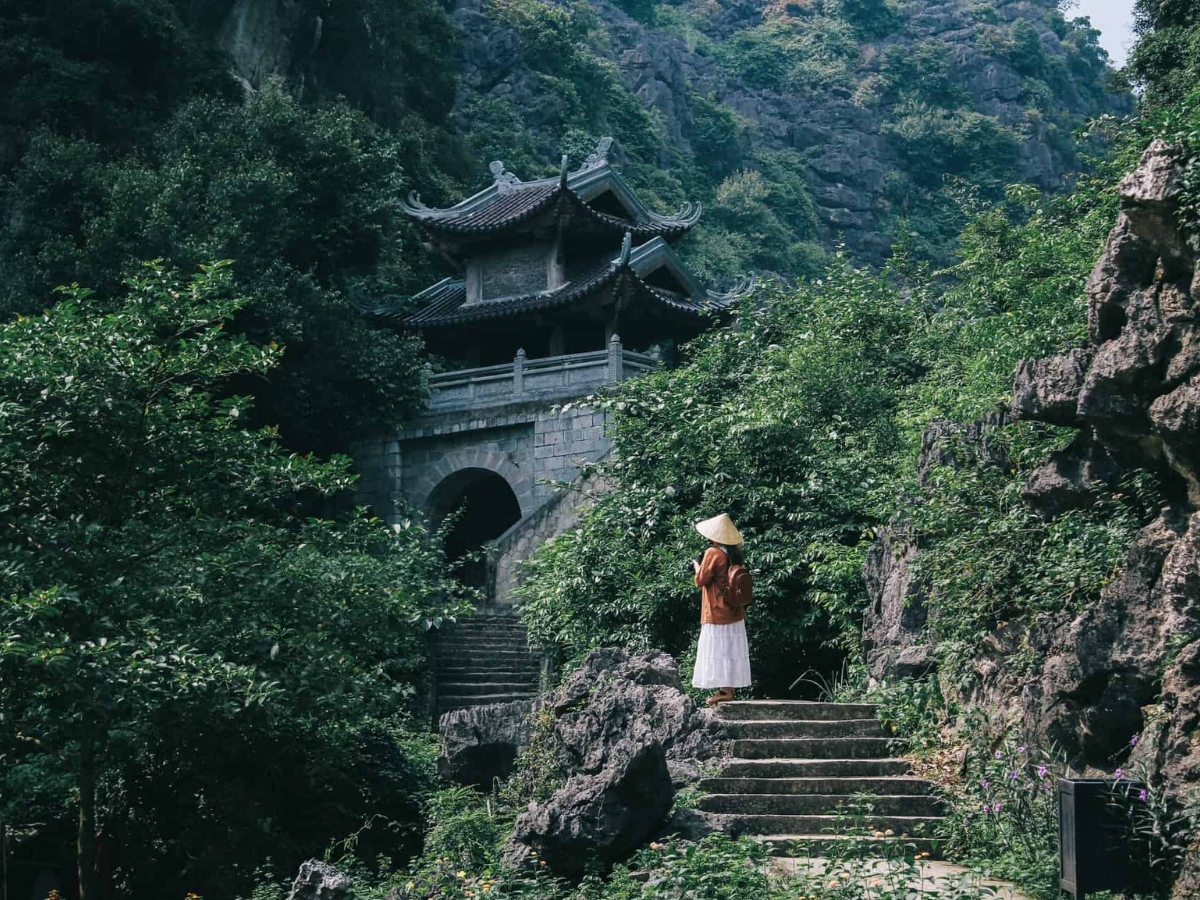
Am Tien Pagoda is likened to a "secluded paradise" in the heart of the Ancient Capital. (Source: Collection)
According to historical records, this area was once used by King Dinh Tien Hoang to keep wild animals and try criminals. After the king's death, Queen Mother Duong Van Nga chose Am Tien as her place of spiritual practice in her final years. She took the Buddhist name Bao Quang Hoang Thai Hau, living in seclusion amidst the mountains and forests, dedicating her life to Buddhism until her passing. This story makes Am Tien Pagoda not only a historical landmark but also a symbol of good intentions and virtue of Vietnamese women in the feudal era.
Visiting Am Tien Pagoda, tourists can not only worship at this sacred place but also immerse themselves in the beautiful natural scenery. Gentle breezes blowing across the lake, the calls of birds echoing between the cliffs, all create a peaceful and pure picture. Wandering around the pagoda grounds, admiring the moss-covered tiled roofs and the shade-giving trees, visitors will feel time slow down, leaving only tranquility and relaxation in their souls. This is not just a spiritual destination, but also a place to regain balance, to let one's mind rest after busy days.
2.4. Bich Dong Pagoda
Leaning against the Truong Yen mountain range, Bich Dong Pagoda is one of the famous ancient pagodas of Hoa Lu Ninh Binh, associated with the poetic scenery of the Ancient Capital region. The pagoda was built during the Le dynasty and has existed for hundreds of years, yet it still retains its rare purity and ancient charm. Located amidst mountains, forests, and the serene Ngo Dong River, Bich Dong Pagoda appears as a harmonious landscape painting of sky, water, and mountains, leaving visitors in awe of its peaceful beauty.
The pagoda is built in a unique "sitting on the mountain, facing the water" style, consisting of three levels: Ha Pagoda, Trung Pagoda, and Thuong Pagoda, connected along the mountainside. Each level has its own beauty: Ha Pagoda is at the foot of the mountain, surrounded by lush green trees; Trung Pagoda is inside the mountain, where natural stalactites sparkle in the dim light; and Thuong Pagoda is halfway up the mountain, offering a panoramic view of the majestic Tam Coc landscape.
At Bich Dong Pagoda, visitors will experience a rare sense of tranquility. The moss-covered stone steps, the ringing of bells mixed with the sound of the wind and birds, all seem to transport people away from the hurried pace of life to find peace in their souls. Looking down from the top of Thuong Pagoda, the scenery of rivers, mountains, clouds, and rice fields stretching out appears like a beautiful painting, where nature and humanity merge in the solemn and sacred landscape of the Ancient Capital.
2.5. Dich Long Pagoda
Leaning against the mountain range in Gia Trấn commune, Dich Long Pagoda is a destination that deeply reflects the essence of Ninh Binh's ancient capital. From afar, the pagoda is hidden amidst the mist, its moss-covered tiled roof standing out against the green of the mountains and forests, creating a scene that is both sacred and poetic.
According to records, the pagoda was built around 1740, initially named Nham Son Dong Co Am Tu, and later changed to Dich Long. The entire pagoda complex is located within a cave vault about 20 meters high, including a stone hall with 16 intricately carved monolithic stone columns, a three-bay ancient Ha pagoda, a half-moon lake, and a moss-covered stupa garden. Notably, inside the cave are the Sang Cave and Toi Cave systems, along with natural stalactites shaped in strange forms, evoking a mystical and sacred feeling.
King Minh Mang once bestowed upon this place the title "Nam Thien De Tam Dong," meaning "the third most beautiful cave in the South," as a tribute to the miraculous beauty of creation and the work preserved by humans. Visiting Dich Long Pagoda, tourists can not only admire the ancient architecture harmoniously blended with nature but also feel the tranquil atmosphere, the distant ringing of temple bells amidst the mountains and forests, making one's heart lighter and more peaceful than ever.
3. Tips for Visiting Ancient Pagodas in Hoa Lu Ninh Binh
To make your pilgrimage and exploration of the ancient pagodas of Hoa Lu Ninh Binh more complete, visitors should prepare thoroughly in terms of time, attire, and mindset before departing. Some small tips below will help visitors have a smooth, peaceful journey and fully appreciate the sacred and tranquil beauty of the Ancient Capital region.
Choose the right time to visit: The ideal time to visit the ancient pagodas of Hoa Lu Ninh Binh is from January to March of the lunar calendar, when the weather is cool, with little rain, and it coincides with the early year festival season. If you want to enjoy a quieter atmosphere, you can visit from September to November, when the autumn weather is mild and the Ninh Binh mountain scenery is radiant in the golden sunlight.
Attire and necessary items: When visiting pagodas, visitors should choose modest, polite, and comfortable clothing for easy movement, especially when climbing stone steps or exploring caves. Visitors should wear sports shoes or soft sandals for easy walking, along with a hat, drinking water, and a light jacket if visiting in the cold season. Don't forget to bring a camera or phone to capture beautiful moments amidst the majestic mountain scenery and ancient pagoda roofs.
Behavior when entering the pagoda: When entering a pagoda, visitors should maintain a respectful attitude, speak softly, and avoid making noise. Additionally, visitors should not take photos in main worship areas or places with "no photography" signs. Maintaining general hygiene, not littering, and respecting the sacred space are ways to show reverence for the historical site and Buddhist culture.
Combine with visits to other famous attractions in Ninh Binh: After visiting the ancient pagodas, visitors can combine their trip with exploring other attractive destinations in Ninh Binh such as Trang An, Tam Coc – Bich Dong, Mua Cave, or the modern entertainment complex Sun World Ha Nam.

Tourists take a boat trip and admire the natural scenery at Trang An. (Source: Collected)
The journey to explore the ancient temples of Hoa Lu Ninh Binh is not just a sightseeing trip but also an opportunity to find inner peace amidst the majestic mountainous landscape. Each temple holds its own story, closely linked to the history, culture, and beliefs of the ancient capital region. If you are looking for a sacred yet tranquil destination to relax and contemplate, plan a visit to Ninh Binh and discover the ancient temples of Hoa Lu. This journey will surely bring you memorable experiences and inner peace.


