




1. Top 7 spectacular mountains in Vietnam to visit
1.1. Mount Fansipan (Lao Cai, Sapa)
Located in the majestic Hoang Lien Son mountain range, Fansipan stands at 3,143 meters, holding the title of the highest peak in Vietnam, Laos, and Cambodia. It is undoubtedly the most famous name on any list of Mountains in Vietnam to visit. Historically reserved for fit trekkers, it is now accessible to everyone.
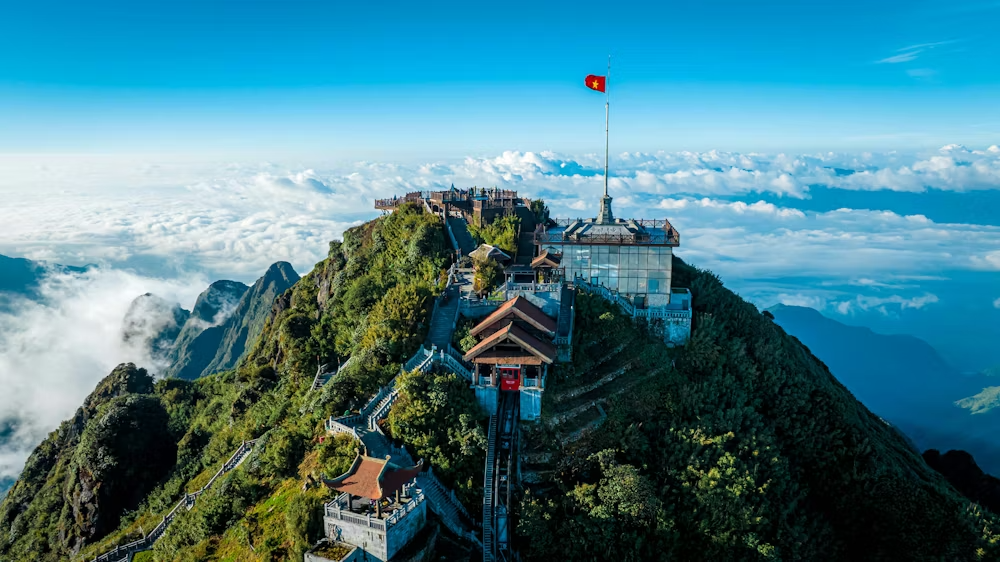
The architecture on MountFansipan blends seamlessly with nature, creating a surreal experience (Photo: Vivu Vietnam/Unsplash)
The journey has been transformed by Sun World Fansipan Legend. Visitors take a record-breaking three-wire cable car through the clouds to reach a breathtaking spiritual complex featuring a giant Buddha statue and 11-story stupa. Standing on the "Roof of Indochina" is a bucket-list achievement that combines the thrill of height with ethnic festivals and blooming flower valleys year-round.
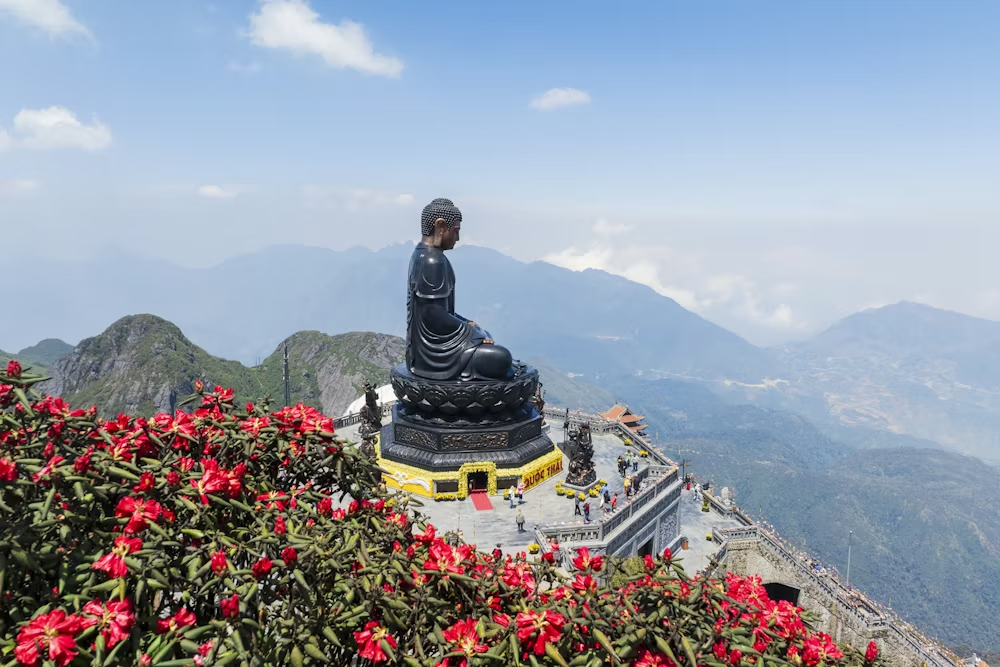
The iconic Buddha statue rises above the clouds, framed by vibrant mountain flowers below (Photo: Vivu Vietnam/Unsplash)
Best time to visit: Cloud hunting is best between November and February. March to April, the slopes come alive with vibrant red and pink azalea blooms.
See more information: https://fansipanlegend.sunworld.vn/
1.2. Ba Den Mountain (Tay Ninh)
Rising abruptly from the fertile plains of the Mekong Delta, Ba Den Mountain is known as the "Roof of the South”, standing at 986 meters. It is a top spiritual destination among mountains in Vietnam to visit. The mountain is an extinct volcano steeped in legends of Linh Son Thanh Mau. For centuries, pilgrims have flocked here to pray for peace, health, and prosperity.
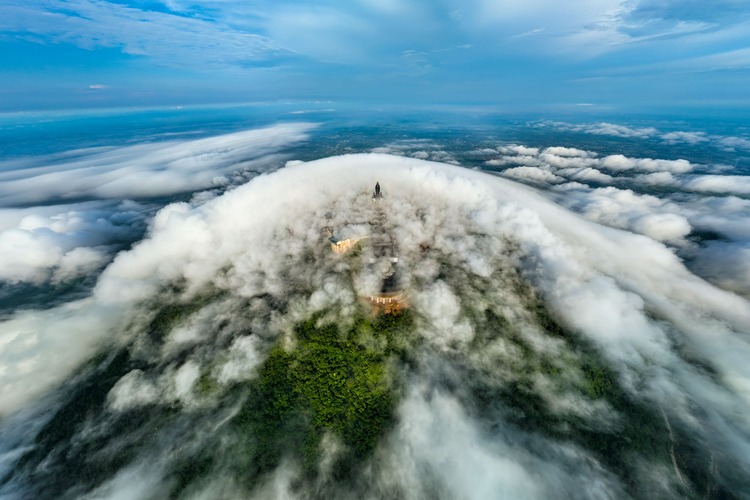
Rolling clouds transform Ba Den Mountain into an island in the sky (Photo: Collected)
The mountain now meets international standards with the Sun World Ba Den Mountain cable car system and its Guinness-recognized station, the world’s largest. Its crowning jewel is the Tay Bo Da Son Lady Buddha statue, the tallest bronze Buddha statue on a peak in Asia, surrounded by year-round blooming terraced flower gardens.
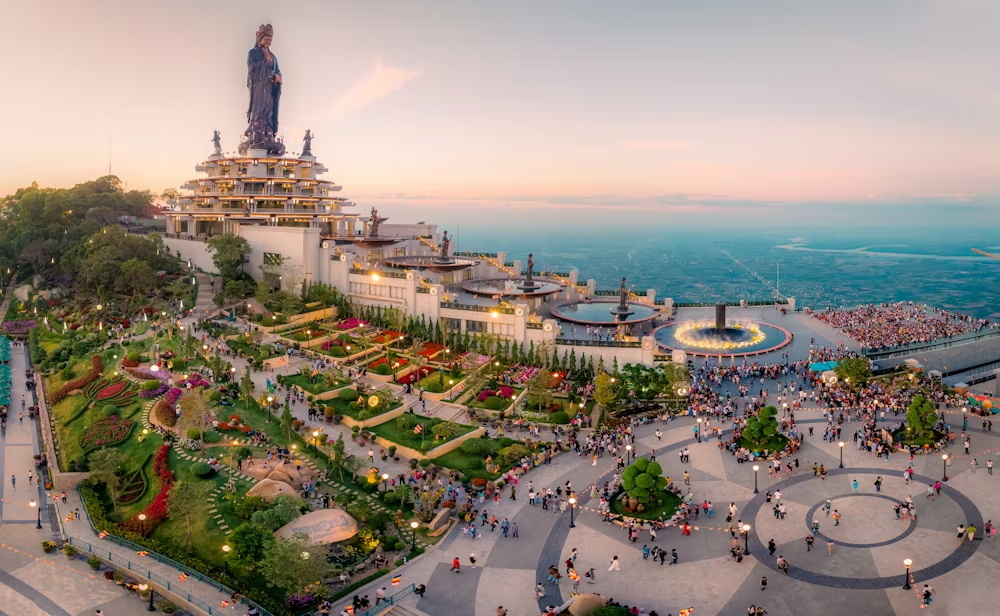
The towering Tay Bo Da Son Buddha statue overlooking crowds and a vibrant mountain landscape (Photo: Vivu Vietnam/Unsplash)
It offers a unique blend of spirituality and modern tourism facilities. As one of most accessible mountains in Vietnam to visit near Ho Chi Minh City, it allows for a quick yet profound escape, with ancient cave pagodas alongside cutting-edge summit light shows. Whether for prayer or sightseeing, the atmosphere is deeply uplifting.
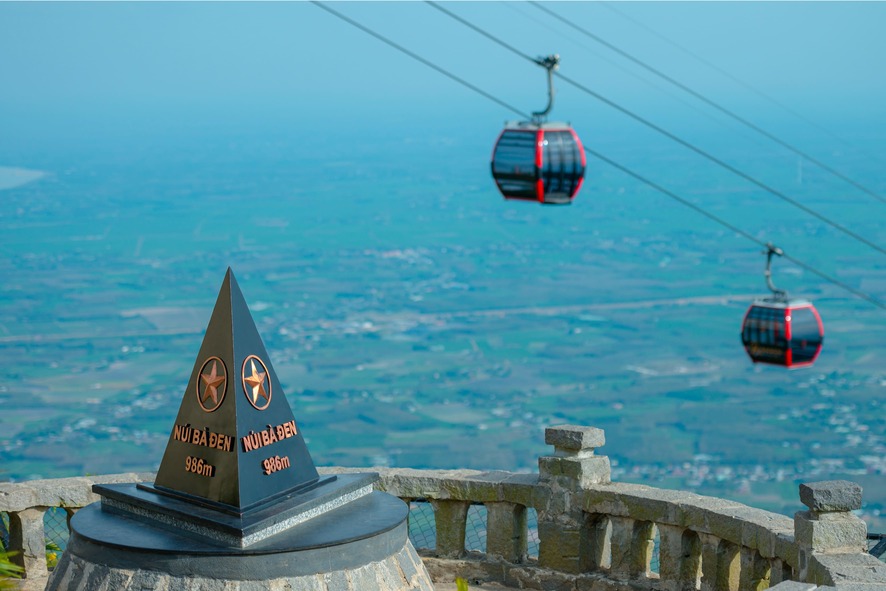
From Ba Den Peak, the checkerboard fields below form a mesmerizing view (Photo: Collected)
Best time to visit: December to April is ideal, but for a deep cultural dive, visit during the Spring Festival (1st lunar month) or the Via Ba Festival (5th lunar month). Visit May to October for clearer air and more tranquil sightseeing.
See more information: https://badenmountain.sunworld.vn/
1.3. Ba Na Mountain/Nui Chua (Da Nang)
Ba Na Mountain, often called Nui Chua, sits at 1.487 meters in the Truong Son range. It is distinct among mountains in Vietnam to visit for being a premier hill station resort rather than a traditional trekking spot. Discovered by French colonists in the early 20th century, it was praised for its famously experiencing four seasons in a single day: spring morning, summer noon, autumn evening and winter night.
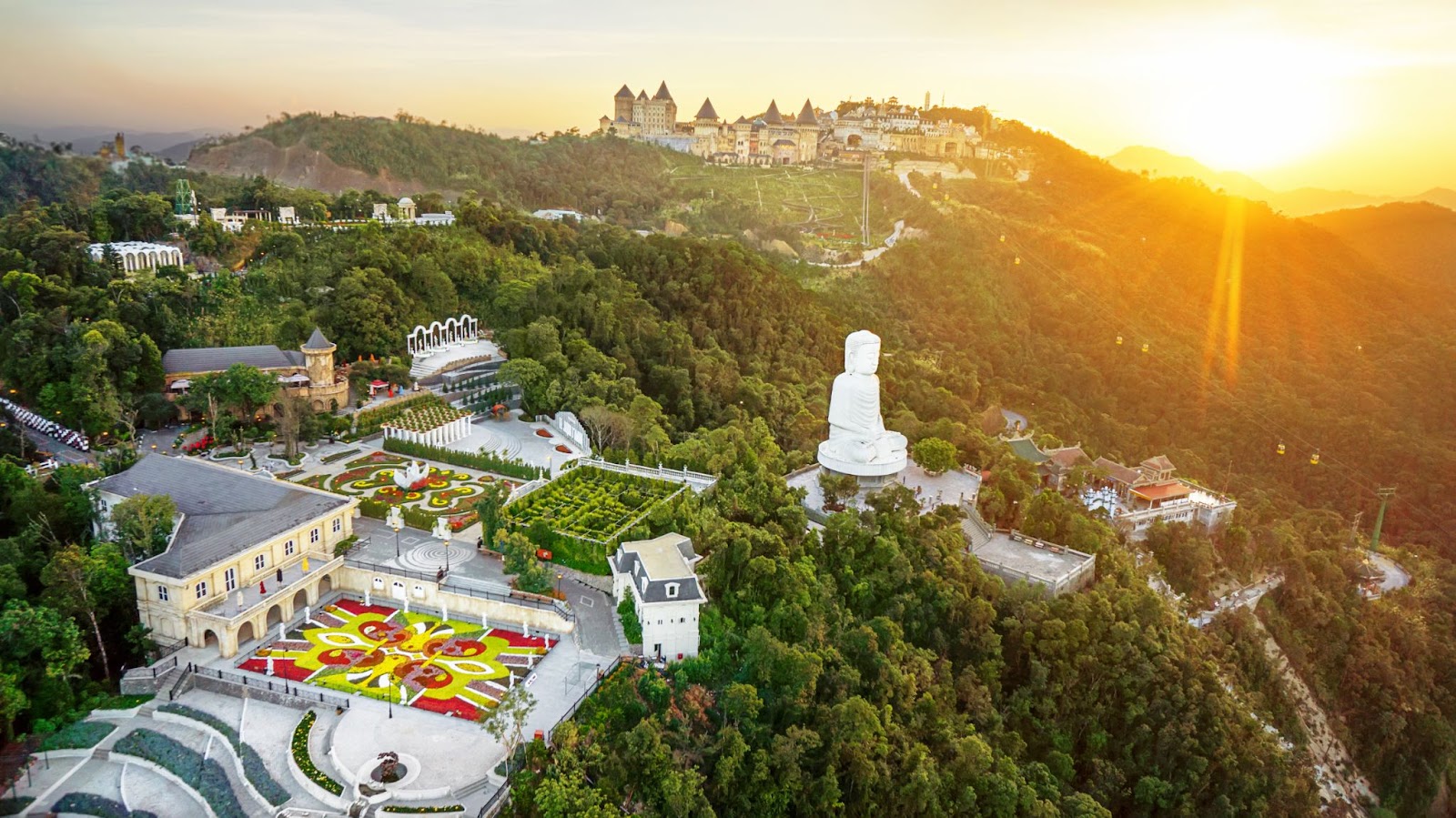
Panoramic view of Ba Na mountain at golden hour (Photo: Collected)
Sun World Ba Na Hills has turned this peak into a global attraction with the iconic Golden Bridge held by stone hands. The summit features a medieval French Village, an indoor Fantasy Park, wine cellars and Linh Ung Pagoda. Ideal for families, Ba Na offers the most comprehensive infrastructure for dining, staying and playing. One moment you stroll a misty square, the next gaze at the coastline. Every visit brings something new.

A European getaway in the heart of Ba Na Mountain (Photo: Vivu Vietnam/Unsplash)
Best time to visit: The clearest views of the Golden Bridge and coastline are from January to August though the crowds. The cooler months are ideal for enjoying flower festivals and themed events, even when it’s cloudy.
See more information: https://banahills.sunworld.vn/
1.4. Chua Chan Mountain (Dong Nai)
Located in Dong Nai, Chua Chan Mountain rises 837 meters as the second-highest peak in the south. It is an emerging star for nature lovers looking for Mountains in Vietnam to visit. The mountain is locally famous for the "Weeping Banyan Tree" with three roots, believed to have healing powers and the cliffside Buu Quang Pagoda, a tranquil spot for prayer and meditation.
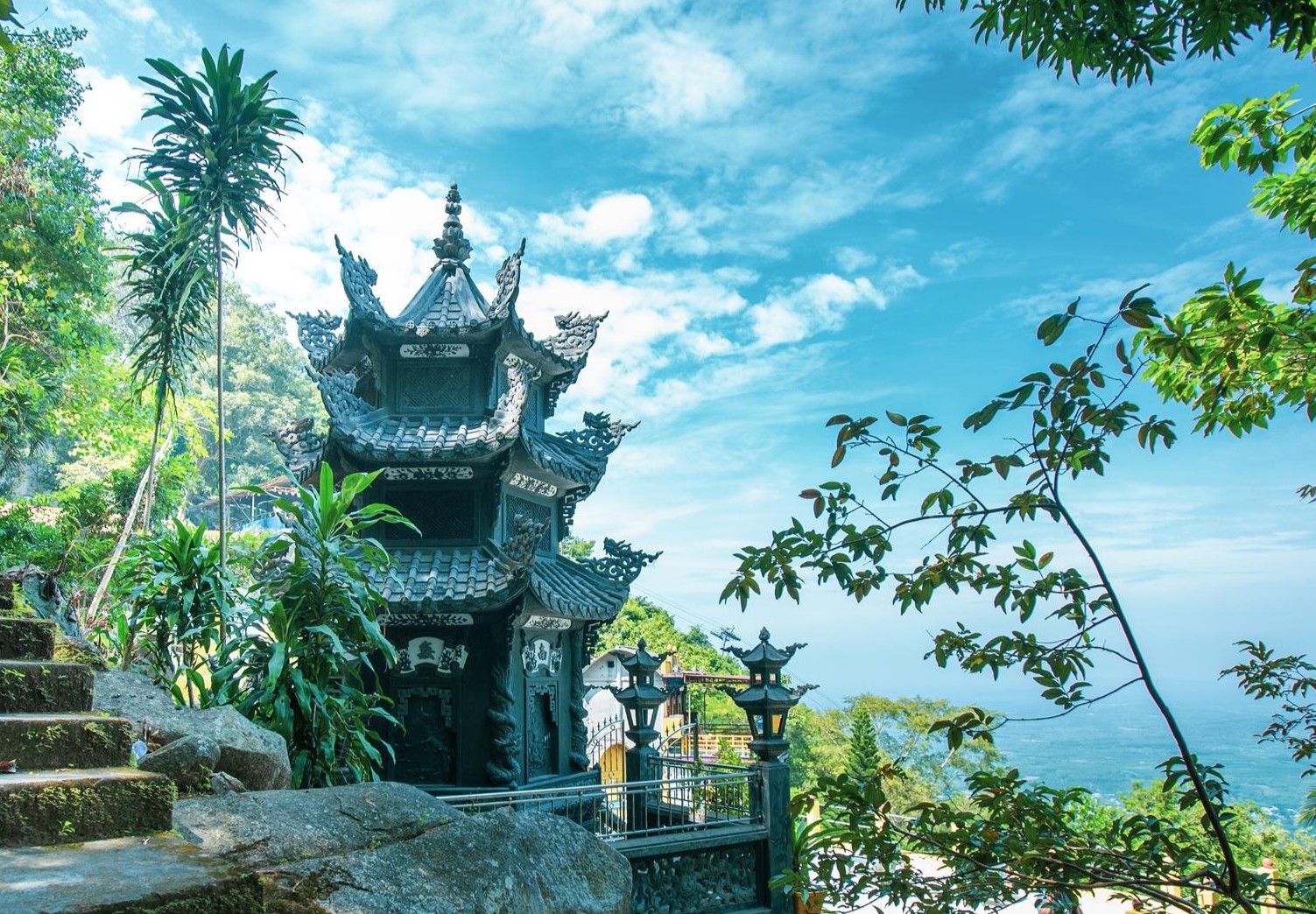
A hidden angle of Buu Quang Pagoda’s charm in Chua Chan mountain (Photo: Collected)
For adventure seekers, the trek up Chua Chan offers a scenic trek through dense forests, bamboo groves, and rocky outcrops, or a relaxing ride via the Sun World Chua Chan cable car. At the summit, there is a flat area perfect for camping, where hikers often gather to watch the sunrise break over the horizon.
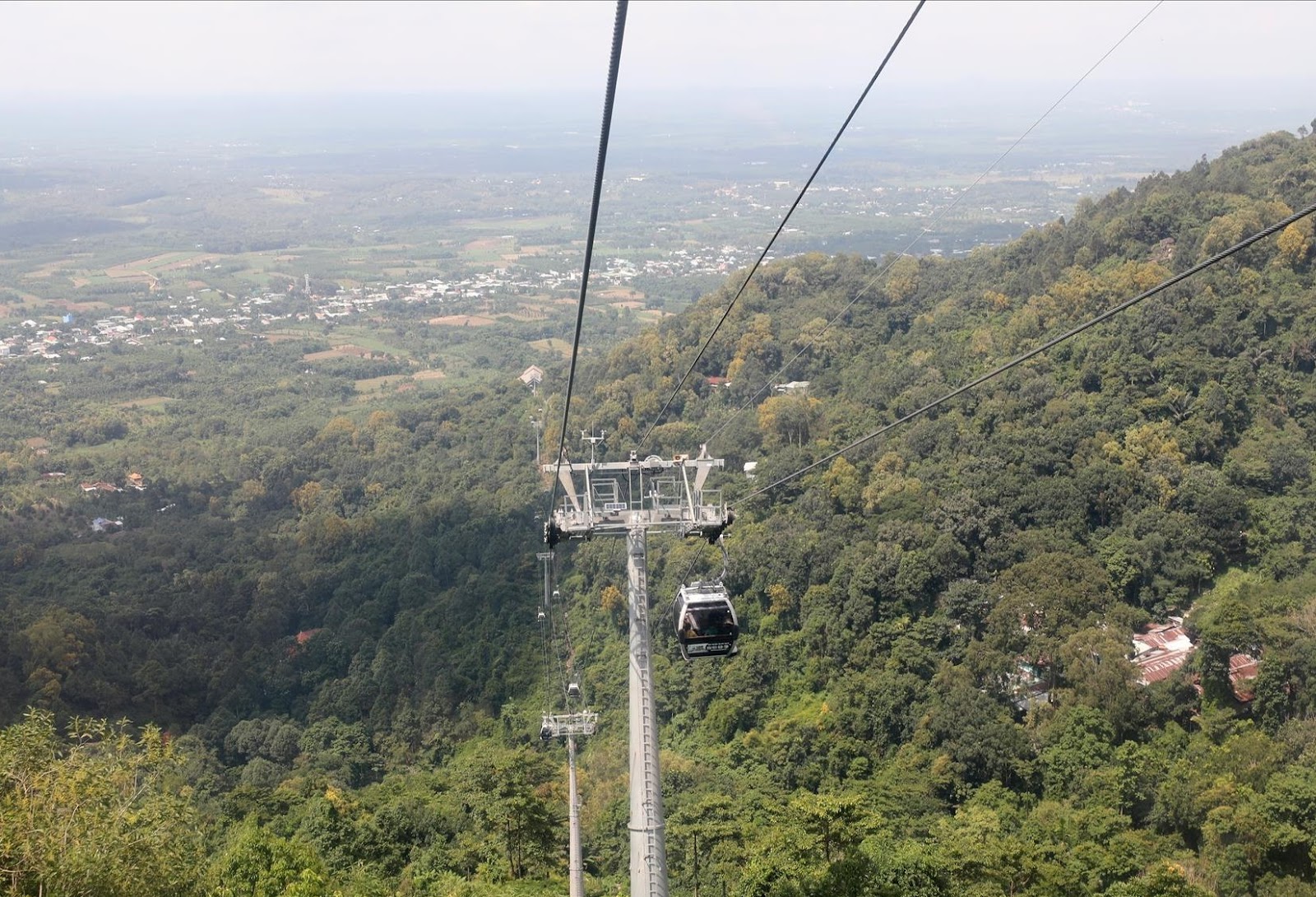
Gliding above Chua Chan mountains on a scenic cable car ride (Photo: Collected)
Among mountains in Vietnam to visit, Chua Chan stands out for its rugged and serene atmosphere. Less commercialized than others, it feels more like a nature reserve, with camping and fresh mountain air. It strikes a perfect balance between a physical challenge and spiritual relaxation.
Best time to visit: The dry season (November - April) is best for hiking. The major festivals in the 1st and 7th lunar months are culturally vibrant.
See more information: https://sungroup.com.vn/
1.5. Langbiang Mountain (Da Lat, Lam Dong)
Overlooking Da Lat city, Langbiang is the heart of the Central Highlands. It consists of two main peaks and is a legendary site among mountains in Vietnam to visit. The mountain is a cultural symbol for the K’Ho people, inextricably linked to the romantic love story.
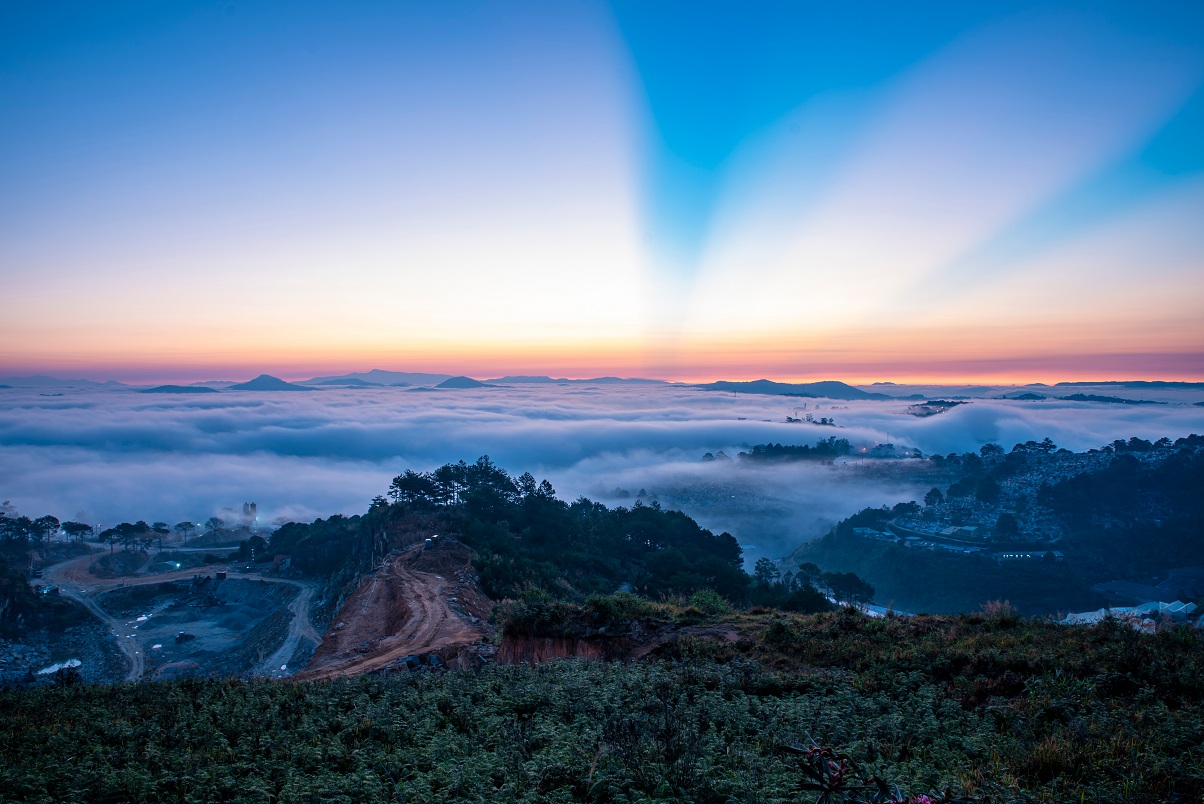
Langbiang Peak, the rooftop of Da Lat
Tourists can take a thrilling jeep ride to Radar Peak for panoramic views of the Golden Valley, Silver Stream, and the cityscape of Da Lat. For hikers, the trail to the 2,167 meters passing through ancient pine forests is the real draw, that provides a sense of solitude along with far-reaching vistas.
As one of the most accessible mountains in Vietnam to visit, it caters to both adventure seekers and casual tourists with trails of varying difficulty. The local culture enriches the experience, letting visitors explore the Gong culture of the Central Highlands, a UNESCO-recognized intangible heritage. The cool air and pine scent add a refreshing touch.
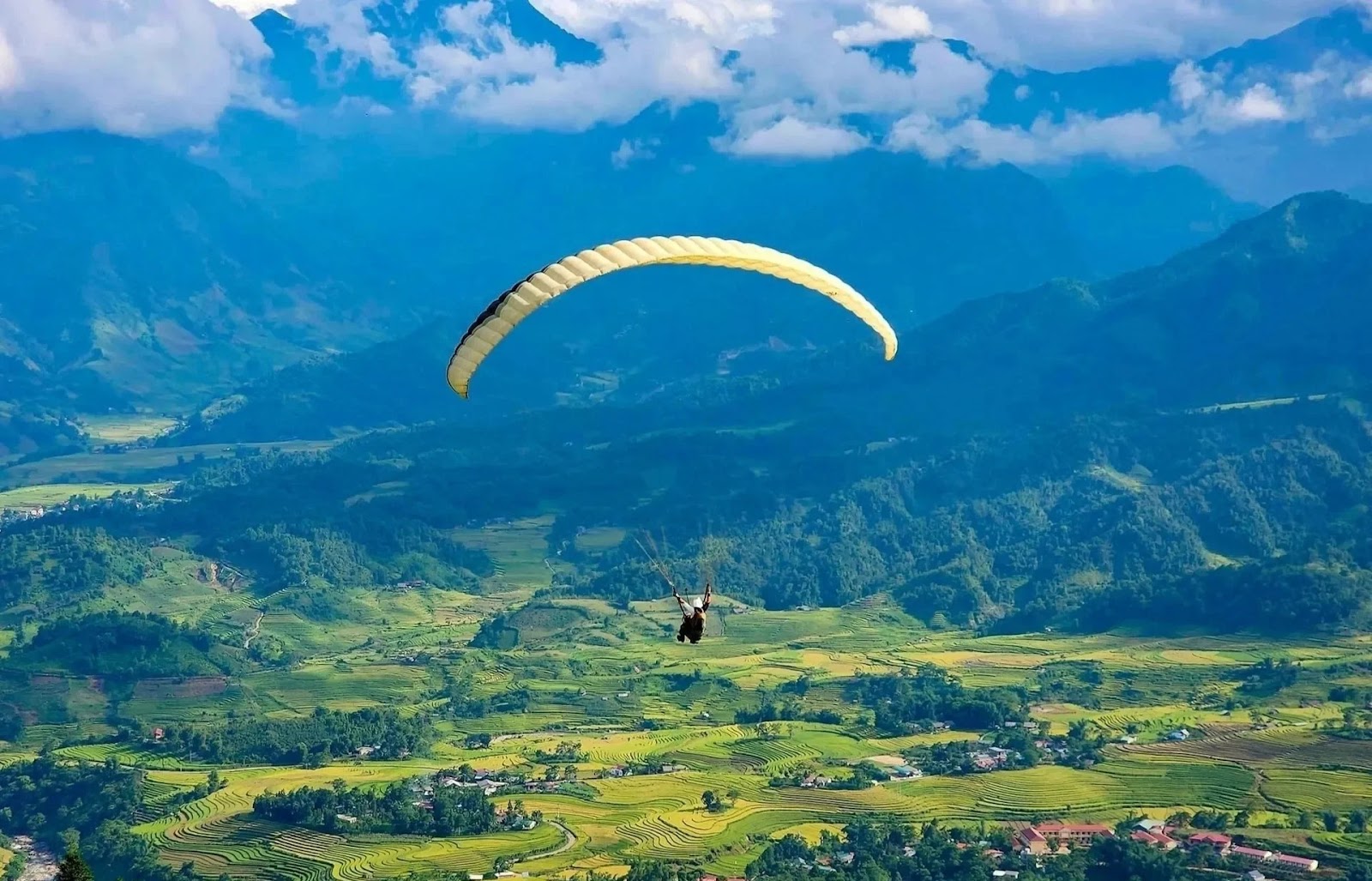
Catch the wind and fly high over Langbiang Mountain (Photo: Collected)
Best time to visit: December to March is fantastic for cherry blossoms across Da Lat. Even the rainy season (May - October) has its charm, bringing misty mornings and lush, romantic scenery.
See more information: https://langbiang.gov.vn/
1.6. Bach Ma Mountain (Thua Thien Hue)
Nestled between the imperial city of Hue and the modern city of Da Nang, Bach Ma is part of a national park stretching to the East Sea. It stands at 1,450 meters and is one of the most unique mountains in Vietnam to visit due to its location. French-built villa ruins hidden in the jungle give it a mysterious “sleeping beauty” charm.
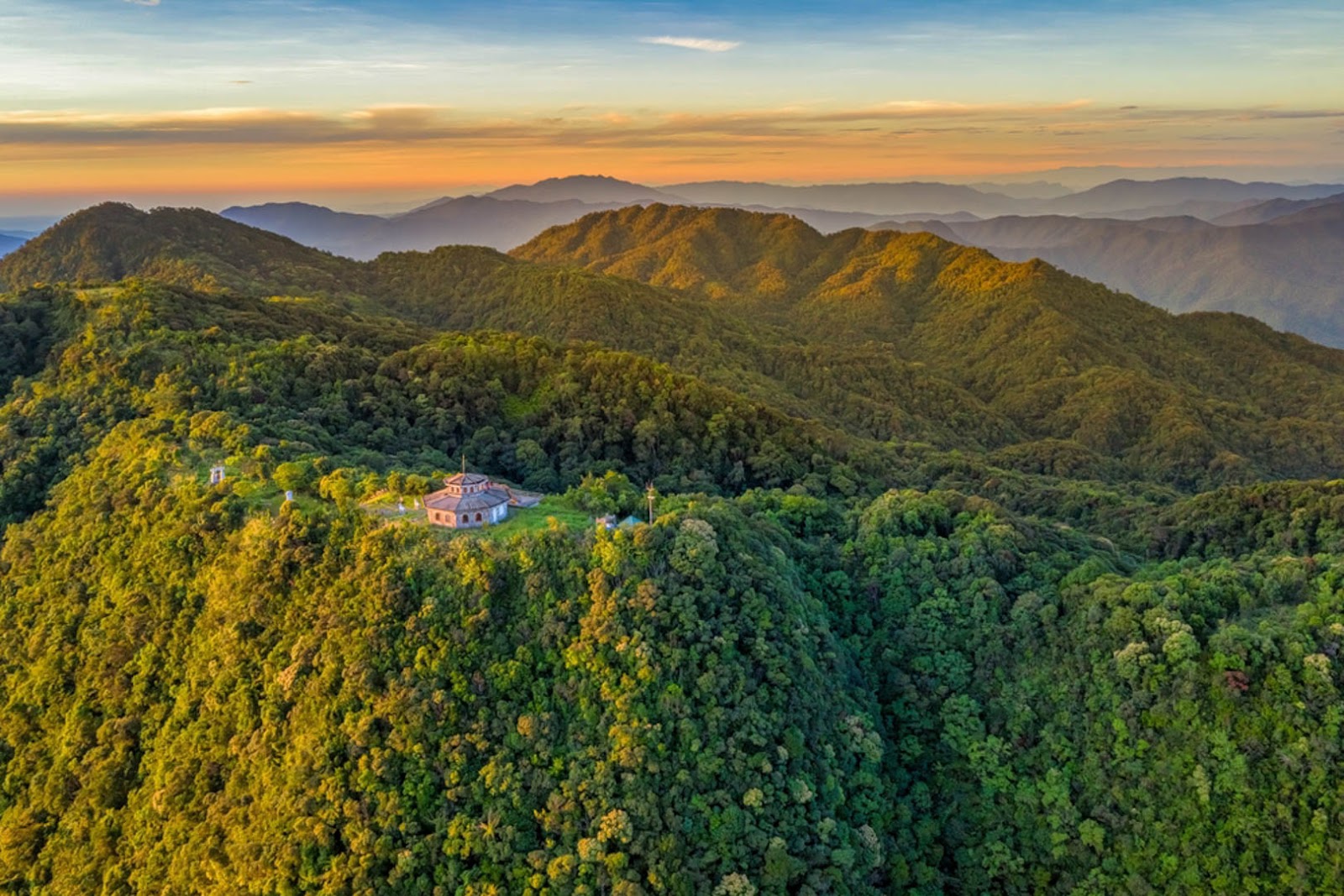
Scenic sights from Vong Hai Dai at Bach Ma Peak (Photo: Collected)
The mountain is renowned for biodiversity and waterfalls, including the towering Do Quyen Waterfall and the crystal-clear Five Lakes (Ngu Ho). The summit’s Vong Hai Dai lets you have a 360-degree view that encompasses Lang Co Bay, Truoi Lake, and the Hai Van Pass.
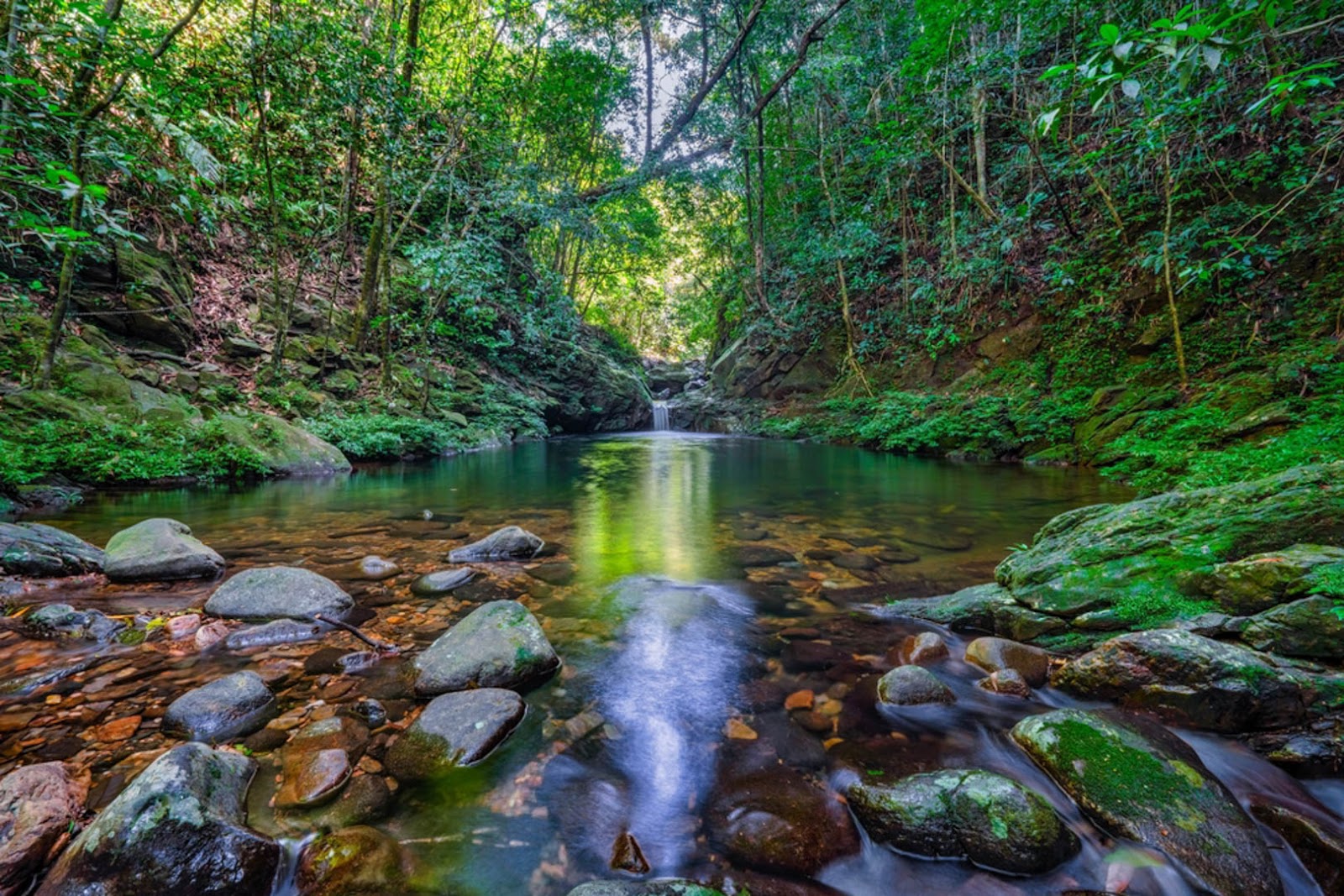
The untouched beauty of Five Lakes, crystal-clear water beneath a lush emerald canopy (Photo: Collected)
A haven for eco-tourism paradise and bird watching, Bach Ma is quieter than other popular mountains in Vietnam to visit. You can hike for hours without seeing large crowds. The blending crisp mountain air with salty ocean breeze creates a healing environment, while the abandoned villas add a layer of historical intrigue to natural exploration.
Best time to visit: December to April is the safest and most pleasant time for trekking, while the early rains (May - July) make the waterfalls most powerful and photogenic. Avoid September to November due to slippery and leeches.
See more information: http://www.bachmapark.com.vn/
1.7. Phia Oac Mountain (Cao Bang)
While famous for waterfalls, the Phia Oac peak is a stunning mountain in Vietnam to visit as the second-highest peak in Cao Bang. The entire region is part of the UNESCO Global Geopark, characterized by rugged limestone karsts, deep valleys, and ancient forests.
The drive reveals terraced rice fields, winding passes and ethnic villages. Phia Oac is one of the rare mountains in Vietnam where snow or ice may appear during the coldest days. Its rich ecosystem features mossy "fairy forests" that feel otherworldly. Nearby, the Kolia organic tea plantation adds a distinctive agro-tourism experience at high altitude.
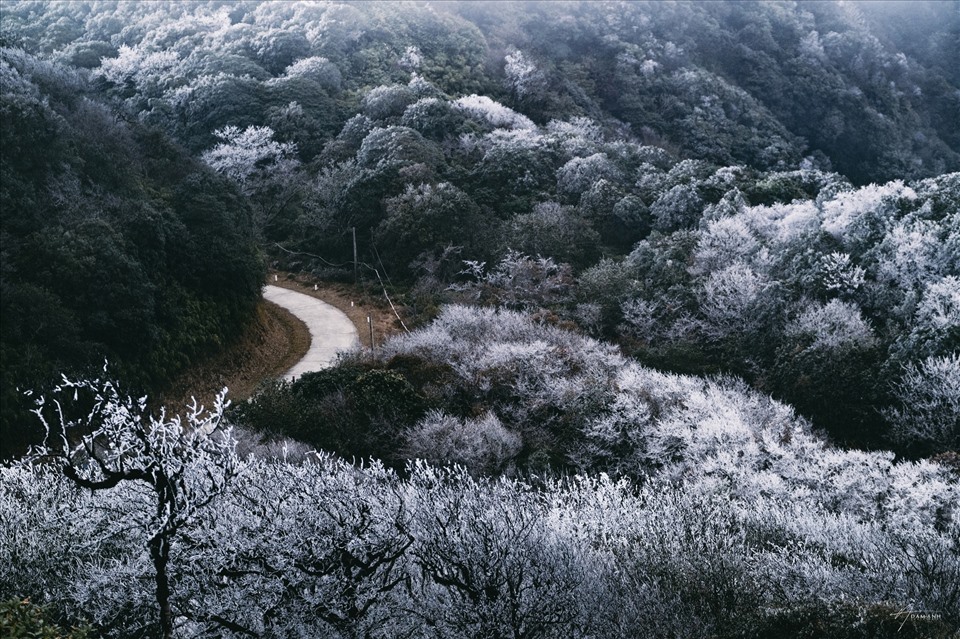
Phia Oac mountain is fully covered in ice and snow (Photo: Collected)
This region captures the wild spirit of Northeast Vietnam, appealing to those who love geology and frontier landscapes in a raw adventure. Combining a Phia Oac trip with a visit to Ban Gioc waterfall creates a compelling itinerary that blends mountain majesty, powerful cascades and Tay-Nung life.
Best time to visit: September to October is beautiful with golden rice fields ready for harvest. December to January is great to hunt for frost and ice on the peak.
See more information: http://caobanggeopark.com/
2. Cultural & spiritual highlights of mountains in Vietnam to visit
A journey to these highlands is also a deep dive into the soul of the country. Here are the must-try cultural experiences when exploring Mountains in Vietnam to visit:
Sacred rituals: Mountains like Fansipan and Ba Den are major pilgrimage sites. Visitors can join locals in lighting incense and praying for peace at the summit pagodas. The energy at the Lady Buddha statue on Ba Den Mountain during the Lunar New Year is particularly powerful.
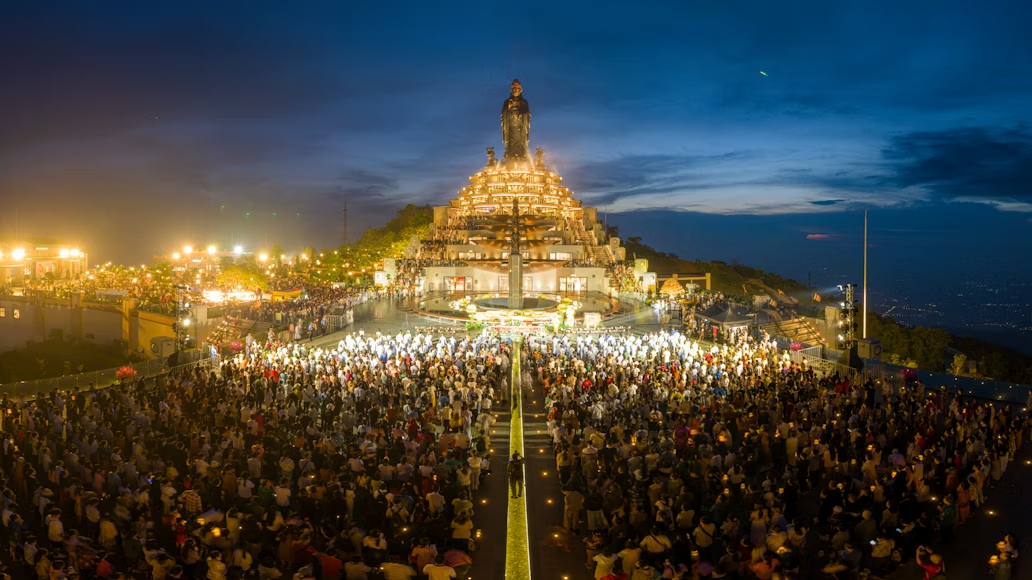
Release wishes and prayers at Ba Den Mountain’s flower lantern ceremony (Photo: Vivu Vietnam/Unsplash)
Ethnic diversity: The peaks are home to vibrant communities. In Sapa (Fansipan), engage with the Hmong and Dao people at local markets. In Da Lat (Langbiang), experience the Gong culture of the K'Ho people, a UNESCO-recognized heritage. These interactions make the list of Mountains in Vietnam to visit truly special.
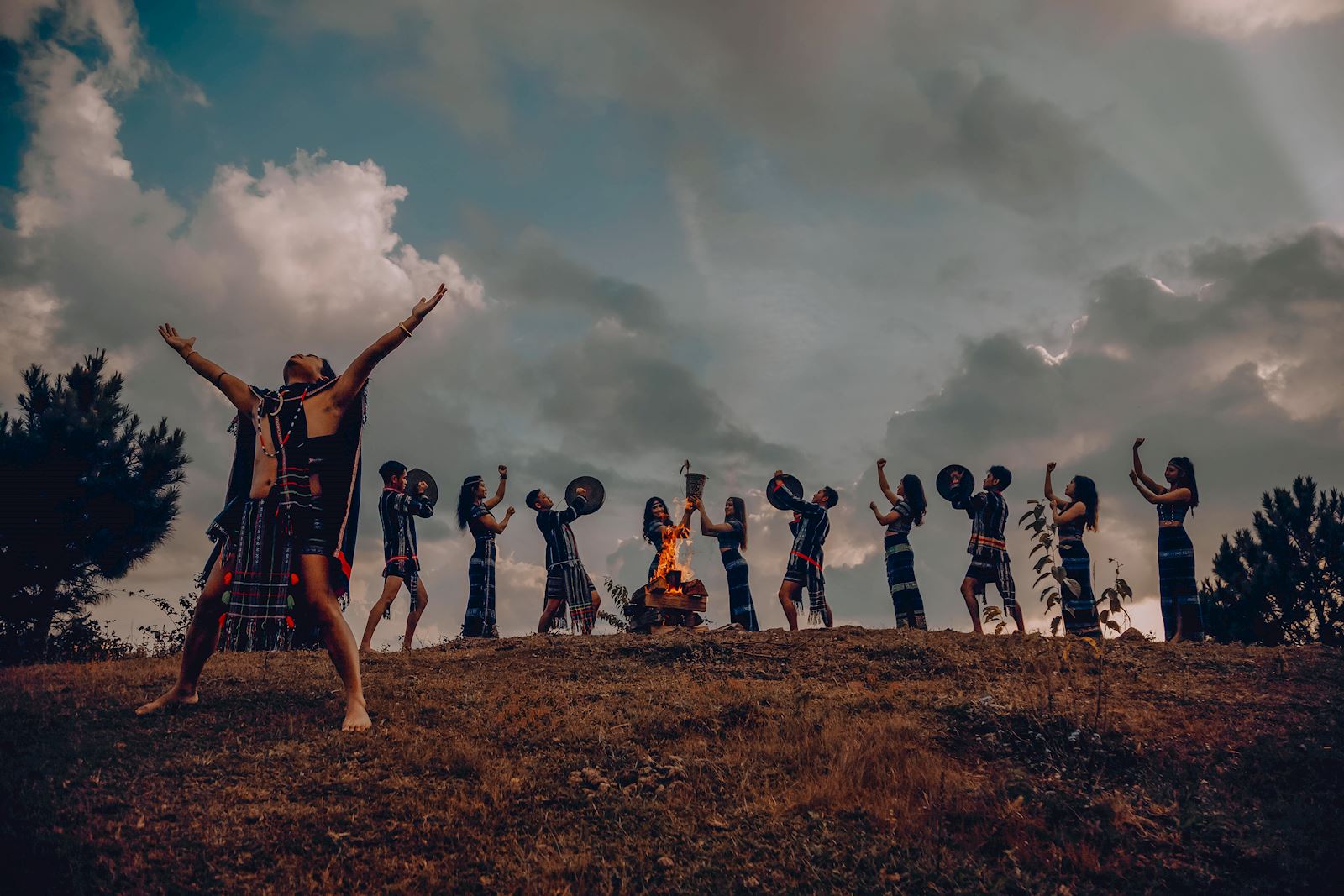
Langbiang comes alive with the rhythmic gongs of the K’Ho people (Photo: Collected)
Festivals in cloud: Timing your visit with local festivals enhances the experience. The "Opening of Heaven's Gate" at Fansipan or the Spring Festival at Ba Den offers a riot of colors, traditional music, and dance that you won't find elsewhere.
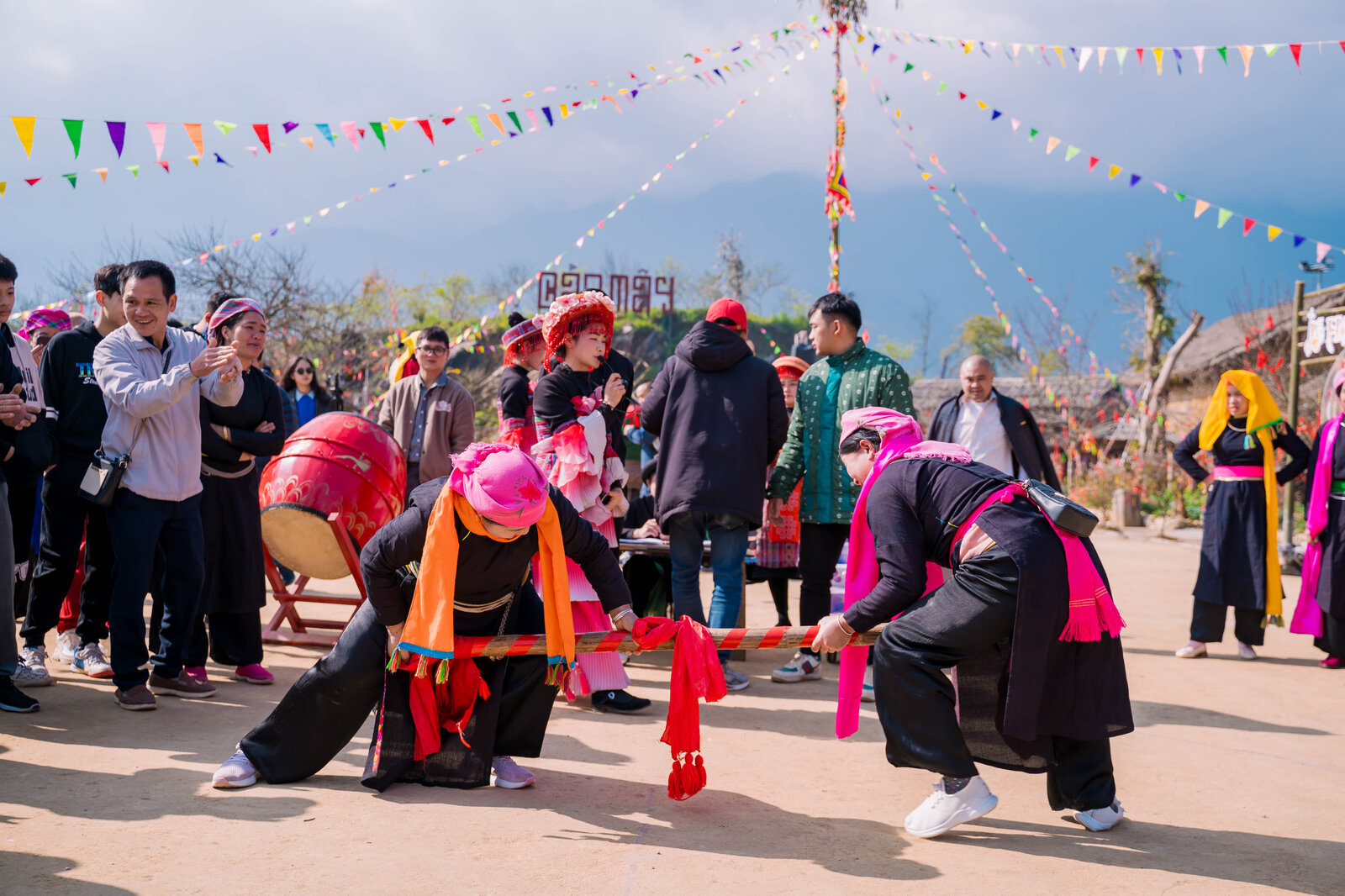
Feel the festive spirit atop Fansipan Mountain (Photo: Collected)
3. Essential travel guide for visiting mountains in Vietnam
Planning a trip to the highlands requires smart preparation. Here is everything you need to know to conquer the best mountains in Vietnam to visit
3.1. General travel tips
Clothing: Weather at high altitudes like Fansipan or Ba Na Hills is unpredictable. Even in summer, the summits may feel chilly. Always pack layers: a moisture-wicking base, a warm fleece, and a waterproof windbreaker. Sturdy footwear is essential for trekking.
Health: Stay hydrated by bringing a reusable water bottle. If you plan to trek, carry a basic first-aid kit. For cable car rides, be prepared for minor changes in ear pressure.
Etiquette: When visiting spiritual sites on these mountains in Vietnam, respect is paramount. Dress modestly by covering your shoulders and knees. Remove hats and sunglasses when praying. Always ask for permission before taking close-up photos of local people or monks.
3.2. Ticket cost
Below is a reference guide with prices for mountains in Vietnam to visit.
| Mountain destination | Ticket type (Standard for adult) | Price (VND) | ||
| Fansipan | Cable car (Roundtrip) | 800.000 (Mon-Fri & Sun) 850.000 (Sat & holidays) | ||
| Funicular | 150.000 (Ascent 120.000 (Descent) | |||
| Ba Den | Entry | 10.000 | ||
| Cable car | Van Son Peak | 400.000 | ||
| Hang Pagoda | 150.000 | |||
| Tam An | 400.000 | |||
| Van Son Peak + Hang Pagoda | 600.000 | |||
| Ba Na | Entry + Cable car (Roundtrip) | 950.000 | ||
| Chua Chan | Cable car | 150.000 (Ascent) | ||
| Langbiang | Entry | 50.000 | ||
| Jeep (to Radar Peak) | 120.000 | |||
| Bach Ma | Entry (National Park) | 65.000 | ||
| Phia Oac | Entry (Geopark) | Free | ||
(Note: These ticket prices are based on 2025 rates and may vary by season, weekends, or holidays. Please check the official destination website for the latest updates)
4. Suggested north-to-south itinerary for mountains in Vietnam to visit
To fully experience the diversity of mountains in Vietnam to visit, consider this streamlined route:
The Northern Leg (adventure & clouds): Start in Sapa to conquer Fansipan. Then, travel northeast to Cao Bang for the raw beauty of Phia Oac. This leg offers the most dramatic rugged scenery.
The Central Leg (heritage & fantasy): Move down to Hue for a nature trek in Bach Ma National Park. Continue to Da Nang to experience the fantasy world of Ba Na Hills.
The Southern Leg (spirituality & romance): Fly to Da Lat for the romantic Langbiang peak. Head south to Dong Nai for a trek up Chua Chan, and finish your journey with a spiritual pilgrimage to Ba Den Mountain in Tay Ninh.
From the snowy northern to the sacred, flower-filled southern summits, mountains in Vietnam to visit offer an endless array of high-altitude adventures. Each mountain tells its own story of geology, spirituality and resilience. Whether you prefer a scenic cable car or a powerful forest trek, the memories will last a lifetime. Pack your bags and start exploring the most stunning mountains in Vietnam to visit today.


