




1. Ba Den Mountain spiritual complex – Tay Ninh
1.1 Linh Son Tien Thach Tu
Linh Son Tien Thach Tu, also known as Ba Pagoda, is the oldest temple within the Ba Den Mountain spiritual complex and an important stop for travelers exploring the best temples in Vietnam. Established in 1763, the temple sits at around 350 metres above sea level and is dedicated to Linh Son Thanh Mau, the revered local deity closely connected with the mountain’s sacred identity.
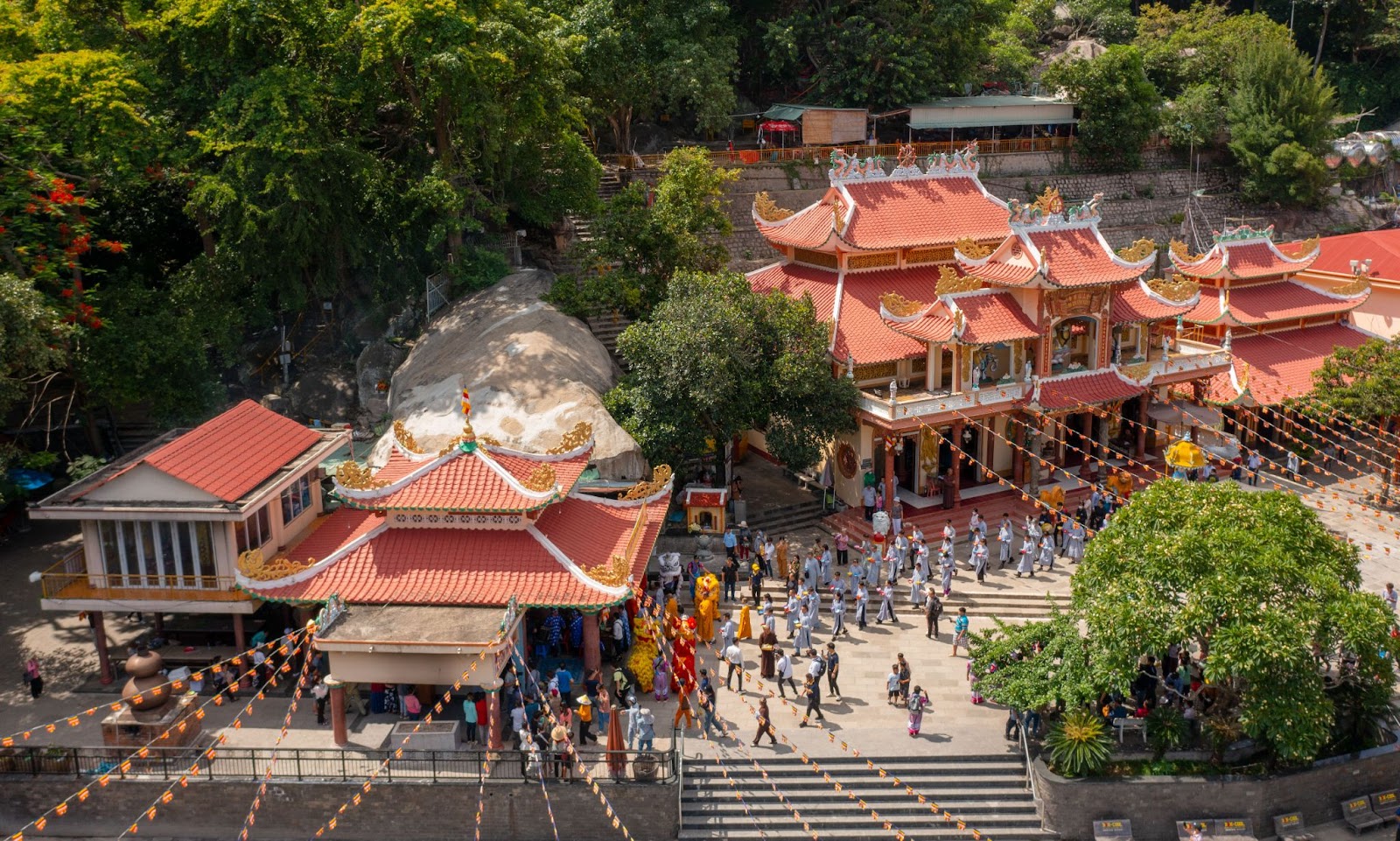
Linh Son Tien Thach Tu inside the sacred cave sanctuary of Ba Den Mountain. (Photo: Collected)
One of the most striking features of the temple is the worship hall of Linh Son Thanh Mau, formed naturally inside a large stone cave. This setting creates an atmosphere that is both solemn and intimate, with the original rock formations preserved as part of the sanctuary. Within the cave, two green stone pillars from the era of Master Tam Hoa remain intact, each carved with elegant dragon motifs that reflect the craftsmanship and religious devotion of earlier centuries.
The temple’s layout includes multiple worship spaces arranged across terraces carved into the mountainside. Statues of the Buddha and various Bodhisattvas are placed throughout the halls, many crafted with refined details that highlight traditional southern Vietnamese Buddhist aesthetics. Incense smoke, the echo of temple bells and the cool air of the rock chamber together create a calm, meditative environment for pilgrims.
1.2 Linh Son Hoa Dong Tu
Linh Son Hoa Dong Tu is one of the quieter yet spiritually significant temples within the Ba Den Mountain complex. Located along the mid-mountain route, the temple sits in a peaceful forested area and offers a distinctly calm atmosphere compared with the busier shrines nearby. With an area of around 200 m², it holds an important place in the pilgrimage sequence for visitors exploring the best temples in Vietnam, serving as a moment of pause between the more prominent worship sites.
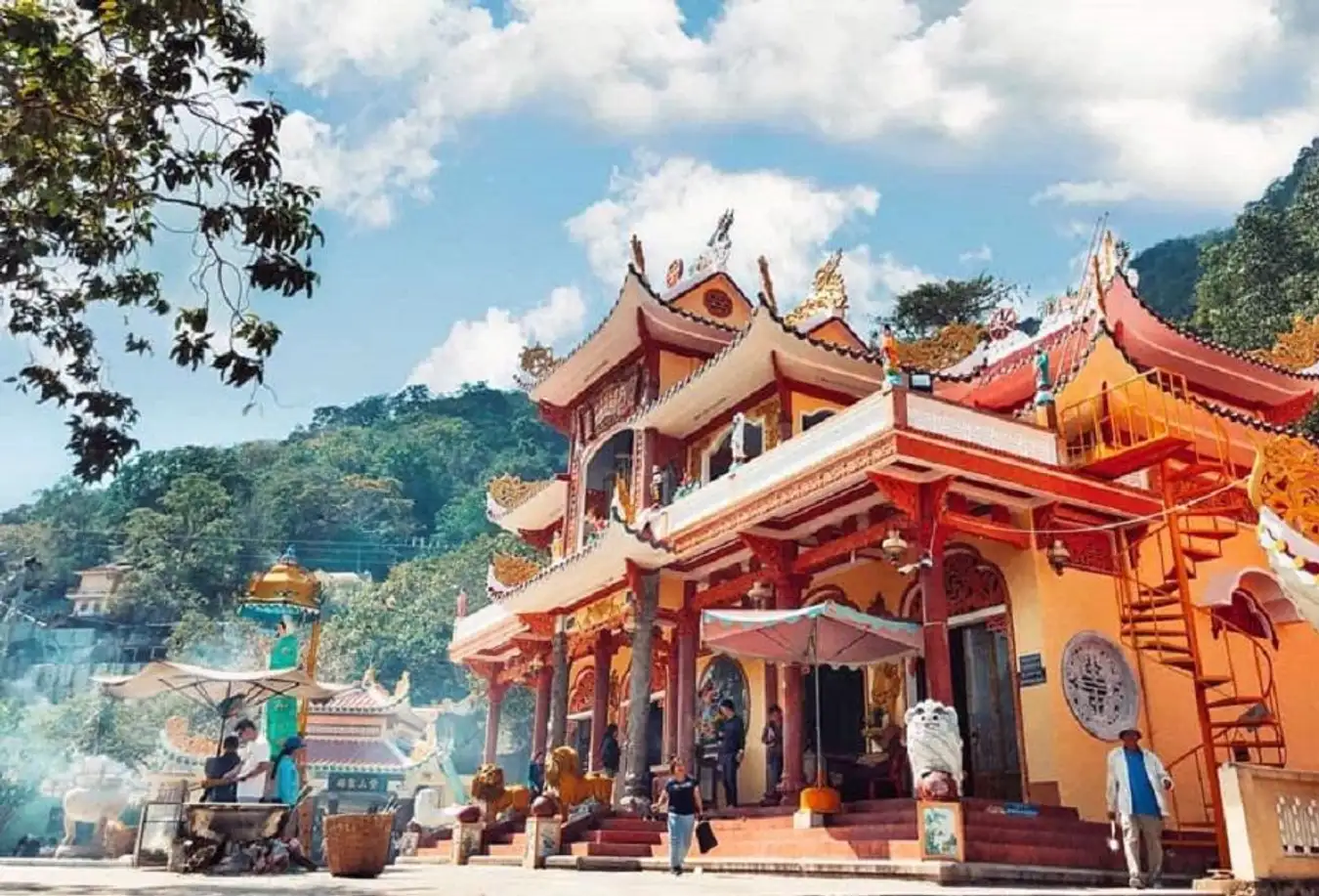
The peaceful forest-framed courtyard of Linh Son Hoa Dong Tu. (Photo: Collected)
Rebuilt on the foundation of an older structure that was damaged during wartime, Linh Son Hoa Dong Tu maintains the traditional architectural style of southern Vietnamese pagodas. Its layout typically includes a front hall and main sanctuary arranged in a linear sequence, with timber pillars and simple carved details that reflect a modest yet enduring aesthetic. The temple grounds are framed by verandas and shaded pathways, allowing visitors to move gently through the space without disruption from the larger crowds elsewhere on the mountain.
Most visitors stop at Linh Son Hoa Dong Tu to offer incense, recite prayers or simply rest before continuing upward to the higher temples and the summit statues. With its understated presence and tranquil surroundings, the temple plays a subtle but essential role in the spiritual rhythm of Ba Den Mountain and remains a gentle highlight for those seeking authentic experiences among the best temples in Vietnam.
1.3 Linh Son Long Chau Tu
Linh Son Long Chau Tu, often known as the Hang Temple, is one of the most distinctive temples on Ba Den Mountain and a meaningful stop for visitors exploring the best temples in Vietnam. The temple was originally formed from a natural cave near the Suoi Vang valley and became an established place of worship in the 19th century. It was later restored in 1995, keeping the original cave structure while adding essential temple elements to support regular worship and pilgrim visits.
The atmosphere at Long Chau Tu is noticeably different from other temples in the complex. Its cool, stone-lined interior creates a quiet and enclosed space where visitors can disconnect from the busier routes on the mountain. The temple’s simple layout follows the shape of the cave, giving it a natural charm that feels more like a hidden sanctuary than a traditional pagoda. This unique character makes it especially appealing for travelers looking for varied cultural experiences among the best temples in Vietnam.
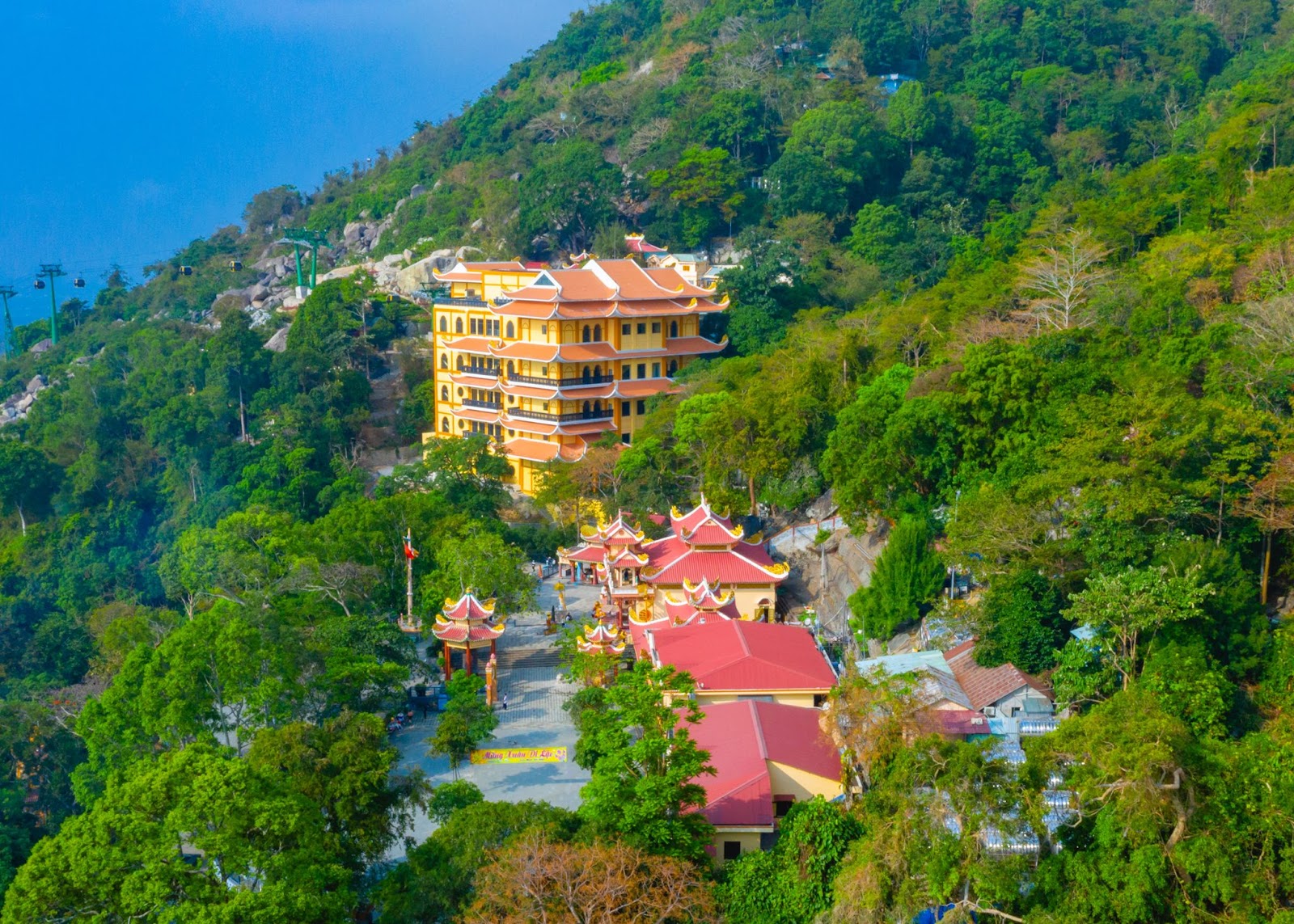
Linh Son Long Chau Tu nestled by the mountain (Photo: Collected)
Reaching the temple requires a short but steep climb – roughly one hundred stone steps from Linh Son Tien Thach Tu. The ascent adds to the sense of entering a more secluded location. For those traveling by cable car, the Chua Hang line provides convenient access, with a clearly marked path leading from the station to the temple area.
In addition to its spiritual value, Linh Son Long Chau Tu also carries historical meaning. A memorial stele within the temple grounds honours 181 reconnaissance soldiers who lost their lives during wartime operations around Ba Den Mountain. This combination of cultural, spiritual and historical significance gives Long Chau Tu a well-rounded identity within the wider temple system.
Because of its natural cave design, peaceful setting and strong historical associations, Linh Son Long Chau Tu remains a memorable part of any pilgrimage on Ba Den Mountain and a notable stop within the best temples in Vietnam.
1.4 Linh Son Phuoc Trung Tu
Linh Son Phuoc Trung Tu, commonly known as Central Temple, is the first major worship site visitors encounter at the foot of Ba Den Mountain. Founded in 1876, the temple plays an important role as the starting point for most pilgrims before they begin their ascent to the upper shrines. Its location and long-standing history make it a meaningful introduction to the wider spiritual landscape for anyone exploring the best temples in Vietnam.
The temple sits on a large compound of over 2,300 m², with a main hall measuring around 48 metres in length. The hall follows the traditional Vietnamese pagoda layout, featuring wooden beams, simple carved details and an open worship space that allows natural light to enter. Because of its spacious design, the temple can welcome large numbers of visitors during festival days without losing its sense of calm and order.

The spacious entrance hall welcoming pilgrims at Linh Son Phuoc Trung Tu. (Photo: Collected)
Inside the main hall, statues of the Buddha and the Amitabha Trinity are placed alongside images of key Buddhist disciples. Decorative reliefs on the high walls illustrate important figures such as Ananda and Mahakasyapa, helping visitors understand the temple’s roots in the Northern Buddhist tradition. Chua Trung is also known for its role in community life: historical accounts note that the temple hosted several resistance activities during the anti-French period, and today it regularly organises charity programmes for local residents.
With its accessible location, spacious design and cultural importance, Linh Son Phuoc Trung Tu offers a grounded beginning to the mountain pilgrimage and stands as a notable stop for travellers discovering the best temples in Vietnam.
1.5 Quan Am Temple
Quan Am Temple, also known as Ba Co Cave, is the highest temple in the mid-mountain area of Ba Den Mountain and a key stop for visitors exploring the best temples in Vietnam. Reached by a steep stairway that begins near Linh Son Long Chau Tu, the temple sits in a quiet rocky landscape shaped by natural stone formations. Because of its elevation and more secluded location, the temple offers a calmer atmosphere compared with the busier shrines lower on the mountain.
The temple is dedicated to Avalokitesvara Bodhisattva, the symbol of compassion in Mahayana Buddhism. A series of small altars and man-made cave spaces surround the main sanctuary, many formed from stacked natural rocks that have been left intact. This gives the temple a distinct character: it feels more like a spiritual hideaway carved into the mountainside than a conventional pagoda. Soft lighting, the sound of water features and the cool mountain air add to the sense of serenity that many visitors appreciate.

The mountainside sanctuary at Quan Am Temple. (Photo: Collected)
Quan Am Temple is often considered the “transition point” between the mid-mountain cluster and the upper pilgrimage route. Those who make the climb usually spend extra time here, either to rest or to offer incense before continuing toward the summit. Because the temple is less crowded, it provides an ideal space for reflection and for experiencing the quieter side of Ba Den Mountain’s spiritual heritage.
Although the temple is accessed mainly by foot, the nearby cable-car stations make the journey more manageable for a wide range of visitors. Its combination of natural surroundings, calm atmosphere and elevation makes Chua Quan Am a memorable stop within the wider complex and a meaningful part of the journey for travellers seeking authentic spiritual sites among the best temples in Vietnam.
1.6 Visiting the summit spiritual complex
The summit of Ba Den Mountain brings the pilgrimage to its most impressive point, where large-scale Buddhist artworks and open mountain views create a dramatic final chapter for visitors exploring the best temples in Vietnam. Thanks to the Van Son cable-car line, reaching the summit is easy for most travelers, with a short network of paved walkways connecting all main spiritual sites.
The most iconic landmark at the summit is the Tay Bo Da Son Bodhisattva statue. Standing 72 metres tall and cast from red bronze, it is recognised as one of the tallest mountaintop Bodhisattva statues in Asia. The statue sits at nearly 1,000 metres above sea level, facing the vast plains of Tay Ninh. Pilgrims often gather here to offer prayers, take in the panoramic scenery or simply enjoy the peaceful atmosphere at the highest point of the complex.
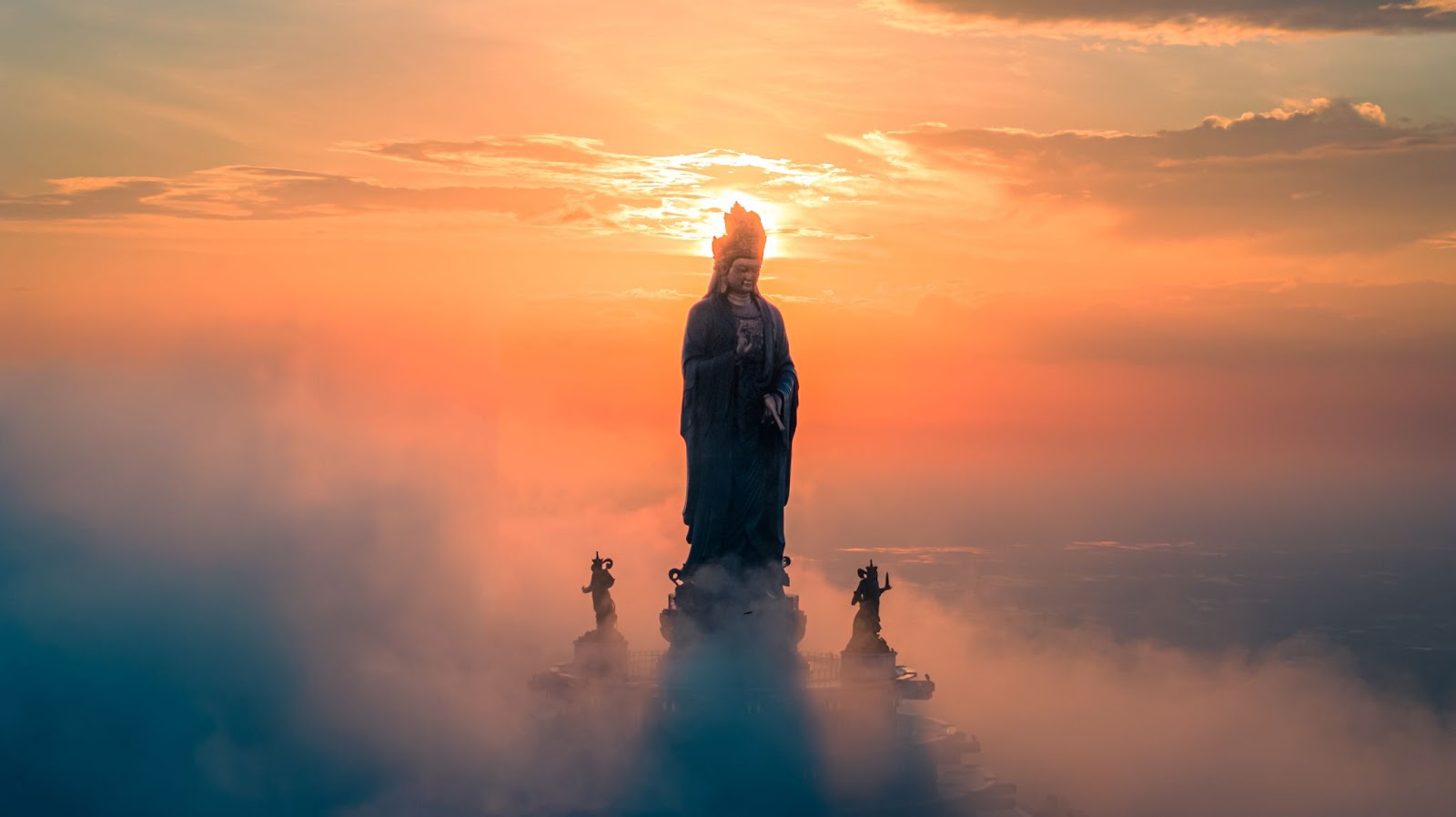
The Tay Bo Da Son Bodhisattva Statue rising above the summit of Ba Den Mountain. (Photo: Vi Vu Vietnam/Unsplash)
Not far from the main statue stands the large seated Maitreya Bodhisattva statue, positioned on a terrace at more than 900 metres. The image of Maitreya – symbolising joy, hope and future prosperity – is one of the most photographed spiritual icons on the mountain. The statue area is accessible directly from the cable-car arrival zone, making it an easy but meaningful stop for visitors of all ages.
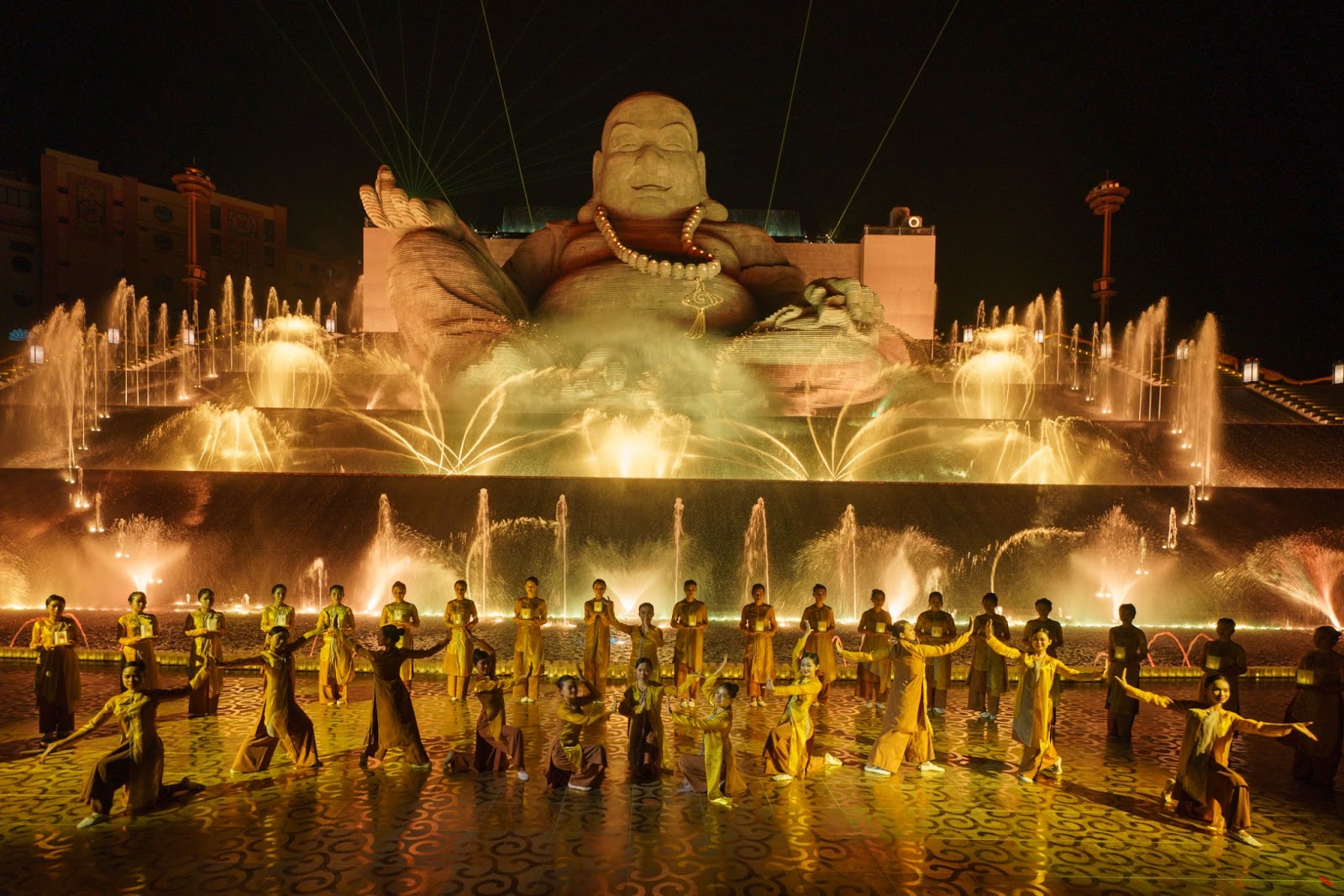
The Maitreya Bodhisattva Statue stands for joy and blessings for pilgrims. (Photo: Vi Vu Vietnam/Unsplash)
A highlight of visiting the summit is the lantern-offering ceremony at Tay Bo Da Son Square. On festival days and selected weekends, thousands of lanterns are lit, creating a sea of warm light beneath the night sky. The ceremony draws both pilgrims and casual visitors, offering a rare chance to participate in a mass spiritual ritual while surrounded by some of the best temples in Vietnam.
Together, the summit statues and ceremonial spaces complete the spiritual journey at Ba Den Mountain, forming a powerful blend of cultural devotion and natural beauty.
2. Fansipan peak spiritual complex – Lao Cai
2.1 Bao An Thien Tu
Bao An Thien Tu, often referred to as the Trinh Temple of the Fansipan spiritual complex, is the first pagoda visitors encounter after stepping out of the cable car. Designed as the “presentation temple” of the complex, it serves as the opening point for pilgrims before they continue toward the higher-altitude shrines. Its convenient location and calm atmosphere make it a natural introduction for those exploring the best temples in Vietnam.
The temple sits on a broad stone terrace overlooking the Hoang Lien Valley. Its architecture follows the traditional northern Vietnamese pagoda style, with tiled roofs, wooden columns and carved details that reflect the simplicity and dignity typical of mountain temples. The main sanctuary is compact but well-proportioned, creating a welcoming space for worship without overwhelming visitors who have just arrived from the lower altitudes.
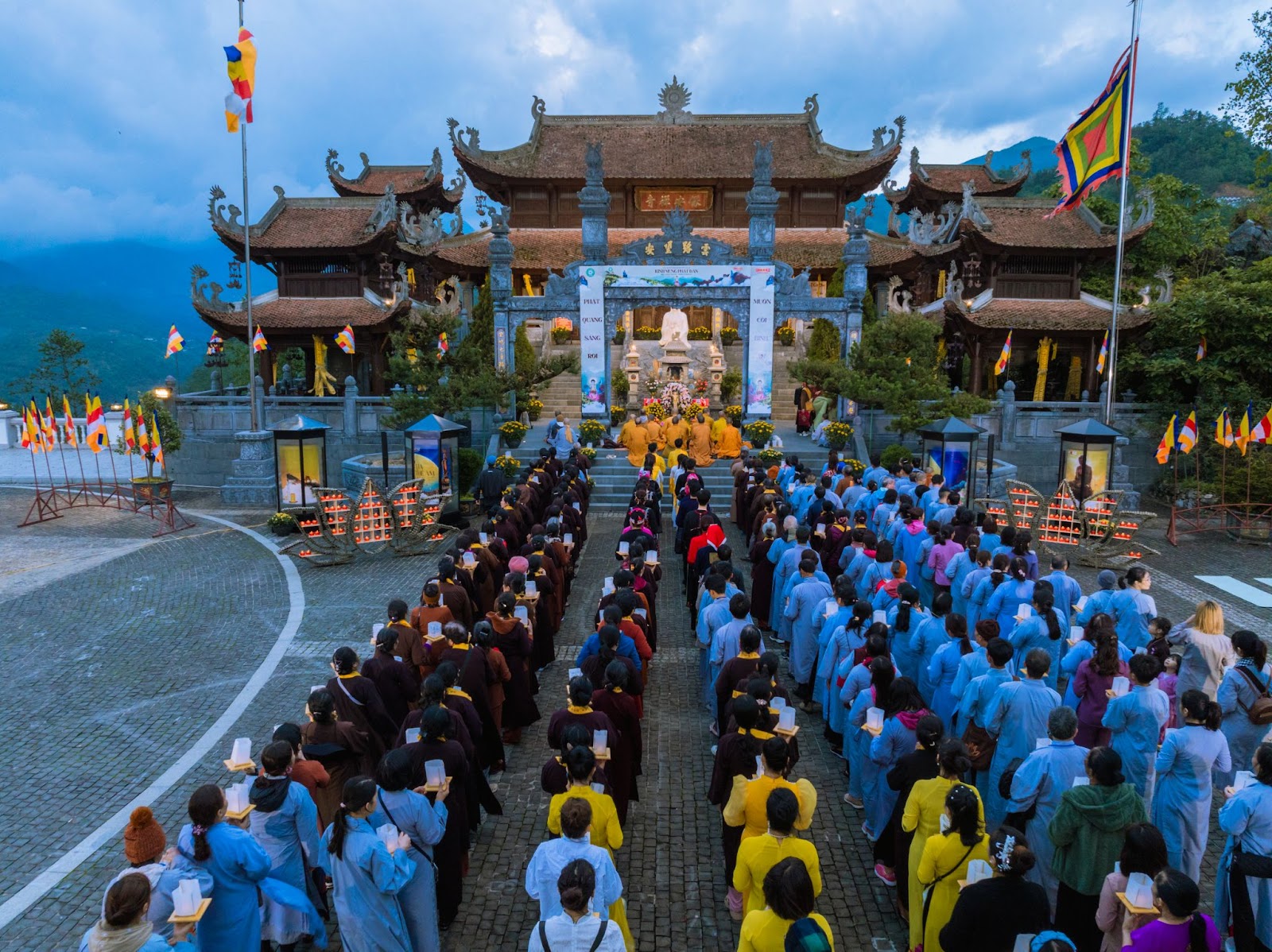
Bao An Thien Tu, the welcoming gateway temple marking the beginning of the Fansipan pilgrimage. (Photo: Collected)
Inside the main hall, Bao An Thien Tu enshrines Shakyamuni Buddha along with supporting Bodhisattva statues commonly seen in Vietnamese Mahayana worship. The layout is straightforward, allowing visitors to comfortably offer incense or make a brief prayer before continuing their ascent. Because the temple sits below the cloud line on many days, the air is cool but not as thin as the upper levels of Fansipan, making it especially suitable for older visitors or families with children.
As the first spiritual stop on the route, Bao An Thien Tu plays an essential role in establishing the rhythm of the Fansipan pilgrimage. Its approachable design, convenient location and serene atmosphere make it a meaningful beginning for anyone seeking authentic spiritual experiences among the best temples in Vietnam.
2.2 Bich Van Thien Tu
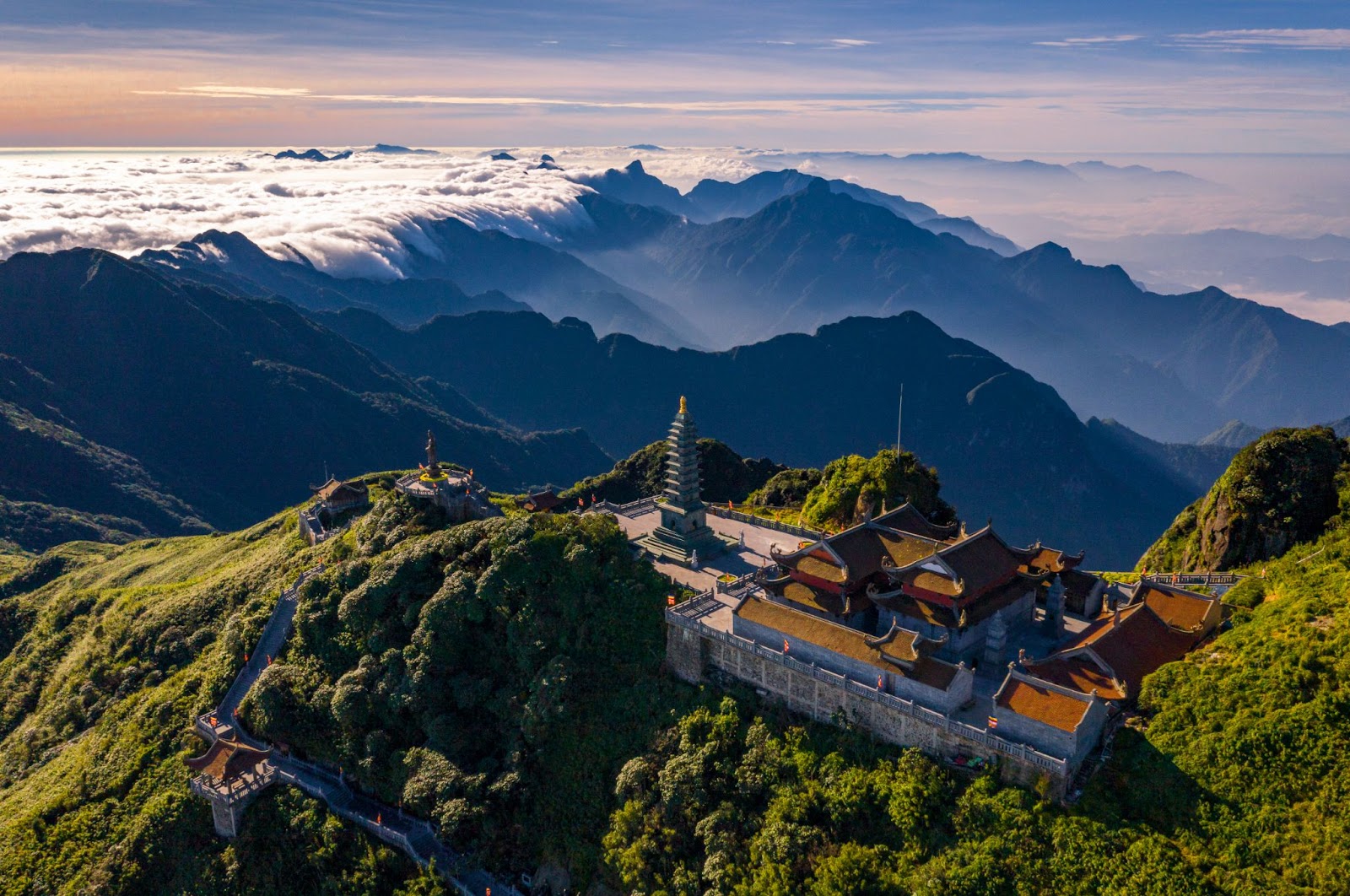
Bich Van Thien Tu is one of the most recognisable temples on the Fansipan spiritual route and a meaningful stop for visitors exploring the best temples in Vietnam. Located at an elevation of more than 3,000 metres, the temple sits above the cloud line for much of the year, giving it the quiet, mist-covered atmosphere that has become symbolic of the Fansipan pilgrimage. This high-altitude setting also provides broad views over the Hoang Lien Son mountain range, making Bich Van Thien Tu both spiritually and visually striking.
Bich Van Thien Tu rising above the cloudline, where mist and mountain worship meet. (Photo: Collected)
Architecturally, the temple follows the traditional northern Vietnamese pagoda layout, with curved tiled roofs, wooden pillars and wide stone courtyards arranged across multiple terraces. The main hall stands on a spacious stone platform that opens directly to the surrounding landscape. Inside, worship is centred on a statue of Shakyamuni Buddha, accompanied by other Bodhisattva figures, arranged in a simple and respectful manner suitable for meditation and quiet prayer.
With its scenic setting, traditional architecture and peaceful character, Bich Van Thien Tu is one of the highlights of the Fansipan complex and remains a memorable stop for travellers seeking meaningful experiences among the best temples in Vietnam.
2.3 Kim Son Bao Thang Tu
Kim Son Bao Thang Tu is the central temple of the Fansipan spiritual complex and one of the most significant stops for travellers exploring the best temples in Vietnam. Located high on the mountain at an altitude of more than 3,000 metres, the temple sits within a dramatic landscape where clouds often drift across stone courtyards and wooden rooftops. Its location and scale make it the spiritual heart of the Fansipan pilgrimage route.
The temple is built in the style inspired by the Tran Dynasty, known for its simplicity, clean architectural lines and use of natural materials. Stone stairways, wooden structures and grey tiled roofs are arranged across several tiers, blending seamlessly with the rugged mountain terrain. The complex includes a front worship hall, a main sanctuary and surrounding terraces where visitors can rest, observe the view or take part in small rituals.
Kim Son Bao Thang Tu, the grand central sanctuary of the Fansipan spiritual complex. (Photo: Collected)
Inside the main hall, the central worship space is dedicated to Shakyamuni Buddha, supported by traditional Bodhisattva statues. The atmosphere is calm and dignified, with incense drifting through the wooden beams and soft light filtering from the open corridors. Many visitors describe this temple as the moment where the spiritual tone of the Fansipan journey becomes most pronounced.
As the largest and most architecturally impressive temple on Fansipan, Kim Son Bao Thang Tu serves as a focal point for worship and reflection. Its historical design influences, elevated location and peaceful atmosphere make it an essential stop for anyone seeking a complete cultural and spiritual experience among the best temples in Vietnam.
2.4 Arhat Path
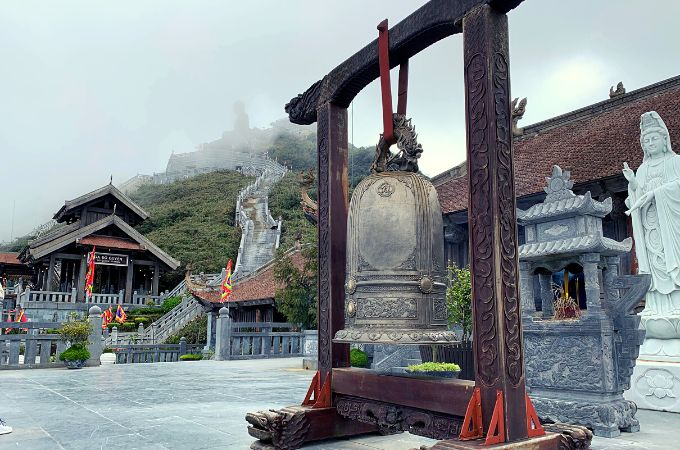
The Arhat Path is one of the most distinctive features of the Fansipan spiritual complex and an essential part of the journey for visitors exploring the best temples in Vietnam. This stone walkway connects the central temples – especially Kim Son Bao Thang Tu – with the higher spiritual sites near the summit. What makes the Arhat Path memorable is the row of 18 Arhat statues placed on both sides of the walkway, each representing a respected disciple of the Buddha.
The Arhats are sculpted in traditional Vietnamese style, with expressive facial features and dynamic postures that symbolise different aspects of Buddhist wisdom and practice. Each statue stands on its own stone pedestal along the mountain slope, allowing visitors to observe them closely while also taking in the surrounding views of the Hoang Lien Son range. The combination of sculpture, landscape and elevation gives the Arhat Path a solemn but inspiring atmosphere.
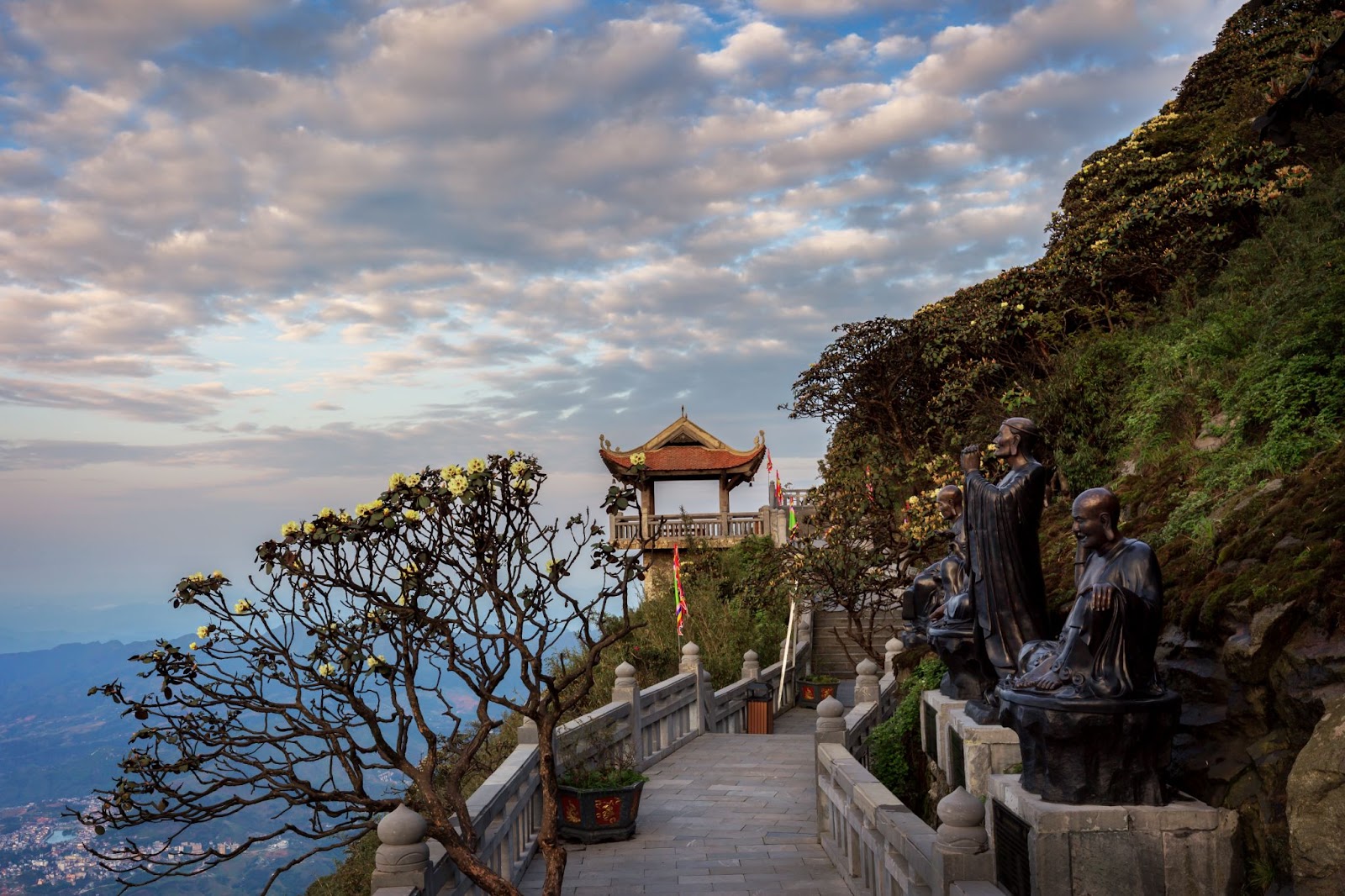
The Arhat Path is lined with 18 expressive Arhat statues guiding pilgrims toward the upper shrines. (Photo: Collected)
Walking along the path is a meaningful part of the Fansipan pilgrimage. The route is paved with stone steps and handrails, making it secure and accessible for most visitors. However, the cool mountain air and shifting clouds create a constantly changing environment – sometimes clear and sunny, sometimes fully wrapped in mist. This natural atmosphere enhances the spiritual feel of the walk and encourages a slower, more reflective pace.
For many travelers, the Arhat Path is where the Fansipan experience becomes the most immersive. It acts as a physical and symbolic bridge between the mid-mountain temples and the summit landmarks. Visitors often stop to photograph the statues, offer a quiet prayer or simply enjoy the peaceful mountain scenery.
2.5 Avalokitesvara Bodhisattva Statue & Great Amitabha Buddha Statue
The Fansipan summit area is home to two of the most iconic spiritual monuments in northern Vietnam: the Avalokitesvara Bodhisattva statue and the Great Amitabha Buddha statue. The Avalokitesvara Bodhisattva statue stands along the upper pathway leading toward the summit. Set on an open stone terrace, the statue depicts the Bodhisattva of Compassion in a calm, upright posture, with flowing robes and soft features that reflect traditional Vietnamese Mahayana aesthetics. Its elevated location allows visitors to pause, offer incense and enjoy panoramic views of the Hoang Lien Son range. When clouds pass through, the figure becomes partially covered in mist, adding a serene and contemplative atmosphere.
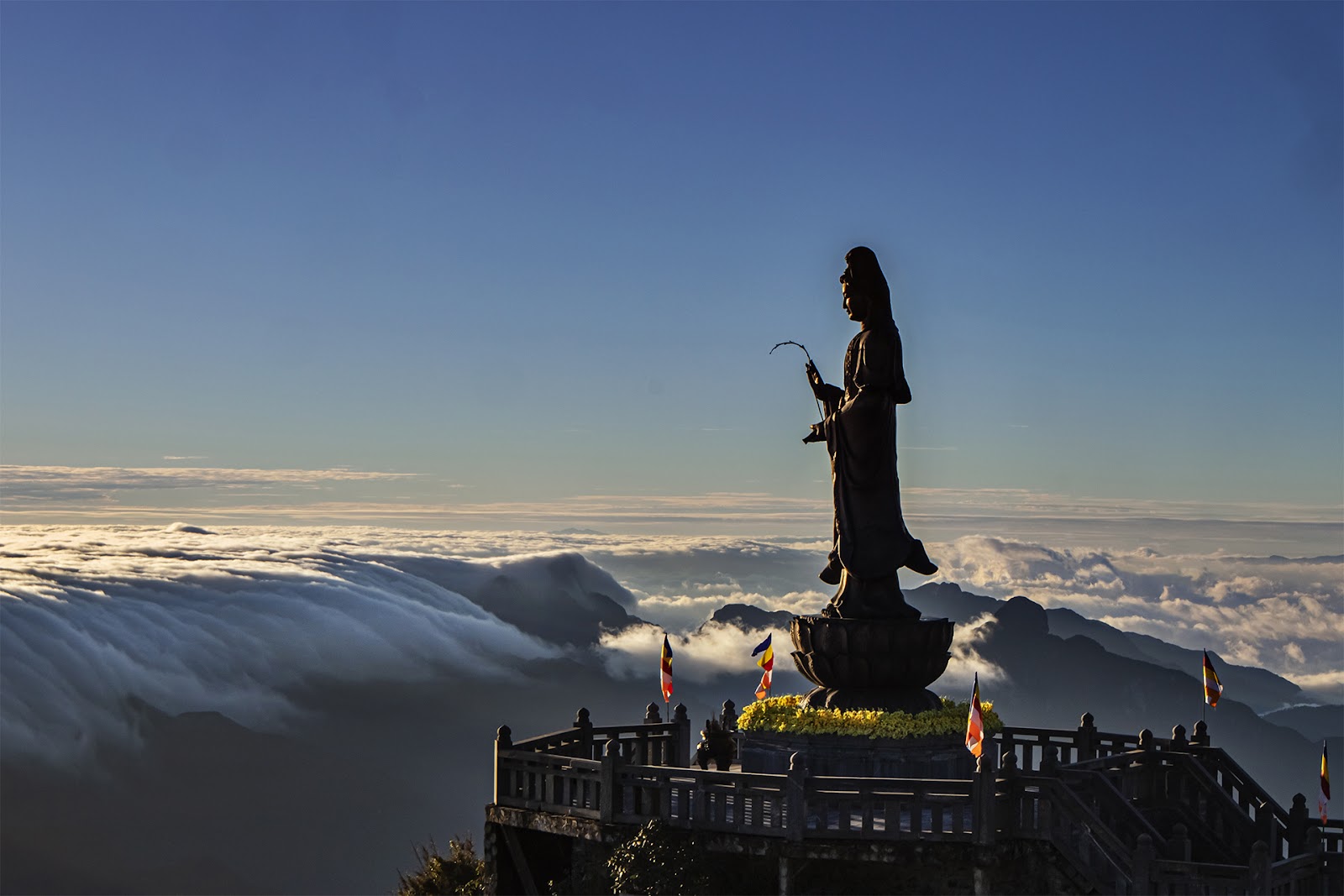
The Avalokitesvara Bodhisattva statue standing peacefully along the high-altitude pathway of Fansipan. (Photo: Vi Vu Vietnam/Unsplash)
Above this terrace lies the Great Amitabha Buddha Statue, the most recognisable symbol of Fansipan. Standing 21.5 metres tall and built from thousands of interlocking bronze panels, the statue sits at an altitude of more than 3,000 metres, making it one of the highest bronze Buddha statues in Vietnam. Amitabha is shown seated in meditation, facing outward toward the mountain peaks. The combination of scale, craftsmanship and changing summit weather gives the statue a powerful presence that many visitors consider the highlight of their Fansipan journey.
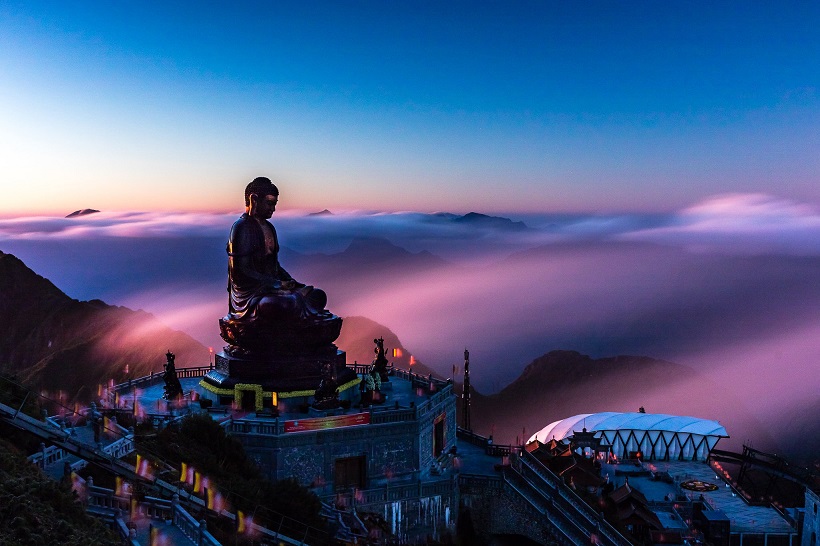
The Great Amitabha Buddha statue, a monumental bronze icon at Fansipan.(Photo: Vi Vu Vietnam/Unsplash)
Both statues are accessible via the stone stairways and terraces that connect the upper part of the mountain. Together, they form the spiritual crown of Fansipan and offer meaningful cultural experiences for travellers discovering the best temples in Vietnam.
3. The Three Linh Ung Pagodas – Da Nang
3.1 Linh Ung Pagoda – Son Tra Peninsula
Linh Ung Pagoda – Son Tra is the most iconic of Da Nang’s three Linh Ung temples and one of the most photographed spiritual sites among the best temples in Vietnam. Located on Son Tra Peninsula, the pagoda overlooks the East Sea and faces the city from a commanding height. Its most defining feature is the 67-metre Avalokitesvara Bodhisattva statue, the tallest of its kind in Vietnam. The statue stands on a lotus platform and can be seen from many points along My Khe Beach, acting as a protective symbol for fishermen and sailors.
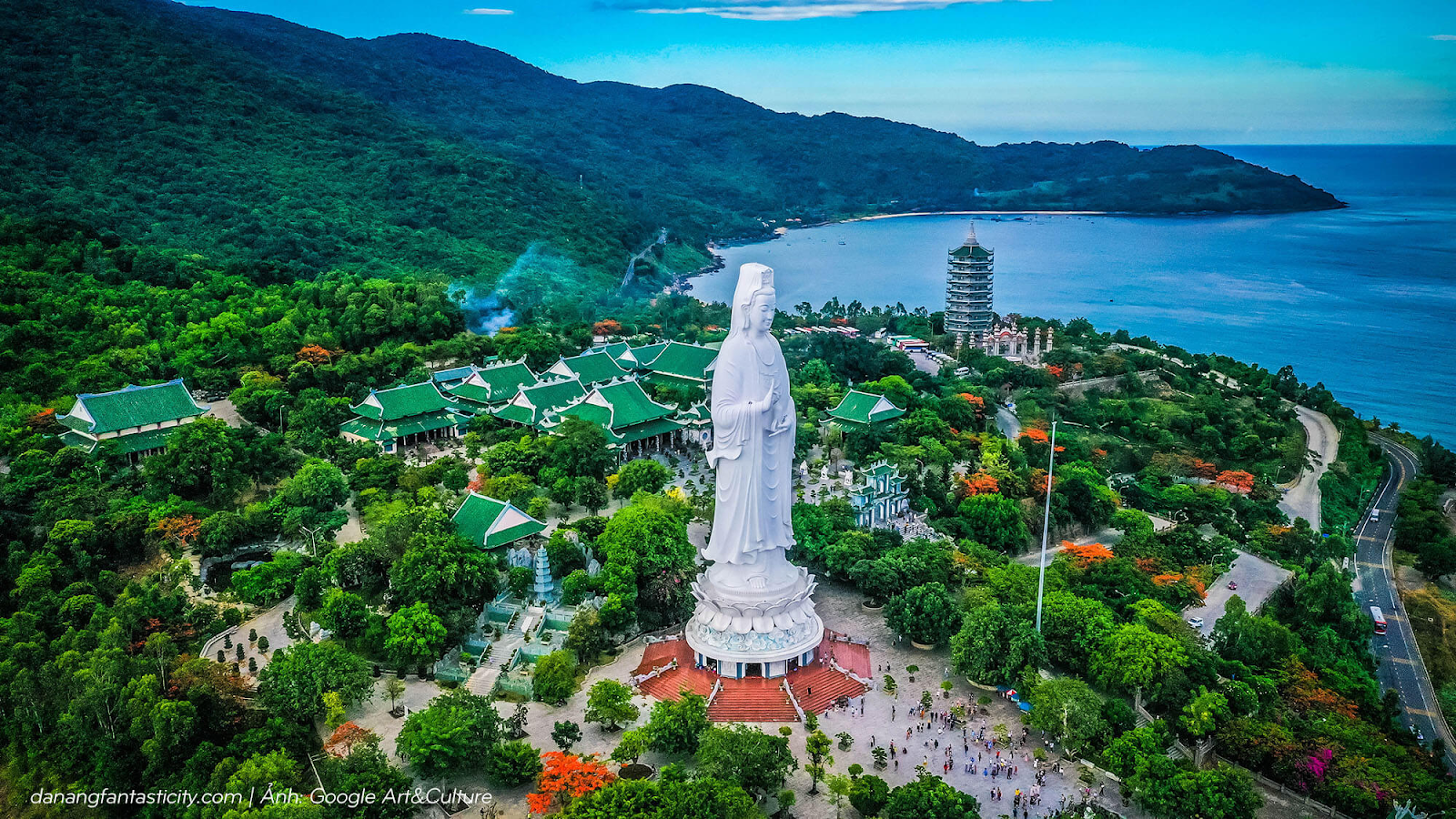
Linh Ung Son Tra with its 67-metre Avalokitesvara statue watching over Da Nang and the sea. (Photo: Collected)
The temple grounds are expansive, with courtyards, bonsai gardens, and a main hall featuring refined wooden details typical of central Vietnamese Buddhist architecture. Waves, sea breeze, and the sound of temple bells blend together to create a peaceful atmosphere that attracts both pilgrims and casual visitors. The pagoda is also known for its panoramic views: sunrise over the sea, Da Nang’s skyline, and the curves of the peninsula all contribute to its appeal. Linh Ung Son Tra is not only a religious site but also a cultural anchor that reflects Da Nang’s coastal identity and spiritual heritage.
3.2 Linh Ung Pagoda – Marble Mountains (Ngu Hanh Son)
Linh Ung Pagoda – Marble Mountains, located at Thuy Son, one of the five mountains in the Marble Mountains cluster, is the oldest and most historically rooted of the three Linh Ung temples. Unlike the open coastal atmosphere of Son Tra, this pagoda is nestled among caves, stone steps, and ancient karst formations. It embodies a quieter, more introspective character, making it a meaningful stop for travellers exploring the best temples in Vietnam.
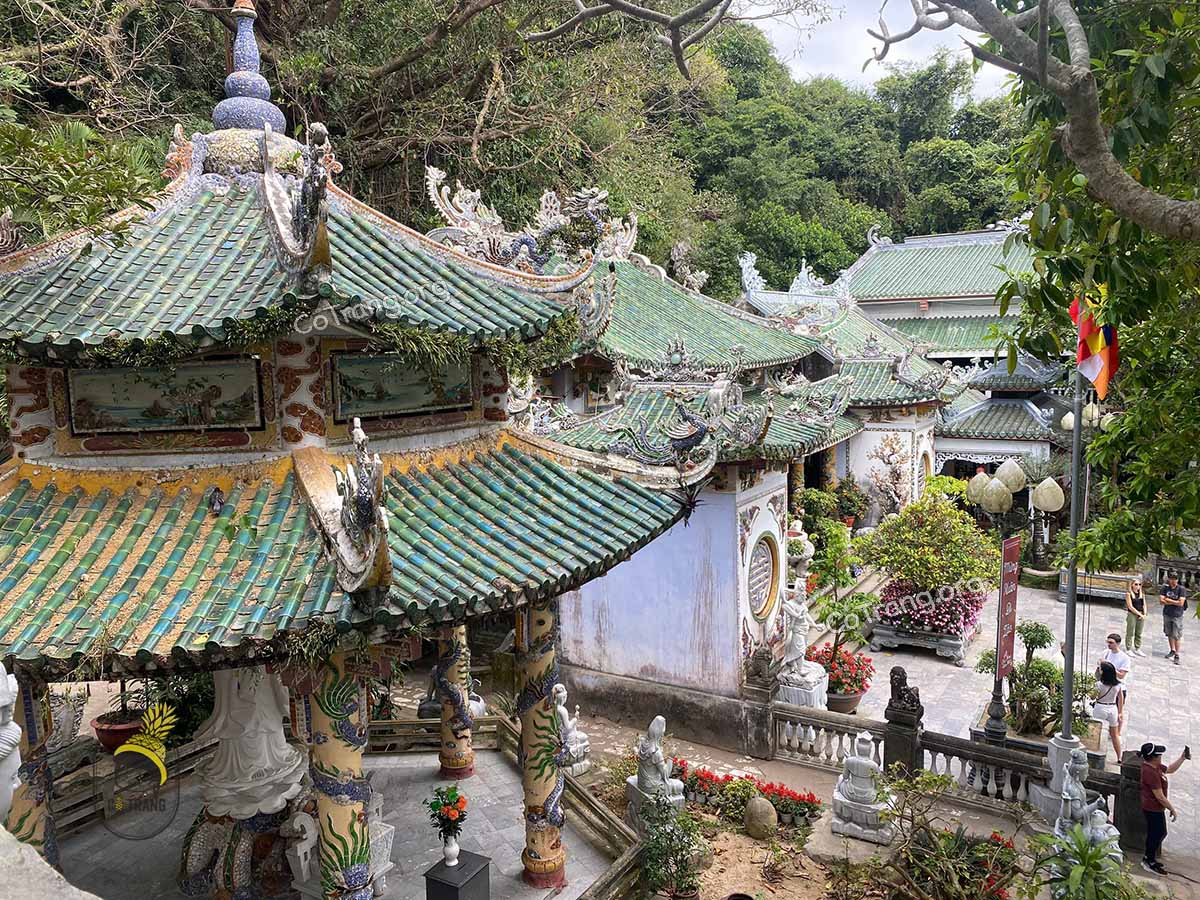
Linh Ung Marble Mountains hidden among caves and karst cliffs, carrying centuries of spiritual devotion. (Photo: Collected)
The pagoda features traditional architectural elements, including stone-tiled roofs, wooden columns, and a deep worship hall dedicated to Shakyamuni Buddha. Surrounding the temple are limestone caves such as Huyen Khong and Linh Nham, where local worship practices have existed for centuries. Lantern light, natural shafts of sunlight through cave openings, and the scent of incense give the area a mystical atmosphere not found in many other pagodas. Stone-carving villages nearby also add cultural depth, linking the temple to the long-standing artistry of the region.
3.3 Linh Ung Pagoda – Ba Na Hills
Linh Ung Pagoda at Ba Na Hills is one of the most distinctive spiritual landmarks in Central Vietnam and a memorable stop for travelers exploring the best temples in Vietnam. Sitting at an altitude of nearly 1,500 metres, the pagoda occupies a broad, open terrace overlooking the Truong Son range. Its atmosphere is bright and airy, unlike many mountain pagodas that sit deep in the forest, making the temple accessible and welcoming to visitors of all ages.
The highlight of Linh Ung Pagoda is its 27-metre white Shakyamuni Buddha statue, positioned on a lotus pedestal at the centre of a spacious stone courtyard. With clear views toward Da Nang and surrounding valleys, the statue has become one of the most recognisable symbols of Ba Na Hills. The architecture of the temple reflects the traditional style of Central Vietnam, with clean rooflines, pale wooden interiors and subtle decorative motifs inspired by local heritage. Inside the main hall, visitors can light incense, observe the Buddha images or simply enjoy the calm atmosphere that contrasts with the lively attractions of Ba Na Hills.
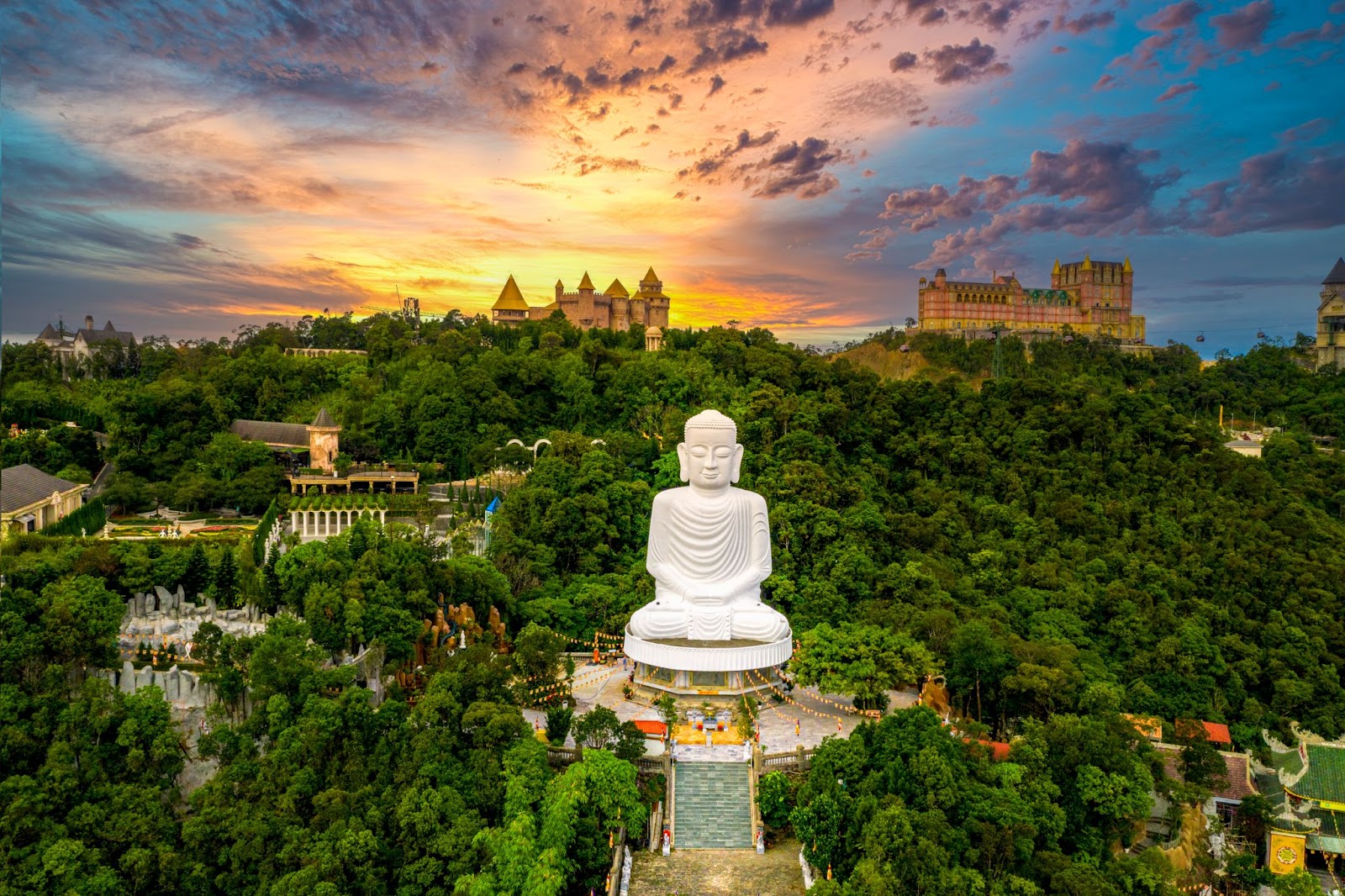
The mountaintop courtyard of Linh Ung Ba Na Hills, home to its iconic white Shakyamuni Buddha. (Photo: Collected)
Reaching the pagoda is convenient thanks to the cable-car system. From the main station, visitors walk a short, landscaped path that leads directly to the temple. This easy access makes Linh Ung Pagoda a favourite for those who want to incorporate a spiritual pause in their Ba Na Hills itinerary.
Linh Ung Ba Na Hills is one of Da Nang’s three Linh Ung pagodas, together forming a symbolic spiritual triangle that locals believe protects the city from three directions: the sea (Son Tra), the land (Marble Mountains) and the mountain sky (Ba Na Hills). While each temple has its own character, Linh Ung Ba Na Hills stands out for its mountaintop setting and wide panoramic views, making it a unique highlight among the best temples in Vietnam.
4. Bao Hai Linh Thong Tu – Quang Ninh
Bao Hai Linh Thong Tu is a newly developed spiritual landmark on Ba Deo Hill in Ha Long and a rising destination for travellers exploring the best temples in Vietnam. More than its architecture, the temple is known for its powerful symbolic meaning. The name itself reflects its spiritual mission: “Bao” (to protect), “Hai” (the sea), “Linh” (sacred energy), “Thong” (pine-covered mountain) — expressing the belief that this is a sacred place safeguarding Ha Long, its harbour and the people who depend on the sea.
Covering around 4,000 m², the complex follows architectural elements inspired by the late Lê Dynasty. The layout includes the Tam Quan gate, the main Tam Bao hall, Ancestor House, Mother Goddess House and the nine-level Ngu Phuong Bao Thap, a marble stupa symbolising the five directions and the connection between heaven and earth. Terraces are arranged across the ridge of Ba Deo Hill, offering wide views of Ha Long City, Bai Chay Bridge and the surrounding pine forest.
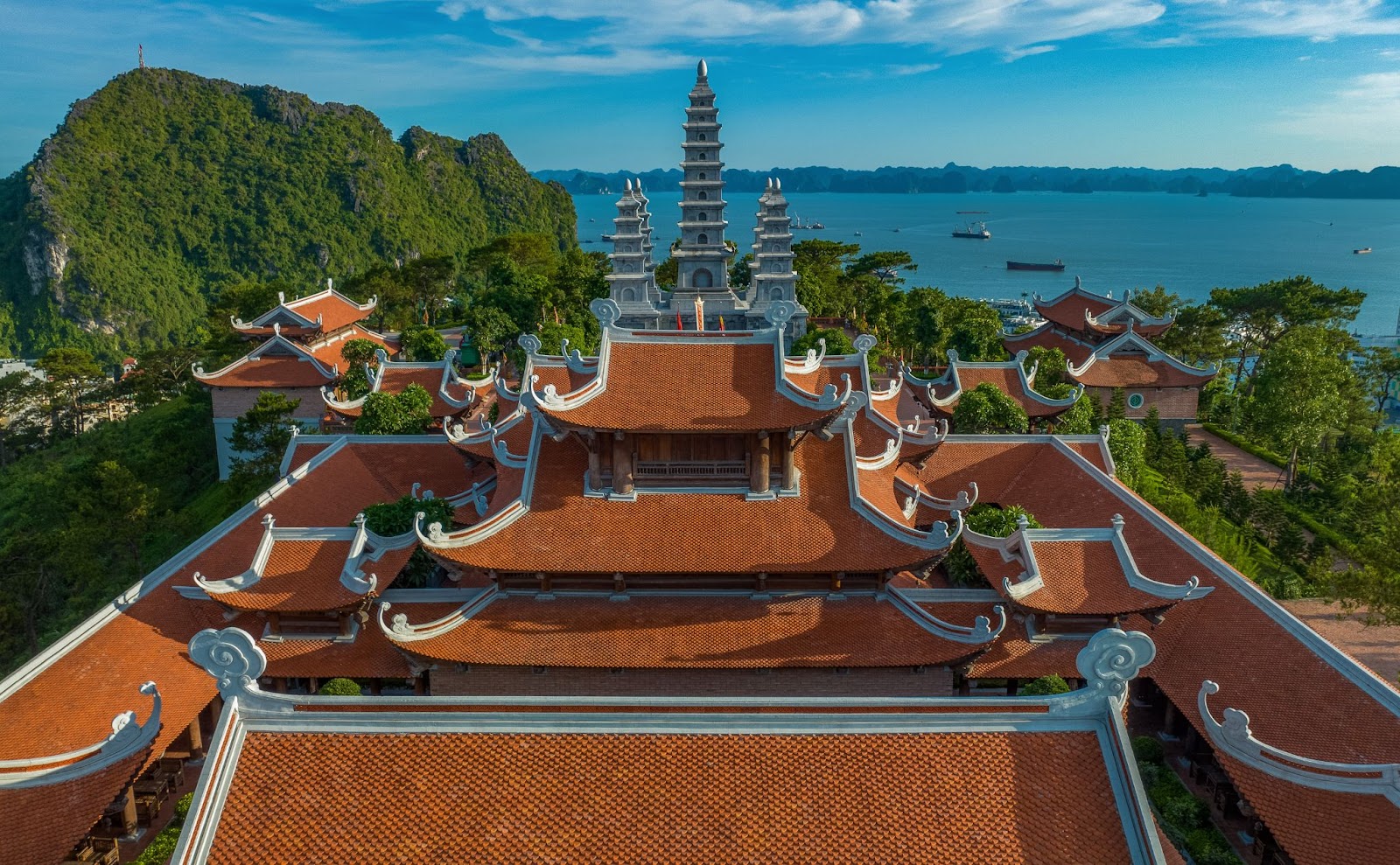
Bao Hai Linh Thong Tu on Ba Deo Hill, a sacred guardian point overlooking Ha Long’s sea and mountains. (Photo: Vi Vu Vietnam/Unsplash)
What makes Bao Hai Linh Thong Tu truly significant is its role as a spiritual guardian point. Local residents consider the temple a “trấn linh” location — a protective anchor that blesses fishermen, seafarers and families who rely on the bay for their livelihood. Many visitors come here to pray for safe voyages, calm weather and personal peace.
Reaching the temple is convenient: travellers take the Queen Cable Car to Ba Deo Hill and walk a short distance through landscaped paths to the complex. The blend of sacred meaning, mountain–sea scenery and carefully planned design makes Bao Hai Linh Thong Tu one of the most unique spiritual additions to northern Vietnam and an emerging highlight among the best temples in Vietnam.
Vietnam’s spiritual landscape stretches from the southern pilgrimage routes of Ba Den Mountain to the cloud-covered temples of Fansipan and the coastal sanctuaries of Da Nang and Ha Long. Each destination carries its own story, shaped by geography, local beliefs and centuries of Buddhist tradition. Together, they form a diverse and deeply atmospheric network that continues to draw both devoted pilgrims and curious travellers.
For visitors searching for the best temples in Vietnam, these places reveal not only architectural beauty but also the quiet values of faith, resilience and harmony with nature that define Vietnamese culture. Exploring these temples is more than a sightseeing journey – it is a chance to experience moments of calm, contemplation and connection across some of the country’s most striking landscapes.


