



1. What is spiritual travel?
Spiritual travel in Vietnam is closely tied to the country’s deep-rooted belief systems, traditional rituals and centuries-old temples. Travelers visit sacred places in Vietnam to seek tranquillity, reflect, offer prayers, or simply immerse themselves in cultural narratives shaped by Buddhism, indigenous beliefs and local legends.
The Maitreya Bodhisattva statue on Ba Den Mountain, a symbol of joy and compassion. (Photo: Collected)
Rather than a conventional sightseeing trip, spiritual travel is a journey into the inner self. The atmosphere of temples, meditation spaces and mountain pagodas helps visitors find calmness and emotional balance. With its diverse spiritual heritage – from Buddhism and Taoism to Mother Goddess worship – Vietnam offers a remarkable network of sacred places in Vietnam, each preserving layers of history and cultural memory.
2. Types of spiritual travel
2.1. Pilgrimage travel
Pilgrimage is one of the most defining forms of spiritual travel in Vietnam. Each year, millions of travelers journey to sacred places in Vietnam during major festivals or meaningful times such as the Lunar New Year, full-moon days or traditional ceremonial periods. These trips often involve offering incense, making prayers for peace and good fortune, or participating in rituals passed down through generations. Pilgrimage travel highlights the sense of devotion and cultural continuity present in many Vietnamese spiritual traditions.
2.2. Meditative and healing journeys
Many travelers seek out sacred places in Vietnam as spaces for meditation, reflection and emotional healing. Mountain pagodas wrapped in mist, quiet temple courtyards and spiritual complexes located deep within nature create environments ideal for slowing down and reconnecting with the inner self. These journeys emphasize stillness rather than ceremony, allowing visitors to step away from daily noise and experience a sense of mental clarity.
2.3. Cultural–spiritual exploration

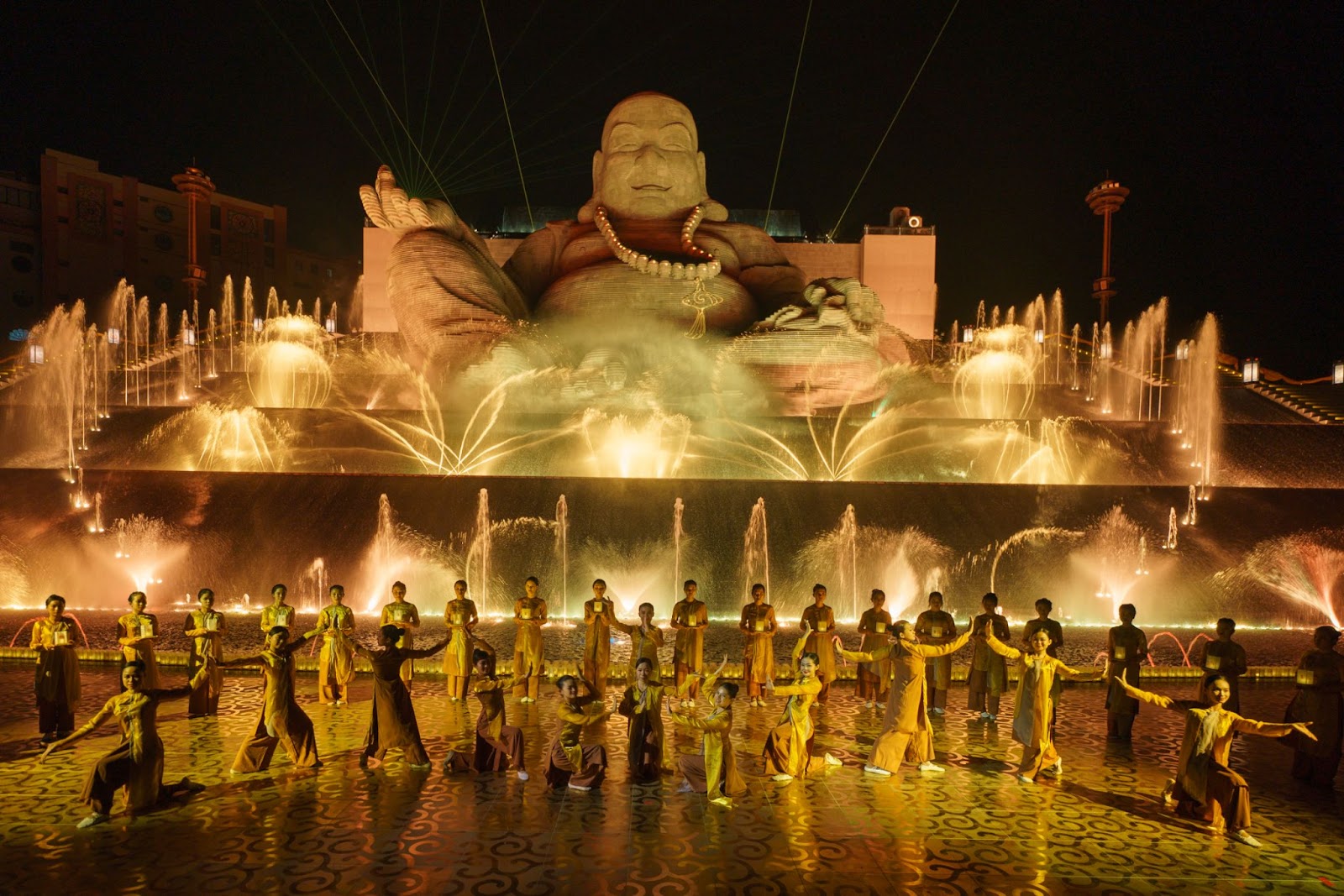
Pilgrims participating in the lantern-offering ceremony at Sun World Ba Den Mountain. (Photo: Collected)
Another popular approach is exploring the cultural and artistic heritage preserved at sacred places in Vietnam. Temples, shrines and ancient pagodas often hold rich architectural details, symbolic statues, historical relics and stories linked to local legends or national history. Travelers interested in culture and heritage find these sites especially compelling, as they reveal how spirituality has shaped Vietnamese identity over centuries.
3. Top 5 sacred places in Vietnam to explore
Vietnam’s spiritual heritage stretches across mountains, islands and ancient temple complexes. Each region has its own legends, architectural character and cultural identity, creating a diverse network of sacred places in Vietnam for travelers seeking spiritual depth. Among these, Sun Group’s destinations such as Sun World Ba Den Mountain, Sun World Fansipan Legend and Sun World Ba Na Hills stand out thanks to their unique combination of sacred landscapes and modern accessibility, making spiritual journeys more seamless while preserving authenticity.
3.1. Ba Den Mountain (Tay Ninh)
Ba Den Mountain is one of the most iconic sacred places in Vietnam, often referred to as the “Roof of the South” with an elevation of 986 m. The mountain has been a major pilgrimage site for centuries, closely tied to the legend of Linh Son Thanh Mau, a figure symbolizing integrity, compassion and spiritual strength. Every year, especially during the Lunar New Year and festival season, millions of visitors travel to Tay Ninh to offer prayers and experience the sacred atmosphere of this revered mountain.
A sacred complex rooted in centuries of devotion
The spiritual landscape of Sun World Ba Den Mountain encompasses a series of ancient temples scattered across the foothills and mid-mountain areas. Key sites include Ba Temple, Hang Pagoda and Linh Son Tien Thach Pagoda, which has a history stretching over 300 years. These temples, built amid natural rock formations and forested slopes, form the heart of the mountain’s spiritual identity.
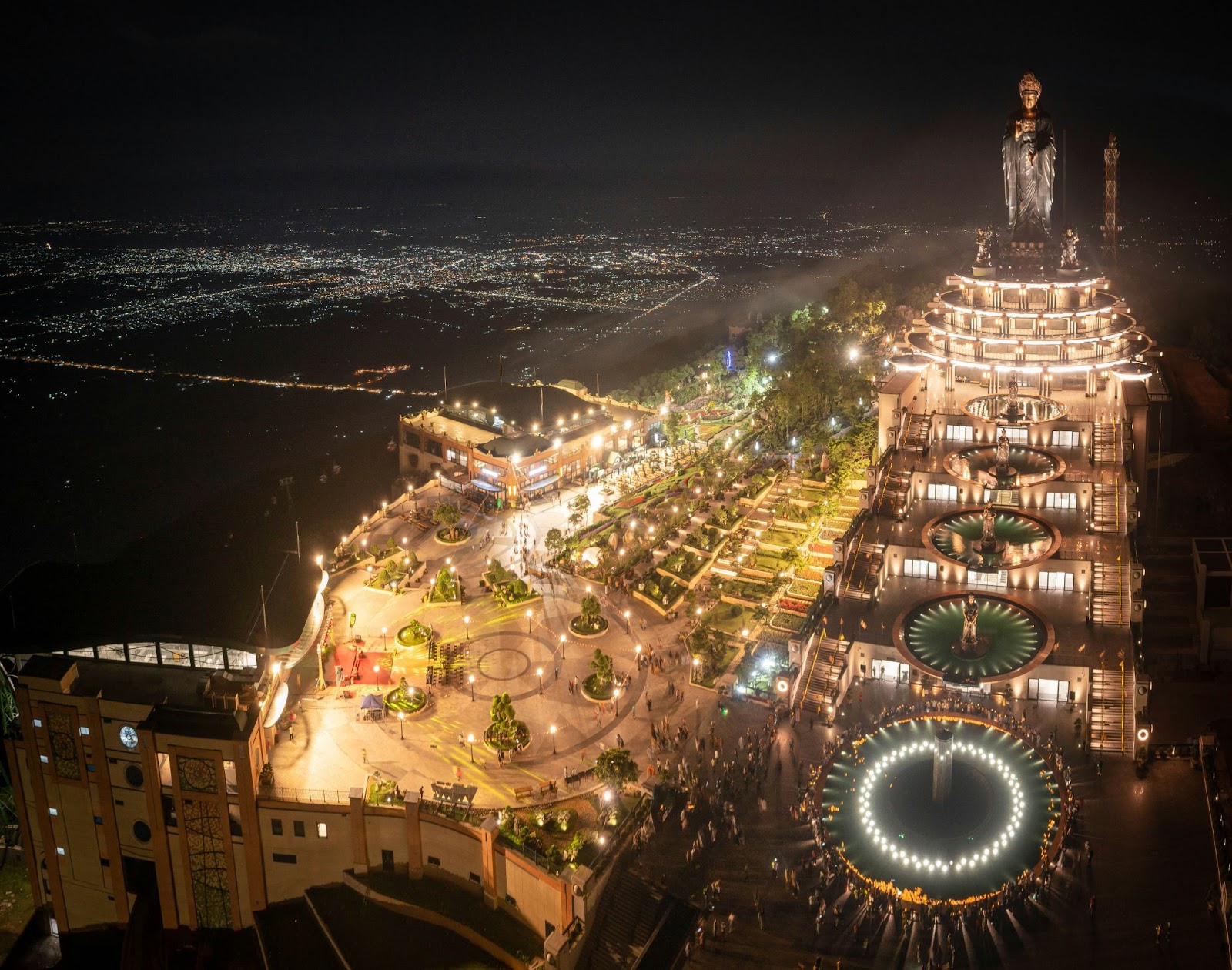
The spiritual complex of Ba Den Mountain seen across its sacred slopes. (Photo: Vivu Vietnam/Unsplash)
Traditional practices such as incense offering, praying for peace and joining the weekend lantern offering ceremony allow visitors to engage deeply with the cultural fabric of Tay Ninh. These ceremonies are held with solemnity, creating a sense of unity and reverence among pilgrims.
Sacred landmarks on the summit
At the summit, travelers can admire the 72-meter bronze statue of Tay Bo Da Son Bodhisattva, recognized as the tallest bronze Buddha statue in Asia set atop a mountain peak. Nearby stands the joyful sandstone statue of Maitreya Bodhisattva, a spiritual symbol of optimism and blessings.
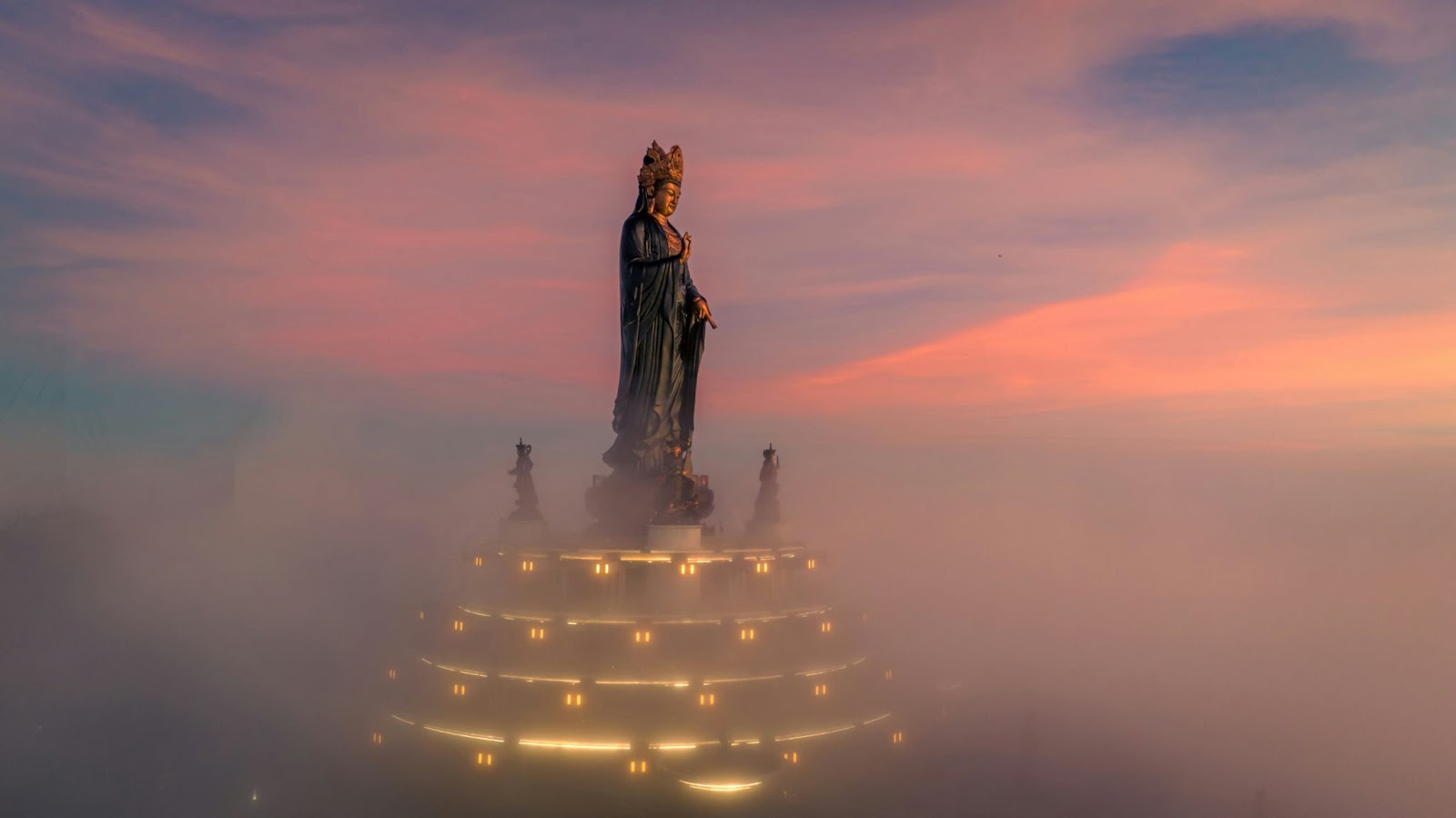
The 72-meter Tay Bo Da Son Bodhisattva statue rising above the cloud line. (Photo: Vivu Vietnam/Unsplash)
The summit area also includes a plaza floating above the clouds, walking paths overlooking the plains of Tay Ninh, and a Buddhist exhibition space displaying traditional art, sacred symbols and historical narratives that help visitors understand the mountain’s cultural foundation.
Cable car journey and how to get there
Sun World Ba Den Mountain operates several modern cable car lines, each connecting different parts of the spiritual complex:
Van Son cable car (to the summit): ~400,000 VND (adult), ~300,000 VND (child 1–1.4 m)
Chua Hang cable car (mid-mountain temples): ~150,000 VND (adult), ~100,000 VND (child)
Operating hours: Early morning – evening (varies by season)
Tickets available: On-site or via Sun World / Sun Paradise Land
The cable car stations were built with European technology, ensuring safe and smooth travel while offering panoramic views of Dau Tieng Lake, endless rice fields and the rolling mountains that form Tay Ninh’s natural backdrop. The main station at the foot of the mountain has been certified by Guinness World Records as the largest cable car station in the world.
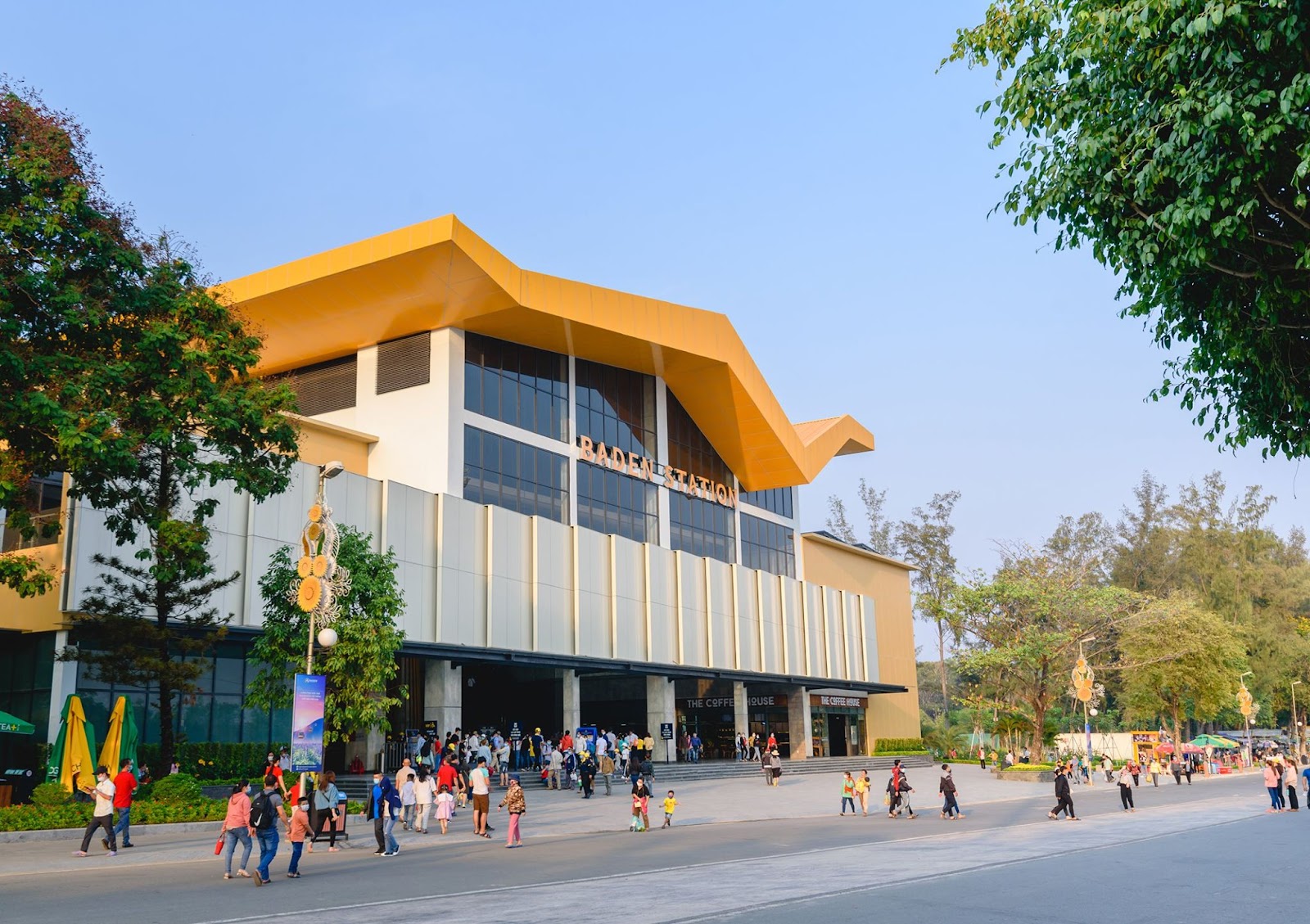
The Ba Den Mountain cable car station welcomes visitors to one of the sacred places in Vietnam. (Photo: Collected)
3.2. Fansipan Peak (Lao Cai)
Fansipan Peak, standing at 3,143 meters, is not only the highest mountain in Indochina but also one of the most spiritually significant sacred places in Vietnam. For generations, the mountain has been revered by ethnic communities of the Northwest, whose legends regard Fansipan as a guardian of the land. Today, the peak remains a symbol of spiritual strength, aspiration and highland heritage.
A remarkable spiritual complex above the clouds
The spiritual architecture at Sun World Fansipan Legend forms one of the most impressive high-altitude Buddhist complexes in Vietnam. Travelers encounter structures such as:
The 21.5-meter bronze Amitabha Buddha statue, the tallest handcrafted seated Amitabha Buddha in Vietnam
The Great Avalokitesvara Statue overlooking the cloud valleys
Bich Van Pagoda – located at the height of 3,037 meters
Kim Son Bao Thang Pagoda Complex with bell tower, drum tower and meditation courtyards
The nine-floor Dai Hong Chung tower rising above the clouds
Stone steps, ancient-style gates and spiritual plazas inspired by traditional Vietnamese Buddhist architecture
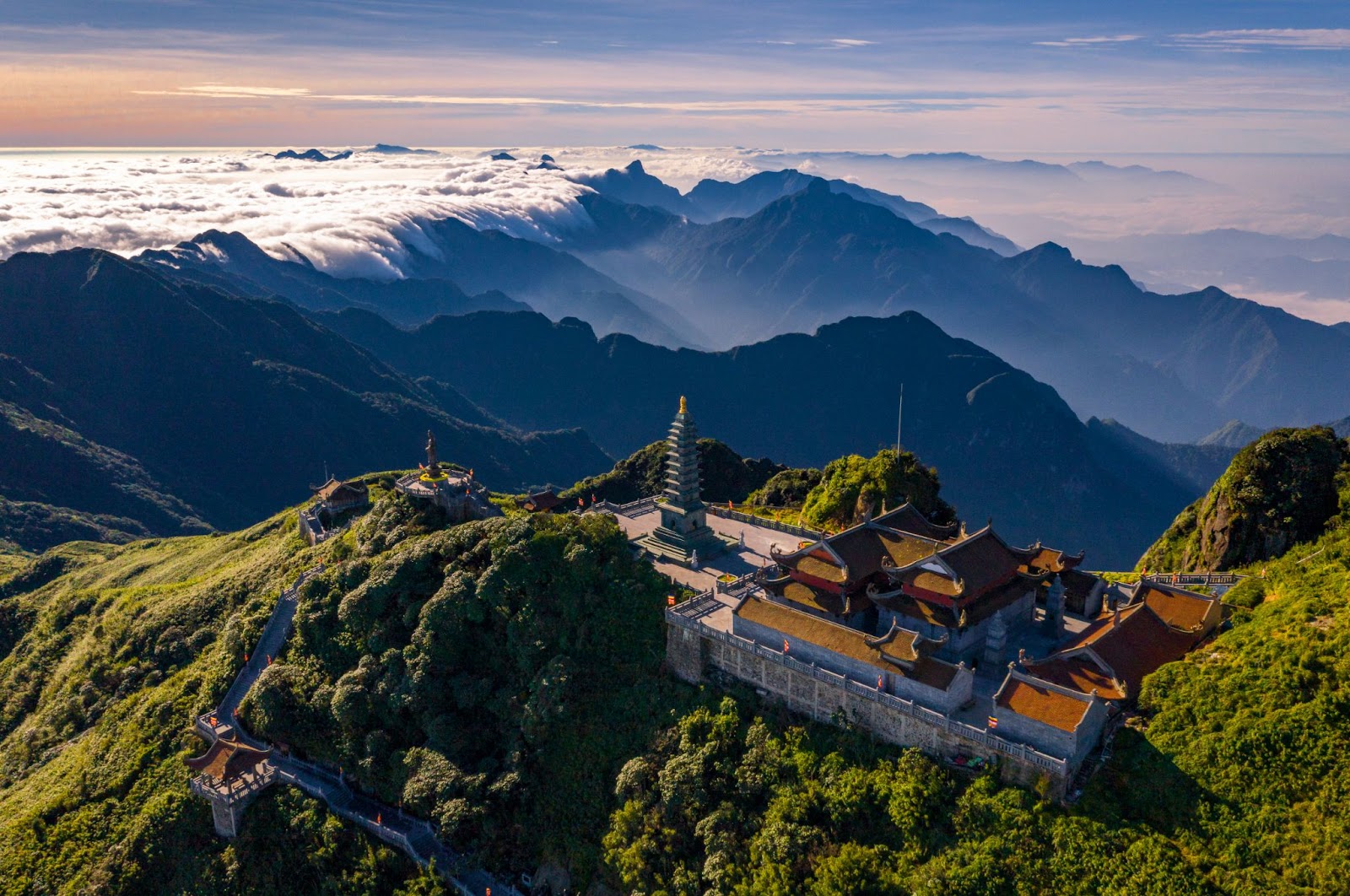
The spiritual complex atop Fansipan, surrounded by shifting clouds. (Photo: Collected)
Every structure is positioned to harmonize with the mountain landscape, allowing visitors to experience a calm, sacred atmosphere.
Cable car journey — a seamless path to the “Roof of Indochina”
Before the Sun Group cable car system was built, reaching Fansipan required a 2–3 day trek. Today, the world-record cable car shortens the ascent to roughly 15 minutes, opening access to one of the most awe-inspiring sacred places in Vietnam for all ages.
The cable car glides above Muong Hoa Valley, revealing terraced rice fields, streams and vast cloud layers drifting over the Hoang Lien Son mountains. From the arrival station, travelers may continue by stone staircase or take the Muong Hoa mountain railway for the final stretch.
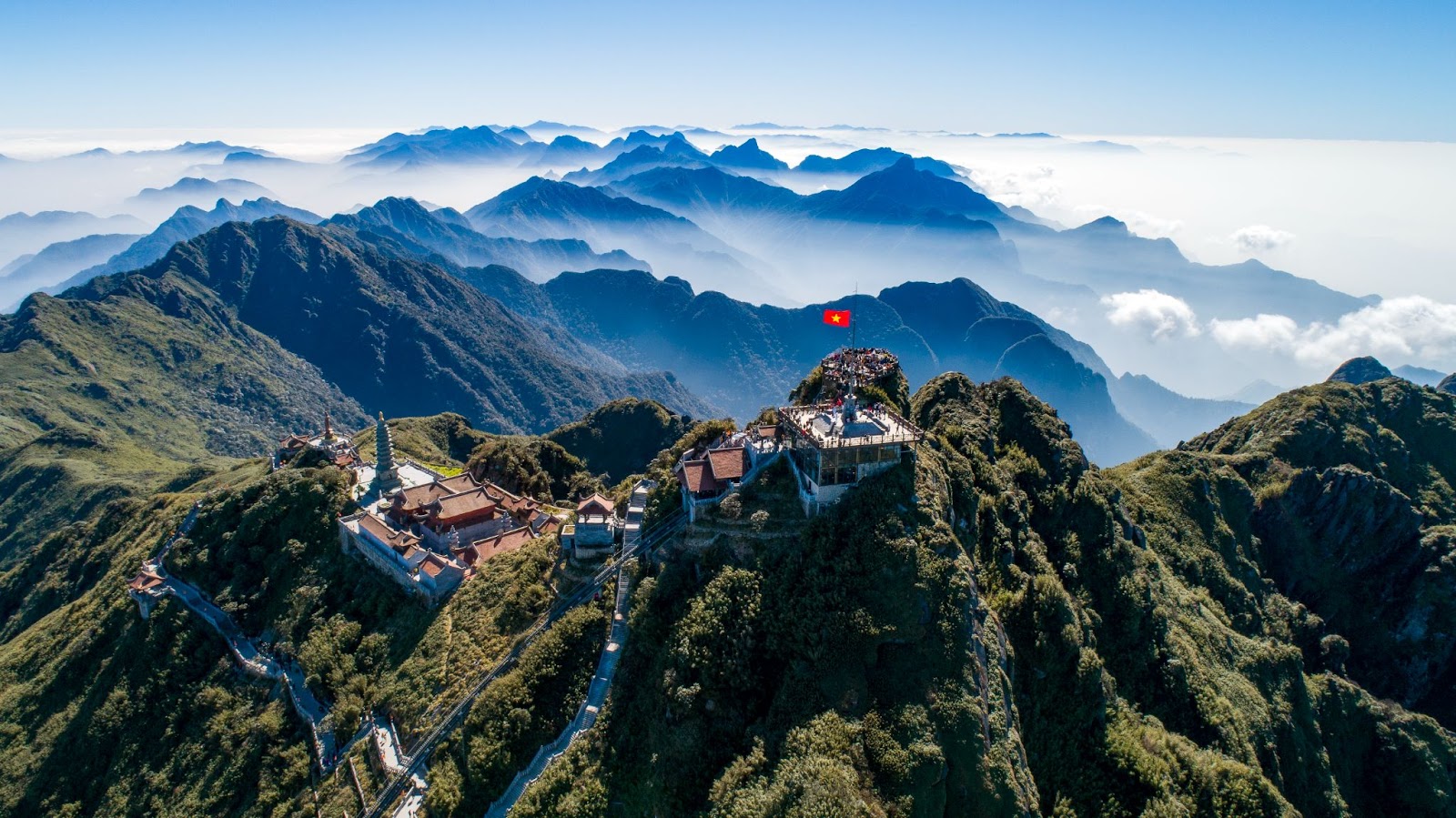
The sacred Fansipan peak, known as the Roof of Indochina. (Photo: Collected)
Cultural events and spiritual experiences
Fansipan hosts many cultural and spiritual activities throughout the year, including lantern-lighting rituals, seasonal festivals like the Rhododendron Festival, Rose Festival or Autumn Festival, and temple ceremonies on significant lunar days. Each contributes to the mountain’s spiritual atmosphere.
Ticket prices
Fansipan cable car round trip: ~800,000 VND (adult), ~550,000 VND (child under 1.4 m)
Muong Hoa monorail: Ticket sold separately (price varies by season)
Tickets available: On-site or via Sun World official channels
To help travelers plan their journey, Sun World Fansipan Legend provides a clear schedule for its transportation systems. According to the official operational timetable:
Muong Hoa mountain railway: operates from 7:30 – 17:30
Fansipan cable car: operates from 8:30 – 17:30, with adjustments depending on seasonal weather
Fansipan funicular railway: connects the upper station to the spiritual complex and follows the same general operating window
Combo tickets: available for visitors who prefer a seamless journey through all transport systems
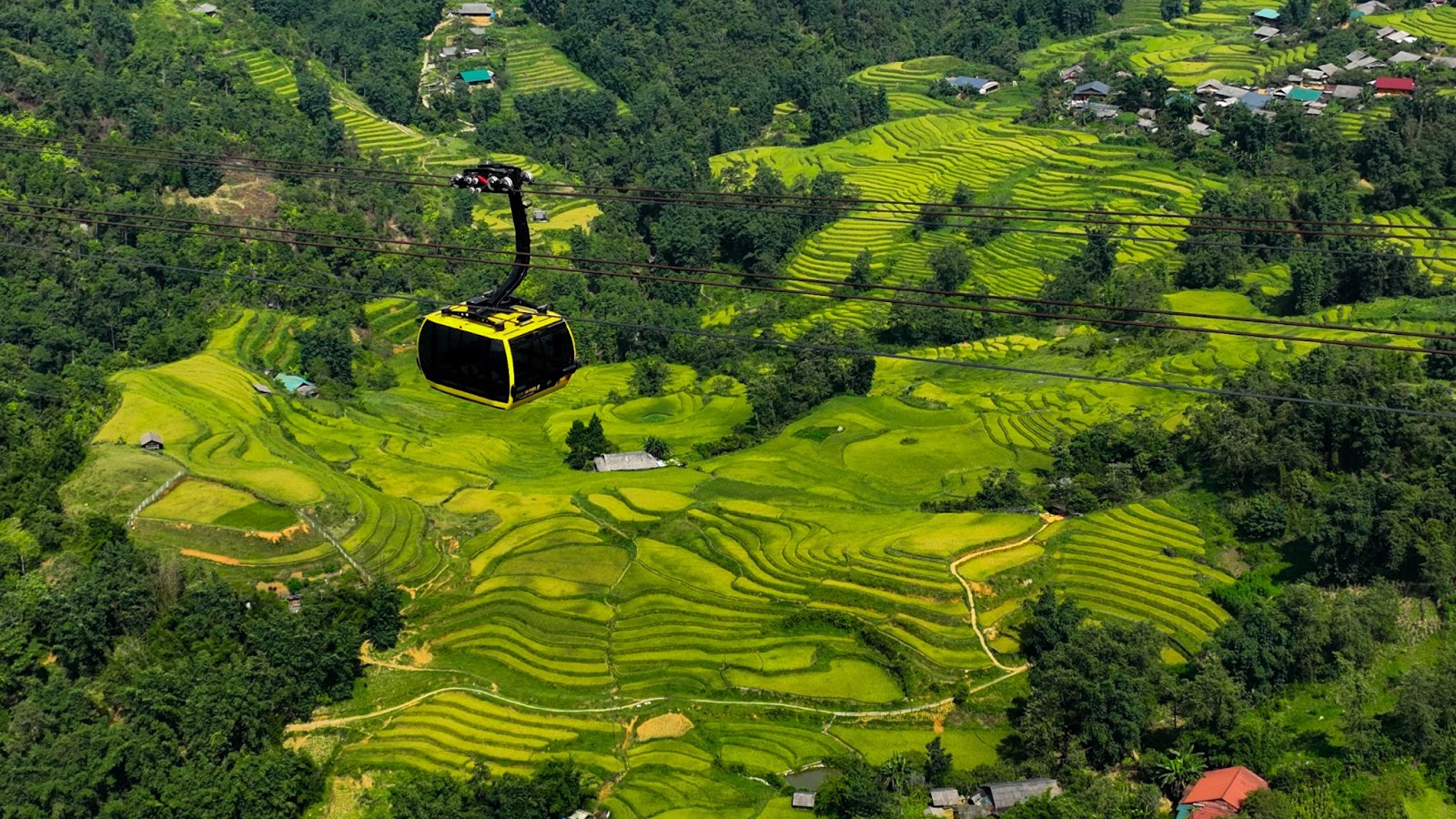
The Fansipan cable car glides above terraced valleys and mountain mist. (Photo: Collected)
Tickets can be purchased onsite or via Sun World’s official website and mobile platforms. Because Fansipan is one of the most visited sacred places in Vietnam, travelers are encouraged to arrive early to enjoy the clearest views and avoid peak-hour queues.
3.3. Ba Na Hills (Da Nang)
Ba Na Hills, sitting at an altitude of 1,487 meters on Nui Chua Mountain, is known globally for its attractions, yet it is also home to one of the most tranquil sacred places in Vietnam: Linh Ung Pagoda. Surrounded by evergreen forest, cool air and drifting clouds, this high-altitude sanctuary has become a spiritual retreat for visitors seeking stillness and reflection.
Linh Ung Pagoda – the mountain temple completing Da Nang’s “Three Linh Ung Pagodas”
Linh Ung Pagoda Ba Na was initiated in 1999 and officially inaugurated in 2004, marking the birth of the first spiritual landmark on Nui Chua. With a 12-hectare campus inspired by traditional Northern Vietnamese Buddhist architecture, the pagoda features pine-lined paths, stone courtyards and ancient-style tiled roofs that blend seamlessly into the mountain landscape.
The highlight of the sanctuary is the 27-meter Shakyamuni Buddha statue, seated on a lotus pedestal facing the East Sea, symbolising compassion, wisdom and the Buddha’s presence watching over Da Nang.
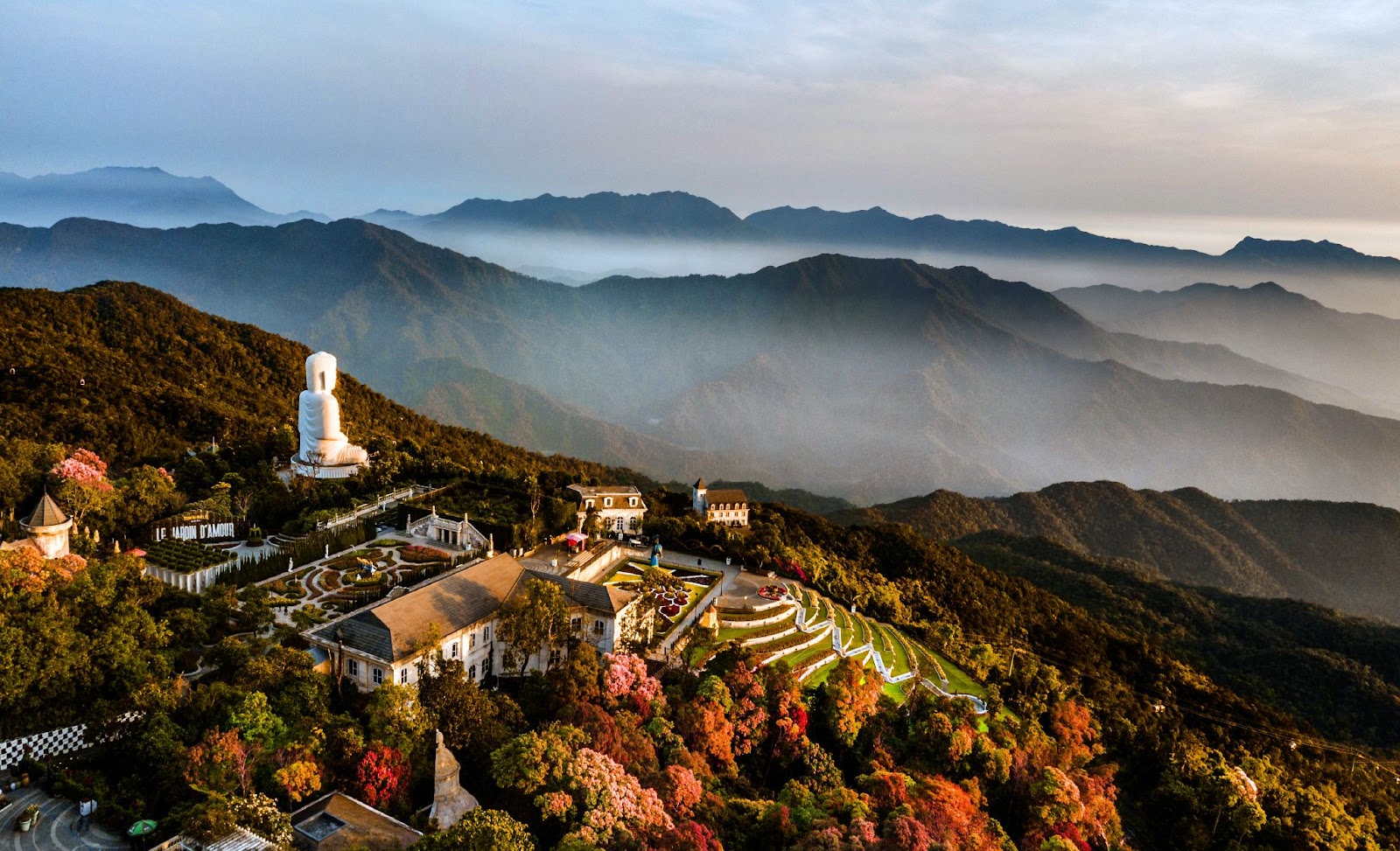
Linh Ung Pagoda perched on Chua Mountain – Ba Na Hills. (Photo: Collected)
Most significantly, Linh Ung Pagoda Ba Na is one of the “Tam Linh Ứng” – the Three Linh Ung Pagodas of Da Nang:
Linh Ung Son Tra – the guardian of the sea
Linh Ung Marble Mountains (Ngu Hanh Mountain) – the guardian of the earth
Linh Ung Ba Na Hills – the guardian of the sky
Together, these three pagodas form a spiritual triangle believed to protect Da Nang, bringing peace and harmony to the land. Linh Ung Ba Na, positioned “above the clouds,” represents the heavenly pillar of this sacred triangle.
A serene journey through mountains and clouds
The ascent to Linh Ung Pagoda begins with a peaceful cable car ride that passes through misty forest layers and opens out to panoramic views of Da Nang’s coastline and the Truong Son Mountain range. Upon reaching the summit, visitors follow stone pathways leading to meditation courtyards, cedar gardens and traditional gates, all imbued with a sense of calm.
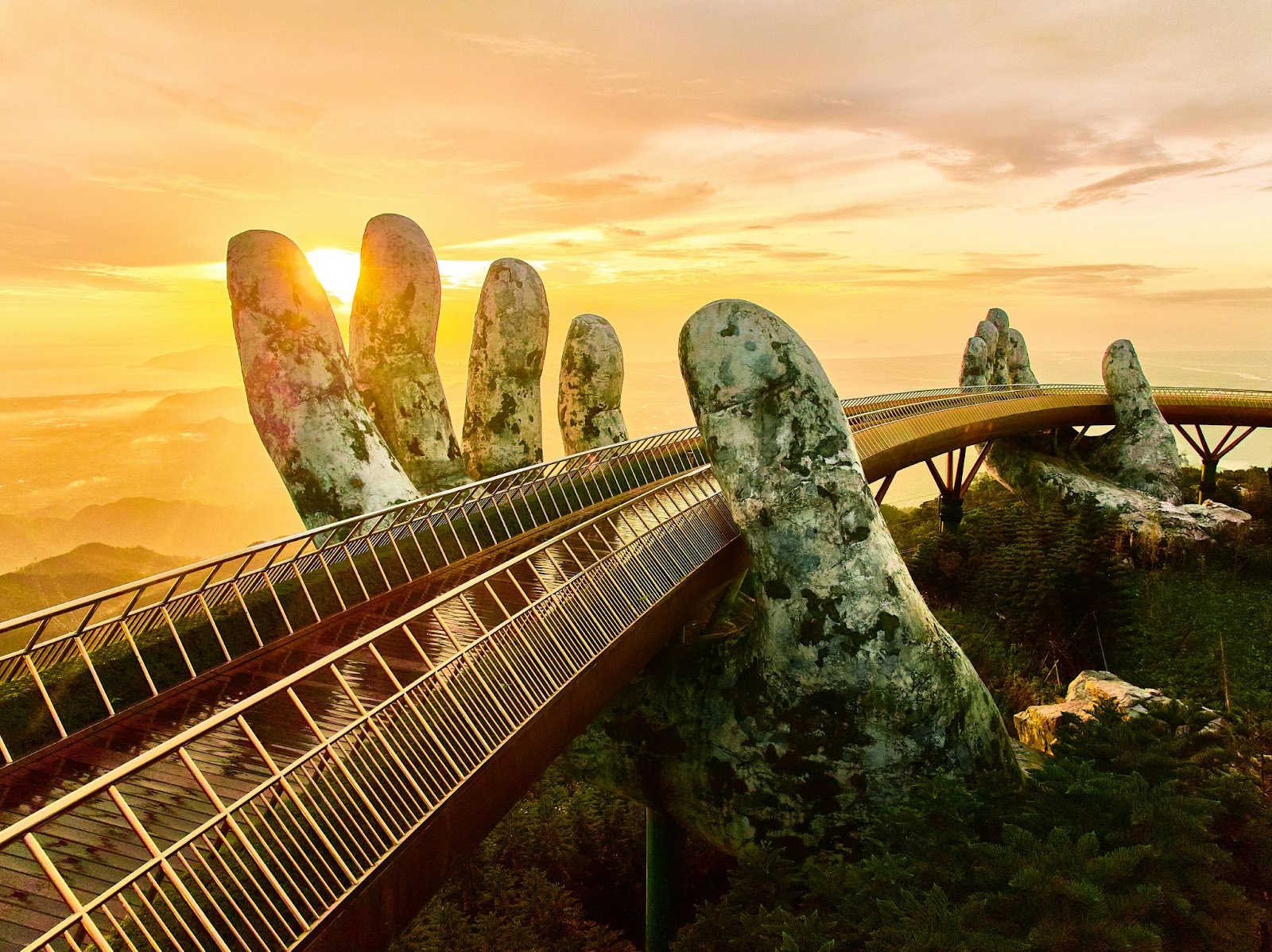
The Golden Bridge stretches elegantly above the clouds of Ba Na Hills. (Photo: Vivu Vietnam/Unsplash)
Besides Ba Na Hills’s world-famous landmarks like Golden Bridge and the French Village, the pagoda area remains quiet and contemplative, attracting travelers looking for a spiritual pause amid a busy mountain resort.
How to visit the spiritual complex
Ba Na Hills is located about 25 km from Da Nang city center and can be reached by taxi, private car or shuttle services. The pagoda is open daily from 7:00 to 21:00, while cable car operations typically run until 22:00 depending on season and weather.
Because fog is common at higher altitudes, late morning and early afternoon are the best times for clear views. Visitors should wear modest clothing suitable for temple visits.
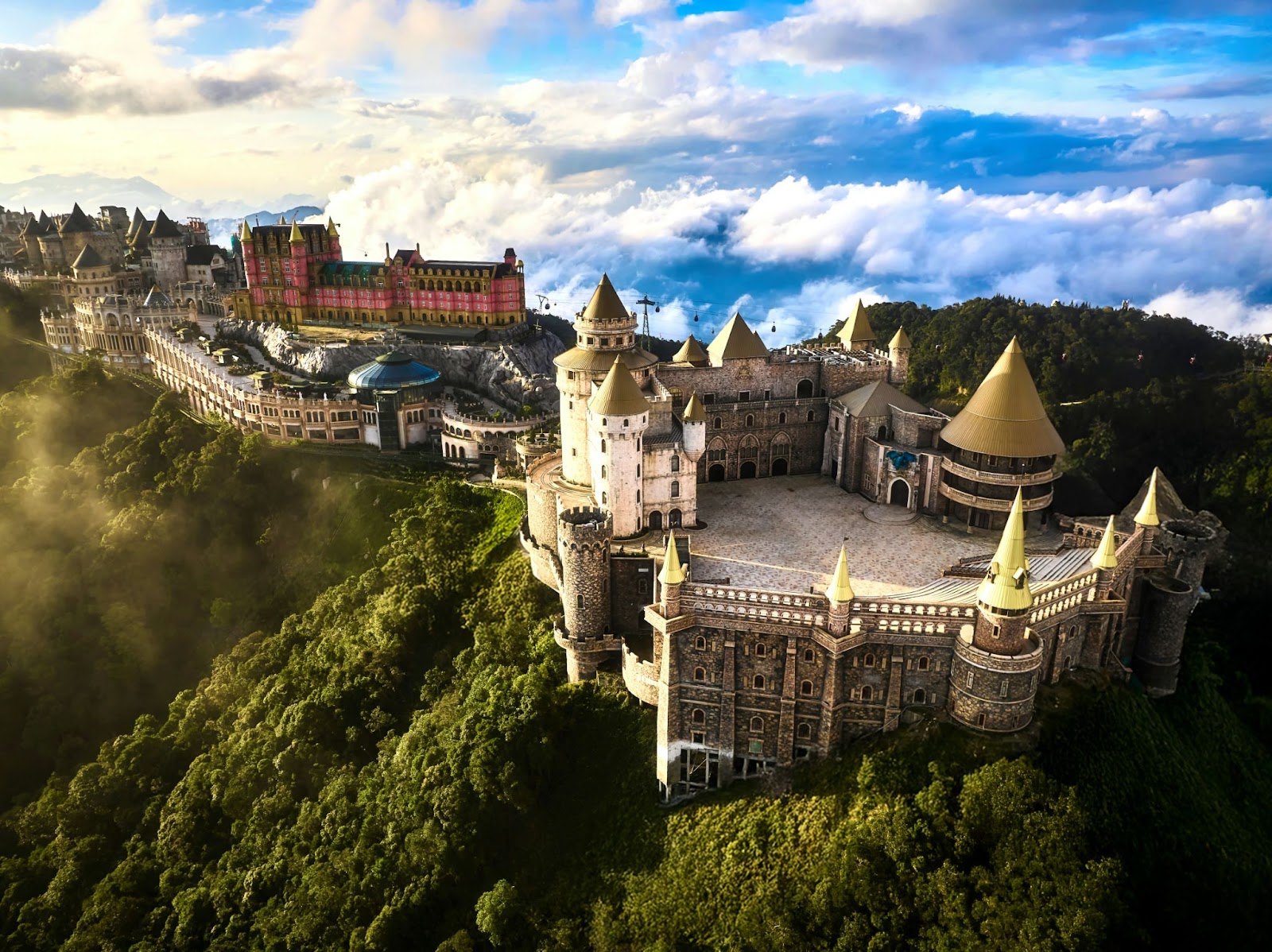
The summit of Ba Na Hills in cool mist and mountain breeze. (Photo: Vivu Vietnam/Unsplash)
Ticket information
Standard Ba Na Hills ticket (non-residents): 950,000 VND (adult) / 750,000 VND (child)
Combo ticket (cable car + lunch buffet): 1,250,000 VND (adult) / 950,000 VND (child)
Includes: round-trip cable car, access to Linh Ung Pagoda, Golden Bridge, French Village, gardens and viewpoints
Tickets available: On-site or via Sun World’s official website
With its serene pagoda complex, mountain chill and panoramic cloud-filled skies, Ba Na Hills stands as a rare mountaintop sanctuary among the most significant sacred places in Vietnam, offering a deeply calming spiritual experience above the bustling city below.
3.4. Bao Hai Linh Thong Tu Pagoda (Quang Ninh)
Bao Hai Linh Thong Tu Pagoda is one of the most serene sacred places in Vietnam, nestled on Ba Deo Mountain within Sun World Ha Long. Overlooking the world-famous Ha Long Bay, the pagoda is a peaceful retreat where Buddhist architecture, mountain breezes and panoramic sea views harmonize to create a deeply calming atmosphere.
A sacred complex for peace of body – mind – spirit
Designed in traditional Vietnamese Buddhist style, Bao Hai Linh Thong Tu Pagoda features a main hall dedicated to Shakyamuni Buddha, stone stairways, tiled roofs, incense courtyards and quiet terraces framed by pine trees. Unlike the bustling entertainment areas of Ha Long, the pagoda offers a contemplative space where travelers can slow down, breathe deeply and reconnect with themselves.
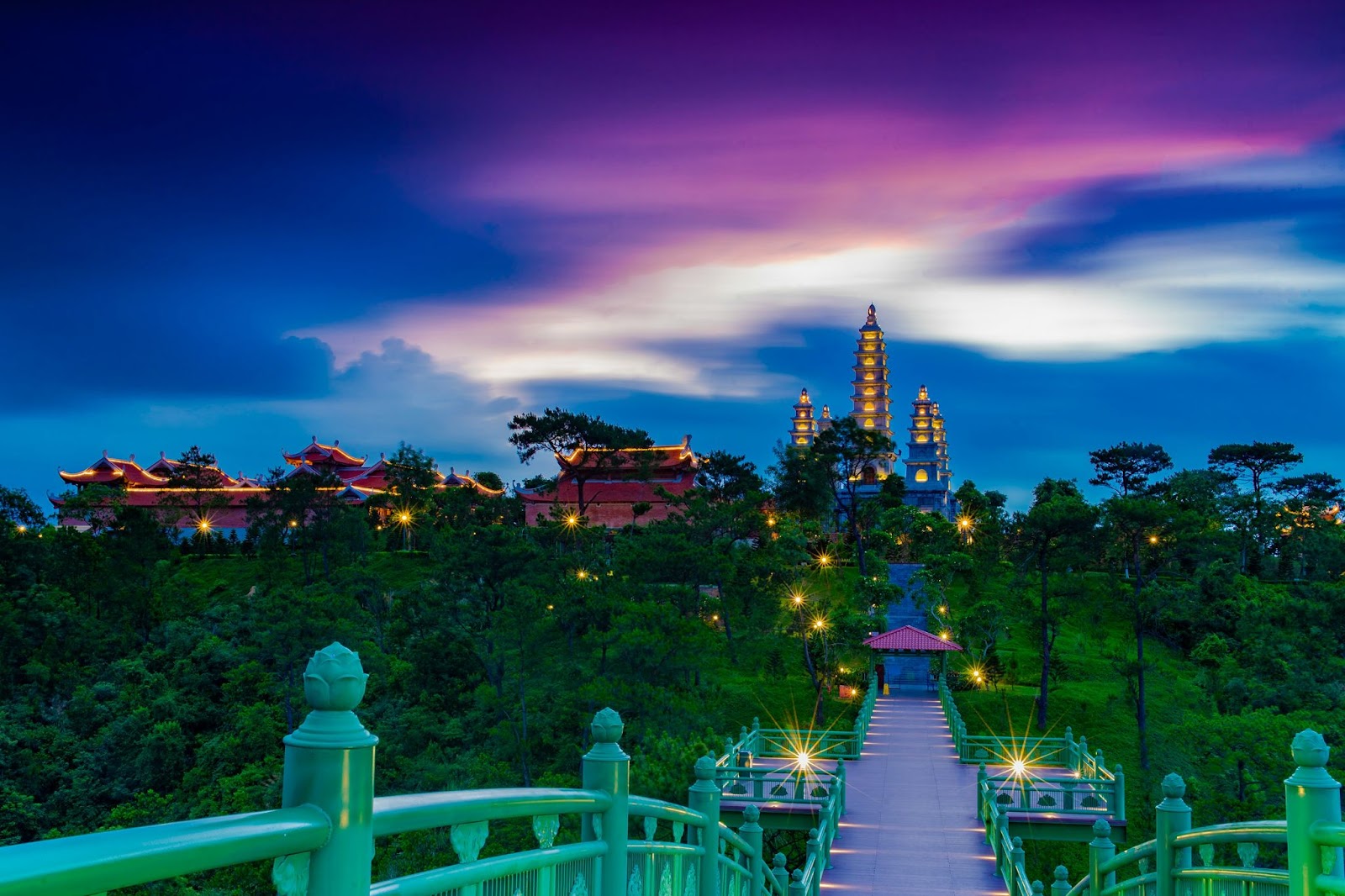
Bao Hai Linh Thong Tu Pagoda nestled quietly amid tranquil greenery. (Photo: Vivu Vietnam/Unsplash)
At the heart of the complex is the signature “Mindful Healing Experience”, a spiritual program created to help visitors restore body – mind – spirit through guided activities such as:
Tea meditation
Singing bowl meditation
Deep-relaxation practices
Lantern-lighting rituals
These sessions are held throughout the day in calm, incense-scented spaces designed for meditation and quiet reflection.
Daily healing schedule and special rituals
The pagoda hosts mindfulness activities daily from 09:30 to 17:00, allowing visitors to join whenever they feel ready for a moment of inner stillness. The evening Lantern-Lighting Ceremony, taking place from 17:30 to 19:30, is one of the most meaningful experiences. As visitors place floating lanterns into the mandala-shaped pool area, the space becomes illuminated with warm golden light – a moment believed to bring peace, clarity and blessings.
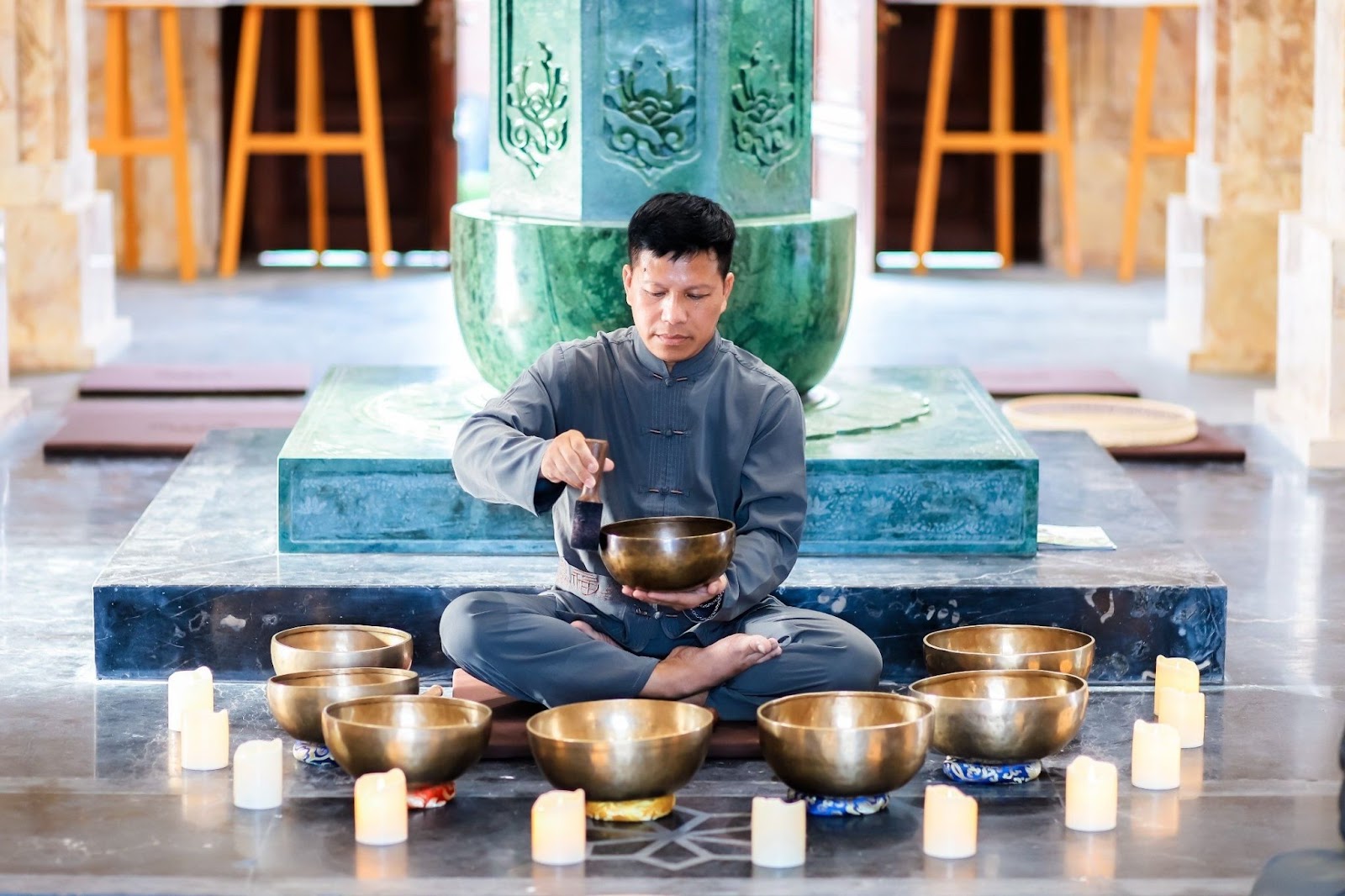
Visitors join the Mindful Healing Experience in the temple’s peaceful courtyards. (Photo: Collected)
Ticket information for healing experiences
According to Sun Paradise Land:
Deep-Relaxation: ~100,000 VND per participant
Lantern-Lighting Ceremony: ~300,000 VND per participant
Mindfulness programs: available throughout the day within the pagoda complex
Ticket purchases and registration can be made directly at the pagoda’s reception area.
Reaching Bao Hai Linh Thong Tu Pagoda
Visitors can reach the pagoda via the Queen Cable Car from Bai Chay, one of the most scenic cable car journeys in northern Vietnam. The ride crosses Ha Long Bay, giving travelers sweeping views of limestone towers, fishing villages and the emerald sea. From the arrival station, it is a short, gentle walk through landscaped pathways to the pagoda entrance.
A unique spiritual vantage point over Ha Long Bay
What sets Bao Hai Linh Thong Tu apart among sacred places in Vietnam is its elevated perspective over a UNESCO World Heritage Site. Few spiritual destinations offer such a dramatic overlook of sea, sky and karst formations. Many travelers visit at sunset, when the bay glows with soft orange light and the pagoda’s bells echo through the mountain air — creating a moment of true stillness and spiritual clarity.
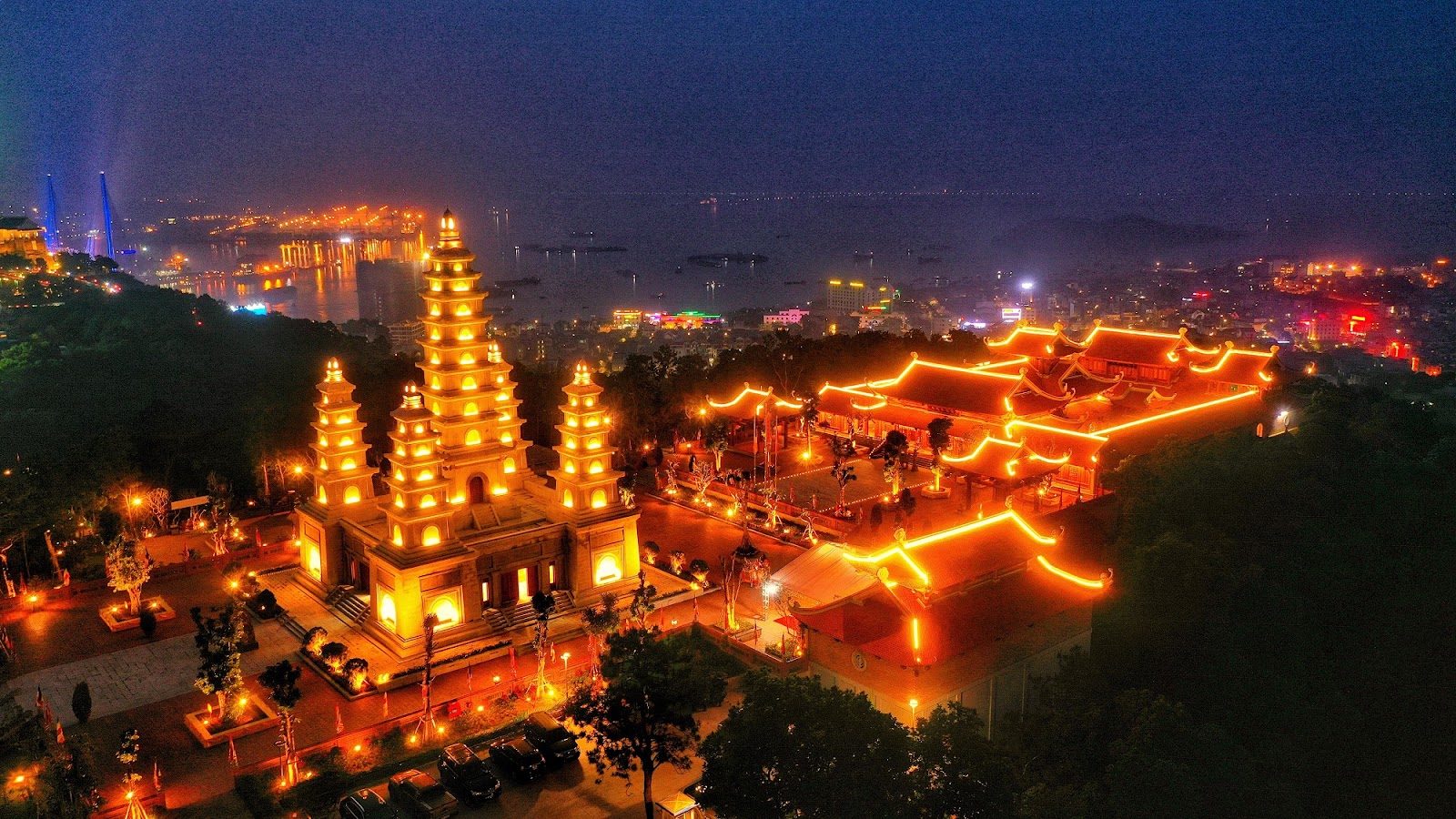
Traditional architectural details within the tranquil grounds of Bao Hai Linh Thong Tu Pagoda. (Photo: Collected)
3.5. Con Dao (Ba Ria – Vung Tau)
Con Dao is one of the most profound sacred places in Vietnam, known for its spiritual significance deeply rooted in national memory. Once the site of the infamous Con Dao Prison system during the French and American wars, the island today stands as a symbol of resilience, sacrifice and gratitude. Far beyond a beach destination, Con Dao offers a reflective journey into the country’s history and its enduring spiritual culture.
The sacred sites of remembrance
At the heart of Con Dao’s spiritual identity is Hang Duong Cemetery, where thousands of revolutionary soldiers and patriots are laid to rest. Visitors come here to pay respects, light incense and express gratitude for those who devoted their lives to Vietnam’s freedom. The atmosphere at night is particularly solemn, as the cemetery glows with candlelight and the sound of waves echoes in the distance.
One of the most visited sites is the Grave of Vo Thi Sau, a national heroine known for her courage and unwavering spirit. Travelers often come before midnight to offer flowers and prayers, following the long-standing custom believed to bring peace, strength and blessings.
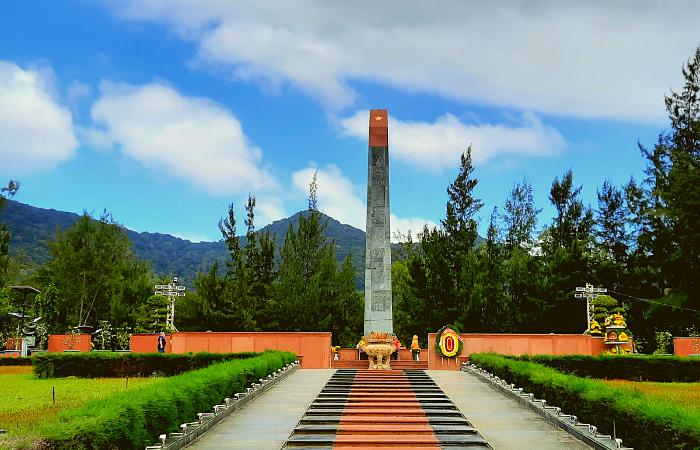
Hang Duong Cemetery for a quiet moment of remembrance. (Photo: Collected)
Nearby is Phi Yen Temple, dedicated to Lady Phi Yen (Nguyen Thi Riem), whose story symbolizes loyalty, virtue and maternal devotion. Together, these spiritual landmarks form the foundation of Con Dao’s reputation as a sacred island of remembrance.
A journey shaped by history and nature
Con Dao’s spiritual appeal is closely tied to its raw natural beauty. Dense forests, quiet beaches and crystal-clear waters create a peaceful backdrop for introspection. Many visitors combine their pilgrimage with quiet moments by the sea, sunrise walks or visits to historical museums that document the island’s past.
Other meaningful stops include the Con Dao Prison Museum, Tiger Cages, and Cow Cages, where travelers can understand the hardships endured by prisoners. These places are not only historical sites but also spaces where national gratitude and remembrance are deeply felt.

The historic Con Dao Prison, preserved as a profound reminder of Vietnam’s past. (Photo: Collected)
How to visit Con Dao’s spiritual landmarks
Con Dao can be reached by direct flights from Ho Chi Minh City, Hanoi, Da Nang and Can Tho, or via high-speed ferry from Vung Tau and Soc Trang. Once on the island, taxis, electric cars and motorbikes make it easy to visit the key sacred sites.
Most visitors choose to visit Hang Duong Cemetery between 8:00 PM and midnight, as this is considered the most meaningful time for paying respects. Offerings such as flowers, candles and fruits are available around the area, and respectful attire is recommended.
Ticket information
Con Dao’s spiritual sites are mostly public heritage landmarks, meaning:
No entrance fee for Hang Duong Cemetery, Vo Thi Sau’s grave or Phi Yen Temple
Museums and historical sites may charge a small fee (usually 20,000–40,000 VND)
Offerings for ceremonies are optional and depend on the visitor’s intention
With its blend of solemn history, tranquil landscapes and deeply rooted spiritual traditions, Con Dao remains one of the most powerful and emotionally resonant sacred places in Vietnam, offering travelers a journey of remembrance, gratitude and inner reflection.
3.6. Huong Pagoda – Hanoi
Huong Pagoda, set deep within the limestone valleys and waterways on the far southern outskirts of Hanoi, is one of the most atmospheric sacred places in Vietnam. Hidden among mountains, forest paths and tranquil streams, the complex is not a single pagoda but an entire spiritual landscape that has drawn pilgrims for centuries. Each spring, millions journey here to pray for peace, fortune and renewal.
A spiritual complex shaped by caves, mountains and legends
The centerpiece of the pilgrimage is Huong Tich Cave, known in ancient inscriptions as the “most beautiful cave under the sky.” Inside the sprawling cavern, stalactites and stalagmites form natural sculptures long associated with blessings for prosperity, fertility and health. Approaching the site is itself a ritual: travelers glide along the quiet Yen Stream in wooden boats, passing rice fields, small temples and karst peaks before reaching the starting point of the ascent.
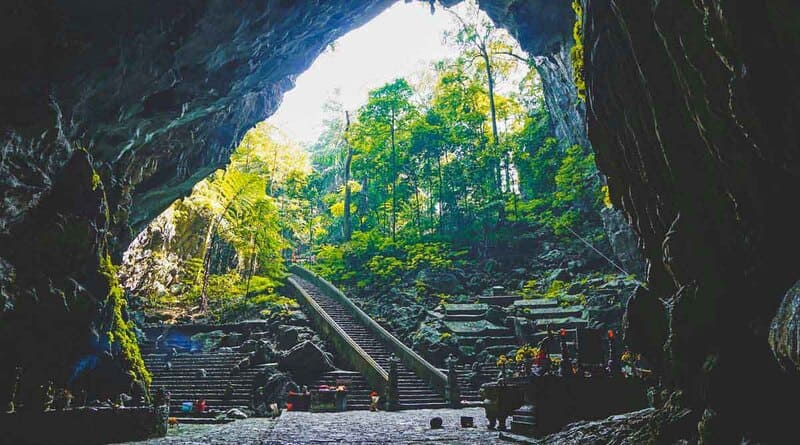
The entrance to Huong Tich Cave, the spiritual heart of the pilgrimage. (Photo: Collected)
Along the way are iconic temples such as Thien Tru Pagoda, Giai Oan Pagoda, and shrines dedicated to Avalokitesvara Bodhisattva – the compassionate figure believed to answer prayers for peace and healing. The combination of serene waterways and sacred mountains gives Huong Pagoda a uniquely contemplative atmosphere.
Vietnam’s largest spring pilgrimage
From January to March in the lunar calendar, Huong Pagoda hosts the largest Buddhist pilgrimage in northern Vietnam. Pilgrims climb stone stairways, offer incense, join prayer ceremonies and make symbolic wishes inside Huong Tich Cave. Despite the large number of visitors, the deeper parts of the complex remain quiet, allowing moments of meditation surrounded by mist and forest.
How to visit Huong Pagoda
Huong Pagoda lies roughly 60 km from Hanoi’s center. A typical journey involves:
Driving to the gateway area south of Hanoi
Taking a boat along Yen Stream
Walking or taking the Huong Pagoda cable car to reach Huong Tich Cave
The cable car is especially useful for elderly visitors or those short on time, easing the steep climb to the upper caves.
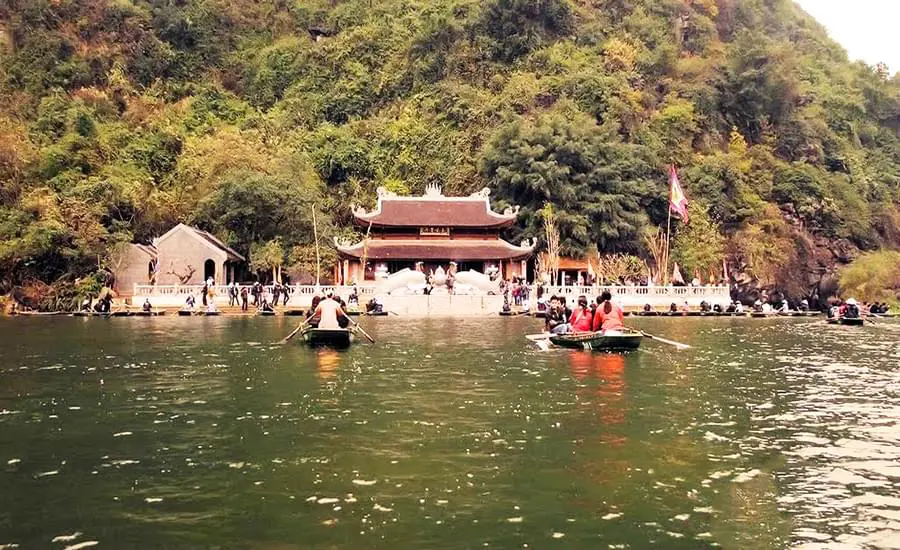
Sampan boats traveling along Yen Stream toward the Huong Pagoda complex. (Photo: Collected)
Ticket information
Boat ride on Yen Stream: ~50,000–80,000 VND per person
Entrance ticket: ~80,000 VND per person
Cable car (one-way): ~120,000–150,000 VND depending on season
Opening hours: roughly 06:00–18:00
With its blend of river journeys, mythical caves and ancient temples, Huong Pagoda stands among the most poetic sacred places in Vietnam, offering a spiritual experience deeply connected to the country’s cultural memory.
3.7. Thien Mu Pagoda – Hue
Thien Mu Pagoda, set on a hill overlooking the Perfume River, is one of the oldest and most iconic sacred places in Vietnam. With over four centuries of history, it stands at the heart of Hue’s spiritual identity, combining imperial heritage, Buddhist philosophy and poetic landscapes that have inspired Vietnamese literature for generations.
A timeless symbol of Hue’s spiritual heritage
Founded in 1601 by Lord Nguyen Hoang, Thien Mu Pagoda is home to the Phuoc Duyen Tower, a majestic seven-story stupa that rises above the riverside pine hills. The pagoda’s courtyards are arranged through ancient gates, lotus ponds, bonsai gardens and meditation halls – all reflecting the quiet elegance of the former imperial capital.
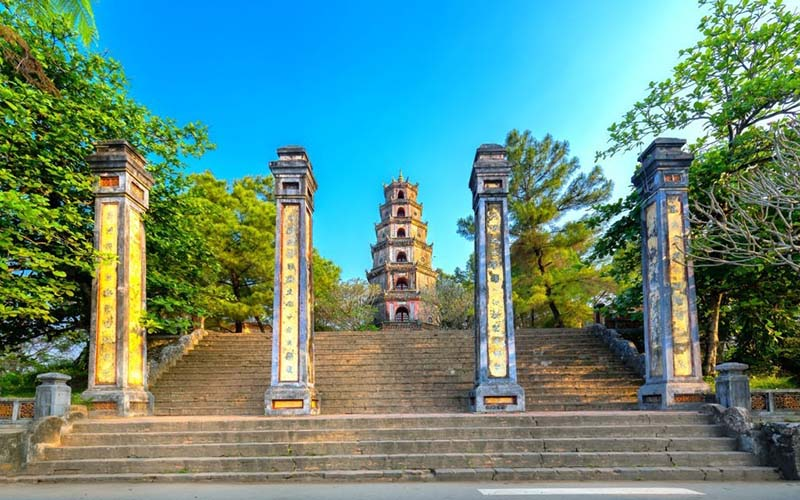
The seven-storey Phuoc Duyen Tower at Thien Mu Pagoda. (Photo: Collected)
Inside the temple complex, visitors can find statues of Bodhisattvas, the main sanctuary dedicated to Shakyamuni Buddha, and heritage artifacts linked to the Nguyen Dynasty. The gentle sound of temple bells resonates across the Huong River, creating a calm atmosphere that feels suspended in time.
Legends and historical echoes
According to legend, an old heavenly lady (Thiên Mụ) once appeared on this very hill, predicting the arrival of a ruler who would unify the region. The pagoda was later built on this spot, and the tale remains a defining part of its spiritual significance.
Thien Mu Pagoda is also associated with Vietnam’s modern history: the iconic car used by monk Thich Quang Duc in his famous self-immolation protest is preserved in the temple grounds as a symbol of Buddhist resilience and peace.
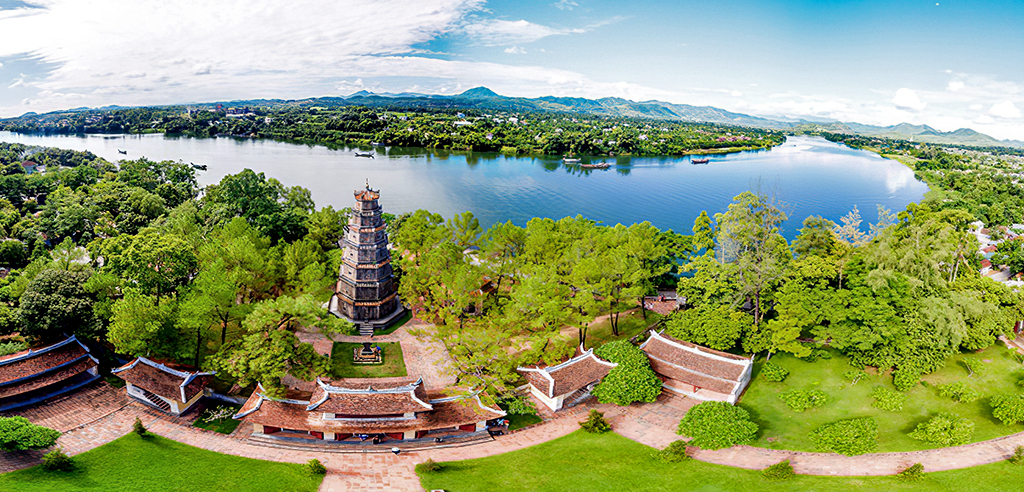
The peaceful courtyard of Thien Mu surrounded by pine-covered riverbanks. (Photo: Collected)
A peaceful riverside journey
Most travelers reach the pagoda by a short car ride from central Hue, but many choose the traditional way — riding a dragon boat along the Huong River. The slow river journey increases the sense of calm and reflection upon arrival.
Ticket information
Entrance: free (donations welcome)
Visiting hours: 06:00–18:00
Dragon boat ride: ~150,000–200,000 VND per boat (shared options available)
As a blend of myth, history and riverside beauty, Thien Mu Pagoda remains one of the most poetic sacred places in Vietnam, offering travelers a quiet refuge in the spiritual heart of Hue.
3.8. Bai Dinh – Trang An (Ninh Binh)
Bai Dinh and Trang An together form one of the most expansive Buddhist–cultural landscapes in northern Vietnam, earning a reputation as some of the most remarkable sacred places in Vietnam. With towering limestone mountains, ancient pagodas, sprawling temple complexes and river caves, the area blends natural majesty with profound spiritual meaning.
Bai Dinh Pagoda – one of Vietnam’s grandest Buddhist complexes
Bai Dinh Pagoda consists of two main areas: the ancient Bai Dinh Pagoda, nestled in mountain caves, and the new Bai Dinh complex, built in traditional Vietnamese style with sweeping tiled roofs, stone corridors and monumental courtyards.
Highlights include:
The 500 Arhat statues carved in monolithic stone
The largest bronze Buddha statue in Vietnam
The peaceful Tam The Hall, surrounded by lotus ponds
Panoramic hilltop views reached via stone staircases
Pilgrims visit Bai Dinh to pray for health, prosperity and harmony, while travelers admire its vast scale and spiritual architecture.
Trang An – river caves and sacred mountains
Just a short ride away lies the UNESCO-listed Trang An Landscape Complex, a network of waterways weaving through limestone peaks, ancient temples and hidden caves. Travelers board traditional sampans to glide through jade-green rivers, passing sacred sites such as Suoi Tien Temple, Tran Temple and the limestone caverns used in historical rituals.
The combination of river, mountain and temple creates a deeply immersive spiritual atmosphere – a journey into Vietnam’s ancient cultural layers.
How to visit Bai Dinh – Trang An
Ninh Binh is around 90 minutes by car from Hanoi. Travelers often spend a full day exploring both Bai Dinh and Trang An:
Morning: Bai Dinh Pagoda
Afternoon: Trang An boat tour
Electric carts help visitors move around the large temple complex, while boat tours through Trang An last around 2–3 hours.

Traditional boats navigating Trang An’s river caves and limestone valleys. (Photo: Collected)
Ticket information
Bai Dinh electric cart: ~30,000–60,000 VND
Trang An boat tour: ~250,000 VND per person
Bai Dinh entrance: free (donations encouraged)
Operating hours: typically 06:00–19:00
With its monumental temples, mystical rivers and dramatic limestone cliffs, Bai Dinh – Trang An stands among the most majestic sacred places in Vietnam, offering travelers a profound combination of nature, heritage and spiritual depth.
From mountaintop sanctuaries wrapped in clouds to riverside temples echoing with centuries of prayer, the most remarkable sacred places in Vietnam reveal a spiritual landscape as diverse as the country itself. As spiritual travel continues to grow, these places stand as reminders of the country’s enduring values: compassion, resilience, harmony and the relationship between people and the natural world. Exploring the sacred places in Vietnam is ultimately an invitation to look outward at landscapes shaped by time and inward at the quiet spaces within ourselves.


