




1. Buddha statues in Vietnam: Monumental icons of Buddhist pilgrimage landmarks
Pilgrimage in Vietnam is often woven quietly into travel, unfolding through journeys to mountains, temples, and places where belief and landscape meet. Many travelers come not only to worship, but to pause, observe, and reconnect with a sense of inner calm shaped by centuries of Buddhist tradition. Within this landscape, monumental Buddha statues serve as spiritual landmarks, guiding paths of contemplation and giving form to collective devotion. The presence of iconic Buddha statues in Vietnam transforms ordinary travel routes into journeys of reflection and reverence.
These statues are designed to be encountered slowly. Rising above clouds, forests, and valleys, they invite visitors to look upward, to walk mindfully, and to experience scale as a form of humility. Their significance extends beyond physical dimensions, reflecting layers of Buddhist symbolism, artistic intention, and the spiritual character of their surroundings. Set on sacred peaks or within expansive temple complexes, these statues have become enduring destinations for pilgrimage and spiritual exploration. This section introduces the context for discovering the 10 most iconic Buddha statues in Vietnam, focusing on those whose monumental presence and contemplative atmosphere continue to draw pilgrims and travelers alike.
2. Top 10 most iconic Buddha statues in Vietnam
2.1 Konagamana Buddha Statue, Ba Den Mountain (Tay Ninh)
At the summit of Ba Den Mountain – often called the “roof of Southern Vietnam” – the Konagamana Buddha Statue is a newly established spiritual landmark marking an important addition to the sacred landscape of southern Vietnam and to the wider map of iconic buddha statues in Vietnam. This statue represents Konagamana Buddha, one of the Seven Buddhas of the Past in Buddhist tradition, symbolizing moral discipline, purity of mind, and the continuity of enlightenment across different eras. Its placement atop Ba Den Mountain extends the mountain’s longstanding role as a pilgrimage destination, adding a layer of doctrinal depth to the region’s spiritual identity.
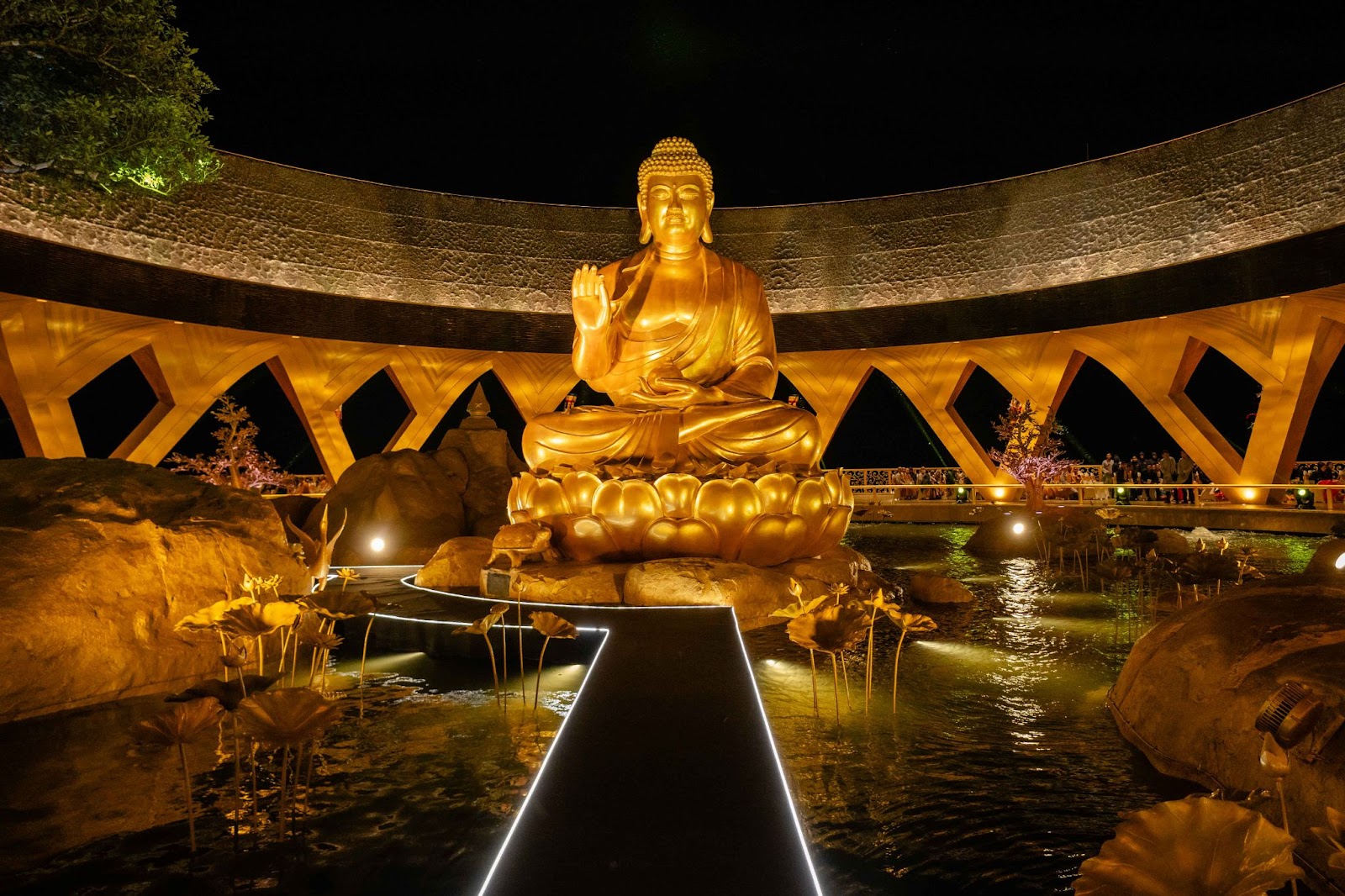
Konagamana Buddha Statue at the summit of Ba Den Mountain, a new spiritual landmark in southern Vietnam (Photo: Vi Vu Vietnam/Unsplash)
The statue stands 7.2 meters tall, cast in red bronze and finished with 24k gold leaf paint. Seated in a meditative lotus posture, the Buddha displays the teaching gesture, reflecting the transmission of the Dharma. The statue is placed within the Udumbara Garden on the mountain summit, a space designed for contemplation and ceremonial practice.
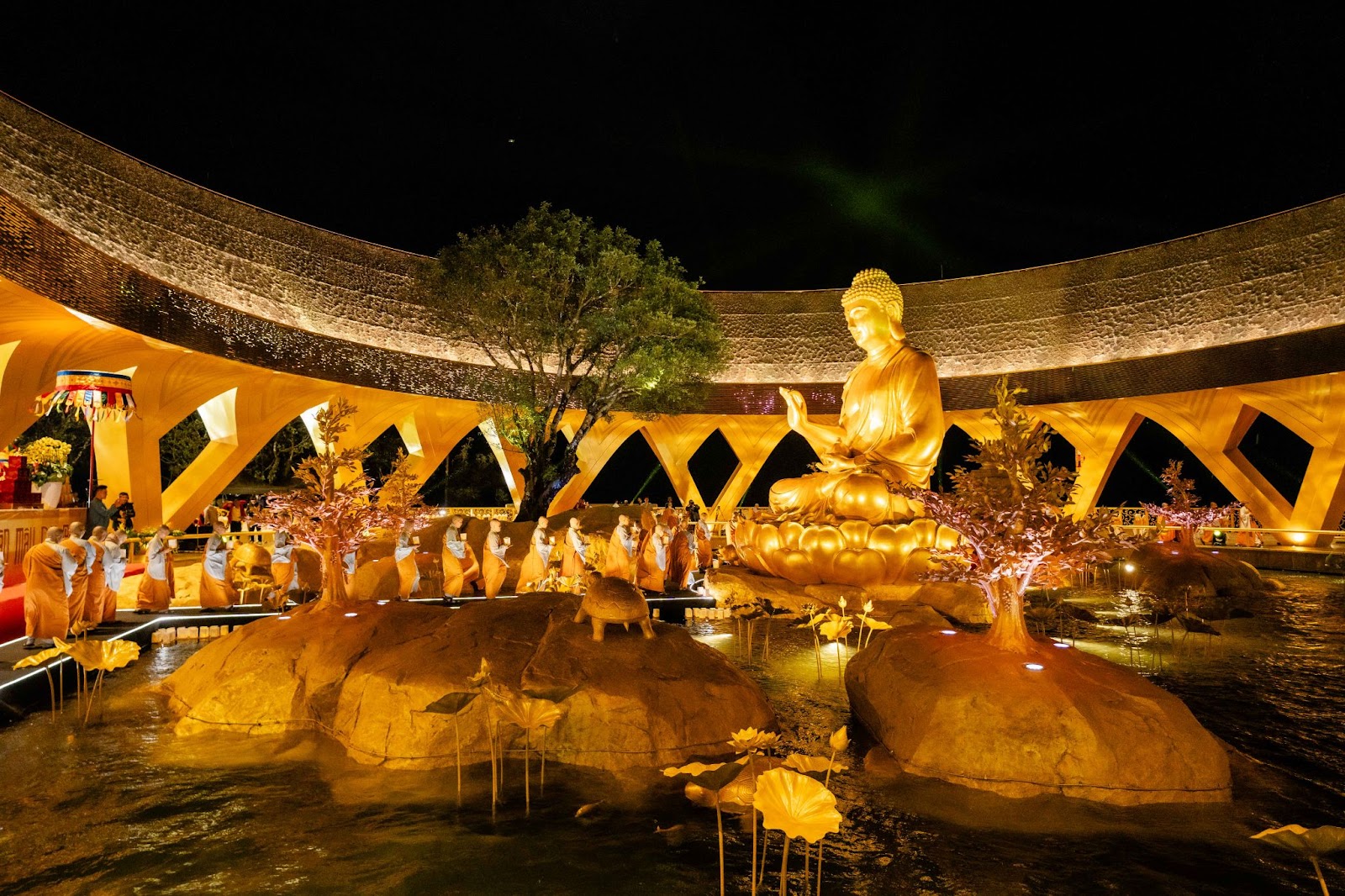
The Konagamana Buddha Statue set within the Udumbara Garden on Ba Den Mountain (Photo: Collected)
Surrounding the statue, the Udumbara Garden is conceived as a symbolic spiritual setting rather than a conventional landscaped garden. The circular water feature and lotus-inspired layout reference the Udumbara flower, a Buddhist symbol associated with auspiciousness and the rare appearance of enlightened beings. This setting enhances the contemplative atmosphere of the statue, reinforcing its role as a focal point for quiet reflection within the broader pilgrimage complex.
2.2 Tay Bo Da Son Lady Buddha Statue, Ba Den Mountain (Tay Ninh)
Rising prominently on the summit of Ba Den Mountain, the Tay Bo Da Son Lady Buddha Statue is one of the most monumental and widely recognized Buddhist icons in southern Vietnam. With a total height of 72 meters, the statue is cast from more than 170 tonnes of red bronze and positioned at an elevation of 986 meters above sea level, allowing it to dominate the surrounding landscape and become visible across vast distances. Its sheer scale and placement have made it a defining landmark among the most iconic buddha statues in Vietnam.
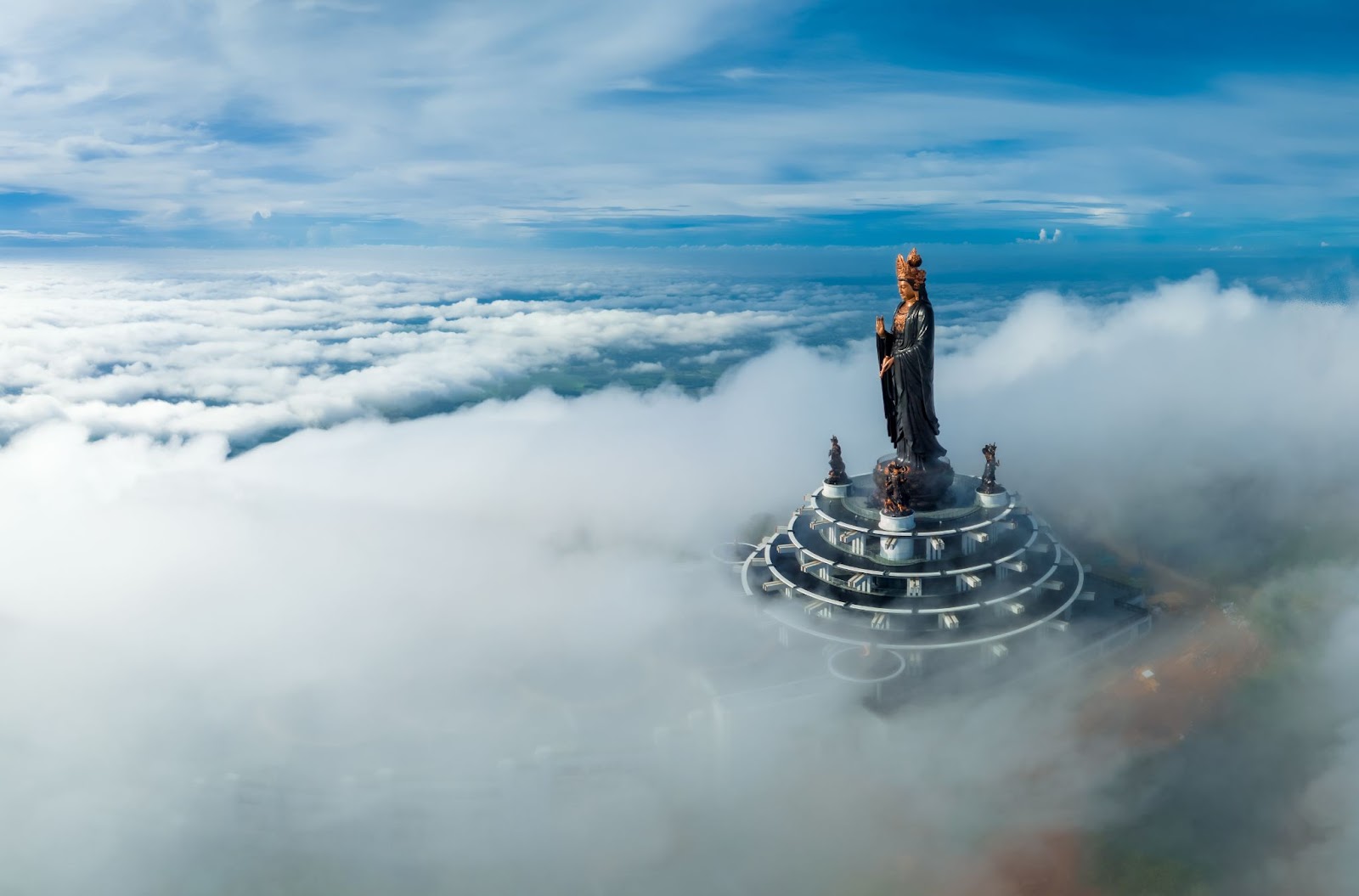
The Tay Bo Da Son Lady Buddha Statue rising amidst the clouds on Ba Den Mountain (Photo: Vi Vu Vietnam/Unsplash)
In 2020, the statue set records including “the tallest bronze Lady Buddha statue in Asia located on a mountain peak” and “the tallest bronze Lady Buddha statue in Vietnam located on a mountain peak.” Around the statue are four bronze statues of the Four Heavenly Kings. From above, the layout is described as a concentric composition with water features cascading down toward a series of lower circular basins. Beneath the statue is a four-level base with a total area of 4,410 meter square, designed as a Buddhist exhibition space with spiritual experiences.
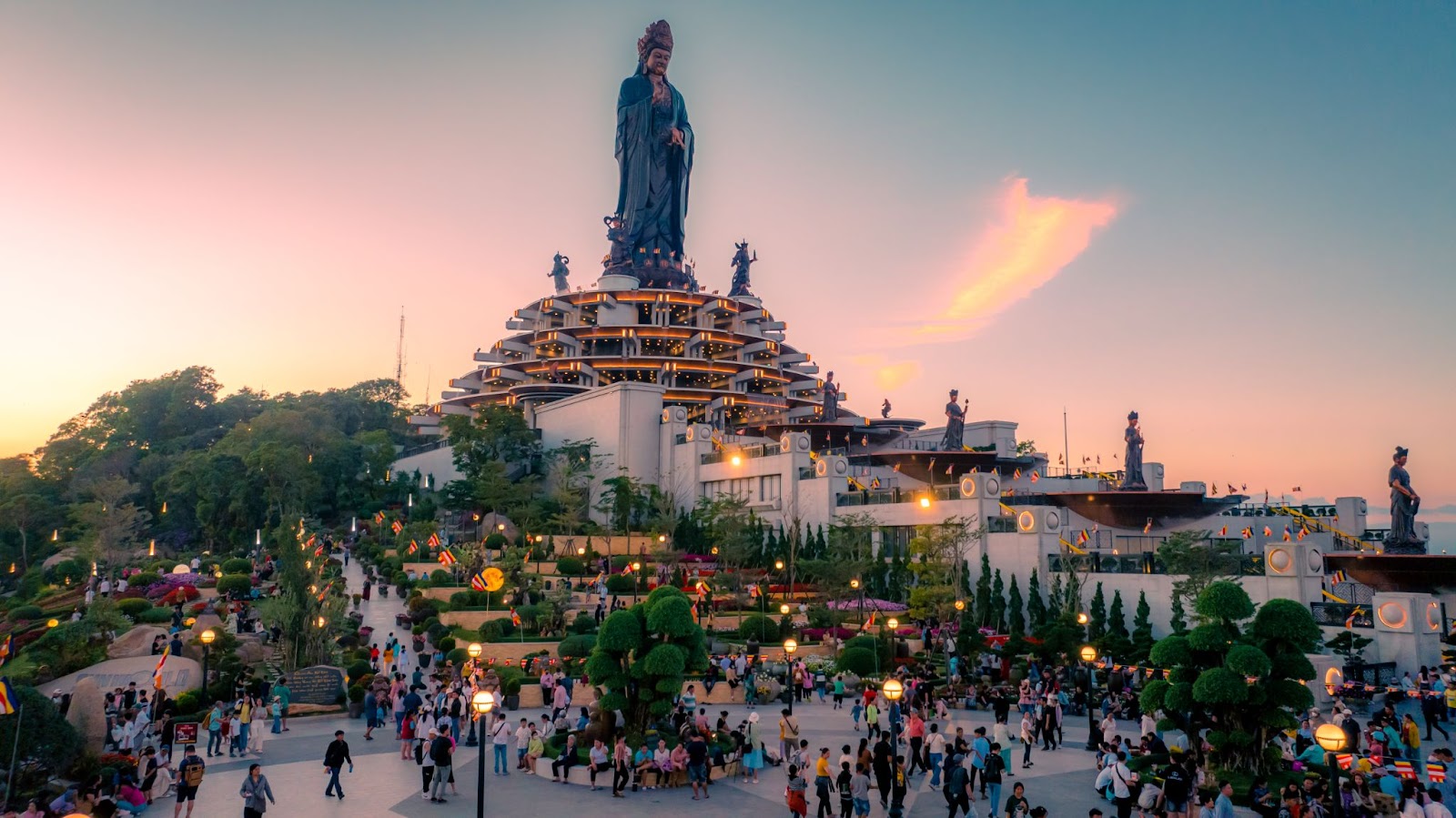
The Tay Bo Da Son Lady Buddha Statue overlooking the whole spiritual complex at Sun World Ba Den Mountain (Photo: Vi Vu Vietnam/Unsplash)
Today, it stands not only as the spiritual centerpiece of Ba Den Mountain but also as one of the most powerful pilgrimage symbols, one of the most iconic Buddha statues in Vietnam.
2.3 Maitreya Bodhisattva Statue, Ba Den Mountain (Tay Ninh)
Located within the summit spiritual complex of Ba Den Mountain, the Maitreya Bodhisattva Statue is one of the most visually distinctive monumental figures at the site and a notable presence among major buddha statues in Vietnam. The statue measures 36 meters in height, with a maximum width of 45 meters, and is constructed from 5,112 tonnes of natural sandstone. Its surface spans 4,651 square meters, assembled from 6,688 stone blocks arranged in 54 stepped layers, a design inspired by the geometry of terraced fields.
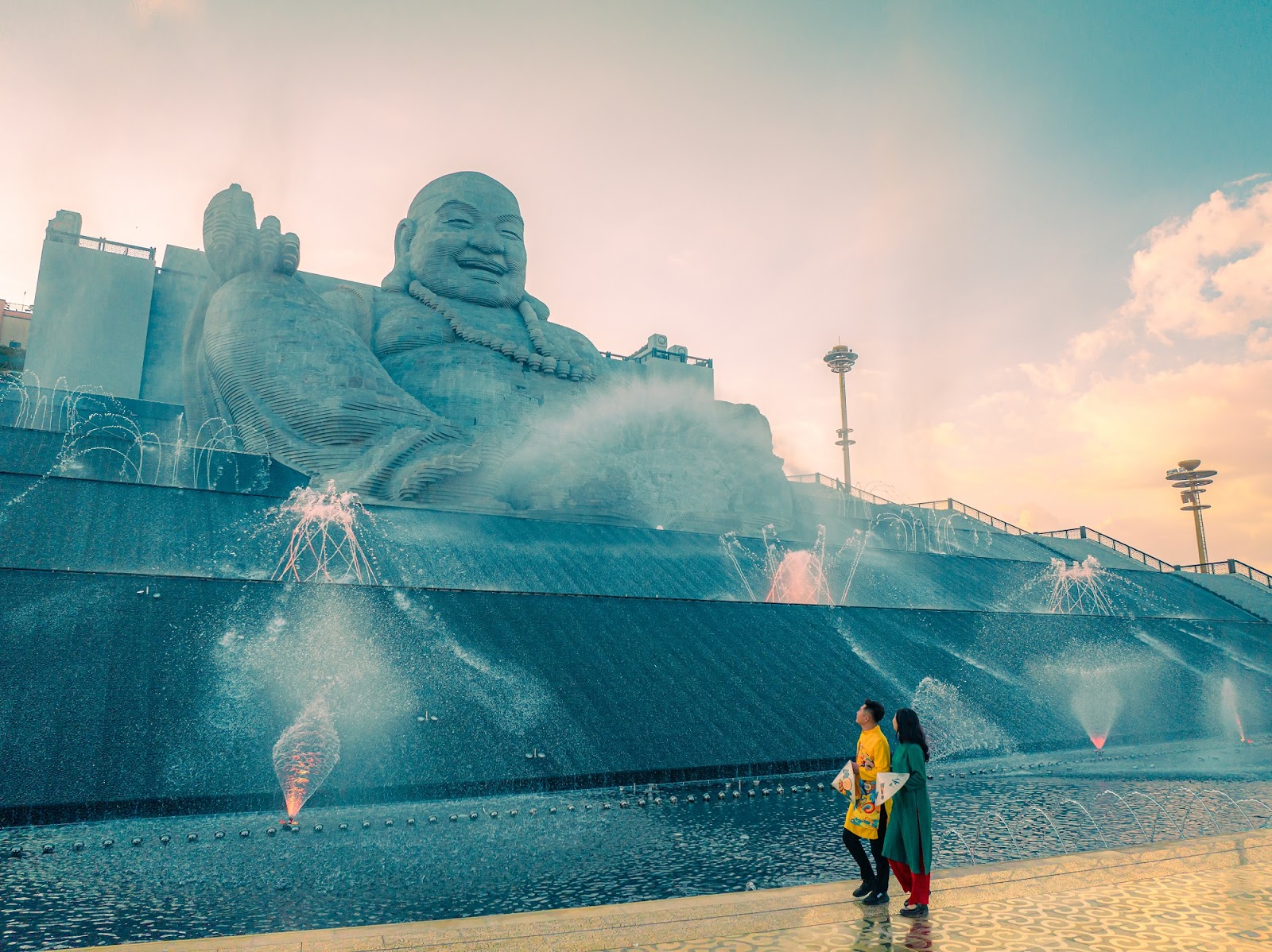
The Maitreya Bodhisattva Statue symbolizing joy and enlightenment at the summit of Ba Den Mountain (Photo: Collected)
The statue represents Maitreya Bodhisattva, associated in Buddhist belief with joy, benevolence, and the future appearance of enlightenment. Rather than emphasizing decorative detail, the design highlights mass, texture, and architectural clarity, allowing the statue to merge sculptural presence with the surrounding landscape.
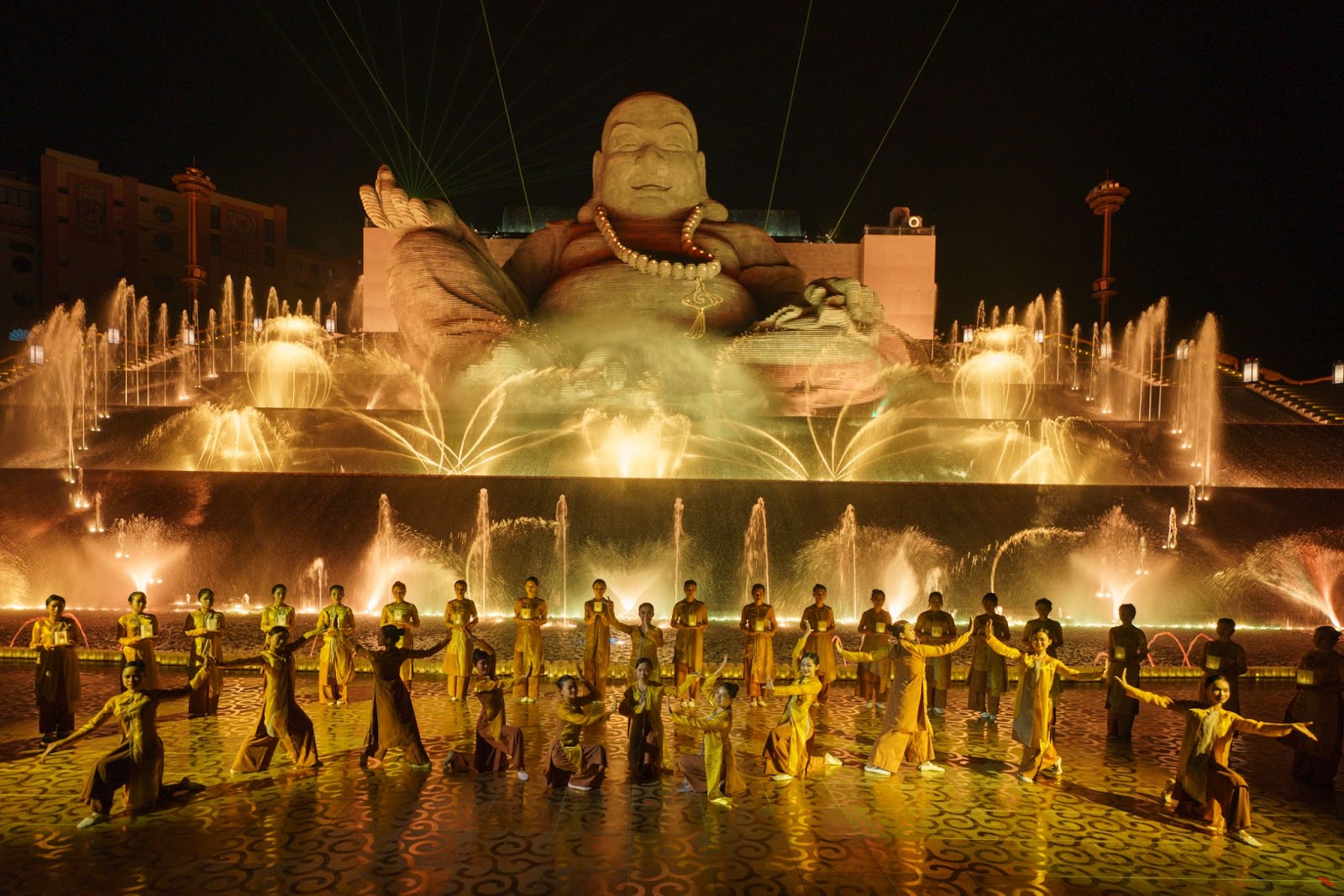
The Maitreya Bodhisattva Statue – Vietnam’s largest sandstone Maitreya statue (Photo: Vi Vu Vietnam/Unsplash)
The Maitreya Bodhisattva Statue has been recognized as the largest sandstone Maitreya statue in Vietnam, underscoring its exceptional scale and material choice. Together with other monumental works on the summit, it reinforces Ba Den Mountain’s status as one of the most prominent pilgrimage destinations and a key concentration of iconic buddha statues in Vietnam.
2.4 Great Amitabha Buddha Statue, Fansipan (Sa Pa)
Situated within the summit spiritual complex of Fansipan, the Great Amitabha Buddha Statue rises above the Hoang Lien Son range at an elevation exceeding 3,000 meters. Standing 21.5 meters tall and cast in bronze, the statue forms the spiritual center of the Fansipan summit complex, where altitude and landscape play a defining role in the act of pilgrimage.
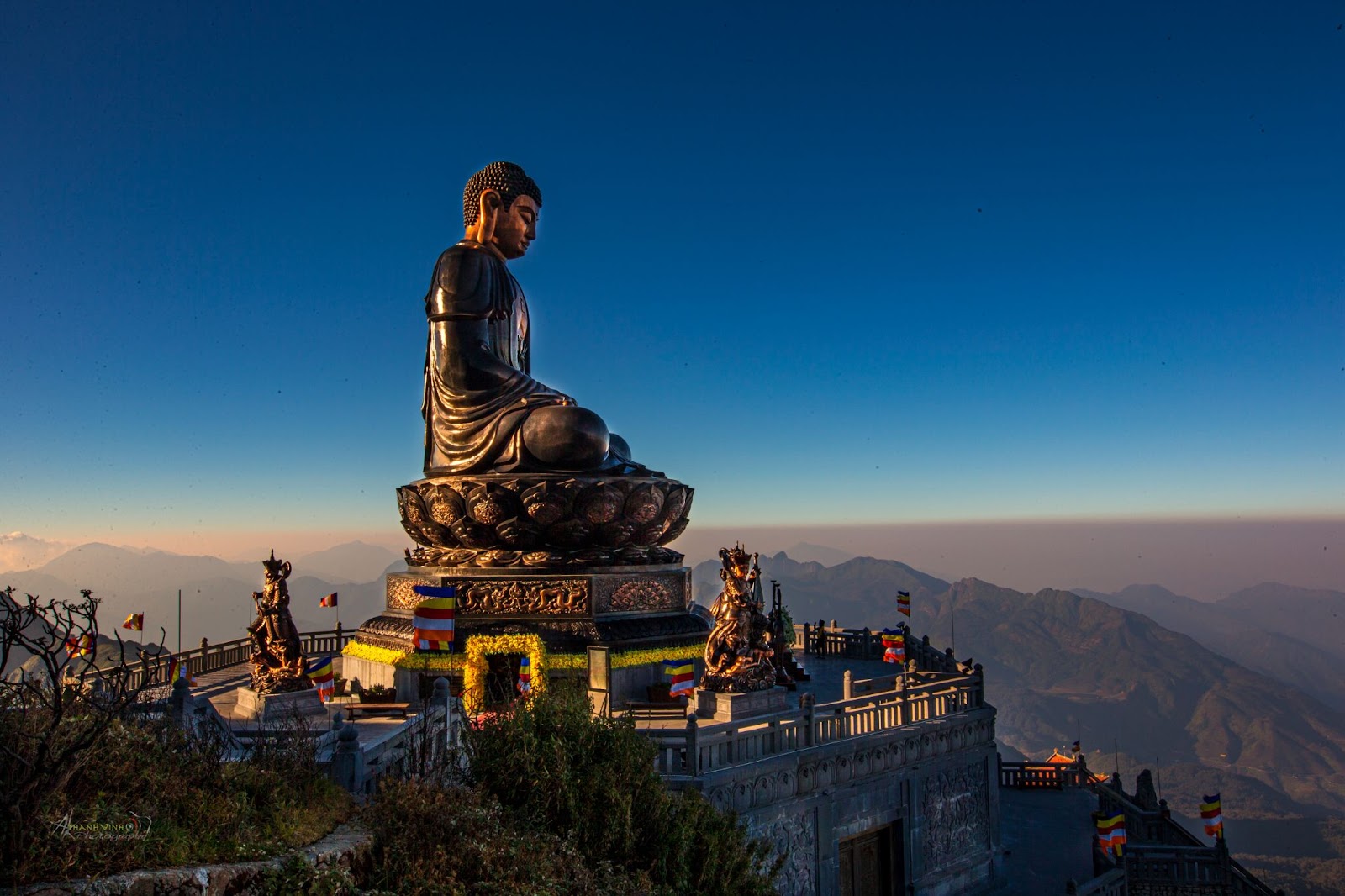
The largest bronze Amitabha Buddha statue at Fansipan peak (Photo: Vi Vu Vietnam/Unsplash)
Depicting Amitabha Buddha, a central figure associated with compassion and liberation in Mahayana Buddhism, the statue is positioned as the spiritual axis of the Fansipan summit complex. Its calm posture and balanced proportions emphasize serenity and contemplation, aligning religious symbolism with the vast, cloud-covered mountain landscape.
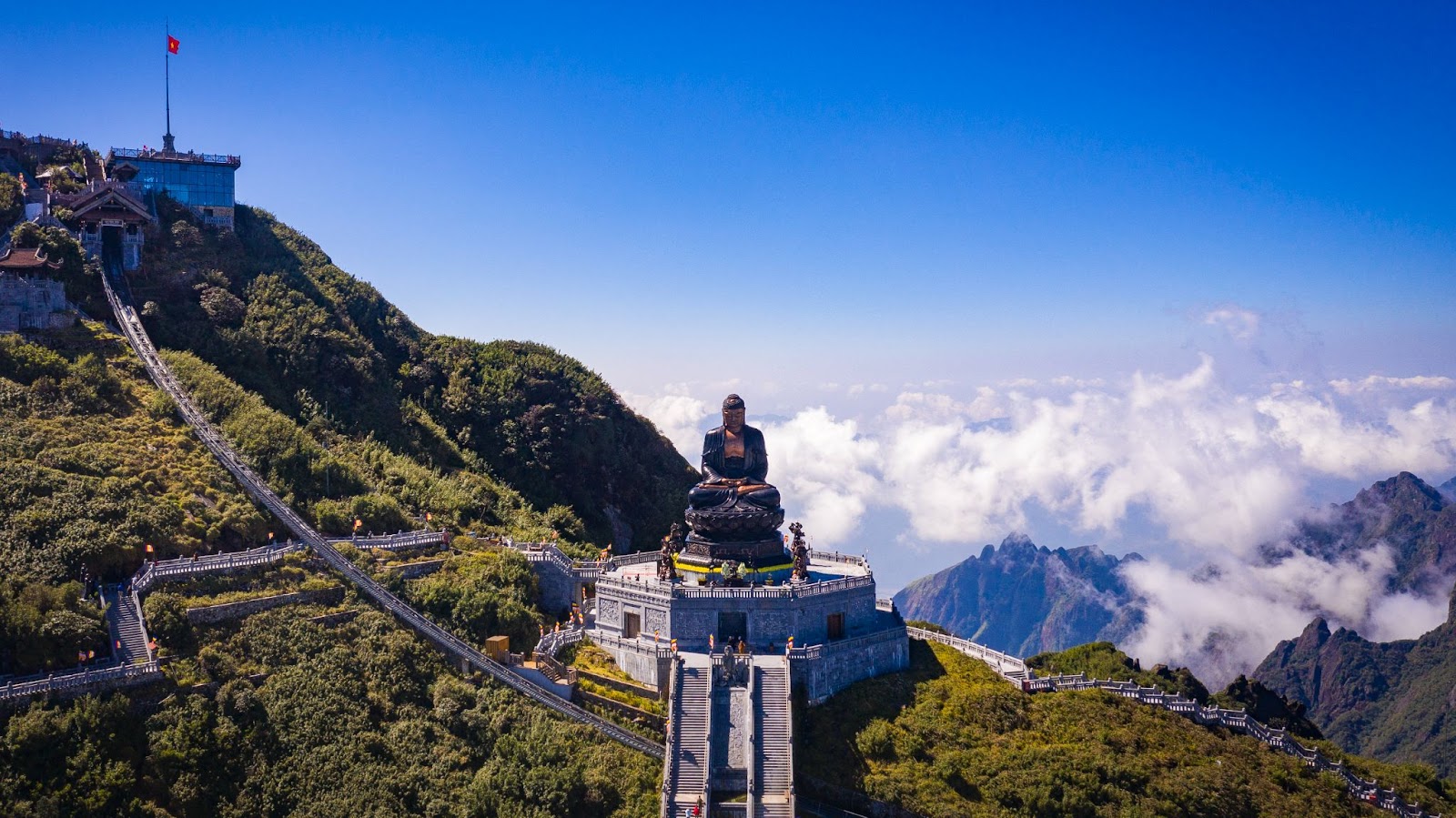
A landmark Buddha statue above 3,000 meters among the spiritual complex on Fansipan mountain (Photo: Vi Vu Vietnam/Unsplash)
The statue is widely recognized as the largest bronze Amitabha Buddha statue in Vietnam located at high altitude, a distinction that underscores its importance within the country’s contemporary Buddhist landscape. Together with surrounding temples and ritual spaces, it contributes to the wider constellation of monumental buddha statues in Vietnam, defined by their setting, symbolism, and enduring role in spiritual travel.
2.5 Avalokitesvara Bodhisattva Statue, Fansipan (Sa Pa)
Located within the spiritual complex on the summit of Fansipan (Sa Pa, Lao Cai), the Avalokiteshvara Bodhisattva Statue is a key stop along the mountain’s pilgrimage route. The statue is cast in bronze, standing 12 meters tall and weighing 18 tonnes, positioned on a natural rock formation along the summit ridge.
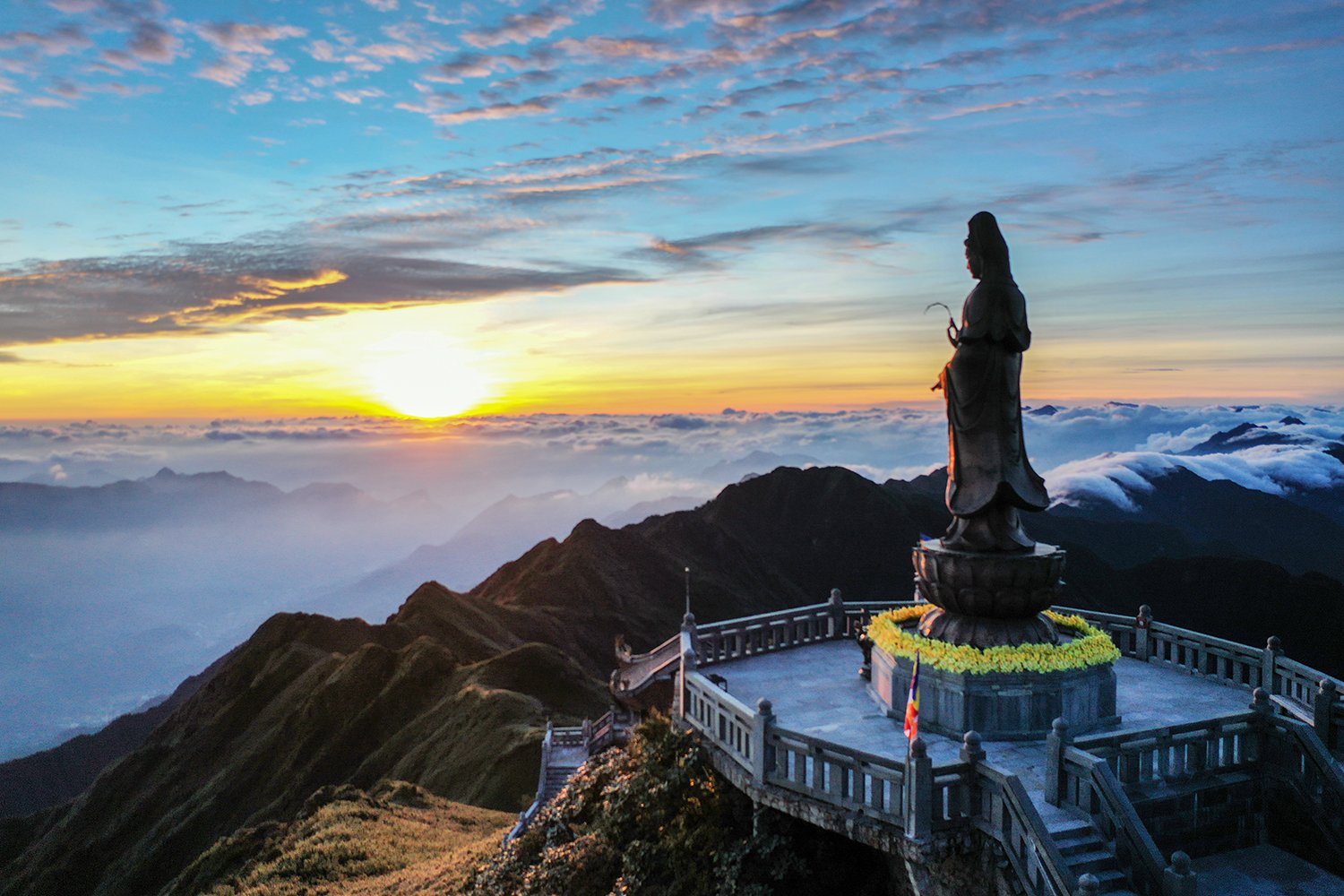
The Avalokitesvara Bodhisattva Statue overlooking the Hoang Lien Son range from Fansipan summit (Photo: Vi Vu Vietnam/Unsplash)
The statue depicts Avalokiteshvara Bodhisattva, revered in Buddhist tradition as a symbol of compassion and mercy. In traditional iconography, the figure is associated with attributes such as a willow branch and a sacred vase, motifs commonly linked to compassion and spiritual relief. Rather than relying on overwhelming scale, the statue’s impact comes from its high-altitude setting and its quiet presence within the broader summit complex.
As part of the monumental spiritual landscape of Fansipan, the statue contributes to the network of iconic buddha statues in Vietnam, where symbolism, location, and pilgrimage significance matter as much as size.
2.6 Avalokitesvara Bodhisattva statues - three Linh Ung Pagodas (Da Nang)
Da Nang is unique in Vietnam for hosting 3 Avalokitesvara Bodhisattva statues associated with the 3 Linh Ung Pagodas, forming a spiritual triangle that plays a central role in local pilgrimage culture. These statues are located at Son Tra Peninsula, Marble Mountains, and Ba Na Hills, each occupying a distinct geographical setting that reflects a different relationship between Buddhist practice and the natural landscape.
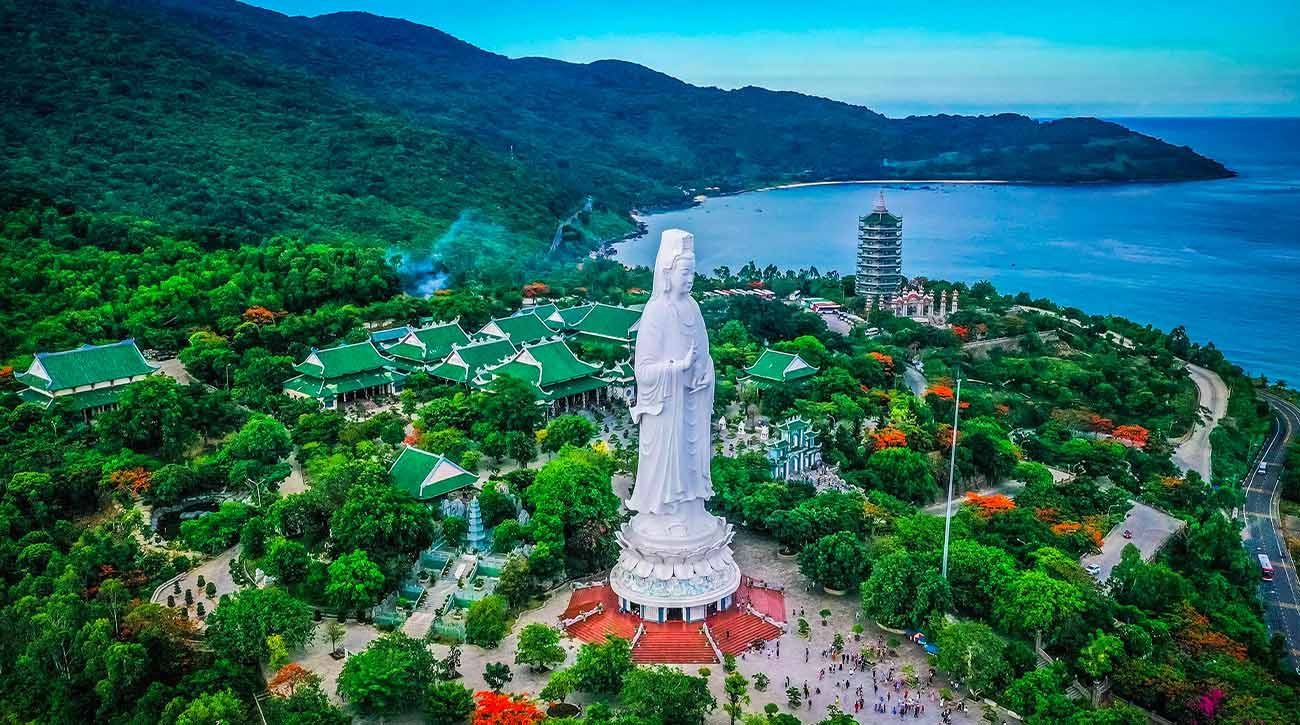
Avalokitesvara Bodhisattva Statue at Linh Ung Pagoda on Son Tra Peninsula, Da Nang (Photo: Collected)
The most prominent of the three stands at Linh Ung Pagoda on Son Tra Peninsula, where the Avalokitesvara Bodhisattva statue rises 67 meters high, facing the sea and serving as a major spiritual landmark for the city. At Ba Na Hills, the The Shakyamuni Buddha statue forms part of a high-altitude spiritual complex set among forested slopes, linking mountain pilgrimage with contemporary spiritual visitation.
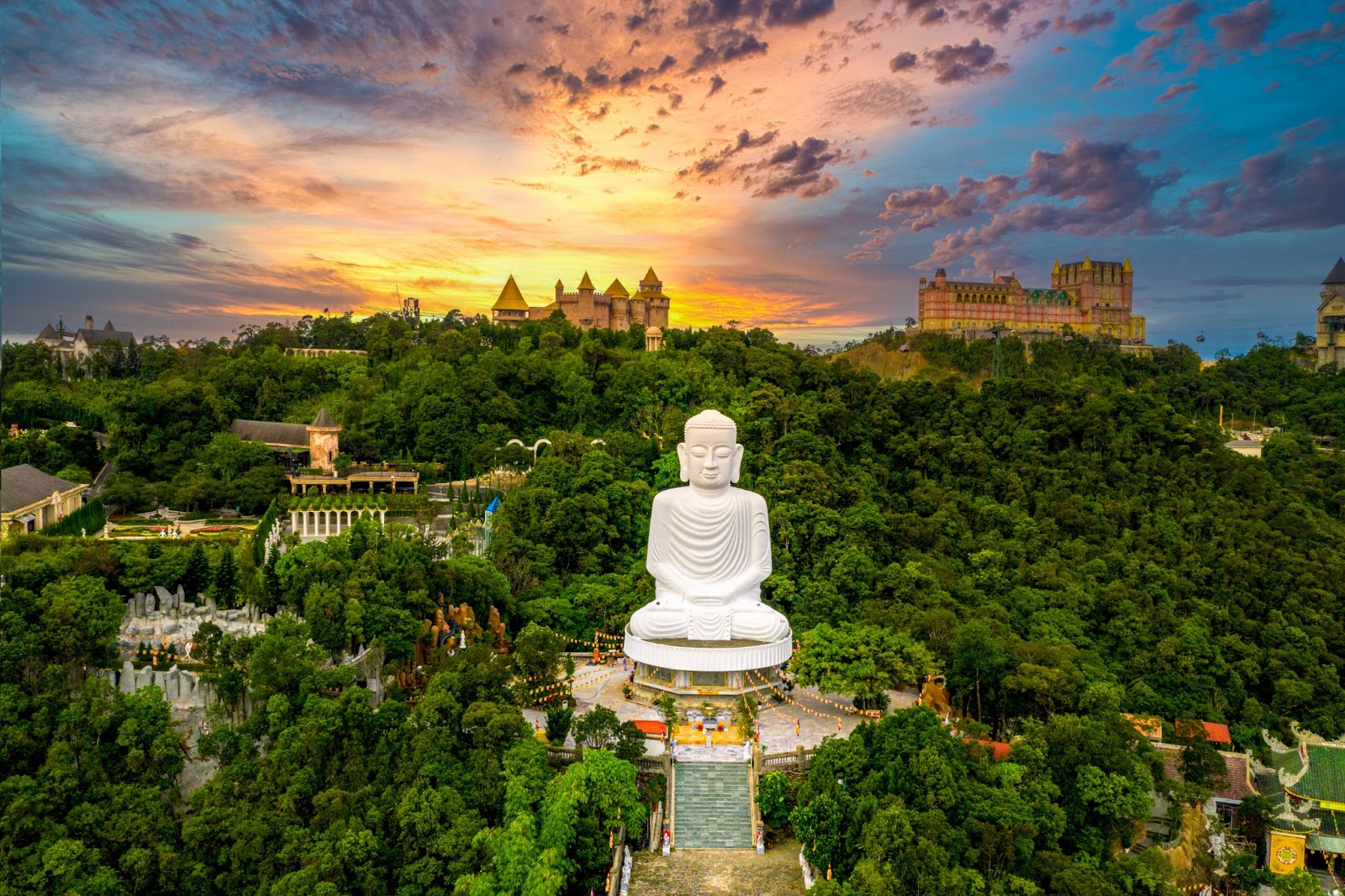
The Shakyamuni Buddha statue at Linh Ung Pagoda, Ba Na Hills, marking Da Nang’s high-mountain Buddhist sanctuary (Photo: Collected)
Together, the three Linh Ung Avalokitesvara Bodhisattva statues are commonly understood as symbolizing protection, compassion, and spiritual balance for Da Nang, uniting sea, lowland, and mountain into a single sacred geography. This configuration gives Da Nang a distinctive position among destinations known for monumental buddha statues in Vietnam, where spiritual meaning emerges from the collective presence of multiple statues rather than a single dominant monument.
2.7 Monumental Buddha Statues at Bai Dinh Pagoda (Ninh Binh)
The Bai Dinh complex in Ninh Binh is home to a remarkable concentration of monumental Buddha statues, forming one of the most significant clusters of large-scale Buddhist sculptures in the country. Rather than a single dominant icon, Bai Dinh is defined by multiple statues whose scale and symbolism together establish its importance within the landscape of iconic buddha statues in Vietnam.
At the spiritual core stands the Shakyamuni Buddha statue, cast in bronze and plated with gold, measuring 10 meters in height and weighing approximately 100 tonnes. Enshrined in the main hall, the statue is widely recognized as the largest gold-plated bronze Shakyamuni Buddha statue in Asia, symbolizing enlightenment, composure, and meditative clarity.
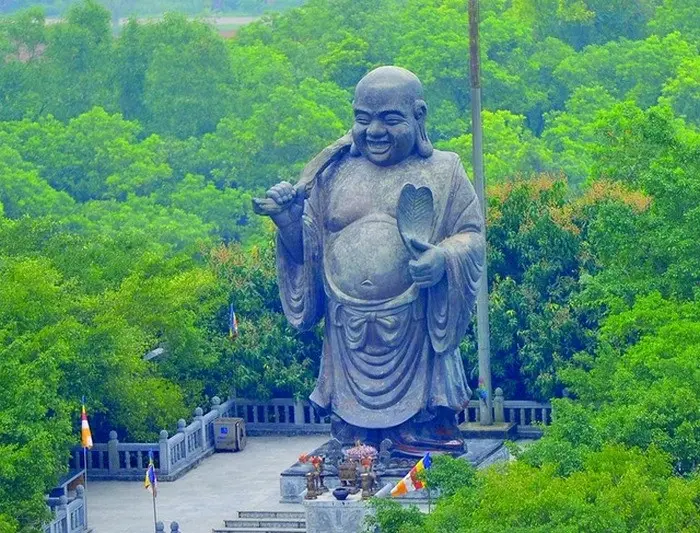
The bronze Maitreya Buddha statue at Bai Dinh Pagoda (Photo: Collected)
Complementing this is the Maitreya Buddha statue, also cast in bronze, standing 10 meters tall and weighing around 80 tonnes. Recognized as the largest bronze Maitreya Buddha statue in Vietnam, it represents joy, benevolence, and hope for the future, offering a contrasting yet harmonious spiritual expression.
Together with the extensive series of Arhat statues lining the corridors, these monumental figures create a sculptural landscape where devotion is expressed through repetition, scale, and continuity. At Bai Dinh, the power of pilgrimage does not rest on a single image, but on the collective presence of its Buddha statues, making the site a defining reference among monumental buddha statues in Vietnam.
2.8 Shakyamuni Buddha Statue, Hoi Khanh Pagoda (Ho Chi Minh City)
Located at Hoi Khanh Pagoda, the Reclining Shakyamuni Buddha Statue is one of the most widely recognized Buddhist landmarks in southern Vietnam and a distinctive presence among monumental buddha statues in Vietnam. The statue depicts Shakyamuni Buddha in the moment of entering Parinirvana, lying on his right side in a posture symbolizing liberation and transcendence.
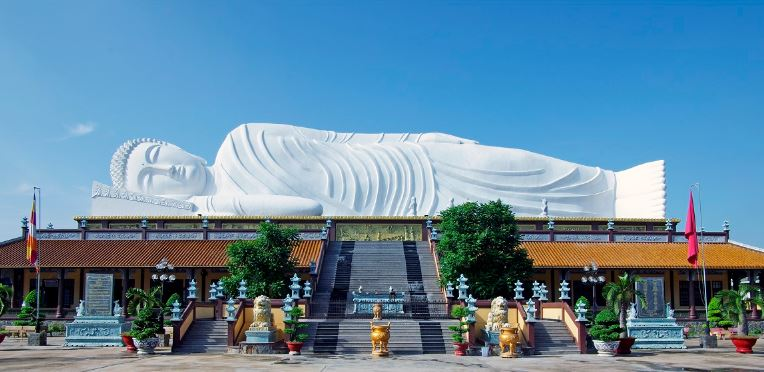
One of Vietnam’s largest reclining Buddha statues (Photo: Collected)
The statue measures approximately 52 meters in length and rises to about 12 meters in height, making it one of the largest reclining Buddha statues in Vietnam. Set on an elevated platform within the pagoda grounds, the statue’s horizontal form contrasts sharply with the vertical dominance of standing Buddha images, creating a powerful visual statement centered on stillness rather than grandeur.
Over time, the Reclining Buddha at Hoi Khanh Pagoda has become a familiar cultural image, frequently associated with Binh Duong in both religious and popular discourse. Its scale, clarity of form, and accessibility have secured its place as one of the most iconic reclining Buddha statues in the country, reinforcing its significance within the broader landscape of buddha statues in Vietnam.
2.9 Great Amitabha Buddha Statue, Khai Nguyen Pagoda (Hanoi)
Located at Khai Nguyen Pagoda, the Great Amitabha Buddha Statue stands as one of the tallest freestanding Buddha statues in northern Vietnam and a highly recognizable landmark within the broader landscape of buddha statues in Vietnam. The statue reaches a height of approximately 72 meters, giving it strong visibility across the surrounding area and clear landmark value.
Depicting Amitabha Buddha in a standing posture, the statue emphasizes aspiration, compassion, and guidance toward the Pure Land. Its vertical form and open placement allow the statue to be perceived from afar, functioning as a visual anchor for pilgrimage rather than an element enclosed within temple architecture.
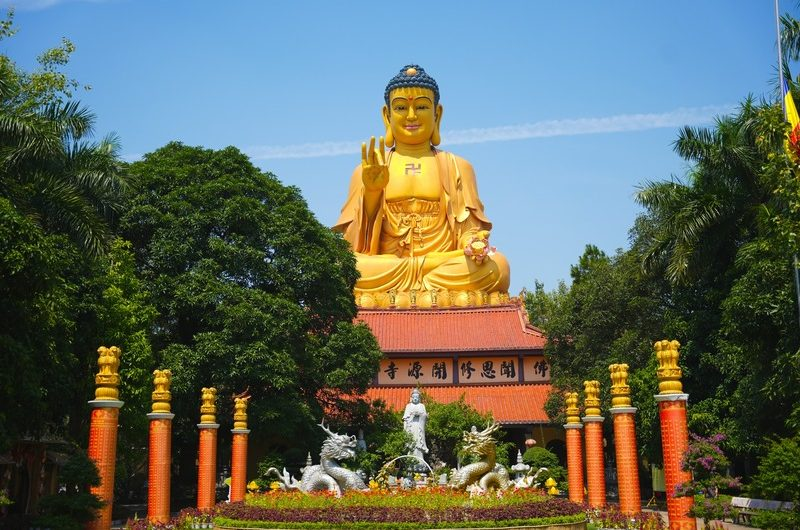
One of the tallest freestanding Buddha statues in northern Vietnam (Photo: Collected)
Since opening to visitors, the statue has attracted large numbers of worshippers and travelers, rapidly becoming one of the most widely recognized contemporary Buddha monuments in the Hanoi region. Its scale and clarity of form strengthen its position among iconic Buddha statues in Vietnam.
2.10 Amitabha Buddha Statue, Van Phuc Pagoda, Phat Tich Mountain (Bac Ninh)
The Amitabha Buddha Statue is located at Van Phuc Pagoda, on the southern slope of Phat Tich Mountain. Seated at the heart of the pagoda complex, the statue is carved from green stone, depicting Amitabha Buddha in a meditative posture on a lotus throne. With a height of 27 meters and an estimated weight of 3,000 tonnes, it stands as one of the largest stone Buddha statues in Vietnam and a prominent landmark among monumental buddha statues in Vietnam.
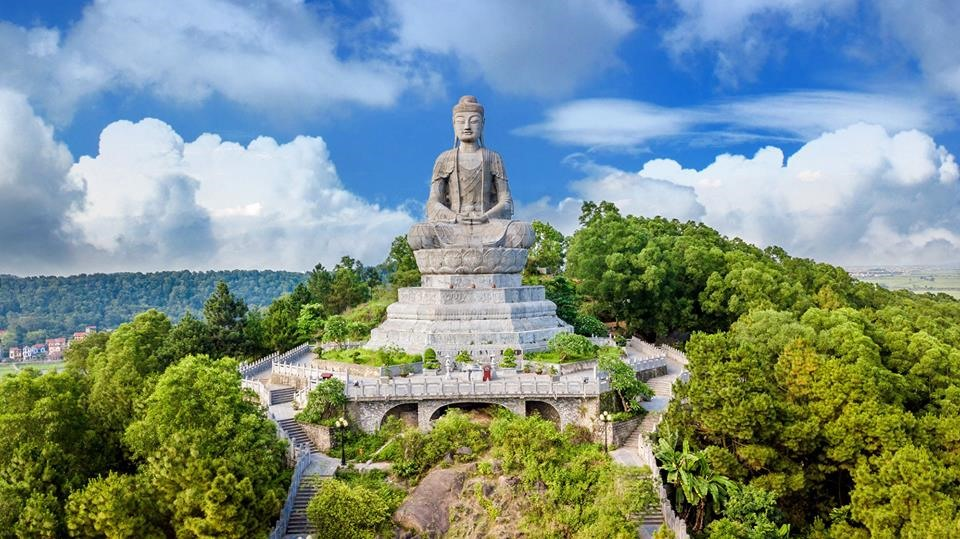
One of Vietnam’s largest stone Buddha statues carved from green stone (Photo: Collected)
The statue was created in connection with the 1,000th anniversary of Thang Long – Hanoi, giving it not only spiritual significance but also strong cultural and commemorative value. The level of craftsmanship is evident in the finely carved facial features, flowing robes, and balanced proportions, which emphasize serenity and composure rather than dramatic scale alone.
Within the broader landscape of buddha statues in Vietnam, the Amitabha Buddha at Phat Tich is distinguished by its material, scale, and symbolic role as a contemporary monument rooted in historical memory.
Conclusion
Across regions and eras, monumental Buddha statues have shaped how spiritual landscapes are perceived and experienced in Vietnam. From mountain summits wrapped in clouds to open plains and ancient hillsides, these statues serve as enduring reference points for pilgrimage, belief, and cultural memory. Taken together, these 10 iconic buddha statues in Vietnam reveal how scale, symbolism, and setting shape the country’s spiritual landscape. Some statues stand out through monumental height and visibility, while others gain lasting significance from craftsmanship, history, or cultural memory. Viewed as a whole, they form a continuous spiritual map across Vietnam, where Buddhist belief is expressed through enduring landmarks rather than fleeting experience.


