




1. When does the Sapa rice planting season take place
Sapa rice planting season usually begins around May and lasts until mid-June each year, depending on the weather conditions in each area. This is considered the sacred water pouring season, when ethnic people start planting young rice seedlings and channeling water into the terraced fields to prepare for the upcoming crop.
The scenery at this time has a unique character, unlike the Sapa rice planting season during the golden ripe rice months from September to October. Instead of a vibrant golden picture, the terraced fields are adorned with the fresh green color of young rice seedlings, creating a peaceful, simple feeling characteristic of the highlands. The water surface on the fields shimmers, reflecting the deep blue sky and drifting white clouds, like large mirrors spread across the mountainside.
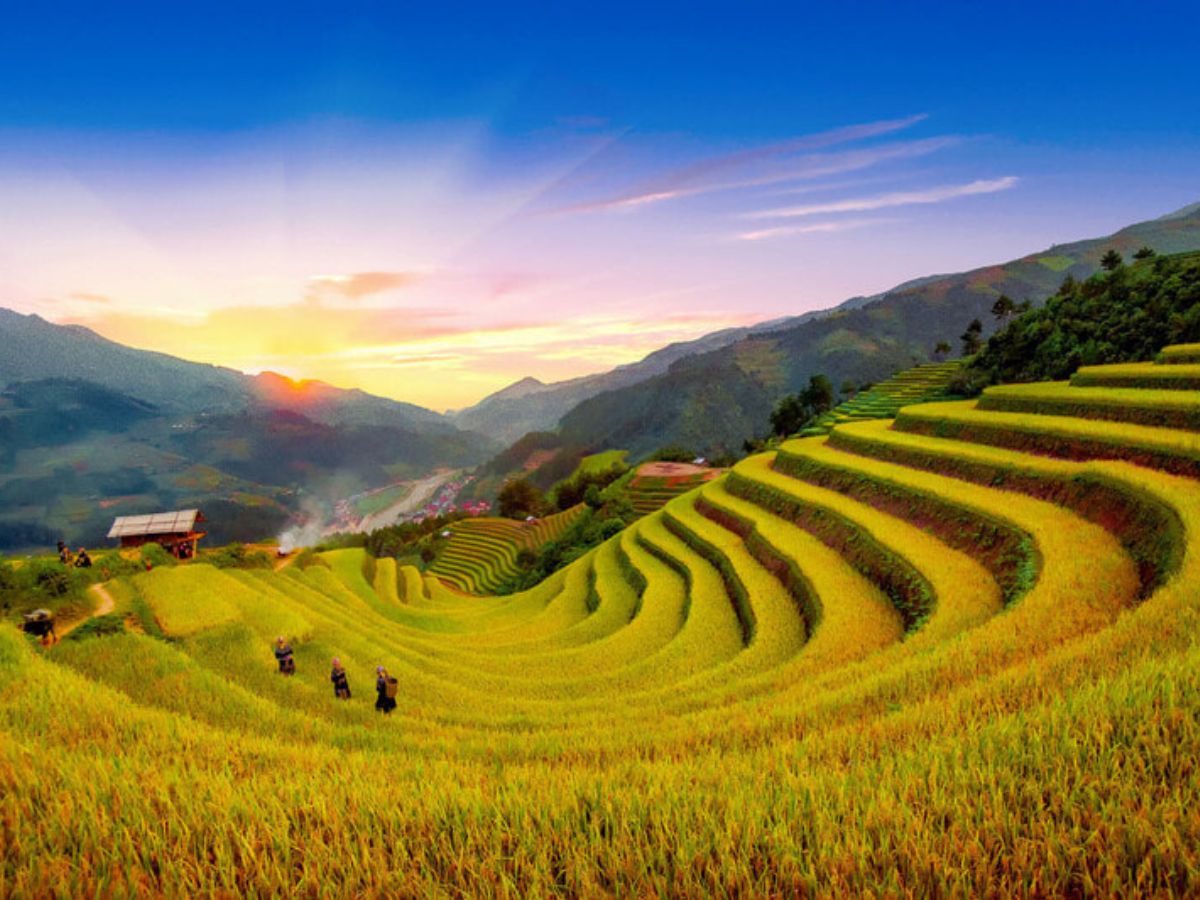
Sapa terraced fields shimmering in the water-pouring season, reflecting the clouds and sky of Tay Bac. (Source: Collected)
People in Sa Pa only grow one main rice crop per year, so the rice transplanting activity usually lasts from 3 to 4 weeks, coinciding with the time when early summer rains begin to fall on the mountains and forests. As a result, the air at this time is always fresh, cool, and very convenient for sightseeing and experience tours.
2. Characteristic beauty of the Sapa rice transplanting season
Terraced fields in Sa Pa wind around the mountainsides, creating a unique beauty, hard to confuse with any other place. When the early morning sunlight shines on the water covering the fields, the entire vast area shines brightly like thousands of small mirrors, reflecting the floating clouds and sky. The Sapa rice transplanting season brings a sense of tranquility, relaxation, evoking peace in the mountains and forests.
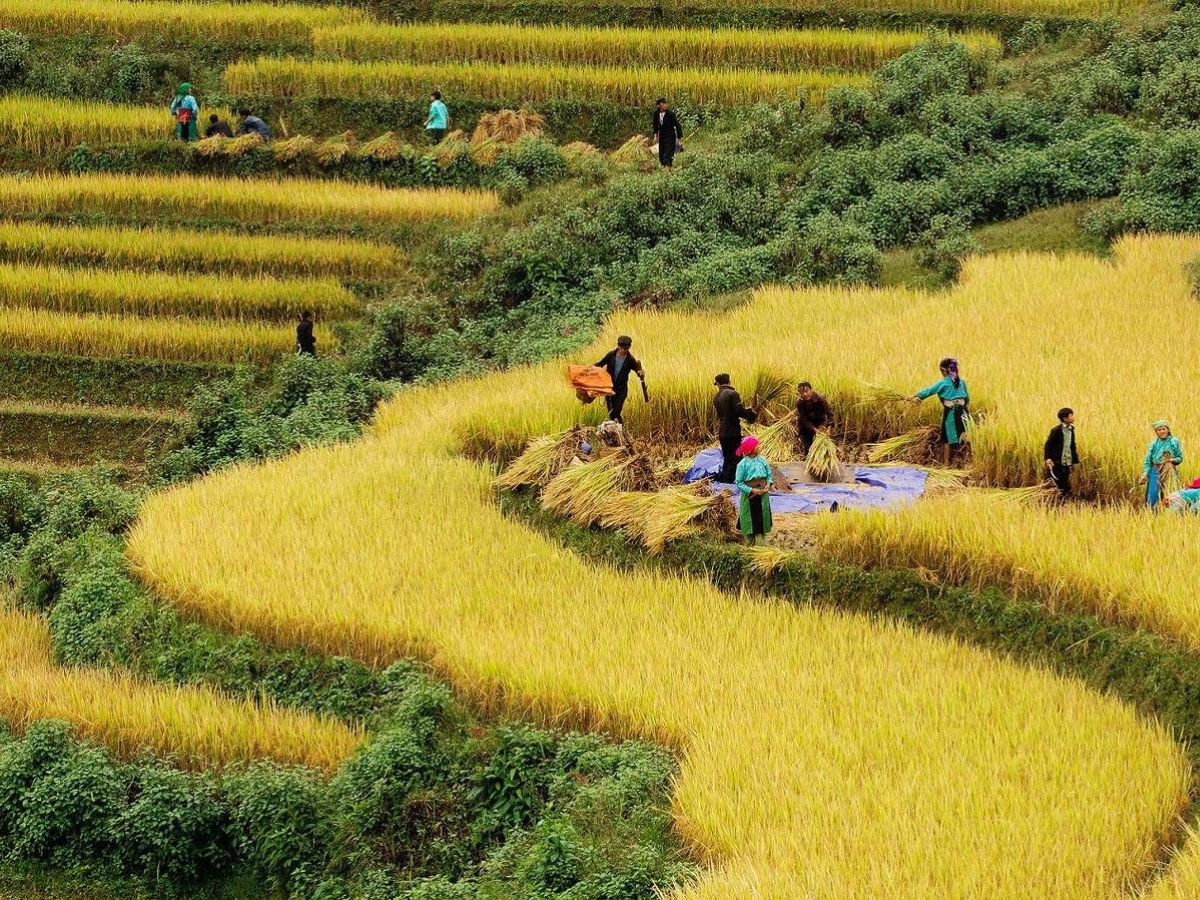
The rice planting season brings a peaceful, warm rhythm of life amidst the mountains and forests of Tay Bac. (Source: Collected)
On those fields, the H'Mong, Red Dao, and Giay ethnic groups work together, creating a vibrant and colorful picture. Colorful brocade dresses stand out against the green of young rice sprouts and the silvery reflection of the water surface, making the space here more captivating. Everyone enthusiastically plants rice, chats, and shares work together in a spirit of close community.
The sounds often heard during the rice planting season in Sa Pa are lively chatter, mixed with the diligent plowing of buffaloes in the fields and the babbling sound of water flowing from irrigation channels. All blend into a symphony of the mountains and forests, making the atmosphere here more lively and warm.
3. Best places to admire the Sapa rice planting season
3.1. Muong Hoa Valley
Muong Hoa Valley is famous for its long, winding terraced fields along the mountainside. The rice planting season in Sa Pa here makes a strong impression with its vast and majestic natural scenery. From the center of Sa Pa town, it only takes about 30 minutes by motorbike to reach this location.
This area also has many homestays and photo spots prepared for tourists. Staying overnight here to welcome the dawn breaking over the terraced fields is an experience not to be missed when exploring the rice planting season in Sa Pa .
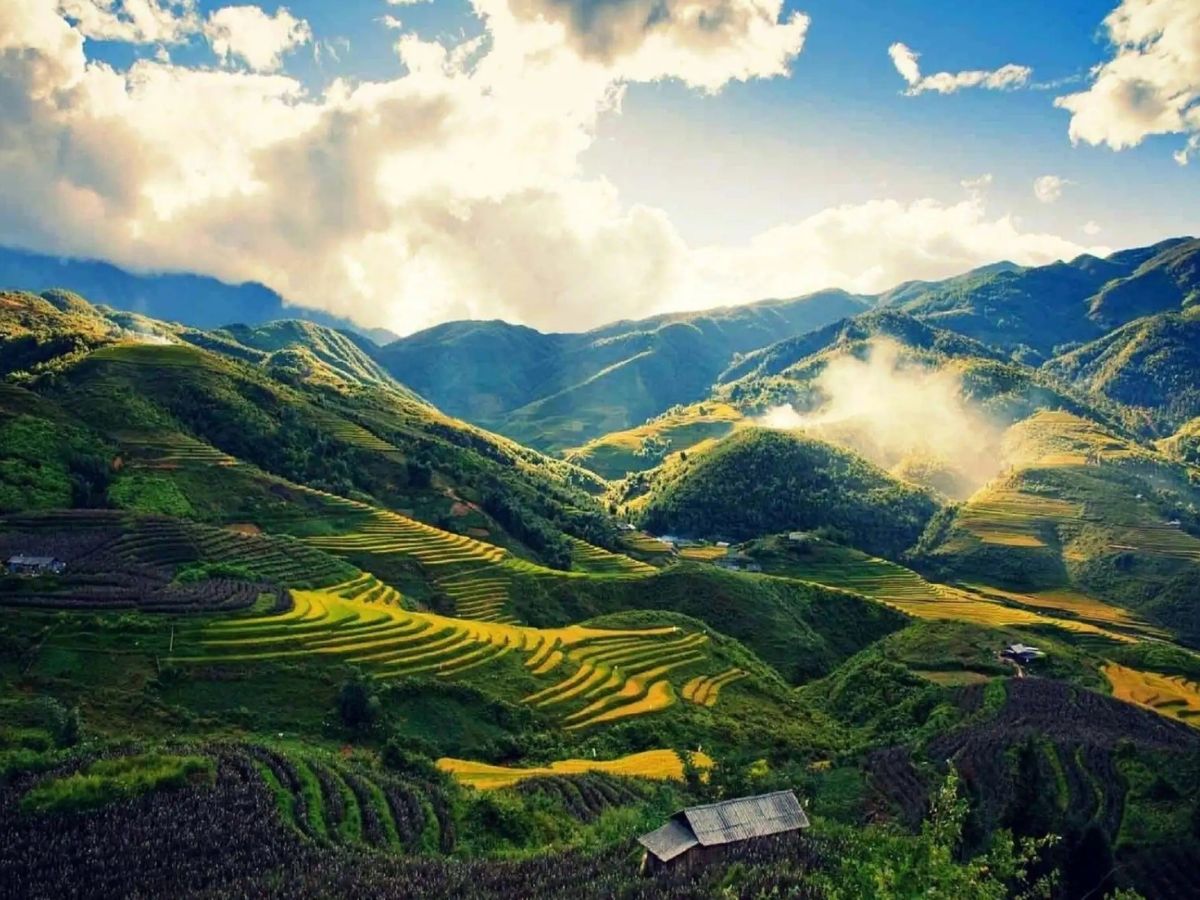
Muong Hoa Valley during the pouring water season, a convergence of light, colors, and the breath of nature. (Source: Collected)
3.2. Ta Van - Lao Chai Village
Ta Van - Lao Chai Village is the main residence of the Giay and H'Mong people, bringing a feeling of peace and closeness to nature. This place is highly rated by many tourists as a great spot to capture beautiful moments of the Sa Pa rice planting season because the scenery still retains its pristine and authentic charm.
Coming here, tourists can not only admire but also have the opportunity to directly try rice planting with the local people. They will enthusiastically guide you on how to hold the seedlings, plant them into the paddy fields, and talk about their lives and farming customs. This intimate experience helps you understand more about the culture and daily life of the ethnic minorities in the highlands.
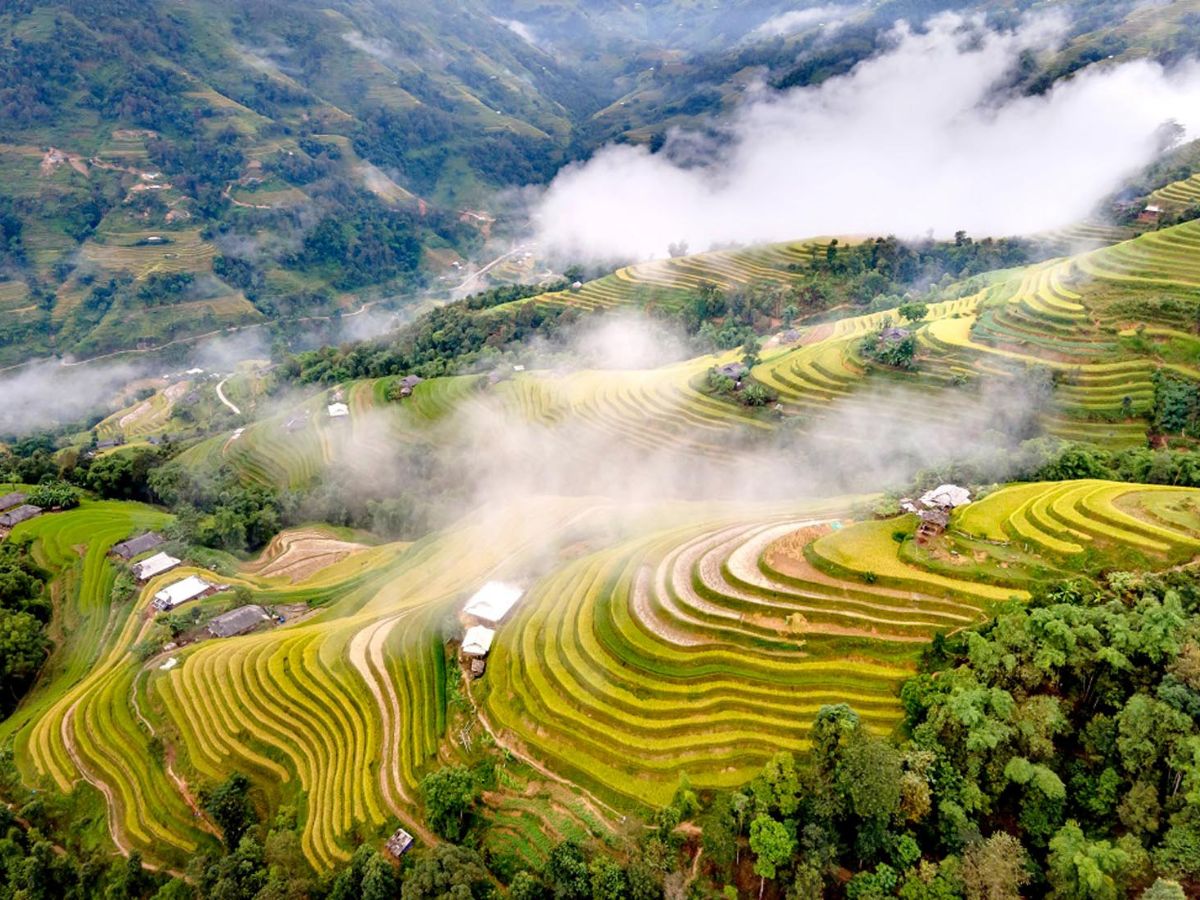
Moments of dawn illuminating the terraced rice fields in Ta Van village. (Source: Collected)
3.3. Cat Cat Village
Cat Cat village is conveniently located, close to the center of Sapa with a distance of only about 3 km, very suitable for those who want to explore in a day. Sapa rice planting season here has a gentle beauty, moderate scale, suitable for family groups with young children or the elderly.
The attraction in Cat Cat is that besides admiring the rice fields, visitors can also combine visiting Tien Sa waterfall with ancient windmills. These three locations form a complete tour route, helping visitors make the most of their time exploring this land.
3.4. O Quy Ho Pass - a viewpoint for the panoramic Sapa flooded paddy season
O Quy Ho Pass is known as one of the most impressive mountain passes in the Northwest, offering a panoramic view down to the entire Sapa valley. At an altitude of over 2,000 m above sea level, visitors can easily admire the entire Sapa rice planting season from above, like a giant natural painting.
This location is especially suitable for those who enjoy cloud hunting combined with viewing the flooded paddy season. In the early morning or late afternoon, as white clouds drift lazily over the mountain peaks, the terraced fields below the valley appear mystical and enchanting.
4. Sapa Rice Planting Season Travel Experience
Choosing appropriate attire when visiting Sapa during the Sapa rice planting season is extremely important. Visitors should prepare comfortable, easy-to-move-in clothing, along with soft-soled or non-slip shoes for convenient travel on muddy terraced paths. Sapa's weather during this season often has morning fog and occasional light drizzle. To ensure health and convenience, you should bring a warm jacket, a lightweight raincoat, and a hat for sun and rain protection. The temperature in Sapa is around 15-22°C, with cool and pleasant air, but the weather can change rapidly.
If you want to capture the most beautiful moments of the Sapa rice planting season , you should take advantage of the early morning from 6 am to 8 am or the late afternoon from 4 pm to 6 pm. At these times, the gentle sunlight shines through the flooded rice fields, creating a shimmering effect between the young green sprouts and the water reflecting the blue sky. Note that you should limit shooting in the middle of the day, as the light is usually too harsh, and the images will not be as desired.
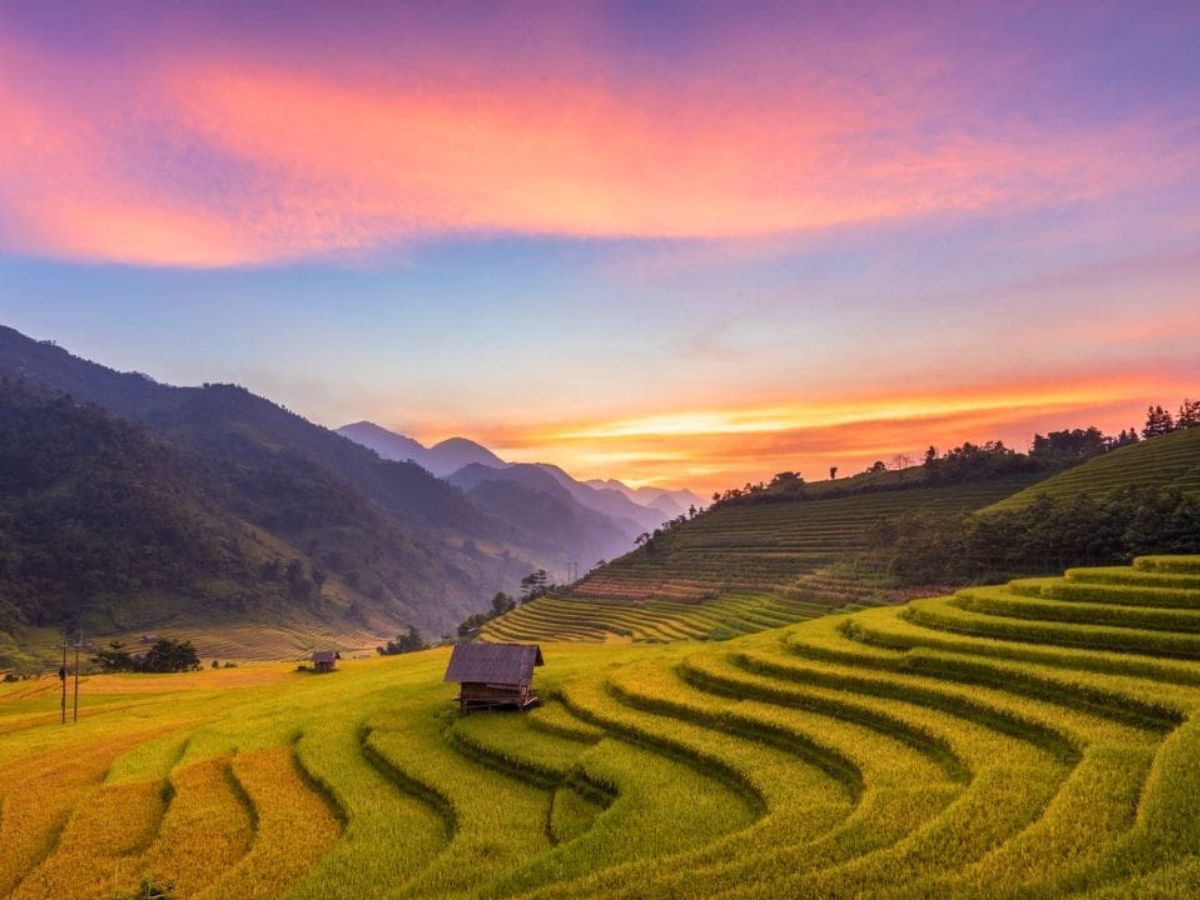
The terraced fields winding around the mountainside create the characteristic beauty of Sapa. (Source: Collected)
The most reasonable means of transportation to explore the Sapa rice planting season is by motorbike or private car rental. This allows you to stop anywhere you want to take photos, rest, or admire the scenery. To get to Sapa from Hanoi, you can choose a sleeper bus with a travel time of about 6-8 hours, a private car, or take a train to Lao Cai and then continue by bus to Sapa.
5. Suggested short itinerary for Sapa rice planting season
Day 1: Getting acquainted with the highland atmosphere and exploring Sapa center
Depart for Sapa, check in, and take time to relax and adapt to the characteristic cool weather of the mountains. In the afternoon, you can leisurely stroll around the town center, visit the ancient Sapa stone church, a long-standing symbol with strong French architectural imprints.
As the streets light up, Sapa night market becomes bustling. This is the ideal time to enjoy highland specialties such as grilled skewers, honey grilled eggs, thang co, five-colored sticky rice, and sip a warm cup of apple blossom wine. Don't forget to browse the brocade stalls, and choose some small gifts or exquisite silver rings as souvenirs for your trip.
Day 2: Experience Sun World Fansipan Legend – Admire the rice planting season from the roof of Dong Duong
Early in the morning, after a light meal, head to Sun World Fansipan Legend – Sapa's most famous destination. From the town center, it only takes about 10 minutes to reach the cable car station. Sitting in the modern Fansipan Legend cable car cabin, visitors can admire the panoramic view of Muong Hoa valley, vibrant during the rice planting season. The terraced fields are like soft silk ribbons winding around the mountainside, with water reflecting the morning sun, creating a magnificent and poetic scene.
Upon reaching the summit of Fansipan at 3,143 m, the feeling of touching the clouds and breathing the fresh air at the “roof of Dong Duong” is an unforgettable experience. Visitors can explore the spiritual complex including the Buddha A Di Da statue, the Great Statue of Quan Am, Bich Van Zen Pagoda, the Bell Tower… appearing and disappearing in the white clouds, bringing a sense of peace and tranquility. After the visit, stop by the restaurant and shopping area of Sun World Fansipan Legend, where many Sapa specialties are sold, such as smoked buffalo meat, shan tuyet tea, wild honey, or local wine, all neatly packaged, convenient to take home as gifts.
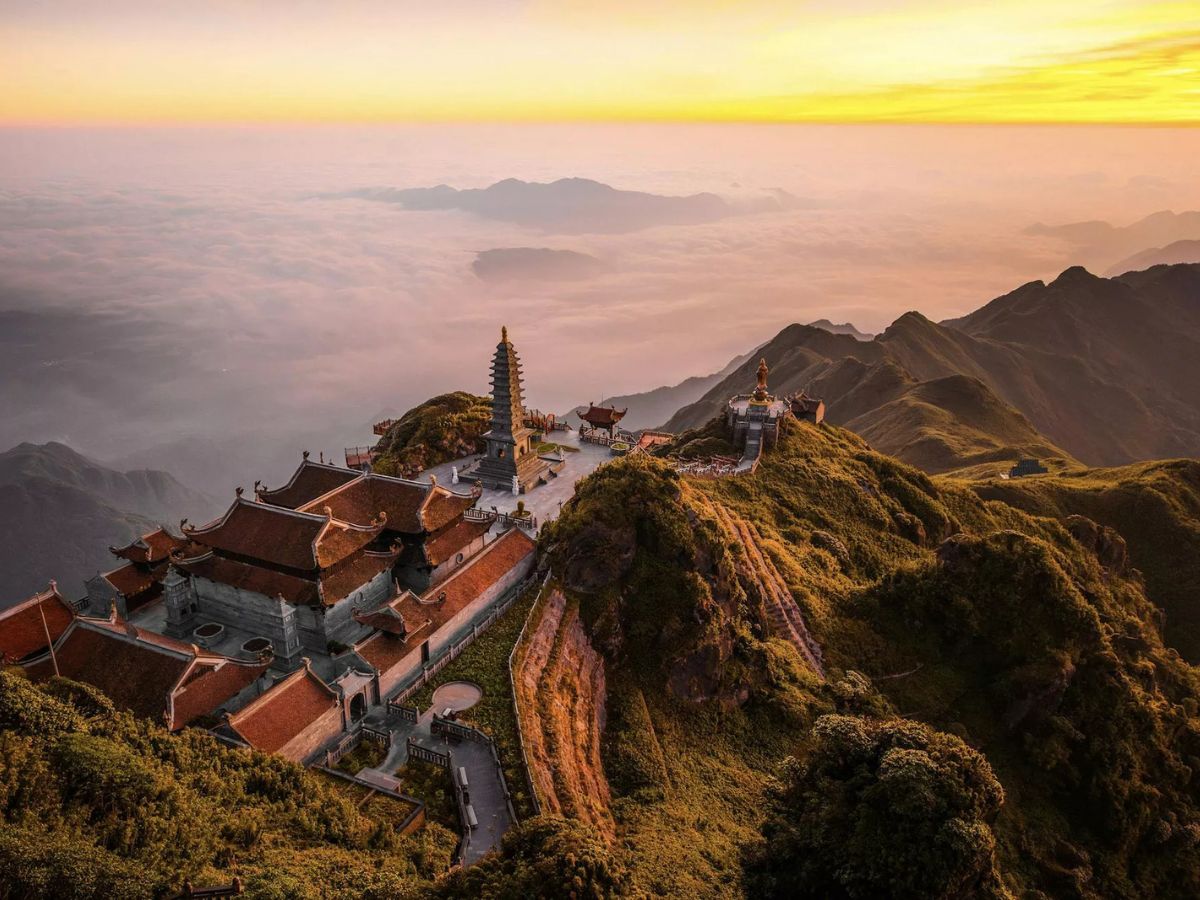
Sun World Fansipan Legend, where visitors can admire the full scenery of the rice planting season in Sa Pa from the "Roof of Indochina" amidst a majestic sea of clouds. (Source: Collected)
In the afternoon, you can visit the Rong May Glass Bridge located near the cable car station to continue your exploration. From the transparent glass bridge, the panoramic view of the terraced fields during the planting season stretching below opens up a spectacular perspective for you – both majestic and poetic. Ending the second day, return to the town center, enjoy a cozy dinner, and rest amidst the misty weather of Sa Pa.
Day 3: Explore Muong Hoa Valley and experience rice planting in Ta Van village
On the morning of the third day, travel to Muong Hoa Valley, which is likened to the most vibrant terraced field painting of Sa Pa. You can take an electric car or stroll along the mountainside, admiring the gently winding fields and witnessing the locals diligently planting rice. The fresh air, the babbling sound of the stream, and the friendly smiles of the locals make visitors clearly feel the peaceful rhythm of life in the highlands.
In the afternoon, rest and enjoy traditional cuisine at a homestay or local eatery. Afterwards, participate in the rice planting experience in Ta Van village, learn how to plant, build dykes, and lead water, and gain a deeper understanding of the unique agricultural culture of the H'Mong, Tay, and Dao ethnic groups. At the end of the day, you can stop by to buy some handmade brocade products or local specialties before returning to the center to rest, concluding a fulfilling three-day journey amidst Sa Pa's rice planting season .
Sa Pa's rice planting season is a special occasion when nature, people, and culture converge, creating a vibrant picture. If you want to experience a Sa Pa with a new color, simple yet full of life, from May to June is the ideal time to feel the rhythm of highland life during the most beautiful water-pouring season of the year.


