




1. Introduction to the Phu Quoc fish sauce making craft
1.1. History of the development of the Phu Quoc fish sauce making craft
The Phu Quoc fish sauce making craft is one of the oldest traditional crafts of the island region, closely associated with the life and culture of the local people. According to historical documents, this craft appeared over 200 years ago, around the late 19th century, when residents from the Central region migrated to the island, bringing with them their fish salting experience. Thanks to the abundant anchovy source around the warm sea area, Phu Quoc fish sauce quickly became a popular specialty throughout Nam Bo.
During the period 1965 – 1975, the Phu Quoc fish sauce making craft entered its peak period, with large quantities exported to many countries worldwide. Despite many ups and downs, the local people have preserved the traditional processing formula. This involves using fresh anchovies mixed with coarse salt, aged in Bời Lời wooden barrels for 12 months to produce a rich fish sauce with an amber color, a mild aroma, and a distinctive rich flavor found nowhere else.
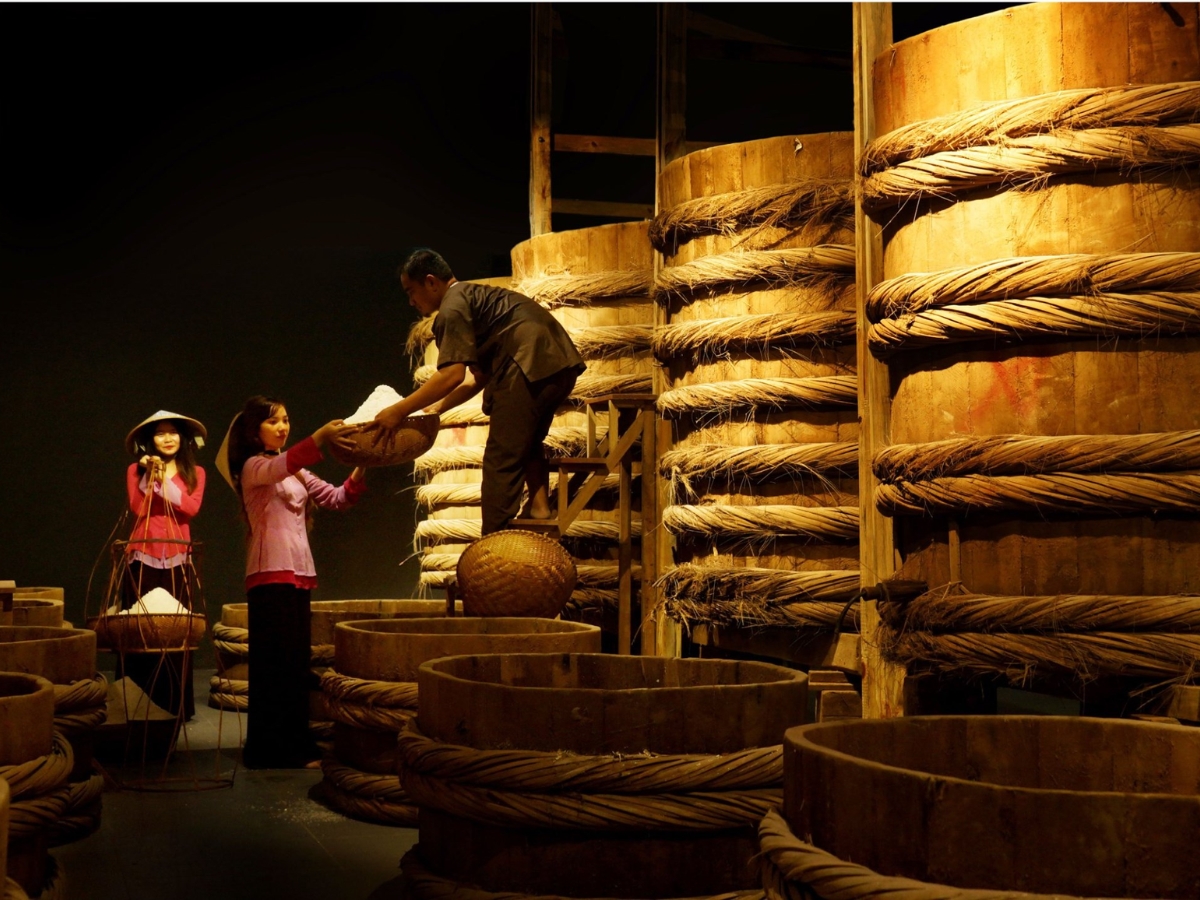
The craft of making fish sauce has been associated with the people of Phu Quoc for generations. (Source: Collected)
Through persistent effort, Phu Quoc fish sauce has reached international level. On October 8, 2012, the European Commission officially granted a geographical indication protection certificate for Phu Quoc fish sauce, making it the first product from Vietnam to be protected across the entire European Union market. On May 27, 2021, the Ministry of Culture, Sports and Tourism recognized it as a national intangible cultural heritage of the traditional craft type. This is a clear testament to the cultural and historical value and the pride of the people of the Jade Island.
1.2. Distinctive features of Phu Quoc fish sauce
Phu Quoc fish sauce is famous for its special flavor, completely different from other types of fish sauce on the market. The fish sauce has a rich salty taste but not harsh; initially, it is slightly pungent on the tip of the tongue but leaves a naturally sweet aftertaste. The aroma of the fish sauce is also not too strong, but subtle and gentle, carrying the flavor of the sea. Especially, Phu Quoc fish sauce has a glossy golden-brown mahogany color, reflecting its quintessence of quality and the skill of traditional fish sauce makers.
Not only attractive for its flavor, Phu Quoc fish sauce is also highly valued for its nutritional value. The natural protein content of the fish sauce here usually reaches over 30 degrees, sometimes even exceeding 40 degrees. This is thanks to the fresh black anchovy (ca com than) raw material, a type of fish containing the highest protein content, fermented in Bời Lời wood barrels for 12 months. The natural fermentation process helps break down protein into essential amino acids, not only creating the characteristic sweet aftertaste but also helping to enhance the health and immune system of users.
2. Phu Quoc fish sauce making process
To create the quintessence of fish sauce, the people of the Jade Island have preserved and applied traditional processing methods passed down through generations. The Phu Quoc fish sauce making process seems simple but requires meticulousness, care, and patience in each step, as even a single wrong step can affect the flavor and quality of the final product.
2.1. Step 1: Selecting raw materials
Raw materials play the most important role in the Phu Quoc fish sauce making craft . Anchovies are the main ingredient for making fish sauce, among which the two best types are striped anchovies (ca com soc tieu) and black anchovies (ca com than), caught in clear waters rich in plankton around the island. The fish must be very fresh and uniform in size and species for the protein decomposition process to occur uniformly, helping the fish sauce have a characteristic aroma and a beautiful natural color.
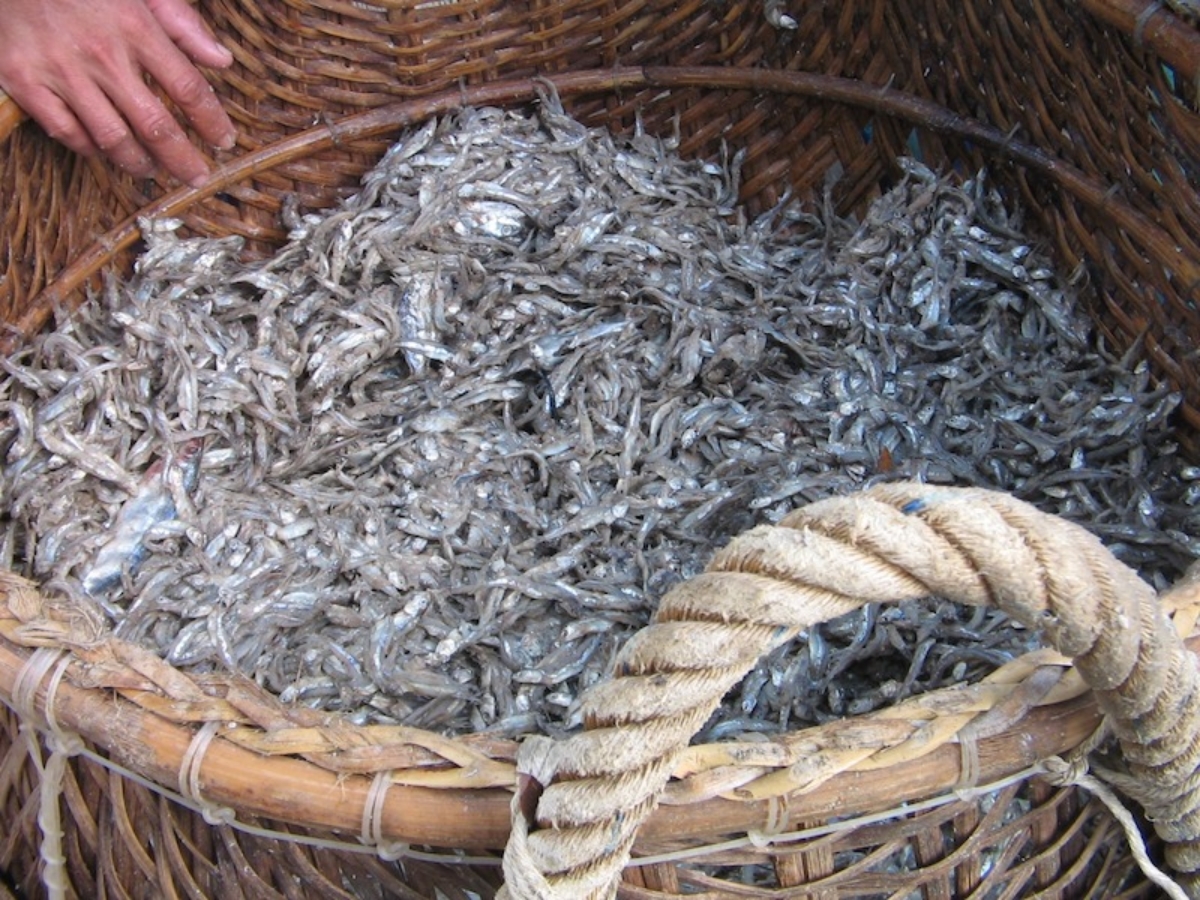
Phu Quoc fish sauce is made from the main ingredient of anchovies. (Source: Collected)
Besides, fish used to make fish sauce are usually small in size to easily decompose during the fermentation process, facilitating the natural fermentation process. Immediately after being caught, the fish are washed clean with seawater to remove impurities and drained before moving to the salting stage.
2.2. Step 2: Salting the fish
Anchovies after being caught are immediately salted on the boat to maintain freshness and prevent natural decomposition. The type of salt used for salting must be white, clean, and low-impurity coarse salt, which has been stored for at least three months to reduce harshness and remove harmful impurities. The salting ratio is usually 3 parts fish to 1 part salt; this is the standard formula that helps the fish absorb salt moderately, facilitating the subsequent fermentation process.
Fish and salt, after being mixed evenly, are put into large wooden barrels and fermented for about 3 to 4 days. When the fish begin to release liquid, the workers will drain the initial brine, level the surface, and add another layer of salt about 2 to 3 cm thick. Then, the initial brine is pumped back to cover the fish, creating a natural fermentation environment, helping the fish cook evenly, not spoil, and retain their characteristic flavor.
2.3. Step 3: Fermentation
Fish after being salted are transferred into wooden barrels to begin the fermentation stage. The wooden barrels are usually made from Boi Loi or Ven Ven trees, two types of wood that are highly salt-resistant and do not secrete substances that affect the flavor or color of the fish sauce. The fermentation process occurs entirely naturally, lasting from 9 to 12 months depending on weather conditions. During this time, the protein in the fish meat is broken down into amino acids, creating a harmonious sweet and salty taste and the characteristic aroma of Phu Quoc fish sauce. Workers regularly check and adjust the compression to ensure the fermentation process is even, helping each drop of fish sauce mature, become smooth and viscous, and rich with the flavor of the sea.
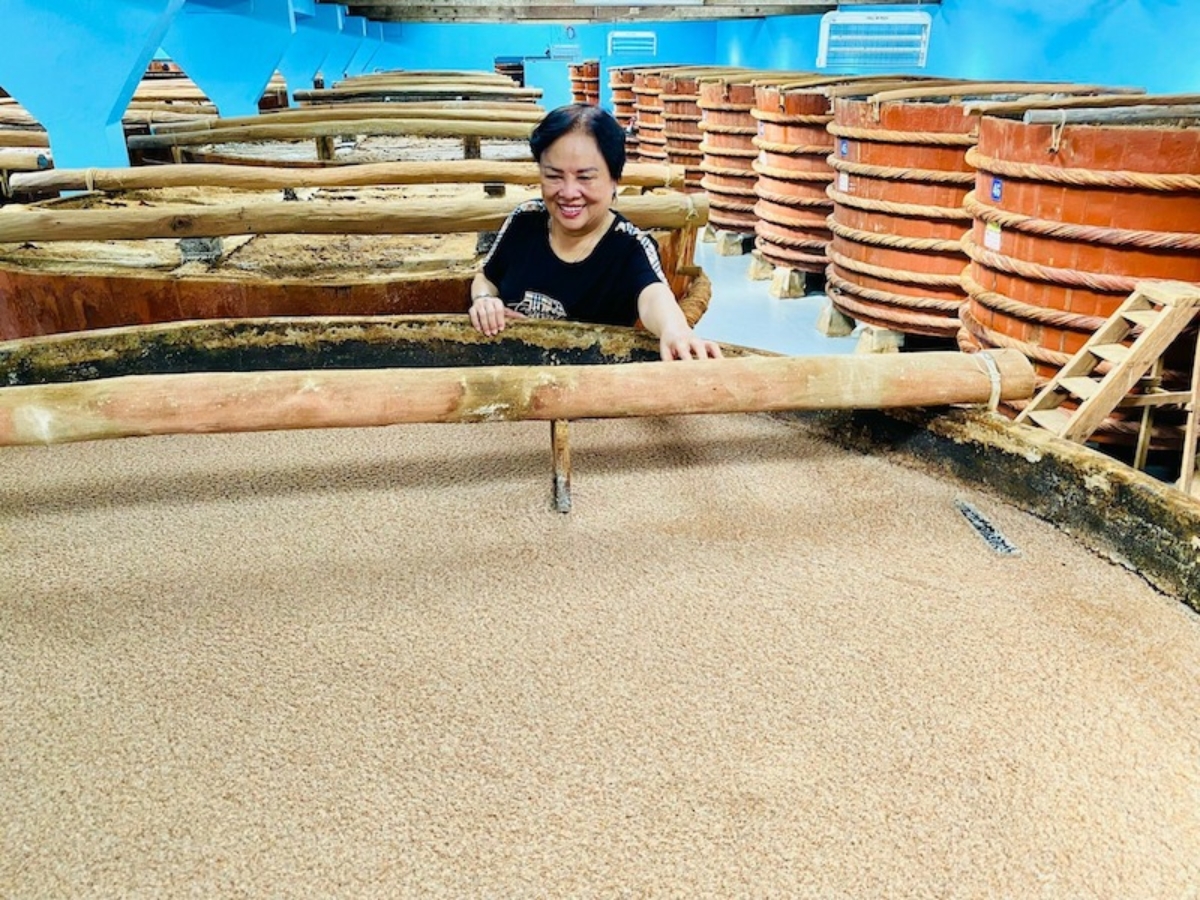
The fermentation process occurs naturally without the addition of chemicals or preservatives. (Source: Collected)
2.4. Step 4: Draining and Filtering Fish Sauce
When the fermentation batch reaches maturity, the liquid in the barrel turns a golden-brown color and emits a characteristic aroma, signaling that the artisan begins to drain the fish sauce. They open the bung hole to let the fish sauce flow out slowly. These first drops of fish sauce are the 'fish sauce essence' (nuoc mam cot), possessing the richest flavor and highest value. After draining, the artisan will remove the pressing rack, clean it, and put it back. Simultaneously, the drained fish sauce is pumped back into the barrel to mix evenly, helping the solution achieve clarity, a smooth texture, and a perfect reddish-brown color.
After collecting all the fish sauce essence, the artisan continues the 'long mam' process to produce second, third, and fourth batches of fish sauce. In this stage, saturated brine is circulated into the fermentation barrels, permeating the remaining fish solids, and blending with nutrients to create fish sauce batches with a lighter flavor but still retaining their characteristic delicious aroma. Each 'long mam' cycle typically lasts two to three months, requiring meticulousness and experience to ensure the consistent quality of every drop of finished fish sauce.
2.5. Bottling
Upon completion of the fermentation and filtering process, the fish sauce enters the bottling stage to finalize the product before it reaches consumers. After quality checks, the fish sauce is pumped from large storage tanks through an automated filling system. This system is precisely programmed to ensure each bottle contains the correct volume, without deviation of even a single drop. Depending on the intended use, the fish sauce can be filled into glass or plastic bottles of various capacities, offering convenience while preserving its original flavor.
Following the filling process, the fish sauce bottles are capped by specialized machinery to ensure absolute sealing and hygiene. Labels are printed and affixed automatically, displaying complete information about the brand, origin, ingredients, and expiry date. Each bottle is then neatly arranged into cartons, ready for domestic distribution and international export. By applying modern packaging lines combined with traditional recipes, Phu Quoc fish sauce not only preserves its distinctive flavor but also meets the stringent quality standards of the global market.
3. Visiting Phu Quoc Fish Sauce Villages
The journey to explore the Phu Quoc fish sauce making craft becomes more complete when visitors visit the famous, long-standing fish sauce houses on the island. This is not only a place that produces delicious, rich fish sauce but also a space that preserves the traditional cultural values of the coastal people. Here, visitors can witness firsthand the giant 'boi loi' wooden barrels, smell the fermenting fish sauce, and hear stories about the formation and development of this century-old craft.
3.1. Thinh Phat Fish Sauce
- Address: Street 30, Quarter 1, Phu Quoc Special Zone, An Giang Province.
Thinh Phat Fish Sauce is a familiar destination for tourists who want to learn more about the traditional fish sauce making process. With over 100 large and small wooden barrels, this place still maintains the method of fermenting anchovies completely naturally. The gentle aroma of fish sauce spreads throughout the space, creating a familiar and authentic feeling. Not only a production facility, Thinh Phat is also a trusted place to buy specialty products as gifts, as they always preserve and promote the essence of Vietnamese fish sauce making through every drop of fish sauce essence.
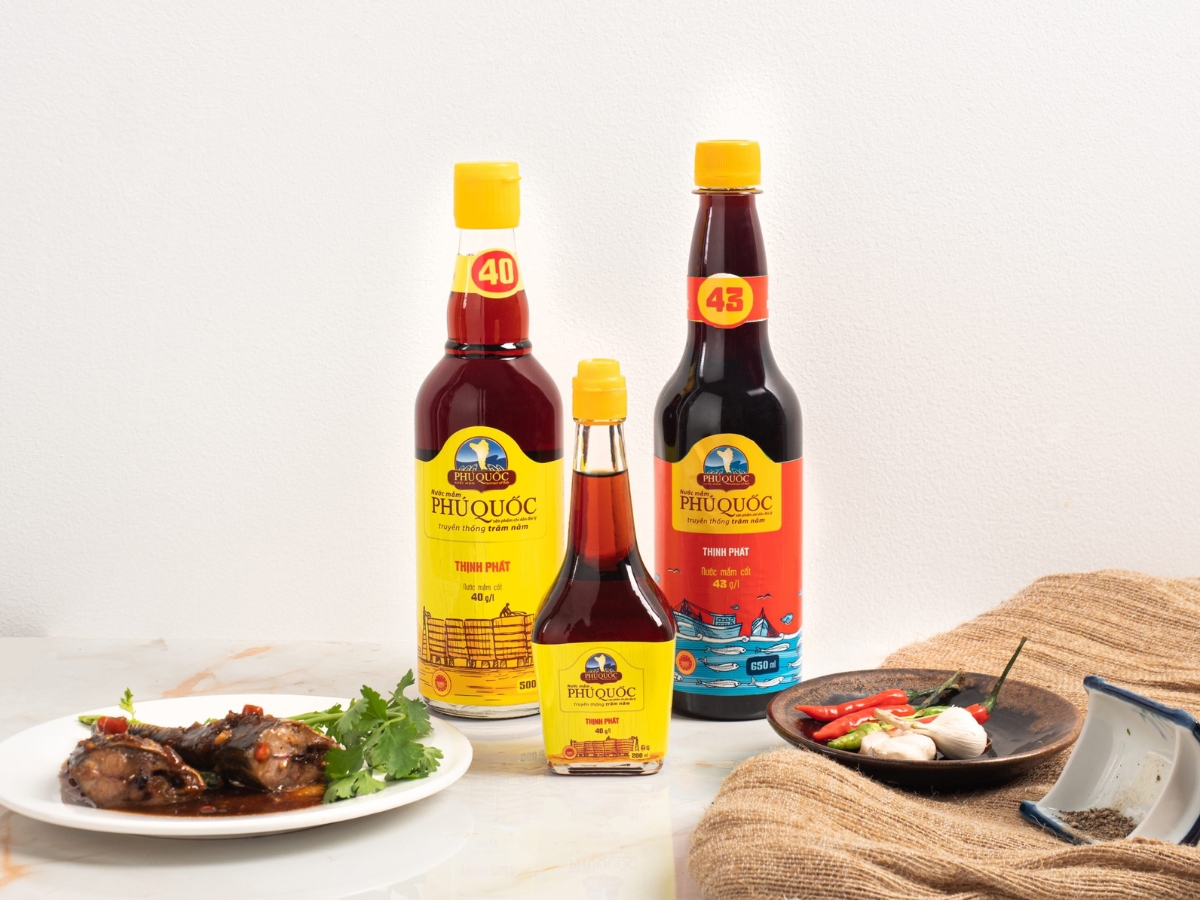
Thinh Phat fish sauce is a reputable brand, chosen by many consumers. (Source: Collected)
3.2. Khai Hoan fish sauce
- Address: No. 11, Hung Vuong Bridge, Phu Quoc Special Zone, An Giang Province.
As the oldest fish sauce brand on Ngoc Island, Khai Hoan has a history of over 200 years, renowned both domestically and internationally. From fresh anchovy ingredients caught directly around the island, this facility remains loyal to the traditional fermentation process in 'boi loi' wooden barrels for many months. When visiting, tourists can not only witness the production process firsthand but also feel the pride and dedication of the artisans who are preserving the renowned Phu Quoc fish sauce flavor day by day.
4. Experience visiting the Phu Quoc fish sauce making village
When visiting the Phu Quoc fish sauce making village, visitors should come in the morning to witness the entire production process firsthand. This is when the fish sauce houses are most bustling, with artisans checking the fermentation barrels, drawing the fish sauce, and filtering the finished product. If you have the chance, chat with them to learn more about the traditional fermentation recipe, how to select anchovies and salt, as well as the secrets that give Phu Quoc fish sauce its unique flavor. This experience is not only interesting but also helps tourists appreciate more the long-standing maritime cultural heritage of the people of Ngoc Island.
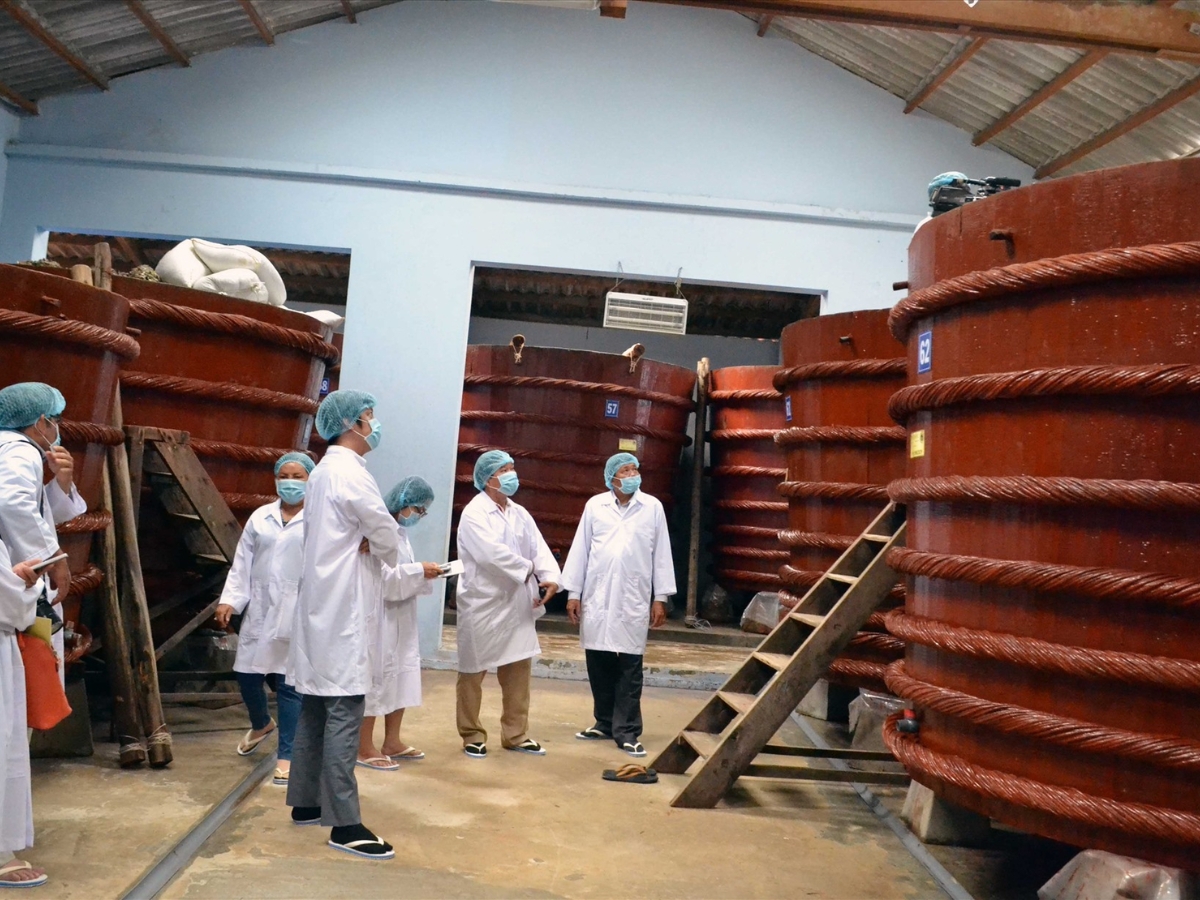
Tourists visit and learn about the fish sauce making process in Phu Quoc. (Source: Lao Dong Newspaper)
When buying specialties to bring home, tourists should choose products with the te m geographical indication “Phu Quoc” clearly printed on the bottle. This is the mark of authentic fish sauce protected by the European Union for its origin and quality. Besides, tourists should prioritize buying from reputable production facilities or licensed fish sauce houses open for visits to ensure genuine products, avoiding the purchase of low-quality items.
After exploring the traditional craft village, tourists can combine their visit with other famous attractions such as Ham Ninh fishing village, Duong Dong Port, Ganh Dau Cape, Rach Vem fishing village, Sunset Town, or Sun World Hon Thom amusement park. These are all places that strongly embody the characteristics of the Pearl Island, enriching the tourist's journey by allowing them to learn about traditional culture while enjoying the beautiful natural scenery of Phu Quoc.
Exploring the Phu Quoc fish sauce making craft is not just a journey to learn about a famous culinary product, but also an opportunity to feel the spirit of persistent labor and the pride of the people of the Pearl Island. Each drop of fish sauce is a crystallization of time, experience, and love for the sea, carrying the rich flavor of the Vietnamese homeland. If you have the chance to visit Phu Quoc, don't forget to visit the traditional fish sauce making villages to witness firsthand the meticulous fermentation process and savor the rich, authentic fish sauce flavor.


