




1. Overview of the Temple of King Le Dai Hanh
Located within the special relic complex of Hoa Lu Ancient Capital, the Temple of King Le Dai Hanh is a destination preserving many historical and cultural values of the Vietnamese nation. The temple is located in Truong Yen Ha village, Tay Hoa Lu commune, Ninh Binh province and is only about 300m away from the Temple of King Dinh Tien Hoang. Amidst the picturesque landscape of mountains and water, the temple appears ancient and majestic with moss-covered tiled roofs, old brick walls, and green trees casting shadows, evoking a sense of peace and solemnity amidst the land and sky of the ancient capital.
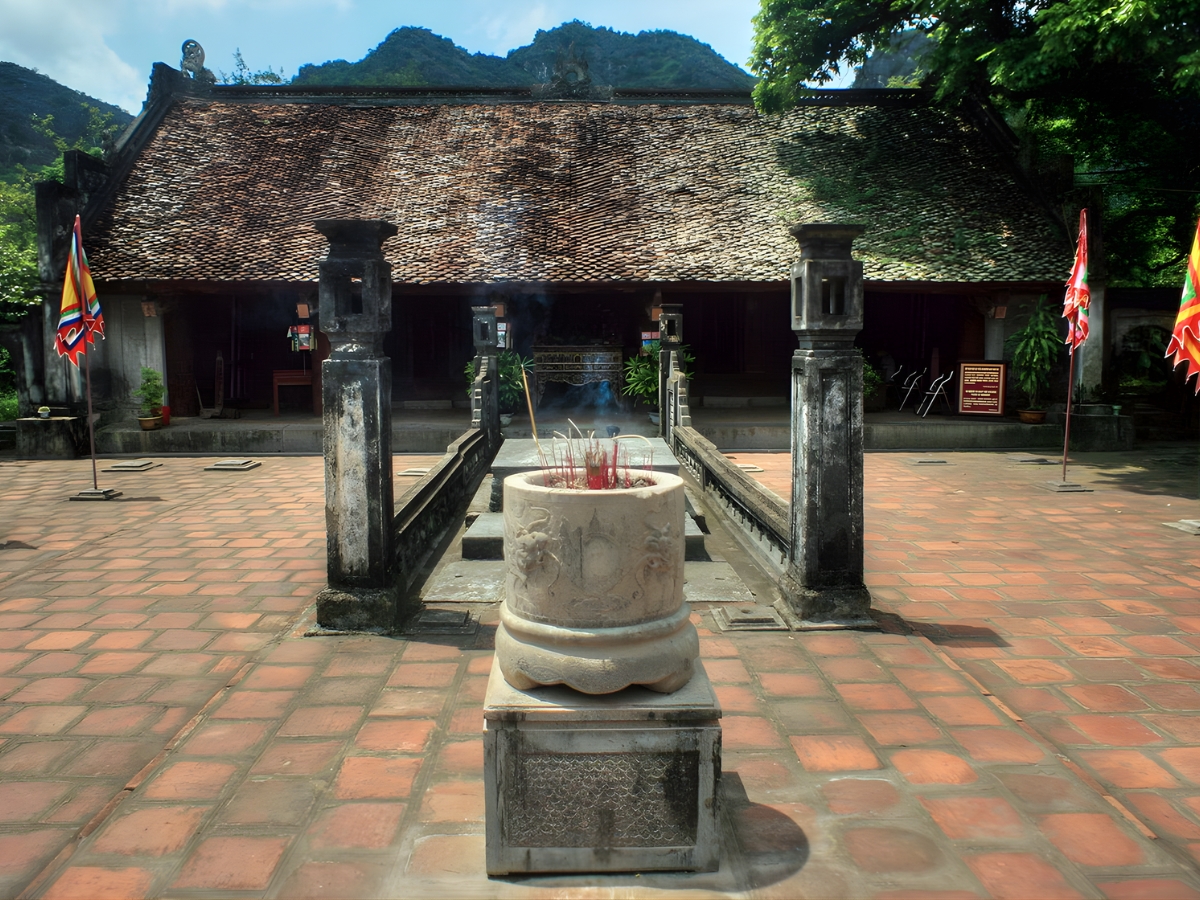
Temple of King Le Dai Hanh is located within the special relic complex of the Ancient Capital Hoa Lu. (Source: Collected)
The temple was built in the 17th century, undergoing many renovations but still retaining the beauty of traditional Vietnamese architecture. This is where King Le Dai Hanh is worshipped – the one who led the people to defeat the invading Song army and ushered in an era of prosperity for Dai Co Viet. The temple is not only a place to commemorate the wise king but also an ideal stop for those who love exploring history, admiring ancient architecture, and finding a sense of tranquility amidst the peaceful scenery of the ancient Hoa Lu land.
2. History of the formation of the Temple of King Le Dai Hanh
The Temple of King Le Dai Hanh was built on the site of the ancient palace of the Le dynasty. After King Dinh Tien Hoang passed away, Le Hoan ascended the throne, continuing the cause of unifying the country, expanding the territory, and leading Dai Co Viet into a period of prosperity. To commemorate the great contributions of the wise king, the people built a temple right in the area of the old imperial palace, turning the former palace site into a sacred place preserving historical imprints.
Over many changes of time, the temple has been renovated and restored through the Ly, Tran, Later Le, and Nguyen dynasties. Each renovation preserved the old foundation, while adding architectural features characteristic of each period, creating a harmonious whole between ancient and sophisticated. Thanks to this, the Temple of King Le Dai Hanh is not only a place of worship but also a historical witness reflecting the development of Vietnamese architectural art over many centuries.
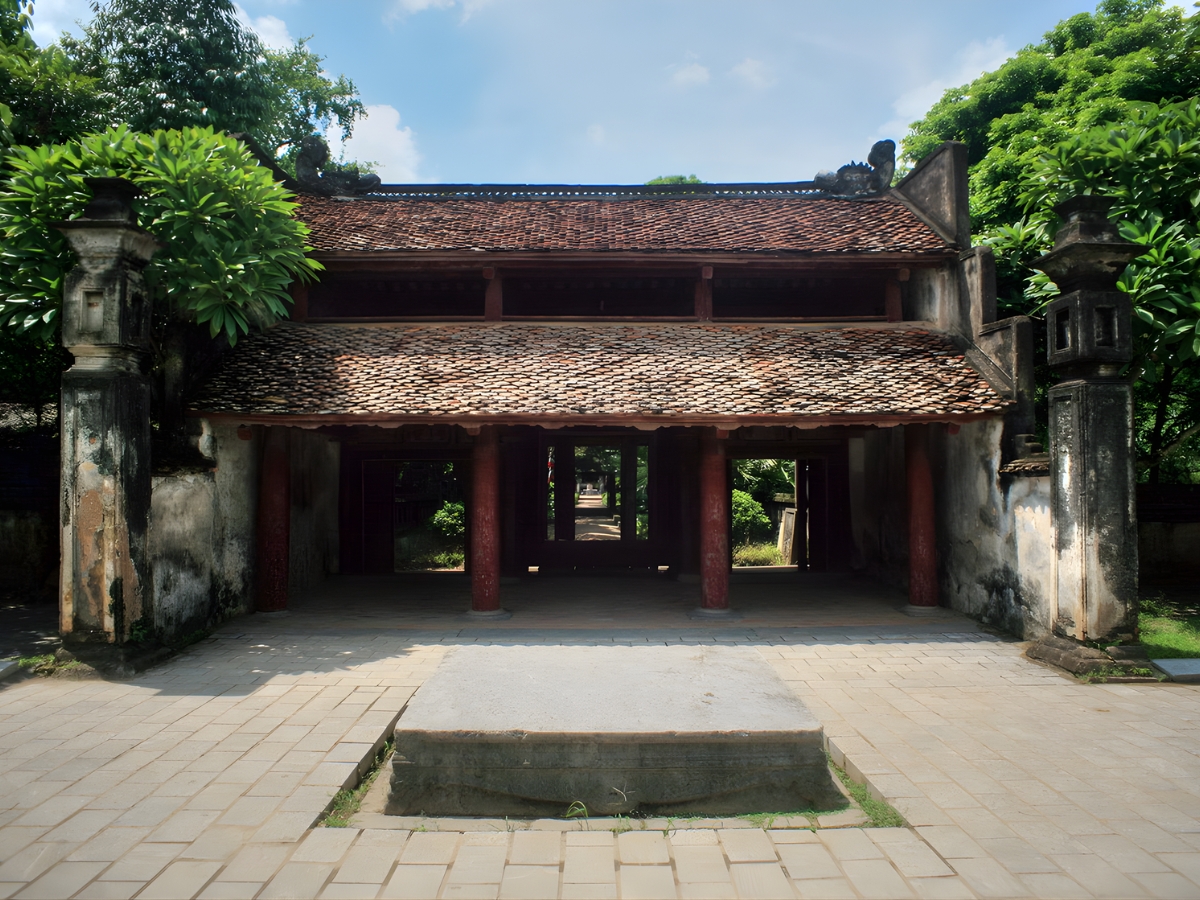
Temple of King Lê Đại Hành (Den Vua Le Dai Hanh) was built right on the foundation of the ancient palace of the Lê dynasty. (Source: Collected)
Notably, during the archaeological excavation in 1998 at the Hoa Lư Ancient Capital relic site, researchers discovered many valuable traces such as palace foundations, decorative bricks, statues, and ancient pottery dating from the 10th to 17th centuries. These artifacts not only confirm the historical significance of the temple but also contribute to illuminating the profound cultural, artistic, and spiritual values that the Temple of King Lê Đại Hành (Den Vua Le Dai Hanh) preserves to this day.
3. Discover the unique architecture of the Temple of King Lê Đại Hành (Den Vua Le Dai Hanh)
3.1. Architectural overview: “Nội công, ngoại quốc” (Noi Cong, Ngoai Quoc)
When visiting the Temple of King Lê Đại Hành (Den Vua Le Dai Hanh), visitors can admire one of the ancient structures bearing the historical imprint of the Hoa Lư Ancient Capital region. The temple was built in the 17th century, contemporary with the temple dedicated to King Đinh Tiên Hoàng (Vua Dinh Tien Hoang), featuring the traditional architectural style of "Nội công, ngoại quốc" (Noi Cong, Ngoai Quoc). The interior is arranged in a "Công" (Gong) character layout, while the exterior is a surrounding corridor forming a "Quốc" (Guo) character. Seen from afar, the temple appears solemn and ancient amidst the deep green mountains, calm lake, and shady trees, making anyone who visits feel the characteristic tranquility and sacredness of the ancient capital land.
Stepping through the temple gate, visitors will see the space gradually open up with three main halls: Bái Đường, Thiêu Hương, and Chính Cung. All structures are made of sturdy ironwood, with curved tiled roofs, and pillars and beams meticulously carved with images of dragons, phoenixes, and lotus flowers. The spacious Bái Đường hall is where major ceremonies are held, behind which is the quiet Thiêu Hương hall, dedicated to four loyal generals of the Early Lê dynasty. The temple's atmosphere is always filled with the faint scent of incense, and sunlight filtering through the ancient tiled roofs creates a warm, peaceful, and contemplative feeling.
The Chính Cung is the most sacred place in the temple, housing three bronze statues, lacquered and gilded, symbolizing the majesty and eternal beauty of the Early Lê dynasty. The statue of King Lê Đại Hành (Vua Le Dai Hanh) is placed in the center, with a commanding face and a majestic posture, reflecting the demeanor of a wise ruler who steered the nation through storms. To the left is the statue of Queen Dương Vân Nga (Hoang Hau Duong Van Nga), benevolent and virtuous, and to the right is the statue of Lê Long Đĩnh. Each statue is elaborately and meticulously crafted down to every detail, possessing artistic value and expressing the deep gratitude of later generations.
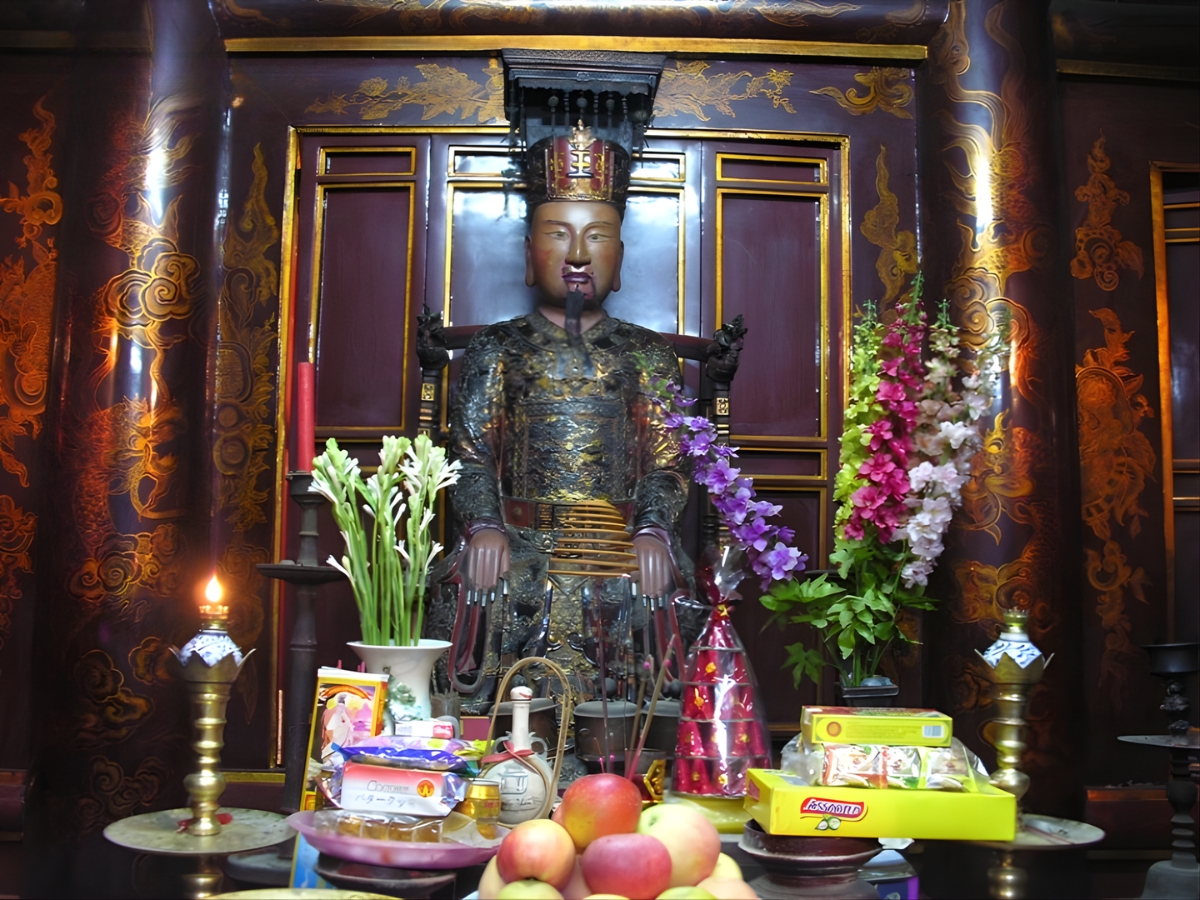
Worship area of King Le Dai Hanh. (Source: Collected)
3.2. Sculpture art and sacred space
The Temple of King Le Dai Hanh is one of the typical works reflecting the peak of Vietnamese wood carving art in the 17th century. The entire system of columns, rafters, and crossbeams are made from precious ironwood, intricately carved with motifs bearing the strong imprint of the royal court such as dragons, phoenixes, lotus flowers, or the four sacred creatures. Each line is soft and graceful, yet exudes strength, symbolizing the power and prosperity of the dynasty. The gilded lacquered horizontal boards and parallel sentences with elegant ancient Han characters contribute to the majestic and solemn atmosphere of the worship space.
Upon entering, visitors can easily feel the sacred atmosphere pervading every small detail. In the middle of the temple courtyard is a monolithic bluestone dragon bed, meticulously carved with coiling dragons and clouds. On both sides are lush green gardens, arranged symmetrically along the main axis, highlighting the balanced and harmonious appearance of the entire structure. When sunlight filters through the ancient tree canopy, reflecting on the moss-covered tiled roof and the dark red brick floor, the entire space seems to don a tranquil beauty, both solemn and strangely peaceful.
4. Some notes when visiting the Temple of King Le Dai Hanh
4.1. Opening hours and ticket prices
The relic site of the Temple of King Le Dai Hanh is open daily from 8:00 AM to 5:00 PM, serving domestic and international visitors for sightseeing, worship, and learning about the history of the Le dynasty.
Adults, high school students: 20,000 VND/person/visit
Primary and middle school students: 10,000 VND/student/visit
Children under 1 meter tall: free
Visitors can purchase tickets at the entrance of the relic site or combine tickets if they wish to visit the Temple of King Dinh Tien Hoang in the same area. Please note that the above prices may change depending on the time or festival, so visitors should check in advance to plan their itinerary.
4.2. Comply with relic protection regulations and civilized behavior
When visiting the Temple of King Le Dai Hanh, visitors should show respect for the sacred space and the cultural and historical values of the place. Please maintain general hygiene, do not litter, and absolutely do not carve, write, or draw on walls, columns, or artifacts within the relic site. The statues, horizontal boards, parallel sentences, or worship items are all precious antiques, so visitors should not touch them, lean on them, or take photos too close to avoid causing damage.
In addition, maintain a polite attitude and speak softly when entering the worship area. Attire should be neat and modest, avoiding overly short or offensive clothing. Adhering to regulations and behaving civilly not only helps preserve the relic's value but also demonstrates the consciousness and beauty of each visitor's conduct when coming to the ancient capital region of Hoa Lư.
4.3. Combining visits to famous tourist attractions in Ninh Binh
After worshiping and learning about the history at the Temple of King Le Dai Hanh, visitors can combine visits to many other attractive destinations in the area to make their trip more complete.
Temple of King Dinh Tien Hoang: Located about 300 meters from the Temple of King Le Dai Hanh, this is where the founding king of the Dai Co Viet state is worshipped. The temple possesses a majestic and ancient appearance, surrounded by rolling mountains and a serene lake. Visitors here can learn about the life and great contributions of King Dinh Bo Linh, admire the characteristic "internal-work-external-state" architecture along with intricately carved statues, horizontal boards, and parallel sentences.
Trang An: A UNESCO World Cultural and Natural Heritage site, Trang An is famous for its boat tours through a system of magical caves such as Dark Cave, Bright Cave, Wine Cooking Cave... Along the river are majestic limestone mountains and lush green vegetation year-round, creating a rare picturesque landscape. This is an ideal destination for nature lovers who want to enjoy the fresh and peaceful atmosphere of Ninh Binh.
Tam Coc – Bich Dong: Dubbed the "Ha Long Bay on land," Tam Coc – Bich Dong tourist area attracts visitors with the poetic beauty of the Ngo Dong River winding through golden rice fields and majestic limestone mountains. Additionally, visitors can climb to Bich Dong Pagoda, known as the "Second most beautiful cave in Vietnam," to admire the peaceful scenery of the ancient capital region.
Ninh Binh Times Square: At Ninh Binh Times Square, visitors can immerse themselves in the most vibrant and modern atmosphere of the ancient capital region. When night falls, the water music system with thousands of fountains and brilliant LED lights creates spectacular performances, combined with lively sound, making the atmosphere even more captivating. Visitors can stroll around the vast square, take photos with the giant "Trong Doi Tam" symbol, or enjoy coffee and street food in the surrounding areas. This is an ideal place to enjoy a relaxing evening after exploring Ninh Binh.
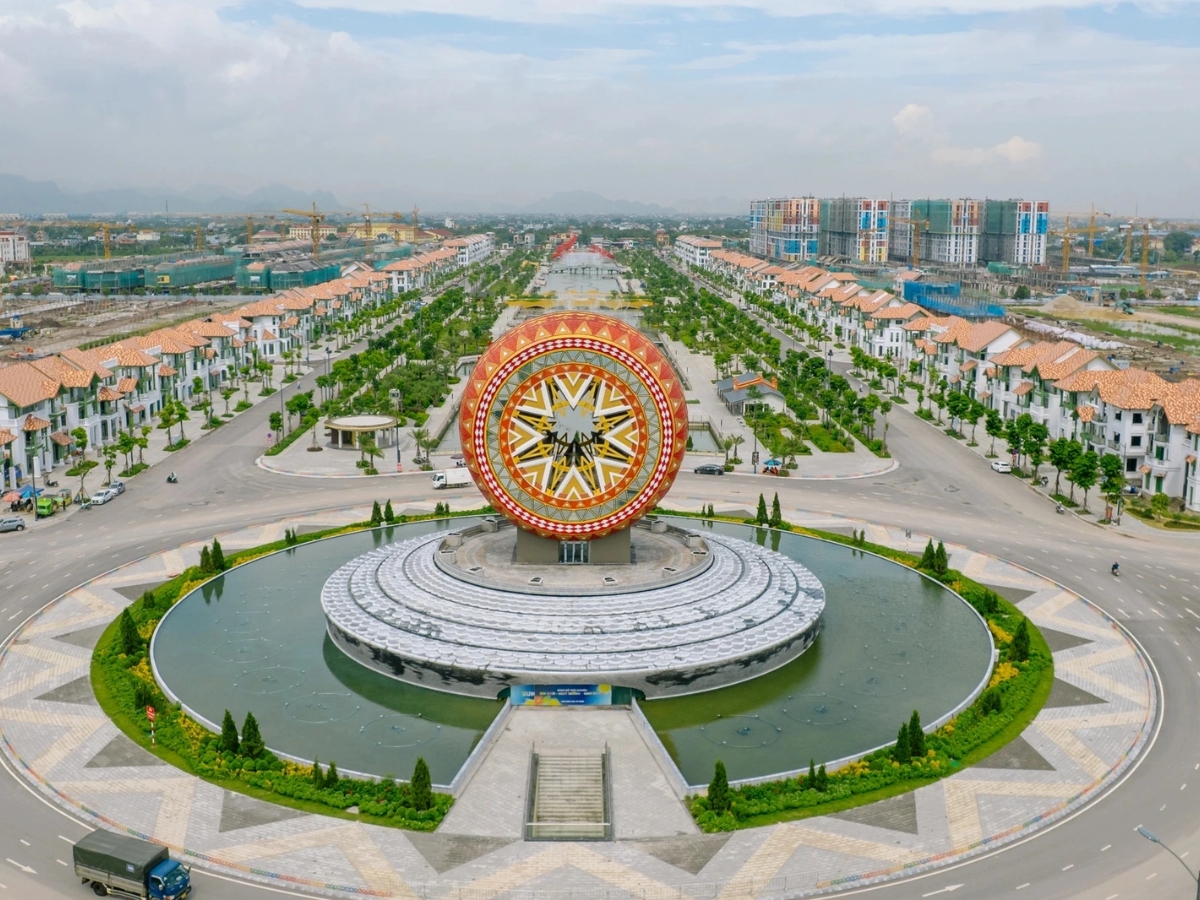
Time Square is highlighted by the Trong Doi Tam symbol. (Source: Bao Thanh Nien newspaper)
The journey to visit the Temple of King Le Dai Hanh is not just a trip to find historical roots, but also an opportunity to fully appreciate the beauty of the ancient capital Hoa Lu region. Amidst the scenery of blending rivers and mountains, the sound of temple bells echoes amidst the faint scent of incense, the Temple of King Le Dai Hanh brings visitors a sense of peace and tranquility. If you are looking for a destination that is both sacred and peaceful, take the time to visit the Temple of King Le Dai Hanh, where the past and present blend in a space rich with Vietnamese imprints.


