




1. Overview of Nui Nhoi Thanh Hoa - Heritage Symbol of the Thanh Region
About 6 km west of Thanh Hoa center, Nui Nhoi stands as a cultural symbol, closely associated with the people of the Thanh region for generations. Around Nui Nhoi are adjacent mountain ranges such as Dong, Chan Than, Nap, and Chong Mam, forming a harmonious natural landscape. At the foot of the mountain, the Huong Giang river meanders before merging with the Ma river.

Nhoi Mountain appears as a cultural symbol, closely associated with the people of the Thanh region for generations. (Source: Collected)
Throughout many historical periods, Nhoi Mountain bore many different names such as An Hoạch Mountain, Khế Mountain, Nhệ Sơn, or Vọng Phu. Each name carries its own unique meaning: "An Hoạch" is associated with the ancient village name, "Nhệ Sơn" refers to the mountain's beautiful shape, while "Vọng Phu" originates from the prominent image of a mother holding her child stone on the mountain peak. The current name "Nhồi" is linked to the long-standing tradition of the stone carving craft village.
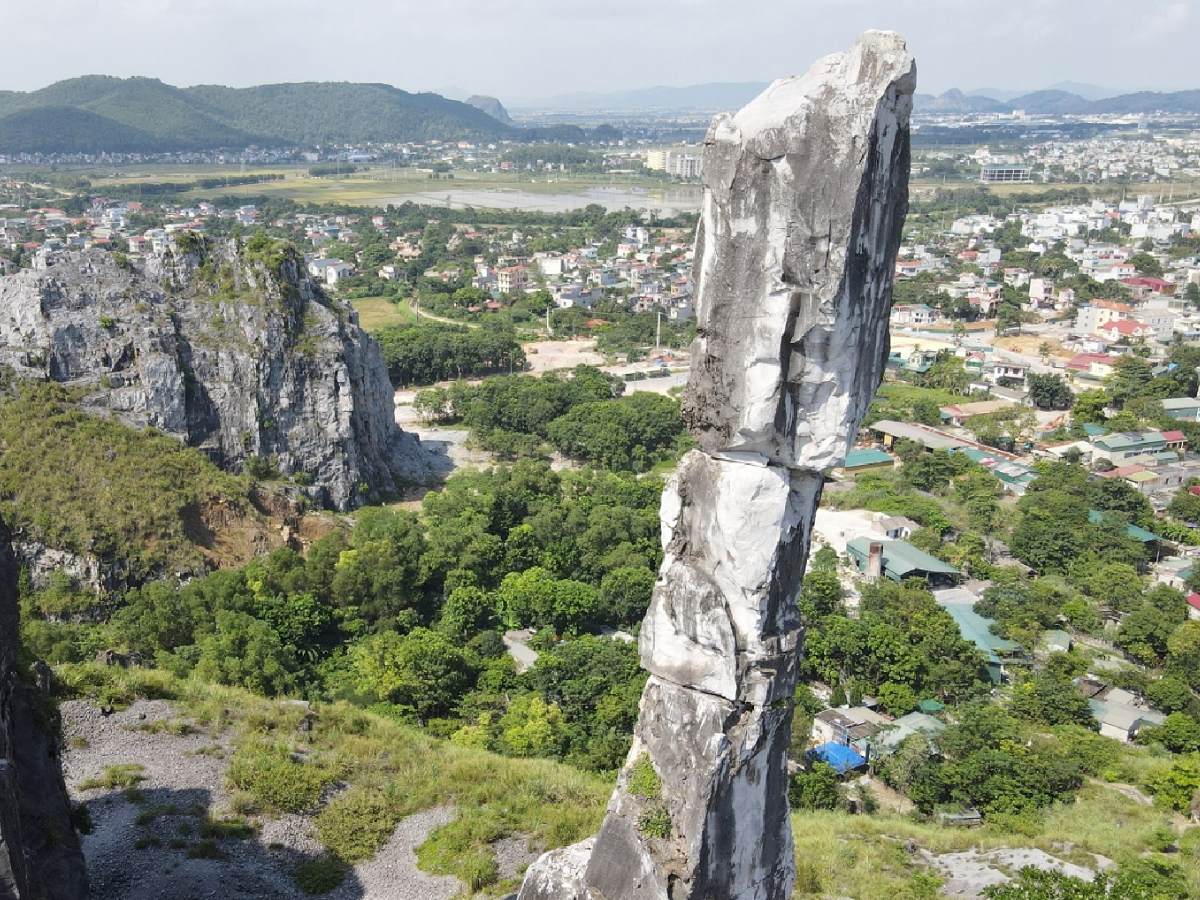
From afar, Nhoi Mountain stands out with its shape resembling a crouching elephant, and together with Long Mountain by the Nhà Lê River, it creates the renowned feng shui formation of "Crouching Elephant and Courting Tiger." On the mountaintop lies Hòn Vọng Phu, a natural stone pillar, depicting a mother holding her child looking towards the East, symbolizing loyalty and steadfastness. Thanks to its unique terrain, the mountain forms an arc embracing Thanh Hóa, both adorning the landscape and holding profound feng shui value.
In 1992, Nhoi Mountain was recognized by the Ministry of Culture and Information as a national-level scenic and artistic relic, a recognition that affirms the cultural and historical significance of Nhoi Mountain for the Thanh region as well as the entire country.
2. Guide to Traveling to Nhoi Mountain, Thanh Hóa
2.1. From Hanoi to Nhoi Mountain, Thanh Hóa
Starting from Hanoi, the journey to explore Nhoi Mountain, Thanh Hóa offers several convenient transportation options. Tourists can choose to travel by train on the Hanoi - Thanh Hóa line, enjoying the rural scenery along the way. Additionally, sleeper buses departing from Mỹ Đình or Giáp Bát bus stations are also popular choices, providing comfort for the journey. For those who prefer independence, driving a personal car on National Highway 1A will be a memorable experience, allowing travelers to stop at various points along the route to admire the scenery.

Journey to explore Nui Nhoi Thanh Hoa has many convenient travel options. (Source: Collected)
Estimated travel time is from 2.5 to 3.5 hours depending on the means of transport and traffic conditions. The cost for a trip is quite reasonable, depending on the means of transport and ticket type. Upon arrival at the station or bus terminal in Thanh Hoa city center, visitors only need to continue their journey by taxi, motorbike, or local bus to reach the foot of Nui Nhoi.
2.2. From Ho Chi Minh City and Southern Provinces to Nui Nhoi Thanh Hoa
For visitors in the South, choosing to fly to Tho Xuan airport is the quickest and most convenient way to travel. The airport is located about 35-40 km from Nui Nhoi Thanh Hoa, and visitors can take a taxi or bus to the center of Thanh Hoa city. Currently, all airlines operate regular flights from Ho Chi Minh City and major cities to Thanh Hoa.
From the provincial center, visitors continue to travel by technology taxi, bus, or motorbike rental to Nui Nhoi. The short distance makes visiting Nui Nhoi and other tourist attractions in Thanh Hoa easy and convenient for a diverse exploration itinerary.
3. Exploring the relic cluster and visiting Nui Nhoi Thanh Hoa
3.1. The Hon Vong Phu Wonder - Thanh Hoa's cultural symbol
On the summit of Nui Nhoi Thanh Hoa, the image of Hon Vong Phu appears as a symbol of love and unwavering loyalty. The natural rock formation shaped like a mother holding her child, facing East, evokes the story of a wife who went up the mountain to wait for her husband to return from the battlefield. This legend remains vivid in the spiritual life of the local people.
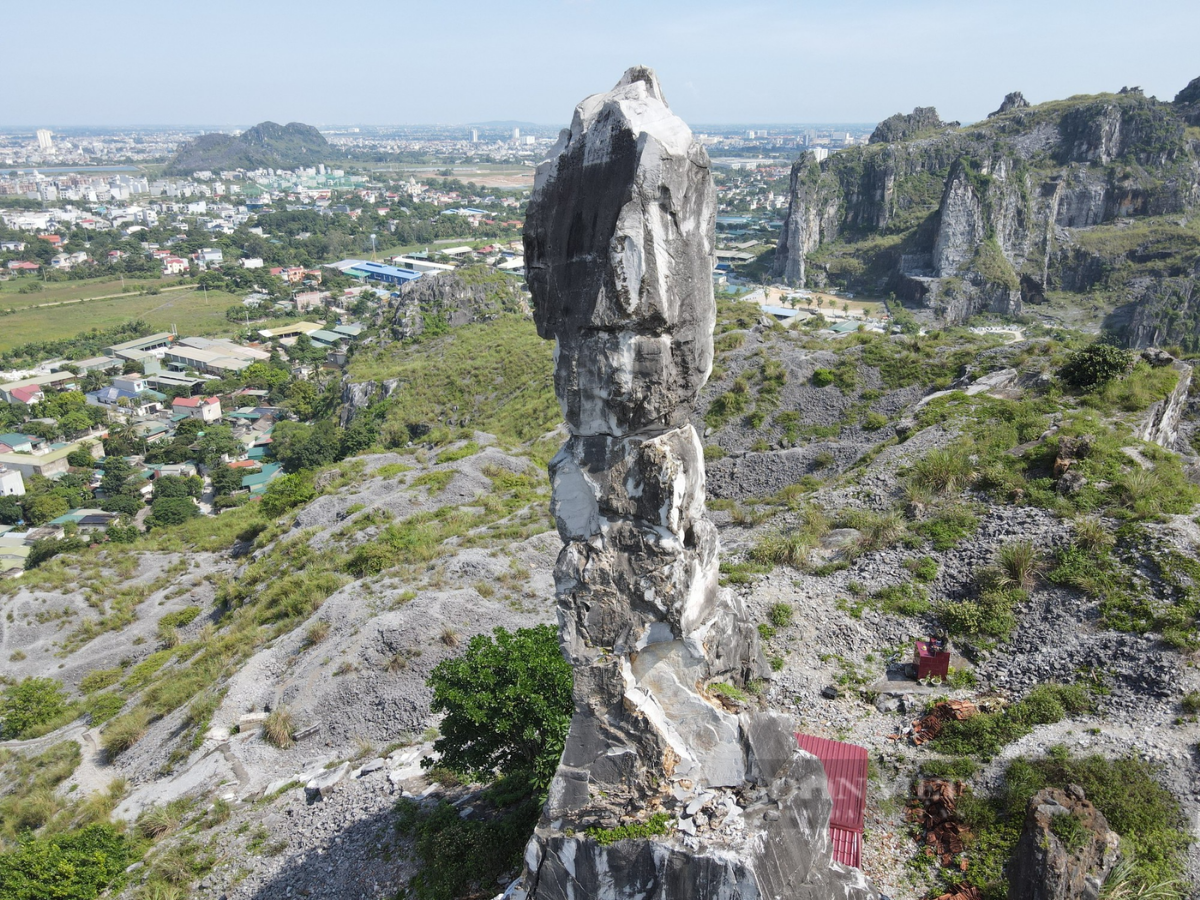
The image of Hon Vong Phu appears as a symbol of love and unwavering loyalty. (Source: Collected)
More than just a fascinating landscape, Hon Vong Phu also inspires many generations of writers and poets. Nguyen Du and many other authors have left behind poetry about this rock. Through generations, the folk verses and legends about Hon Vong Phu still echo, honoring the value of fidelity in love and family relationships of Vietnamese people.
Reinforcement and protection works for Hon Vong Phu have been implemented to preserve the rock intact from the effects of time and natural elements. Reinforcement, scaffolding installation, and steel bracing drilling are carried out carefully to protect the natural state. These efforts demonstrate the determination to preserve a precious heritage, safeguarding Hon Vong Phu for future generations.
3.2. The complex of pagodas, temples, and tombs around Nui Nhoi Thanh Hoa
The area around Nui Nhoi is a convergence of many valuable spiritual sites such as Hinh Son Pagoda, Tien Son Pagoda, Thuong Temple, Bao An Pagoda, and the tomb of Earl Man Quan Le Trung Nghia. These structures reflect the traditional architecture of many dynasties.
The outstanding highlight of the complex is the exquisitely crafted stone statues and bas-reliefs. Visitors will be impressed by the Buddha statues, warrior figures, images of elephants, horses, and people, all created with meticulous carving techniques. Stone steles with hundreds-year-old ancient inscriptions remain clear, preserving the history of this land.
The peaceful and serene atmosphere at Nui Nhoi creates an ideal environment for those seeking tranquility and contemplation. When visiting, it is advisable to choose polite attire, maintain order, and adhere to the regulations when entering spiritual areas, showing respect for the sacred space, including Buddhist worship and incense offering.
3.3. Outstanding archaeological sites and historical evidence
Exploring Nui Nhoi Thanh Hoa is also a journey back to the ancient history of the ancient Vietnamese community. Archaeologists have discovered many bronze artifacts such as axes, chisels, daggers, spears, and ancient human remains. These discoveries confirm the early presence of Vietnamese residents in this area since prehistoric times.
The archaeological evidence at Nui Nhoi plays an important role in researching the settlement history and development of ancient Vietnamese people. These artifacts are like vivid pieces of a puzzle, illuminating the lives, culture, and crafting techniques of our ancestors in making tools and weapons.
Each artifact discovered at Nui Nhoi is not only a trace of the past but also evokes pride in the long-standing traditions, intelligence, and skillful hands of the ancients in protecting and building their homeland.
4. Nui Nhoi Thanh Hoa's Traditional Stone Carving Craft
4.1. History of Formation and Development
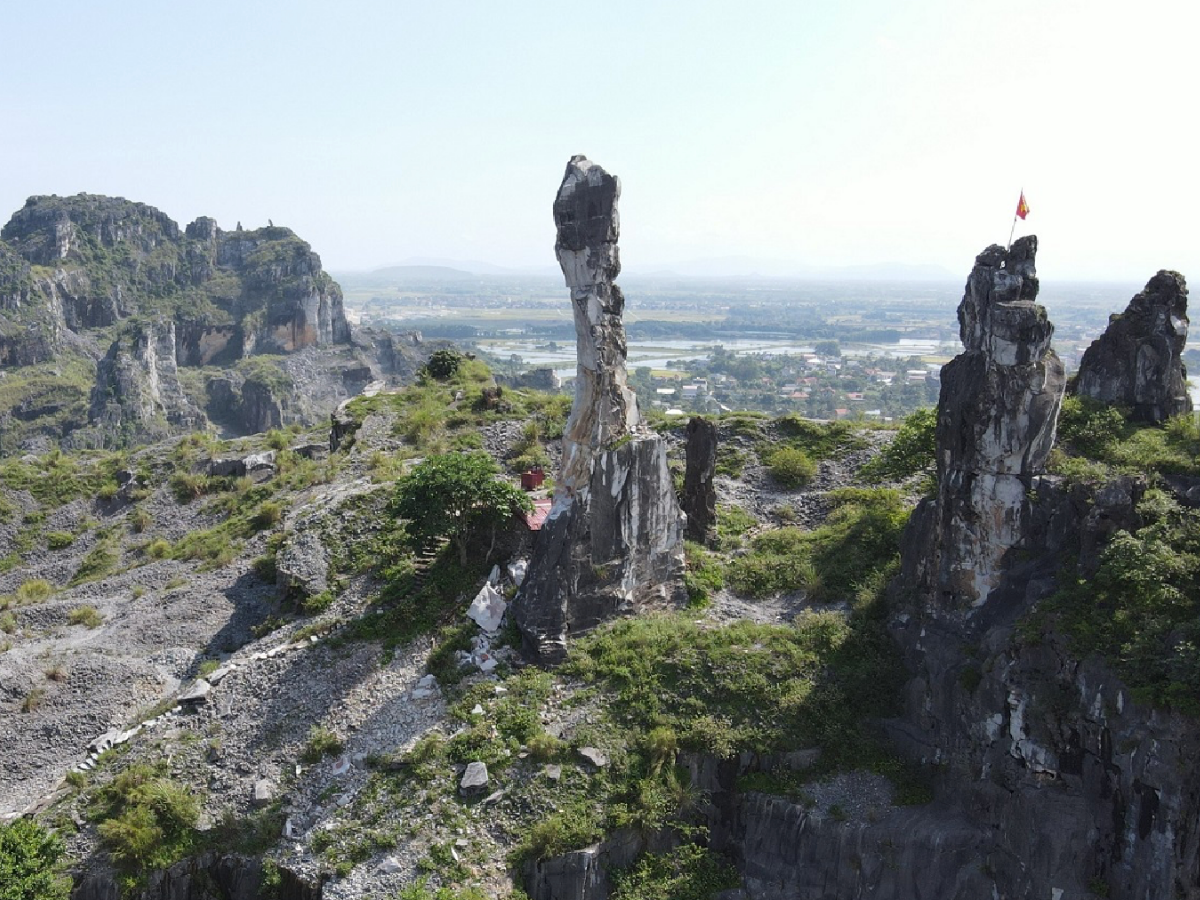
Stone at Nhoi Mountain, Thanh Hoa, has a deep blue color, fine texture, optimal toughness, and is very suitable for crafting exquisite handicraft products. (Source: Collected)
Nhoi Village has long been known as the cradle of the traditional stone carving craft in Vietnam. As early as the Han domination period, Nhoi Mountain stone was famous for its exceptional quality, once chosen as material to craft precious steles sent all the way to China. This testifies to the value and reputation of the stone craft here for thousands of years.
Stone at Nhoi Mountain, Thanh Hoa has a deep blue color, fine texture, optimal toughness, and is very suitable for crafting exquisite handicraft products. Compared to stone from many other localities, this stone has a moderate hardness, is not difficult to process nor easily broken, making it an ideal material for sculpture.
Through many ups and downs, the stone carving craft in Nhoi Mountain has retained its traditional identity. Skills and secrets have been passed down from generation to generation, creating a unique style for Thanh Hoa stone products, contributing to enriching the national artistic treasure.
4.2. Outstanding Stone Products and Modern Craft Villages
Currently, the stone craft of Nhoi Mountain, Thanh Hoa has diversified products. Besides traditional Buddha statues, mythical creature statues, inscriptions, and stone columns, the craft village also produces architectural decorative details, bridge abutments, and handicraft items for modern needs.
The processing quy trình at the craft village is a combination of traditional handicraft techniques and modern machinery support. Many artisans here also proactively organize experiential activities for tourists, guiding them through the stone carving process, thereby preserving the traditional craft and contributing to increasing community income.
In Nhoi Village, An Hung Ward, visitors can directly visit processing workshops, choose and buy products, or participate in basic stages such as stone cutting, shaping, and carving themselves. Products made by hand under the guidance of artisans become meaningful souvenirs during a trip to Nhoi Mountain .
4.3. Economic and Tourism Value of the Craft Village
The Nhồi stone market is a destination chosen by many construction contractors, architects, and stone art enthusiasts. It offers a diverse range of products, from small items for family life to large-scale products for domestic and international architectural projects. The reputable Nhoi Mountain stone brand has been affirmed over generations, featured in many major projects across the country.
The craft village experiential tourism model is increasingly developing at Nhoi Mountain, Thanh Hoa. Tourists not only observe the processing quy trình but also have the opportunity to practice creating products according to their preferences. Short-term stone carving classes offer new experiences, helping to foster a deeper connection with traditional culture.
The combination of cultural values and commercial development has created a stable income for the local community. Each stone product sold is not just an ordinary item but also tells a story about the traditional craft, expressing the love for the profession and the dedication of the artisans.
5. Experiencing Nature, Literature, and Check-ins at Nhoi Mountain, Thanh Hoa
5.1. Scenery, Trekking, and Notable Photo Spots
The trekking journey to Nhoi Mountain, Thanh Hoa opens up challenging and attractive exploration routes. Starting from the foot of An Hung mountain, visitors will follow ancient paths and stone steps. Although not overly treacherous, the route requires good physical health to conquer Vong Phu peak, from where one can gaze out at the vast panorama.
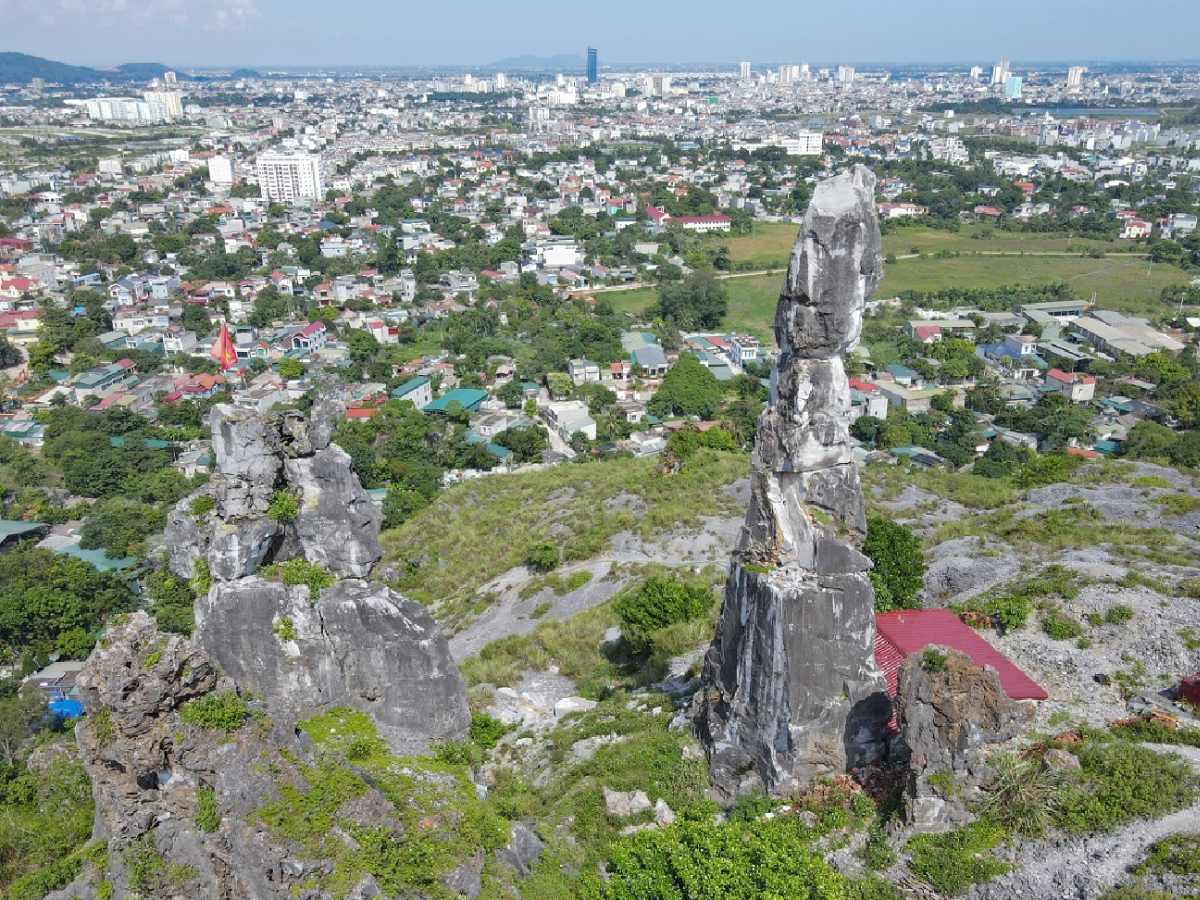
The trekking journey to Nui Nhoi Thanh Hoa opens up challenging and attractive exploration routes. (Source: Collected)
From the summit of Nui Nhoi, the image of Thanh Hoa appears, the Ma River gently winds, and distant mountains fade in the early mist, creating an impressive natural painting. The moments of sunrise or sunset here always leave a deep impression on every visitor as the sunlight covers the vast landscape.
Notable check-in spots at Nui Nhoi include Hon Vong Phu peak with its famous rock formation, the unique reclining elephant stone face, and natural rock beaches around the mountain's base. Each viewpoint offers its own beauty, creating impressive photos with a poetic blend of mountainous scenery.
5.2. Nui Nhoi Thanh Hoa in poetry and folklore
The image of Hon Vong Phu on Nui Nhoi Thanh Hoa has become a symbol in Vietnamese literature and art. Nguyen Du once left lines of poetry praising the beauty and profound humanistic meaning of this rock formation. Many poets have composed verses about the faithful mother or wife waiting with anguish, inspired by the legend of Hon Vong Phu.
In the treasury of Thanh region's folk songs, Nui Nhoi also appears with simple, familiar verses. These songs not only honor the natural scenery but also convey life philosophies, emphasizing affection and loyalty in Vietnamese culture.
Today, the spiritual value of Nui Nhoi has transcended local boundaries, becoming a national cultural symbol. The image of Nui Nhoi is present in textbooks, artworks, and many other cultural products, affirming its position as a timeless heritage.
5.3. Suggested itinerary combining Nui Nhoi and nearby attractions
Planning an exploration of Nui Nhoi Thanh Hoa can be flexibly combined with attractive nearby destinations. Nui Long and Nha Le River nearby create a rich natural experience. Visitors can combine visits to ancient pagodas, explore stone craft villages, or enjoy Thanh Hoa specialties like che lam and nem chua.
If time is limited, a half-day itinerary is suitable for visiting Nui Nhoi, some typical pagodas, and a quick experience at the stone craft village, still ensuring a feel for the highlights of this destination.
After finishing the exploration of Nui Nhoi, visitors can continue towards the sea, enjoying the vibrant atmosphere at Sam Son Beach Square, Thanh Hoa's modern center for entertainment, events, and recreation. The combination of majestic mountain beauty and the brilliant sea space offers a balanced experience of nature, culture, and the youthful rhythm of Thanh land.
6. Festivals and cultural activities at Nui Nhoi Thanh Hoa
6.1. Local traditional festivals associated with Nui Nhoi
The spiritual cultural space at Nui Nhoi Thanh Hoa becomes vibrant with traditional festivals held regularly each year. The 'Le cung giao duyen' (Soulmate Offering Festival) and the New Year's village festival take place in early spring, attracting a large number of local residents and visitors from afar. Distinctive features also come from rituals honoring traditional stone artisans and the 'Le te Dinh Thuong' (Upper Temple Offering Ceremony), reflecting the uniqueness of this land.
During the festival atmosphere, visitors can enjoy 'hat chau van' (ceremonial singing) performances, participate in stone carving competitions, and experience traditional folk games such as swing, tug-of-war, and blindfolded pot-breaking. These activities contribute to community bonding, honor traditions, and bring joy to both participants and spectators.
At the foot of Nui Nhoi and in the craft village, many special cultural and artistic events are expected. This is an opportunity for every visitor to gain a deeper understanding of the culture, beliefs, and life of Thanh residents through different historical periods.
6.2. Activities for preserving and promoting heritage values
Efforts to preserve the heritage at Nui Nhoi Thanh Hoa are being emphasized with contributions from the local community. A large-scale project to reinforce Hon Vong Phu is underway to protect the wonder from the impacts of weather and time. Alongside this are activities to restore historical sites and organize heritage education programs for the younger generation.
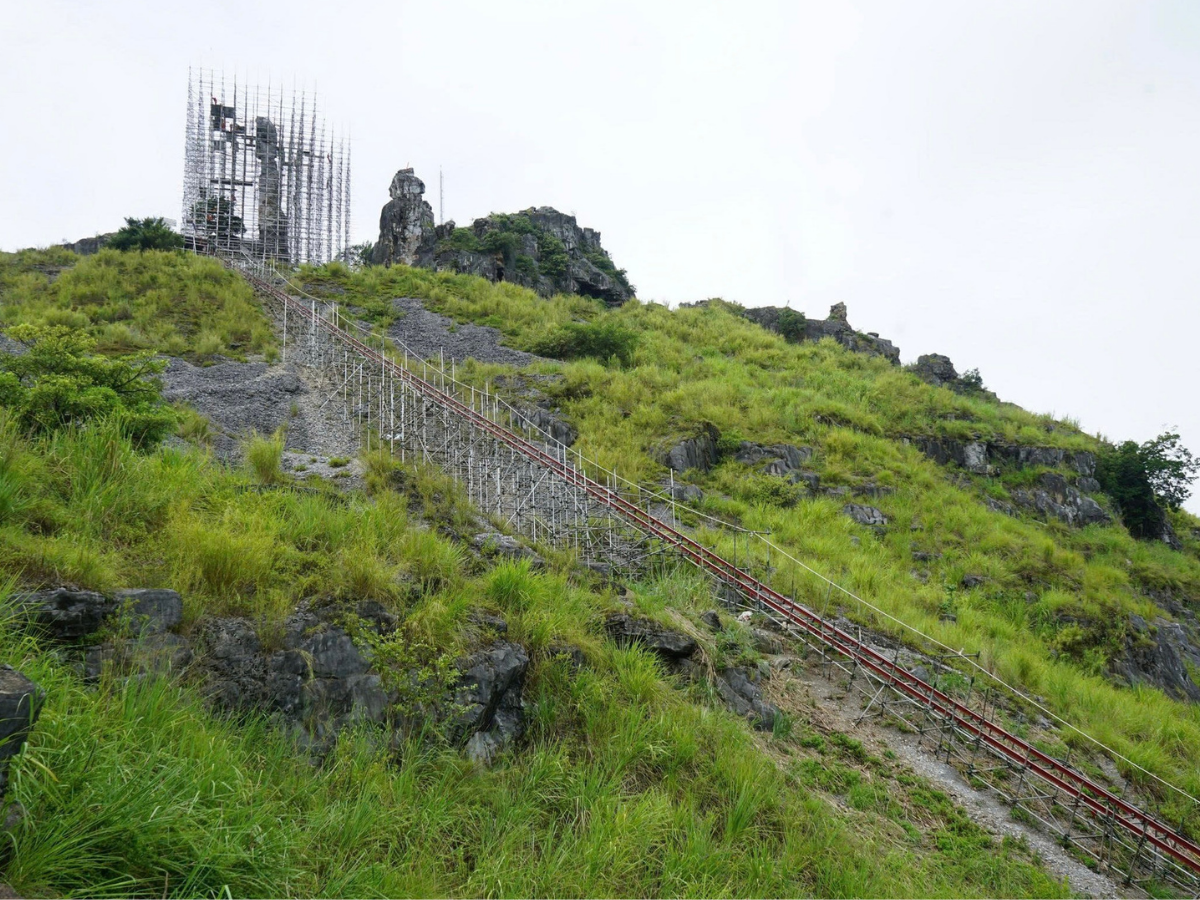
Heritage preservation work at Nui Nhoi Thanh Hoa is being focused on with the contribution from the local community. (Source: Collected)
Developing sustainable experiential tourism tours is a prioritized direction, contributing to the preservation and promotion of heritage values while creating opportunities to increase income for the people. The coordination between traditional preservation and adaptation to modern needs helps Nui Nhoi become increasingly known to many people.
Community movements such as environmental protection, tree planting, and raising awareness of heritage preservation are implemented and receive consensus. This demonstrates the desire to preserve and promote the valuable assets of Nui Nhoi Thanh Hoa for future generations.
7. Experience visiting Nui Nhoi Thanh Hoa
Before each exploration trip to Nui Nhoi Thanh Hoa, preparing suitable clothing is an important factor. Tourists should choose comfortable sportswear, hiking shoes, and bring plenty of drinking water. Don't forget a hat or wide-brimmed hat, and a light jacket to suit changing weather, especially when climbing to the mountain peak.
When attending festivals or entering spiritual relic areas, pay attention to maintaining order, choose polite attire, and respect the sacred space. If you wish to take photos or videos, please comply with the specific regulations of each area, avoiding disruption to the religious activities and community life.
Experiences to note when visiting Nui Nhoi. (Source: Collected)
To capture beautiful photos, visitors should choose early morning, when the weather is cool, the air is fresh, and there's a chance of beautiful clouds. Avoid rainy days as the stone paths can be slippery. When buying stone souvenirs, prioritize items with certificates of origin to ensure quality and contribute to preserving the local traditional craft.
Nui Nhoi Thanh Hoa is truly a special destination where majestic nature, long history, and traditional crafts blend to create a unique travel experience. Come and feel this beauty directly, while also contributing to preserving this precious heritage for future generations!


