




1. Mapping a Ho Chi Minh City Historical Tour
A Ho Chi Minh City historical tour usually highlights museums, tunnels and former military bases, but the experience becomes richer when approached as a continuous narrative rather than separate stops. The most meaningful route begins outside the city and returns later to central landmarks, allowing each location to give context to the next.
Traveling first to Tay Ninh introduces remote command sites hidden among forests and temples, where spiritual belief and strategic responsibility coexisted. Continuing to Cu Chi reveals how ordinary citizens built underground networks to endure hardship and protect their communities. Returning to Ho Chi Minh City connects these encounters to preserved rooms, archival photographs and documented decisions that contextualize what travelers witnessed in rural areas.
Unlike conventional sightseeing, this approach values careful observation and thoughtful pacing. Many tour operators now design Ho Chi Minh City historical tour options that emphasize interpretation over speed, helping visitors connect personal stories, leadership moments and physical landscapes into a unified historical understanding. The goal is not to see “as much as possible,” but to understand what you see.
2. Ho Chi Minh City historical tour to Tay Ninh
A Ho Chi Minh City historical tour to Tay Ninh is a journey through quiet mountains, hidden caves and former command centers. Just over 80 kilometers from Ho Chi Minh City, this region holds stories of endurance and leadership grounded in the landscape. It offers a rare blend of strategic history and spiritual heritage that shaped decisions far from public view.
2.1. Ba Den Mountain
At 986 meters above sea level, Ba Den Mountain served as a lookout across vast lowlands during the height of the resistance effort. Across 50,000 square meters, bombs struck relentlessly and stone caverns became makeshift homes. People slept on rock beds, moved by moonlight and risked their lives daily under constant threat.
On January 6, 1975, Ba Den Mountain was liberated – an event remembered as foundational in the historic victory later that year. Sun World Ba Den Mountain now gives visitors access to spots once reachable only through danger. The cable car system reveals panoramic views over former supply routes, letting visitors see with clarity what defenders once saw through fear and urgency.
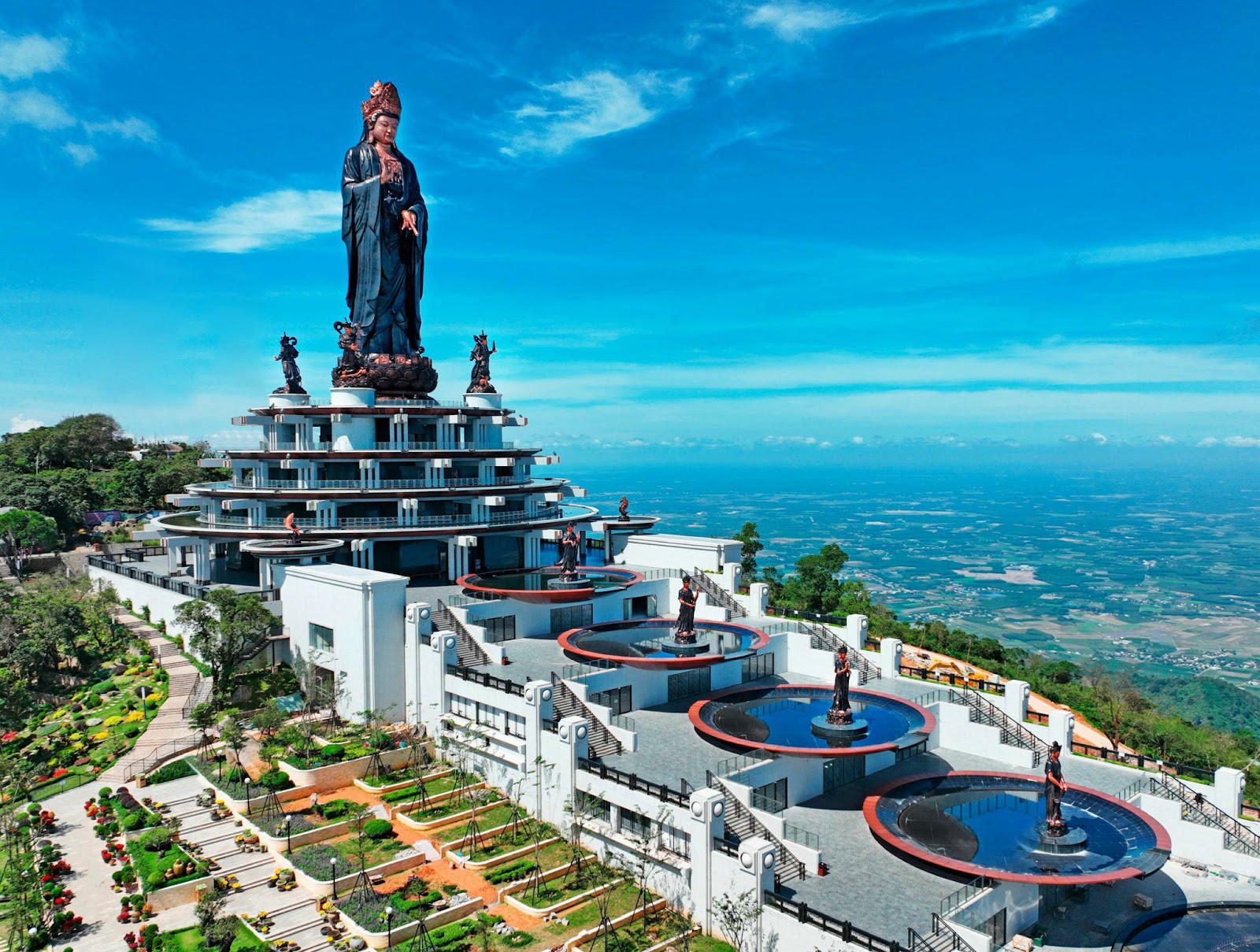
Ba Den Mountain - from a place marked by history to a lively tourist hub (Photo: Collected)
A Ho Chi Minh City historical tour here goes beyond scenery. Key sites like Kim Quang Cave, Hang Pagoda and Son Than shrine remain solemn memorials where veterans return to trace old paths, while travelers quietly light incense to honor unseen heroes.
2.2. Kim Quang Cave
Kim Quang Cave, reachable by a 500-meter walk from the mountain base, was once a central hideout for local leadership. Around 60 individuals lived in its depths, facing bombing raids and chemical exposure, yet refusing to surrender their position. Stories from this cave speak of discipline and mutual protection rather than violence.
Visitors taking a Ho Chi Minh City historical tour to Tay Ninh often bring offerings, lighting candles beneath rough stone walls. The space feels preserved exactly as it was left, stark and deeply human. Guides share stories passed down by families who lived near the mountain, keeping memories alive beyond history books. Kim Quang Cave is not a tourist attraction, it is a place for gratitude.
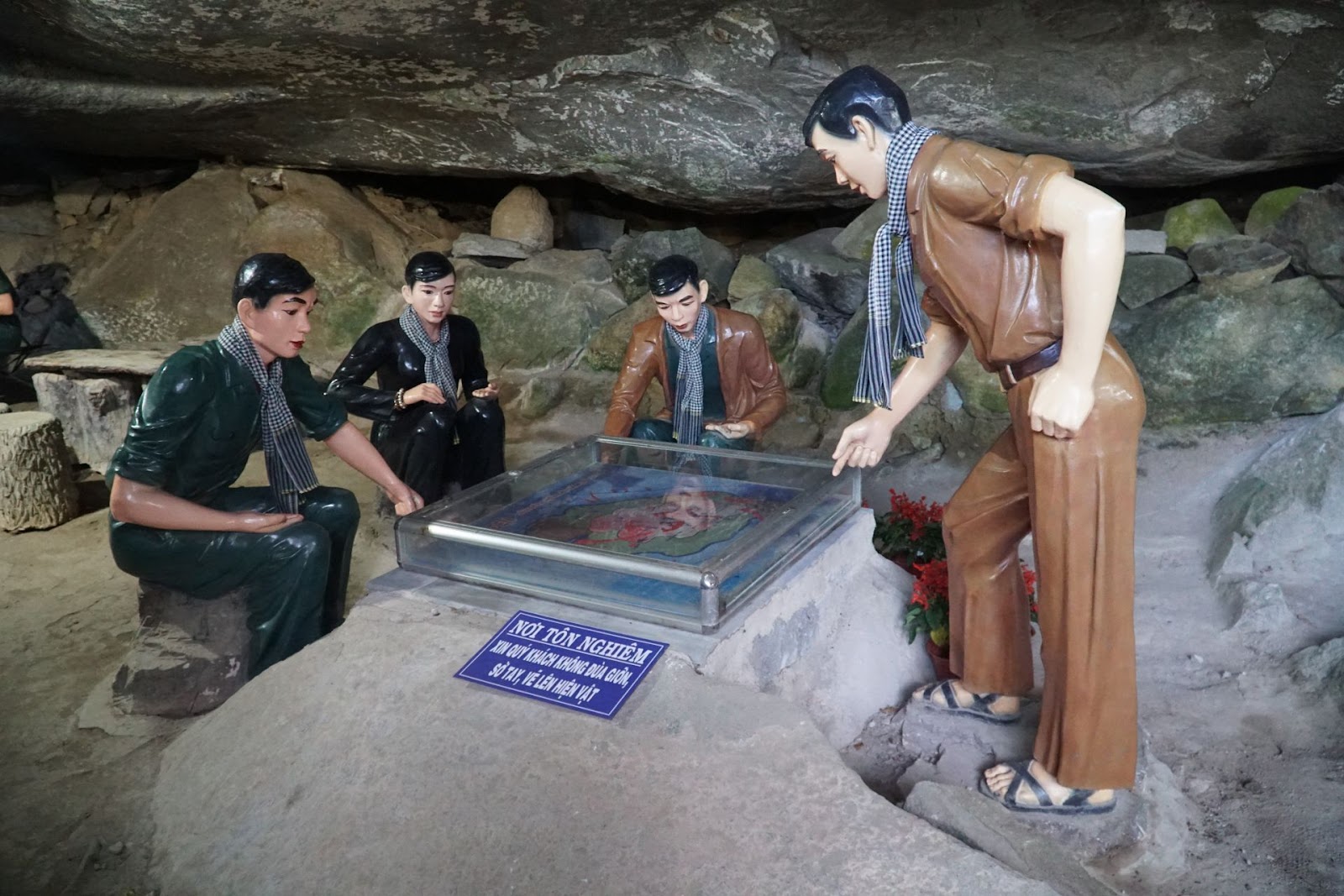
A group of statues recreates the activities of revolutionary soldiers in the Kim Quang cave (Photo: Collected)
2.3. Hang Pagoda
Hang Pagoda, halfway up the mountain, holds dual significance - both spiritual and historical. During the struggle, this area sheltered soldiers and supplied hiding places in steep rock folds. Records recall that 181 individuals gave their lives here to secure Ba Den Mountain’s liberation on January 6, 1975.
The present temple remains a sacred destination for those seeking blessings from Linh Son Thanh Mau, the revered guardian spirit associated with the mountain. Ho Chi Minh City historical tour here allows visitors to witness monks performing rituals near memorial altars, creating a bridge between ancient faith and modern remembrance.
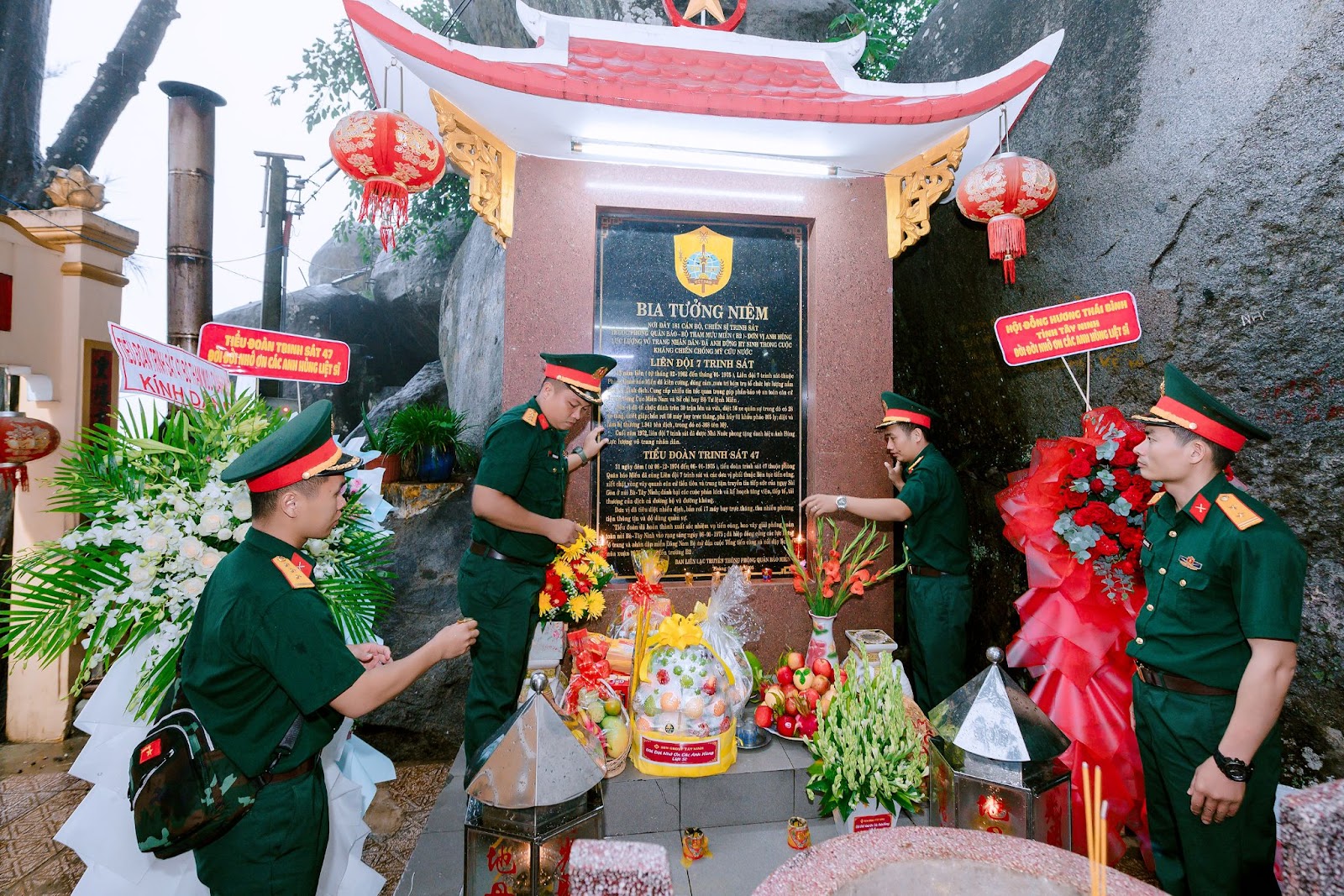
The soldiers still often visit and light incense to commemorate the fallen heroes at Hang Pagoda on special occasions (Photo: Collected)
On Saturday nights, thousands gather at Tay Bo Da Son square for a lantern-offering ceremony honoring fallen heroes. Flames flicker against mountain winds, holding wishes for peace, gratitude and healing. Chua Hang shows that history is not only retold in museums but lived through community rituals and shared silence.
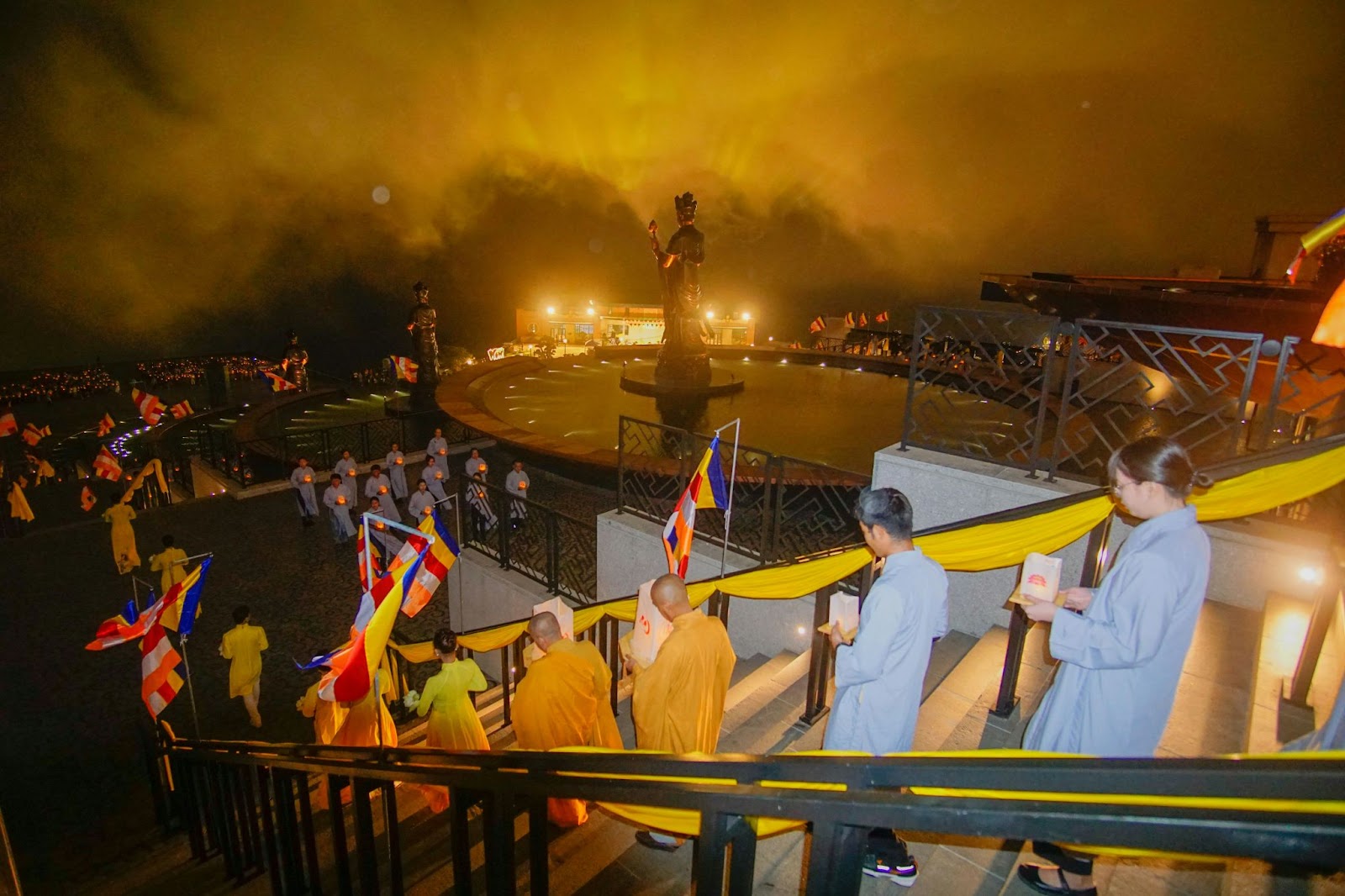
The flower lantern offering ceremony is held every Saturday night in Ba Den Mountain (Photo: Collected)
2.4. Central Office for South Vietnam
About 70 kilometers from Ba Den Mountain, another chapter of Tay Ninh’s story unfolds. Hidden deep in forested land, the Central Office for South Vietnam functioned as the strategic headquarters of the entire resistance effort in the South. This was not a battlefield, but a decision-making center where communications, planning, supply coordination, and tactical ideas began.
The site was chosen for practical reasons: dense forests for cover, proximity to cross-border routes, and reliable local support. Life here required secrecy and endurance. People used coded notes, silent movement, and nighttime briefings under dim lanterns. Visiting the Central Office for South Vietnam on a Ho Chi Minh City historical tour to Tay Ninh offers a rare understanding of leadership beyond combat.
Today, simple wooden barracks, radio remnants and basic supplies are still preserved at the site. They show how leadership survived not through force, but through patience, planning, and trust. A guide’s stories here are essential as this is a place you experience by listening, not just seeing.
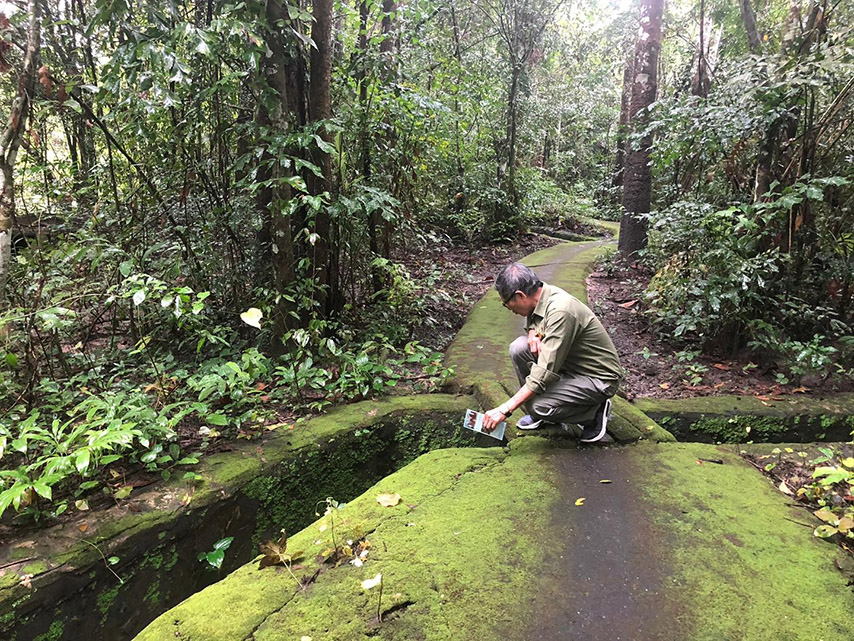
Trenches appear scattered throughout the revolutionary base (Photo: Collected)
3. Ho Chi Minh City historical tour to Cu Chi
Continuing a Ho Chi Minh City historical tour toward Cu Chi reveals a different chapter. Roughly 70 kilometers from Ho Chi Minh City, this area shows how families survived underground for years, turning soil and silence into protection. Every tunnel segment reflects inventive strategy and community resilience under constant pressure.
3.1. History of Cu Chi Tunnels
Under forests and farmland lies a network of over 200 kilometers of tunnels. People once moved through these narrow passages with only a single shoulder-wide entrance and small air holes for breathing, leaving no trace above ground. Kitchens, meeting rooms and hidden shelters allowed communities to endure the harshest conditions out of sight.
The Cu Chi tunnels were first dug in the late 1940s, originally built by resistance forces fighting against the French. They were later extensively expanded in the early 1960s during the war against the Americans, ultimately forming a vast underground system used for shelter, supply and combat.
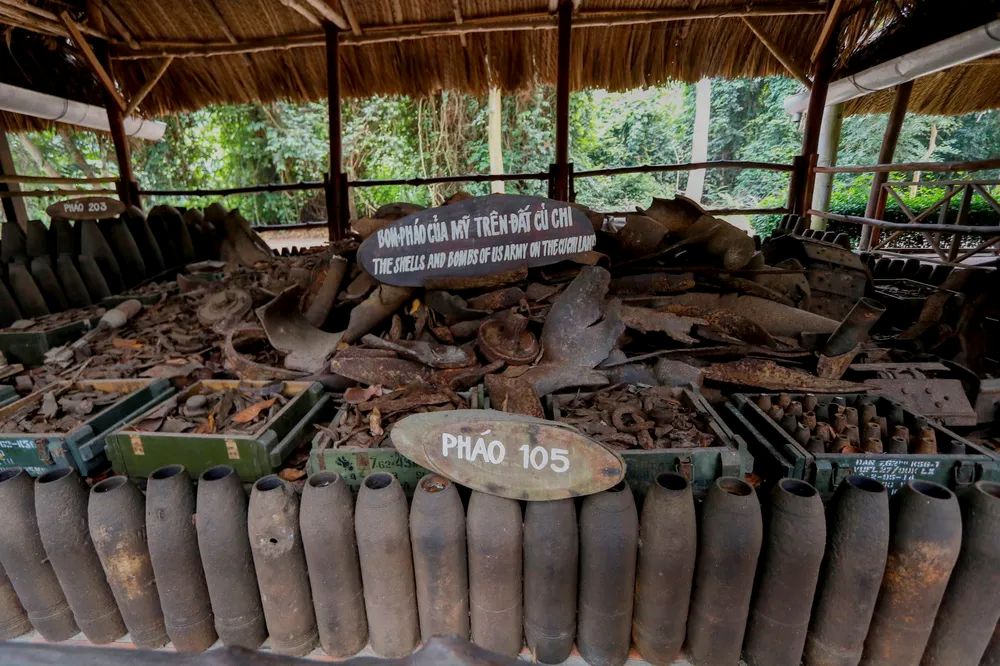
Wartime bombs and artillery preserved to this day (Photo: Collected)
On a Ho Chi Minh City historical tour, guides share stories not just of battles, but of daily resilience. They recount how meals were cooked without smoke using Hoang Cam’s stoves and how officers like Pham Van Tra used coded signals and silent runners to replace telephones. The tunnels reveal human adaptability rather than destruction. Walking through preserved sections offers perspective few museums can provide. Every bend and crawlspace represents decisions made in urgency, fear and hope.
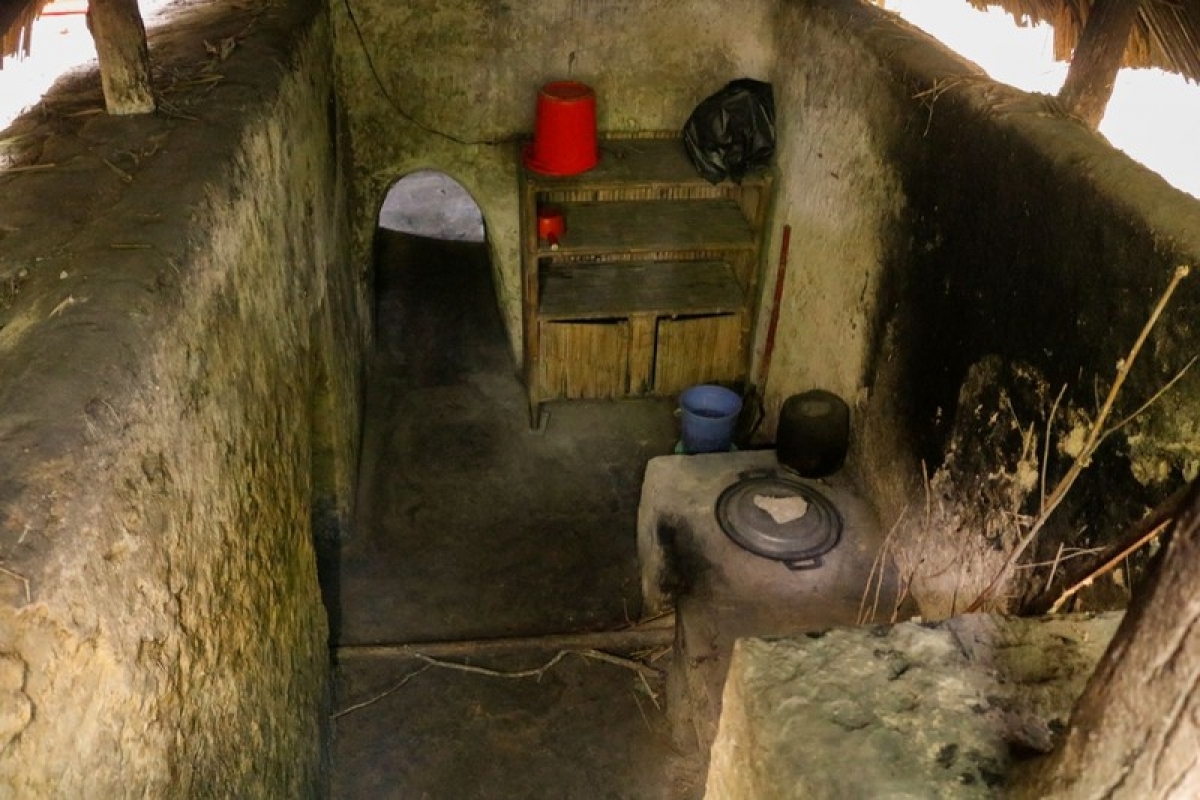
Hoang Cam stove in the Cu Chi tunnels (Photo: Collected)
3.2. Inside the Cu Chi Tunnels
Inside the tunnels, visitors will see original trapdoors camouflaged with termite soil, ingeniously designed to hide entire openings from plain sight. These engineering feats reveal the brilliance of quiet strategists like Tran Van Lai, whose inventions allowed the landscape itself to protect those underground.
Deeper underground, preserved medical chambers tell the story of doctors such as Duong Quang Dong, who saved lives in oxygen-poor air using basic herbs and improvised instruments. These makeshift hospitals, alongside simple details like a water jar or a wooden bed, speak louder than photographs. They show how survival depended on calm determination rather than force.
A Ho Chi Minh City historical tour to Cu Chi is a memory path filled with names that rarely appear in Western narratives but are cherished in local recollections. By listening to guides share these family accounts connected to this area, visitors realize that each personal story turns soil into testimony. The experience becomes less about the tunnels themselves, and more about the lives that passed through them.
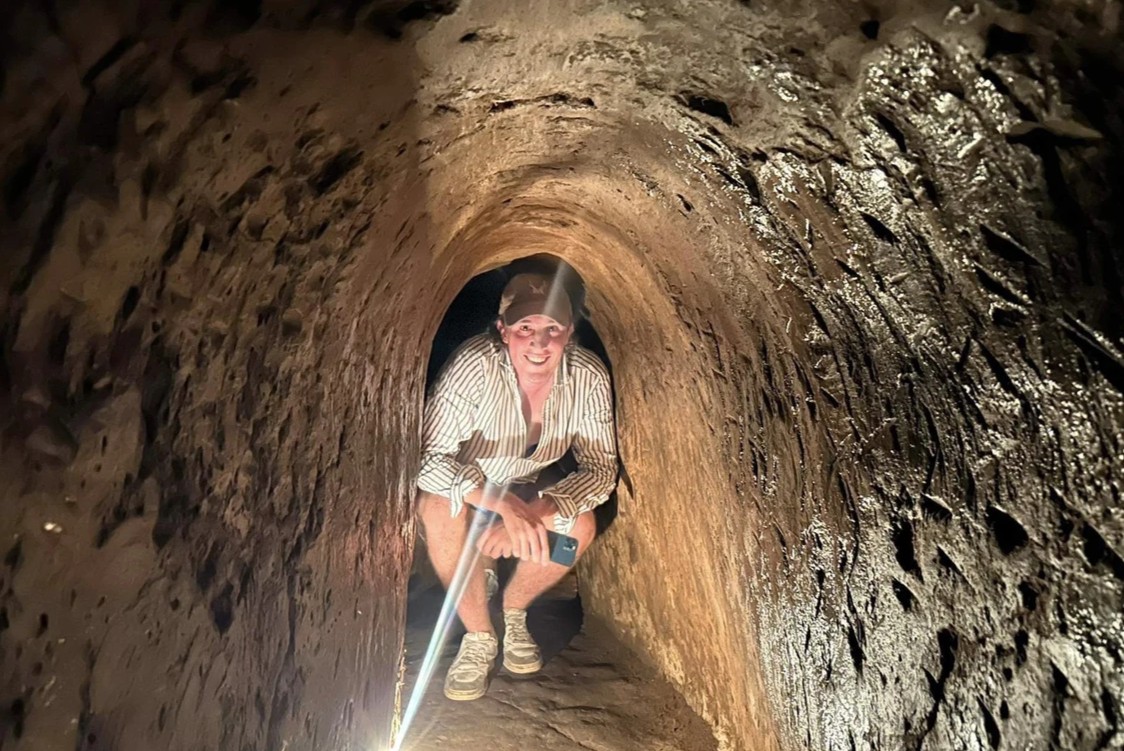
Visitors experience walking through the tunnels (Photo: Collected)
Visitors often extend a Ho Chi Minh City historical tour at Cu Chi by trying the shooting range, located near the main tunnel complex. This controlled activity allows visitors experience using replica firearms, priced at around 40,000–60,000 VND per bullet. Protective gear is provided, and instructors explain proper stance and safety. While distinct from historical exploration, the activity gives perspective on the contrast between underground silence and the loud tension that once marked life above ground.
4. Ho Chi Minh City historical tour in the city center
The final stage of a Ho Chi Minh City historical tour unfolds in the urban core, where museums, archives, and preserved rooms help interpret everything seen in Tay Ninh and Cu Chi. Here, public records, testimony, and documentary evidence transform hidden landscapes into shared historical knowledge.
4.1. War Remnants Museum
The War Remnants Museum presents history not as a single voice, but as a dialogue between local citizens and international observers. Exhibits display photographs that captured human experiences during the conflict like fear, hope, care, and resilience in communities affected by displacement. Visitors gain context about how ordinary people adapted, rebuilt and continued life throughout years of uncertainty.
Only after understanding the visual language of these images can you trace the work of photographers who risked their lives to document events. Figures such as Larry Burrows, Henri Huet, and Kyoichi Sawada recorded stories that might otherwise have disappeared. Their presence in a Ho Chi Minh City historical tour highlights the importance of witnesses. Through their lenses, individual faces - mothers, students, farmers become part of the historical record.
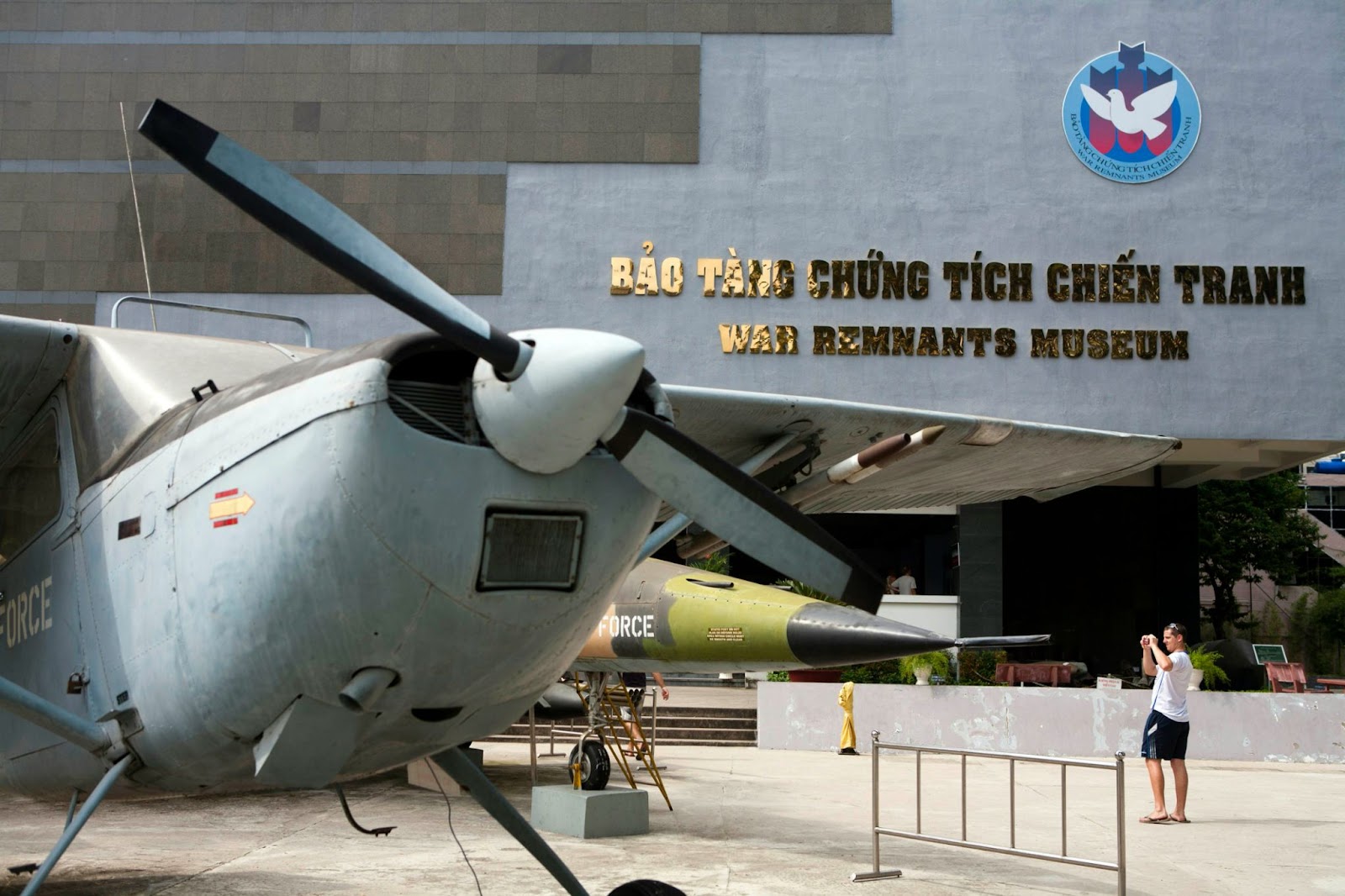
The War Remnants Museum displays many valuable documents and artifacts (Photo: Collected)
4.2. Reunification Palace
The Reunification Palace is less emotional than caves or tunnels, but it is intellectually powerful. Visitors walk through halls where strategic discussion shaped outcomes nationwide. You see conference tables where decisions were drafted, maps where territory was marked and communication rooms that coordinated transitions between uncertainty and resolution. Understanding these settings reveals history as process, not myth.
Only after sensing the atmosphere of these rooms does a Ho Chi Minh City historical tour introduce names linked to pivotal moments. Dương Văn Minh, a figure often associated with the palace, became a central character in the transfer of power that marked a shift toward national closure. Through preserved furniture, handwritten notes and radio equipment, visitors imagine how leadership navigated intense pressure behind closed doors.
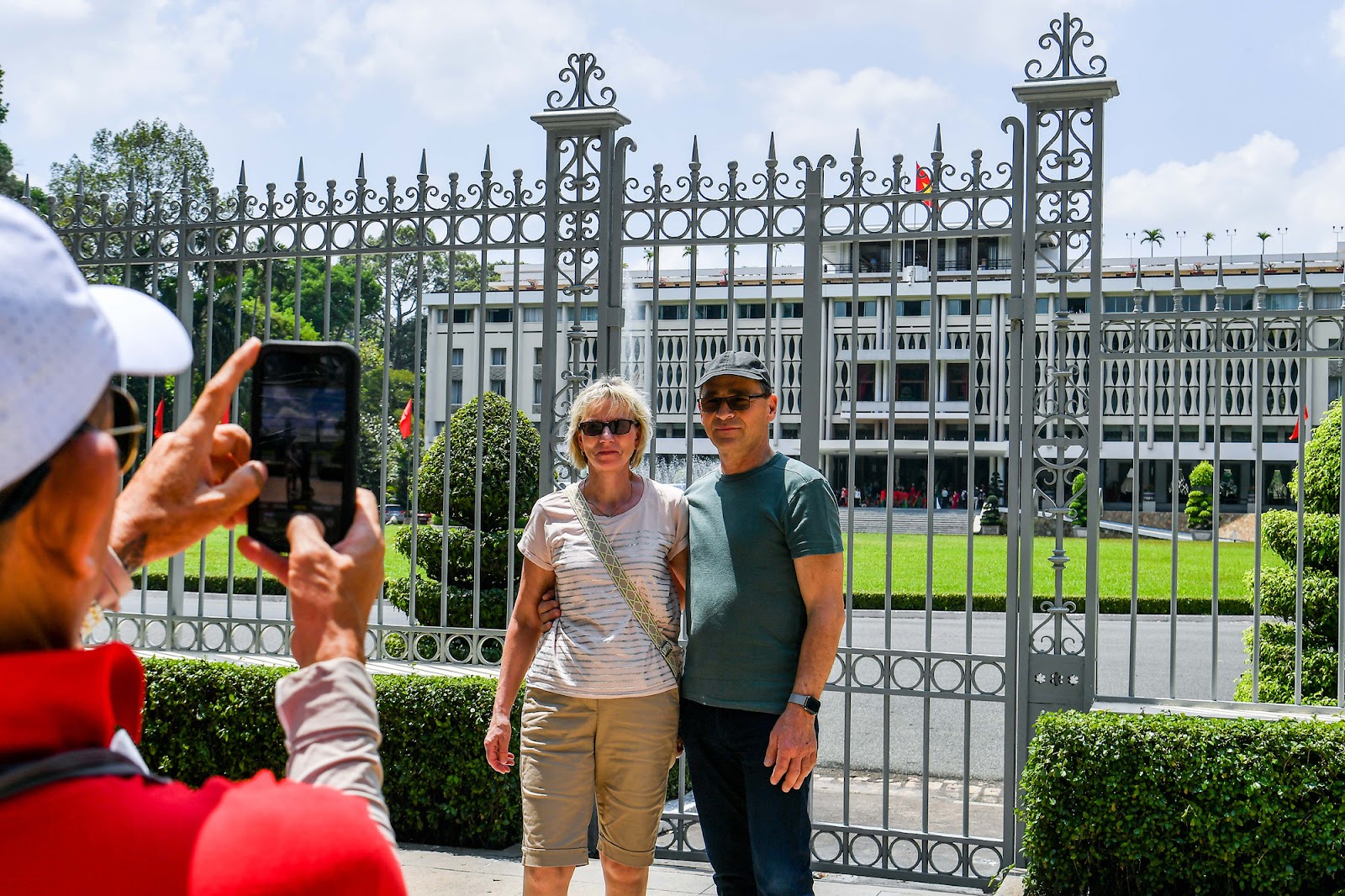
The gate of the Independence Palace, struck by Tank 390 in 1975, remains a major attraction for foreign tourists (Photo: Collected)
4.3. Notre Dame Cathedral & Central Post Office
Colonial-era landmarks show an earlier chapter of the city long before resistance movements rose. Architecture here expresses political interests through aesthetics: Romanesque facades, ironwork structures, and stained glass designed to signal authority and presence. Visitors who pause to appreciate these buildings see how cultural domination worked silently through urban design.
At this stage, a Ho Chi Minh City historical tour connects architectural symbols with individuals who shaped them. Architects and planners like Marie-Alfred Foulhoux left visual systems that later generations inherited and reinterpreted. Maps displayed inside the Central Post Office offer clues to communication routes and administrative divisions that influenced later strategic thinking, proving that history accumulates through layers, not sudden events.
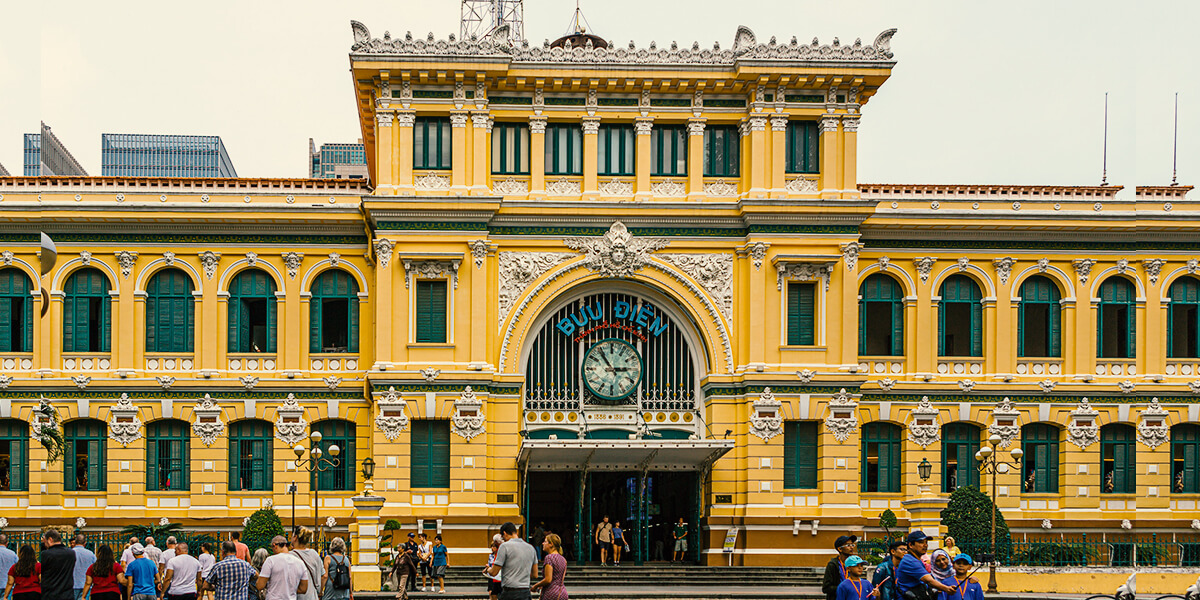
Visitors admire the classic yellow facade of the Central Post Office (Photo: Collected)
5. Travel guide for a Ho Chi Minh City historical tour
5.1. Best time to experience a Ho Chi Minh City historical tour
The ideal period for a Ho Chi Minh City historical tour is from December to April, when dry weather supports exploration in all three major areas — Tay Ninh, Cu Chi, and the inner city. Clear skies reveal sweeping views from Sun World Ba Den Mountain, allowing reflection while observing vast plains once used for communication routes.
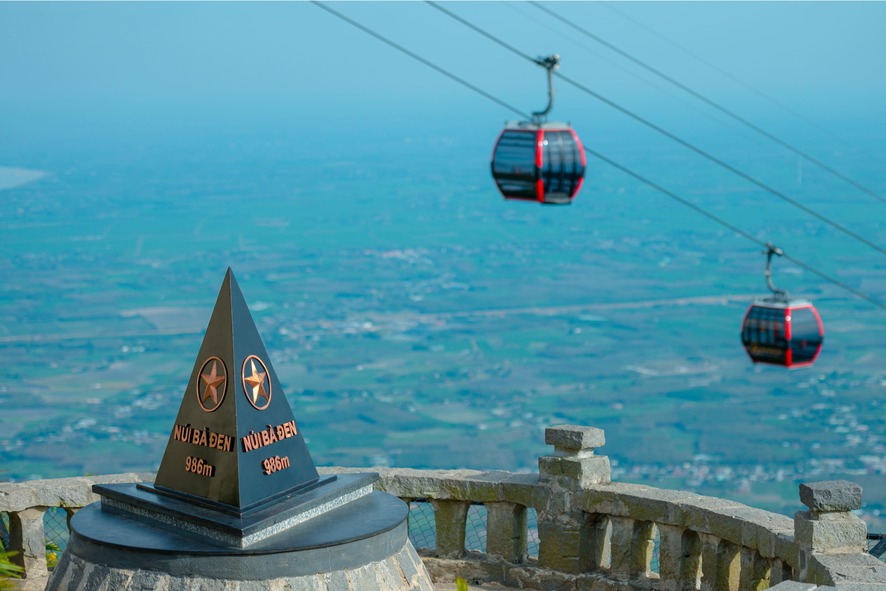
Panoramic view from the peak of Ba Den Mountain on a clear day (Photo: Vivu Vietnam/Unsplash)
This timeframe also brings more comfortable conditions for tunnel visits in Cu Chi, reducing humidity inside narrow passages. In the city center, cooler mornings make museum visits easier, especially when standing outdoors at memorial sites or walking between Reunification Palace and Notre Dame Cathedral. Planning your journey within this window ensures consistent, thoughtful exploration without weather interruptions.
5.2. Transport options for a Ho Chi Minh City historical tour
Traveling between historical sites usually requires more than one method. For most visitors, private cars offer flexibility, especially when moving from Tay Ninh to Cu Chi and stopping at locations such as Kim Quang Cave or the Central Office for South Vietnam. Booking a private vehicle for a full-day route through Tay Ninh and Cu Chi typically costs 1,200,000–1,800,000 VND for a four-seat car.
For those without access to a private car, express buses run regularly from Ho Chi Minh City to Tay Ninh, with fares ranging from 70,000–150,000 VND per passenger. Travelers can then continue by taxi or motorbike to the monuments, with total transportation expenses generally 150,000–300,000 VND per person, depending on the destination. Rental motorbikes provide autonomy for experienced riders, while tour operators can arrange day trips with English-speaking drivers.
Within Tay Ninh, the Sun World Ba Den Mountain cable car is the smoothest way to reach summit temples, shrines, and viewpoints overlooking strategic lowland areas. Ticket prices vary depending on the chosen package and usually range from 250,000–800,000 VND round-trip for adults.
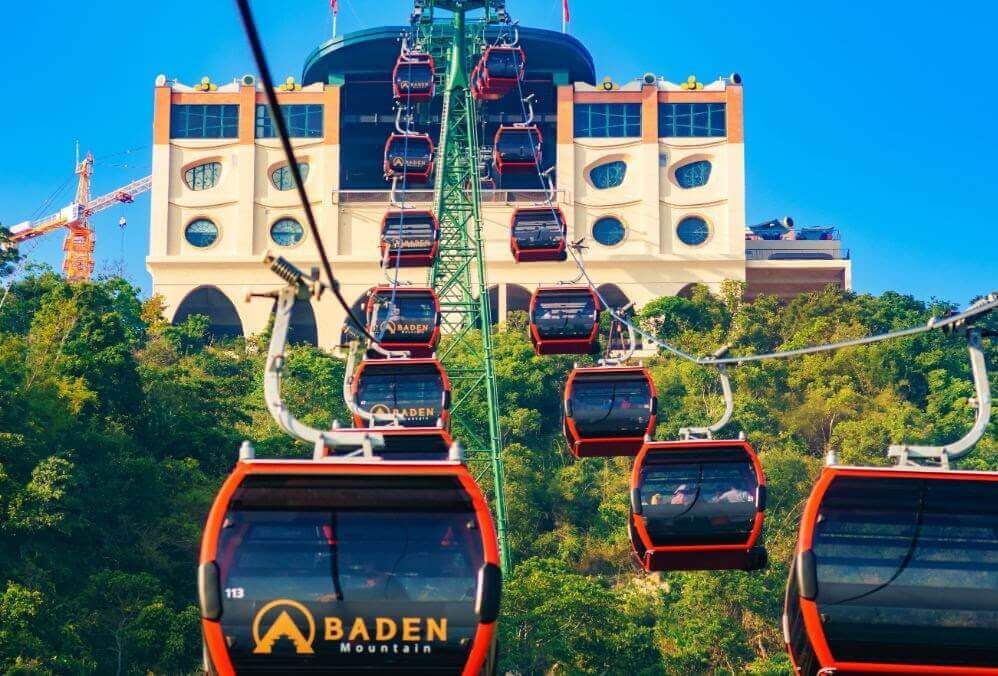
The Ba Den cable car makes reaching the summit fast, easy and effortless (Photo: Collected)
In Cu Chi, marked walking paths guide visitors between tunnel sections with minimal additional travel costs. Back in Ho Chi Minh City, ride-hailing services, taxis or rented motorbikes, typically 200,000–250,000 VND per day make it convenient to move between museums and government buildings. A balanced Ho Chi Minh City historical tour often combines at least three transport types over the course of a full itinerary.
5.3. Tips for a meaningful Ho Chi Minh City historical tour
Guides are essential in historical travel, but the right type matters. Many tours provide surface-level commentary, while local historians offer deeper context and personal insight. Some oral histories, passed down through families connected to Ba Den Mountain or Cu Chi Tunnels, reveal rarely mentioned signs or displays.
Their storytelling turns a Ho Chi Minh City historical tour into an experience of awareness rather than checklist sightseeing. Thoughtful questions reveal narratives preserved through lived memory, not just documents. A full-day historian guide generally costs 500,000–1,000,000 VND.
Approach each stop with patience, pause before lifting your camera. At memorial caves, shrines and tunnel chambers, silence reveals details: incense drifting through rock openings, scuffed ground where feet once waited, faded markings on wooden beams. To honor historical spaces fully, visit with presence and humility. A Ho Chi Minh City historical tour is most meaningful when it leaves emotional traces, not just images. The past remains stored in stillness, often accessible only when attention replaces hurry.
A Ho Chi Minh City historical tour unfolds best through progression: mountain leadership in Tay Ninh, underground resilience in Cu Chi, and preserved narratives in central museums and palaces. Each location contains names, decisions, and quiet strategies that shaped entire communities. When travelers move through them thoughtfully — with awareness, respect, and curiosity — the journey becomes more than sightseeing. It becomes a connection.


