




1. General introduction to the history of Linh Son Hoa Dong
1.1. Where is Linh Son Hoa Dong?
Nestled halfway up Ba Den mountain range, in Thanh Tan commune, Tay Ninh city, Linh Son Hoa Dong pagoda is one of the prominent spiritual sites, contributing to the unique character of the relic complex of the highest mountain in the Southern region. The pagoda is located at an altitude of about 350 m above sea level, amidst the lush green space of the mountains and pristine natural scenery. This very location creates a poetic landscape and is an ideal spiritual destination for Buddhists and pilgrims.
To visit the pagoda, travelers will follow the steep stone steps along the mountainside and cross a small wooden bridge leading into the pagoda grounds. From here, visitors can easily gaze out at the vast Tay Ninh plains, giving the feeling of being in a place where heaven and earth meet.
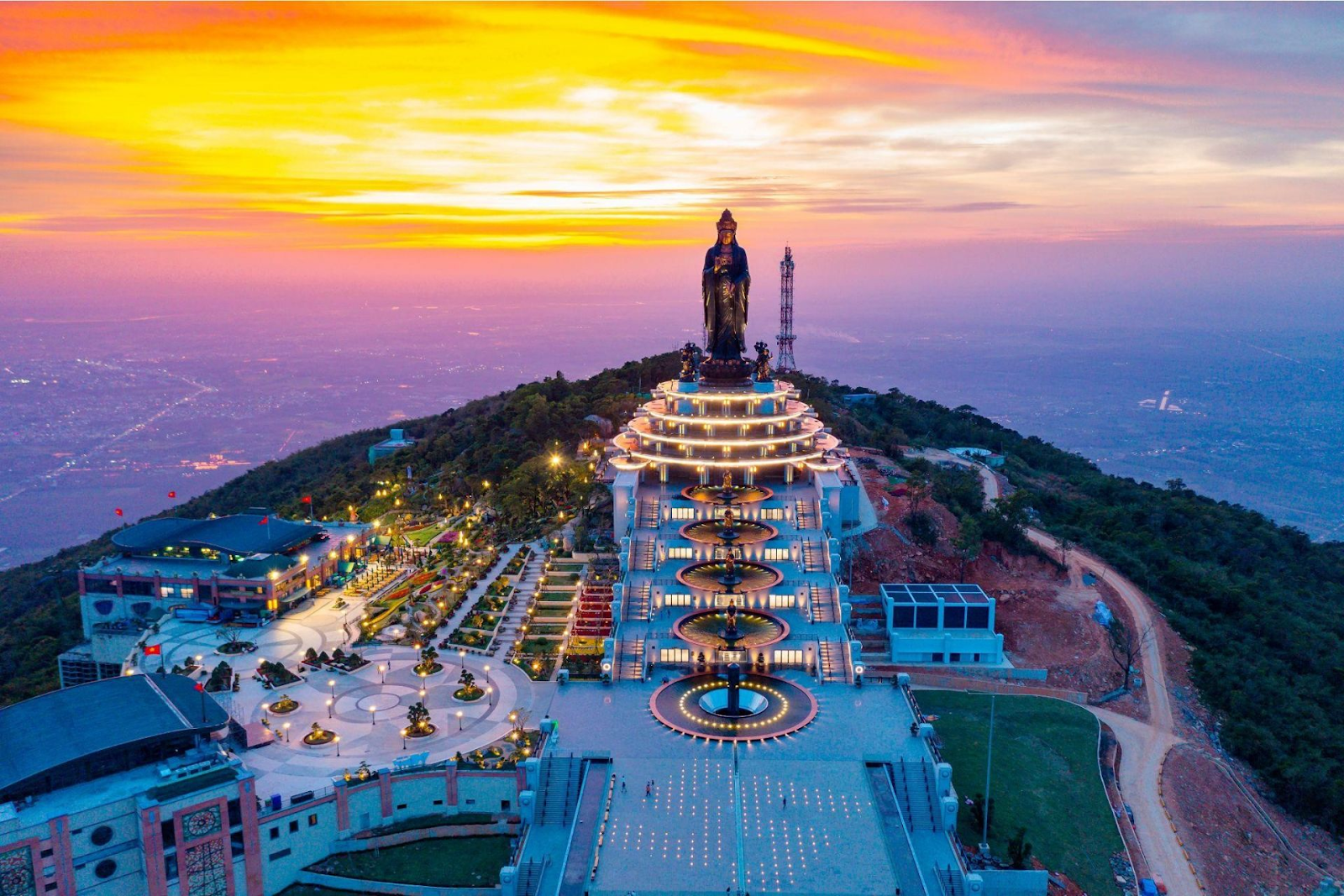
The pagoda belongs to the spiritual tourist area of Ba Den Mountain. (Source: Collected)
1.2. Why learn about the history of Linh Son Hoa Dong?
Learning about the history of Linh Son Hoa Dong will open up a colorful picture of the intersection between Mahayana Buddhism and the worship of Linh Son Thanh Mau in the spiritual life of the Southern people. The pagoda is a symbol of the process of receiving and integrating Buddhism into local traditions, not merely an ancient architectural relic.
Exploring the origin and development journey of the pagoda helps us better understand the process of spreading Buddhism in the Tay Ninh region since the late 19th century. The special feature of Linh Son Hoa Dong also lies in its preservation of religious values, reflecting the thinking and spiritual culture of the Southern residents throughout the flow of history.
2. Formation and Development Process of Linh Son Hoa Dong
2.1. Origin of the construction of Linh Son Hoa Dong Pagoda in 1876
The year 1876 marks a turning point in the history of Linh Son Hoa Dong, when the pagoda was built on the foundation of an old pagoda, initiated by eminent monks of the South. At that time, in the late 19th century, the religious needs of the residents around Ba Den Mountain were increasing, and it was also when people from all over the South came here to pray for peace, safety, and happiness.
The pagoda was erected with the aim of honoring Linh Son Thanh Mau, as well as spreading the teachings of Mahayana Buddhism. The eminent monks keenly recognized the special spiritual significance of Ba Den Mountain in the hearts of the local people, a place inherently associated with many sacred legends surrounding Linh Son Thanh Mau. From then on, the combination of Buddhism and folk beliefs created a solid foundation for the development of religious life here.
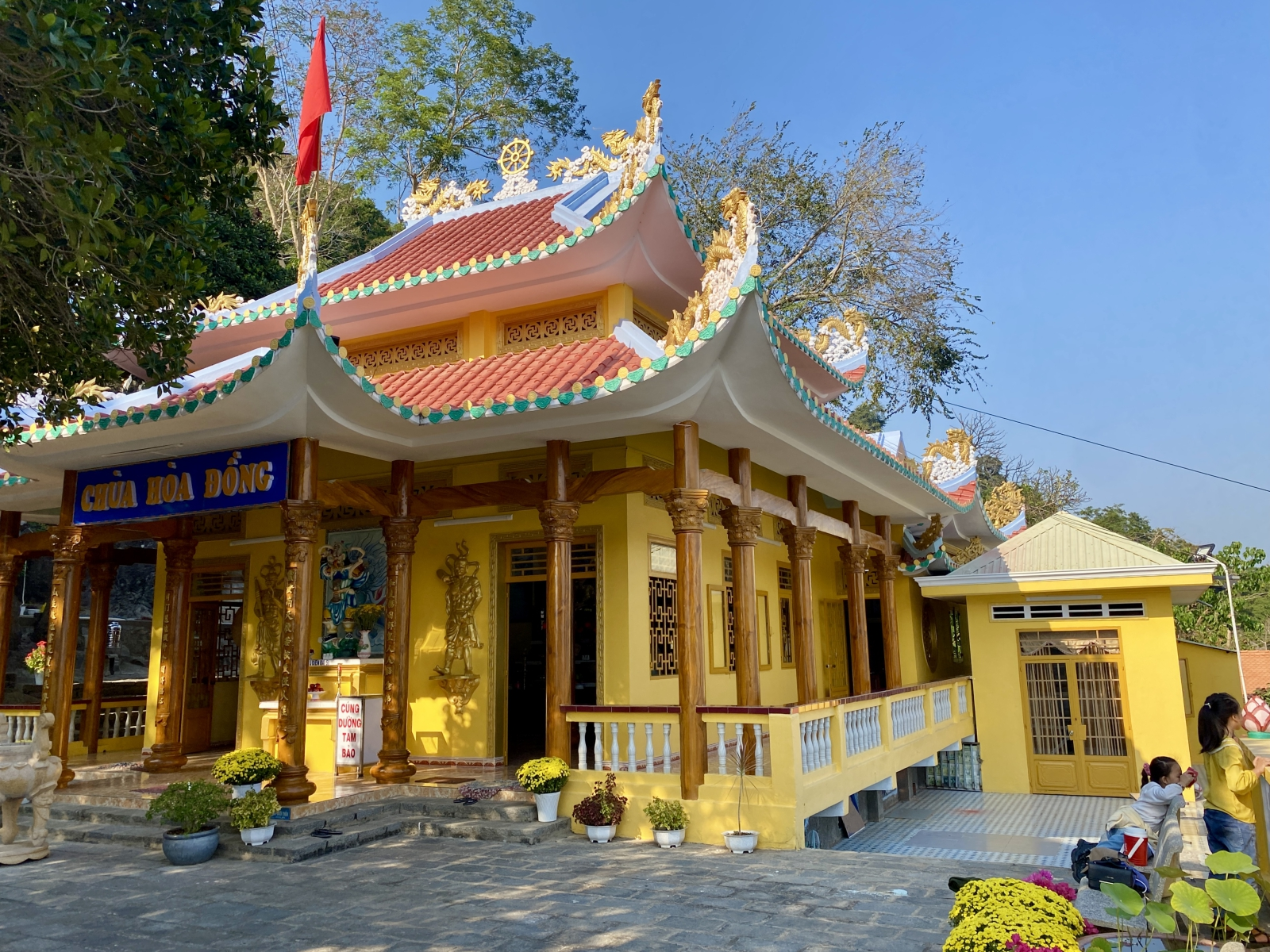
The pagoda after being restored. (Source: Collected)
2.2. Role of the pagoda in the development of beliefs in the Ba Den mountain region
Amidst the system of sacred sites on Ba Den Mountain, Hoa Dong Pagoda plays a role in connecting the spiritual values of Southern Vietnam and Mahayana Buddhism. The pagoda has become a familiar resting place on the journey towards Ba Mountain for countless Buddhists, contributing to the enrichment of the unique belief culture of this land.
The presence of Linh Son Hoa Dong spreads powerfully, attracting a large number of Buddhists from all over Southern Vietnam to pilgrimage, especially during major festivals. The pagoda is not only a place for monks and nuns to practice but also a space for the community to bond, where traditional values are passed down through generations.
The pagoda's mission is also clearly demonstrated through the maintenance of traditional rituals, the organization of charitable activities, and moral training. Thanks to this, Linh Son Hoa Dong has become an indispensable part of the spiritual life of the residents around Ba Den Mountain.
3. Cultural and Spiritual Values of Linh Son Hoa Dong
3.1. Blending Mahayana Buddhism and Mother Goddess Worship beliefs
A prominent feature in the history of Linh Son Hoa Dong is the harmonious blend of Northern Buddhism and the worship of Linh Son Holy Mother. The process of "Buddhizing" the image of Linh Son Holy Mother has created a unique spiritual nuance, characteristic of Southern Vietnamese culture. This integration is not a replacement but a mutual support and complementarity between the two belief systems.
The worship space at the temple clearly demonstrates this, with the image of Linh Son Holy Mother created in a Buddhist style, featuring distinct lines and symbols from clothing to posture. This is the result of creative and skillful localization, bringing Buddhism closer to the spiritual life of the local people.
This intermingling is further expressed through characteristic rituals, where Buddhist scriptures resound simultaneously with prayers for the Holy Mother. People come here not only to perform Buddhist rituals but also to offer incense and pray for Linh Son Holy Mother's blessings of peace and good fortune for themselves and their families.
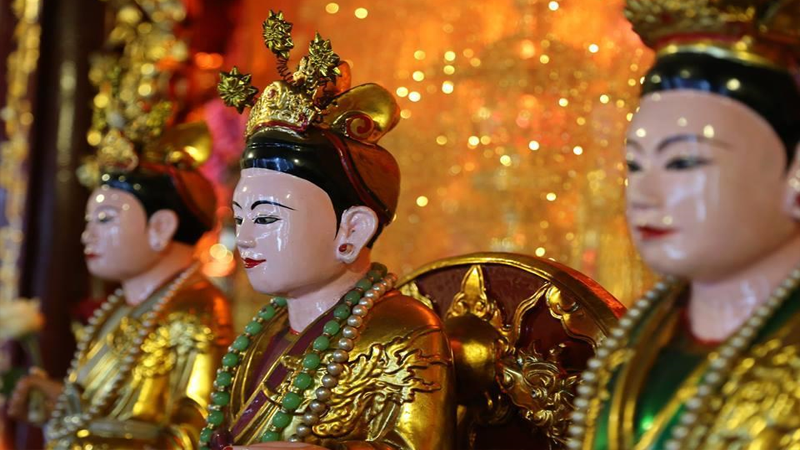
The belief in worshipping the Stone Mother is engraved into the spiritual life of the people of Tay Ninh. (Source: Collected)
3.2. Festivals and religious activities at Linh Son Hoa Dong
Religious activities at Linh Son Hoa Dong take place periodically according to the lunar calendar, with important occasions such as the Mother Linh Son Festival in the 4th and 8th lunar months. On these days, the temple space is bustling with streams of pilgrims from everywhere returning to offer incense, entrusting their wishes for peace and prosperity for their families.
In addition, on the full moon and the first day of the lunar month, Buddhists regularly visit the pagoda to participate in rituals, listen to sermons, and organize meaningful charity activities together. The atmosphere becomes even more sacred with the spreading incense, the sound of bells and gongs blending with the chanting of kinhs, creating a sense of stillness and peace.
Besides their religious significance, the festivals here are also an occasion for community bonding and cultural exchange between locals and tourists. This is also an opportunity to explore traditional customs, enjoy special vegetarian dishes, and participate in many meaningful spiritual activities. These experiences contribute to preserving and promoting the unique cultural heritage values of the Tay Ninh region.
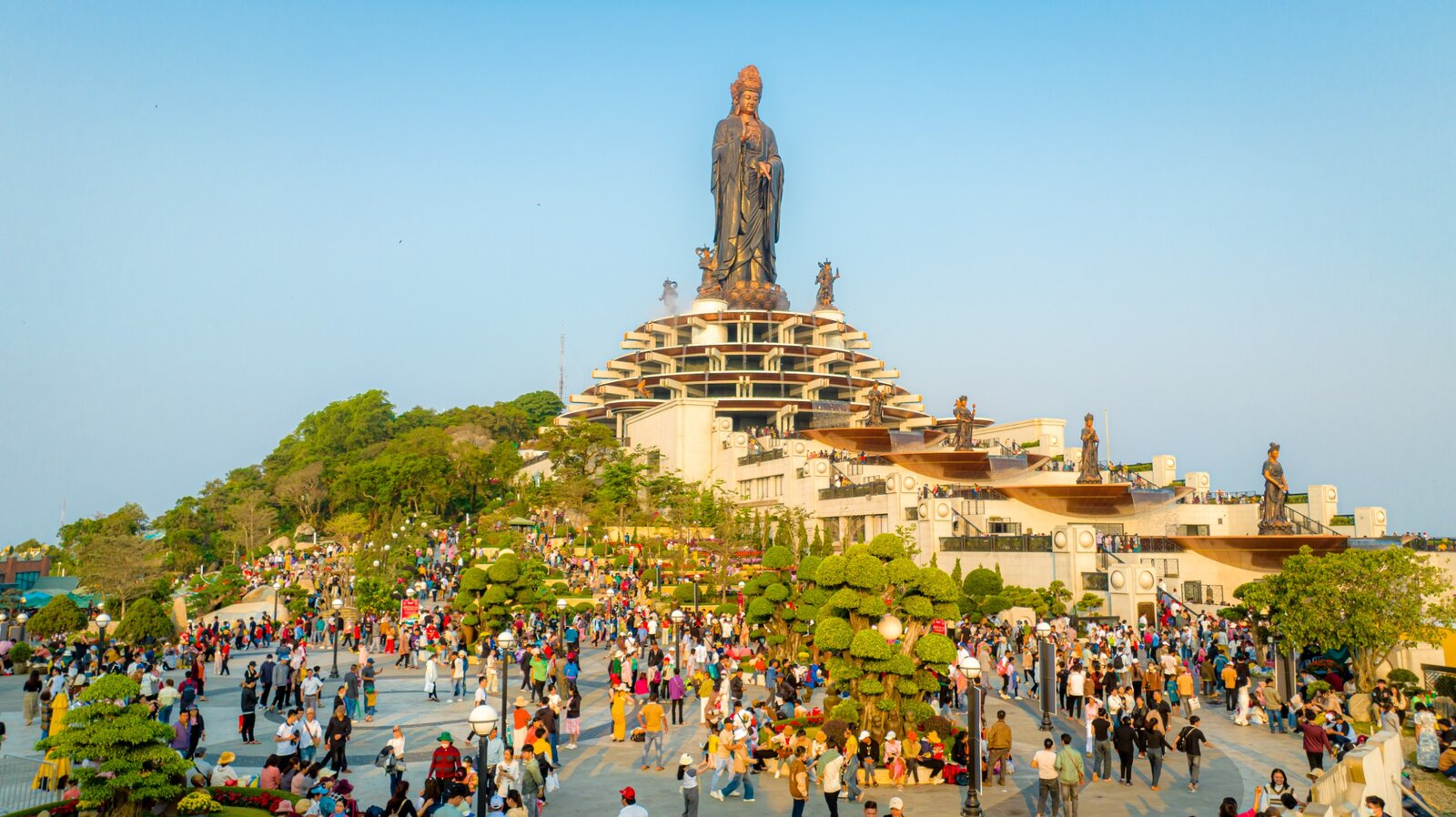
Every spring festival, the pagoda attracts many visitors for worship. (Source: Collected)
4. Architecture and Landscape of Linh Son Hoa Dong
4.1. Characteristic Architecture of Linh Son Hoa Dong Pagoda
After years of war, Linh Son Hoa Dong Pagoda was restored by Venerable Thich Nu Dieu Nghia, drawing inspiration from the traditional architecture of the South. The entire structure consists of two parallel rows of houses, with the main hall following the 'tu tu' style, three bays, and three spans, bringing symmetry and solemnity to the worship space.
The main hall covers an area of about 200 m², built on a frame of four large pillars, with a roof covered in yin-yang tiles creating soft curves, characteristic of Southern temple architecture. The decorative patterns and details are simple yet retain an ancient, solemn feel in line with the traditional Buddhist spirit.
During restoration, artisans paid special attention to preserving ancient architectural elements, such as the technique of assembling wood without nails and the arrangement of worship halls. As a result, the pagoda retains its tranquil, serene appearance amidst the mountains and forests, while also honoring the exquisite craftsmanship of ancient Southern carpenters.
4.2. Location and Mountain Pilgrimage Experience
Linh Son Hoa Dong Pagoda is located in a quiet spot on the mountainside. Although not extensive in area, it boasts a rare and picturesque landscape. The path leading to the pagoda consists of stone steps shaded by lush green forest trees, creating a feeling of entering a spiritual world separate from the hustle and bustle of daily life.
Standing at an elevation of 350 m, pilgrims can see the entirety of Ba Den Mountain with its nối tiếp peaks and the Tây Ninh plains stretching out in the distance. In the early morning, when mist and clouds linger, the scenery becomes even more magical and tranquil.
The experience of worship at the pagoda is a blend of nature and sacred space. The sound of the wind through the leaves, the distant chirping of birds, and the fresh air of the mountains and forests bring peace, ideal for those seeking to calm their minds and pray. Many feel that simply sitting quietly in the pagoda courtyard is enough to make their souls feel light and serene.

The sacred space inside the warm pagoda. (Source: Collected)
5. Directions to Linh Son Hoa Dong Pagoda
5.1. From Ho Chi Minh City and Southern Provinces
To explore the history of Linh Son Hoa Dong, visitors from Ho Chi Minh City can choose to travel by motorbike or personal car, following National Highway 22, a distance of about 120 km and taking approximately 2.5 hours to reach Tay Ninh city.
If you wish to use public transport, you can choose bus routes that depart frequently from Mien Tay Bus Station or An Suong Bus Station, with prices ranging from 80,000 to 120,000 VNĐ. The bus will take you to Tay Ninh Bus Station, from where you can rent a motorbike or hire a motorbike taxi to travel to the Ba Den Mountain area. From the Ba Den Mountain tourist area, you can choose the Sun World cable car to ascend the mountain quickly and conveniently, or challenge yourself by climbing the stone steps to fully experience the journey of conquering the mountain. Whichever way you choose, you will have the opportunity to enjoy the scenery of Tay Ninh's mountains and forests from various perspectives.
5.2. From Northern and Central Provinces
Guests from the Northern and Central provinces can fly to Tan Son Nhat Airport (Ho Chi Minh City). From here, traveling to Tay Ninh is flexible with many options such as taxi, bus, or private car rental. The most common method is to take a bus from the airport to Mien Tay Bus Station, and then continue by bus to Tay Ninh. The total travel time from the airport to the Ba Den Mountain tourist area is about 4 to 5 hours, depending on traffic conditions and waiting times for the bus.
Alternatively, guests can also rent a private car at the airport to go directly to Tay Ninh. Although the cost will be higher, you will have control over your schedule, which is especially convenient for groups of friends or families who want a private and time-saving tour.

Tourists from the North can fly to Ho Chi Minh City and then travel by car to Tay Ninh (Source: Collected)
6. Suggested combined experiences when visiting Linh Son Hoa Dong
6.1. Combine visiting Sun World Ba Den Mountain and spiritual sites
A trip to Linh Son Hoa Dong becomes more interesting when combined with exploring Sun World Ba Den Mountain. You should start by experiencing the modern cable car route, which makes it easy to reach the top of Ba Den Mountain in about 15 minutes and admire the panoramic view of the Southern plains from above.
On the mountaintop, visitors can continue their journey to explore famous spiritual sites such as Dien Ba, Linh Son Tien Thach Pagoda, Linh Son Long Chau Pagoda, and Linh Son Hoa Dong Pagoda. Each place possesses its own architectural style and spiritual value, creating a rich journey of exploring beliefs and culture.
The best time for this journey is early morning, when the air is cool and pleasant, convenient for travel and admiring the scenery. You should dedicate a full day to participate in spiritual rituals, enjoy the natural landscape, and learn about the cultural and historical values of Ba Den Mountain.
6.2. Useful tips when visiting and worshipping at Linh Son Hoa Dong
When visiting Linh Son Hoa Dong, polite, modest attire in gentle colors is the most suitable choice to show respect for the sacred space. You should avoid wearing revealing clothes, short pants, or overly bright colors when entering the pagoda.
Throughout the process of offering incense and participating in rituals, maintain a respectful attitude, avoid loud conversations, and comply with the regulations at the pagoda. You should also silence your phone and avoid taking photos in the main worship area to maintain solemnity.
The ideal times to visit the pagoda are early morning from 6 to 9 AM or late afternoon from 3 to 5 PM, when the weather is pleasant and the atmosphere is quiet, suitable for prayer and meditation. Lunar full moon days, the first day of the lunar month, or major festivals will have a special atmosphere, but also attract more people. Don't forget to maintain general hygiene, do not litter, do not pick flowers, or break branches within the pagoda grounds to help protect the landscape and the sacred values of this place.
The history of Linh Son Hoa Dong is a vivid testament to the journey of preserving spiritual heritage through generations. The pagoda is not only a pilgrimage destination but also a cultural bridge between the past and the present. Come and experience the unique sacred values in the heart of Ba Den Mountain!


