




1. Overview of the Sa Pa ancient stone field
1.1. Location and area scale of the Sa Pa ancient stone field
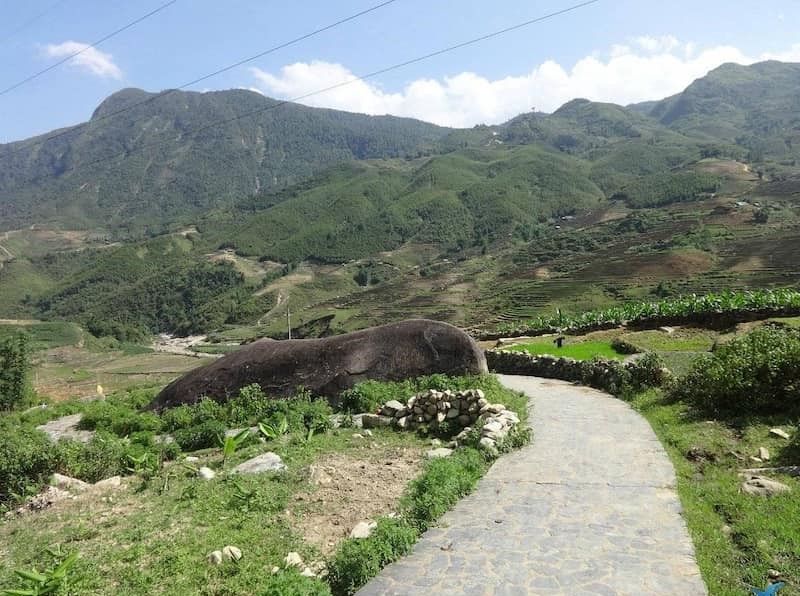
The stone field is located in the Muong Hoa valley. (Source: Collected)
Located in the vast Muong Hoa valley, the Sa Pa ancient stone field is surrounded by mountains nearly 2,000 m high, belonging to Hau Thao, Ta Van, Su Pan communes and bordering Pho village of the Hmong people. This archaeological site covers an area of about 8 km², stretching about 7–8 km to the Southeast, about 8 km from the center of Sa Pa.
The ancient stone slabs are distributed in two main clusters in Hau Thao commune: one cluster near Pho village extending down to the stream, the other cluster is located on the border between Hau Thao and Lao Chai with over 100 stones of various sizes. From here, visitors can observe the panoramic view of Muong Hoa valley and feel the beauty blending cultural heritage with the characteristic natural landscape of the Tay Bac mountains.
1.2. History of discovery and research of the Sa Pa ancient stone field
The journey to discover the Sa Pa ancient stone field began in August 1925, when French archaeologist Victor Goloubev from the École Française d'Extrême-Orient accidentally discovered this area during a field trip. In 1994, the Sa Pa ancient stone field was recognized by the Ministry of Culture and Information as a national historical and cultural relic. According to research documents, the carvings on the stones contain many layers of valuable information about the spiritual life, beliefs, and culture of the ancient inhabitants.
Today, the Sa Pa ancient stone field is not only a vivid testament to the formation history of the Tay Bac region but also a precious national cultural heritage, contributing to the unique identity of Sa Pa in the hearts of tourists.
2. Experience visiting the Sa Pa ancient stone field
2.1. Landscape and surrounding space of the Sa Pa ancient stone field
The space at the Sa Pa ancient stone field paints a charming natural picture, with the lush green Muong Hoa valley and terraced fields like silk ribbons interwoven around the mountainside. The Muong Hoa stream winding at the foot of the mountain creates a water surface reflecting sparkling light, adding to the picturesque landscape.
In the early morning, when mist still lingers on the treetops, the scene of the Sa Pa ancient stone field appears peaceful and pristine. As dusk falls, it takes on a serene, romantic beauty amidst the quiet mountain and forest space.
2.2. Discovering the mysterious stones and patterns
The Sa Pa ancient stone field currently has over 200 stone slabs of various sizes, mainly granite – a characteristic rock of the Hoang Lien Son geological region. What makes this place special are the mysterious carvings on the surface of the stone slabs, which have not yet been fully deciphered.
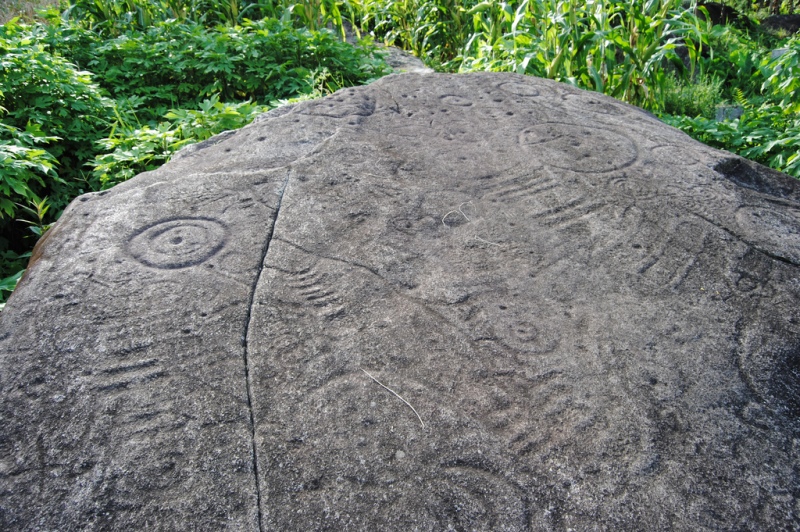
Mysterious patterns carved on stone. (Source: Collected)
The carved patterns clearly show the spiritual life of ancient residents, including images of the sun, water droplets, fertility symbols, strokes, spirals, and stylized human figures. These motifs are believed to depict the beliefs, daily life, and agricultural activities of the community that once lived in this area, reflecting their reverence for nature and deities in their spiritual life.
Many archaeologists believe that the carvings on the ancient stone field of Sa Pa date back to the Dong Son Culture period, one of the most brilliant periods of the ancient Vietnamese civilization. Visitors can stroll, admire the stones carved with ancient patterns, and try to decipher the mysterious symbols, which is also very interesting.
2.3. Experiencing local culture when visiting the ancient stone field of Sa Pa
Visiting the ancient stone field of Sa Pa is also an opportunity for visitors to get closer to the H'Mong and Dao communities who have long lived in the nearby villages of Hau Thao and Ta Van. During festivals such as Tet Nhay (New Year Dance) and the Roong Pooc festival of the Giay people, visitors can immerse themselves in traditional mountain rituals. The echoing sound of the khen flute, the resounding gongs and drums in the valley, the dances around the campfire, and the flavors of mountain cuisine leave an unforgettable impression.
Participating in community activities associated with the ancient stone field of Sa Pa not only helps each guest understand the local identity more deeply but also contributes to spreading the value of precious intangible cultural heritage.
2.4. Enjoying the scenery at cafes near the ancient stone field
Around the area of the ancient stone field of Sa Pa there are many cafes with wide-open views overlooking Muong Hoa valley and winding terraced fields. Stopping here, visitors can feel the slow pace of life and have peaceful moments amidst nature.
Some suggested cafes near the ancient stone field of Sa Pa:
The Haven Sapa Camp Site: Located on the road leading to Cat Cat village, about 1.5-2 km from Sa Pa center.
- Sailing Sapa: Located at the ancient stone field, Pho village, Muong Hoa commune.
- Fansipan Terrace Cafe & Homestay: No. 67, Fansipan Street, Sa Pa Ward.
- La Dao Spa & Coffee House: located in Ta Van village.

Picturesque scenery around the Sailing Sa Pa cafe. (Source: Collected)
3. How to get to the Sa Pa ancient stone field
3.1. From Hanoi and other localities to Sa Pa center
To travel to Sa Pa, visitors can choose various means of transport depending on their needs and itinerary. Popular options include train, coach bus, limousine bus, or self-driving car.
Train: This is a popular choice for many tourists due to its safety and interesting experience. The Hanoi – Lao Cai route takes about 8 hours to travel, with ticket prices ranging from 400,000 to 800,000 VNĐ/trip, depending on the seat type or sleeper cabin. Throughout the journey, visitors can relax and admire the scenery gradually changing from urban areas to the majestic mountains and forests of the Northwest region.

Comfortable beds on the bus to Sa Pa. (Source: Compiled)
Buses and Limousines: High-quality bus companies and limousines offer direct Hanoi – Sa Pa routes, with a travel time of about 5 to 6 hours, and an average ticket price of 300,000–500,000 VND/trip. Most trips depart in the evening, allowing passengers to rest on the bus and arrive in Sa Pa early in the morning.
Self-driving: For travelers who prefer independence, driving along the Noi Bai – Lao Cai expressway (about 320 km long) is an attractive option. The journey takes an average of 6 to 7 hours, offering opportunities to admire spectacular mountain passes and majestic forest scenery. However, drivers need experience on mountain roads and should pay attention to safety while traveling.
3.2. Moving from Sa Pa center to the Sa Pa ancient stone field
The route from Sa Pa center to the Sa Pa ancient stone field is relatively easy with many transportation options. Taxis are the quickest and most convenient option, costing from 100,000 to 200,000 VND per trip, suitable for families with young children or the elderly.
Renting a motorbike offers maximum independence for travelers. The rental cost is about 120,000 - 150,000 VND per day. Travelers can easily stop, take photos, and explore along the way, which is very suitable for young people who love discovering characteristic mountain pass routes. Here are some reputable motorbike rental shops:
- Shop Hoc Ly: No. 8 Hoang Lien, Sa Pa ward (near Sun Plaza)
- Shop Tien VIP: 04 & 28 Muong Hoa street, Sa Pa ward
- Shop Hang Diep: No. 16 Hoang Dieu, Sa Pa ward
- Shop Mr. Chinh: 44 Fansipan street, Sa Pa ward
4. Conservation and promotion of the tourism value of the Sa Pa ancient stone field
In 2025, the conservation of the Sa Pa ancient stone field continues to be prioritized with close coordination between local authorities, domestic and international research agencies, and the indigenous community. Regular surveys of the current status, data digitization, and conservation mapping are frequently implemented to monitor and manage the changes of the relic over time.
The local government has also built an exhibition house and a visitor center for the Sa Pa ancient stone field, which preserves and introduces valuable archaeological artifacts along with related research materials.
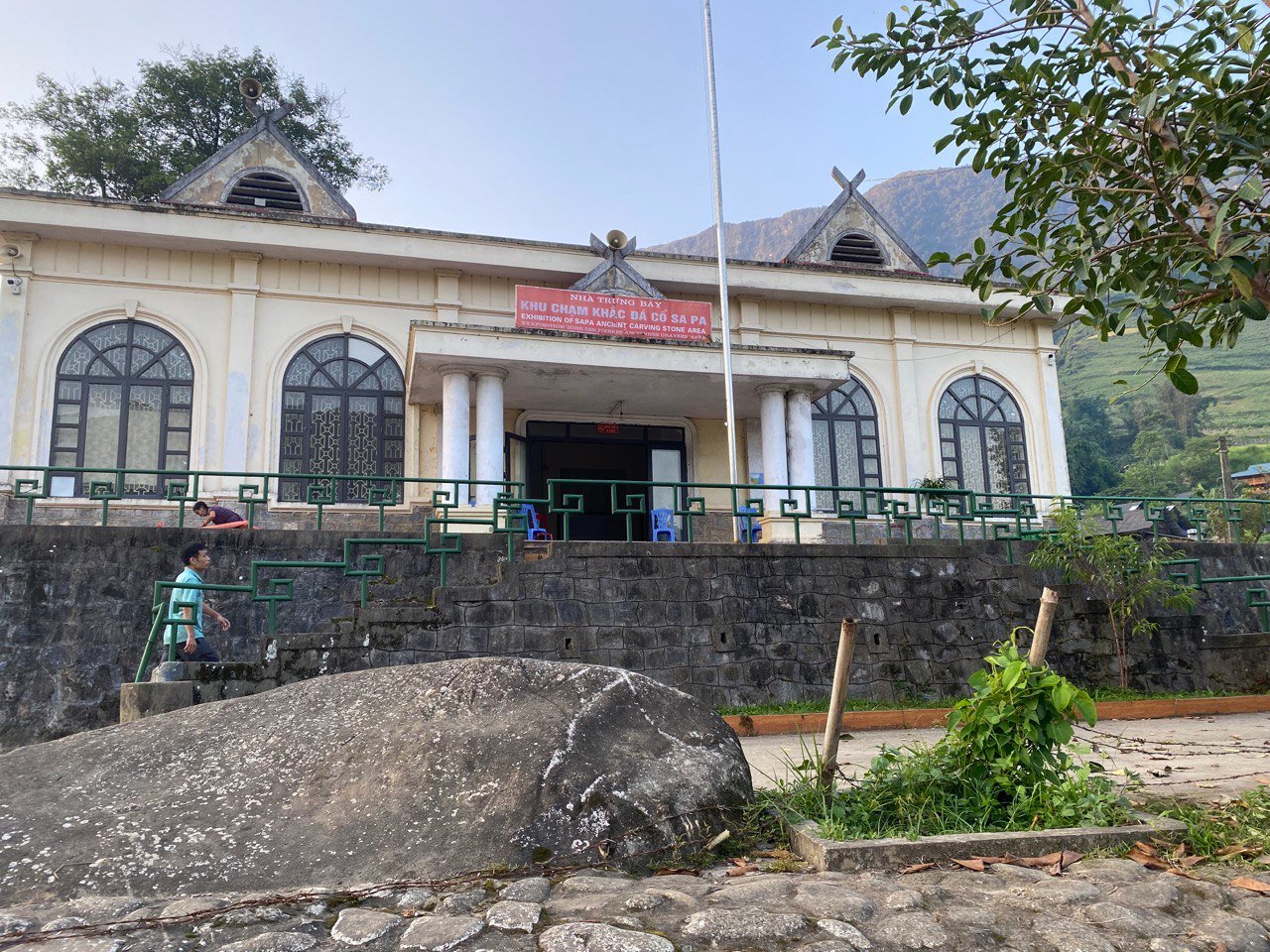
The Sa Pa Ancient Stone Exhibition House is built to manage and protect artifacts. (Source: Collected)
5. Suggested 2-day 1-night itinerary to explore Sa Pa
5.1. Day one: Conquer Fansipan Peak
In the morning, tourists wake up early and enjoy breakfast with famous Sa Pa specialties such as black chicken pho, coon sui, banh cuon, or ngu sac sticky rice.
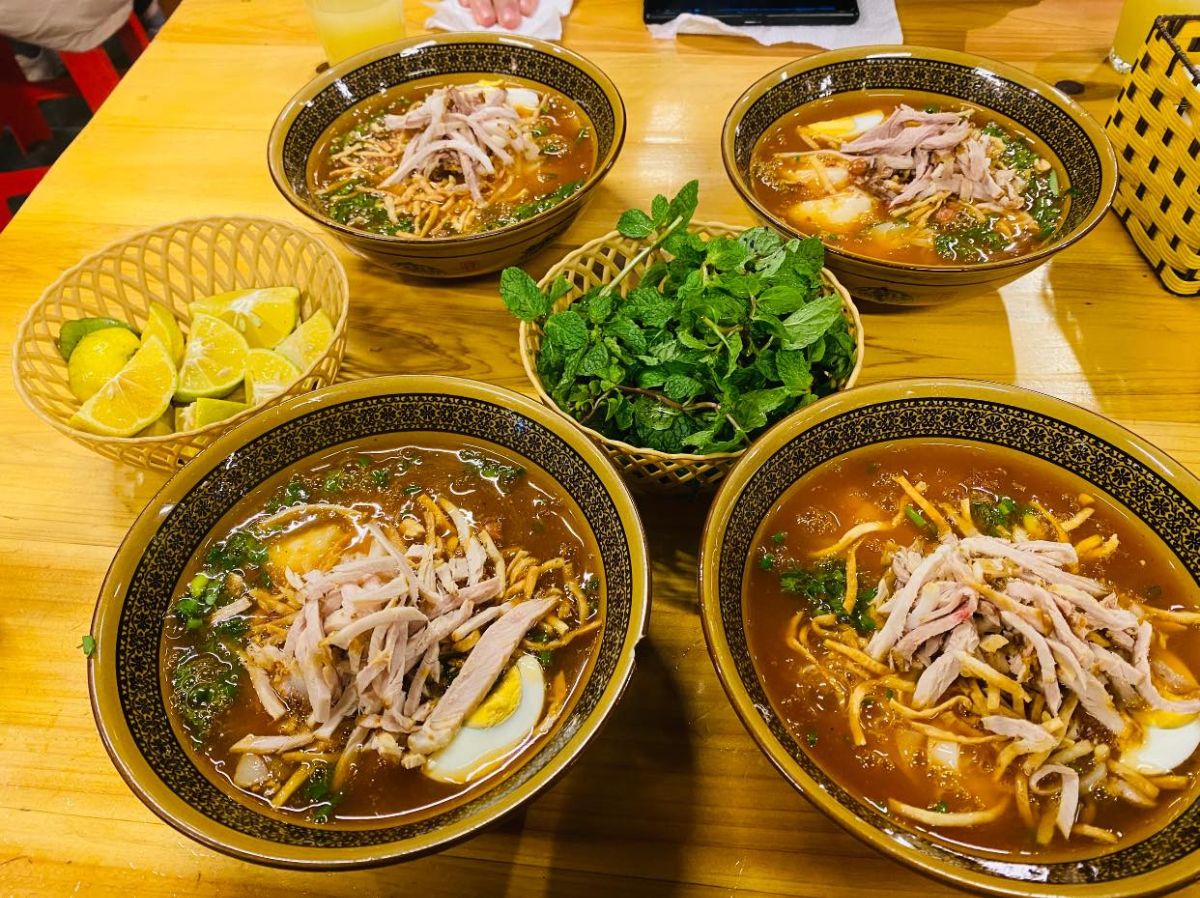
Tourists can enjoy the famous con sui specialty. (Source: Compilation)
Then, move to Sa Pa station (located on the 1st floor of the Sun Plaza building) to buy a ticket for the Muong Hoa mountain railway, starting the journey to conquer the 'Roof of Indochina'. The train's journey is 1.7 km, taking tourists through the scenery of Muong Hoa valley and the majestic Hoang Lien Son mountain range, where terraced fields stretch to the horizon.
Upon arriving at the Hoang Lien Son cable car station, tourists continue their journey by the Sun World Fansipan Legend cable car, a modern, safe, and smooth three-rope cable car line. Inside the cabin, tourists can admire the panoramic view of the Northwest mountains and forests appearing and disappearing amidst the floating clouds.

The Muong Hoa mountain climbing train is modern and vibrantly colored. (Source: Collected)
When visiting Sun World Fansipan Legend tourist area, visitors can explore a series of unique cultural and spiritual works such as: Gate of Heaven (Cong Troi), statue of Quan The Am Bo Tat, Great Buddha statue of A Di Da, and the serene La Han path... Visitors should stop to check in at the 3,143-meter milestone of the legendary Fansipan peak and the sacred National Flagpole amidst the sea of clouds.
In the afternoon, visitors return to Sa Pa center to rest. In the evening, you can stroll through Sa Pa night market, which is filled with the sounds of khen flutes, bamboo flutes, and the flavors of highland specialties. Don't forget to choose and buy characteristic souvenirs such as forest honey, brocade, or smoked buffalo meat as gifts for loved ones.

Majestic Great Buddha Statue of Amitabha on the peak of Fansipan mountain. (Source: Collected)
5.2. Day Two: Discover Sa Pa Ancient Stone Field
In the morning, visitors move to Sa Pa Ancient Stone Field, a destination with mysterious stone slabs. Here, visitors can stroll among ancient stones carved with mysterious patterns, admire the lush green Muong Hoa terraced fields, and stop at a streamside cafe to enjoy the peaceful atmosphere of the mountains and forests.
After the visit, visitors return to the hotel to check out, concluding the two-day, one-night journey, a complete and memorable exploration of Sa Pa.
6. Visiting Experience of Sa Pa Ancient Stone Field
6.1. Ideal Time to Visit

Sa Pa's golden rice season is a prime travel time for all visitors. (Source: Collected)
The best time to explore Sa Pa ancient stone field is during the golden rice season from September to October, when the terraced fields turn vibrant yellow, reflecting on the ancient stones, creating a unique landscape. Spring, from February to April, is also very attractive with peach and plum blossoms blooming white throughout the valley and pleasant weather, favorable for trekking and cloud hunting.
Visitors should avoid the heavy rainy season from June to August, when dense fog and slippery roads make travel difficult.
6.2. Notes for Visiting
For a comfortable and safe trip, visitors should wear neat sportswear, sturdy shoes with good grip, a wide-brimmed hat, a light jacket, and water. If you want to hunt for clouds or capture the sunrise, it's best to visit the ancient rock field early in the morning or late in the afternoon when the light is soft and there are fewer visitors. Preserving the heritage is the responsibility of every visitor. When visiting Sa Pa ancient stone field, you should avoid touching, climbing, or impacting the stones to protect the original ancient patterns.
Sa Pa ancient stone field is a harmonious intersection of history, culture, archaeology, and the unique nature of the Northwest. It opens up a journey to discover messages from ancient times, while also offering visitors a vivid experience with the highland people. Don't miss the opportunity to plan a visit to this unique heritage this year.


