




1. General introduction to Dau Go Cave
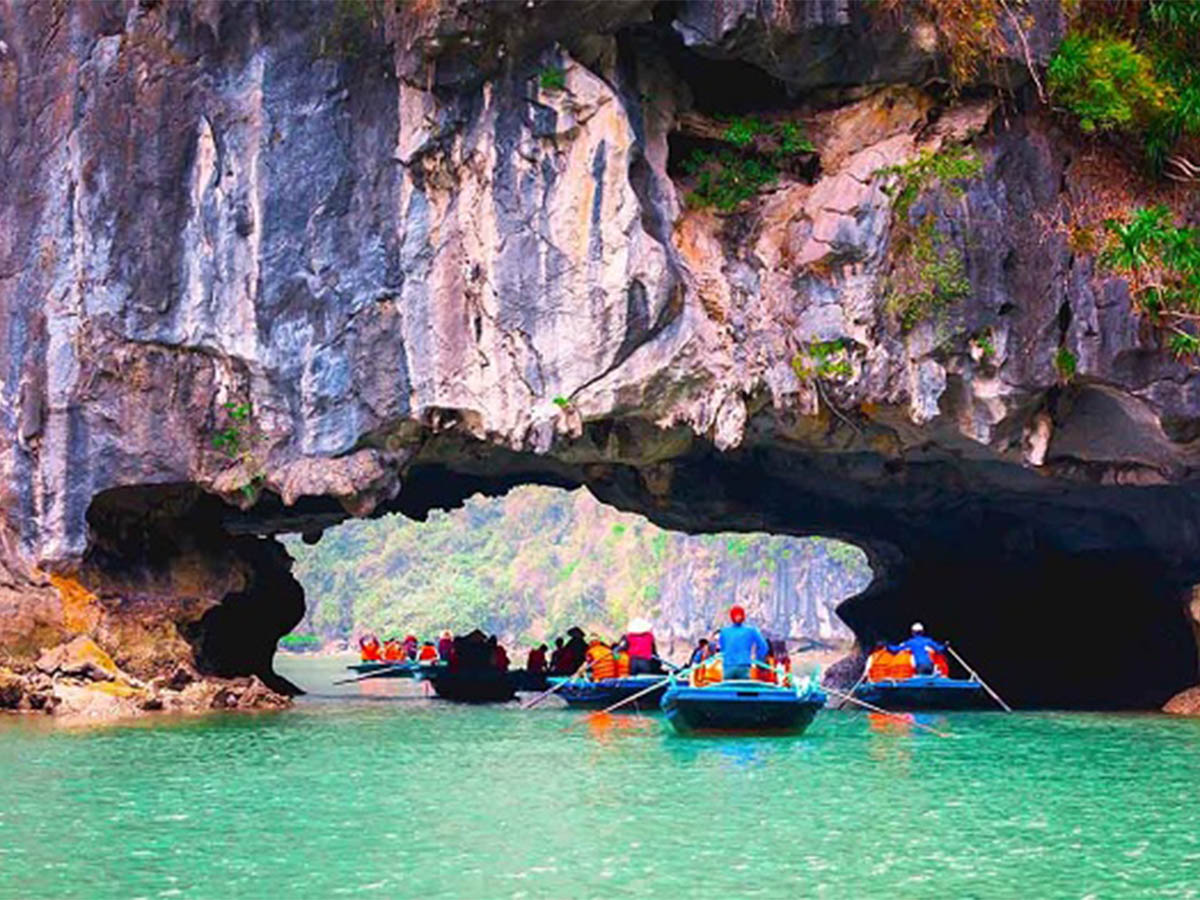
Entrance to Dau Go Cave seen from the sea. (Source: Collected).
Rising from the turquoise waters of Ha Long Bay, Dau Go Cave appears as a masterpiece of nature bearing the deep imprint of time and history. Gifted by nature, this cave not only possesses magnificent beauty but also holds heroic stories about the nation's past.
1.1. Geographical location and outstanding scale
Located on Dau Go Island, Dau Go Cave is situated adjacent to Thien Cung Cave, approximately 300 meters away, and 6 km northeast of Bai Chay Port. This convenient location allows visitors to easily combine visits to both sites in a single trip.
With an area of about 5,000 m² and a height of 27 meters above sea level, the cave boasts an impressive scale. The cave entrance is 17 meters wide and 12 meters high, while the cave dome reaches a height of up to 25 meters, creating a rare spaciousness among the caves in the bay area.
Formed approximately 2 million years ago during the late Pleistocene period, Dau Go Cave shares a geological age similar to Thien Cung Cave. What makes this cave particularly unique is its rich internal flora. Thanks to the wide cave entrance that welcomes abundant natural light, green moss, ferns, and woody plants thrive, creating a lush "paradise garden" within the barren rocky mountain.
1.2. Historical, cultural significance and the name "Dau Go"
The name "Dau Go" is closely linked to one of the most heroic chapters in Vietnamese history. According to legend, this cave is intimately connected with the famous 13th-century Bach Dang River victory under the Tran Dynasty. At that time, to defeat the Mongol-Yuan invaders, the renowned general Tran Hung Dao ordered thousands of sharpened wooden stakes to be driven into the Bach Dang River. The remnants of these wooden stake heads, left after the battle, were hidden by local people in this cave, thus giving rise to the name "Dau Go".
Some other researchers suggest the name might have originated from "Giau Go" (Hide Wood), which over time deviated to become "Dau Go" (Wood Head). Despite various hypotheses, the historical significance and patriotic spirit of the cave are preserved and passed down through generations.
Inside the cave, many strangely shaped stalactites and stalagmites are likened by visitors to weapons, wooden stakes, or scenes of battlefields. These images not only add to the cave's mystical allure but also vividly recall the heroic historical narrative in the minds of visitors.
2. Guide to traveling to Dau Go Cave 2025
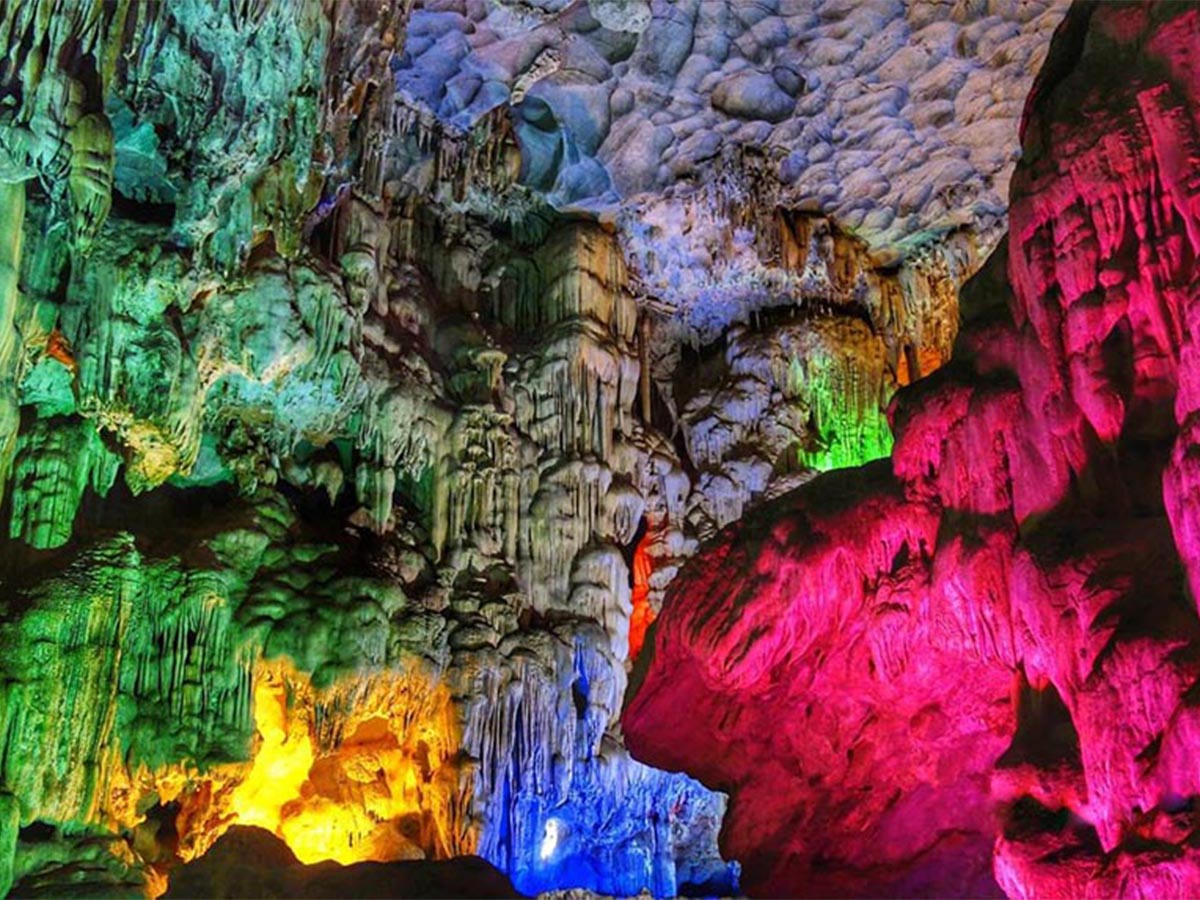
Guide to moving to Dau Go Cave. (Source: Collected).
The journey to explore Dau Go Cave begins with the initial travel preparations. With various means of transport and routes, visitors can flexibly choose the method that suits their time and budget.
2.1. Getting from Hanoi to Ha Long
Buses remain the most popular choice with reasonable costs from 180,000 - 250,000 VND/trip. Reputable bus companies like Hoang Long, Phuong Trang often depart from My Dinh or Gia Lam stations with a travel time of about 2.5 - 3 hours. Visitors should book tickets in advance, especially during holidays, to ensure a seat.
Premium limousine services are increasingly popular due to their convenience and comfort. Although the cost is higher than regular buses, visitors will be served with door-to-door pick-up, spacious seats, and cool air conditioning throughout the journey.
For those who want to be in control of their time, a personal vehicle is an ideal choice. The Hanoi - Hai Phong - Ha Long expressway is currently quite convenient, just pay attention to toll fees and rest stops along the way.
2.2. From the city center to Bai Chay Port
Taxis are still the fastest way to travel from Ha Long city center to Bai Chay Port with costs ranging from 80,000 - 150,000 VND depending on the starting point and travel time. Ride-hailing apps like Grab and Be are also quite active in this area.
Public buses are suitable for visitors who want to save costs and experience local life. However, attention should be paid to the schedule and operating hours to avoid missing the boat to the bay.
Visitors renting motorbikes or driving personal vehicles should note that Ha Long streets can be quite crowded during peak hours, so plan your travel time accordingly.
2.3. Renting a boat to visit the bay - traveling to Dau Go Cave
Dau Go Cave is located on the itinerary of both Route 1 and Route 2 for visiting Ha Long Bay. Route 1 often combines Dau Go Cave, Thien Cung Cave, and Stone Dog Islet in a 4-hour journey, with ticket prices ranging from 150,000 - 200,000 VND/person. Route 2 expands to include points like Cua Van fishing village, with a tour duration of 6 hours and ticket prices around 200,000 - 240,000 VND/person.
The travel time from Bai Chay Port to Dau Go Cave by tourist boat is about 15 - 30 minutes depending on the speed and weather conditions. Along the way, visitors will admire the majestic scenery of the bay with its fascinating limestone islands.
For the best experience, it is advisable to book the tour 1-2 days in advance, carefully check the itinerary stops and the cancellation/refund policy of each boat company. Bring your identification documents and prepare cash for any additional expenses.
3. Unmissable experiences at Dau Go Cave
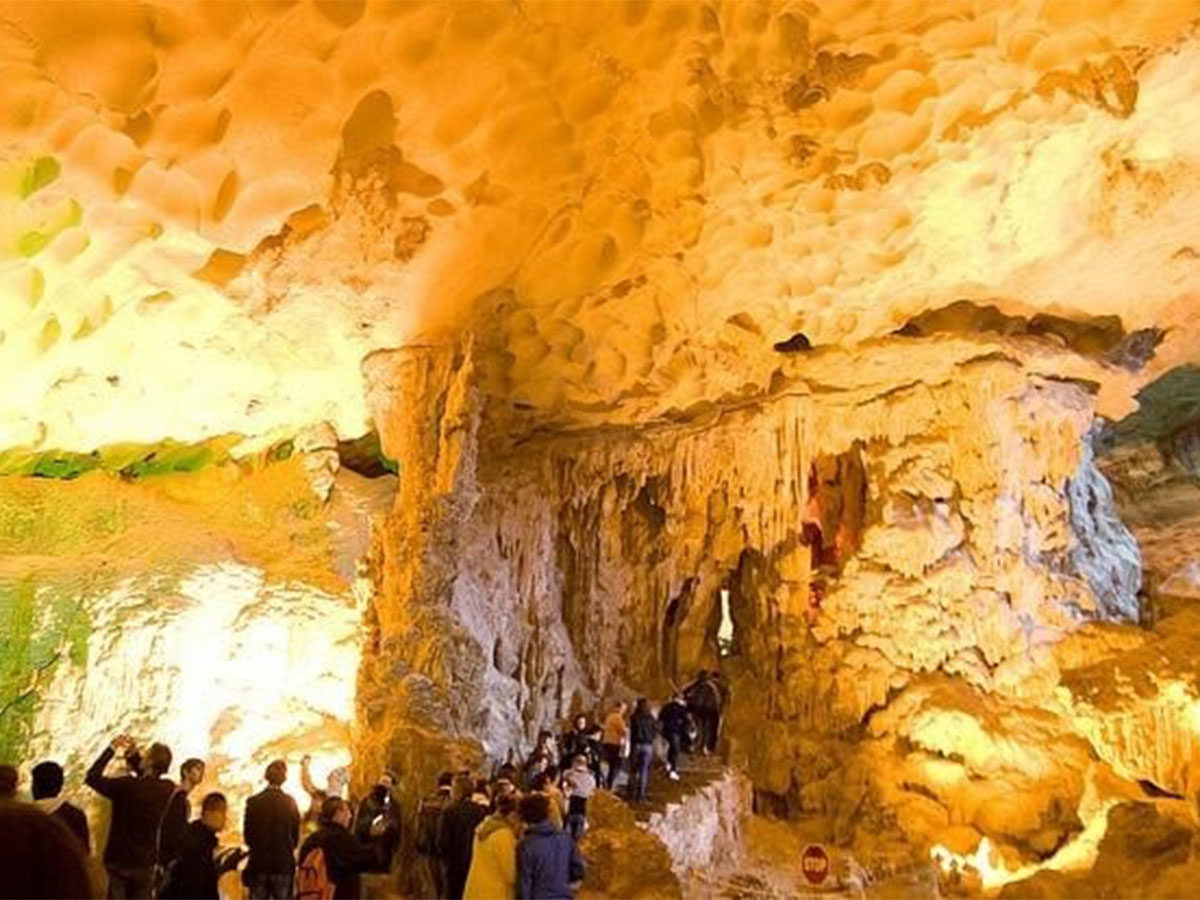
Experience at Dau Go Cave. (Source: Collected).
Stepping into Dau Go Cave, visitors feel like they are entering a magical world with unique multi-sensory experiences. From the majestic natural landscape to the heroic historical stories, every moment here brings unforgettable emotions.
3.1. Exploring the 3 cave compartments - a magical space
The first compartment of Dau Go Cave welcomes visitors with a vast space filled with natural light. The cave ceiling is adorned with stalactites and stalagmites shaped vividly like a migrating elephant herd, a sitting lion, fighting roosters, or resting wild animals. Light filtering through the cave entrance creates a beautiful interplay of light and shadow, making these images come alive like a natural painting.
Moving deeper into the second compartment, the space becomes more mystical and hazy. Stalactites and stalagmites hidden in the dim light create the feeling of entering an ancient castle with magnificent architecture. Here, visitors can find shapes that evoke small islands or strange creatures lurking in the darkness.
3.2. Ecosystem deep within the cave: a "paradise garden" in the heart of the limestone mountain
Dau Go Cave boasts a unique internal cave ecosystem, rare in Ha Long Bay. Thanks to the wide-open entrance and high humidity, green moss covers many rock surfaces, creating soft vegetation. Ferns grow lushly in rock crevices, while small woody plants reach for the light.
The richness of this flora creates a lush "paradise garden" in the heart of the limestone mountain, completely different from most other caves in the region which are often dry and sparse in vegetation. This ecosystem not only creates aesthetic beauty but also helps regulate the air inside the cave, bringing a cool, pleasant feeling to visitors.
3.3. Special check-in, photo-taking, and exploration activities
The arched entrance is the most popular check-in spot, creating beautiful photos with the Ha Long Bay scenery as a backdrop. Natural light entering the cave creates an impressive light and shadow effect, especially beautiful during the late afternoon sunbeams.
The natural stone staircase leading into the cave offers an exciting sense of adventure. Young visitors often enjoy climbing these steps, combining light exercise with exploring lesser-known corners of the cave.
The uniquely shaped stalactites and stalagmites are also ideal photo spots. With a little creativity and imagination, visitors can create artistic photos by interacting with these natural "sculptures."
3.4. Hearing the legend of Bach Dang and heroic historical stories
Guides at Dau Go Cave are often deeply knowledgeable about local history and legends. They not only introduce the geological structure but also recount heroic stories of the Bach Dang battle, helping visitors better understand the historical significance of the cave.
Stories about Tran Hung Dao and the strategy of planting stakes to defeat the enemy are told vividly, linked to the shapes of the stalactites and stalagmites inside the cave. This not only adds interest to the tour but also evokes national pride in the hearts of every Vietnamese visitor.
4. Suggested itinerary combining with Ha Long ecosystem 2025
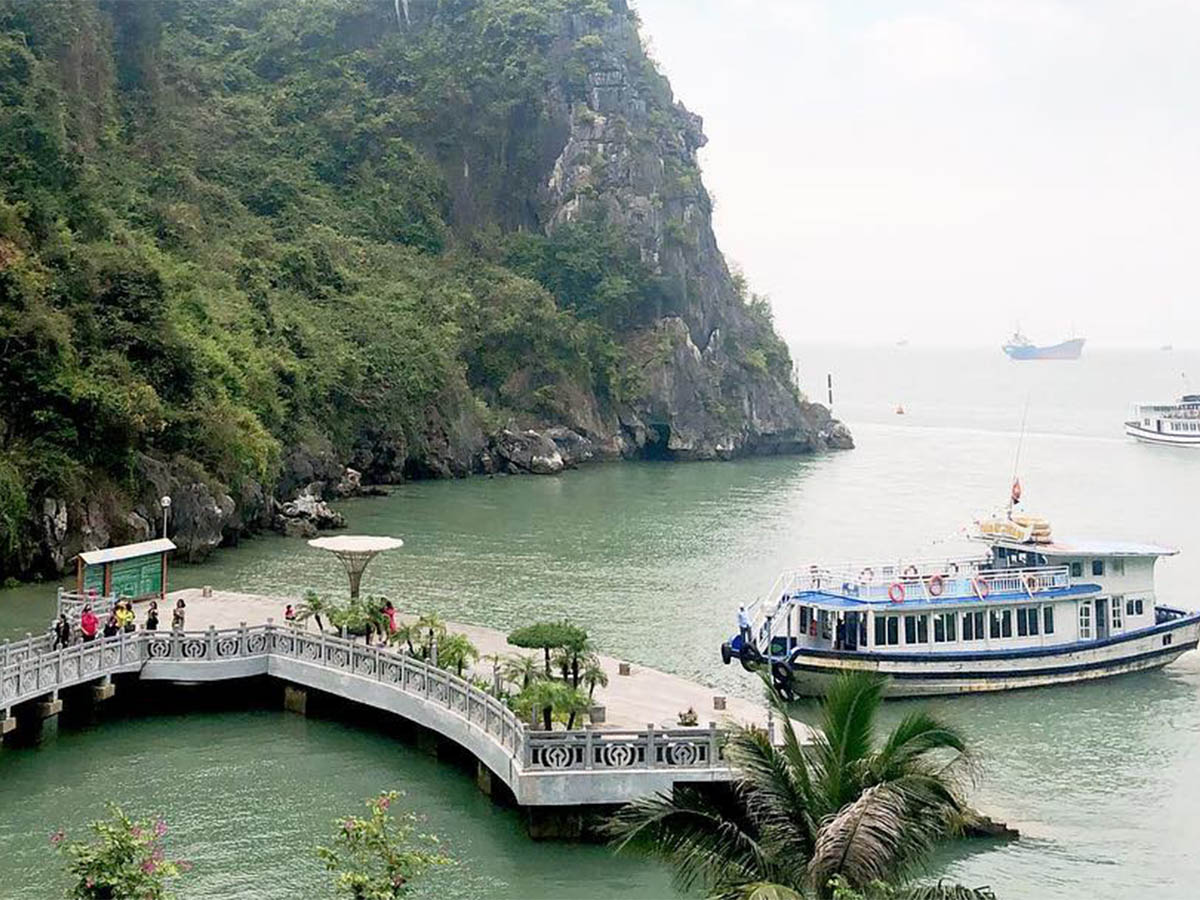
Suggested itinerary for exploring Dau Go Cave and Ha Long. (Source: Collected).
To optimize the exploration experience of Dau Go Cave and Ha Long Bay, detailed planning will help visitors make the most of their time and budget. A well-arranged itinerary will provide diverse and interesting experiences.
4.1. 1-day tour itinerary for Dau Go Cave and Ha Long Bay
Departing from Bai Chay Port at 8:20 AM, visitors will board a tourist boat to begin their exploration journey. The first stop is usually Thien Cung Cave, with a visiting time of about 45 minutes, where visitors can admire the magnificent beauty of the "palace in the sky".
Next, the boat will take visitors to Dau Go Cave around 10:20 AM. With a visiting time of 1 hour, visitors will have enough time to explore the three chambers of the cave, take souvenir photos, and listen to fascinating historical stories from the guide.
After leaving Dau Go Cave, the boat continues its journey to Cho Da Islet - one of the famous symbols of Ha Long Bay. Visitors can enjoy lunch on the boat with fresh seafood specialties characteristic of the Quang Ninh coastal region.
In the afternoon, the boat visits Ba Hang fishing village or Cua Van, where visitors can learn about the lives of local people and shop for dried seafood products as souvenirs. The boat trip ends around 4:20 PM, returning to Bai Chay Port.
To conclude a full day of sightseeing, visitors can visit the Sun World Ha Long entertainment complex located near the port. With its scenic cable car and modern games, it is an ideal destination to relax after a day of exploring caves.
5. Tips for self-guided travel to Dau Go Cave in 2025
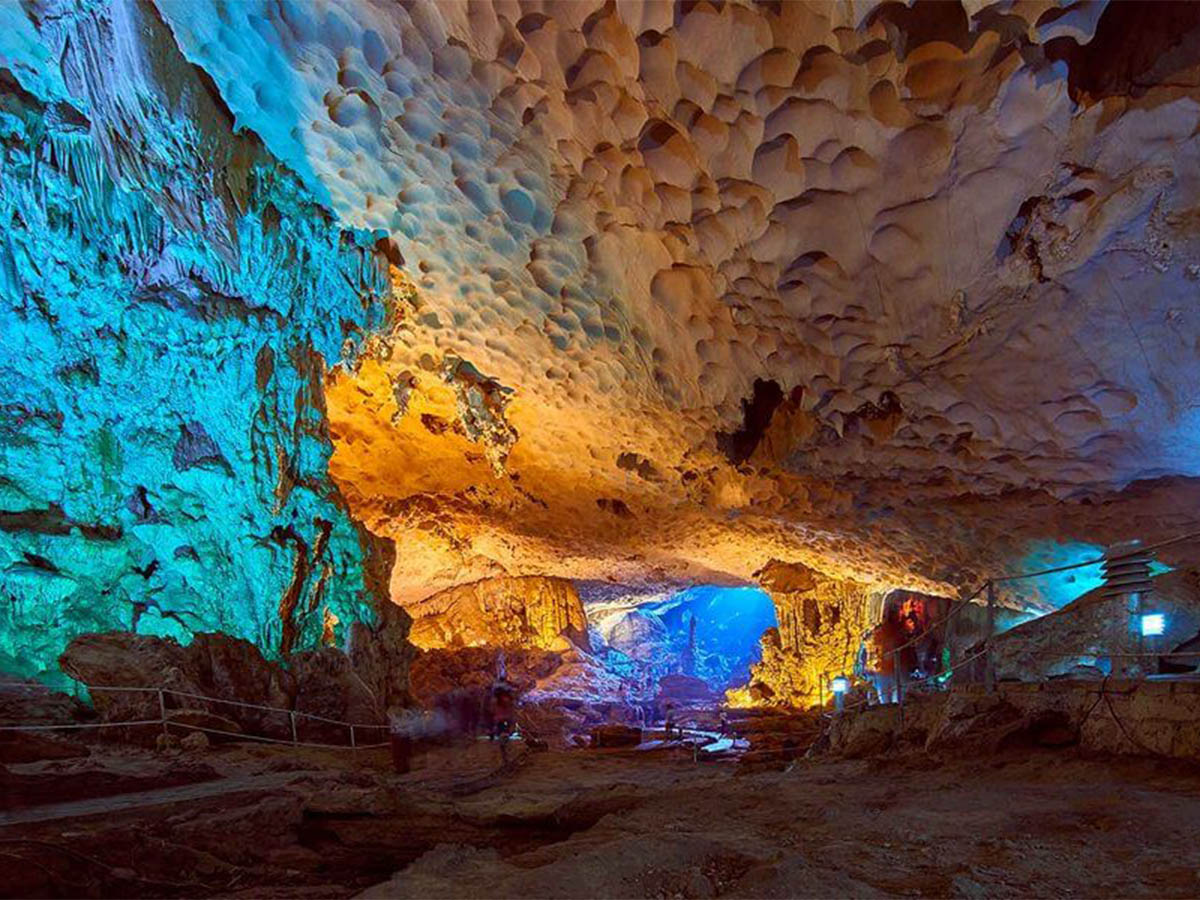
Experience and travel tips for Dau Go Cave. (Source: Curated).
A successful visit to Dau Go Cave not only depends on choosing the right tour but also requires thorough preparation regarding attire, belongings, and necessary knowledge. Practical experiences will help visitors have the safest and most enjoyable experience.
Non-slip sports shoes are the most important item when visiting Dau Go Cave. The rocky surface inside the cave is often wet and slippery, especially dangerous if wearing high heels or flip-flops. Clothes should be made of sweat-absorbent, breathable material as the temperature inside the cave can be higher than outside.
A flashlight is essential for exploring dark corners of the cave that the main lighting cannot reach. A camera with low-light shooting capabilities will help capture the most beautiful moments. Spare batteries should also be prepared to ensure devices operate throughout the trip.
Dau Go Cave is a precious natural heritage that needs strict protection. Visitors must not litter, especially plastic bags and bottles which can pollute the cave environment for hundreds of years. All waste must be carried out for disposal outside.
Touching stalactites or attempting to damage natural structures is strictly prohibited. Stalactites, formed over millions of years, can be destroyed in seconds by human impact. Additionally, visitors must follow the guide's instructions and not wander off from the group to ensure personal safety.
The ideal time to visit Dau Go Cave is early morning from 8:20 AM - 10 AM or after 2 PM when the number of group visitors significantly decreases. Natural light during these hours is also more beautiful, creating impressive light and shadow effects for photography.
To get the best photos, visitors should utilize natural light from the cave entrance as the main light source and use the flash as a secondary light to illuminate the face. Experimenting with different shooting angles will create unique and creative pictures.
6. Things to Avoid When Visiting Caves in Ha Long
Reckless climbing or damaging stalactites are strictly prohibited acts and may be subject to legal penalties. Visitors should only walk on designated paths with safety protection systems.
The stone paths in the cave are often wet and very slippery, especially dangerous during the rainy season or when humidity is high. Absolutely avoid wearing shoes with slippery soles or walking too fast to prevent falling backward. Always keep one hand on the cave wall or railing when moving.
Do not enter restricted areas or paths not yet open for tourism. These areas may pose risks of rockfalls or other unassessed hazards.
Dau Go Cave is truly a wonderful connection between magnificent natural beauty, deep historical value, and fascinating exploration experiences for all ages when visiting Ha Long Bay in 2025. Don't forget to add Dau Go Cave to your Ha Long Bay exploration itinerary and share these beautiful wonderous moments with your friends!


