




1. A Brief Introduction to the Ancient Capital Hoa Lu Ninh Binh
The Ancient Capital Hoa Lu is considered the starting point for the golden pages of the Vietnamese nation's history. Located amidst a fertile valley surrounded by majestic limestone mountains and the serene Hoang Long River, this place was once the capital of the Dai Co Viet kingdom under the Dinh and Tien Le dynasties. It was on this land that Dinh Bo Linh suppressed the 12 warlords, unified the country, ascended the throne as Emperor, and laid the first foundation for an independent nation, opening an era of self-rule in the nation's history.
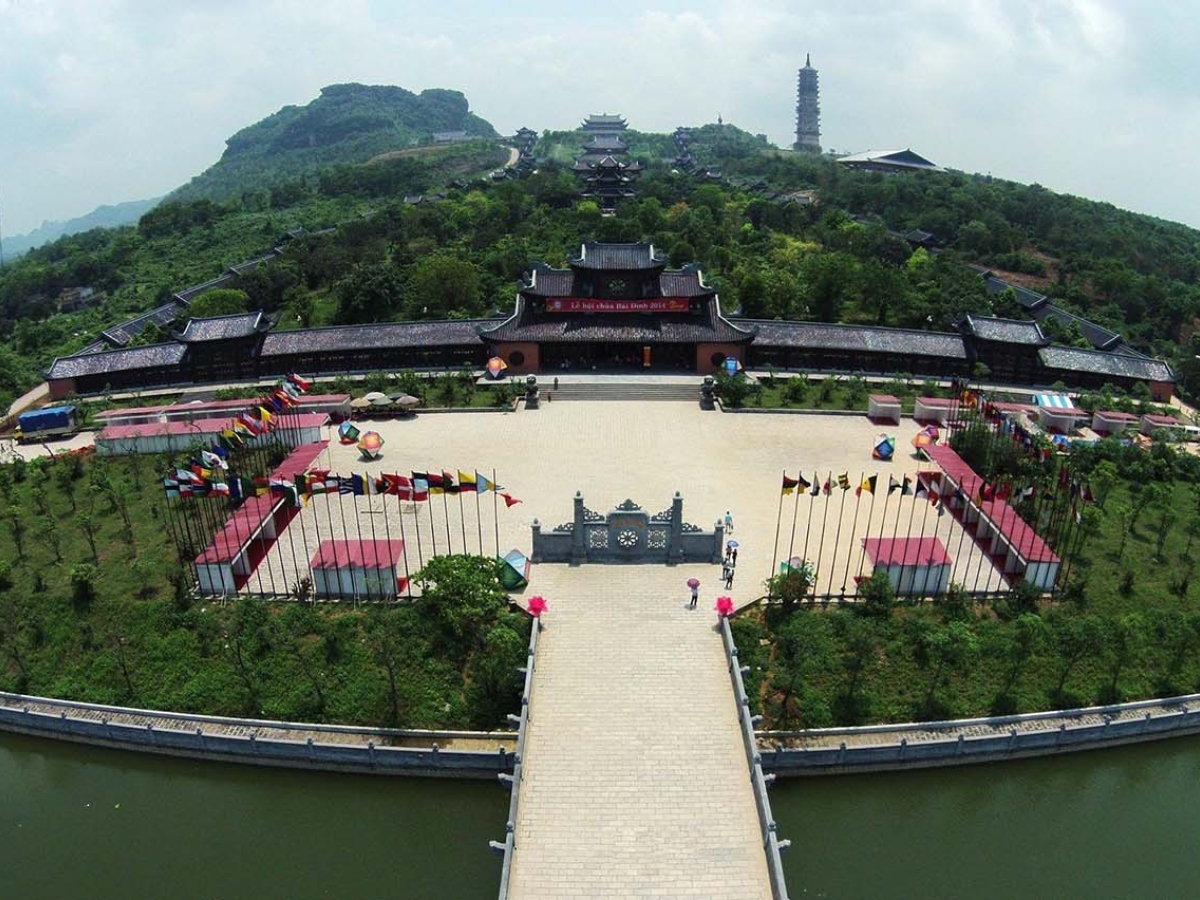
The ancient capital Hoa Lu was once the political, economic, and military center of the Dai Co Viet country. (Source: Collected)
Visitors arriving here will feel the solemn and sacred atmosphere of the land that once played a crucial role in the early nation-building. Structures like the Dinh King Temple, Le King Temple, Nhat Tru Pagoda, or Hoa Lu Ancient Citadel still quietly tell the heroic story of an era of territorial expansion, leaving behind many victories and the indomitable spirit of the nation.
Today, the Hoa Lu Ninh Binh Ancient Capital tour is not just a journey to explore relics but also a trip back to the nation's roots. Amidst the picturesque river and mountain scenery, visitors can admire the ancient beauty and feel the breath of history echoing through every stone, every tile, making the trip more meaningful and memorable than ever.
2. Ideal time to go on the Hoa Lu Ninh Binh Ancient Capital tour
The most ideal time to go on the Hoa Lu Ancient Capital tour is spring and early summer, approximately from February to May annually. At this time, the weather is cool and fresh, trees are lush and flowers are in full bloom, very suitable for sightseeing, photography, and fully enjoying the beauty of the ancient capital region. Especially, in the 3rd lunar month, the Truong Yen Festival takes place here, one of the largest festivals in Ninh Binh, vividly recreating the images of King Dinh, King Le along with unique traditional rituals, attracting many tourists from all directions.
If you prefer a quiet and peaceful atmosphere, visitors can choose the period from September to November. At that time, Hoa Lu enters autumn, the sky is clear blue, golden sunlight spreads across the mountains, and rice fields begin to turn golden. The cool, pleasant air along with the serene scenery makes this place an ideal destination for those who want to temporarily escape the noisy pace of life to find peace again in the ancient capital region.
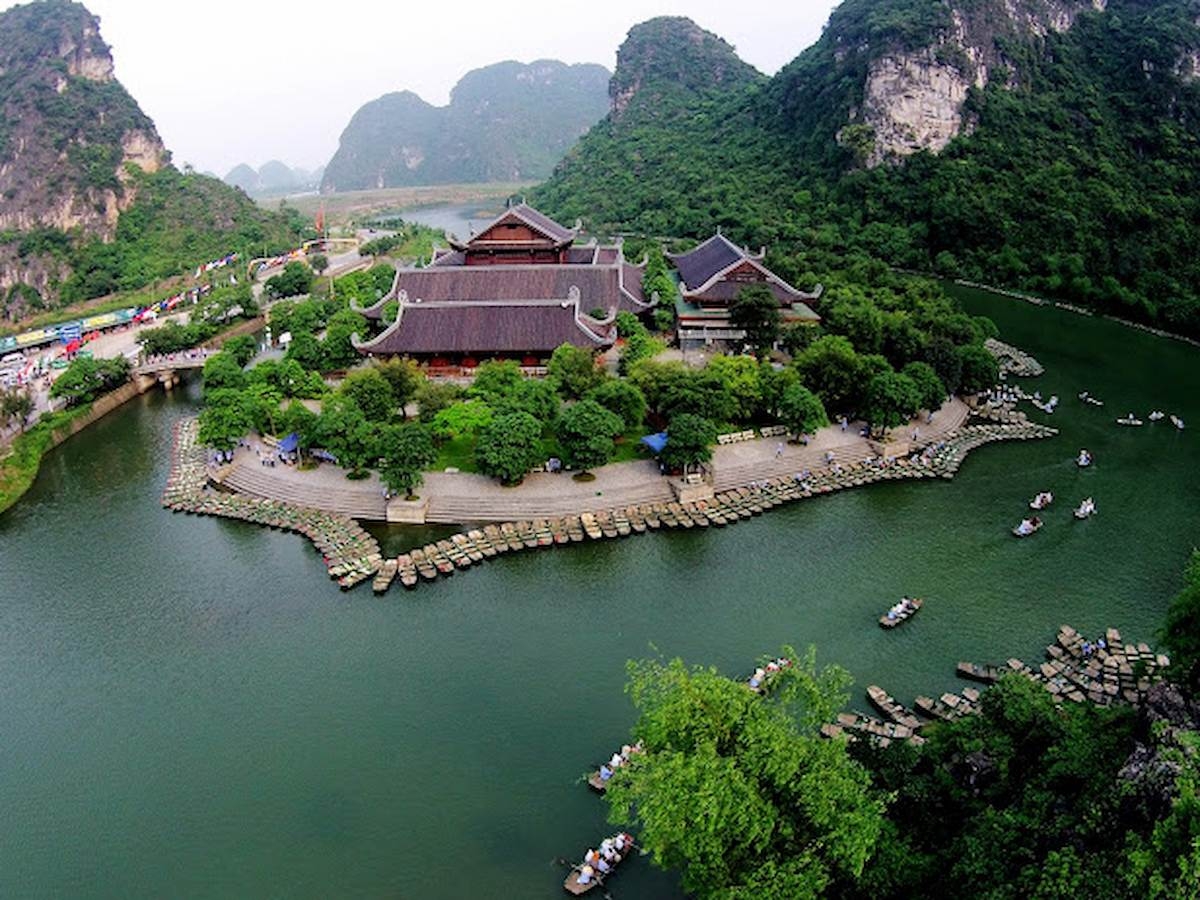
Each season in Hoa Lu Ancient Capital brings its own beauty and unique characteristics. (Source: Collected)
3. Notable tourist attractions in the Hoa Lu Ancient Capital Ninh Binh tour
3.1. King Dinh Tien Hoang Temple
Located within the Hoa Lu Ancient Capital complex, King Dinh Tien Hoang Temple is a must-visit destination on your journey to explore Ninh Binh. The temple is located in Tay Hoa Lu ward, which is considered the center of the ancient capital, leaning against the majestic Ma Yen mountain and facing the gentle Hoang Long river. Thanks to the beautiful 'sitting mountain, facing water' terrain, the temple possesses both the solemnity of a sacred place and the characteristic poetic beauty of the ancient capital region. Here, visitors can clearly feel the sacred, solemn atmosphere, which once witnessed many historical imprints of the early nation-building period.
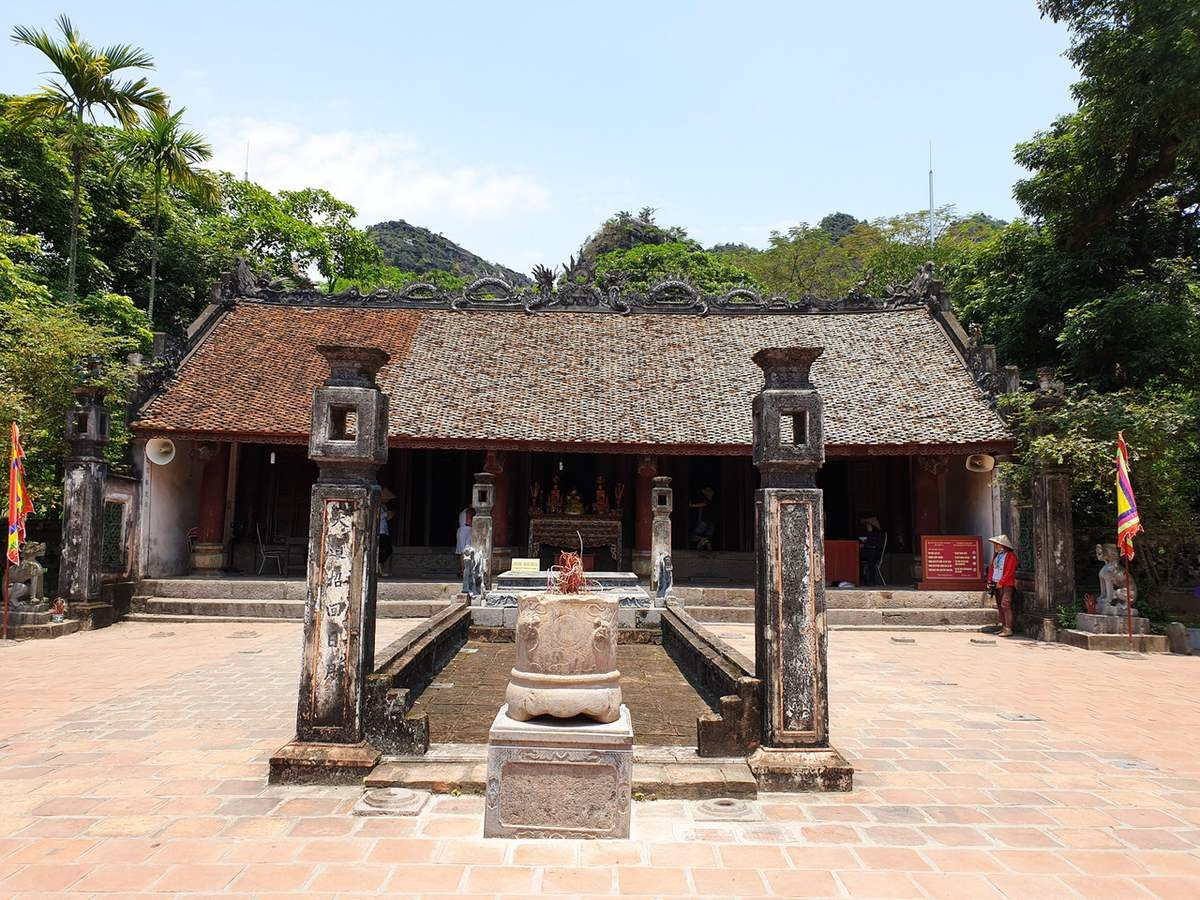
King Dinh Tien Hoang Temple is the place of worship for the first emperor of the Dai Co Viet nation. (Source: Collected)
Built during the Ly Dynasty and repaired many times through dynasties, the temple still retains almost intact the ancient architectural style of “Nội công ngoại quốc” (inner-work outer-country). The entire complex is divided into many sections such as the Ngo Mon gate, lotus pond, flower garden, inner and outer nghi môn, along with three main buildings: Bai Duong, Thien Huong, and Hau Cung. Each room, each ironwood pillar, or carved stone slab reflects the meticulousness and sophistication of ancient artisans. Particularly, the statue of King Dinh and his princes are placed solemnly in the Hau Cung, carved from precious wood, lacquered and gilded brilliantly, symbolizing the reverence and deep gratitude of posterity.
King Dinh Tien Hoang Temple is not only a place to commemorate the heroic king who unified the country but also a work of art rich in national spirit. Every carving detail, every horizontal lacquered board, and couplet reflects the spirit, aspirations, and talent of the Vietnamese people of the Dai Co Viet era. Visiting this place, tourists can not only admire the ancient beauty but also have the opportunity to listen to proud historical stories about the founding king who wrote the opening chapter for the nation's era of independence.
3.2. King Le Dai Hanh Temple
Just a few hundred meters from King Dinh Tien Hoang Temple, King Le Dai Hanh Temple lies peacefully at the foot of Dìa Mountain, amidst the picturesque river and mountain scenery of the Hoa Lu region. This place worships King Le Dai Hanh, the wise monarch who led the people to defeat the invading Song army and continued the nation-building cause of the Dinh dynasty. Although not overly grand, the temple impresses with its ancient charm and the distinct imprint of the Tien Le dynasty. In the serene atmosphere, the gentle chime of wind bells beside the moss-covered tiled roof further highlights the solemnity and sacredness of this thousand-year-old place of worship.
The temple is built in a traditional architectural style, consisting of three main buildings: Bai Duong, Thien Huong, and Chinh Cung, connected along a straight axis. Bai Duong is the place for rituals, followed by Thien Huong, which worships General Pham Cu Luong, who played a significant role in supporting King Le Hoan to ascend the throne. In Chinh Cung, the statue of King Le Dai Hanh is placed in the center, with a stern face exuding the aura of a wise monarch. On either side are the statues of Queen Duong Van Nga and King Le Long Dinh, recreating the image of the once prosperous Tien Le dynasty.
In front of the temple is the central square, where major ceremonies of the ancient Hoa Lu citadel once took place. Surrounded by a winding moat and rows of shady green trees, it creates a peaceful, poetic scene that still retains the appearance of a once solid capital. Inside the temple, many precious artifacts are preserved, such as pottery, bronze bells, stone steles, and excavated relics from the old palace foundation, testifying to a golden era in the nation's history. Visiting King Le Dai Hanh Temple, tourists can not only pay homage to the sacred place but also fully experience the heroic spirit of the dynasty that contributed to shaping the nation's independence.
3.3. Hoa Lu Four Guardians
Amidst the sacred space of the Ancient Capital region, the Hoa Lu Four Guardians system is considered an invisible citadel wall protecting the ancient capital, carrying both feng shui significance and reflecting the deep folk beliefs of the Vietnamese people. The four sacred temples guarding the four directions are not only places of worship but also symbols of loyalty, strength, and protection for all people. When participating in the Hoa Lu Ancient Capital Ninh Binh tour, tourists will hear legendary stories associated with each deity, each story evoking pride in the nation's heroic past.
The East Guardian is the Temple of God Thien Ton, worshipping the deity who helped King Dinh Tien Hoang suppress the rebellion of the 12 Warlords and unify the country. According to legend, he was appointed by Ngoc Hoang as Tran Vu Dai Tuong Quan (Great General Tran Vu), bestowed with the Tam Thai That Tinh sword to exorcise evil spirits and protect humanity.
The West Guardian is the Temple of God Cao Son, the 17th son of King Lac Long Quan, who taught the people to reclaim land, establish settlements, and maintain peace in the western border region of the capital. The temple is currently located within the Bai Dinh Pagoda spiritual tourist area, a familiar pilgrimage site for visitors from all directions.
The South Guardian is the Temple of God Quy Minh Dai Vuong, a deity who guarded the Son Nam region and protected the southern gateway of the Hoa Lu capital. The temple was built during the Hung King era and was renovated through many dynasties, especially during the Tran Thai Tong era, still retaining its ancient, moss-covered appearance.
The North Guardian is the Temple of Zen Master Khong Lo – Saint Nguyen, an eminent monk of the Ly Dynasty renowned for his extraordinary talent and virtue. He revived the bronze casting craft, contributing to preserving the essence of the Dong Son civilization. The temple was built on the site of Vien Quang Pagoda, founded by the Zen master himself in 1121, and remains a sacred place revered by the people to this day.
3.4. Pagodas in Hoa Lu
Hoa Lu Ancient Capital is not only the origin of the nation's independence but also a land converging enduring spiritual and cultural values. When participating in the Hoa Lu Ancient Capital Ninh Binh tour, tourists will immerse themselves in a quiet space, with the faint scent of incense and the sound of temple bells echoing through the valley, feeling the harmony between humans and nature, between the present and the past.
Among the ancient pagodas, Nhat Tru Pagoda (One Pillar Pagoda) is the most prominent stop. Built during the reign of King Le Dai Hanh, the pagoda is famous for its over 4m high stone scripture pillar placed in the center of the yard, symbolizing Buddhist wisdom and strength. The pillar's body is inscribed with ancient scriptures in Han characters, testifying to the period of prosperous Buddhism associated with the Le dynasty. Despite many vicissitudes, the pagoda retains its ancient, serene appearance and is a place many visitors seek to find peace in the heart of the Ancient Capital.
Besides, Bai Dinh Pagoda is also a must-visit destination when coming to Hoa Lu. With its magnificent architecture, hundreds of stone Arhat statues, and a giant Maitreya Buddha statue, the pagoda combines traditional style with the majesty of the new era. Additionally, the Hoa Lu region boasts many other ancient pagodas such as Ban Long Pagoda, Kim Ngan Pagoda, Ba Ngo Pagoda, or Am Tien Pagoda, each contributing a piece to Ninh Binh's colorful spiritual tapestry. Whether visiting to pay homage or sightsee, tourists can clearly feel the peace and cultural depth that this land has preserved throughout a thousand years of history.
4. Notes when participating in the Hoa Lu Ancient Capital Ninh Binh tour
To ensure a complete and smooth trip, visitors should prepare thoroughly before departure. Here are some useful tips to help tourists have a memorable experience in the Ancient Capital region:
Prepare suitable attire: Visitors should choose polite, neat, and comfortable clothing for convenience when moving around, especially when entering historical sites, temples, and pagodas.
Prepare necessary items: Bring drinking water, sunscreen, an umbrella, or a light raincoat depending on the season. If traveling in the summer, visitors should also prepare a wide-brimmed hat and wet wipes. For those who enjoy photography, a camera or a fully charged phone is essential.
Comply with regulations at the sites: When visiting temple and pagoda areas, visitors must maintain order, do not litter, do not touch artifacts, and refrain from speaking loudly.
Notes when booking a tour: Visitors should choose reputable travel agencies with historically knowledgeable tour guides to help them learn more about the culture, customs, and legends associated with each site. Additionally, check the tour price, departure time, included services, and cancellation policy clearly before booking.
Combine visits to famous attractions in Ninh Binh: Besides Hoa Lu Ancient Capital, visitors can combine their trip with exploring other nổi bật destinations such as Trang An, Tam Coc – Bich Dong, Hang Mua, Sun World Ha Nam, or Times Square…. Each location offers its own unique beauty, contributing to a colorful and emotional Ninh Binh exploration journey.

Combine sightseeing and check-in at Hang Mua Ninh Binh. (Source: Collected)
Co do Hoa Lu Ninh Binh Tour is not just a trip to visit thousand-year-old relics, but also an opportunity for visitors to listen to the breath of history and feel the beauty of harmony between nature and national culture. Every temple roof, every pagoda, every road here tells a story about the heroic past and the indomitable spirit of our ancestors. If you are looking for a destination that is both peaceful and rich in cultural value, plan a trip to Co do Hoa Lu Ninh Binh to once set foot in the ancient capital and bring back unforgettable experiences.


