




1. Introduction to the Carp-Dragon Statue
The Carp-Dragon Statue is located on the east bank of the Han River, on Tran Hung Dao Street, between the famous Dragon Bridge and Han River Bridge. This location was carefully chosen to create a focal point in the city center, making it convenient for tourists to visit, take photos, and experience the surrounding space. With a height of 7.7 m and a weight of 200 tons, the Carp-Dragon Statue is made from 5 blocks of white marble, featuring a majestic dragon head, a meticulously carved fish body with scales, and dragon claws resting on waves, creating a harmonious and vivid overall appearance.
The statue's water feature operates regularly, creating a stream of water directed towards the Han River, not only cooling the atmosphere but also serving as a beautiful highlight for visitors to admire.
When strolling by the Han River Bridge in the afternoon, visitors are easily captivated by the beauty of this unique sculpture by the water's edge. The Carp-Dragon Statue is inspired by the image of a carp leaping over the Dragon Gate to transform into a dragon, symbolizing perseverance, the strength to overcome challenges, and the aspiration for success and prosperity in Eastern culture.
The Carp-Dragon Statue remains a favorite stop, attracting a large number of tourists and city residents. Many choose this spot to capture beautiful moments, especially as the sunset casts a golden hue over the water.
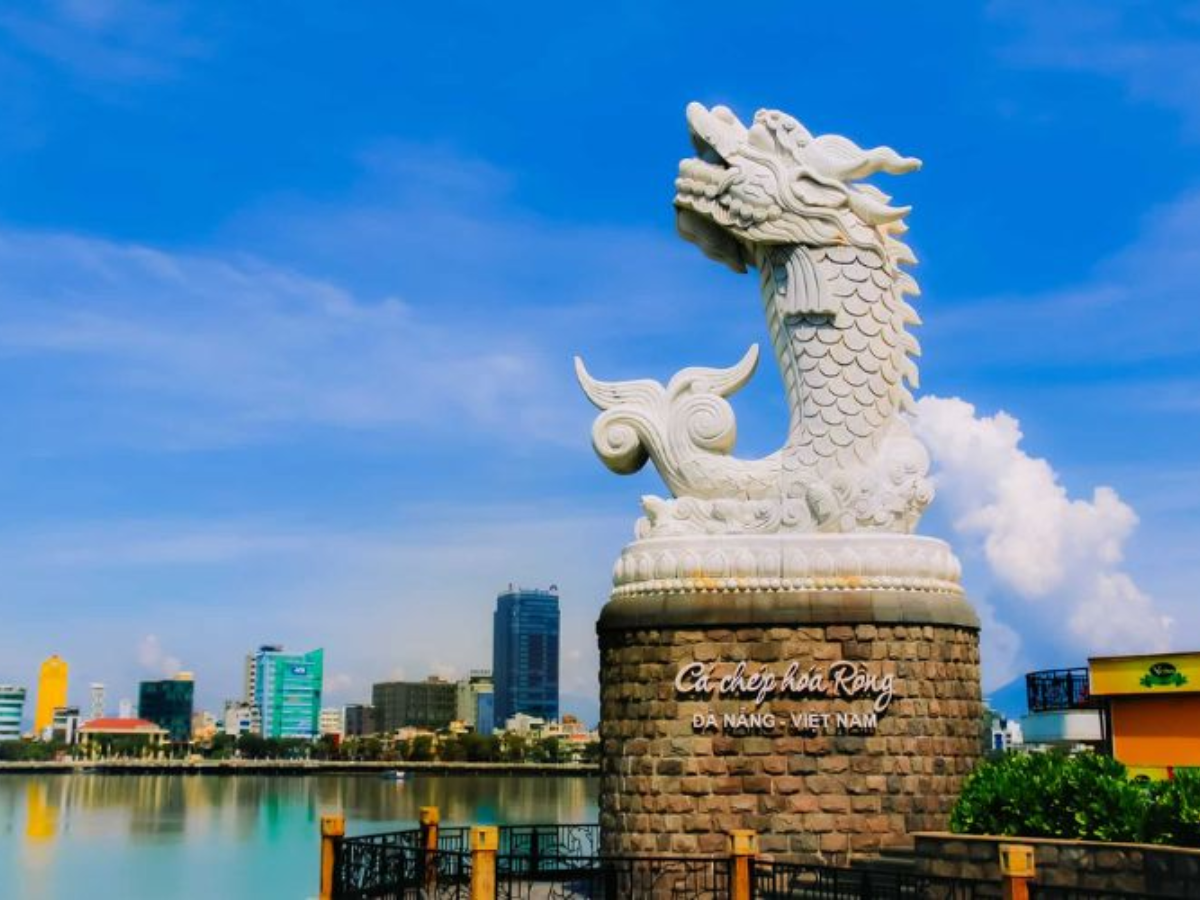
Close-up of the carp turning into a dragon statue. (Source: Collected)
The statue's location also contributes to its appeal, situated in the center of Da Nang, where modernity and tradition converge, offering visitors a unique perspective on the city's transformation.
Origin and meaning of the carp turning into a dragon statue
Legend of the carp crossing the Dragon Gate
The origin of the story of the carp crossing the Dragon Gate began in Chinese culture and has been widely passed down in Vietnam through generations. According to legend, the Dragon Gate is a place with a vertical waterfall, and all creatures wish to cross it to transform into dragons. Among them, only the most persistent carp have the strength to overcome the fierce waves and strong currents. The journey to cross the Dragon Gate requires persistent effort; successful carp will transform into dragons, symbolizing achievement and glory.
The lessons from this story are deeply ingrained in the consciousness of East Asian people, reminding them of the value of willpower, faith, and continuous effort to overcome all challenges in life.
Symbolic meaning of the carp turning into a dragon in Vietnamese culture
The carp turning into a dragon statue symbolizes noble qualities such as strong will, resilience in overcoming difficulties, intelligence, and bravery. In Vietnamese culture, this image represents transformation and rising above all challenges, especially as people place their faith in academic and career paths. The carp turning into a dragon statue also signifies success, passing exams, a prosperous life, and good fortune. Many parents often bring their children to admire the statue when they are preparing for exams, wishing for their children's academic progress.
For the Da Nang community, the carp turning into a dragon statue is a symbol of resilience, a progressive spirit, and the aspiration to constantly rise above, reflecting the city's dynamic development and international integration in recent years.
Spiritual and tourism value
The carp turning into a dragon statue The carp turning into a dragon statue has long been a familiar meeting point for tourists visiting Da Nang. Not only does it impress with its unique beauty by the Han River, but the structure also contributes to the development of tourism in Da Nang. Every day, this place is bustling with people taking photos, strolling, exercising, or simply watching the city light up. During festivals, the area around the statue becomes even more vibrant with many lively cultural activities, contributing to the unique appeal of Da Nang tourism and becoming an unmissable stop on the journey to explore the city.

The Carp-Dragon Transformation Statue has become a check-in icon in Da Nang. (Source: Collected)
3. Outstanding features of the Carp-Dragon Transformation Statue
3.1. Form and craftsmanship
The architecture of the Carp-Dragon Transformation Statue in Da Nang is a blend of traditional art style and a modern touch. The dragon head is inspired by Ly Dynasty architecture, expressing Vietnamese culture through strong, sacred lines. The fish body with thousands of delicately carved scales, each detail is a crystallization of the talent and meticulousness of the artisans. The dragon legs are stylized like symmetrical hands, creating a sense of solidity amidst the moving water waves.
Natural white marble is the main material used to create the Carp-Dragon Transformation Statue in Da Nang, ensuring long-lasting durability while enhancing its elegance.
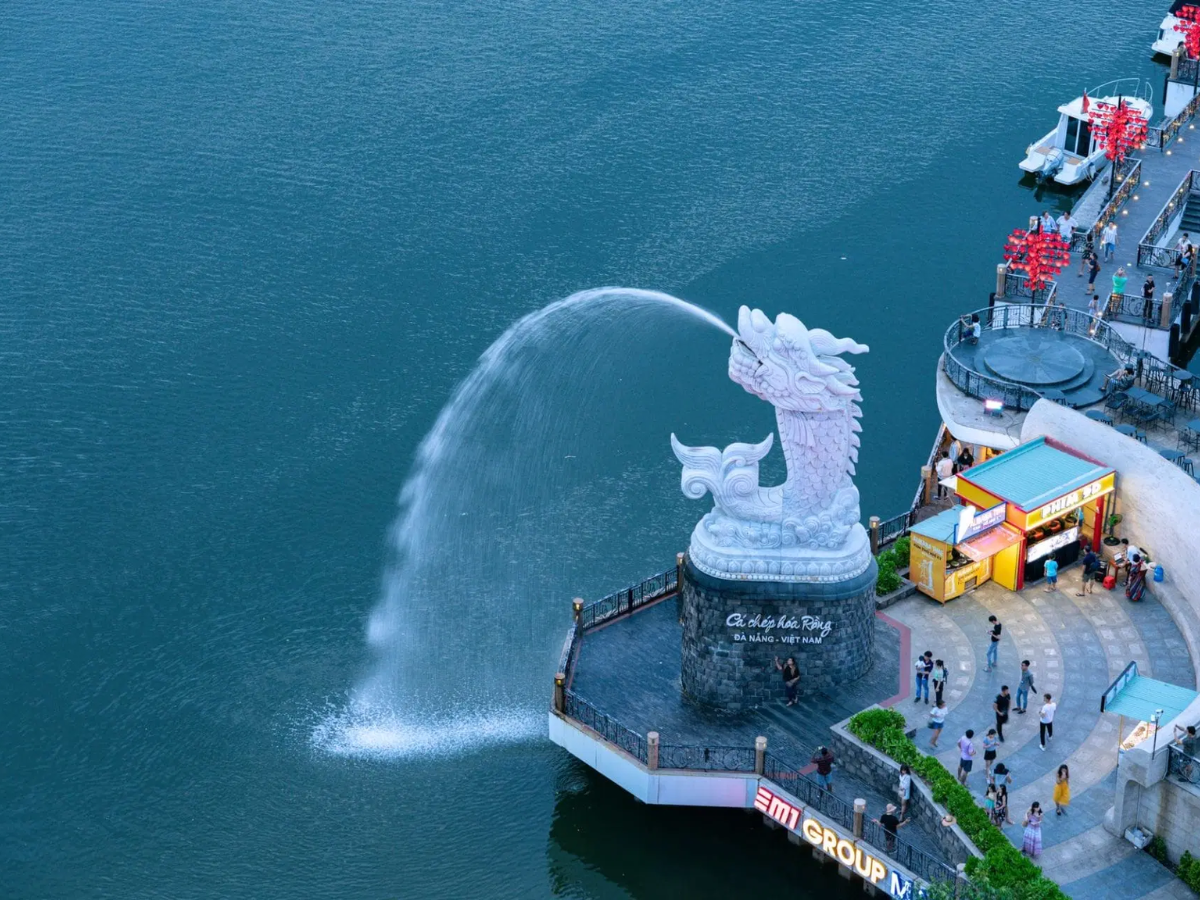
Admire the carp-dragon sculpture spouting water. (Source: Collected)
3.2. The Art of Water Spouting
An impressive highlight of Da Nang's carp-dragon sculpture is the water spouting system located at the dragon's head. The water sprayed out creates a vivid effect, making the carp-dragon image more realistic and lively in the eyes of viewers. According to feng shui, this water symbolizes nourishing, spreading vitality and blessings to the area around the sculpture.
As night falls, the carp-dragon sculpture is illuminated with an artistic color-changing lighting system, creating a brilliant lighting effect that casts its reflection onto the Han River. The combination of light, water, and architectural forms offers visitors a captivating modern artistic experience.
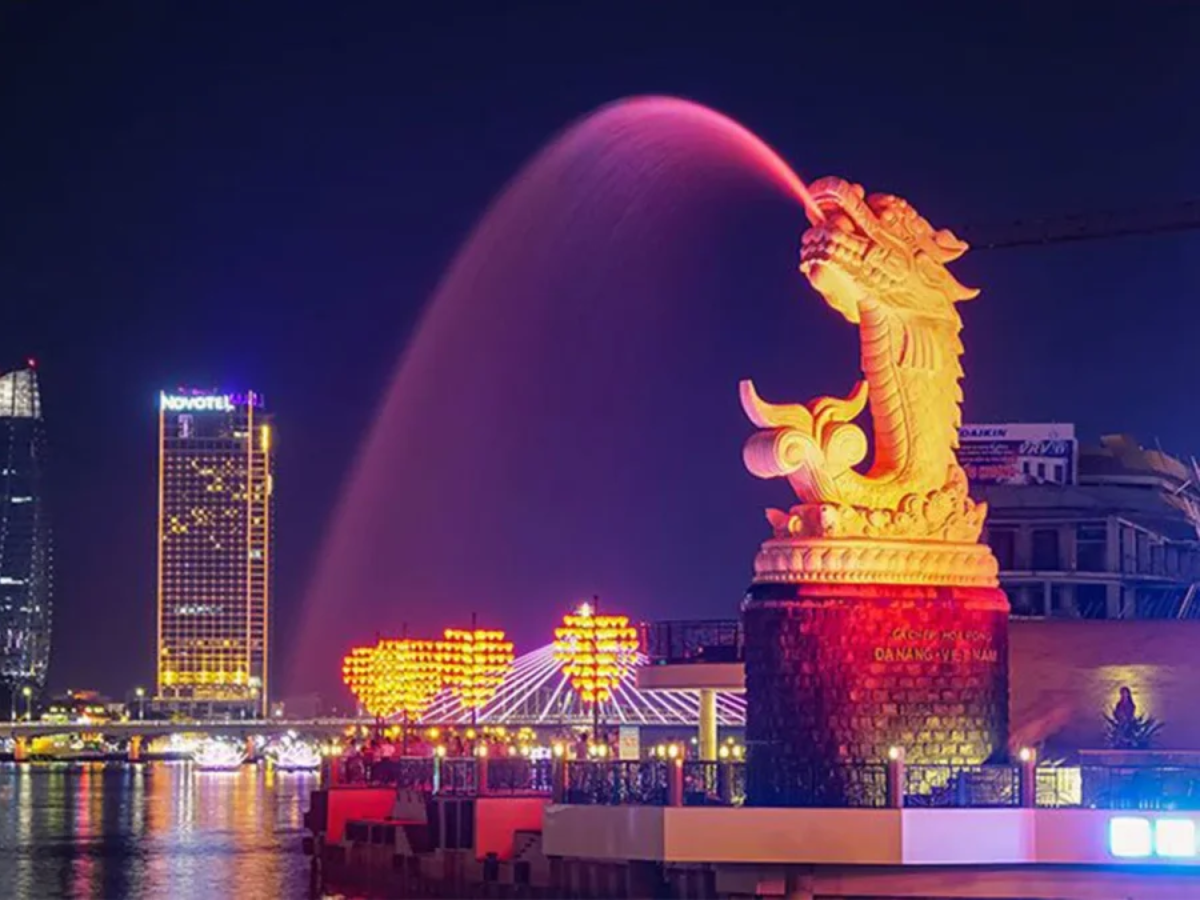
The Carp-Dragon statue shimmering at night. (Source: Collected)
4. Suggested Combined Itinerary
The ideal time to visit the Carp-Dragon statue is at sunset, when visitors can admire the shimmering changing colors of the statue while enjoying the sunset scene by the Han River. Afterwards, you can enjoy local specialties such as Mi Quang, Banh Xeo, and fresh seafood at nearby eateries and restaurants.
If visitors have more time, they can spend a day continuing their journey to explore Sun World Ba Na Hills. This place offers a completely different experience with its cool year-round climate, a miniature European landscape, and prominent structures like the Golden Bridge, the French Village, or Le Jardin d’Amour flower garden, promising a full day of fun amidst the clouds and sky of Da Nang.
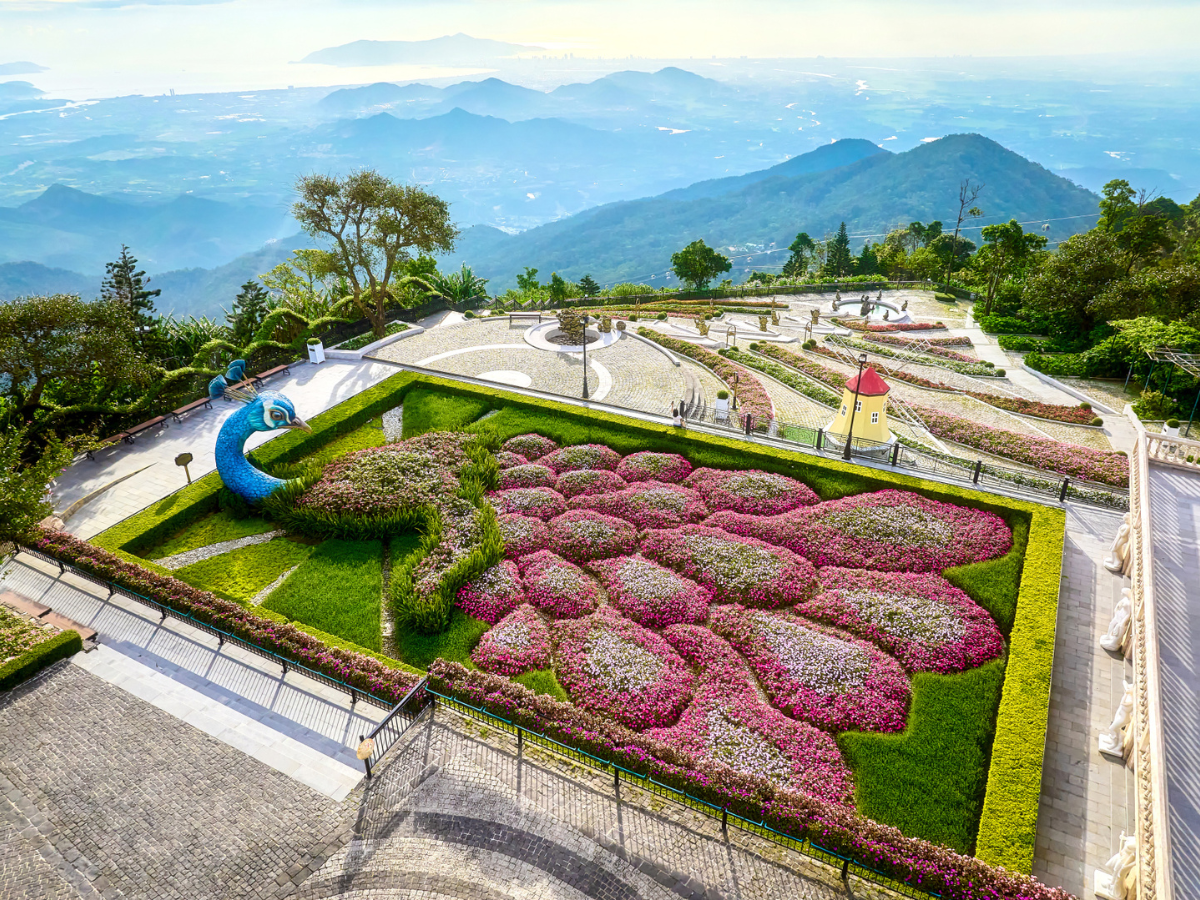
The Le Jardin d’Amour flower garden is vibrant with colors.
The Carp-Dragon statue is not only an artistic symbol but also a source of inspiration for rising up and good fortune in Vietnamese culture. Come to Da Nang to personally experience the vibrant beauty of this structure, enjoy the fresh air by the Han River, and combine it with exploring many attractive destinations in the surrounding area.


