




1. Overview of Con Moong Cave, the unique archaeological heritage of Southeast Asia
1.1. Where is Con Moong Cave located?
Hidden in the limestone mountains of Thanh Trung village (old Ban Mo village), Thanh Vinh commune, Thanh Hoa province, Con Moong Cave stretches along the border of Cuc Phuong National Park. This unique geographical location is closely linked with both Ha Nam and Phu Tho, forming a network of extremely special archaeological attractions.
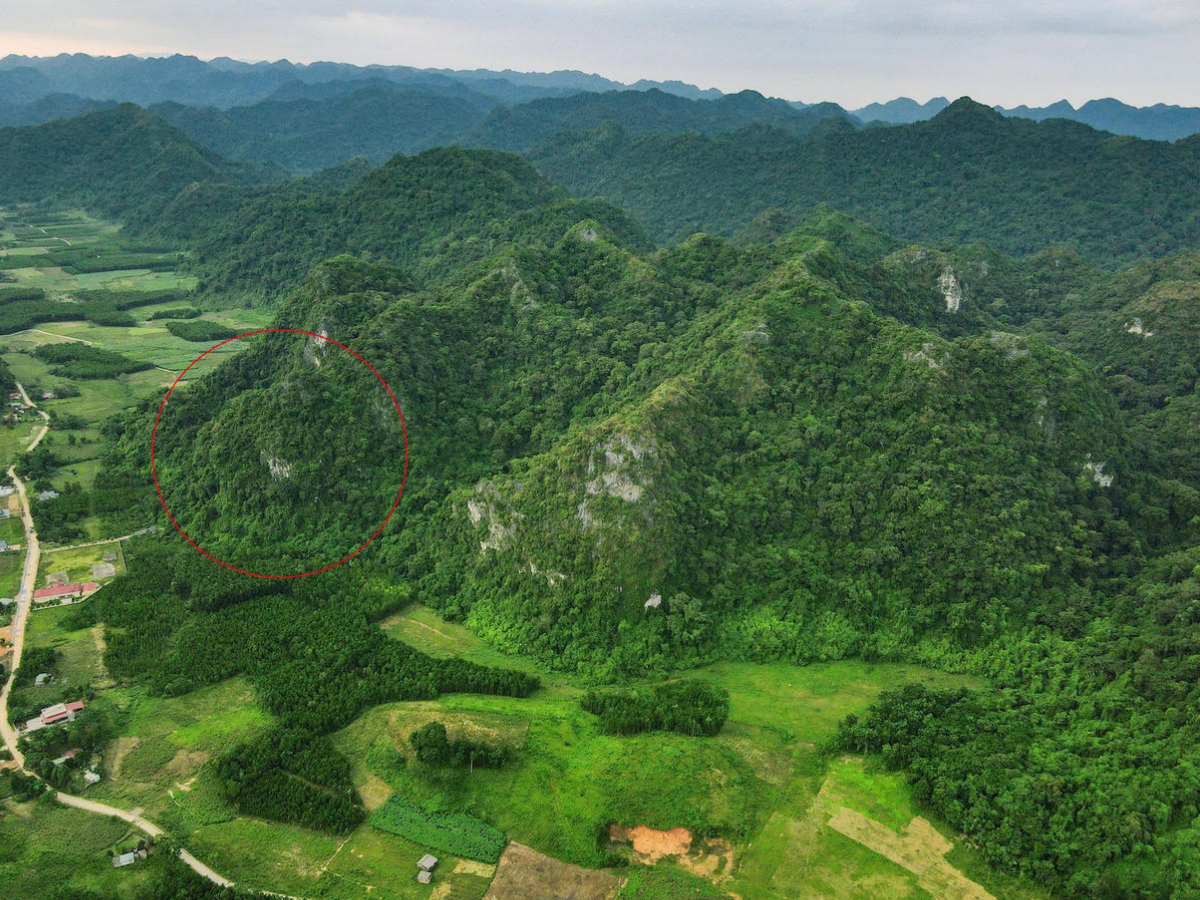
Con Moong Cave possesses wild beauty bestowed by nature. (Source: Collected)
The cave possesses wild beauty bestowed by nature, located at an absolute altitude of 147 m above sea level. With a length of about 40 m, Con Moong Cave has two interconnected entrances: Southwest and Southeast. The cave ceiling reaches a maximum height of 10 m, and the cave interior is wide, providing an ideal space for both sightseeing and archaeological activities. Surrounding the cave is the ecosystem of Cuc Phuong National Park with year-round lush greenery, creating a rare pristine landscape.
1.2. Origin of the name Con Moong Cave
The name Con Moong Cave clearly reflects the indigenous culture of the Muong community. According to the Muong language, "Hang Con Moong" means "animal cave", evoking vivid images of ancient times in this land.
This name originates from an interesting natural feature: in front of the Southeast entrance, there is a large rock shaped like an animal resting its chin, lying before the entrance. For a long time, local people have told that the rock resembles a tiger resting and guarding the cave. Tradition also suggests that Con Moong Cave was once a habitat for many wild animals, demonstrating the harmony between humans and nature in the life of the Muong community in the Tay Thanh Hoa region over thousands of years.
2. Archaeological value and historical evidence at Con Moong Cave
2.1. History of discovery and major excavations
Research on Con Moong Cave began in 1974, when archaeologists first visited the site. The first excavation took place in 1976 over an area of 24 m², of which 8 m² were preserved as a research and sightseeing spot for future generations to continue exploring.
Significant excavation campaigns conducted continuously from 2008 to 2014 have brought many important discoveries about the value of Con Moong Cave. Vietnamese expert teams collaborated with international researchers to conduct in-depth surveys of stratigraphy, artifact classification, and dating, as well as discovering additional valuable new archaeological features.
In 2007, Con Moong Cave was recognized as a National Monument. In November 2016, it became a Special National Monument, proposed for preservation according to the overall plan, contributing to scientific research and sustainable cultural tourism development for future stages.
2.2. Special archaeological stratigraphy
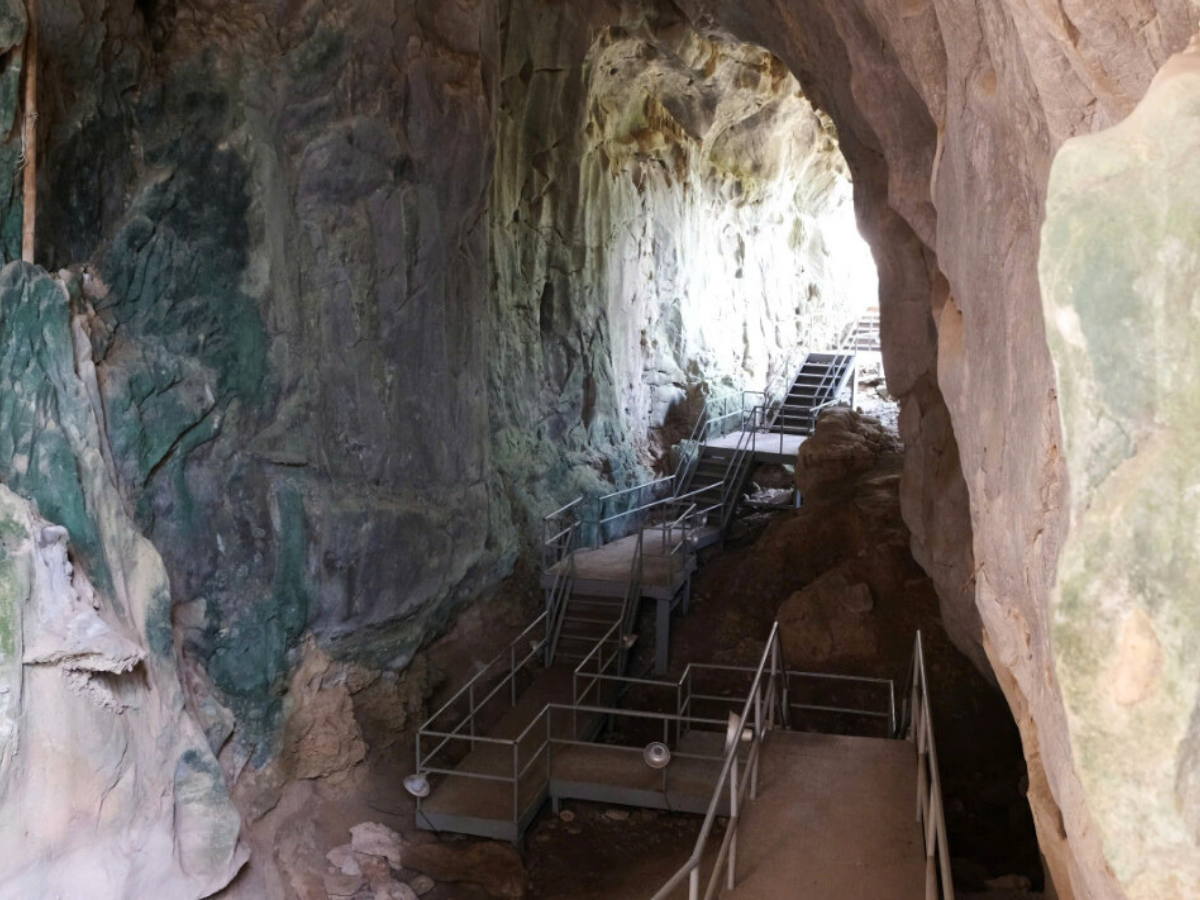
Con Moong Cave is one of the archaeological sites with the thickest and best-preserved archaeological strata in Vietnam and the whole of Southeast Asia. (Source: Collected)
The highlight that helps Con Moong Cave be highly regarded is its possession of the thickest and best-preserved archaeological strata in Vietnam and the whole of Southeast Asia, with an average thickness of up to 9.5 m. This strata is divided into ten layers with different structures, each layer recording a stage of human development on this land.
The cultural layers follow each other, spanning the Early Paleolithic period, through stages such as Son Vi, Hoa Binh, Bac Son, and then to the Neolithic period, Da But. Each stratigraphic layer is like a rich page of history preserved by nature, demonstrating the transition process from a lifestyle of hunting and gathering to early agricultural production.
Con Moong Cave is special for the unbroken continuity of its stratigraphic layers. This serves as an affirmation of the process of adaptation, survival, and technological improvement of ancient humans. Researchers can trace the progress in stone tool making, pottery techniques, as well as changes in the living methods of ancient people through each period.
2.3. Outstanding Archaeological Artifacts and Evidence
The artifacts found at Con Moong Cave are vivid sources of information for reconstructing the life of prehistoric humans. Among the countless precious artifacts, the collection of original stone tools and tools crafted from quartz from the Paleolithic period stand out prominently. Elaborately crafted stone axes, sharp arrowheads, and scrapers made from flint showcase increasingly refined craftsmanship.
Pottery shards decorated with patterns create distinctive marks for each historical period. Animal bone fossils, mollusk shells, along with ancient plant remains, contribute to providing a clear view of the environmental conditions and dietary habits of ancient people. Notably, the flexed-arm burial sites discovered here reveal the distinctive characteristics of the beliefs and spiritual concepts of ancient Vietnamese inhabitants.
The relics from Con Moong Cave are scientific bases for determining the formation process of the Hoa Binh and Bac Son cultures and the development of tool-making techniques through the periods. These artifacts help clarify the connections, interactions, and evolution between different cultures in Southeast Asia, making a significant contribution to the understanding of human evolutionary history in the region.
2.4. Dating and Global Significance
Con Moong Cave is located on a limestone mountain belonging to the Dong Giao Formation, formed approximately 240 million years ago, creating an impressive setting for human historical traces. The ancient layers indicate that humans inhabited here from 50,000 to 70,000 years ago, with each period leaving a distinct mark.
The earliest dated layer is from 40,000 to 60,000 years ago; the superposition of these layers reconstructs the picture of continuous development of ancient communities over many millennia.
The global value of Con Moong Cave is not only local but also outstanding evidence for the continuous evolutionary process, adaptability, technological development, and social life of humankind in the tropical Southeast Asian environment. The cave is a valuable source of information, supplementing key pieces into the picture of human development history worldwide.
3. Journey of Discovery at Con Moong Cave: Practical Experience
3.1. Visiting Experience at Con Moong Cave
The journey to discover Con Moong Cave will offer visitors a gentle trekking experience through unique limestone terrain. The climbing activity, with moderate difficulty, is suitable for all ages, from students to elderly visitors passionate about exploration.
Visiting the cave with its two connecting entrances brings a novel feeling, as natural light filters through the rock crevices, highlighting each ancient stratigraphic layer. Visitors can witness firsthand the meticulously preserved system of relics within the cave itself. The stopping points are logically arranged, helping each person better understand the scientific value of each archaeological area.
Con Moong Cave is very suitable for students, scientists, as well as tourists interested in archaeology. Educational tours are specially designed with a team of guides knowledgeable in history. Visitors will have the opportunity to directly access the ancient cultural layers within the cave, creating a highly beneficial history-archaeology experience journey.
3.2. Suggested Itinerary Combining Nearby Sites
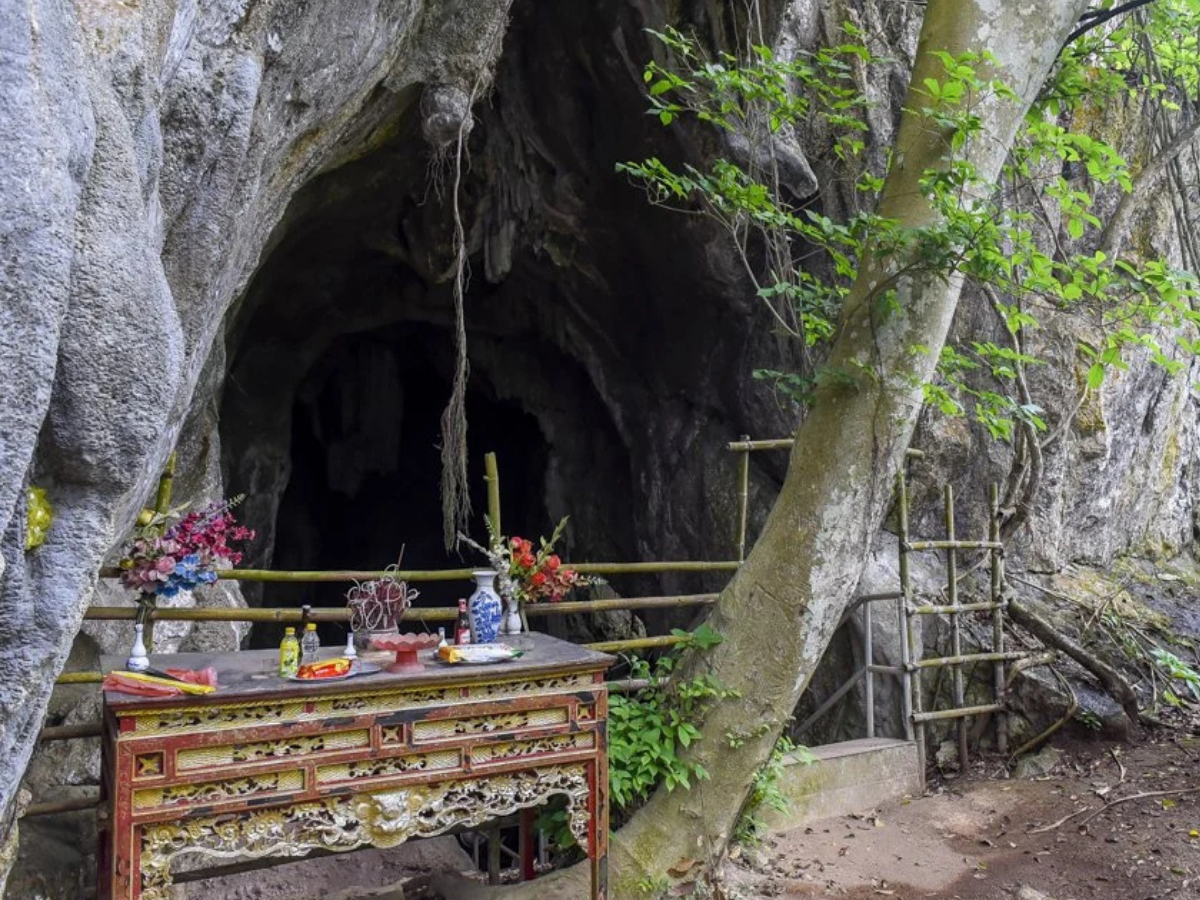
Con Moong Cave tour will become more diverse when combined with other experiences. (Source: Collected)
A tour of Con Moong Cave will be even more diverse when combined with nearby caves in the area. Visitors can stop by Lai Cave with its diverse stalactite system, the impressively spacious Dang Cave, Moc Long Cave containing many archaeological secrets, and Mang Chieng Cave, notable for its impressive natural landscape.
Besides, Ly Chun Cave and Dau Voi Mountain are also attractive options to add to the itinerary. Each cave marks a part of the settlement history and cultural development of the ancient residents in this area.
Exploring nature at Cuc Phuong National Park will contribute to enriching the experience, as visitors can observe diverse flora and fauna, admire rare pristine natural scenery, and participate in sustainable eco-tourism activities. The combination of cultural-archaeological exploration and natural ecological experience creates an ideal tourist journey.
In addition, the Huyen Tich Am Tien spiritual tourist area is a project under construction in Trieu Son commune, Thanh Hoa province. Although not yet open to visitors, this complex is expected to become a typical cultural-spiritual destination of Thanh Hoa, associated with the legend of Ba Trieu and the sacred Nua mountain range. Upon completion, Huyen Tich Am Tien promises to offer a harmonious experience between nature, history, and spirituality, contributing to enriching visitors' exploration journey of Con Moong Cave.
4. Useful experiences and notes when visiting Con Moong Cave
4.1. Suggestions for preparing clothing and equipment
Choosing appropriate clothing and equipment will make the trip to Con Moong Cave convenient and safe. Visitors should prioritize sportswear that is absorbent and flexible for convenient movement along limestone paths. Hiking shoes with good grip are essential to ensure safety when moving on potentially damp rocky surfaces.
A personal flashlight is an indispensable item, because although natural light from the cave entrance is quite strong, deeper areas still require supplementary lighting to observe ancient geological layers. Personal protective equipment such as specialized helmets, gloves, and dust masks are also essential for self-protection during the visit.
4.2. Notes on environmental and relic protection
When visiting Con Moong Cave, each visitor must proactively comply with regulations for cultural heritage protection. Absolutely do not disturb the geological layers or take any archaeological artifacts, no matter how small. Every rock, every pottery shard carries significant scientific meaning and must be preserved in its original state for future research.
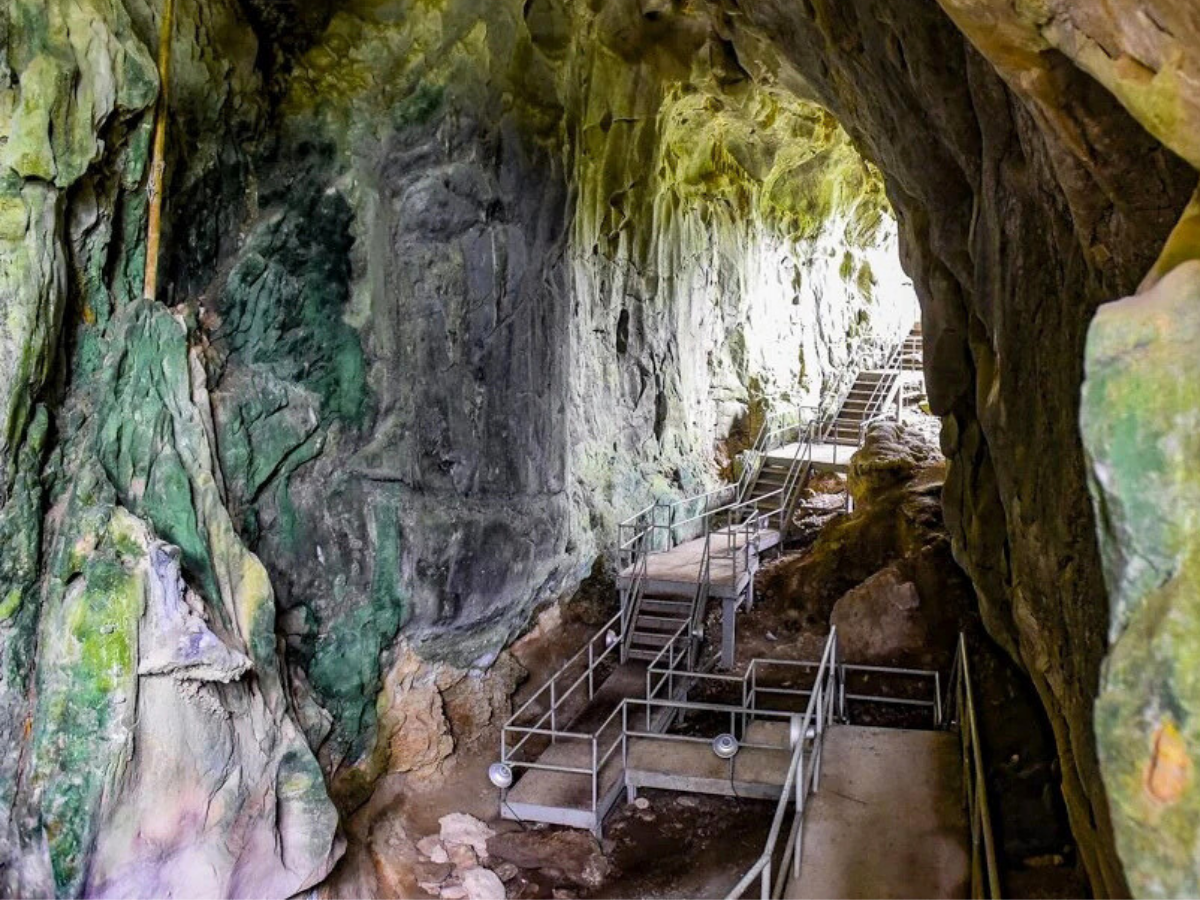
When visiting Con Moong cave, each visitor must proactively comply with regulations for cultural heritage protection. (Source: Collected)
Preserving the relic and not leaving waste in the cave area is everyone's responsibility. Visitors should bring personal trash bags and collect all waste before leaving. Please limit loud noises and avoid touching sensitive surfaces within the cave.
All those who visit Con Moong cave contribute to the common heritage preservation effort. The awareness of preserving and promoting the significance of the relic will help the cave continue to be a foundation for research, education, and inspiring heritage exploration for future generations.
Con Moong cave not only holds archaeological, historical, cultural, and scientific value, but also offers a rare opportunity for everyone to return to prehistoric times amidst Vietnam's natural landscape. Its unique stratigraphy, diverse ecosystem, and continuous evolutionary traces make it a special destination for history lovers and explorers.


