




1. Introduction to Hon Ba Island and the road in the sea
1.1. Location of Hon Ba Island
If you stand on Bai Sau beach and look straight out to sea in the Nghinh Phong cape area, you will see a small island not far from the shore, which is Hon Ba Island. The island belongs to Vung Tau ward, Ho Chi Minh City, and is only a few hundred meters from the water, creating a unique touch in the vast sea and sky space.
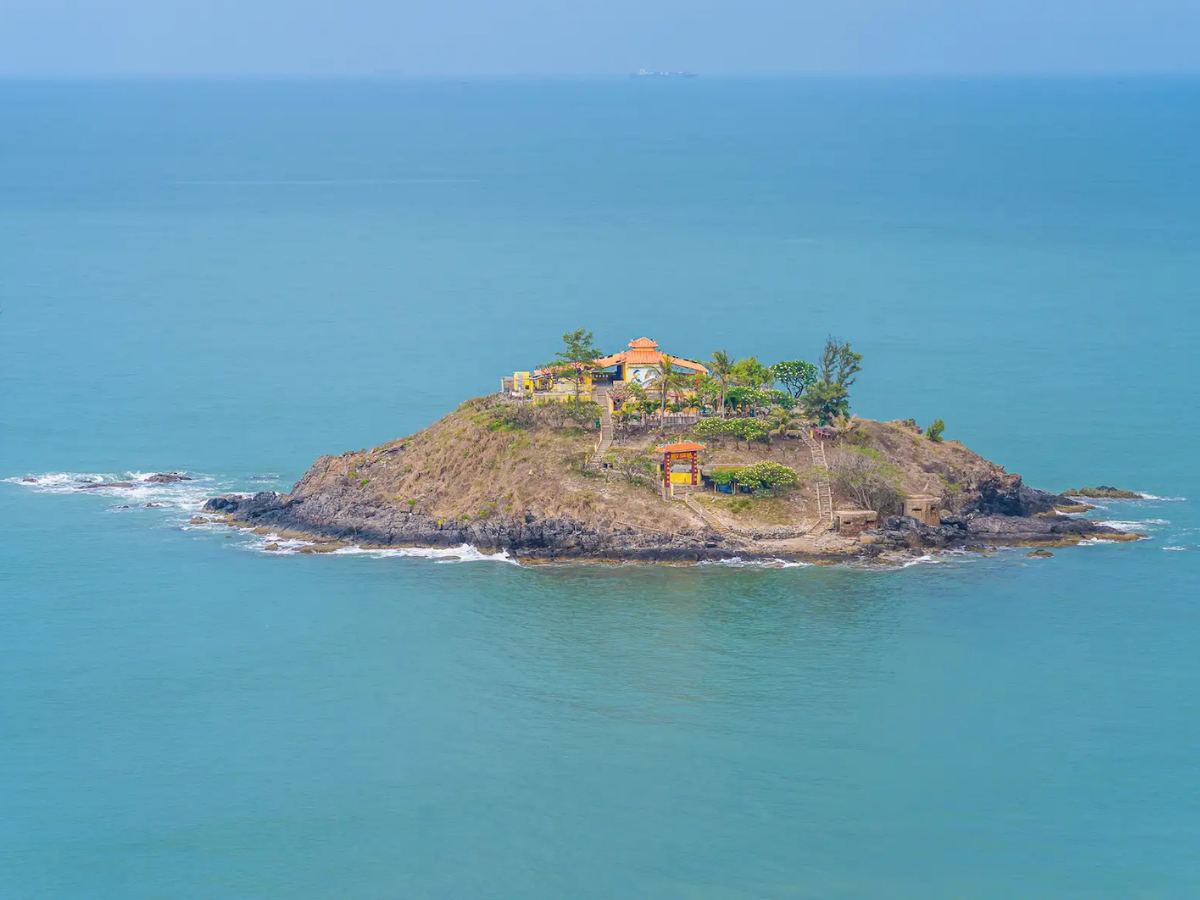
Hon Ba Vung Tau is a mysterious, sacred island in the sea. (Photo: Collected)
Thanks to its proximity to the shore, Hon Ba is an easily accessible location, requiring no boat travel and only dependent on the tide. This factor surprises many visitors when they first witness the stone path appearing: just a few hours earlier, it was still a vast sea, but when the tide recedes, the stone surface is revealed like a 'natural avenue' leading directly to the island.
1.2. Cultural and spiritual value of Hon Ba Temple
On this small island lies the Hon Ba Temple, a structure that has existed for over a century, intertwined with the lives of generations of coastal residents. The temple was built in the early 20th century by fishermen who believed in the protection of the Goddess of Water on each fishing trip. Over time, it has become a spiritual anchor for the people of Vung Tau, a place to send prayers for a peaceful life and calm seas.
The temple's architecture is not overly large or elaborate, but it exudes an air of solemnity and serenity. The old walls, moss-covered roof tiles, and the freely blowing sea breeze create a feeling that is both sacred and simple. Many visitors stepping onto the island clearly feel a complete tranquility rarely found elsewhere.
1.3. Highlight of the tide receding phenomenon
What makes Hon Ba a 'national hotspot' during each tourist season is the stone path that is only revealed when the tide recedes deeply. Normally, the path is completely submerged, so no one knows it exists. However, for a few hours each day, the water recedes, revealing a path covered with coral and rocks.
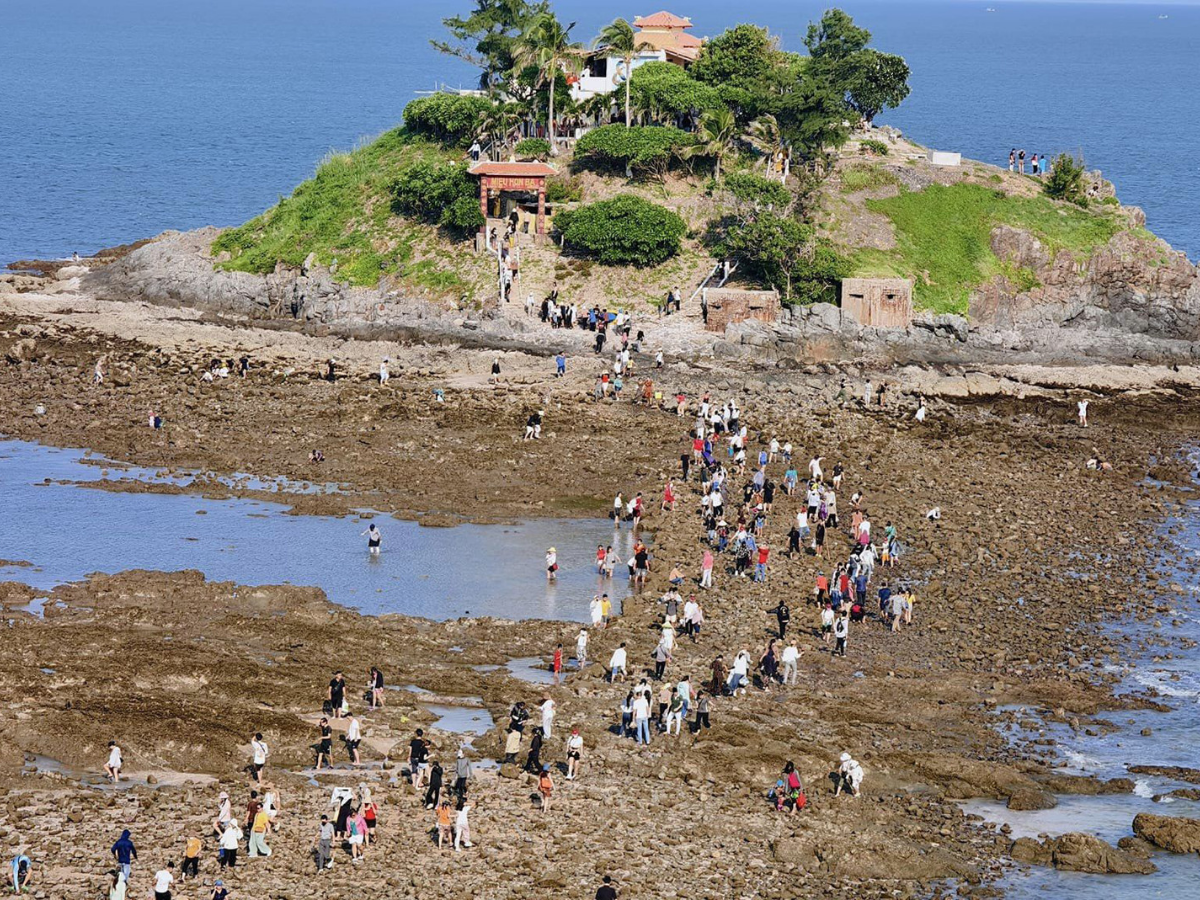
Hon Ba is an interesting destination, chosen by many tourists when visiting Vung Tau. (Photo: Collected)
When visiting Hon Ba, tourists all look forward to the moment of walking in the middle of the sea, with gentle waves lapping on both sides, and a small, lush green island ahead. For many, this is not just an exploration experience but also like opening a door to another world, a journey from the hustle and bustle of the city to the absolute tranquility of nature.
2. Hon Ba Low Tide Schedule and How to Track It Accurately
2.1. Annual Low Tide Hours
Vung Tau tides rise and fall in a fixed cycle, usually strongest on the first and middle days of the lunar month. During this time, the water recedes deeper than usual, and the stone path is exposed more and for longer.
In Vung Tau, afternoon tides tend to recede more strongly than morning tides, so most tourists choose the period from 14:00 to 18:00 to start their journey. However, each day, the time of the lowest tide shifts by tens of minutes to a few hours, which is why you need to consult the daily tide chart to adjust your travel time accurately and safely.
From December to April is the dry season in Vung Tau, a time when the sea is calm, waves are gentle, the sky is blue, and there is no rain. This is also the season when many tourists choose to visit Hon Ba due to the far visibility, clear sea surface, and suitable weather conditions for taking photos or watching the sunset on the island.
During the rainy season (May to November), tides are more erratic, sea waves are strong, and the weather is unstable, so the experience may be interrupted.
2.2. How to Check the Tide Chart to Determine the Best Time to Go
Nowadays, checking the tide chart has become easier than ever. You can look up on maritime forecast websites, tide charts, or dedicated marine apps. These charts display the water level line by hour of the day, clearly showing the lowest tide times (marked as Low Tide).
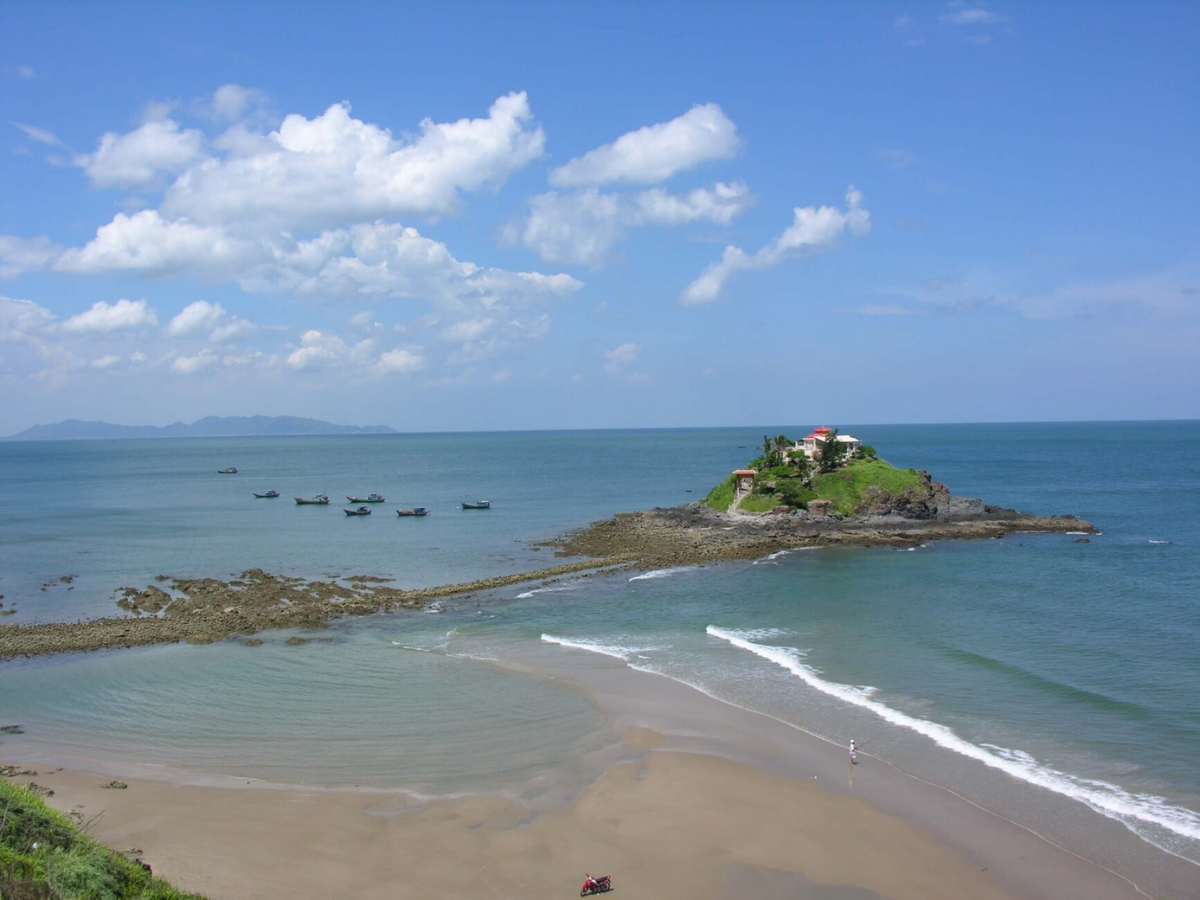
Tourists should consider the time to visit Hon Ba to have the best experience. (Photo: Collected)
Checking the tide is actually very simple. First, you just need to find the exact date you plan to go in the marine forecast table or a tide tracking app. Then, identify the time of the lowest tide of the day; this is the "golden hour" for the path to Hon Ba to be most visible. The air at this time is also cool, not too harsh sunlight, so walking on the rocky surface becomes more pleasant. Once you have the information, you should arrive at the beach about 20 to 30 minutes earlier to observe the actual water level and decide on a safe time to move. The ideal time is to choose when the water level drops below 0.5 m, as at this time the rocky path is almost completely revealed, making the walk to the island both easier and safer.
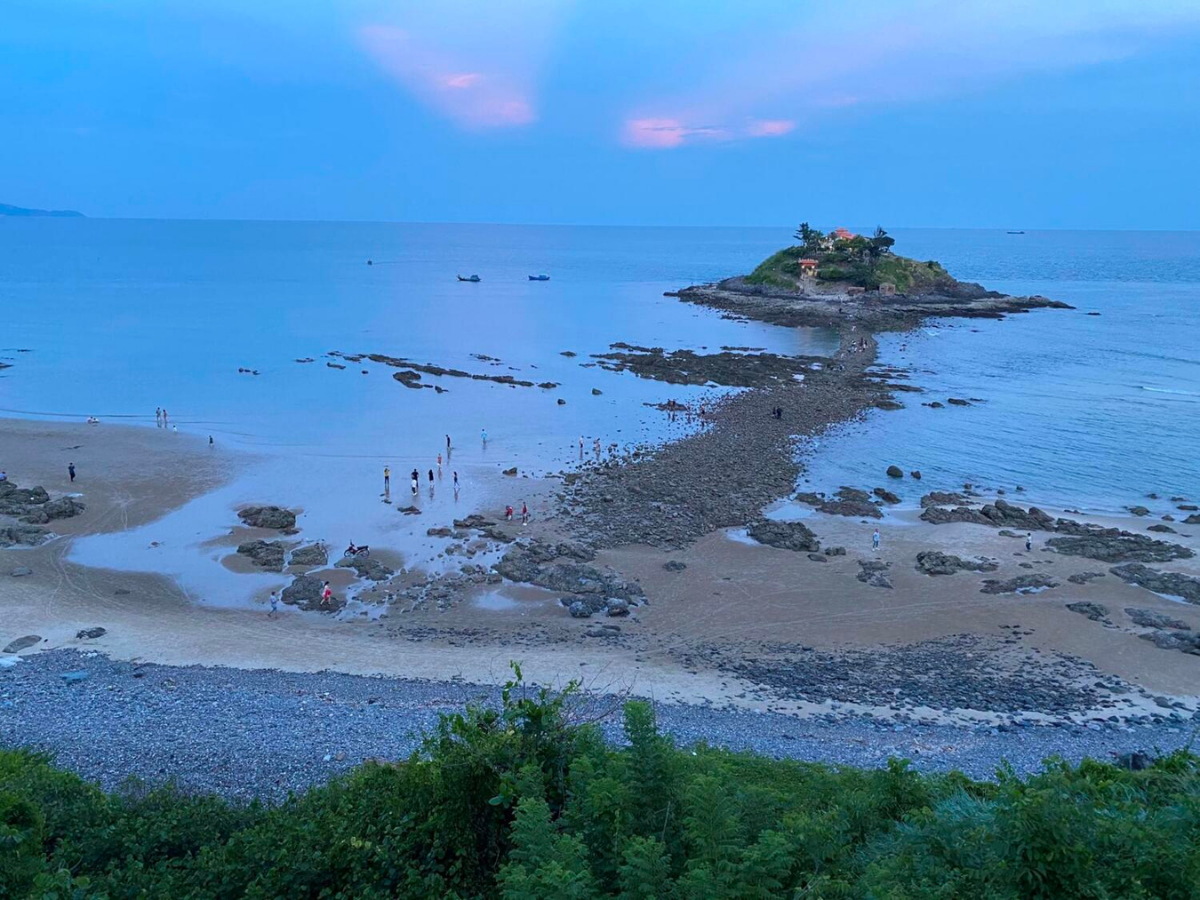
Hon Ba Vung Tau is one of the few tourist destinations that have not been intervened by human hands . (Photo: Collected)
3. Guide to safe walking to Hon Ba
3.1. Route from Bai Sau to the starting point of the path
Starting from Thuy Van street, visitors move straight to Cape Nghinh Phong. From here, standing on the rocky outcrop looking directly out to sea, Hon Ba island can be seen before your eyes. When the tide recedes, the stone path from the shore to the island will clearly appear like a natural walkway.
Before moving, you should observe the water level, determine the width of the stone path, and ensure that the tide has receded steadily to walk safely.
3.2. Recommended clothing and items to bring
The stone path has many slippery and jagged sections, so you should wear non-slip sandals or rock-walking shoes to avoid slipping. Clothing should be neat and breathable; you can also bring a light jacket as the sea breeze is strong. Phones, cameras, or personal devices should be kept in a waterproof bag to minimize risks.
If you go in the afternoon, bring drinking water to maintain your energy, because although the path is not too far, the stone surface is quite rough, which can easily make you tired if you are unfamiliar with the terrain.
3.3. Safety precautions when the tide returns
The most important thing when visiting Hon Ba is not to stay too long when the tide is about to rise. When the water level rises and begins to cover the rocks near the shore, you should proactively turn back to ensure safety. The tide can change quite quickly, so if you return late, you may have to wait for the tide to recede or need boat assistance.
Going with a group will be more convenient as everyone can observe and remind each other. If you are traveling alone, you should pay attention to the time and compare it with the tide chart you researched beforehand to ensure the journey goes smoothly.
4. Cultural and natural experiences at Hon Ba
4.1. The spiritual space of Hon Ba temple
Upon entering the temple, visitors will clearly feel the tranquility pervading the space. The faint scent of incense blends with the sea breeze, making the atmosphere both sacred and peaceful. Inside, the temple is simply decorated with an altar to the Lady, old inscribed steles, and paint faded over the years.
Despite its small scale, the temple remains a place where people place their faith, especially fishermen praying for peace before each fishing trip. Although simple, this place clearly reflects the unique culture and beliefs of the Southern coastal fishing communities.
4.2. Viewpoint of Bai Sau and the panoramic sea view
From the temple courtyard, gazing towards the mainland, you will see Bai Sau stretching impressively. The soft, curved sandy shore, gentle waves lapping the shore, and tall buildings shimmering in the distance create a scene that is both modern and poetic.
At sunset, the sunlight covers the sea, creating sparkling golden streaks, one of the most beautiful moments at Hon Ba. Many tourists choose to sit on the rocky outcrop in front of the temple to watch the sun gradually sink below the horizon, fully experiencing the tranquility of Vung Tau's afternoon.
4.3. Relaxing experiences at sea
The island is small but offers a unique feeling: a tranquility that is hard to find in the city. The sound of waves crashing at the island's base, the wind rustling through the trees, and the salty sea air make one feel relaxed.
Some tourists prefer to stay longer to enjoy the feeling of being "detached from the mainland" as if in a small world with only the sea, wind, and themselves. This is also when many people choose to take photos, capturing memorable moments amidst pristine nature.
Following the tide schedule to walk to Hon Ba is one of the most unique experiences when visiting Vung Tau. From the stone path revealed by the rhythm of the sea, the sacred Lady's temple amidst the ocean, to the moment of admiring the city from the small island, all blend together to create an emotional journey. This is not only a trip to explore nature but also an opportunity to feel the culture, life, and spirit of the people of the Southern coast.
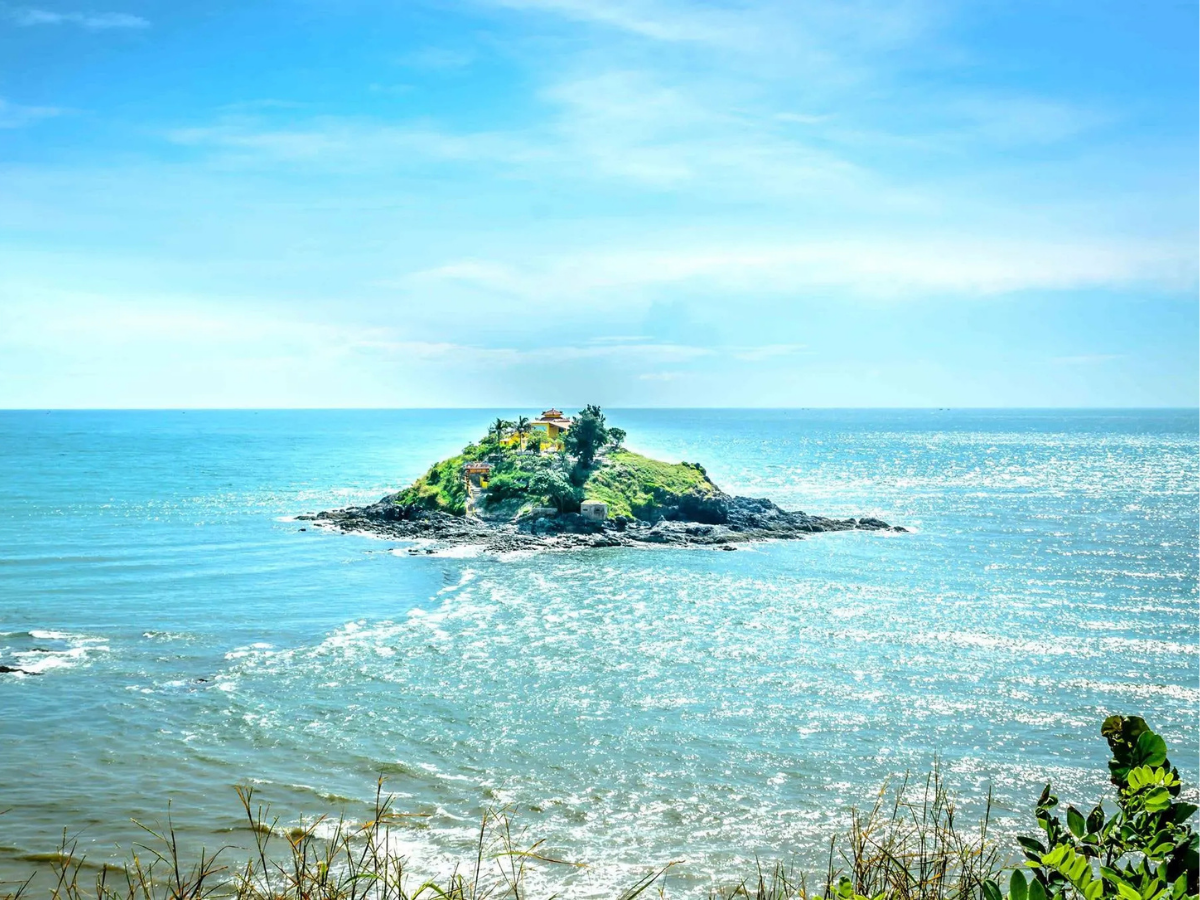
Hon Ba always retains its wild beauty, poetic and charming nature. (Photo: Collected)
In the coming years, visitors can expect even more new experiences as Sun World Vung Tau is expected to launch in 2026. The emergence of this large-scale entertainment complex promises to transform the tourism landscape of Vung Tau, adding a series of exciting activities alongside unique natural experiences like the journey to Hon Ba. Then, visitors to Vung Tau will not only have the opportunity to 'walk amidst the sea' but also immerse themselves in new check-in spots, modern amusement parks, and entertainment activities bearing the Sun World signature, which is already famous in many tourist destinations in Vietnam.
If you have the chance to visit Vung Tau, take time to learn about its history and experience this special natural masterpiece, and don't forget to look forward to the colorful changes of the city in the near future. An afternoon watching the sunset from Hon Ba will surely be the perfect pieces for a complete trip.


