




1. Overview of Buddhist pilgrimage sites in Vietnam
Vietnam is one of the countries with a long-standing and deeply rooted Buddhist tradition. Therefore, the system of Buddhist pilgrimage sites in Vietnam stretches from North to South, closely linked to the history, culture, and spiritual life of the people. These destinations are not only places of worship and pilgrimage but also special cultural and spiritual spaces, attracting a large number of Buddhists and tourists, both domestic and international.
Buddhist pilgrimage sites in Vietnam typically include ancient temples, mountain spiritual complexes, large-scale Buddha statues, and important Buddhist centers. Each location possesses unique value, reflecting the interplay between architecture, beliefs, and nature. Some are nestled amidst majestic mountains, while others are situated in the heart of urban areas, but all share the common goal of creating a serene space for spiritual practice and seeking peace.
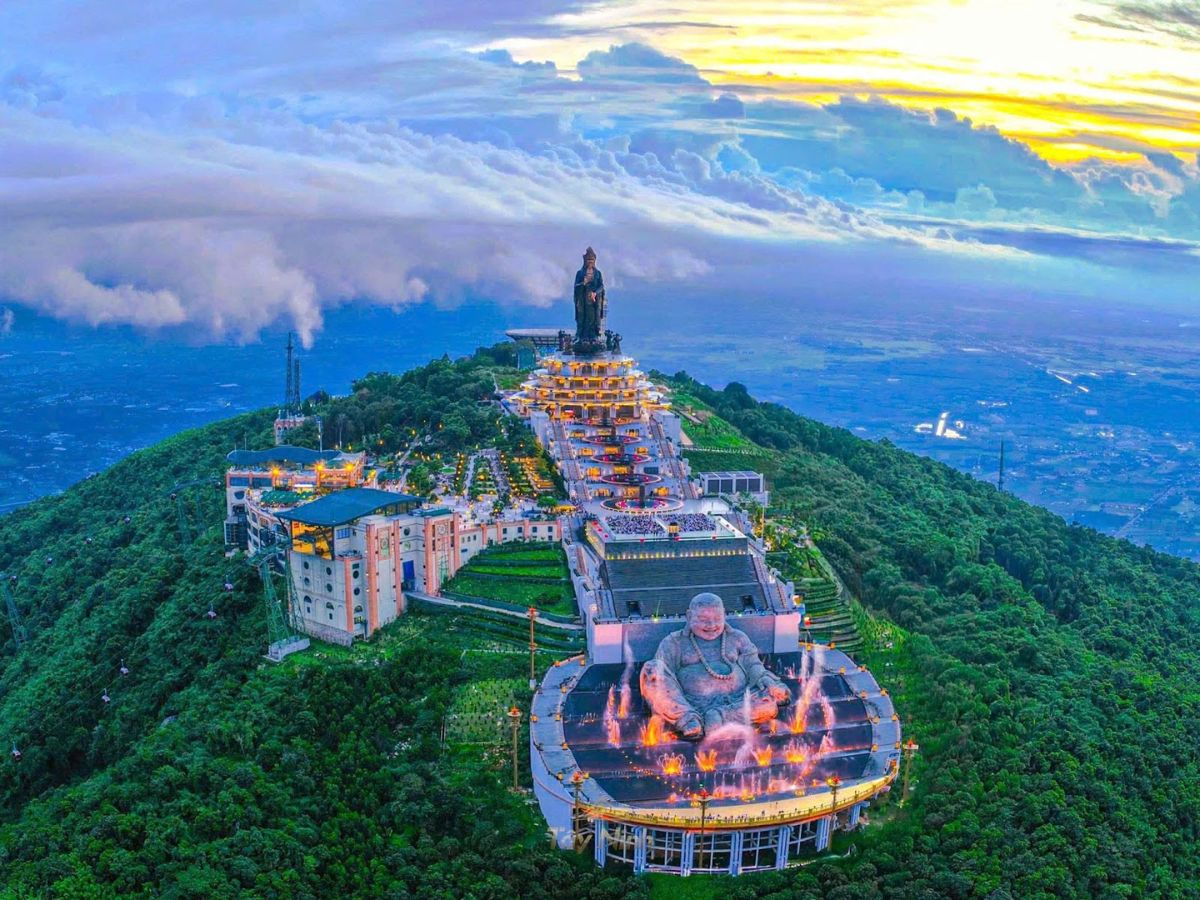
Vietnam boasts many famous pilgrimage sites suitable for tourists from India.
Beyond simply serving religious needs, Vietnamese Buddhist pilgrimage sites have become important spiritual tourism products. People come not only to worship Buddha and pray for peace, but also to seek spiritual balance, experience meditation, and explore traditional cultural values. Many sites have been systematically invested in with modern tourism infrastructure such as cable cars, sightseeing areas, and support services, making pilgrimages much more convenient.
It can be said that the system of Buddhist pilgrimage sites in Vietnam is a harmonious combination of religion and tourism, of spiritual values and exploratory experiences. These are not only destinations of religious significance, but also places that preserve Vietnamese cultural identity, contributing to a special attraction for international tourists who love spiritual tourism.
2. Prominent Buddhist pilgrimage destinations in Vietnam
The system of Buddhist pilgrimage sites in Vietnam spans the entire country, forming spiritual spaces associated with mountains, temples, and large-scale Buddhist cultural complexes. Many of these locations not only hold religious significance but have also become prominent tourist destinations, attracting numerous Buddhists and international visitors who come to worship, explore, and seek inner peace.
2.1. Ba Den Mountain in Tay Ninh
Mount Ba Den is considered one of the most important and representative Buddhist pilgrimage sites in southern Vietnam. It is not only the highest mountain in the South but also a large-scale spiritual complex with a well-invested system of temples, Buddha statues, and worship spaces.
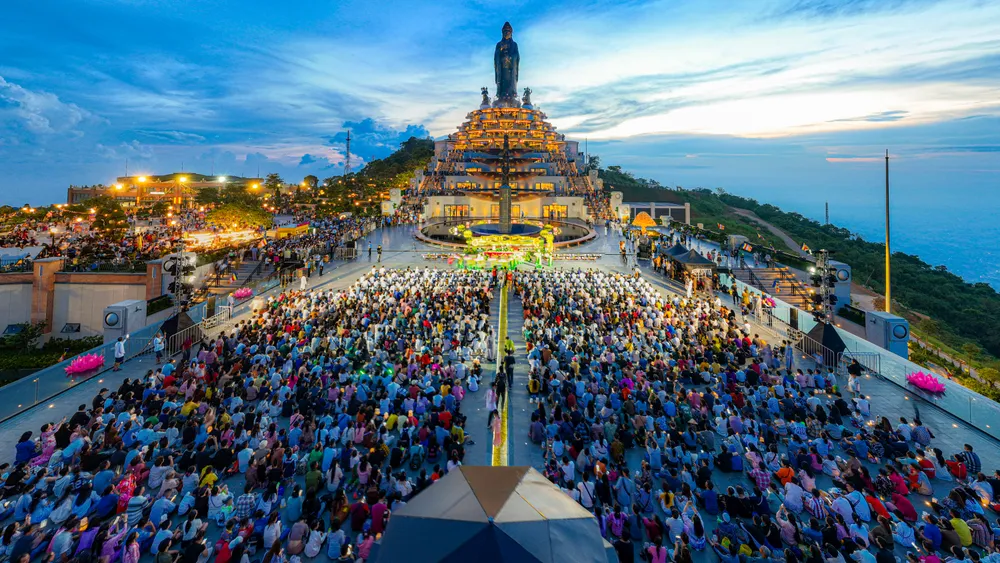
A large number of tourists and Buddhist pilgrims visit Ba Den Mountain.
The highlight of Ba Den Mountain is the combination of natural elements and modern spiritual architecture. You can travel by cable car to the summit, then visit prominent structures such as the Tay Bo Da Son Bodhisattva Statue – one of the tallest bronze Buddhist statues in Asia, the Maitreya Bodhisattva statue with its expansive viewing area, and the deeply contemplative Konagamana Buddha statue.
The spacious and airy area at the mountaintop is designed to be suitable for both pilgrimage and sightseeing. Thanks to its modern infrastructure, Mount Ba Den has become an ideal destination for both traditional pilgrims and international tourists seeking a "spiritual travel" experience amidst nature.
👉 BOOK BA DEN MOUNTAIN TICKET HERE!
2.2. Fansipan in Lao Cai
Fansipan is not only known as the highest mountain in Vietnam and Indochina, but also as one of Vietnam's most special Buddhist pilgrimage destinations, with a complete spiritual complex built on its summit.
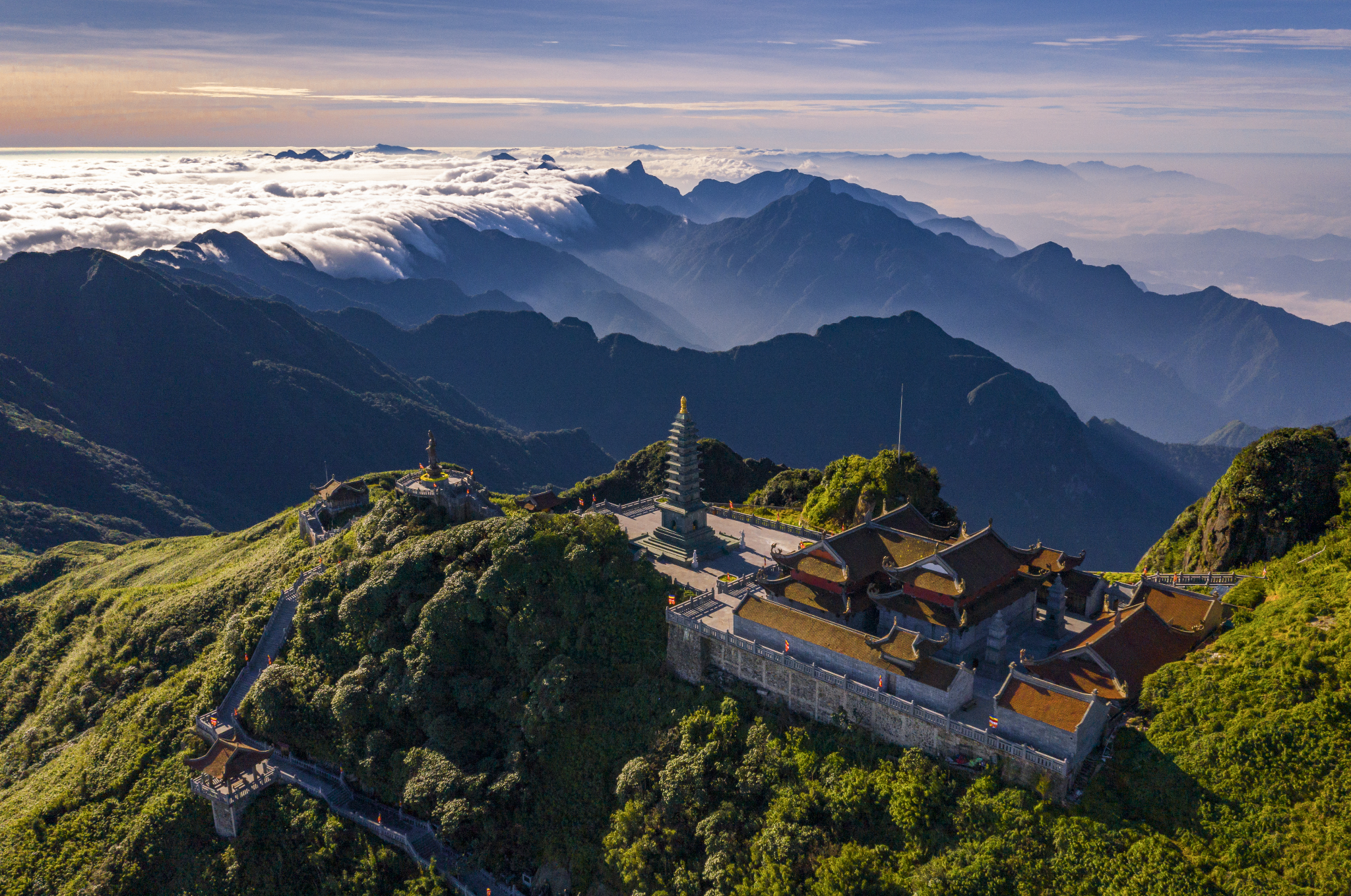
Sacred spiritual complex on the summit of Fansipan
The Fansipan area boasts a system of temples, Buddha statues, and structures bearing the distinct mark of Buddhism, such as the Great Buddha Statue, Bich Van Zen Monastery, and other structures nestled amidst the clouds. A special feature is that you can travel by modern cable car, making the journey to conquer the summit much easier than traditional trekking.
The pilgrimage experience at Fansipan is distinctly "heaven, earth, and spirit": the majestic mountain scenery, the cool climate year-round, and the feeling of standing amidst a sea of clouds create a unique journey of both worship and exploration of nature. This is also why Fansipan has become a favorite destination for both Buddhists and international tourists when visiting northwest Vietnam.
2.3. Huong Pagoda in Hanoi
Huong Pagoda is one of Vietnam's most famous Buddhist pilgrimage sites and boasts one of the largest festivals in the country, especially vibrant in the spring each year. The Huong Son complex is not only a place of worship but also a cultural and spiritual space combining rivers, mountains, and natural caves.
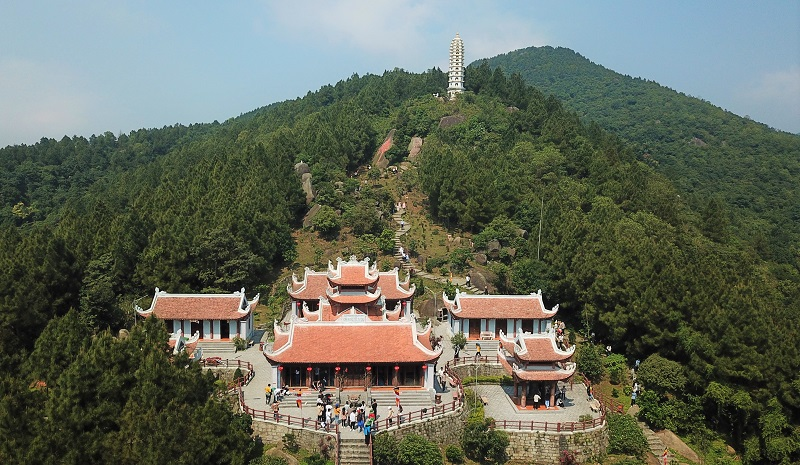
Huong Pagoda is a famous pilgrimage site in Hanoi.
The journey to Huong Pagoda is distinctly experiential: you typically travel by boat on the Yen stream, then continue by road or cable car to reach the caves and pagodas nestled deep within the mountains, such as Huong Tich Cave – considered the "foremost cave in the land of Vietnam". The combination of natural scenery and religious atmosphere makes this a pilgrimage site that is both sacred and rich in exploration.
2.4. Bai Dinh Pagoda in Ninh Binh
Bai Dinh Pagoda is one of the most prominent Buddhist pilgrimage sites in Vietnam today, located within the Trang An scenic complex. The pagoda impresses with its massive scale and numerous records, such as the longest Alahat Paths in Asia, the largest bronze Buddha statue in Vietnam, and sprawling grounds covering hundreds of hectares.
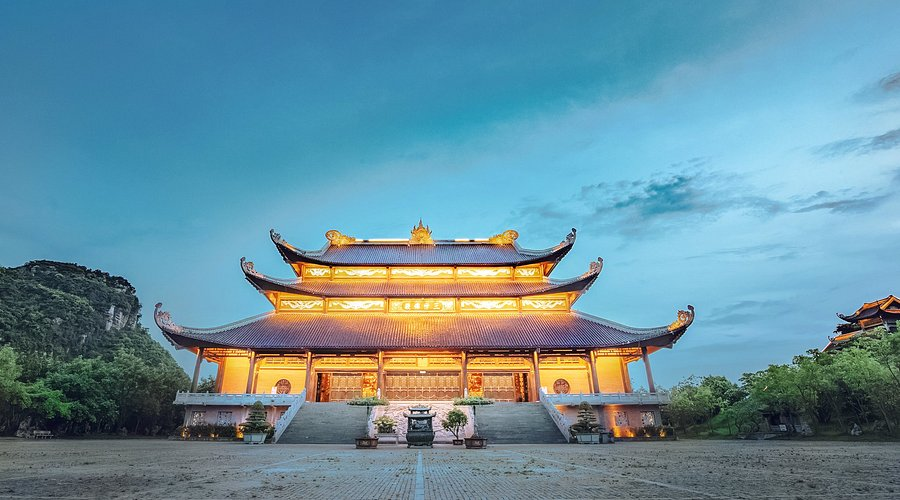
Bai Dinh Pagoda is a famous spiritual and scenic tourist destination in northern Vietnam.
The temple grounds are meticulously planned, combining traditional architecture with the distinctive limestone landscape of Ninh Binh. You can travel by electric vehicle or walk through the vast grounds to explore the main hall, bell tower, Buddha statues, and Alahat Paths. This is a suitable destination for both solemn pilgrimages and exploratory tourism.
2.5. Yen Tu Mountain in Quang Ninh
Yen Tu is one of Vietnam's most historically and spiritually significant Buddhist pilgrimage sites, closely associated with Emperor Tran Nhan Tong and the formation of the Truc Lam Zen sect. It is considered the "cradle of Vietnamese Buddhism," with a system of temples, pagodas, and hermitages stretching along the mountainside.
The pilgrimage to Yen Tu is a highly experiential journey, as you can choose to hike or take the cable car to the summit of Dong Pagoda. Along the way, there are stops such as Hoa Yen Pagoda and Mot Mai Pagoda, creating a journey that is both physically challenging and deeply meaningful for spiritual practice and worship amidst the majestic mountain scenery.
3. Things to note when visiting Buddhist pilgrimage sites in Vietnam
When experiencing Vietnamese Buddhist pilgrimage sites, you are not simply sightseeing but are also entering a solemn and sacred space of faith and culture. Therefore, careful preparation regarding attire, behavior, and itinerary will make the trip more fulfilling and demonstrate respect for the spiritual spaces in Vietnam.
3.1. Choosing appropriate attire and maintaining a dignified appearance
When visiting temples, spiritual complexes, or places of worship, you should prioritize modest and respectful attire, avoiding overly short or revealing clothing. This is an important factor in showing respect for the Buddhist space.
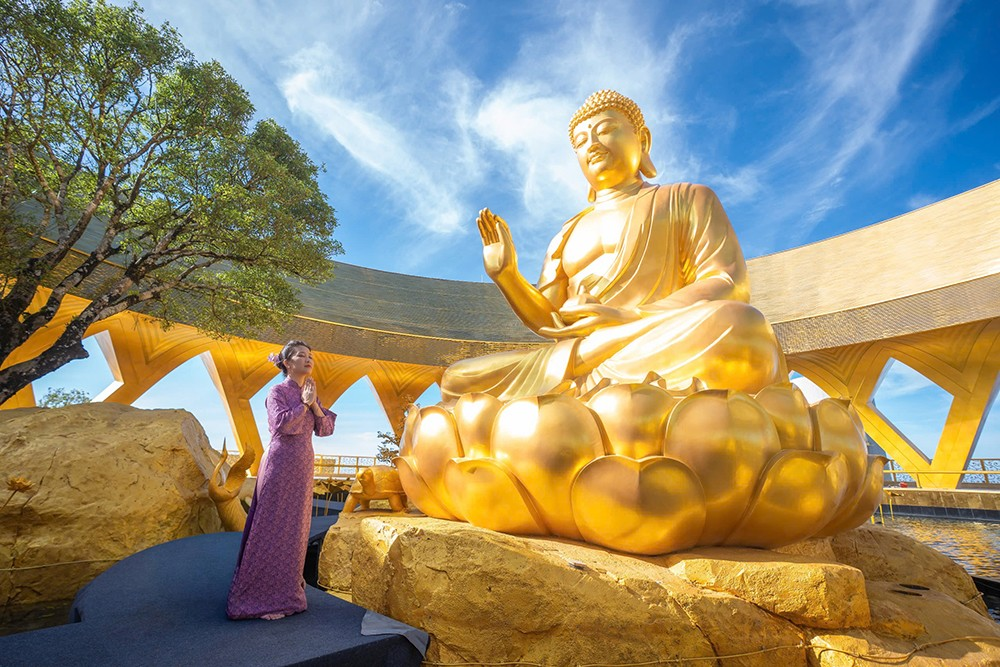
Visitors should choose respectful attire when visiting spiritual sites.
Additionally, for pilgrimage sites located in mountainous areas like Mount Ba Den or Fansipan, it's advisable to bring a light jacket as the weather at high altitudes is often cooler or changes rapidly, especially in the early morning and late afternoon.
3.2. Maintaining order and minimizing noise in the worship area
Buddhist pilgrimage sites in Vietnam often have tranquil spaces for meditation, so you should maintain a calm demeanor, speak softly, and avoid making noise, especially in the main hall or areas where people are performing rituals.
Respecting shared spaces not only helps maintain solemnity but also provides a better experience for yourselves, allowing you to clearly feel the peace and tranquility characteristic of spiritual destinations.
3.3. Respect the rules and rituals at each location
Each pilgrimage site has its own regulations regarding offerings, photography, or movement within the temple grounds. You should observe the signs or ask their guide before doing anything to avoid violating local rules.
For example, in areas around large Buddha statues or the main hall, photography may be restricted or require maintaining a certain distance. Adhering to these regulations helps maintain the sanctity of the space and avoids disturbing other pilgrims.
It is evident that Vietnamese Buddhist pilgrimage sites are not only places of worship and prayer for peace, but also unique cultural and tourist spaces, reflecting the depth of religious beliefs and national identity. The combination of tourism and pilgrimage allows you not only to sightsee but also to find spiritual balance, leading to more peaceful and positive values in life. This is precisely why spiritual tourism in Vietnam is increasingly attracting both domestic and international tourists.


