


1. Overview of cultural day trips from Ho Chi Minh City
Ho Chi Minh City is not only a destination for urban exploration but also a convenient starting point for discovering the history, religious traditions and local lifestyles of Southern Vietnam. Beyond the city's busy streets, travelers can reach historic sites, spiritual landmarks, rural communities and river destinations that reveal different layers of the region's cultural identity. Many of these places can be explored within a day, making them suitable additions to a short stay in the city.
For travelers searching for cultural day trips from Ho Chi Minh City, the possibilities extend far beyond visiting museums or architectural landmarks. A cultural journey can involve exploring wartime heritage at the Cu Chi Tunnels, discovering distinctive religious traditions in Tay Ninh, visiting temples and pagodas, traveling through communities in the Mekong Delta or learning how local livelihoods remain closely connected to rivers, agriculture and traditional crafts. Religious and spiritual heritage is an important part of these journeys. Southern Vietnam is home to Buddhist landmarks, historic temples and the distinctive traditions of Caodaism, offering travelers opportunities to observe different forms of architecture, symbolism and worship. Tay Ninh is particularly notable in this respect, with the Cao Dai Holy See and the spiritual landscape of Ba Den Mountain providing two very different perspectives on the province's religious identity.
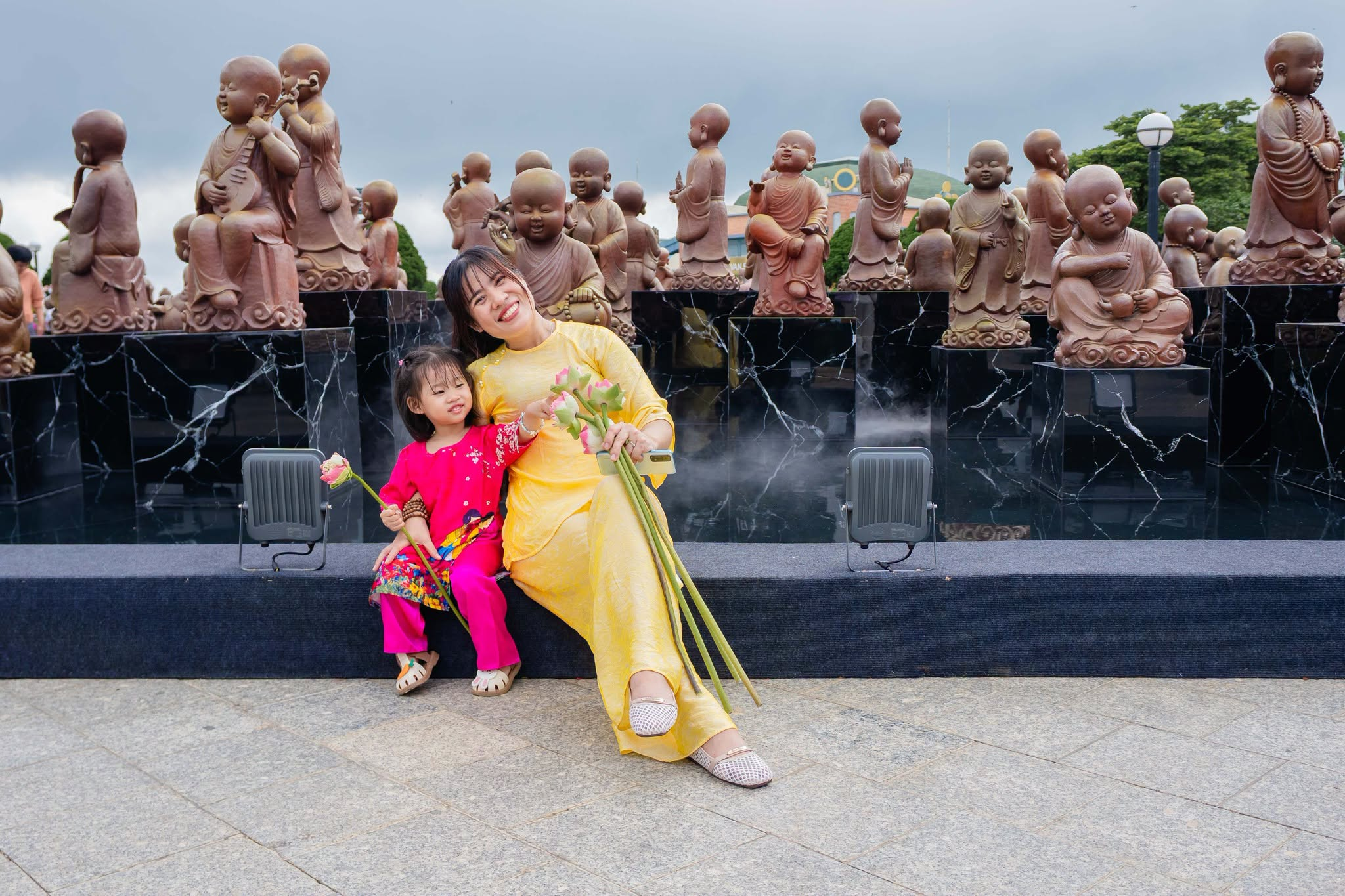
Visitors explore traditional cultural features at Ba Den Mountain in Tay Ninh (Source: Collected)
History provides another major theme for day trips from the city. The Cu Chi Tunnels offer insight into Vietnam's wartime past through an extensive underground network and surrounding historical areas. Other destinations introduce travelers to regional architecture, traditional settlements and communities shaped by the development of Southern Vietnam over different periods. Combining these experiences can provide greater context than exploring individual landmarks in isolation. Culture can also be experienced through everyday life. Traveling into the Mekong Delta or the countryside surrounding Ho Chi Minh City gives visitors opportunities to encounter local markets, orchards, waterways, traditional food and small-scale production. Rather than focusing solely on monuments, these journeys allow travelers to observe how local communities interact with their natural surroundings and maintain customs that continue to shape daily life.
The variety of cultural day trips from Ho Chi Minh City also makes it possible to choose an itinerary based on personal interests. History enthusiasts can focus on wartime heritage, travelers interested in spirituality can explore Tay Ninh and Ba Den Mountain, while those seeking local experiences can head toward the Mekong Delta and riverside communities. With an early departure and a carefully planned route, a single day outside Ho Chi Minh City can introduce travelers to a much broader picture of Southern Vietnam's history, beliefs and ways of life.
2. Best Cultural Day Trips from Ho Chi Minh City
2.1. Tay Ninh and Ba Den Mountain
Tay Ninh is one of the most rewarding destinations for travelers interested in the religious and spiritual heritage of Southern Vietnam. A day trip can combine Ba Den Mountain with the Cao Dai Holy See, creating a journey that introduces two distinctive aspects of the province's cultural identity. Leaving Ho Chi Minh City early in the morning provides more time to explore both destinations at a comfortable pace.
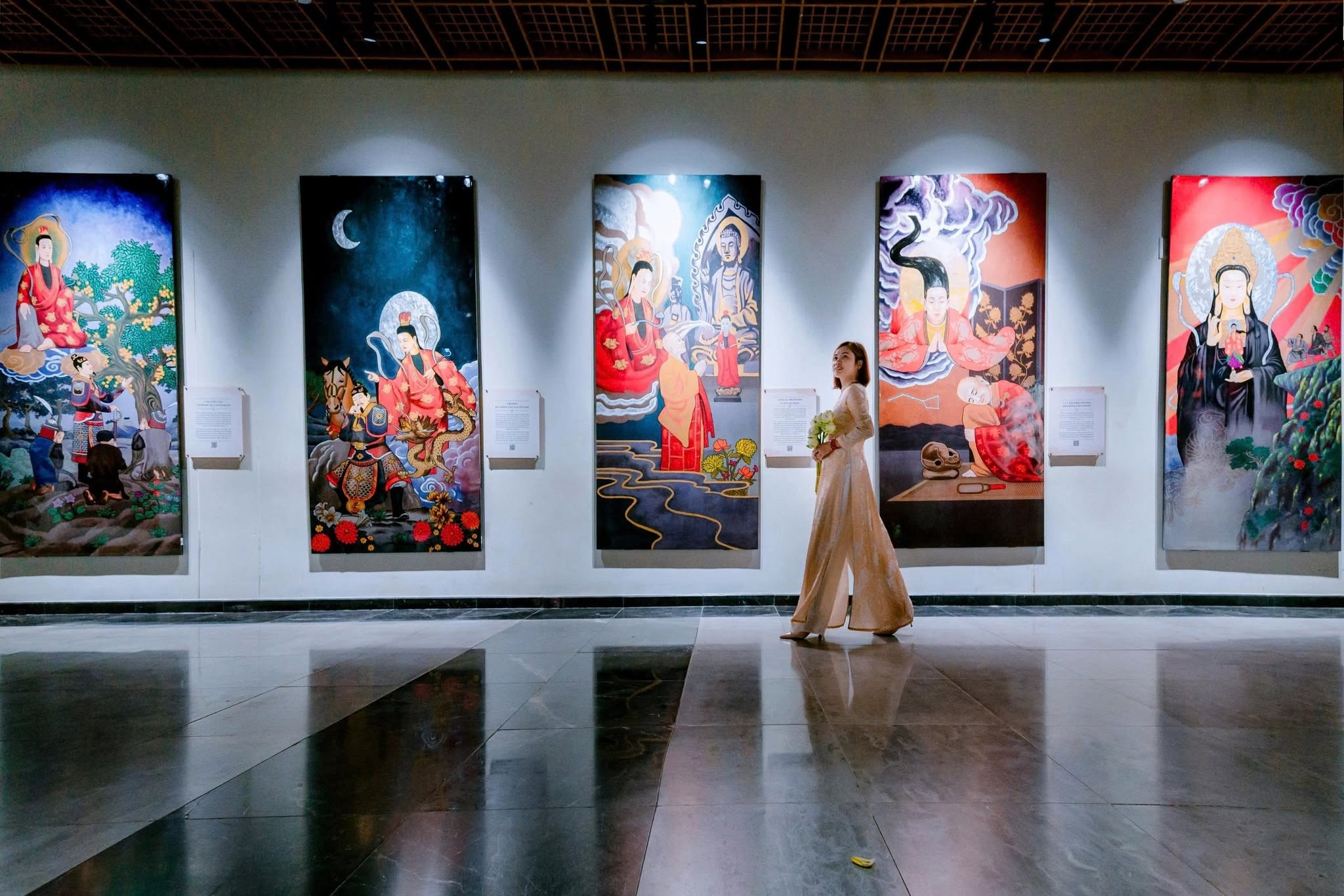
Visitors can learn about Buddhism and other beliefs through the art exhibition at Ba Den Mountain in Tay Ninh (Source: Collected)
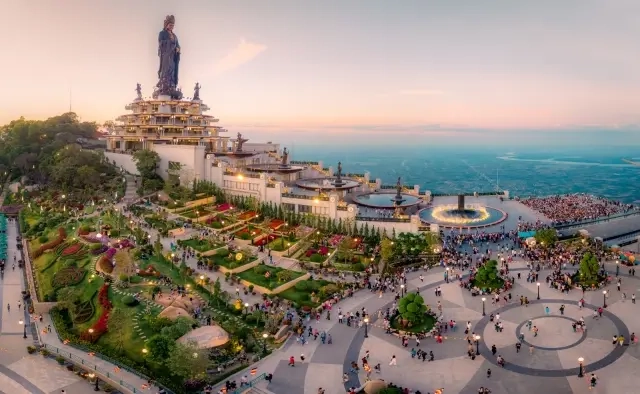
At Ba Den Mountain, visitors can discover a spiritual landscape surrounded by impressive natural scenery. Rising 986 meters above sea level and known as the “Rooftop of Southern Vietnam”, the mountain is home to Ba Pagoda and the Ba Den Mountain spiritual complex. Visitors can take the cable car to different areas of the mountain, admire the Tay Bo Da Son Bodhisattva Statue and explore religious spaces while enjoying panoramic views across Tay Ninh.
The journey can continue to the Cao Dai Holy See, the center of Caodaism in Tay Ninh. Its colorful architecture, elaborate decorative details and distinctive religious symbolism provide an introduction to a faith that originated in Southern Vietnam. Together, these two destinations make Tay Ninh particularly suitable for cultural day trips from Ho Chi Minh City focused on religion, architecture and local heritage.
2.2. Cu Chi Tunnels
The Cu Chi Tunnels offer one of the most accessible historical excursions from Ho Chi Minh City. The extensive underground network provides insight into wartime life and the ways in which the tunnels were used for communication, shelter, storage and other activities. Exploring selected tunnel sections allows visitors to understand the scale and complexity of the system from a closer perspective.
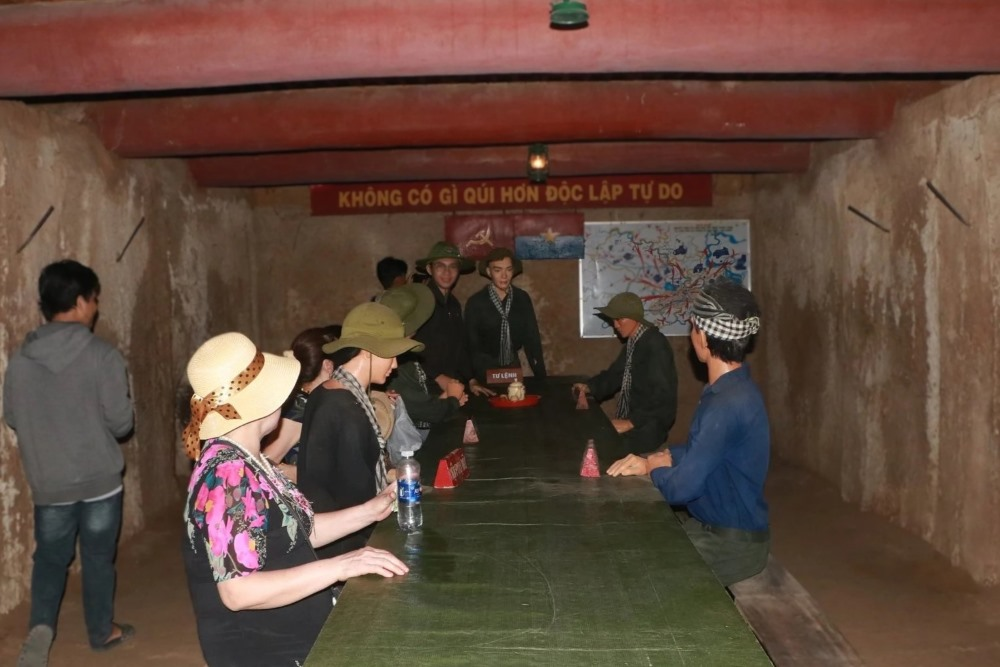
Visitors explore the history and culture of the Cu Chi Tunnels (Source: Collected)
Beyond the underground passages, travelers can explore historical displays and reconstructed facilities that provide additional context for the site. Allowing several hours for the visit gives enough time to explore the main areas, listen to historical explanations and understand the relationship between the tunnel network and the surrounding landscape.
Cu Chi can be visited as a standalone day trip or combined with Tay Ninh for travelers who want to connect historical and religious experiences. The combination provides contrasting perspectives on Southern Vietnam, moving from wartime heritage to the spiritual traditions and architecture found farther northwest.
2.3. My Tho and the Mekong Delta
My Tho offers an accessible introduction to the landscapes and river culture of the Mekong Delta. A day trip from Ho Chi Minh City typically shifts the experience away from urban sightseeing toward waterways, orchards and communities whose daily lives are closely connected to the river. Travelers can explore sections of the Mekong by boat, visit local gardens and discover regional products and food. Smaller waterways provide a closer perspective on the lush vegetation and riverside environment, while stops in local communities can introduce visitors to traditional activities and agricultural livelihoods.
The cultural value of the journey lies not only in individual attractions but also in observing the relationship between people and the waterways. For travelers interested in local lifestyles, cuisine and rural landscapes, the Mekong Delta provides a distinctly different experience from the historical monuments and religious sites found closer to Ho Chi Minh City.
2.4. Ben Tre and coconut-growing communities
Ben Tre offers another perspective on Mekong Delta culture, with coconut groves, waterways and rural communities defining much of the landscape. The province is particularly suitable for travelers who want to move beyond the larger tourism centers and spend more time experiencing the everyday character of the delta.
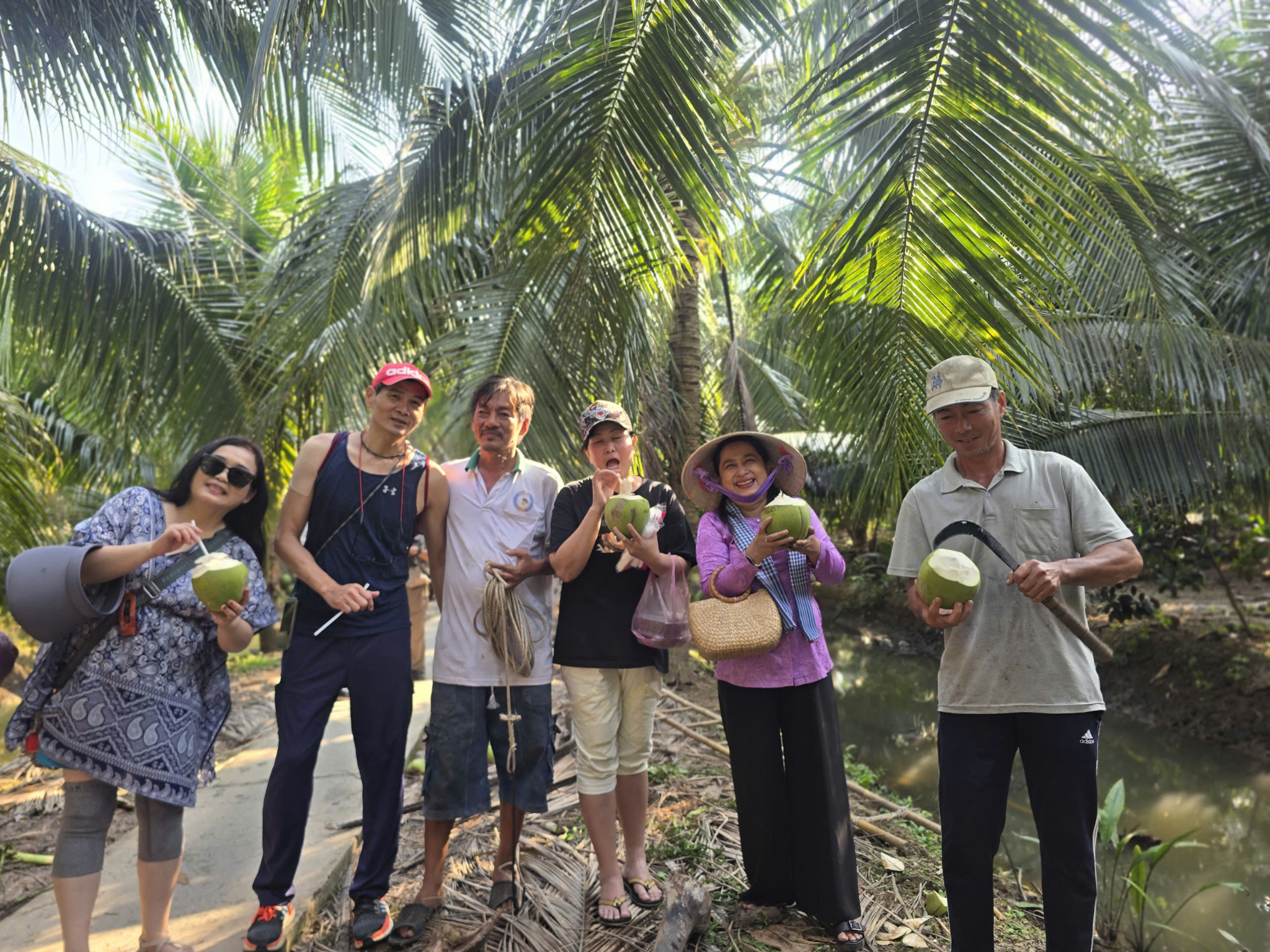
Ben Tre is known as the "coconut capital" of Vietnam (Source: Collected)
A typical visit can include boat journeys along rivers and smaller canals, walks through tropical gardens and stops where travelers can learn about products made from coconuts and other local ingredients. These experiences demonstrate how agriculture remains connected to food, handicrafts and household economies across the region.
Among the cultural day trips from Ho Chi Minh City, Ben Tre is particularly appealing for travelers interested in community life and traditional livelihoods. The slower rhythm of the countryside provides a contrast to Ho Chi Minh City while remaining suitable for a full-day excursion.
2.5. Vung Tau and its coastal heritage
Vung Tau combines coastal scenery with religious landmarks and traces of the city's historical development. While many visitors travel here primarily for the beaches, the destination also offers temples, religious monuments and architectural sites that can add a cultural dimension to a seaside day trip. Travelers can combine sightseeing around the city with visits to spiritual landmarks before spending time along the coastline. Exploring different neighborhoods also reveals a destination shaped by its long relationship with the sea, tourism and the development of southern Vietnam's coastal economy.
This combination makes Vung Tau suitable for visitors who want a cultural journey without giving up the opportunity to enjoy the coast. A well-planned day can balance architecture, spirituality, local seafood and ocean scenery before returning to Ho Chi Minh City.
2.6. Can Gio and its coastal communities
Can Gio provides a cultural experience shaped strongly by the natural environment. Although it forms part of Ho Chi Minh City, the district feels considerably different from the urban center, with mangrove forests, waterways, fishing communities and coastal landscapes defining much of the area.
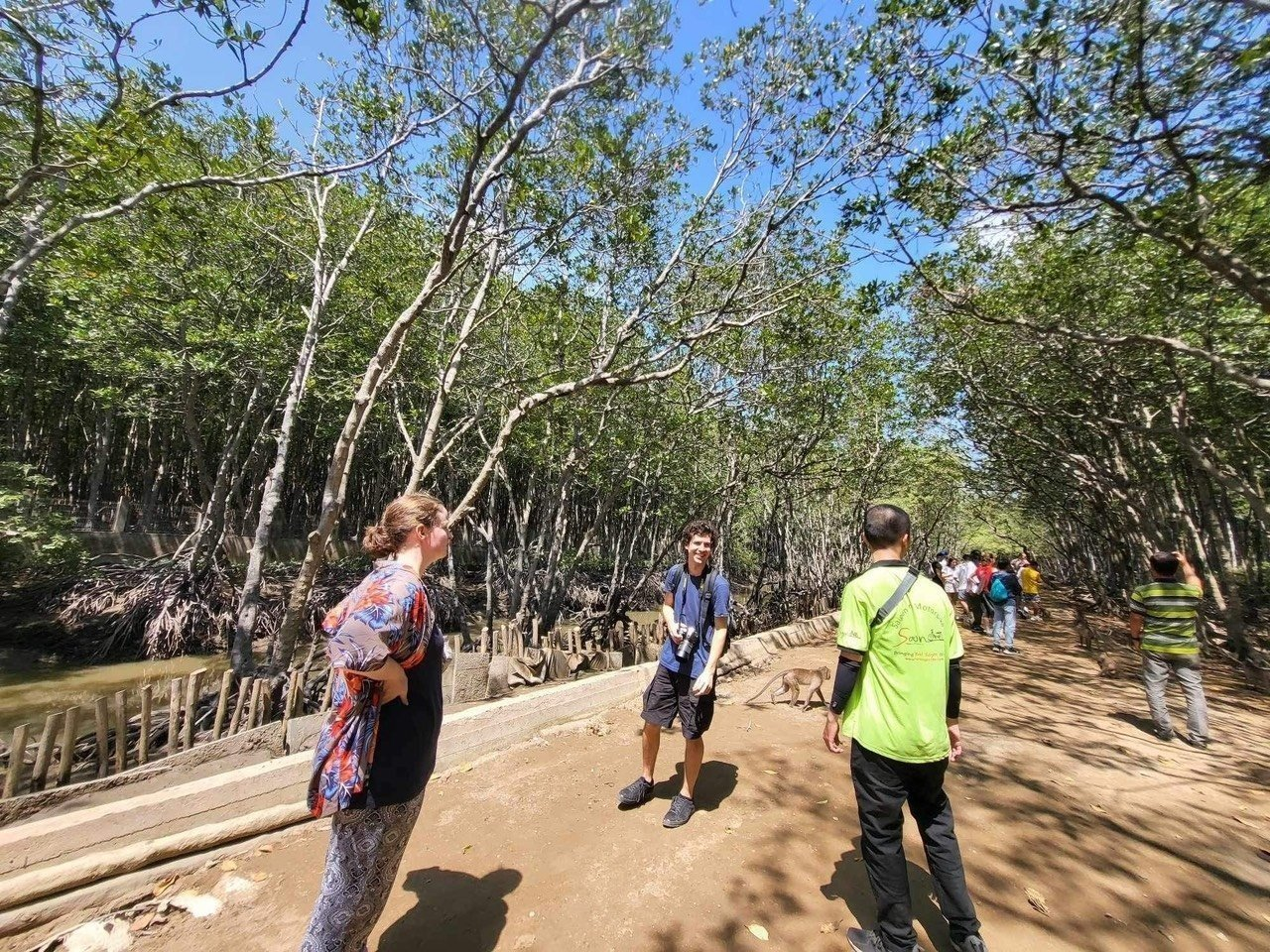
Foreign tourists enjoy exploring Can Gio (Source: Collected)
Travelers can explore the mangrove environment while also learning about communities whose livelihoods have historically depended on the sea and surrounding waterways. Local seafood, fishing activities and coastal settlements provide another perspective on everyday life in Southern Vietnam.
A Can Gio excursion works particularly well for travelers who want to combine culture with ecology. Instead of focusing on monumental architecture, the journey highlights how communities interact with mangrove and coastal ecosystems, making it a distinctive alternative to more conventional sightseeing routes.
2.7. Long An and the gateway to the Mekong Delta
Long An is often passed through on journeys deeper into the Mekong Delta, but the province can also be explored as a destination in its own right. Its countryside features agricultural landscapes, waterways and communities that provide an accessible introduction to rural life outside Ho Chi Minh City. Travelers can explore local landscapes, visit cultural or religious sites and spend time observing the slower rhythms of the countryside. Depending on the selected route, the journey can also include wetland environments and local food experiences, providing a mixture of nature and culture within the same day.
Because of its location between Ho Chi Minh City and the wider Mekong Delta, Long An works well for travelers who have limited time but still want to experience a setting beyond the metropolitan area. It offers a quieter approach to discovering Southern Vietnam's agricultural and rural character.
2.8. Thu Dau Mot and traditional heritage in Binh Duong
Thu Dau Mot and surrounding areas of Binh Duong provide an alternative cultural excursion north of Ho Chi Minh City. The region has long-standing connections with traditional crafts, religious architecture and the development of communities around the Saigon River. Visitors can explore pagodas, local neighborhoods and places associated with traditional craft production. Ceramics and lacquerware are among the cultural products historically linked with Binh Duong, making the province particularly interesting for travelers who want to learn more about craftsmanship alongside architecture and local history.
Compared with better-known excursions such as Cu Chi or the Mekong Delta, Binh Duong can offer a less conventional addition to a Southern Vietnam itinerary. Its combination of religious landmarks, traditional crafts and local urban heritage provides another perspective on cultural day trips from Ho Chi Minh City.
From the spiritual landscape of Ba Den Mountain and the distinctive religious heritage of Tay Ninh to the Cu Chi Tunnels, Mekong Delta waterways and traditional communities, cultural day trips from Ho Chi Minh City offer many ways to experience Southern Vietnam beyond the city center. Whether travelers are interested in history, spirituality, architecture or local lifestyles, each journey reveals a different aspect of the region's cultural identity and can add greater depth to a Southern Vietnam itinerary.


