




1. Mapping a Tay Ninh Historical Tour
A Tay Ninh Historical Tour Guide usually highlights temples, mountains, and military bases, but the experience becomes richer when approached as a continuous narrative of the land itself rather than a checklist of isolated sites. The most meaningful route moves logically from the spiritual heights of the mountains to the architectural wonders of religious tolerance, then back in time to ancient civilizations, and finally deep into the forests where modern history was written. Traveling first to Ba Den Mountain introduces the sacred geography that served as both a shrine and a fortress, setting the stage for the rest of the journey. Continuing to the nearby ancient Cham Towers and revolutionary sites reveals the deep layers of human occupation in this borderland, stretching from the Oc Eo culture to the 20th-century wars.
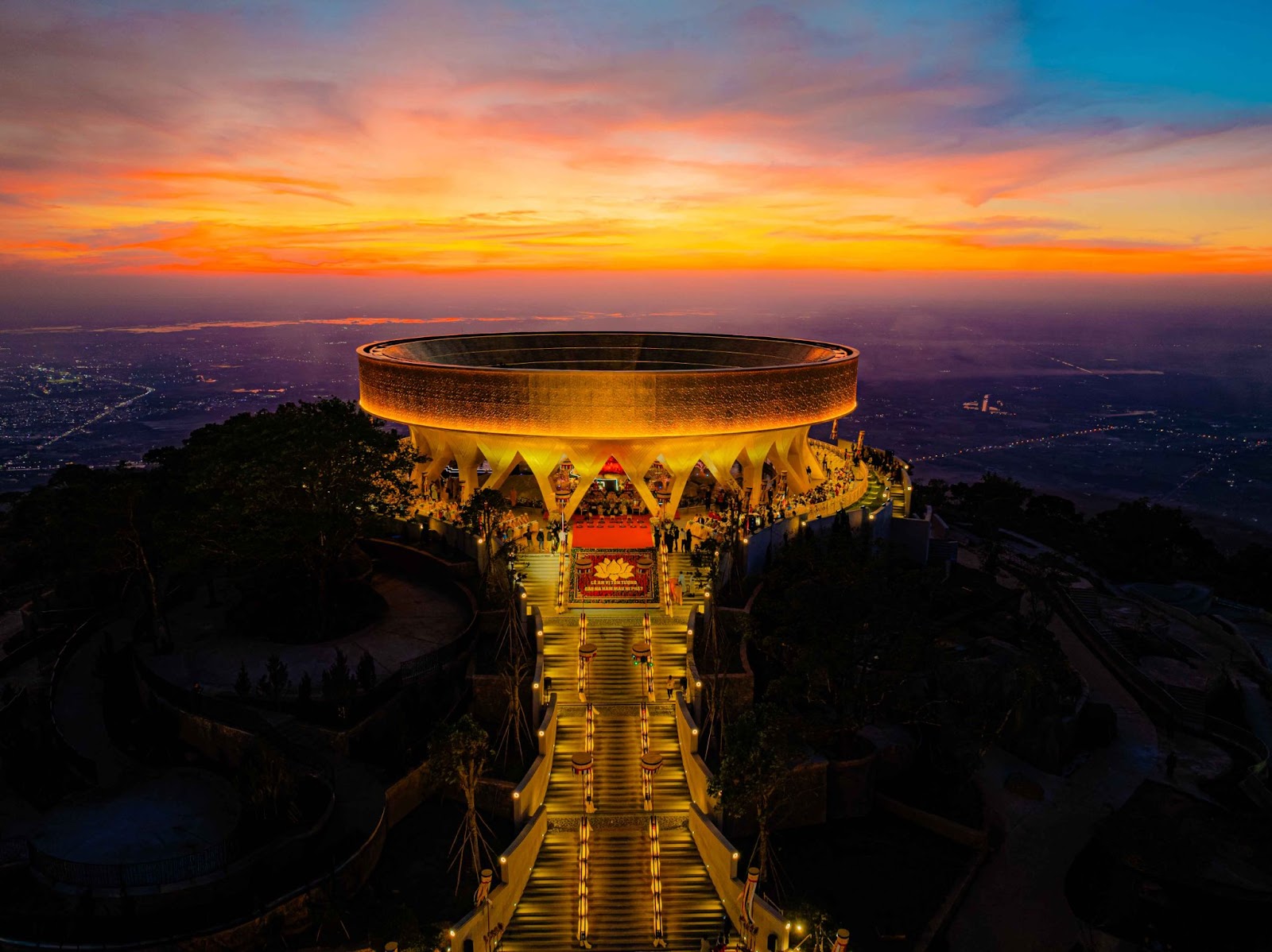
The Udumbara Garden atop Ba Den summit. (Photo: Collected)
Unlike conventional sightseeing checklists, this specific approach values careful observation and context, allowing the visitor to see how geography influenced destiny throughout the region. Many operators now design Tay Ninh Historical Tour Guide options that emphasize the stark contrast between the province’s peaceful present and its fierce, resilient past. The ultimate goal of this itinerary is to understand Tay Ninh not just as a tourist destination, but as a sanctuary of history where every stone has a story to tell.
2. Tay Ninh Historical Tour Guide: The sacred mountain
2.1. Sun World Ba Den Mountain
A Tay Ninh Historical Tour Guide invariably begins with the province's most iconic landmark, Ba Den Mountain, which rises 986 meters above the Mekong Delta as the “Roof of the South”. For centuries, this granite peak has been the spiritual domain of the Black Virgin Lady (Linh Son Thanh Mau), serving as a beacon of protection for the region’s inhabitants.
During the war, its strategic height made it a contested fortress where caves sheltered soldiers and the summit served as a vital communication relay station against opposing forces. On January 6, 1975, the liberation of Ba Den Mountain marked a critical turning point in the region's history, paving the way for the eventual reunification of the country. Today, visitors can access these historic heights with ease through the Sun World Ba Den Mountain cable car system, which transforms what was once a difficult trek into a scenic flight over the landscape.
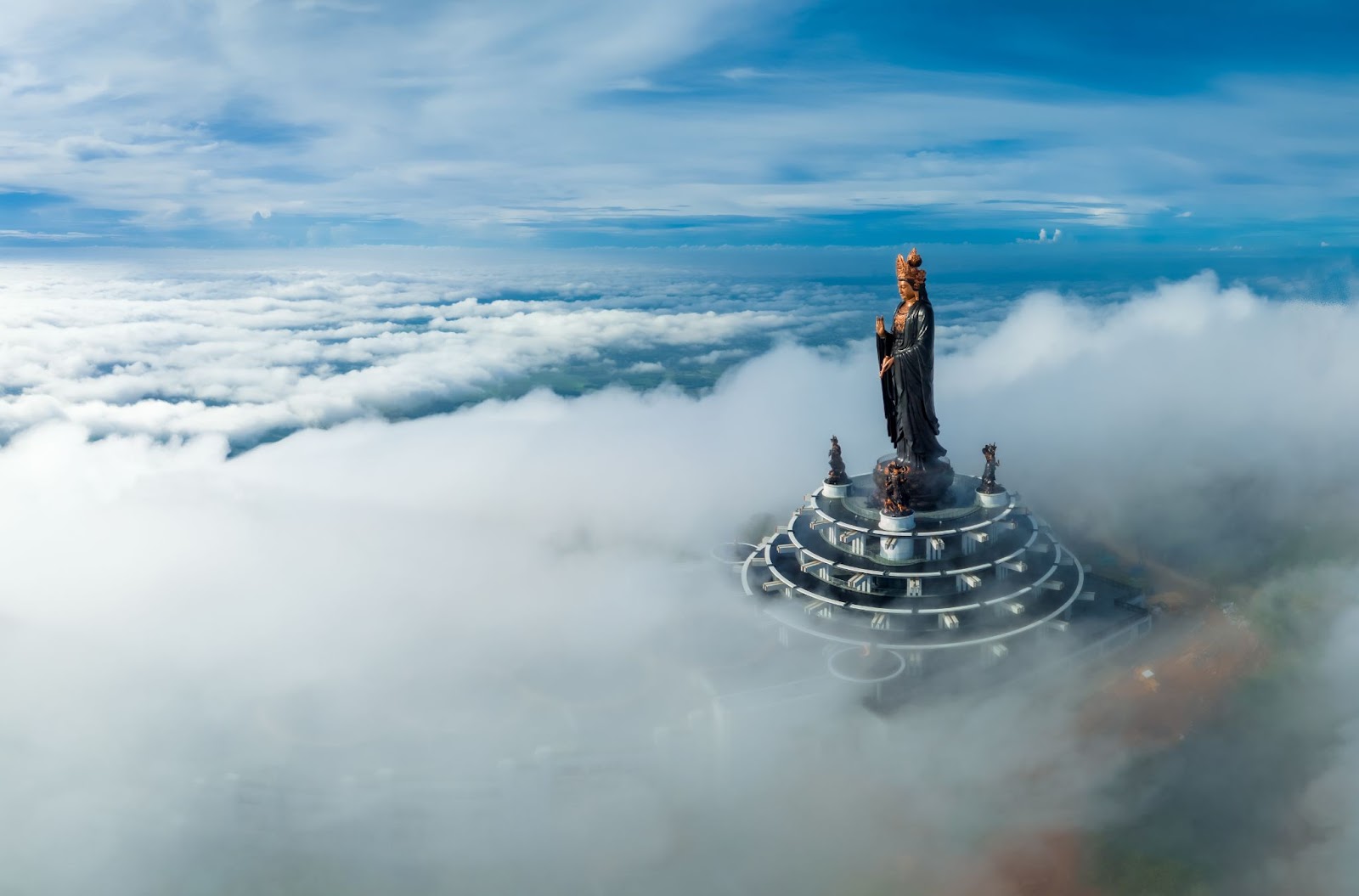
The Tay Bo Da Son Lady Buddha Statue overlooks the entire Ba Den mountain. (Photo: Collected)
Once at the summit, the experience continues with world-class spiritual monuments that define the modern appeal of the mountain. A comprehensive Tay Ninh Historical Tour Guide here goes beyond the clouds to visit the Tay Bo Da Son Lady Buddha, a 72-meter masterpiece cast from over 170 tons of red bronze. Standing as the tallest bronze Lady Buddha on a mountain peak in Asia, it symbolizes compassion and protection for the region. Nearby, visitors are awestruck by the Great Maitreya Buddha, an architectural marvel assembled from 6,688 individual sandstone blocks stacked in 54 stepped layers, weighing over 5,000 tons.
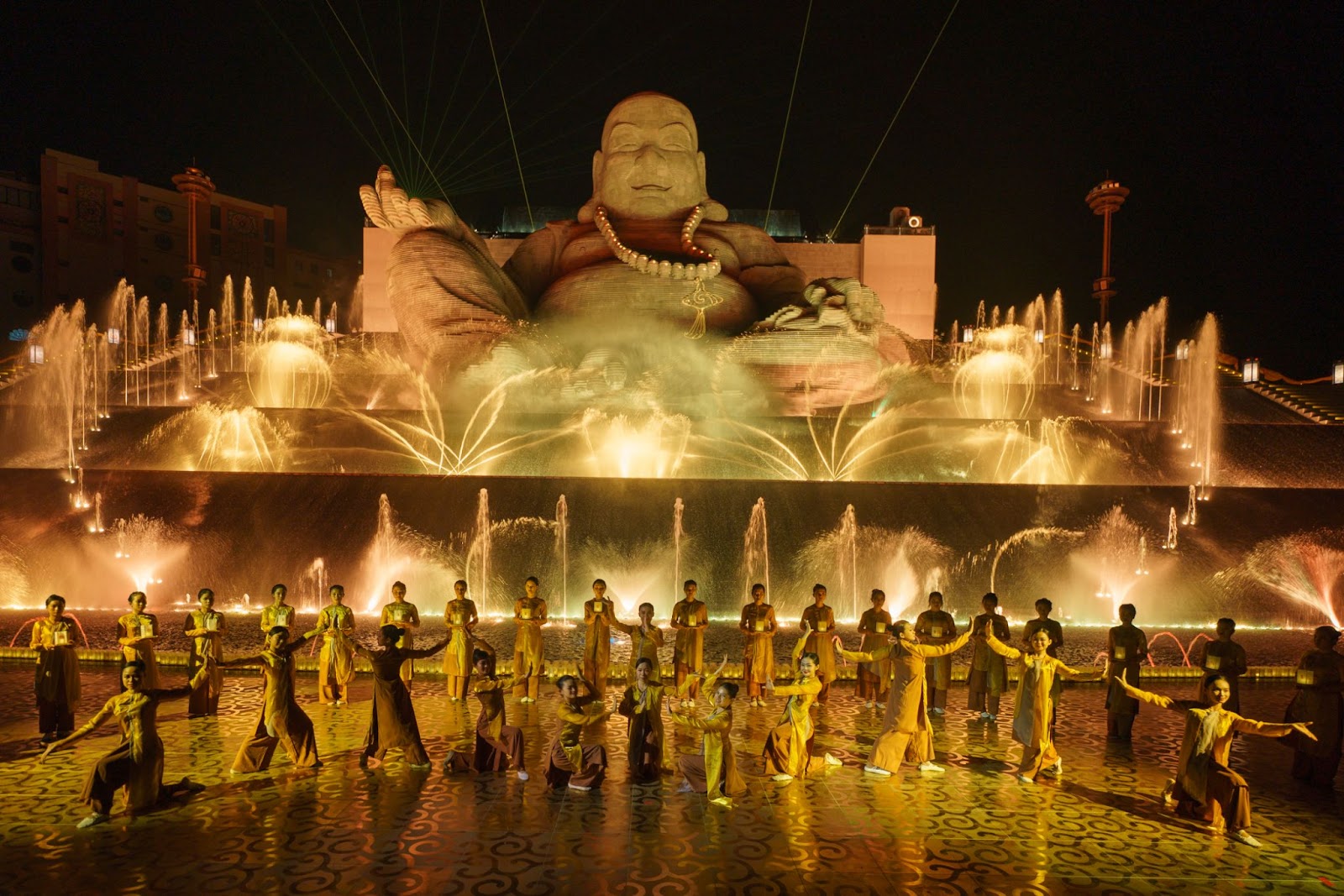
The largest sandstone Buddha statue – Great Maitreya Buddha Statue. (Photo: Collected)
Completing this sacred trilogy is the Konagamana Buddha, a 7.2-meter statue coated in brilliant 24k gold leaf seated in the Udumbara Garden. These architectural marvels are not just tourist attractions but are imbued with deep spiritual significance, making the mountain a perfect blend of past legend and present-day magnificence.
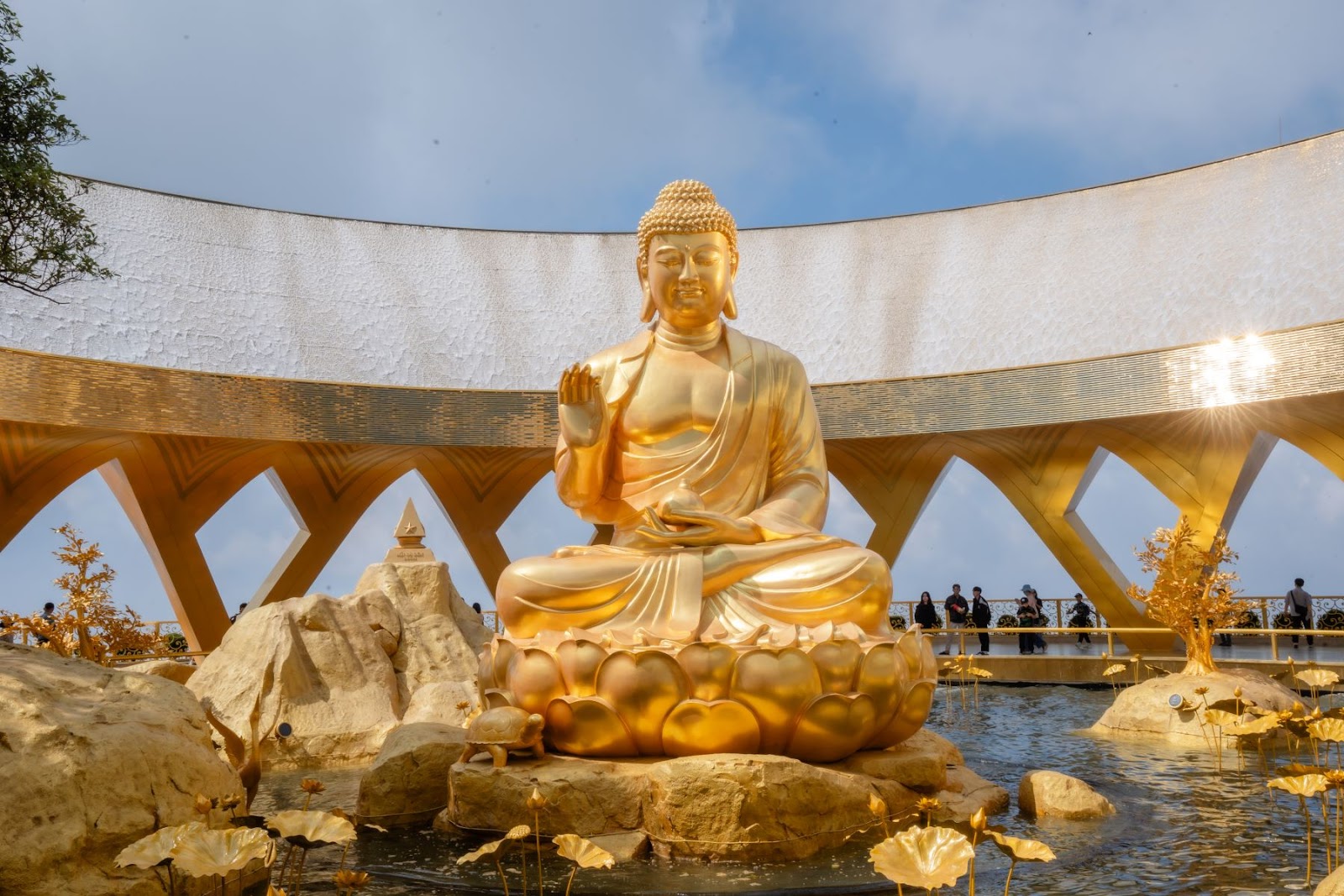
The Konagamana Buddha Statue – “Buddha comes from Gold” – completes the holy trinity atop Ba Den mountain. (Photo: Collected)
See more information: https://sunworld.vn/en/ba-den
2.2. Kim Quang Cave
Kim Quang Cave is a site of immense historical pride located on the slopes of the mountain, serving as a testament to the resilient spirit of the local army. A Tay Ninh Historical Tour Guide highlights this cave as the former garrison of the Toa Thanh district army (Unit C34), which housed 60 comrades during the war. Considered an “inviolable base” of the liberation army, this natural fortress withstood fierce conditions to protect those fighting for independence. The cave’s strategic location and natural fortification allowed the revolutionary forces to maintain their position against overwhelming odds, making it a legendary stop for anyone researching the military history of the region.
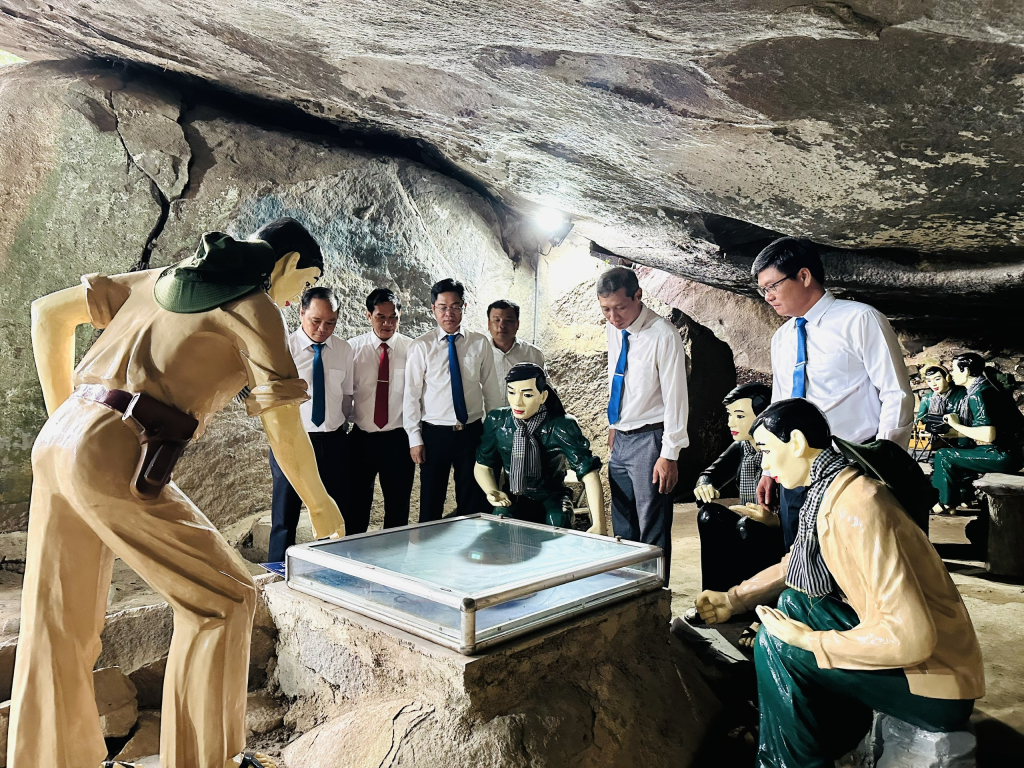
Images recreating wartime activities inside Kim Quang Cave. (Photo: Collected)
The origin of the cave’s name is a fascinating story often shared by locals and documented in every detailed Tay Ninh Historical Tour Guide. After 1954, a monk named Tai, with the religious name Kim Quang, used this secluded cave for meditation and Buddhist worship. In 1960, realizing the intensifying nature of the war, Master Kim Quang selflessly voluntarily vacated the cave, allowing the Revolutionary Army to establish their base there while he returned to the town to practice. In gratitude for his noble sacrifice and support for the revolution, the soldiers named the cave after him. Visiting this site today offers a blend of spiritual history and revolutionary gratitude, honoring both the monk's compassion and the soldier’s bravery.
See more information: https://sunworld.vn/en/ba-den/activities/dong-kim-quang
2.3. Linh Son Tien Thach Pagoda (Chua Ba)
Located at an altitude of 350 meters amidst the mountain slopes, Linh Son Tien Thach Pagoda (commonly known as Chua Ba or Thuong Pagoda) is the spiritual heart of the province. A Tay Ninh Historical Tour Guide identifies this as the oldest temple in Tay Ninh, dating back to its formation in 1745 and initial construction in 1763 by Zen Master Dao Trung (Thien Hieu), also known as “To Bung Dia”. Covering an area of over 6,000 square meters, the pagoda is not just a place of worship but a historical vestige marking the arrival of the first inhabitants and Buddhism in the region. It stands as a testament to the enduring faith of the local people, preserving the legend of the Black Virgin Lady (Linh Son Thanh Mau) who protects the land.
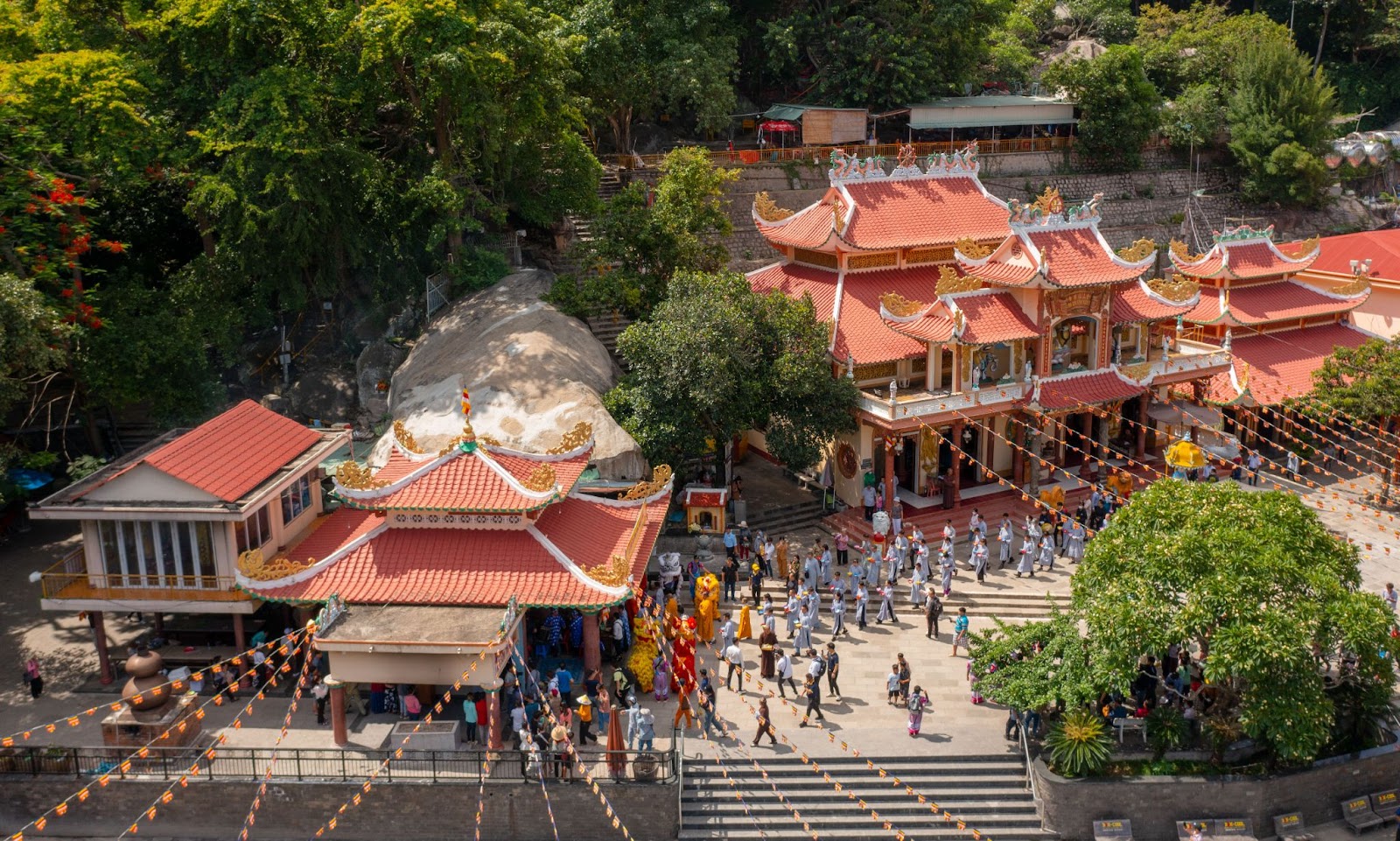
Ba Pagoda - A 300-year-old temple on Ba Den Mountain. (Photo: Collected)
The history of the pagoda is also a story of resilience through wartime destruction, a key theme in any Tay Ninh Historical Tour Guide. The original monastery system was completely destroyed during the French occupation and suffered further devastation from bombings during the resistance war against America. However, in 1956, Venerable Master Giac Dien organized a major restoration to rebuild the sanctuary. Today, visitors can admire the reconstructed temple which retains its sacred atmosphere and architectural harmony with the surrounding granite cliffs. Visiting Linh Son Tien Thach Pagoda offers a profound connection to the past, honoring both the spiritual heritage and the determination to rebuild from the ashes of war.
See more information: https://sunworld.vn/en/ba-den/activities/chua-ba
3. Tay Ninh Historical Tour Guide: The ancient and religious heritage
3.1. Binh Thanh Ancient Tower (Cham Tower)
Traveling back over a millennium, the Tay Ninh Historical Tour Guide leads visitors to the Binh Thanh Ancient Tower, a rare survivor of the Oc Eo culture. Dating back to the 8th or 9th century, this tower is one of the few remaining architectural masterpieces of the ancient civilization that once thrived in the Mekong Delta.
The tower stands remarkably intact, showcasing the incredible brick-laying technique of the ancients who built without mortar, yet created structures that have withstood centuries of weathering and war. Visiting Binh Thanh Tower allows travelers to touch the ancient soul of the land, connecting with a history that predates the modern borders of Vietnam.
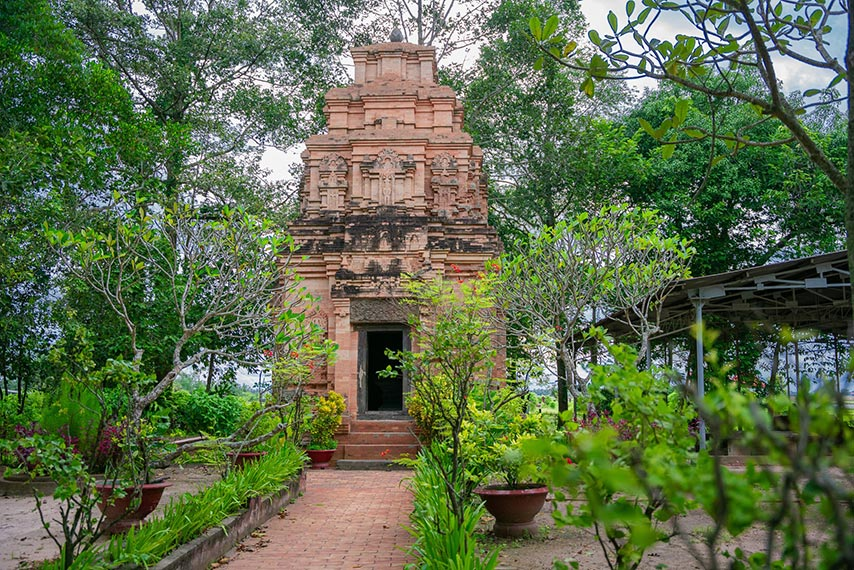
Binh Thanh Ancient Tower – A masterpiece of Oc Eo culture over 1,000 years old. (Photo: Collected)
The tower is situated in a tranquil setting, surrounded by rice fields, offering a stark and beautiful contrast to the bustling modern temples elsewhere in the province. A knowledgeable Tay Ninh Historical Tour Guide will point out the intricate carvings on the lintels and the architectural precision that aligns the tower with cardinal directions, reflecting the cosmological beliefs of its builders. It serves as a silent guardian of time, reminding visitors that Tay Ninh has been a crossroads of cultures and civilizations for over a thousand years.
See more information: https://www.originvietnam.com/destinations/binh-thanh-ancient-tower/
3.2. The Cao Dai Holy See
Leaving the ancient world, a Tay Ninh Historical Tour Guide moves to the province’s unique modern cultural masterpiece, the Holy See, which serves as the Vatican of Caodaism. Built between 1933 and 1955, the Cao Dai Holy See (Toa Thanh Tay Ninh) stands as a monumental testament to the power of faith during the colonial and war eras. The structure itself is a history book made of stone, featuring French cathedral towers, Chinese pagoda roofs, and Islamic geometric details in a dazzling display of color.
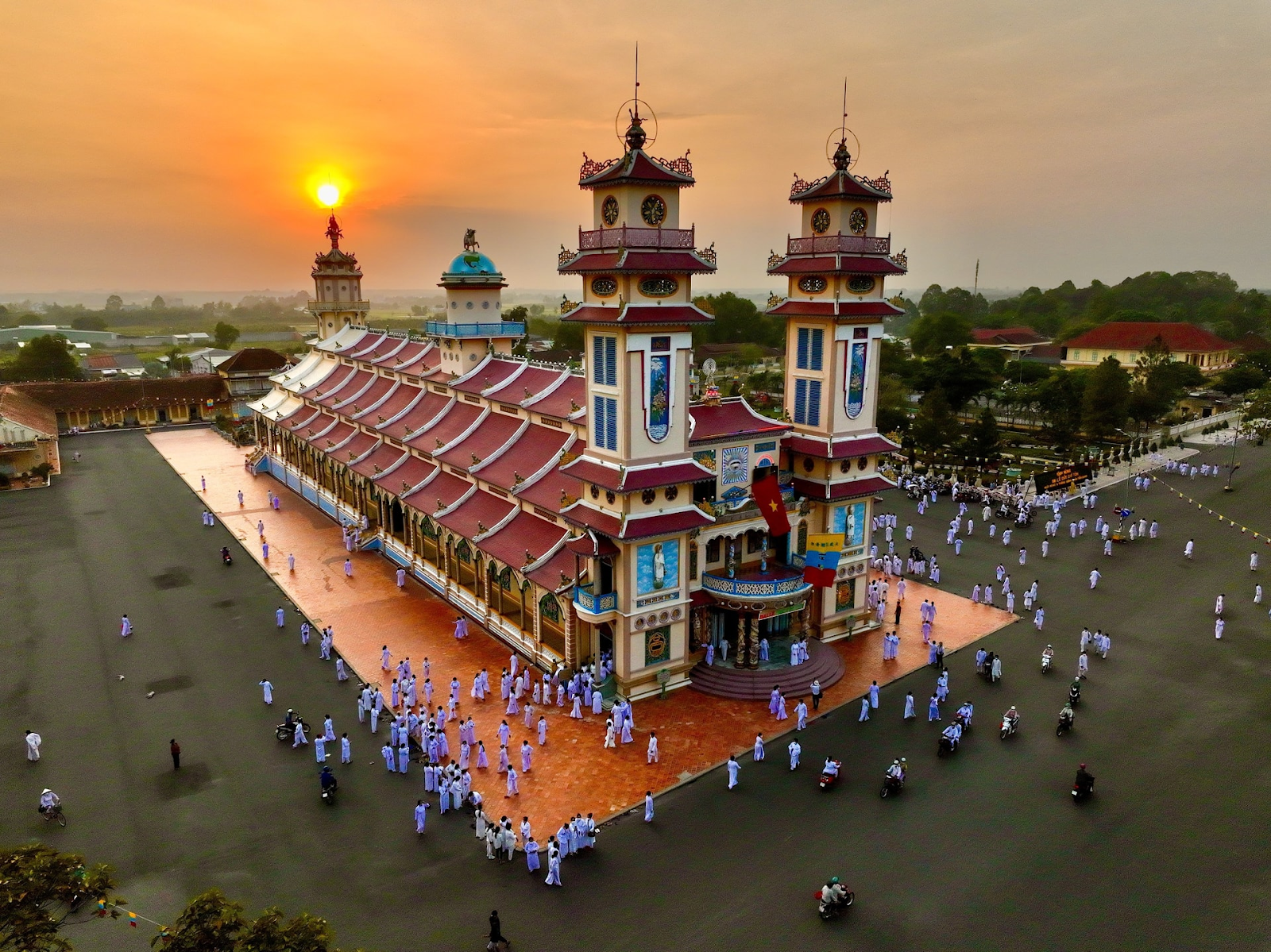
Cao Dai Holy See – a unique religious building of Cao Dai religion. (Photo: Collected)
This architectural fusion represents the core philosophy of Caodaism: the unification of all religions under one supreme truth to promote universal peace. Visitors are often struck by the sheer scale and vibrancy of the temple, which serves as a visual representation of the inclusive and peaceful nature of the faith.
On a professional Tay Ninh Historical Tour Guide, visitors step inside to see the “Divine Eye” watching from the celestial sphere, symbolizing the universal truth of the religion. The noon prayer ceremony is a mesmerizing display of discipline and color, with hundreds of worshippers in white, yellow, blue, and red robes chanting in unison to traditional music.
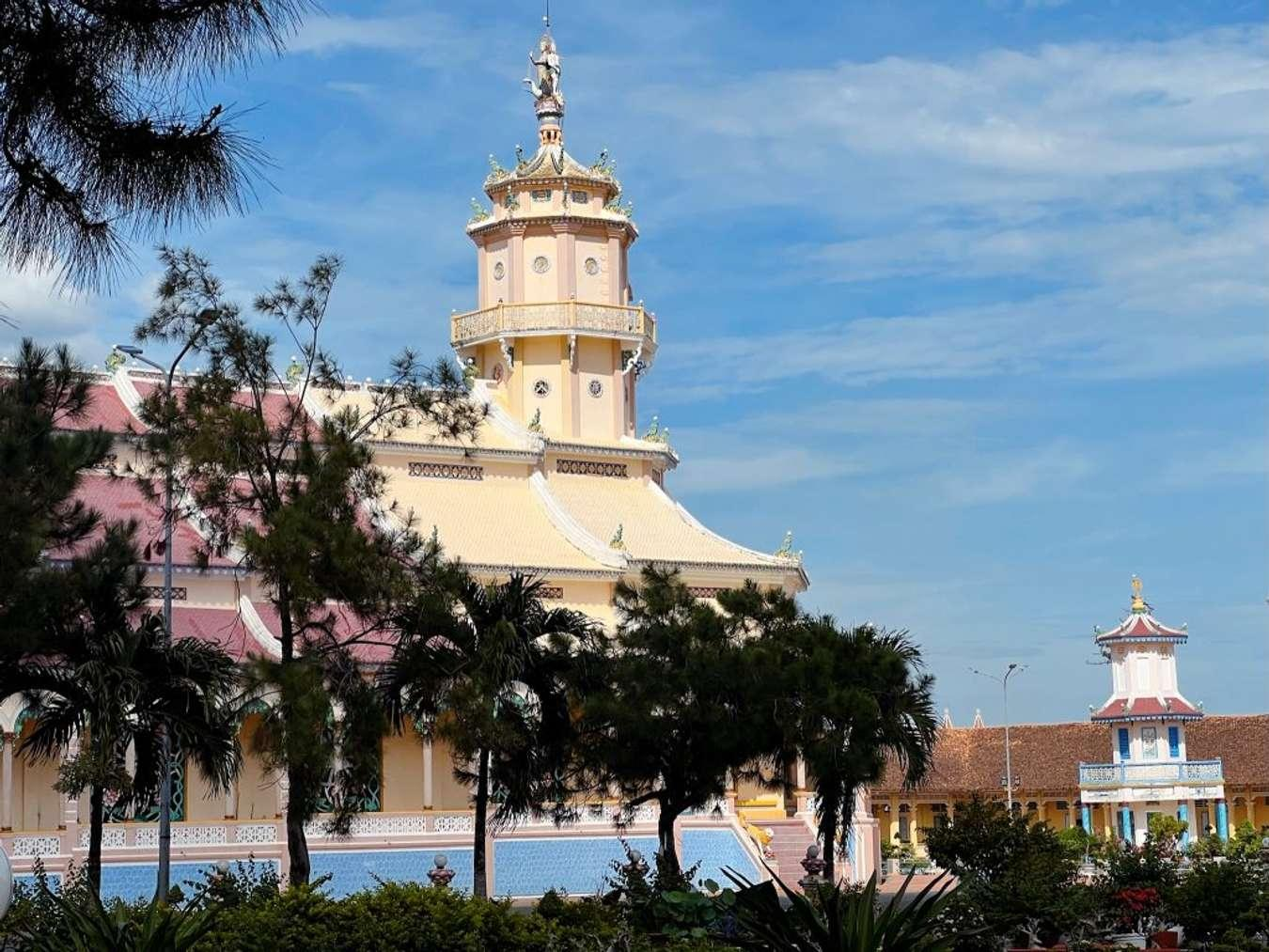
The grounds surrounding the Tay Ninh Holy See. (Photo: Collected)
This visual harmony reflects the religion’s core principle that all faiths are one and come from the same supreme source, regardless of their external differences. It shows how the people of Tay Ninh cultivated a spirit of unity and organization even when the country was deeply divided by war and political ideology.
See more information: https://www.lonelyplanet.com/vietnam/around-ho-chi-minh-city/tay-ninh/attractions/cao-dai-holy-see/a/poi-sig/1390404/357857
3.3. Go Ken Pagoda
A short distance away stands Go Ken Pagoda, one of the oldest Buddhist temples in the region, having been built in the early years of the 20th century. Before the massive Cao Dai Holy See was constructed, Go Ken was the primary center for Buddhism, education, and charity in the province, playing a vital role in local society.
A well-planned Tay Ninh Historical Tour Guide highlights this site as a symbol of the cultural exchange that occurred during the colonial period between East and West. Unique to this site is its distinctive architecture, which blends traditional Vietnamese wooden craftsmanship with Western architectural influences like marble floors and arched windows. This blend of styles reflects the open-mindedness of the region and its ability to adapt external influences while maintaining its core spiritual values.
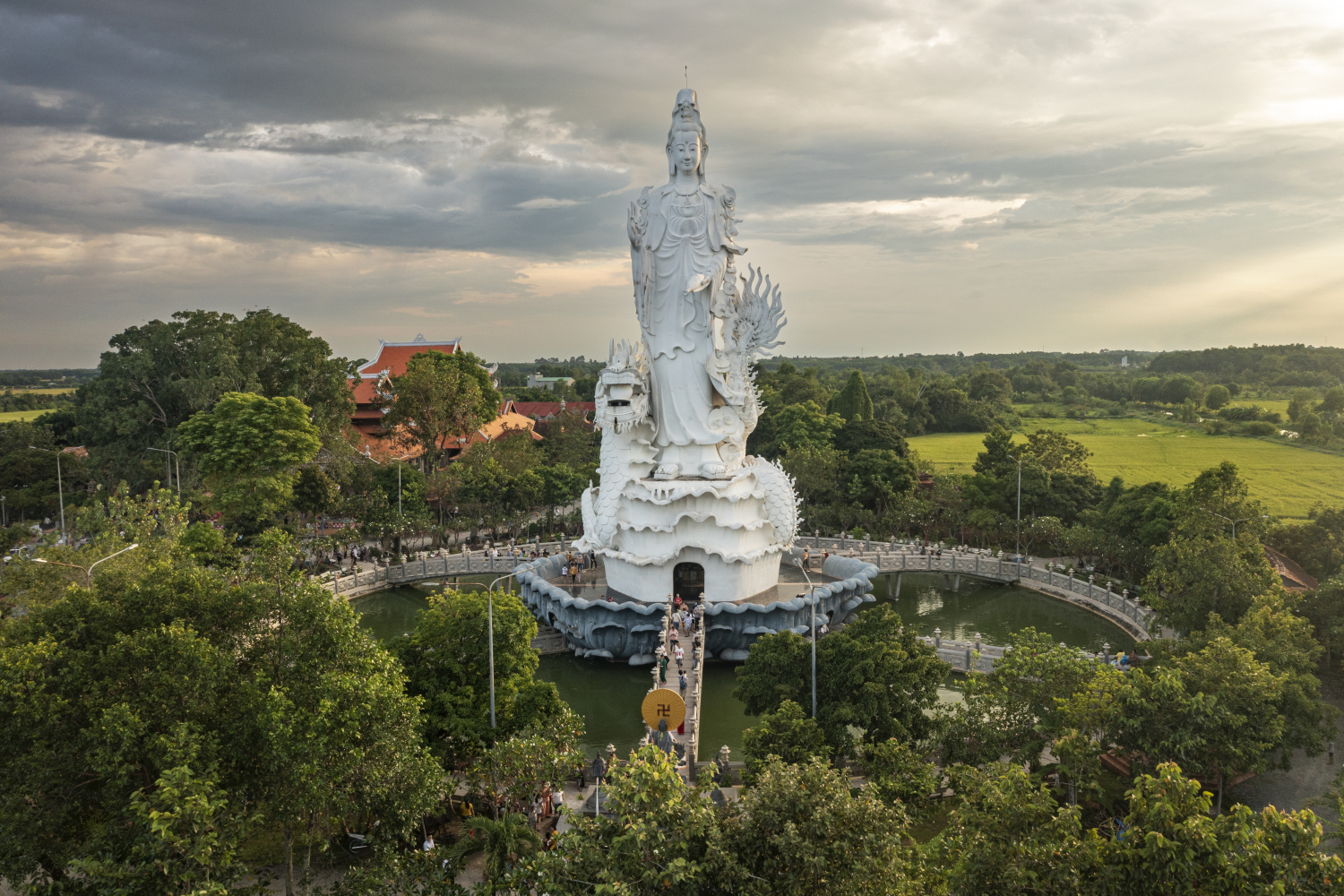
Go Ken Pagoda, Hoa Thanh commune, Tay Ninh province (Photo: Collected)
The statue of Avalokitesvara Bodhisattva standing on a dragon in the lotus pond offers a serene counterpoint to the grandeur of the Holy See and is a favorite spot for photographers.. Go Ken Pagoda represents the deep-rooted Buddhist tradition that runs parallel to the newer Caodaist faith in the region, showing the diversity of religious practice here.
See more information: https://vnanet.vn/en/anh/vna-photos-1027/hundred-year-old-thien-lam-go-ken-pagoda-gives-tranquillity-to-tay-ninhs-people-7400559.html
4. Tay Ninh Historical Tour Guide: The revolutionary strongholds
4.1. Central Office for South Vietnam
The first stop in the revolutionary chapter of a Tay Ninh Historical Tour Guide is the Central Office for South Vietnam, hidden deep in the Rum Duon forest. Known as the “Red Capital”, this site functioned as the strategic headquarters for the revolution in the South from 1962 to 1975. Unlike the urban palaces of Saigon, this was a “forest government” where high-ranking leaders lived in simple thatched huts to evade detection by aerial reconnaissance.
Visitors walk along bamboo-lined paths to see the preserved workspaces of historic figures like Nguyen Van Linh, complete with simple furniture and personal items. The preservation of these humble dwellings offers a powerful insight into the austere lifestyle that defined the revolutionary leadership during the long years of conflict.
The bunkers, connected by miles of fortified trenches, show how safety was maintained through silence and ingenious engineering against heavy bombardment from enemy forces. This site creates a powerful narrative contrast between the simplicity of the facilities and the monumental impact of the decisions made here that shaped the nation. By including the Central Office for South Vietnam in a Tay Ninh Historical Tour Guide, travelers gain a complete picture of the war, moving beyond the combat zones to see the hidden nerve center that directed the course of history.
See more information: https://sunrisehotel.com.vn/can-cu-trung-uong-cuc-mien-nam/
4.2. Duong Minh Chau Base
Deepening the exploration of resistance history, a Tay Ninh Historical Tour Guide must include the Duong Minh Chau Base, a stronghold named after the hero Duong Minh Chau, the first Chairman of the Tay Ninh Resistance Administrative Committee. Established in 1951, this base became a crucial sanctuary for the revolutionary forces during the French colonial war and later the American war. It served not only as a military zone but also as a center for intellect and culture, where artists, writers, and intellectuals gathered to support the resistance cause through their work.
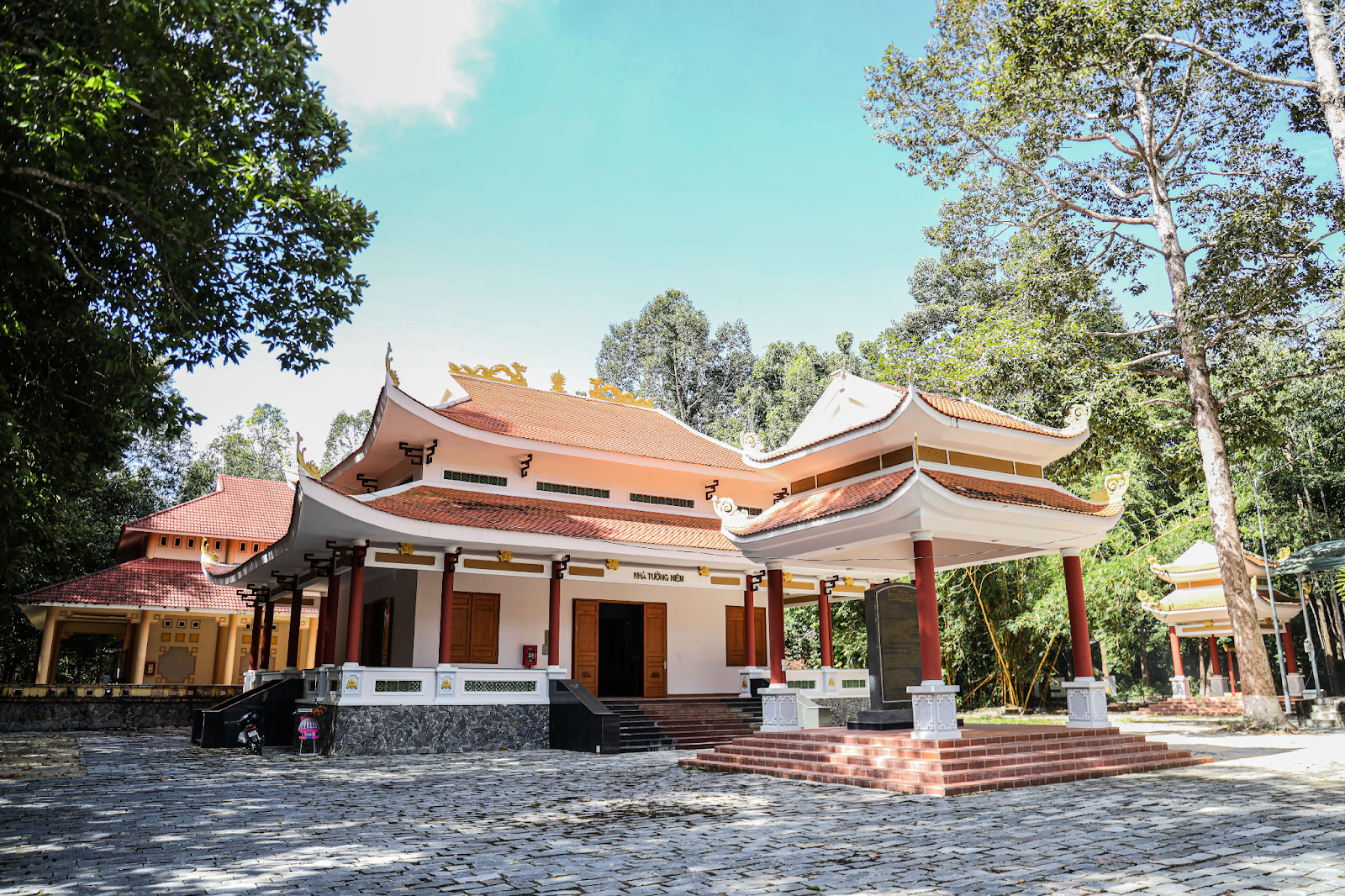
The Duong Minh Chau historical base is a place of historical significance, marking the heroic memories of a difficult period of resistance. (Photo: Collected)
The significance of the Duong Minh Chau Base lies in its role as a bridge between different phases of the Vietnamese revolution. It connected the Eastern region with the Mekong Delta and served as a vital logistics corridor for troops and supplies moving along the border. A detailed Tay Ninh Historical Tour Guide will explain how this base withstood numerous sweep operations and heavy bombardments to remain a defiant symbol of liberation. Visiting the memorial sites here allows travelers to pay tribute to the thousands of soldiers and civilians who laid down their lives in this area.
See more information: https://www.vietnam.vn/en/ve-tham-chien-khu-duong-minh-chau
4.3. Tua Hai Victory Historical Relic
To witness the spark that ignited the revolution in the South, a Tay Ninh Historical Tour Guide leads visitors to the Tua Hai Victory Historical Relic. On the night of January 26, 1960, revolutionary forces launched a daring surprise attack on the Tua Hai regiment headquarters of the Saigon regime. This victory is historically celebrated as the opening shot of the “Dong Khoi” movement in Eastern South Vietnam, shattering the image of invincibility of the opposing forces. The site today features a grand monument and a museum that details the meticulous planning and bravery required to execute this pivotal battle with limited weaponry.
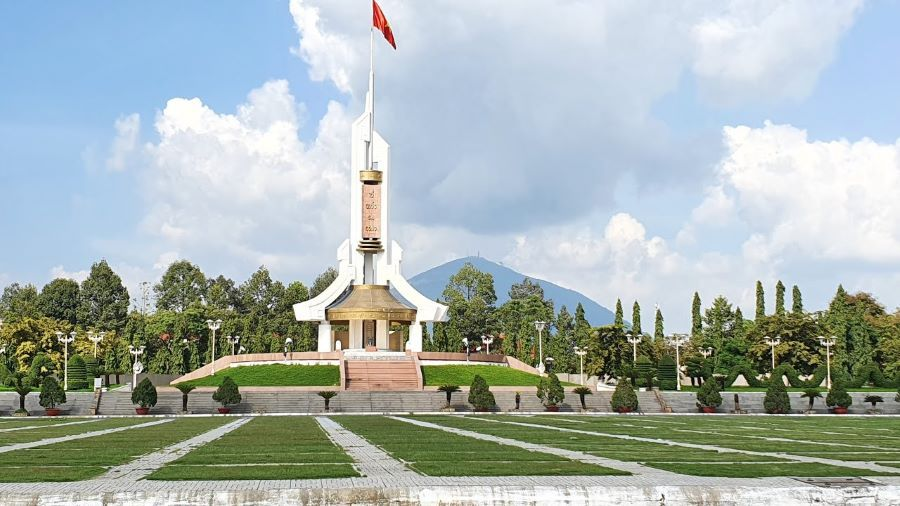
The Tua Hai Victory Monument, a place that records the history of the Đồng Khởi movement. (Photo: Collected)
Standing on the grounds of this former battlefield, visitors can better understand the evolution of military strategy in the Vietnam War. The Tua Hai victory was not just a military success but a massive psychological boost that galvanized the local population to rise up and reclaim control of their villages. The museum displays artifacts and maps that bring the battle to life, offering a dynamic and educational experience. It serves as a powerful concluding chapter to the revolutionary tour, showing where the fire of resistance was first lit.
See more information: https://sunparadiseland.com/en/tin-tuc/journey-to-the-historical-and-cultural-site-of-the-tua-hai-victory-13174
5. Travel Guide for a Tay Ninh Historical Tour
5.1. Preparation and best time to visit
The ideal period to undertake a Tay Ninh Historical Tour Guide is during the dry season, which runs from December to April, ensuring clear skies and accessible paths. This weather is perfect for exploring the outdoor complex of Sun World Ba Den Mountain, allowing for unobstructed views of the Lady Buddha and the surrounding plains. It also ensures that the forest paths at the Central Office for South Vietnam and Duong Minh Chau Base are dry, making the walk through the bunkers comfortable and safe. January, which often coincides with the Lunar New Year, is particularly vibrant with the Spring Festival on Ba Den Mountain and major ceremonies at the Cao Dai Holy See. Planning your trip during these months guarantees the most comfortable experience for exploring both the exposed mountain peaks and the dense forest trails.
For transportation, a private car is the most convenient option, costing about 1,500,000 to 2,000,000 VND for a full-day round trip from Ho Chi Minh City. This flexibility allows you to easily move between scattered sites like the Holy See, the ancient Cham towers, and the remote forest bases without waiting for public transport, which is crucial for a comprehensive Tay Ninh Historical Tour Guide itinerary. Alternatively, high-quality limousine buses run frequently from Ho Chi Minh City to Tay Ninh for a lower cost, though you will need taxis to navigate within the province. To fully experience the mountain, purchasing tickets for the Sun World Ba Den Mountain cable car is essential, with prices varying based on the route and buffet combos chosen. Securing transportation in advance ensures a seamless journey through the province's historical landmarks.
5.2. Tips for an ultimate experience
A meaningful Tay Ninh Historical Tour Guide requires not just logistical planning but also a respectful mindset towards the local culture and history. Since both the temples on Ba Den Mountain and the Cao Dai Holy See are active and sacred religious sites, visitors must strictly adhere to a modest dress code. This means wearing clothing that covers both shoulders and knees to enter the sanctuaries, showing respect for the worshippers and the sanctity of the space.
When observing the spectacular noon mass at the Holy See, it is crucial to remain in the designated visitor balconies and observe silence to avoid disturbing the ritual. Following these cultural etiquettes opens doors to deeper interactions with the locals and a more authentic experience of the spiritual life in Tay Ninh.
At historical sites like the Tua Hai Victory Monument and the Central Office for South Vietnam bunkers, visitors are encouraged to take a moment of silence to appreciate the gravity of the history surrounding them. These were places of immense struggle and sacrifice, and approaching them with humility enriches the travel experience significantly. Engaging with local guides can also provide oral histories and personal anecdotes that are not found in guidebooks, adding a personal layer to the Tay Ninh Historical Tour Guide.


