




1. Overview of Tay Ninh Cao Dai Holy See
When mentioning Tay Ninh, besides prominent destinations like Ba Den Mountain or Dau Tieng Lake, one cannot overlook the Tay Ninh Cao Dai Holy See – a religious structure with unique architecture and the center of the Cao Dai religion in Vietnam. The experience of visiting the Cao Dai Holy See in the most detail is not merely a visit to an architectural work, but also a journey to learn about a distinctive indigenous religion, harmoniously blending culture, beliefs, and architectural art.
The Cao Dai Holy See was built on a large scale, nổi bật (standing out) with an architectural style blending many cultures such as East Asian, Western, and various religious symbols. Right from the entrance, visitors can feel the solemnity and uniqueness of the structure with dragon motifs, clouds, colorful patterns, and two characteristic tall towers. This very combination makes this place one of the most architecturally distinctive religious structures in Vietnam.
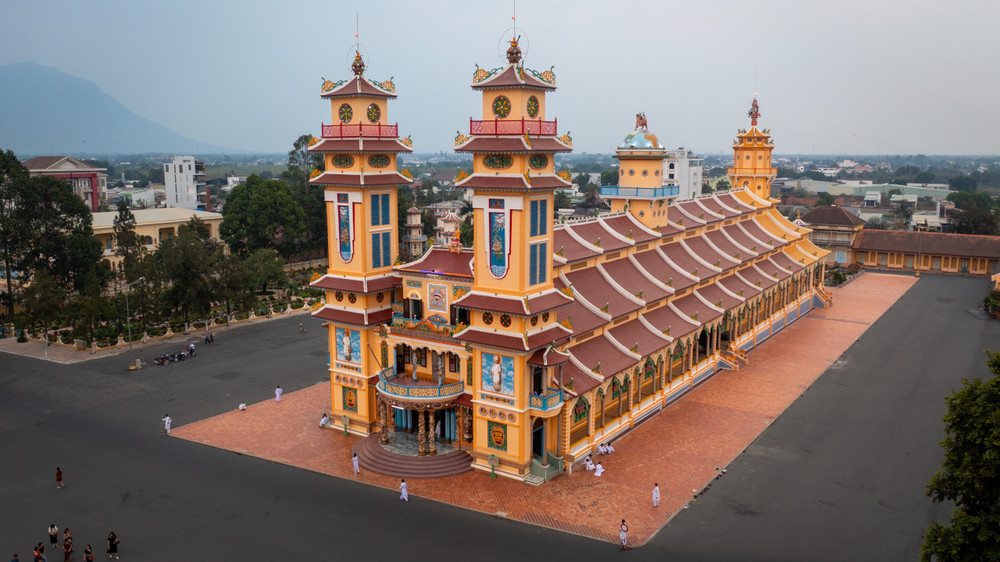
Cao Dai Holy See viewed from the outside
Not only does it hold architectural value, but visiting the Cao Dai Holy See also offers an opportunity for visitors to learn about the Cao Dai religion – a religion formed in Vietnam in the early 20th century, with a philosophy that harmonizes many major religions worldwide. Visitors coming here can observe the daily ceremonies, learn about the doctrine system, and feel the solemn atmosphere during prayer times.
Besides the spiritual aspect, the Holy See is also a prominent check-in spot thanks to its vast space, colorful architecture, and highly symbolic photo opportunities. Therefore, the most detailed experience of visiting the Cao Dai Holy See is not only for pilgrims but also attracts a large number of tourists who love exploring culture, architecture, and photography when visiting Tay Ninh.
2. Architecture and interior space of the Cao Dai Holy See
When starting the most detailed journey of visiting the Cao Dai Holy See , visitors will quickly realize that this is not just a simple religious structure but a particularly symbolic architectural complex of the Tay Ninh Cao Dai Holy See. The entire campus is built with a clear symmetrical layout, spread over a large area, combining religious architectural elements, decorative art, and philosophical spatial thinking. From the first glance, the structure creates a feeling that is both solemn, vibrant, and possesses a cultural depth rarely seen in religious structures in Vietnam.
2.1. Facade and Main Gate
The facade of the Holy See creates the initial impression and stands out as one of the most striking highlights of the visit. The main gate complex is grand in scale and rich in intricate detail; it combines signature shades of green, yellow, and pink to create a look that is both eye-catching and harmonious. Decorative elements—such as dragons, clouds, stylized patterns, and religious symbols—are densely arranged yet avoid visual clutter, instead coming together to form a clearly defined, symbolic whole.
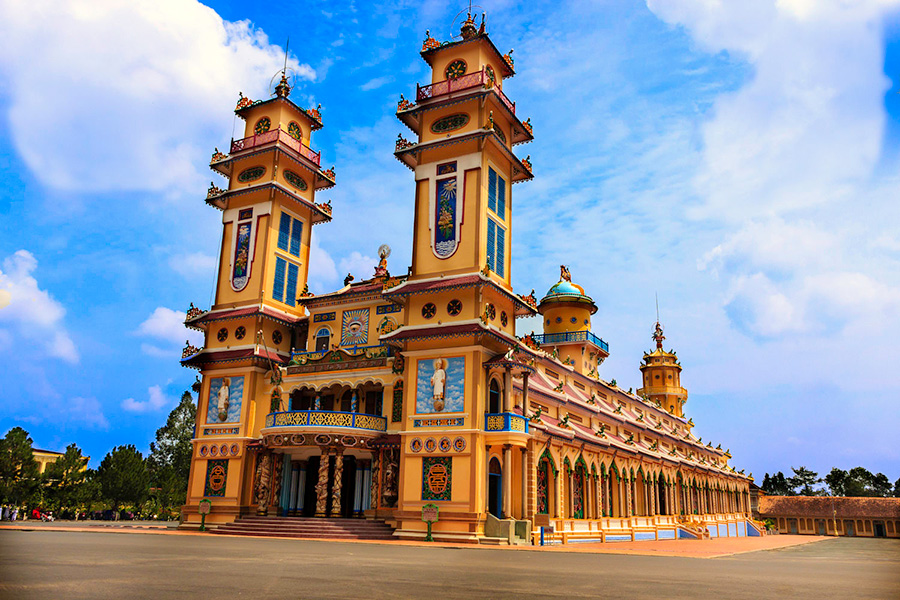
Close-up view of the facade of the Cao Dai Holy See
From the gate area looking in, visitors can immediately feel the grandeur of the structure with its spatial axis extending deep inside. This is also an ideal position to observe the overall architectural panorama, especially during beautiful lighting times of the day, when the structure's colors become more vibrant under natural sunlight.
2.2. Main Hall
The Main Hall is the most important area in the entire complex, where the main ceremonies of the Cao Dai religion take place. The interior space is designed with great height, airy, with rows of brightly colored pillars running along both sides, creating a majestic yet not heavy feeling. On the ceiling and walls are characteristic symbolic motifs, among which the most prominent is the "Thien Nhan" – the sacred eye symbol representing the supreme being in Cao Dai belief.
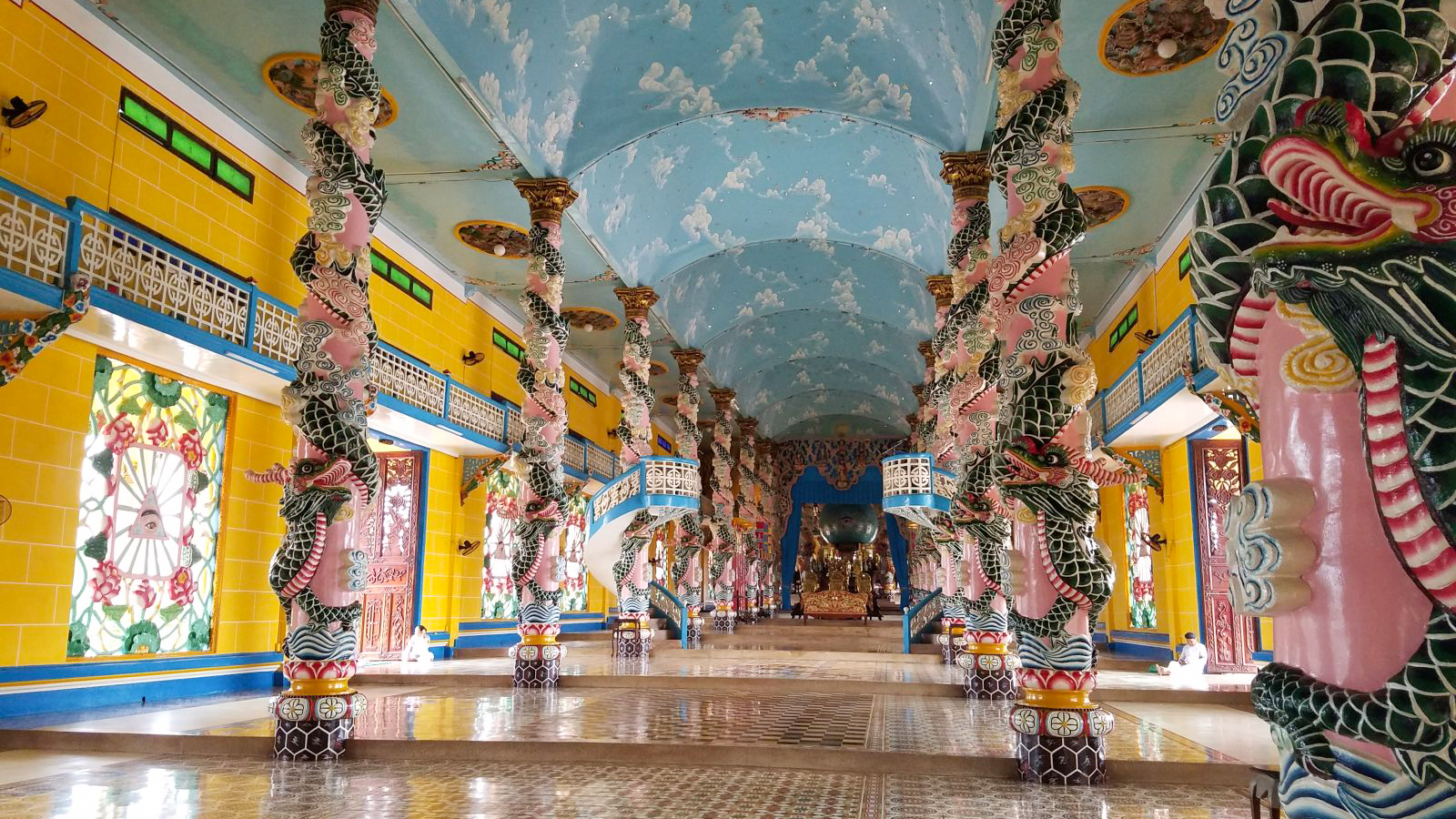
The main sanctuary interior
Upon entering this area, visitors often clearly feel a change in atmosphere: quieter, more solemn, and somewhat serene. Especially during prayer times, the space becomes very special with the appearance of devotees in traditional attire, creating a picture that is both ritualistic and vibrantly cultural. This is also the most important part of the experience of visiting the Cao Dai Holy See in the most detail, helping visitors understand more deeply the spiritual life of the devotee community.
2.3. Corridors and grounds
Surrounding the main sanctuary is a system of long corridors and open walkways, allowing visitors to move flexibly and observe the structure from various angles. The architecture here continues to maintain a multi-colored style with the combination of many different religious and cultural symbols, creating a feeling of walking through a space that intersects many belief systems.
The spacious and airy exterior grounds, with many large courtyards and clean pathways, are planned to serve both religious ceremonies and tourist visits. It is this balance between religious function and tourist experience that allows the place to retain its sacredness while remaining friendly to visitors. This is also an ideal area for taking photos, observing the overall architecture, and feeling the slow pace of life in this unique religious space.
2.4. Overall architecture
The special point when visiting the Cao Dai Holy See in the most detail lies in how the entire structure is built as a unified whole, where each detail carries its own symbolic meaning. From colors, shapes, spatial proportions to the layout of pathways, everything is designed to convey the idea of harmony among the world's major religions.
The architectural space not only serves the purpose of worship but also acts as a "living museum" of culture and beliefs. Each area within the Holy See carries a different layer of meaning, which when combined creates an experience that is both visual and spiritual, allowing visitors not only to observe but also to feel the cultural depth of the structure. This is why the Cao Dai Holy See has become one of the most distinctive destinations when traveling to Tay Ninh.
3. Suggested 1-day itinerary for visiting Ba Den Mountain and the Cao Dai Holy See in detail
The itinerary combining the Tay Ninh Cao Dai Holy See and Ba Den Mountain is a "classic" itinerary for a day exploring Tay Ninh, as it balances cultural-spiritual elements in the morning with natural-scenic experiences in the afternoon. Below is a detailed itinerary by time slot, helping to optimize travel time and actual experience.
3.1. Morning – Visiting the Cao Dai Holy See
Visitors should start early to arrive at the Holy See around 7:00–7:30 AM, when the air is still cool and the grounds are not too crowded. This is the ideal time to fully appreciate the tranquility and solemnity of the Tay Ninh Cao Dai Holy See.
During the 2.5–3 hour visit, you should follow the sequence: main gate - outer grounds - corridors - main sanctuary. When entering the main sanctuary, visitors must remain silent, walk quietly, and observe from the permitted area. If it coincides with the morning prayer time (usually around 6 AM–7 AM or 11 AM depending on the day), you will see groups of devotees in white ceremonial robes, moving in very uniform lines, creating a space that is both solemn and rich in ritual.
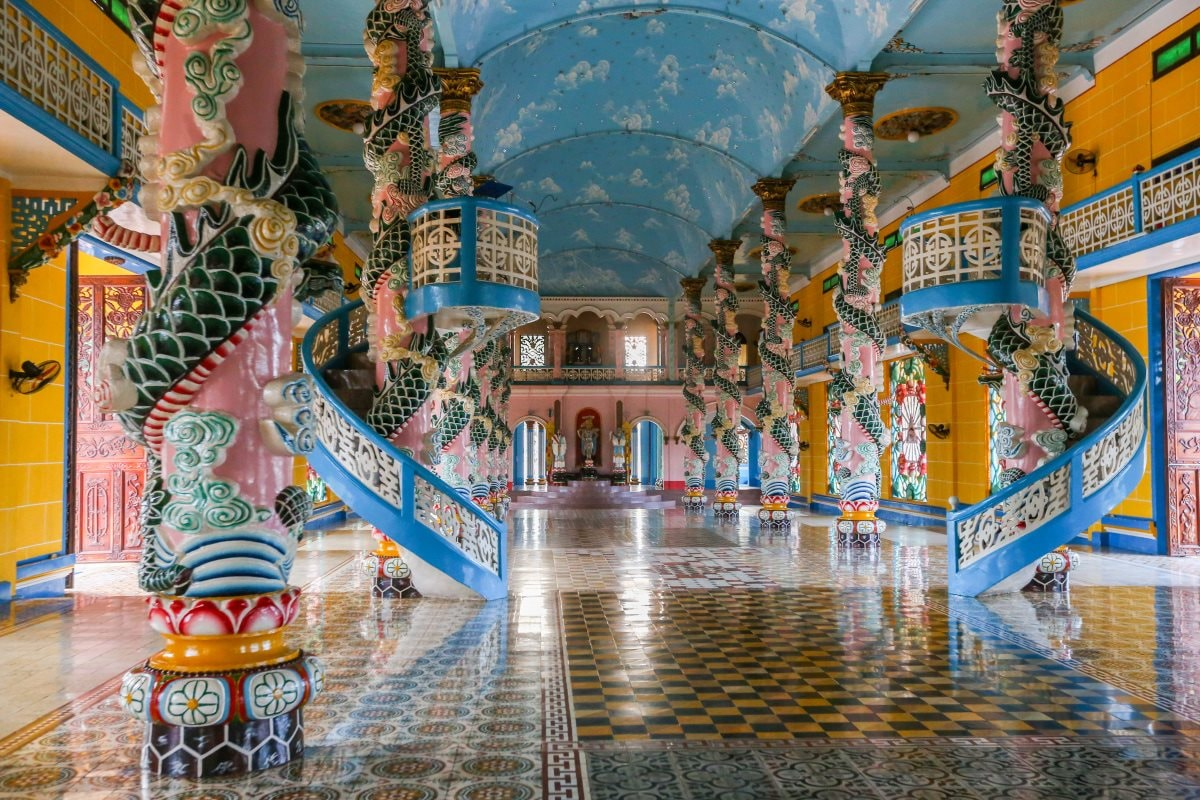
Morning is the ideal time for visitors to explore the Cao Dai Holy See
Besides the architecture, the morning is also a beautiful time for lighting to photograph the panoramic view of the Holy See. The colors of the structure become clearer when met with early sunlight, especially the details of dragons, clouds, and multi-layered patterns. Finishing the visit around 10:00–10:30 is reasonable to avoid the harsh sun and to move on to the next itinerary.
3.2. Noon – Lunch and rest in Tay Ninh city center
From the Holy See, visitors travel to Tay Ninh city center for lunch (about 10–20 minutes). This is an important break to recharge energy before heading to Ba Den Mountain in the afternoon – a time with more activities and movement.
You can choose local specialties such as Trang Bang banh canh, rice paper rolls with pork, or family-style rice restaurants. If traveling in a group, it is advisable to choose a restaurant with a spacious area and fast service to ensure the itinerary is on schedule. During this time, you should take at least 1–1.5 hours to rest, drink enough water, and prepare personal items such as sunscreen, a light jacket, a hat, or sunglasses before moving to the Ba Den Mountain area.
3.3. Afternoon – Exploring Ba Den Mountain
Around 13:30–14:00, visitors move to the Ba Den Mountain tourist area to begin their afternoon journey. This is a suitable time to experience the cable car as the sun has softened, and the light is still clear enough to observe the panoramic view of Tay Ninh from above. From the cable car station area, visitors begin their journey to the summit of Van Son Mountain, which opens up a vast view encompassing the plains, the distant city, and even Dau Tieng Lake on clear days.
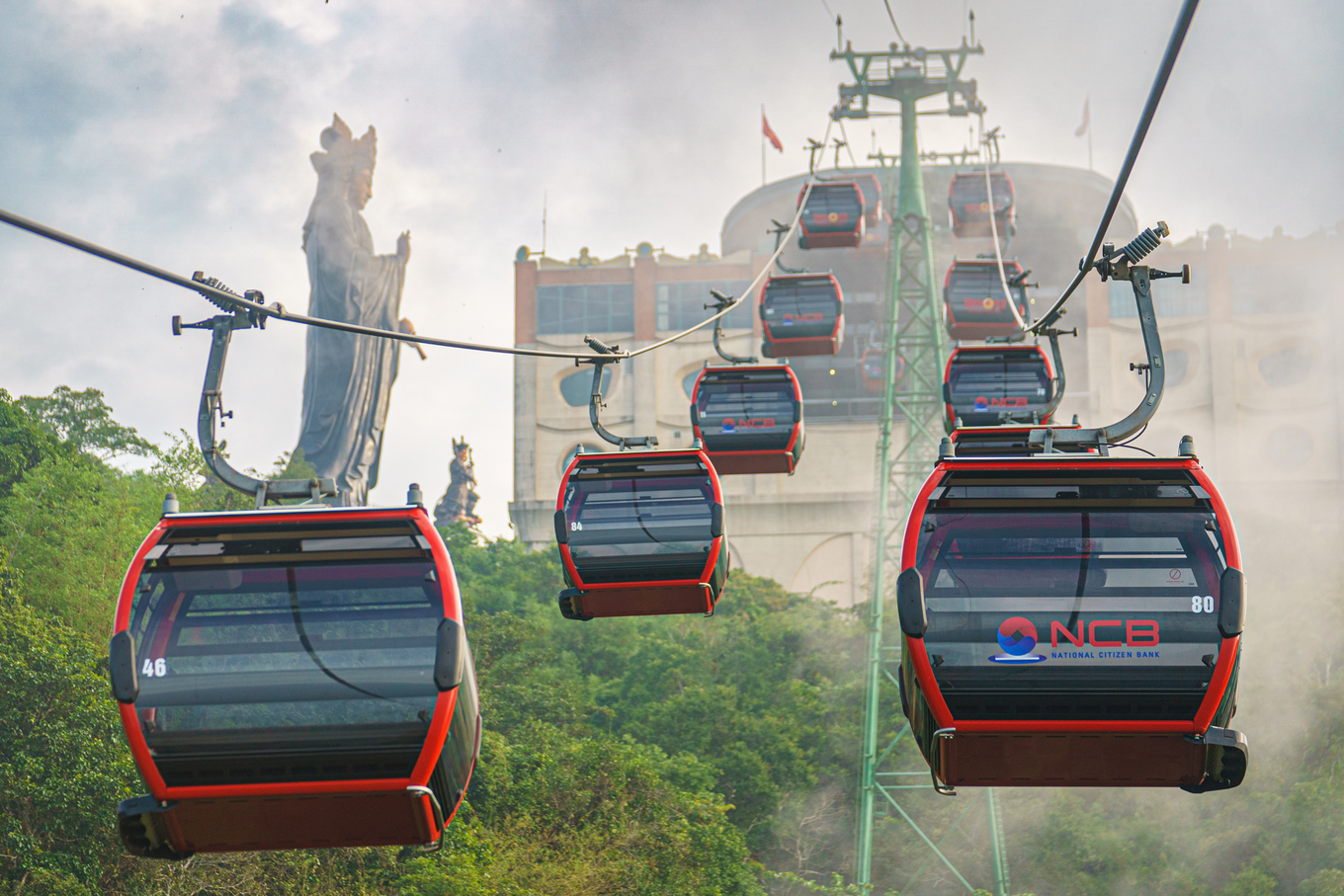
Modern cable car system makes it easier and more convenient for tourists to reach the mountaintop
Upon reaching the mountaintop area, the first highlight is the Tay Bo Da Son Buddha statue complex – the tallest bronze Buddha statue in Asia, considered the most prominent symbol of the entire tourist area. The space around the statue is vast, offering a sense of both majesty and openness, perfect for sightseeing, worship, and capturing panoramic photos from various angles. From here, visitors can clearly feel the architectural scale and the harmony between the spiritual structure and the natural landscape.
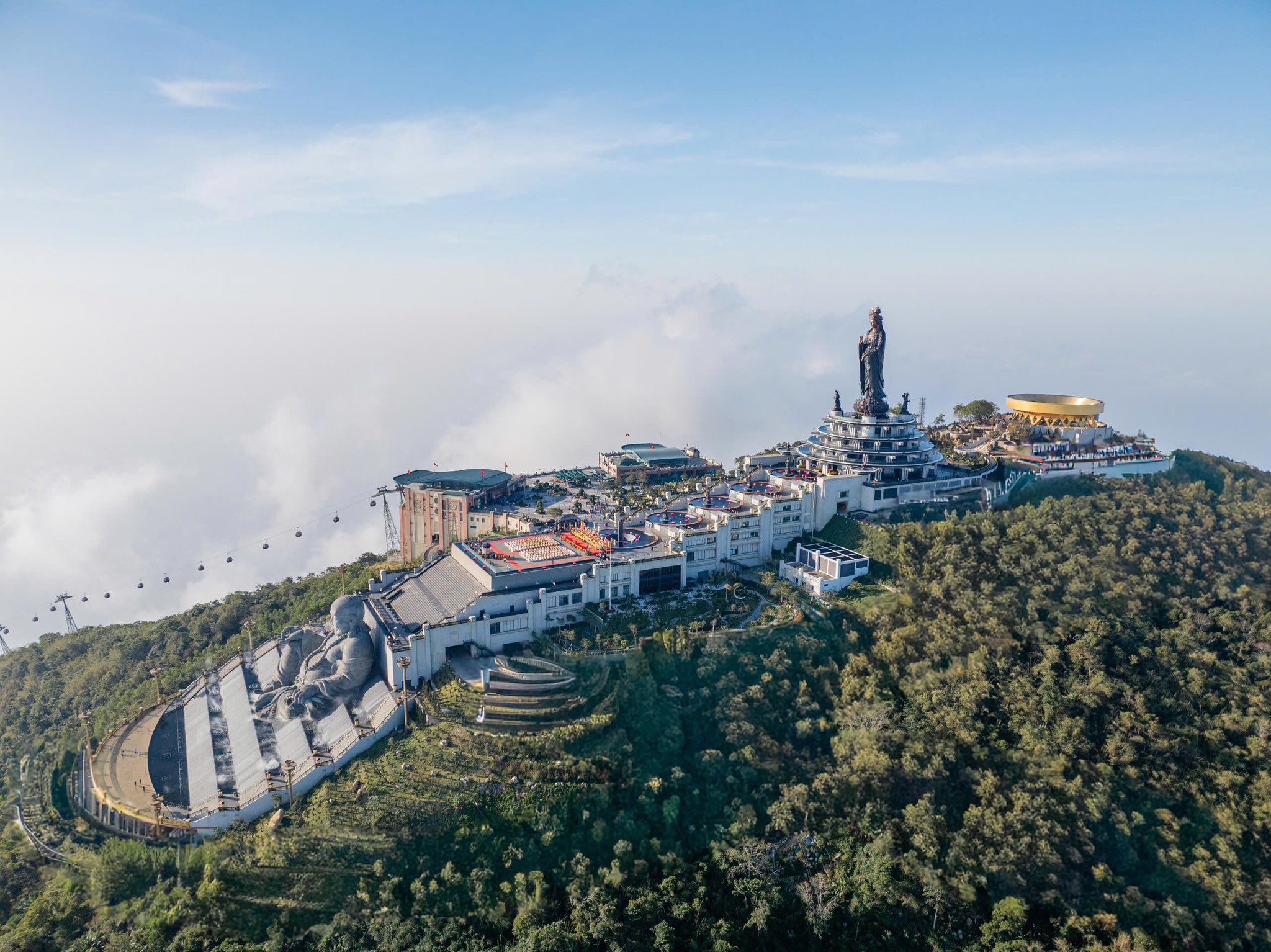
Panoramic view of the spiritual axis on Ba Den Mountain
Continuing the journey, visitors can move to the area of the Kuan Yin Bodhisattva statue and the Maitreya Buddha statue. If Kuan Yin Bodhisattva brings a solemn, tranquil feeling with a profound contemplative space, the Maitreya Buddha statue stands out with its joyfulness, openness, and ideal scenic view. Both structures are part of the spiritual complex system on the mountaintop, creating a diverse emotional experience – from stillness to openness, from contemplation to relaxing sightseeing. This is also the perfect combination of architecture, spirituality, and modern tourism experience at Ba Den Mountain.
👉 BOOK BA DEN MOUNTAIN CABLE CAR TICKETS NOW!
3.4. Late afternoon – watch the sunset and end the journey
From around 5:00 PM onwards, the light on Ba Den Mountain begins to turn golden orange, creating a beautiful sunset scene viewed from above. Visitors should take advantage of this time to gradually move towards the cable car station area to avoid missing the descent.
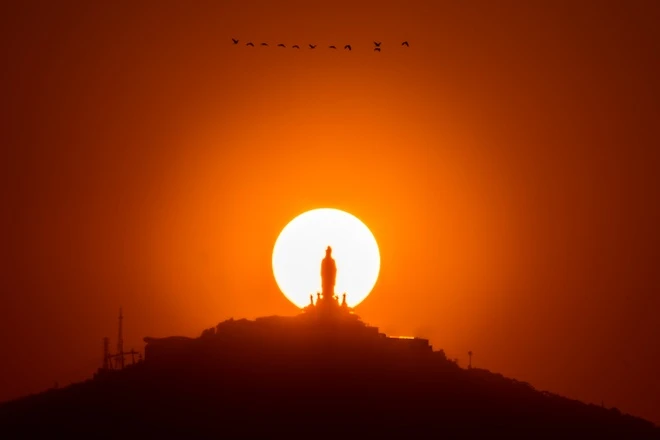
Magical sunset scenery on Ba Den mountain peak
The moment the cable car descends in the sunset light is one of the most memorable experiences of the journey, as the entire Tay Ninh landscape unfolds in the day's final light, vast and peaceful.
At the end of the itinerary, visitors return to the center or travel to Ho Chi Minh City. Although the day is short, it is enough to fully experience two of Tay Ninh's greatest symbols: the cultural-religious space at Toa Thanh Cao Dai and the majestic natural landscape at Ba Den mountain.
It can be seen that combining a visit to Toa Thanh Cao Dai and Ba Den mountain in the same day is an ideal choice to fully appreciate the unique tourism identity of Tay Ninh. The morning offers a unique religious-architectural space, while the afternoon opens up majestic natural landscapes along with the cable car system and the spiritual complex on the mountain peak.
A reasonably arranged itinerary not only saves travel time but also optimizes the experience, creating a balanced journey between worship, exploration, and relaxation. This is a suitable suggestion for both independent travelers and short-term tour groups, especially on weekends or holidays. With the harmonious combination of Tay Ninh's two greatest symbols, this 1-day itinerary is sure to leave many unforgettable impressions for visitors coming to this land full of cultural and natural colors.


