




1. Meaning of visiting pagodas during the Vu Lan festival
The Vu Lan festival is not merely an annual religious ritual but also carries profound humanistic value, reminding everyone of filial piety and gratitude towards their parents. For many Vietnamese families, the habit of visiting pagodas during Vu Lan has become a long-standing spiritual cultural beauty passed down through generations.
This is a quiet yet warm time for everyone to join hands in praying for parents currently alive to always be peaceful and healthy, and praying for deceased parents and ancestors to soon be reborn in a peaceful realm. Besides, the trip to pagodas during the filial piety season also helps each person calm their mind, nurture their compassionate heart, turn towards good deeds, and live more responsibly with their family and community.
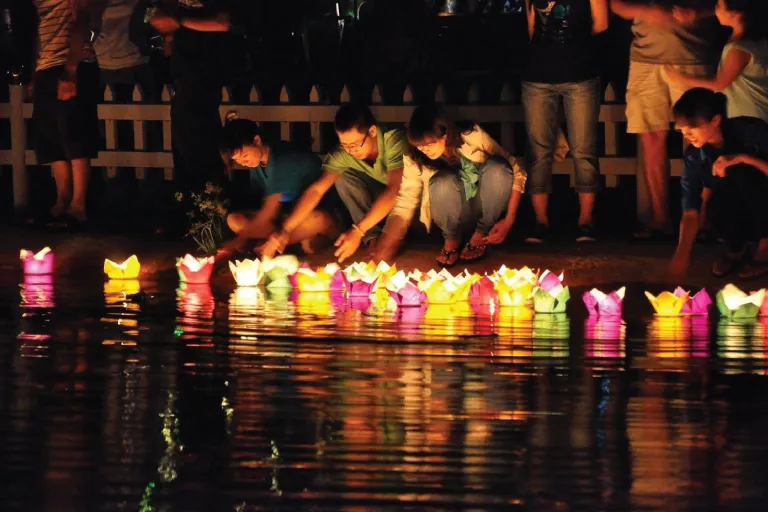
Tourists experience offering lanterns during the Vu Lan festival (Source: Collected)
1.1. Origin of the Vu Lan filial piety festival
According to Buddhist philosophy, the Vu Lan festival originates from the legend of Venerable Maudgalyayana – one of the ten great disciples with the foremost supernatural powers of Sakyamuni Buddha. After achieving enlightenment, he used his clairvoyance to find his mother and was pained to discover his mother, Mrs. Qing Ti, was suffering as a hungry ghost, enduring much torment and punishment. Although he tried his best, he could not save his mother and had to return to ask the Buddha for guidance on how to liberate her. The Buddha advised him to join forces with monks from everywhere to hold a grand offering ceremony on the full moon of the seventh lunar month, using that great merit to dedicate to his mother. From this touching story, the Vu Lan festival has become the most sacred symbol of filial piety, preserved for thousands of years.
1.2. Why do many people visit pagodas during Vu Lan?
Unlike New Year pilgrimages often associated with wishes for wealth or fame, visiting pagodas during Vu Lan is entirely imbued with the meaning of turning towards family and the true, good, and beautiful spiritual values. People return to sacred places to sincerely pray for their parents' health, remember their ancestors, or participate in warm chanting ceremonies for the deceased.
Notably, the ritual of pinning a rose – a red rose for those with living parents and a white rose for those who have passed away – always touches the most sacred emotions of the human heart. Listening to venerable monks share Dharma talks on filial piety also helps each person understand the value of devotion more deeply, thereby finding balance, gentleness, and peace in their souls.
1.3. What should one pray for when visiting pagodas during Vu Lan?
Many people visiting pagodas during the filial piety season often wonder how to prepare their prayers to align with Buddhist meaning. In reality, Buddhist philosophy guides people towards sincerity from the heart, not towards begging for wealth or personal benefits.
In the solemn atmosphere of Vu Lan, dedicate your entire mind to praying for your parents' well-being, family harmony, and for deceased ancestors to rest in Buddha's realm. More importantly, pray that you yourself always maintain filial piety, practice compassion, love, and cherish every moment you have with your parents. This pure intention is the most meaningful gift of filial piety.
2. Which pagodas are sacred for Vu Lan?
Vietnam boasts countless ancient and sacred pagodas stretching from North to South, each possessing unique historical, architectural, and spiritual values. Depending on your geographical location and family plans, you can choose the most suitable destinations to undertake your pilgrimage during the filial piety season. Famous pagodas not only offer serene natural landscapes but are also places where the spiritual energy of heaven and earth converges, making your prayers more devout. Below is a list of the most sacred pagodas chosen by countless Buddhists as stops to offer incense and express deep gratitude to their parents annually during the Vu Lan festival.
2.1. Ba Pagoda – Tay Ninh
Located on the highest peak in the South, Ba Pagoda within the Sun World Ba Den Mountain complex is one of the most sacred pilgrimage sites, attracting millions of visitors during Vu Lan. Not only famous for its majestic mountainous scenery, it also boasts a magnificent Buddhist architectural complex such as the Great Statue of Lady Buddha Tay Bo Da Son, intricately carved Prajnaparamita Sutra Pillars, and a priceless Buddha relic veneration area.
Thanks to the modern cable car system, the journey to the summit for visitors to pay homage becomes extremely convenient and relaxing. Amidst the pure clouds, offering incense for parents' peace on the peak of Ba Den Mountain is not just a spiritual trip but also a profound experience to engrave filial piety.
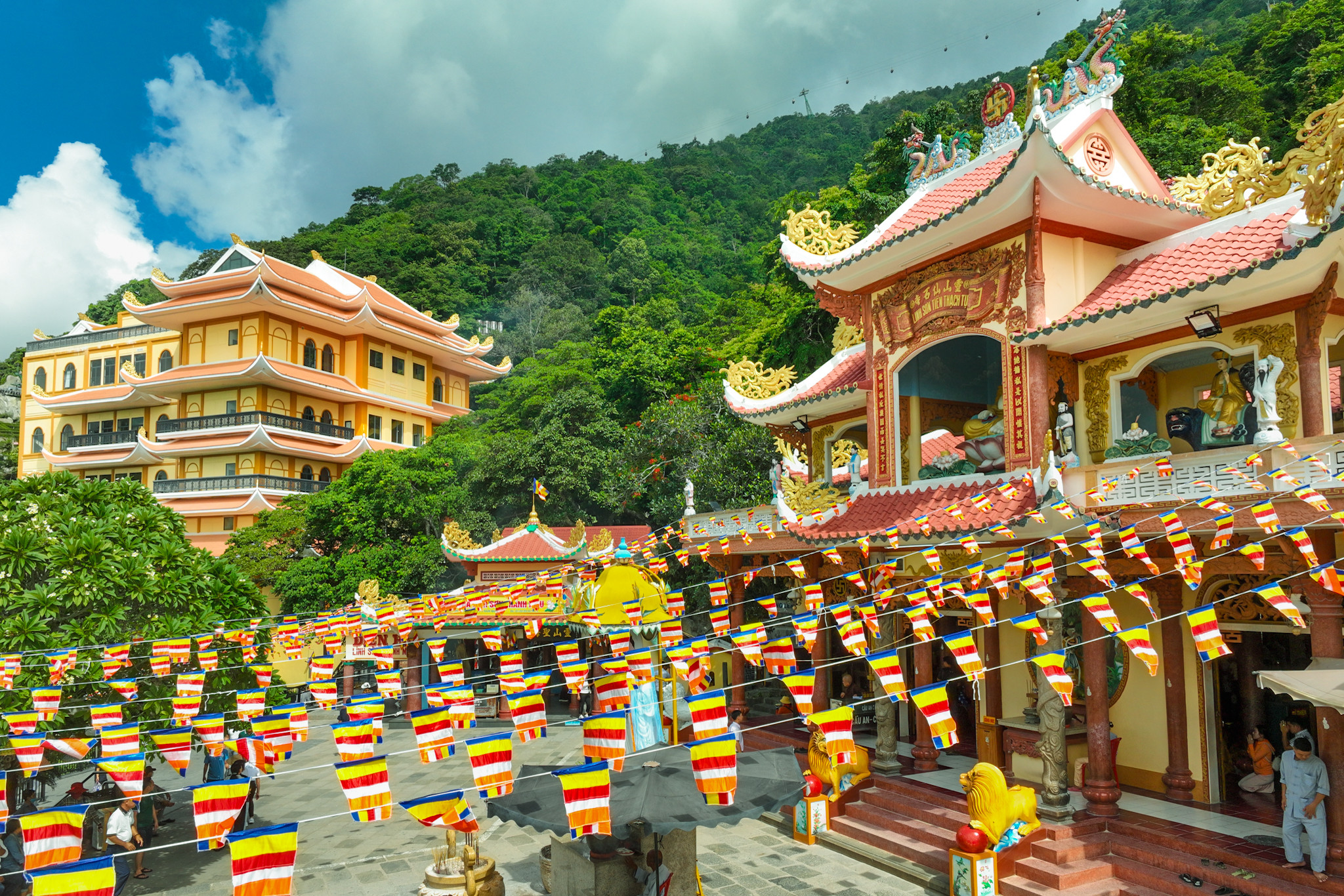
Located on top of Ba Den Mountain, Ba Pagoda is a prominent attraction in Tay Ninh. (Source: Collected)
👉 BOOK BA DEN MOUNTAIN CABLE CAR TICKETS NOW!
2.2. Bai Dinh Pagoda – Ninh Binh
As one of the spiritual destinations and the largest pagoda complex in Southeast Asia, Bai Dinh Pagoda has long been a priority destination for millions of Buddhists during the Vu Lan filial piety festival. Located amidst the picturesque riverine landscape of the ancient capital Ninh Binh, Bai Dinh impresses strongly with its grand architecture, solemn gold-plated Buddha statues, and tranquil, serene atmosphere.
Pilgrimaging to Bai Dinh during Vu Lan season, visitors can leisurely stroll along the long corridors of Arhats, listen to the echoing temple bells, and immerse themselves in a meditative space. This is the perfect resting place for families to offer incense together, praying for health and expressing boundless gratitude to their roots.
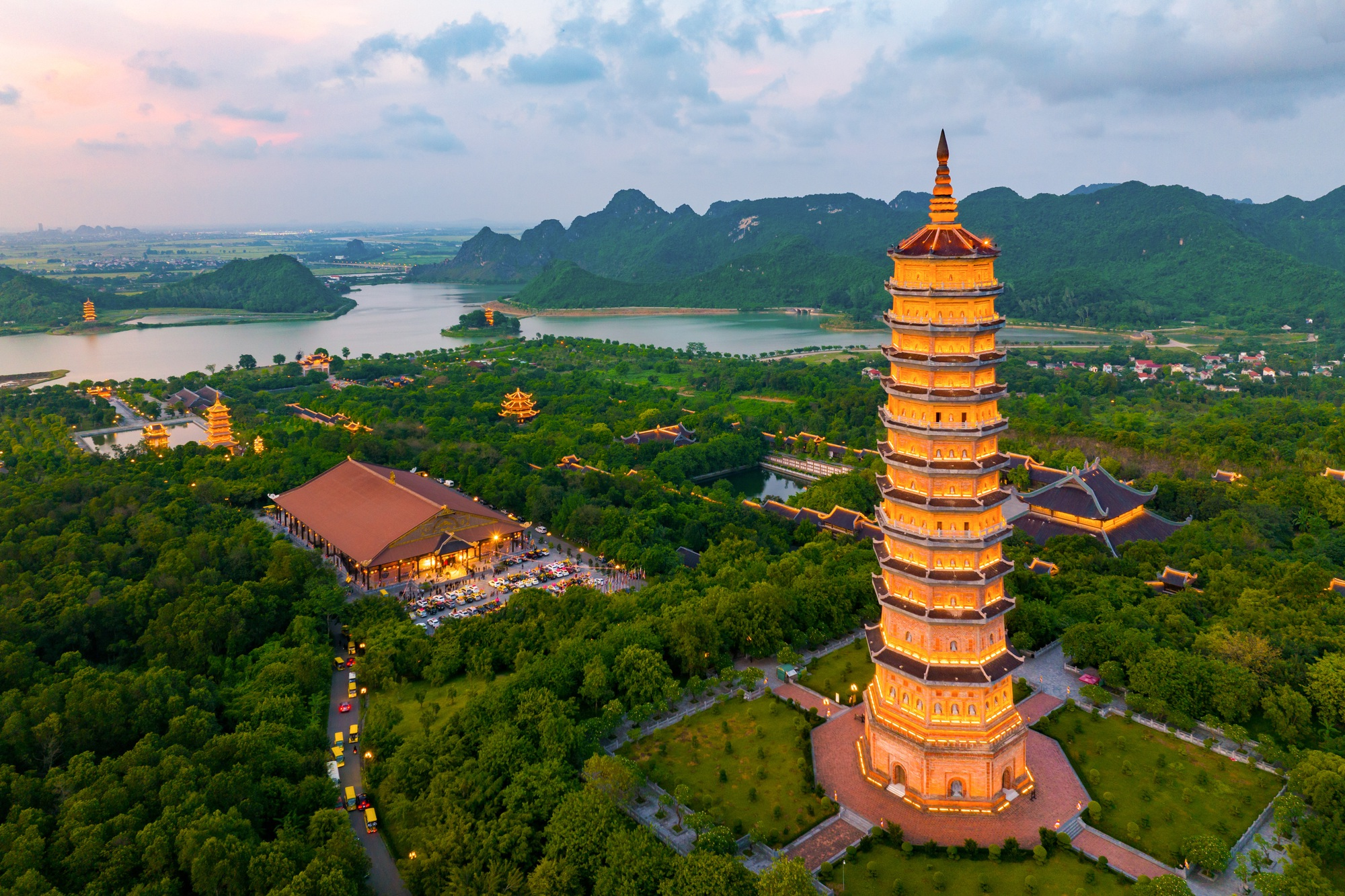
Located at the peak of Ba Den mountain, Ba Pagoda is a prominent attraction in Tay Ninh. (Source: Collected)
2.3. Tam Chuc Pagoda – Ha Nam
Located in Ba Sao, Ha Nam, Tam Chuc Pagoda is known as one of the largest pagoda complexes in the world, attracting tens of thousands of Buddhists during Vu Lan. Nestled against That Tinh mountain and facing the poetic Tam Chuc lake, the pagoda boasts majestic natural scenery and exquisite stone-carved Buddhist architecture.
During the filial piety season, the sacred space at Tam The Hall and Phap Chu Hall becomes a gathering place for numerous visitors to offer incense and pray for their parents' peace. The boat trip on the clear blue lake combined with admiring the magnificent Buddhist structures helps purify one's soul, bringing peace and lightness. Visiting Tam Chuc during Vu Lan is not just a purely spiritual journey but also an opportunity for the whole family to mark warm moments together, pray for health, and express deep gratitude to their parents.
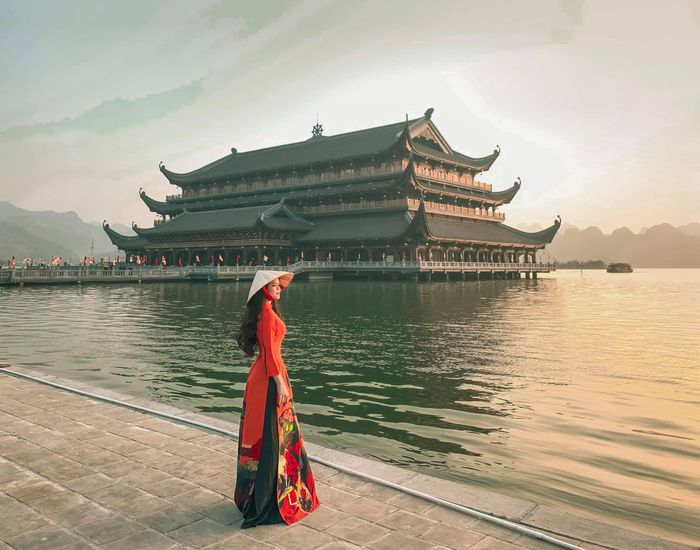
Located at the top of Ba Den mountain, Ba Pagoda is a prominent attraction in Tay Ninh. (Source: Collected)
2.4. Tran Quoc Pagoda – Hanoi
Situated on a small island on the eastern side of West Lake, Tran Quoc Pagoda is the oldest pagoda in Hanoi with a history of over 1,500 years. With its ancient architecture blended with elegant natural scenery, this place was once honored in the list of the most beautiful pagodas in the world. During the annual Vu Lan Festival, Tran Quoc Pagoda welcomes a large number of tourists and Buddhists from the Capital to participate in ceremonies for chanting prayers for the deceased, offering incense to honor ancestors, and praying for parents' peace.
The pagoda's highlights are the majestic Lục độ đài sen tower and the ancient Bodhi tree providing cool shade. Amidst the vast West Lake scenery, the pagoda bell ringing on Vu Lan afternoon helps people temporarily escape the noisy city, calm their minds to fully feel the sacred motherly love and noble filial piety.
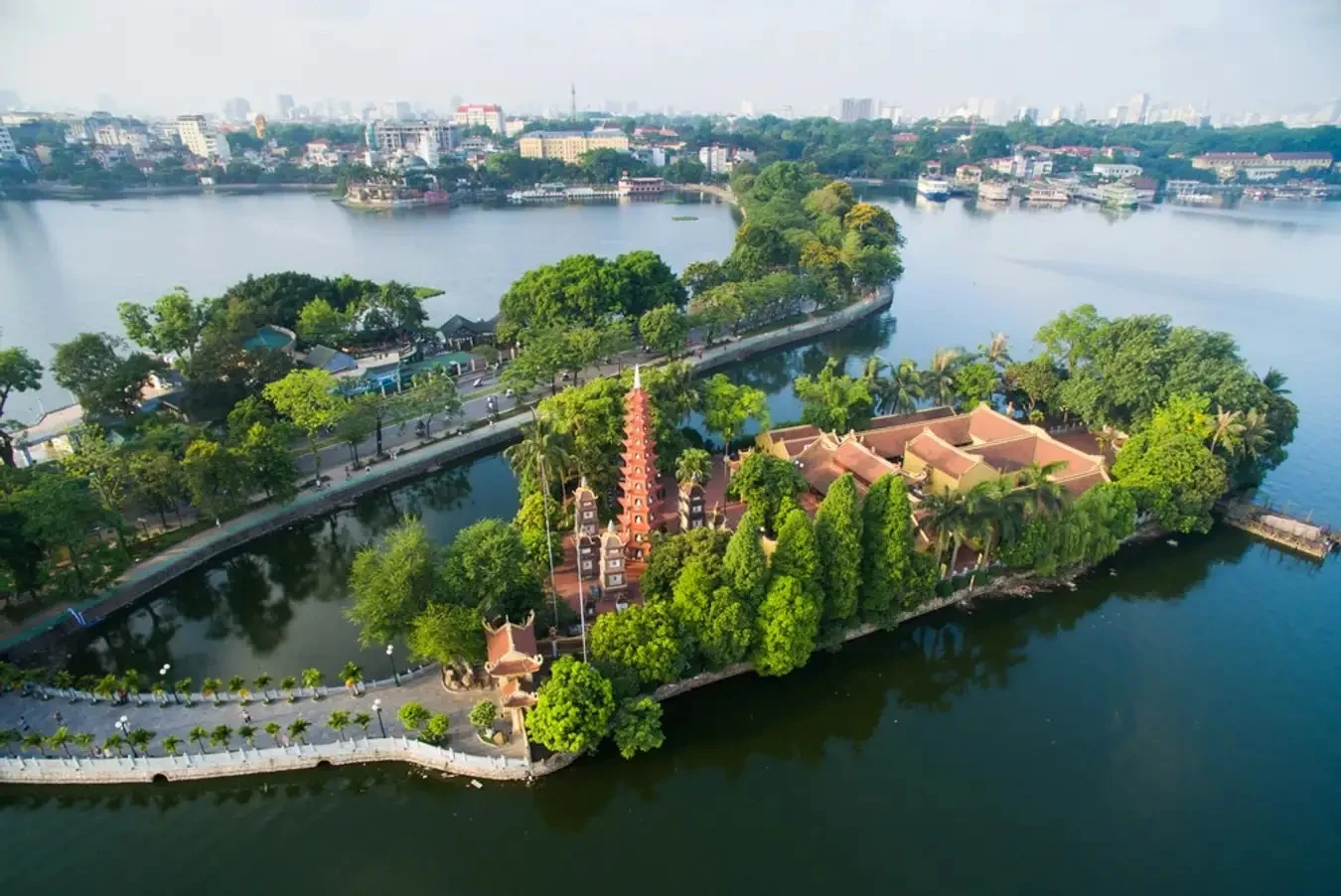
Located on Ba Den mountain peak, Ba Pagoda is a prominent attraction in Tay Ninh. (Source: Collected)
2.5. Thien Mu Pagoda – Thua Thien Hue
Located on Ha Khe hill beside the poetic Huong River, Thien Mu Pagoda is known as the "Number One National Pagoda" and is a famous spiritual symbol of the ancient capital Hue. Founded in 1601, the pagoda possesses an ancient, serene beauty with the majestic 7-story Phuoc Duyen Tower standing tall amidst the lush green mountainous landscape. In the 7th lunar month, Thien Mu Pagoda becomes a meaningful pilgrimage destination for visitors from Central Vietnam during the filial piety lễ báo hiếu (filial piety festival).
The peaceful scenery, the echoing temple bells, and the gently flowing Huong River create a tranquil atmosphere, especially suitable for those wishing to pray for the health and longevity of their parents. Pilgrims visiting Thien Mu during Vu Lan season not only pay homage to ancient historical relics but also find tranquility and peace of mind in the serene ancient capital.
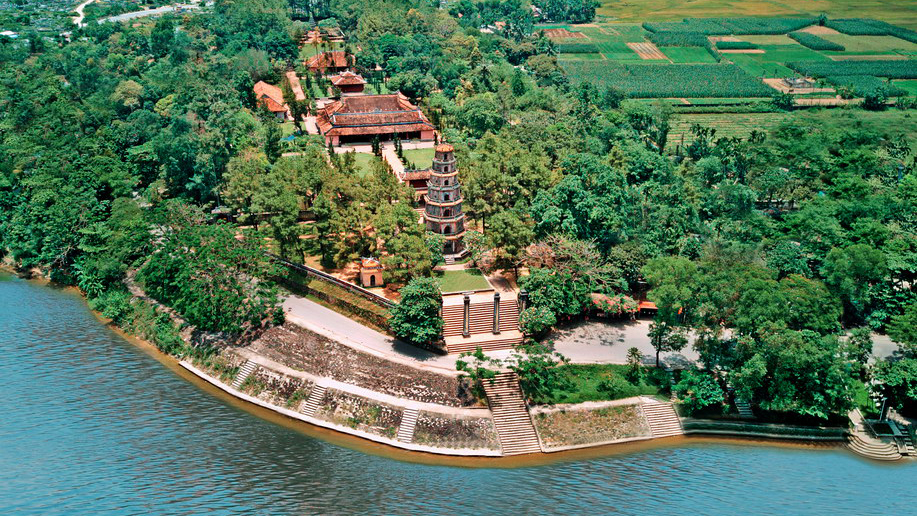
Located on the summit of Ba Den Mountain, Ba Pagoda is a prominent attraction in Tay Ninh. (Source: Collected)
2.6. Linh Ung Bai But Pagoda – Da Nang
Leaning against Son Tra mountain and facing the vast East Sea, Linh Ung Bai But Pagoda is one of the most sacred and magnificent spiritual destinations in the Quang region. The pagoda is famous for its 67m tall Quan The Am Bodhisattva statue – the tallest Buddha statue in Vietnam today, holding a vase of holy water as if bestowing peace upon the world.
During the Vu Lan filial piety festival, thousands of visitors flock here to offer incense, praying for their parents' health and family harmony. The airy space, blending sea breeze and Son Tra mountain mist, brings absolute tranquility to pilgrims. Standing from the pagoda courtyard looking out at the immense blue sea, with hands clasped in reverence praying for one's parents, everyone can feel the boundless love of parents and deep gratitude towards their roots.
2.7. Vinh Nghiem Pagoda – Ho Chi Minh City
Strategically located on Nam Ky Khoi Nghia street, Vinh Nghiem Pagoda is one of the largest and most famous Mahayana Buddhist pagodas in Ho Chi Minh City. With an East Asian traditional architectural style combined with a 7-story stone tower intricately carved, the pagoda is an important spiritual center for the people of the South. In the 7th lunar month, Vinh Nghiem Pagoda attracts tens of thousands of Buddhists to participate in the rose-pinning ceremony, chanting prayers for living parents and reciting sutras for deceased ancestors.
The pagoda's solemn atmosphere, filled with the scent of incense and profound Dharma teachings on filial piety, moves many children to tears. Visiting Vinh Nghiem Pagoda during Vu Lan has become a familiar cultural beauty, helping Saigon residents find peace and warmth, and reminding themselves to live up to their filial duties.
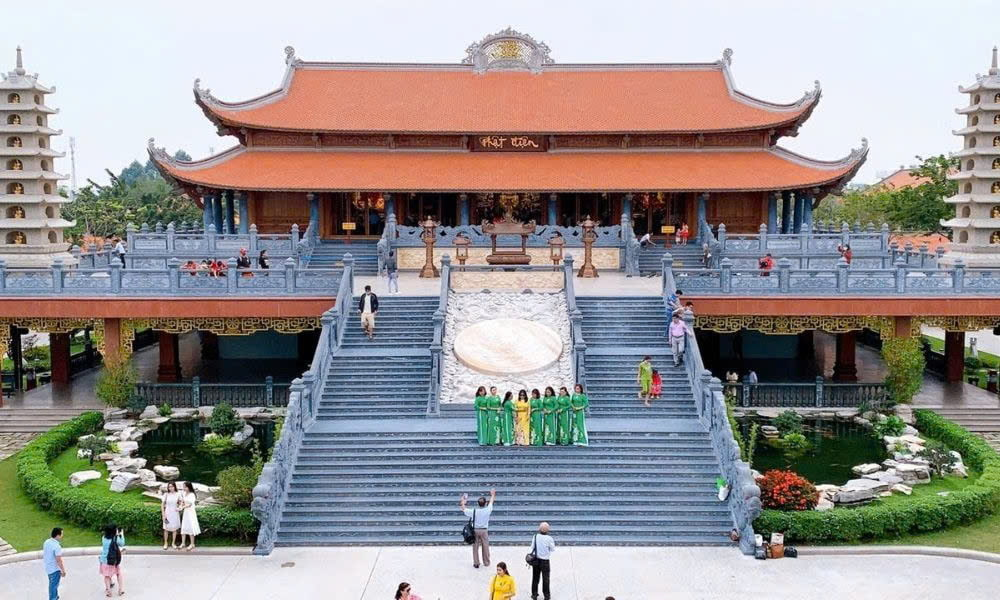
Located at the peak of Ba Den mountain, Ba Pagoda is a prominent tourist attraction in Tay Ninh. (Source: Collected)
2.8. Hoang Phap Pagoda – Ho Chi Minh City
Located in Hoc Mon district, Ho Chi Minh City, Hoang Phap Pagoda has long been famous as a major center of Buddhist culture, spirituality, and education in the South. The pagoda attracts tens of thousands of people annually thanks to organizing large-scale festivals and very meaningful summer retreats. Especially during the Vu Lan filial piety occasion, Hoang Phap Pagoda organizes the deeply moving "Rose Pinning" ceremony, gathering thousands of Buddhists and young people to attend.
The pagoda's spacious grounds, shaded by green trees, along with solemn altars, create a serene space for everyone to send their most sincere prayers to their parents. The rose pinning ceremony at the pagoda not only honors the sacred mother-child and father-child bond but also spreads a profound message about gratitude, guiding people to live virtuously and cherish their parents every moment.
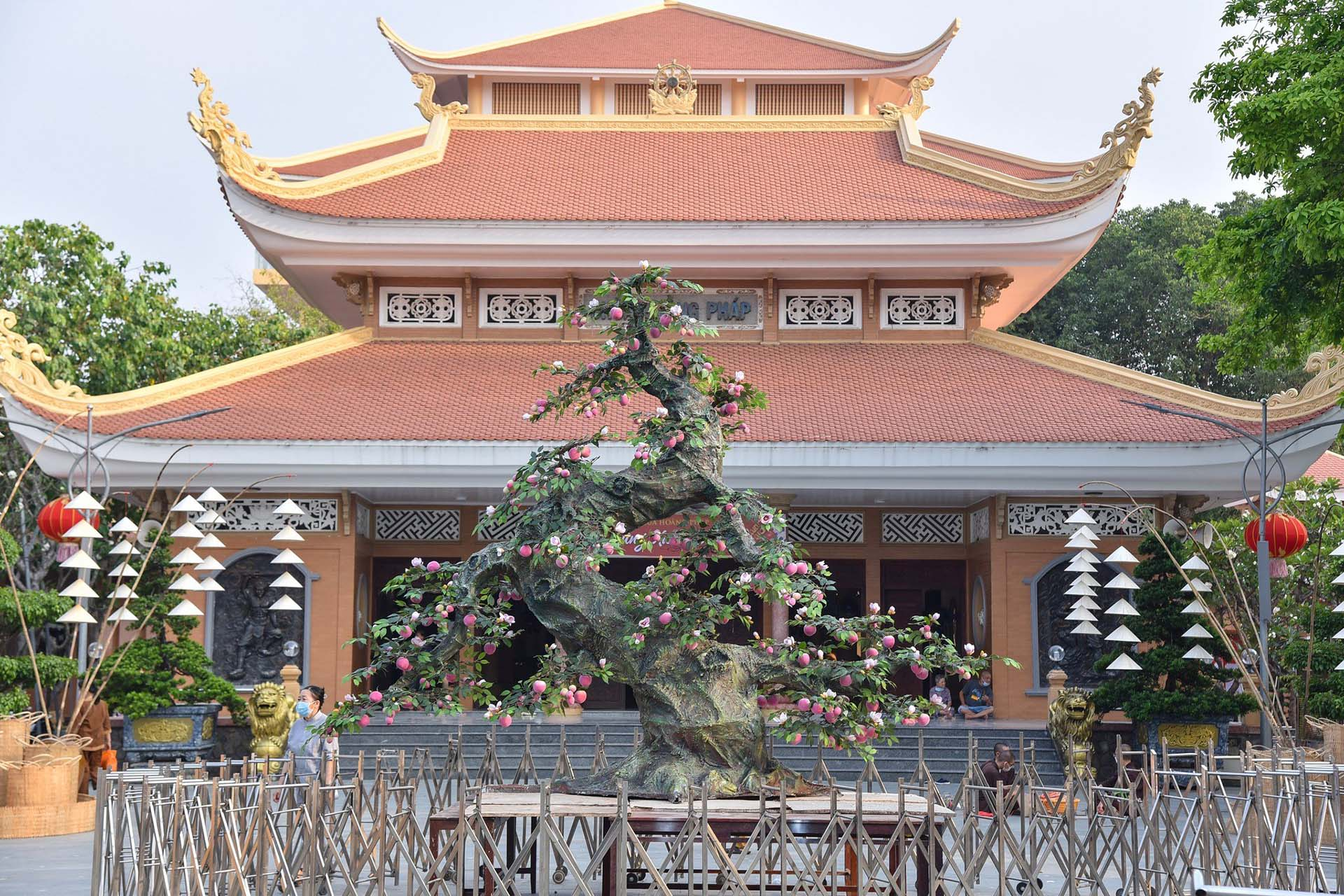
Hoang Phap Pagoda stands out in Ho Chi Minh City. (Source: Collected)
4. Notes when visiting pagodas during the Vu Lan Festival
The Vu Lan pilgrimage will be more complete and peaceful if you are well-prepared in terms of mindset and etiquette in sacred places. Due to the large number of tourists and Buddhists flocking to pagodas during this time, understanding the general regulations will help you avoid unnecessary trouble. From choosing attire, preparing offerings, to civilized behavior at the temple gates, everything needs careful attention. Reverence is not only shown through inner piety but also expressed through every gesture and word externally, contributing to maintaining a peaceful space for everyone participating in the pilgrimage.
4.1. Choose modest and polite attire
When entering spiritual spaces, attire is the first factor that shows respect for the Buddhist sanctuary. You should prioritize choosing elegant, modest clothing with light colors, and avoid wearing short skirts, sleeveless tops, or overly tight outfits that may cause offense. Traditional ao dai or Buddhist robes are always excellent choices for the Vu Lan festival. Additionally, as temple visits often involve a lot of movement and climbing stairs, you should opt for soft sports shoes or low-heeled shoes to keep your feet comfortable, making the pilgrimage smooth and convenient.
4.2. Maintain solemnity at the temple gates
Temple grounds are places where spiritual energy accumulates and require absolute quiet for everyone to meditate and pray. When offering incense for worship, you should walk lightly, speak softly, and avoid crowding or pushing in altar areas or where incense is lit. Limiting phone use, silencing ringtones, and refraining from loud chatter are the minimum civilized behaviors in sacred places. Furthermore, always follow the instructions of the site management and maintain general hygiene by not littering. A gentle, polite attitude not only brings personal peace but also helps spread the beauty of spiritual culture to the community.
4.3. Prepare simple, sincere offerings
Many people often wonder about preparing elaborate feasts when attending Vu Lan ceremonies, but Buddhist philosophy always emphasizes simplicity and sincerity. Offerings to the pagoda do not need to be overly elaborate or expensive; you only need to prepare a stick of fragrant incense, a few fresh flowers, clean fruits, or a small amount of oil for lamps according to your heart. Avoid bringing meat dishes or votive paper into the main hall of the pagoda to maintain the purity of the sacred space. Remember, the most sacred value of the Vu Lan season lies not in the material value of the offerings, but in the aspiration for goodness, sincere gratitude, and wishes for peace for one's parents.
4.4. Proactively arrange your time
The Vu Lan festival is a peak period attracting millions of pilgrims, so being proactive with your time will ensure a smooth journey. Your family should plan in advance, research the routes, and prepare service tickets (such as cable car tickets for Ba Den Mountain) through online systems to avoid long queues. Departing early in the morning will not only allow you to enjoy the fresh air but also make it easier to find a quiet space for worship. Thorough time preparation will help you feel relaxed and fully enjoy the filial piety journey.
5. The meaning of the Vu Lan journey lies beyond the destination
Many people are engrossed in searching for answers to the question "which pagoda is sacred for Vu Lan," but in reality, the greatest sacredness originates from each person's sincere heart. Regardless of whether your destination is the majestic Ba Den Mountain, the grand Bai Dinh, or a small, peaceful pagoda near your home, the core value of the trip still lies in the sincere feelings towards your parents. The Vu Lan journey becomes most complete when you dedicate your time to accompanying, listening to, and sharing with your parents. Filial piety, gratitude, and practical acts of love in daily life are the most sacred pagodas, creating profound meaning for the reunion and filial piety season.
The Vu Lan festival is not just about offering incense for blessings, but also a precious opportunity for each of us to slow down and express deep gratitude for the immense blessings of our parents and ancestors. Choosing a sacred pagoda will enhance the solemnity of the journey, but sincerity and filial piety are what remain in the end. If you are looking for a pilgrimage site that combines magnificent spirituality with beautiful natural scenery, Tay Ninh's Ba Den Mountain is the perfect choice. The spiritual complex on the mountaintop with the Great Buddha statue, the Prajnaparamita Sutra Stupa, and the space for venerating Buddha relics will bring your family a Vu Lan journey filled with peace.
After a pure incense offering pilgrimage, you and your loved ones can relax and enjoy the rich cuisine at Sol Kitchen or Van Son Buffet. The perfect combination of profound spiritual experience, lush nature, and modern amenities will help you create cherished moments of happiness and strengthen family bonds during this filial piety season.


