




1. Overview of the Tua Hai Victory Historical and Cultural Relic
1.1. Geographical Location of the Tua Hai Victory Historical and Cultural Relic
The Tua Hai Victory Historical and Cultural Relic is located on National Highway 22B, in Tua Hai Hamlet, Dong Khoi Commune, Chau Thanh District, Tay Ninh Province. From the center of Tay Ninh, visitors can reach this location by traveling about 7 km to the Northwest. Thanks to its location not too far from the central area and convenient access, the exploration journey becomes easier for both individual visitors and tour groups.
Surrounding the relic site are vast rice fields, creating the rustic and peaceful scenery of Tay Ninh's countryside. When approaching the main gate area, visitors can recognize familiar landmarks such as Dong Khoi Secondary School or the Tua Hai Market area, which helps with quick orientation.
Not only does it possess a convenient location, but the landscape surrounding the relic site also carries the characteristic features of the Southeastern region: an airy atmosphere, a gentle breeze from the fields, and sunlight bathing the lush green rice paddies. All of this creates a sense of tranquility as visitors first arrive, marking the beginning of a journey to discover the historical imprints of Tay Ninh Province.
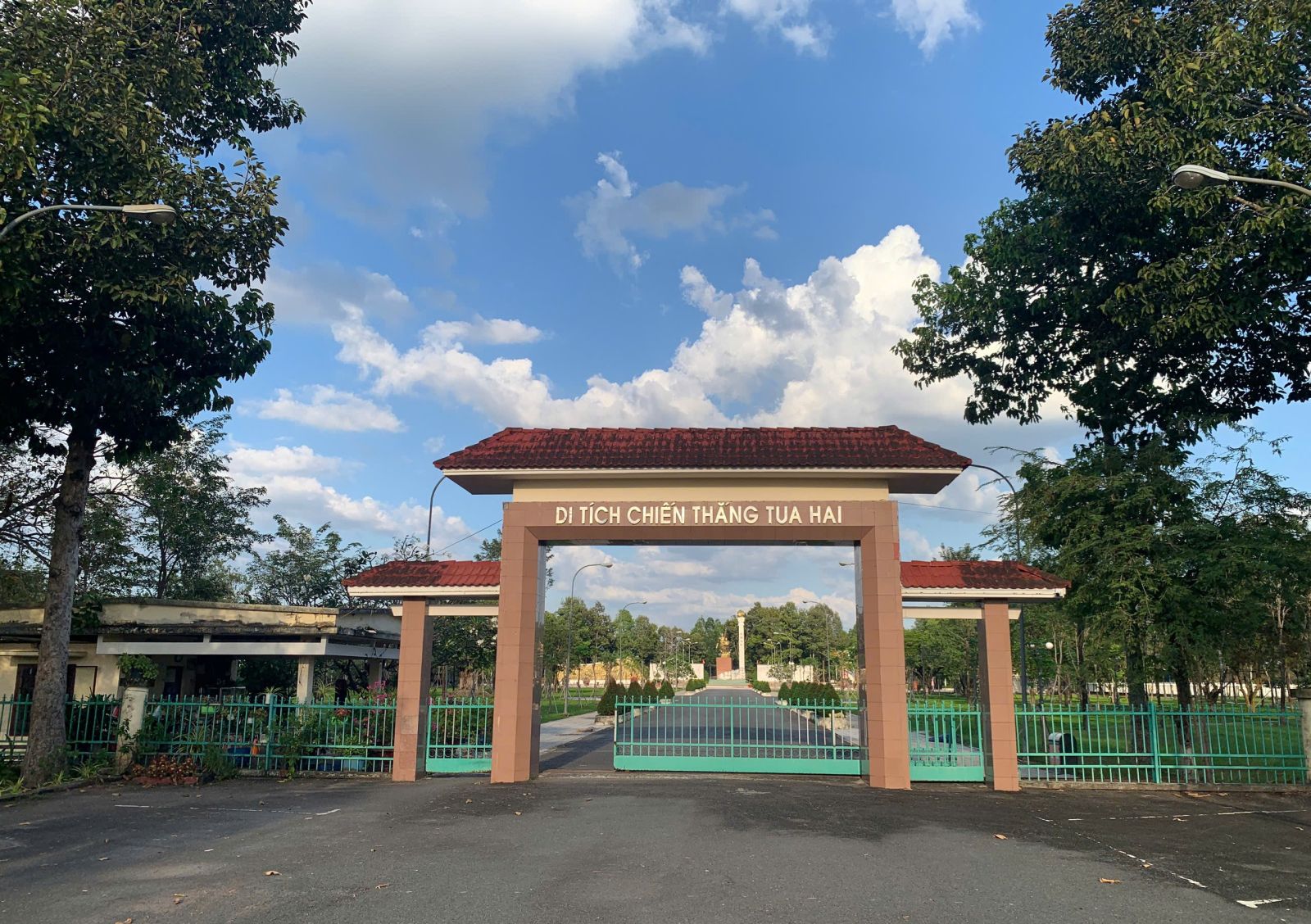
Historical Site of Tua Hai Victory commemorates revolutionary feats. (Source: Collected)
1.2. History of the formation of the Tua Hai Victory historical site
Tua Hai began as a watchtower during the resistance war against the French. The name Tua Hai is explained as a folk pronunciation originating from the French word "la tour," meaning watchtower. After the French withdrew from Vietnam in 1956, this place quickly became a strategically important military point under the appropriation of the US-Ngo regime. The watchtower was renovated into a military base, used as a special forces training school and the garrison of the 32nd Regiment of the 21st Republic of Vietnam Division.
The Tua Hai base covered an area of over 36 hectares. During the time it was controlled by the enemy, a solid defensive system was built here, including a 2-meter high rampart, 48 densely arranged watchtowers, many sections of triple barbed wire fences, and open areas mined with explosives. Trench systems were dug in a wide network, increasing flexibility for guards and patrol forces. Security was maintained regularly to create a strong protective layer for the base.
Based on the spirit of Resolution 15 and the leadership of the Southern Vietnam Party Committee, the revolutionary forces of the South launched a major surprise attack on the Tua Hai base. Precisely at midnight on January 26, 1960, attack waves advanced from four main directions. Key areas including the command post, vehicle depot, barracks, and armory were chosen as breakthrough points. In the silent night, the revolutionary forces approached the targets, combining the use of torches and artillery fire to weaken the enemy's morale.
Although the base had a solid defensive system and strict guards, it quickly fell to the strong fighting spirit of the army and people. The battle lasted for three hours and ended with a victory for the revolutionary forces. The Tua Hai Victory became the starting point for the Dong Khoi movement, which spread throughout the South, contributing to changing the course of the struggle during this crucial period of the nation's history.
In 1993, the Tua Hai site was recognized as a historical and cultural relic by the Ministry of Culture, Sports and Tourism. This was a step acknowledging the significant meaning of the battle as well as the traditional values that this site has helped preserve. Over the years, the relic site has been restored to become a destination rich in historical significance, a place where people and tourists return to recall the resilient struggle of the Southern army and people.
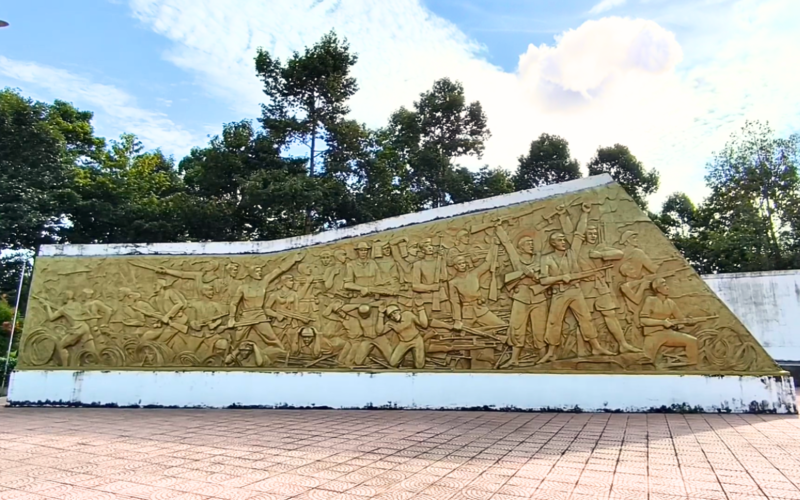
The relief sculpture depicts the tenacious battle. (Source: Collected)
2. Notable Sightseeing Areas at the Tua Hai Victory Monument
2.1. Monument Grounds Area
Stepping through the entrance gate, visitors will immediately feel the vast space of 36 hectares of the Tua Hai victory historical and cultural monument. This was once a solid military base, but has now been rebuilt with a spacious and clean appearance. Straight paved paths form airy walking paths, easy to navigate for both the elderly and groups of students.
The grounds are surrounded by a sturdy iron fence, helping the space become tidy and ensuring the solemnity of a national-level monument. Along the paths, small flower beds are meticulously cared for, planted with familiar flowers such as Ixora, bougainvillea, frangipani, or periwinkle. Thus, each step brings a gentle feeling as the vibrant colors of the flowers contribute to embellishing this area that once bore many traces of war.
The green space is a special highlight of the grounds. Rows of trees are planted evenly on both sides, with moderate trunks but enough to provide shade and help regulate the air in the often hot and sunny Southeast region. Underfoot, a wide carpet of green grass makes the place always feel cool, helping visitors relax after their journey.
The parking area within the grounds is quite spacious, suitable for large groups of visitors. On peak days, many school groups organize visits for students to explore history. The children are assigned to help clean the grounds on certain occasions, contributing to maintaining a clean and beautiful landscape and fostering a spirit of respect for the monument among the younger generation.
The spacious, clean, and green grounds are the ideal starting point for the journey to explore the Tua Hai victory historical and cultural monument. The atmosphere here makes visitors feel both relaxed and contemplative, creating a natural connection between the present and the past.
2.2. Victory Monument Area
The most easily recognizable highlight upon entering the Tua Hai victory historical and cultural monument is the victory monument located in the center. The structure is built with solid concrete, depicting two soldiers with fierce determination in the early days of the Dong Khoi movement. Their strong stance, gaze directed forward, embodies the spirit of the revolutionary forces in the Tua Hai surprise attack in 1960.
Next to the monument is a prominent tall pillar with the inscription "Tua Hai Victory". This is a meaningful symbol, and a place many visitors choose to stop and capture a moment during their visit.
From the monument's position, looking to the left, visitors will see a large, intricately carved relief sculpture. The raised images depict the progression of the Tua Hai battle, from the preparation for combat to the charging momentum towards the base. The sculptural lines are powerfully realistic, evoking the courageous spirit of the Tay Ninh army and people during this important historical period.
Not only an impressive check-in spot, the victory monument area is also a venue for commemorative activities on January 26th annually. Many art programs are held here to commemorate the event that initiated the Dong Khoi movement, contributing to educating the patriotic tradition for local people and visitors from all directions.
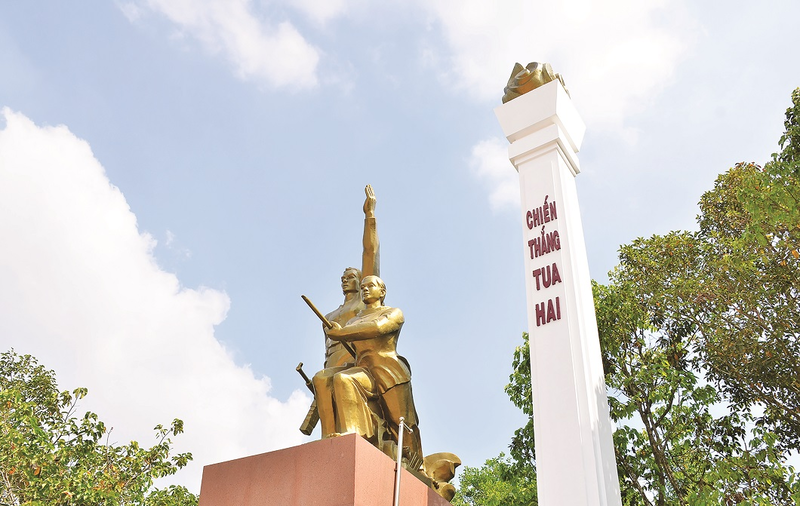
Victory Monument in the Tua Hai Victory historical and cultural site. (Source: Collected)
2.3. Memorial House at the Tua Hai Victory historical and cultural site
From the monument area, turning right, visitors will reach the memorial house for heroes and martyrs who sacrificed for the revolutionary cause. The structure is built in the familiar Southern Vietnamese communal house roof architectural style, creating a sense of familiarity and solemnity upon entering.
At the center of the memorial house is a black granite stele inscribed with clear gold lettering. The words on the stele recall the merits of the preceding generation and remind each generation of the indomitable spirit in the struggle for independence. In front of the memorial stele is an incense burner placed neatly, allowing visitors to offer incense and express their gratitude.
The memorial house is an unmissable stop on the journey to explore the Tua Hai Victory historical and cultural site. This place often welcomes many delegations of officials, soldiers, and tourists from all over to pay respects on major holidays. The quiet, solemn space allows everyone to have moments of reflection to remember the heroes who contributed to national independence.
2.4. Artifact Exhibition House
Behind the memorial house is the exhibition area – a place preserving many valuable artifacts from the war period. This area helps visitors understand more deeply the significance of the Tua Hai Victory and the role of the battle in the Đồng Khởi movement.
The exhibition space is scientifically arranged, focusing on prominent artifact groups such as a diorama simulating the Tua Hai base, a map of the battle's progression in January 1960, images of the Liberation flag, and various weapons used during that period. Old newspapers reflecting the revolutionary situation and important enemy documents are also carefully preserved.
One of the points of interest for many visitors is the diorama simulating the base, located at the center of the exhibition house. The diorama shows a panoramic view of 48 watchtowers, ramparts, barbed wire fences, and trench systems. Not only does it recreate the military structure, but the diorama also helps visitors clearly visualize how the revolutionary forces launched the surprise attack on the night of January 1960.
The area with the battle progression map is also very attractive. Bright arrows are arranged according to the direction of the revolutionary forces' advance, aiding in visualizing the attack tactics from four main directions. Many visitors often spend time observing this area closely to understand better how the battle was organized.
The exhibition house at the Tua Hai Victory historical and cultural site opens according to the management board's arrangements. Visitors need to contact in advance before visiting if they wish to tour this area, as it is a place preserving many important artifacts that require careful preservation.
3. Experiences when visiting the Tua Hai Victory site
3.1. Listening to explanations about the Tua Hai Victory
One of the experiences highly rated by many visitors at the Tua Hai Victory historical and cultural site is listening to explanations from staff or tour guides. Through clear and vivid storytelling, the journey recreating the surprise attack on the night of January 26, 1960, becomes clearer in the listener's mind.
Inside the artifact exhibition house, there is an audio system supporting explanations at the simulated diorama. Standing before the large base model, visitors can observe each position of the rampart, ammunition depot, or watchtower while listening to detailed explanations about how the revolutionary forces deployed their tactics. The combination of visuals and audio creates a realistic feel, helping visitors better visualize the scale and intensity of the battle.
If traveling in a group or booking a tour, visitors can ask the guide for more information about the historical context, the fighting spirit of the Tây Ninh army and people, or the impact of the Tua Hai Victory on the Đồng Khởi movement. This knowledge makes the visit not only enjoyable but also beneficial for students and anyone who wants to learn deeply about national history.
3.2. Taking souvenir photos within the relic site
With its spacious landscape and many historically significant structures, the Tua Hai Victory historical and cultural site is an ideal place to capture beautiful moments during your exploration of Tây Ninh. Visitors can choose various spots for photos, according to their preferences and perspectives.
The relief depicting the 1960 battle is a popular check-in spot due to its strong carving lines. The large structure combined with natural light helps create vivid and deep photos. The victory monument area is also a place to capture many memorable moments, especially when the morning or afternoon sun casts harmonious shadows on the statue of two soldiers.
The spacious grounds with lush green trees, lawns, and clean paved paths are also suitable backgrounds for photos with a gentle mood. Student groups or families often take group photos here to record their visiting experience.
Inside the exhibition house, visitors can photograph artifacts such as the Liberation flag, the simulated diorama, the battle map, or historical articles. These are not only beautiful images but also have documentary value, suitable for those who love research or want to preserve information for study.
3.3. Offering incense at the memorial house area
The memorial house is the most solemn place during the visit to the Tua Hai Victory historical and cultural site. Many visitors spend time offering incense to express their gratitude to the heroes and martyrs who sacrificed for the cause of national liberation. This activity is not mandatory but is an act that shows respect and gratitude from everyone when visiting a place with significant historical value.
The incense burner is placed right in front of the granite stele, making it easy for visitors to perform the incense offering ritual in a quiet space. On event days, the memorial house often welcomes many delegations of officials and soldiers to pay respects. Images of old soldiers, student groups, or local units coming to offer incense always evoke many emotions and help everyone understand more about the sacrifices of previous generations.
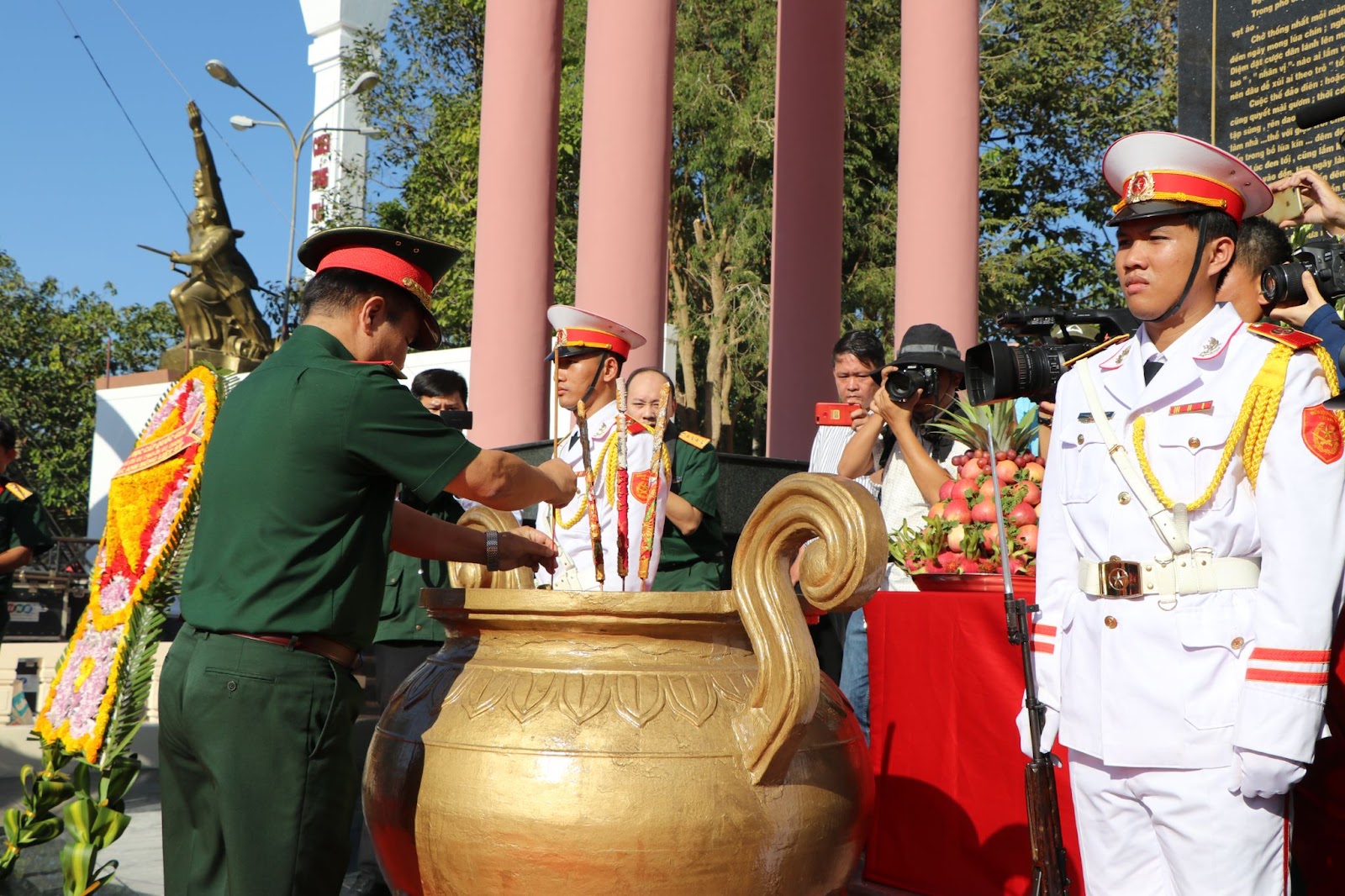
Cadres and soldiers visited and offered incense in remembrance. (Source: Collected)
At the historical and cultural relic of the Tua Hai victory, groups of visitors offered incense to express deep gratitude. One of the typical images was the scene of Lieutenant General Le Chiem, Deputy Minister of National Defense, performing the memorial ritual during a visit. This moment contributes to affirming the importance of the Tua Hai relic in the flow of revolutionary history.
4. Tourist attractions near the historical and cultural relic of the Tua Hai victory
4.1. Black Lady Mountain
In the journey to explore Tay Ninh, Black Lady Mountain is always a prominent destination, known as the "roof of the South" and also one of the three sacred acupoints of Vietnam. This is where tourists come for pilgrimage, to feel the spiritual energy of heaven and earth, and enjoy peace of mind.
On the mountaintop, the 72-meter-high statue of Lady Buddha Tay Bo Da Son stands majestically amidst heaven and earth, evoking a sense of peace. From the vast square at the foot of the statue, visitors can follow the elaborately designed path to reach the colossal sandstone statue of Maitreya Buddha, symbolizing joy and peace.
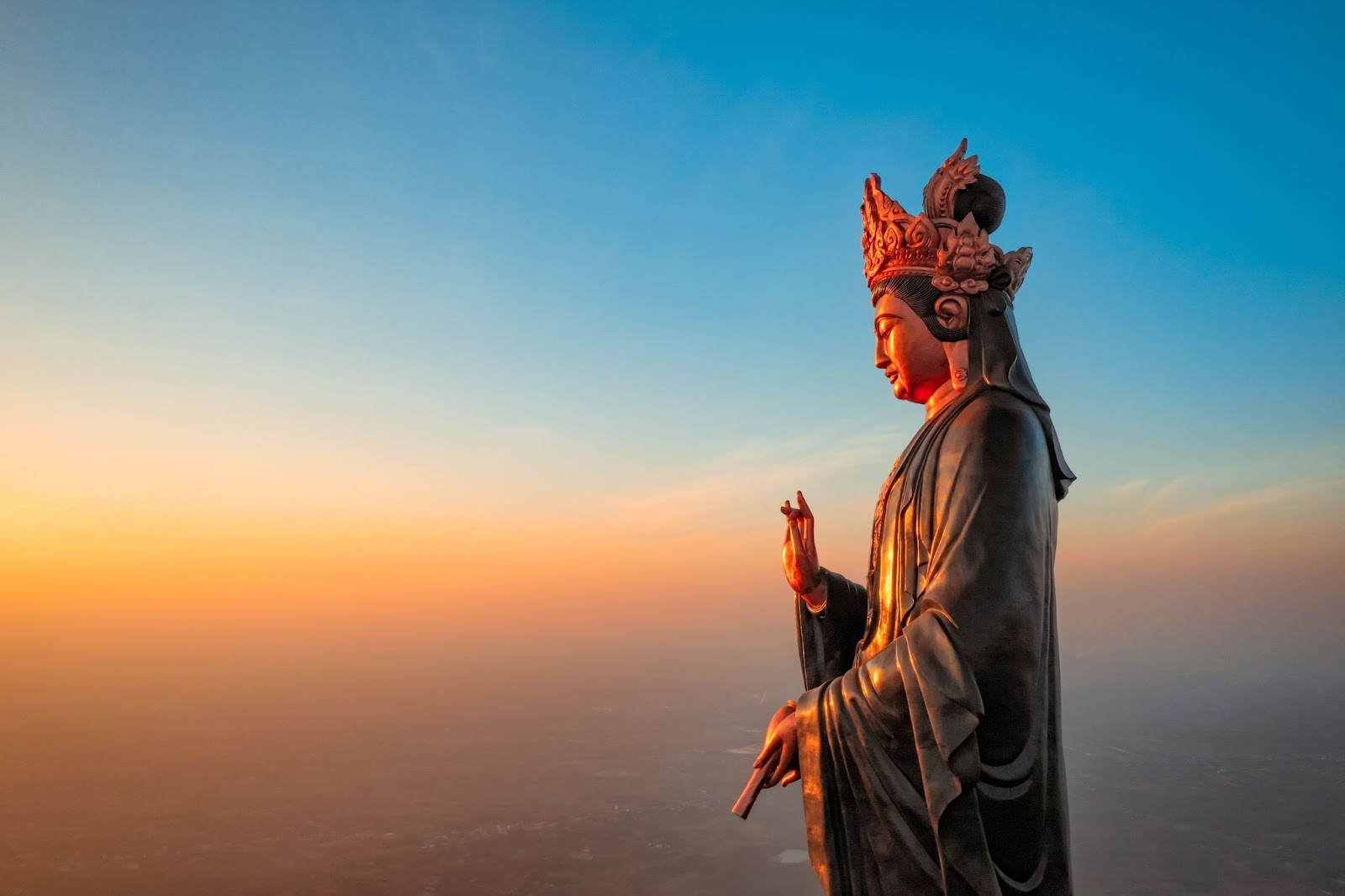
The Statue of the Goddess of Mercy Tay Bo Da Son is the embodiment of wisdom, virtue, and compassion.
Every Saturday evening, the Lamp Offering Ceremony takes place with thousands of sparkling lights, associated with visitors' wishes for peace and safety. That atmosphere, combined with the refreshing breezes at an altitude of nearly a thousand meters, offers an unforgettable experience.
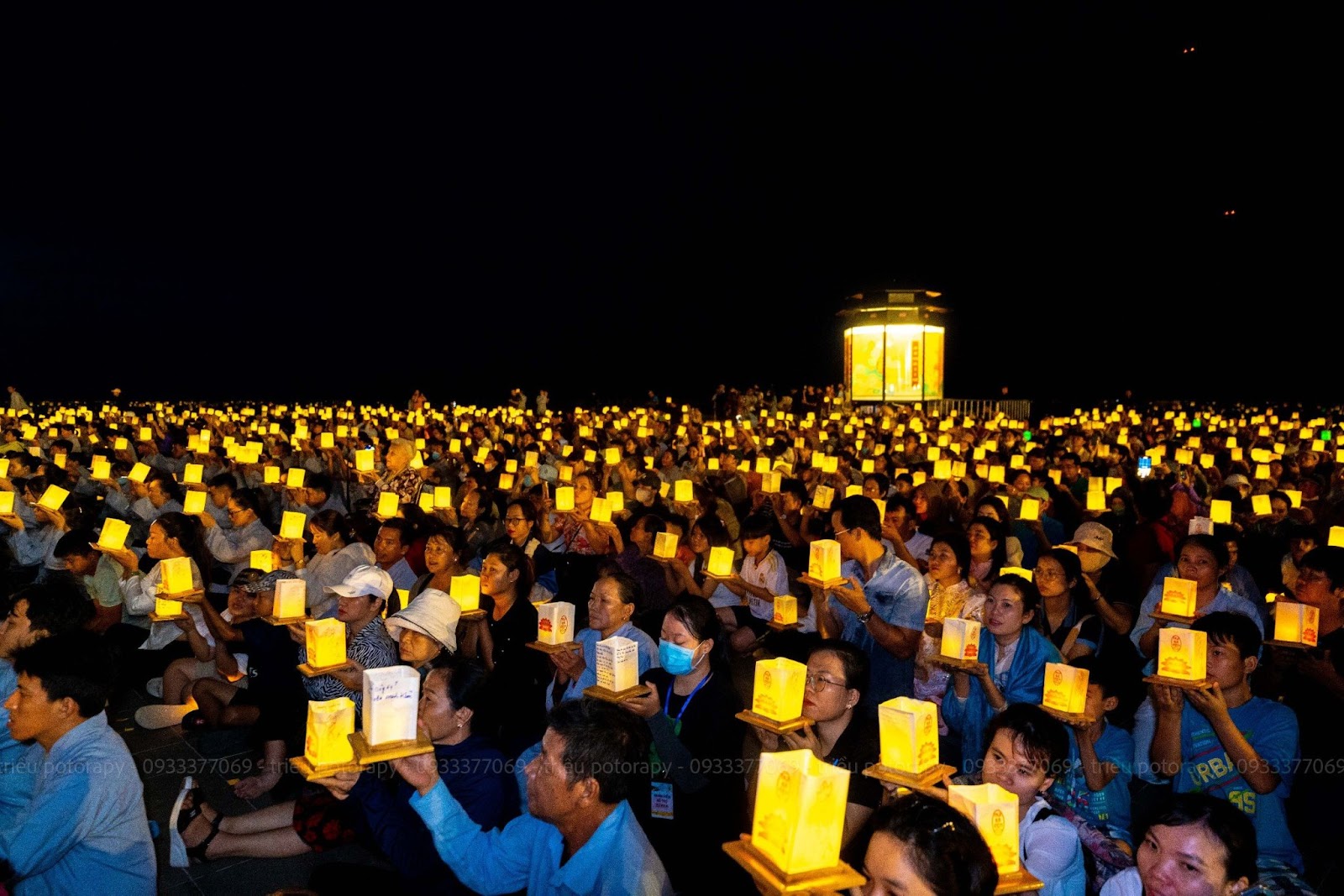
Thousands of tourists attend the Festival of Offering Lanterns on the sacred peak of Southern Vietnam.
Black Lady Mountain (Nui Ba Den) is also a "check-in" paradise. The Vo Nga Garden with its crescent moon shape overlooking the sea of clouds, the Uoc Wishing Bridge allowing tourists to observe the panoramic view of Tay Ninh, and the stairs leading up to the statue of Bodhisattva Di Lac are all ideal stops to capture moments. Young people who love novelty are also particularly fond of Ba Den ice cream – a snack creatively shaped like cable cars, lotus flowers, or the 986m milestone.
4.2. Dau Tieng Lake
About 38 km east of Tay Ninh center, Dau Tieng Lake stretches across three provinces: Tay Ninh, Dong Nai (former Binh Phuoc), and Ho Chi Minh City (former Binh Duong). Built from 1981 to 1985, this project not only serves the role of providing irrigation water but also opens up a unique tourist landscape.
With its vast area, the lake surface is as calm as a mirror, interspersed with islands and rocky shores, Dau Tieng Lake offers a peaceful and poetic atmosphere. This is an ideal location for tourists to camp, watch the sunrise, or take souvenir photos.

Peaceful beauty of fishermen fishing at Dau Tieng Lake. (Source: Collected)
4.3. Central Office for South Vietnam Base
The Central Office for South Vietnam Base is located in Chang Rieng Forest, Tan Lap Commune, Tay Ninh Province, near the Cambodian border. This was once the revolutionary capital of the South, housing the headquarters that led the resistance war against France and the US for many years.
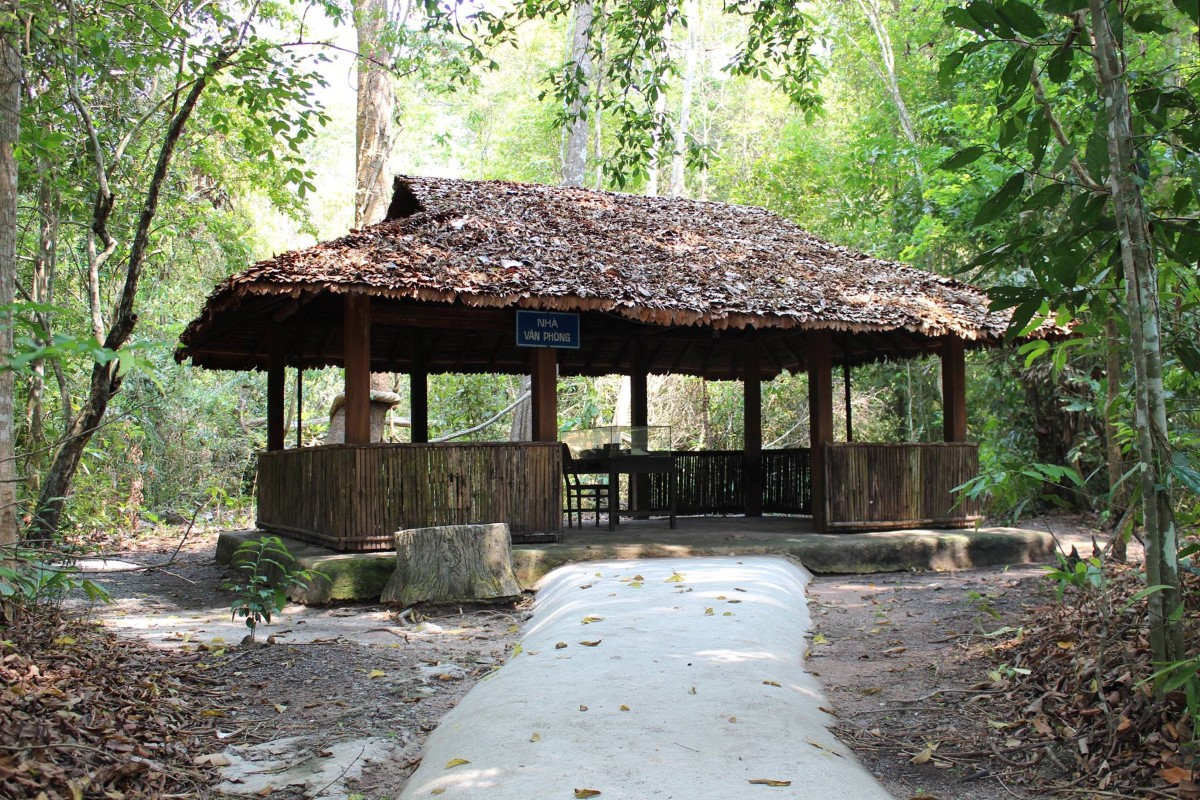
The Central Office for South Vietnam Base is a tourist destination to remember the extremely meaningful roots. (Source: Collected)
The relic area is divided into three sub-zones: the Central Office for South Vietnam Base, the Base of the National Liberation Front of South Vietnam, and the Base of the Provisional Revolutionary Government of the Republic of South Vietnam. Here, visitors can visit the assembly hall, Hoang Cam stove, bomb shelters, offices of revolutionary leaders, and the restored trench system.
Today, the base area is not only a vivid testament to a heroic historical period but also a practical school helping the younger generation better understand the resilient and indomitable spirit of the nation.
The Tua Hai Victory Historical and Cultural Relic not only preserves the victory that opened the Dong Khoi movement but also serves as a place for every visitor to reconnect with the resilient traditional source of Tay Ninh. With its spacious landscape, many meaningful sightseeing areas, and historically rich experiential journeys, this is definitely a must-visit destination in your exploration of this sacred land full of imprints.


