




1. Introduction to spiritual tourism
Spiritual tourism is a form that combines sightseeing, pilgrimage, worship, and learning about cultural values at the destination. During the trip, you can pay homage to Buddha, offer incense, pray for peace, or participate in rituals associated with local beliefs. Besides the spiritual aspect, tourists also have the opportunity to explore the architecture, history, and legends preserved through generations. Therefore, this journey is not only about sightseeing but also helps you understand more about the cultural life of each region.
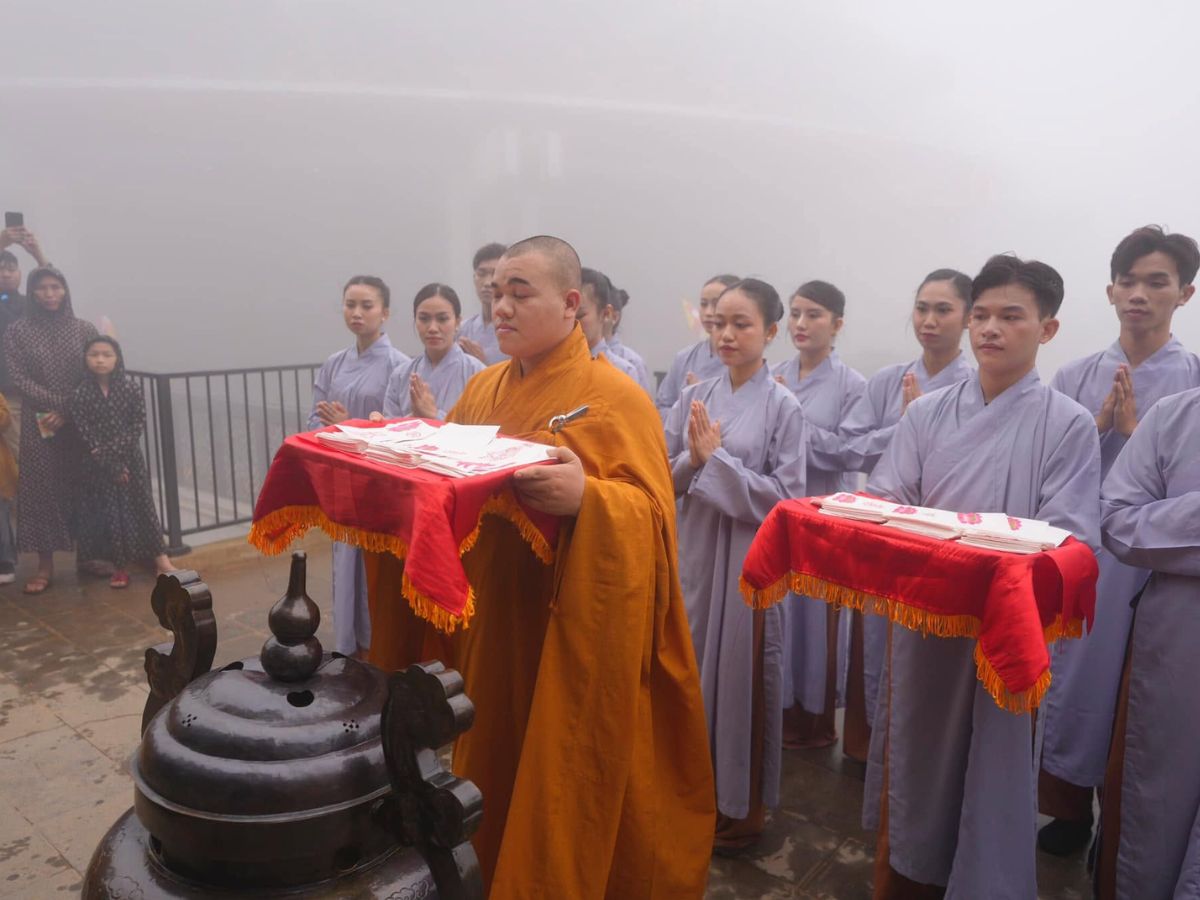
Solemn prayer ritual for peace in the mist on the summit of Ba Den Mountain. (Source: Collected)
In modern life, many people choose spiritual tourism as a way to temporarily escape the rhythm of daily life and find balance again. The space of pagodas, temples, or pilgrimage sites amidst mountains and forests often brings a feeling of lightness and relaxation. When spending time paying homage and sightseeing, you can calm your thoughts, regenerate energy, and connect more deeply with your emotions. It is the blend of inner experience with natural landscapes that creates the unique characteristic of this type of tourism.
2. Popular forms of spiritual tourism today
2.1. Pilgrimage and Buddhist worship at pagodas and meditation centers
Pilgrimage and Buddhist worship are popular forms of spiritual tourism. When visiting pagodas or meditation centers, you can offer incense, pay homage, pray for peace, and send good wishes for yourself and your family. During the tour, visitors also have the opportunity to learn about the history, architecture, and special rituals at each destination.
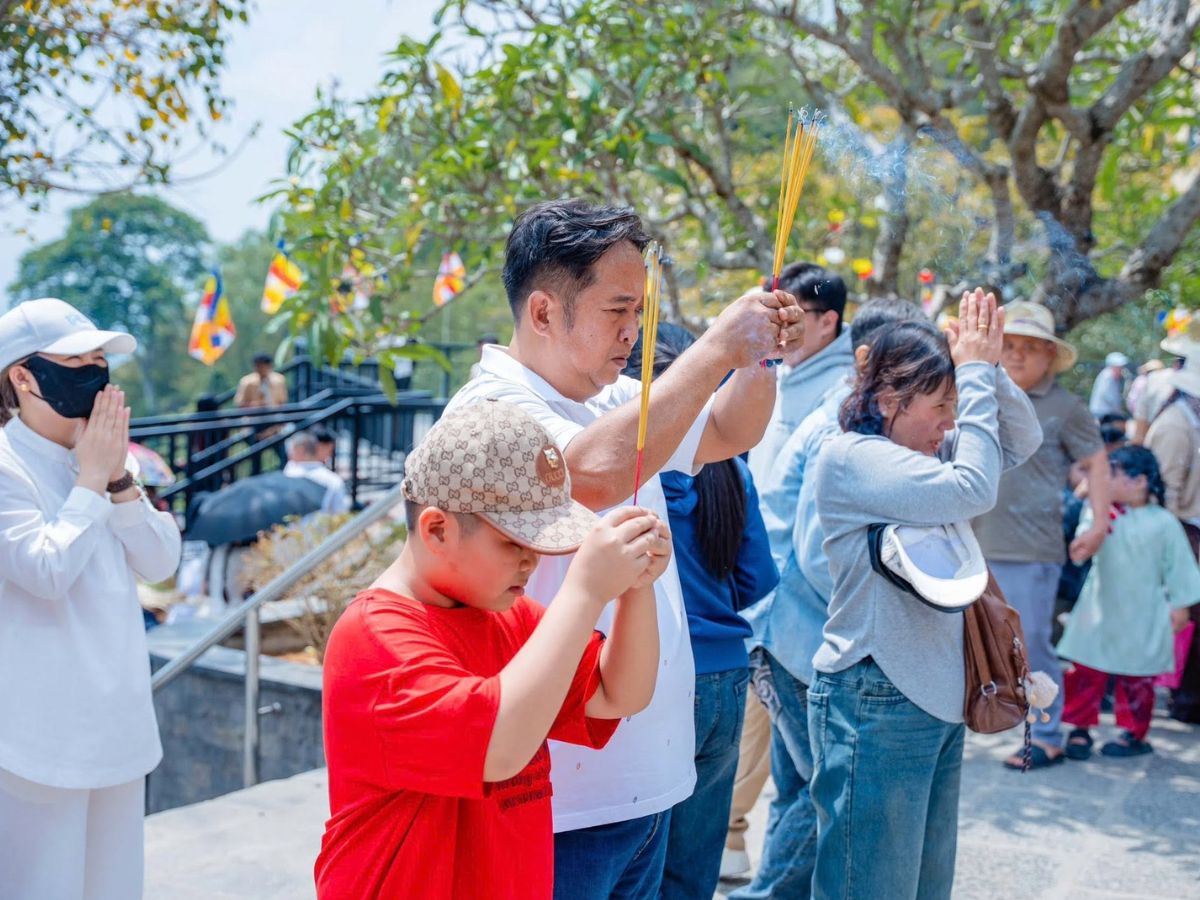
Visitors offer incense and pray for peace during Buddhist pilgrimage journeys. (Source: Collected)
The serene atmosphere of pagodas and meditation centers also makes the journey more peaceful. The sound of bells, green trees, and the slow pace of life create conditions for you to set aside daily worries. As a result, the trip is not only for worship but also helps visitors calm their emotions, relax their minds, and find balance in life.
2.2. Visiting Temples, Shrines, and Spiritual Historical Sites
Temples, shrines, and spiritual historical sites are often associated with meritorious figures, folk beliefs, or stories passed down through generations. When visiting, you can not only offer incense but also learn about the origin of the structures, the legends of worship, and the role of the place in community life. This adds historical and cultural depth to the trip.
Besides their religious significance, these structures also impress with their traditional architecture, statues, horizontal lacquered boards, and intricate carvings. Visitors can spend time observing each space, listening to local stories, and feeling the imprint of time. The combination of worship and heritage exploration makes the journey more relatable, understandable, and valuable.
2.3. Participating in Cultural and Religious Festivals
Each spiritual festival reflects the local beliefs and unique identity. During occasions like early spring, Buddha's Birthday, Vu Lan, or specific deity commemoration days, many rituals such as offering incense, procession, praying for peace, and offering lamps are solemnly organized. Through these, you can better feel the faith, customs, and how the community preserves long-standing spiritual values.
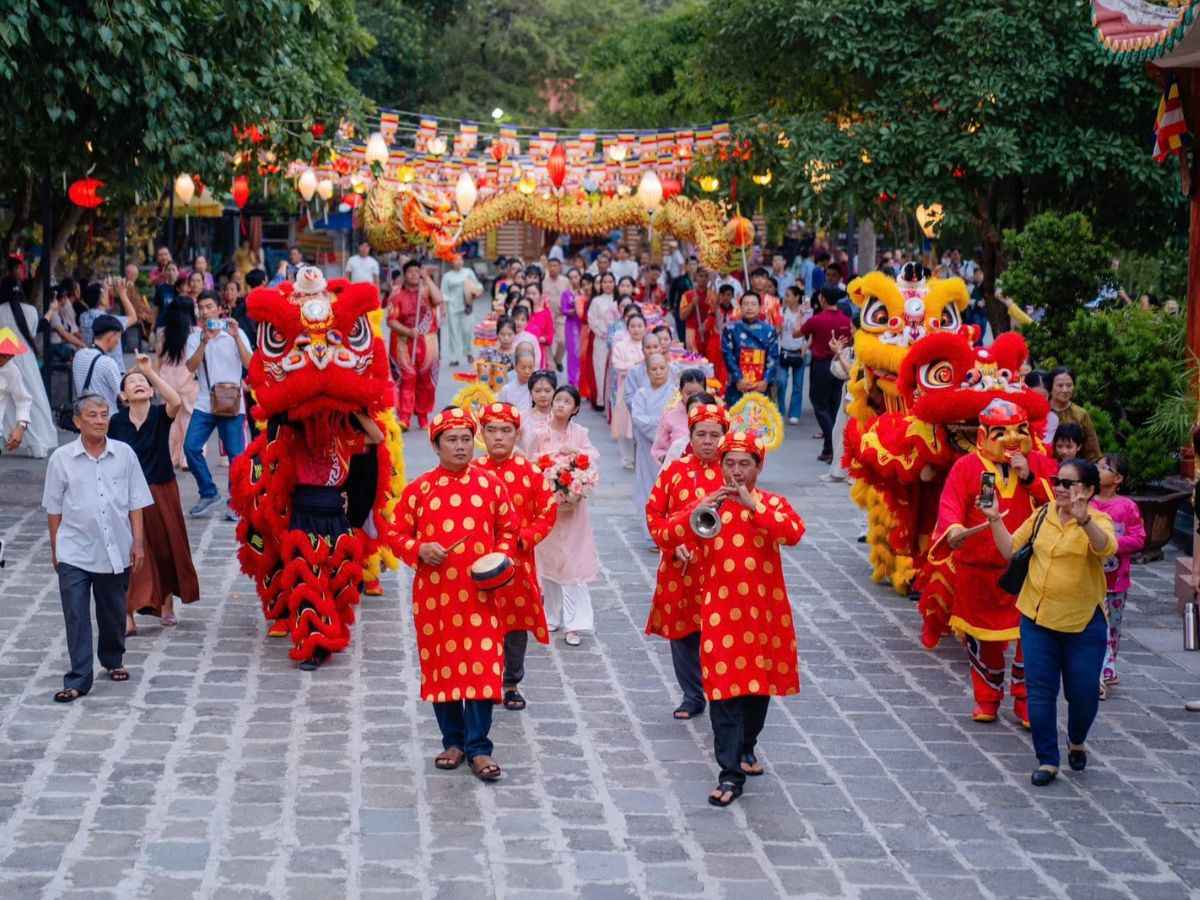
Lion dance procession in the spiritual cultural festival at Nui Ba Den Mountain. (Source: Collected)
The festival atmosphere is further enriched by artistic programs, folk games, and activities introducing local specialties. These experiences help the pilgrimage journey become lively while still maintaining the necessary solemnity. Thanks to this, visitors not only participate in a religious event but also have the opportunity to understand more deeply about the culture of the land they visit.
2.4. Meditation, mindfulness, and short retreats
Meditation, mindfulness, and participating in short retreats are suitable choices when you want to dedicate time to spiritual well-being. In these programs, visitors are often guided in sitting meditation, walking meditation, lectures, or mindful eating practices. The slow pace of life helps you temporarily detach from daily worries and focus more on your inner emotions.
After a period of practice, many people feel a clear sense of relaxation and better balance. This is also why this form is often combined with the trend of wellness tourism. However, for a suitable experience, you should research the content, duration, and rules of each retreat beforehand, and then choose a program that matches your capacity and needs.
2.5. Combining spiritual tourism with relaxation and nature exploration
Many spiritual destinations are located amidst mountains, lakes, or open landscapes. Therefore, you can combine pilgrimage with walking, sightseeing, and relaxation within the same journey. This arrangement makes the trip less rushed, while also creating more time for visitors to appreciate the space and enjoy the relaxing atmosphere.
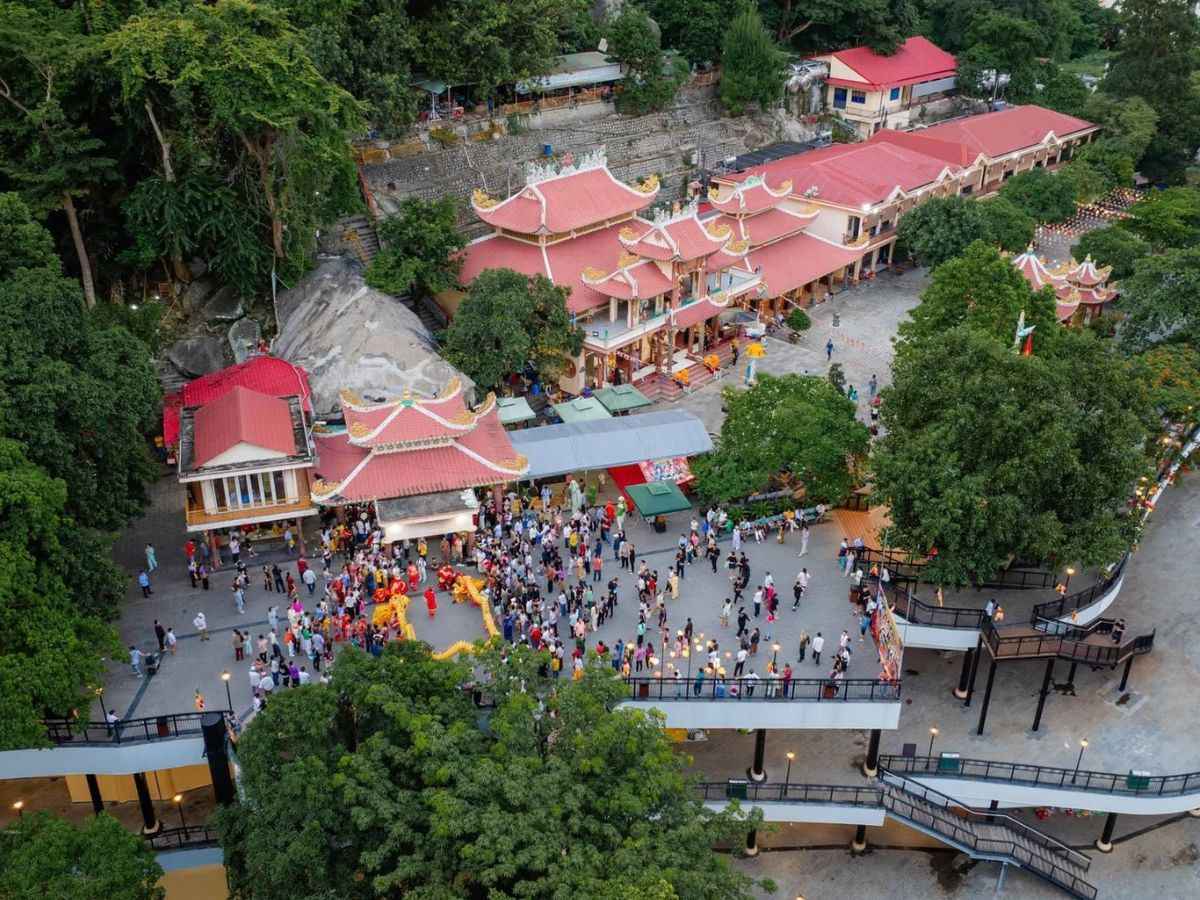
Panorama of the Nui Ba Den pagoda complex amidst green forests and streams of pilgrims. (Source: Collected)
After visiting pagodas, temples, or other religious sites, you can have a meal, rest at nearby accommodation, or continue exploring the surrounding nature. This model is suitable for families, groups of friends, and the elderly as the itinerary can be flexibly adjusted. Thanks to the harmonious combination of pilgrimage and relaxation, the trip not only meets spiritual needs but also helps you gently regenerate energy.
3. Reasons why spiritual tourism is increasingly popular
3.1. Seeking peace and balance in life
After continuous workdays, many people choose spiritual tourism as a way to temporarily escape the familiar rhythm of life. The quiet space at pagodas, meditation centers, or pilgrimage sites amidst nature helps you rest and calm your emotions. By slowing down, breathing deeply, and observing the surrounding scenery, the mind gradually becomes lighter.
From that moment of quietude, you can better understand what is bothering you and rearrange your thoughts in a positive direction. The trip does not necessarily have to be long, as sometimes just one day in a serene space is enough to help tourists regenerate energy. As a result, you can return to daily life with a stable spirit and a greater sense of balance.
3.2. Praying for health, luck, and good things
In Vietnamese life, visiting pagodas to pray for health, peace, and luck has become a familiar cultural practice. You can visit pagodas, temples, or spiritual sites at the beginning of the year, on the full moon or the first day of the lunar month, or on major holidays. Each trip is an opportunity for tourists to send their good wishes for themselves, their families, and their loved ones.
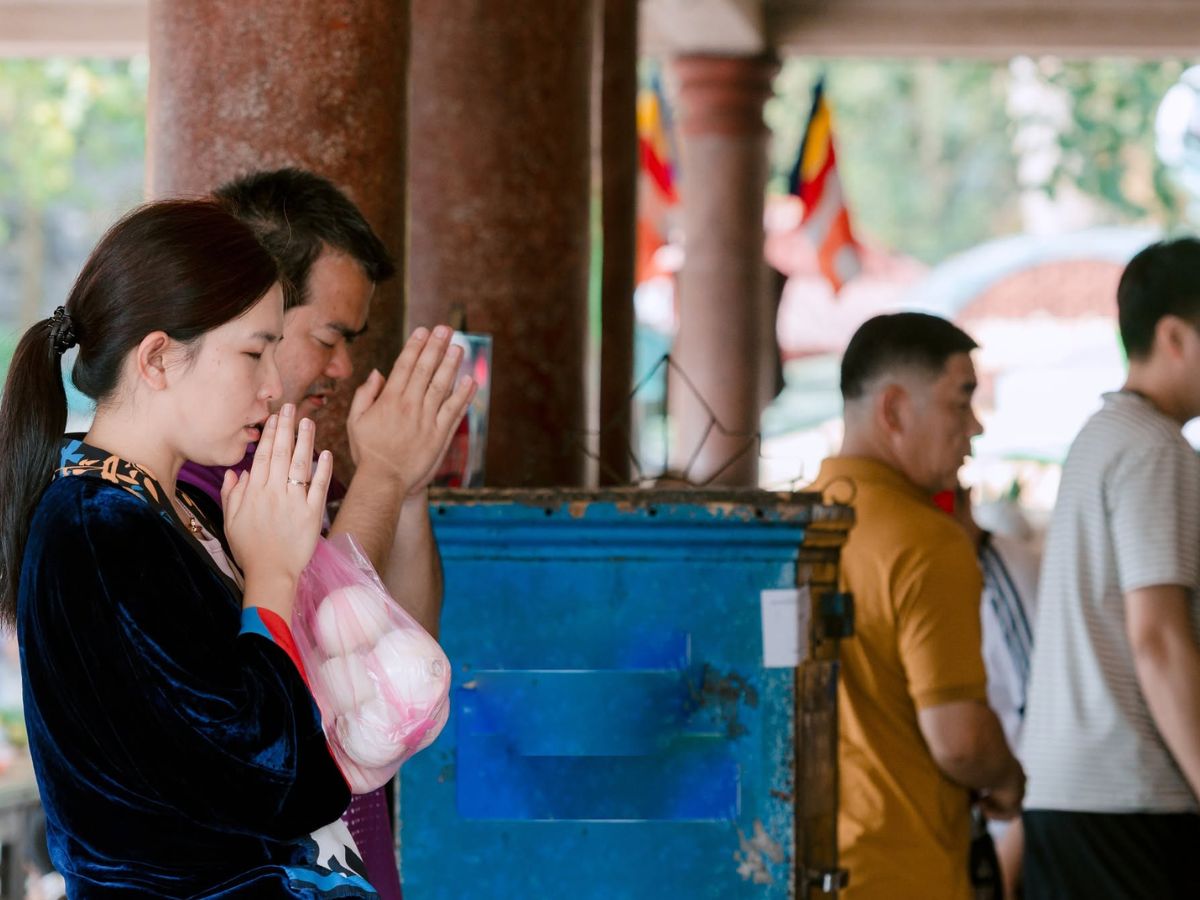
Devout visitors pray for peace at sacred pilgrimage sites. (Source: Collected)
The meaning of the journey lies not in elaborate offerings but in sincerity and solemnity. When offering incense, praying, or spending a few quiet moments, you can better feel gratitude and hope for positive things. This peace of mind makes the trip a gentle mental break, while also creating more motivation for you to live more optimistically.
3.3. Explore unique culture, history, and architecture
Each spiritual destination often preserves many layers of cultural and historical value. Through stories about the worshipped figures, the formation of the structures, or folk legends, you can gain a deeper understanding of the spiritual life of the local community. Thus, the trip is not just about pilgrimage but also opens up opportunities to explore the depth of each land.
The architecture of pagodas, temples, shrines, or monasteries also creates its own charm. Visitors can observe the tiled roofs, wooden pillars, statues, bas-reliefs, and intricately carved patterns. Each detail reflects the artistic style of a certain period, while also showcasing the craftsmanship of the ancients. Therefore, the sightseeing tour becomes more vivid when you combine sightseeing with heritage exploration.
3.4. Connect with nature on pilgrimage journeys
Many spiritual destinations are located amidst mountains, by lakes, or within vast scenic areas. This allows you to combine pilgrimage with hiking, sightseeing, and breathing in the fresh air. The presence of greenery, water, and sky helps make the journey lighter, while also fostering a sense of closeness to nature.
As you move through each space, visitors can slow down to observe the scenery and feel the changes in the surrounding environment. Moments spent before mountains, listening to the wind, or gazing at a tranquil lake often bring a sense of relaxation. Therefore, the trip not only fulfills the need for pilgrimage but also helps you rest, recharge, and find balance.
4. Notable Spiritual Tourist Destinations in Vietnam
4.1. Ba Den Mountain, Tay Ninh
Ba Den Mountain is a typical spiritual tourist destination in the South, nổi bật with a system of pagodas and shrines stretching from the foot to the mid-slope of the mountain. During your pilgrimage, you can visit Trung Pagoda, Ba Pagoda, Ba Temple, Hoa Dong Pagoda, Hang Pagoda, and Quan Am Pagoda. Each structure is associated with its own story, while also reflecting the intermingling of Buddhism and the worship of Linh Son Thanh Mau by the people of Tay Ninh.
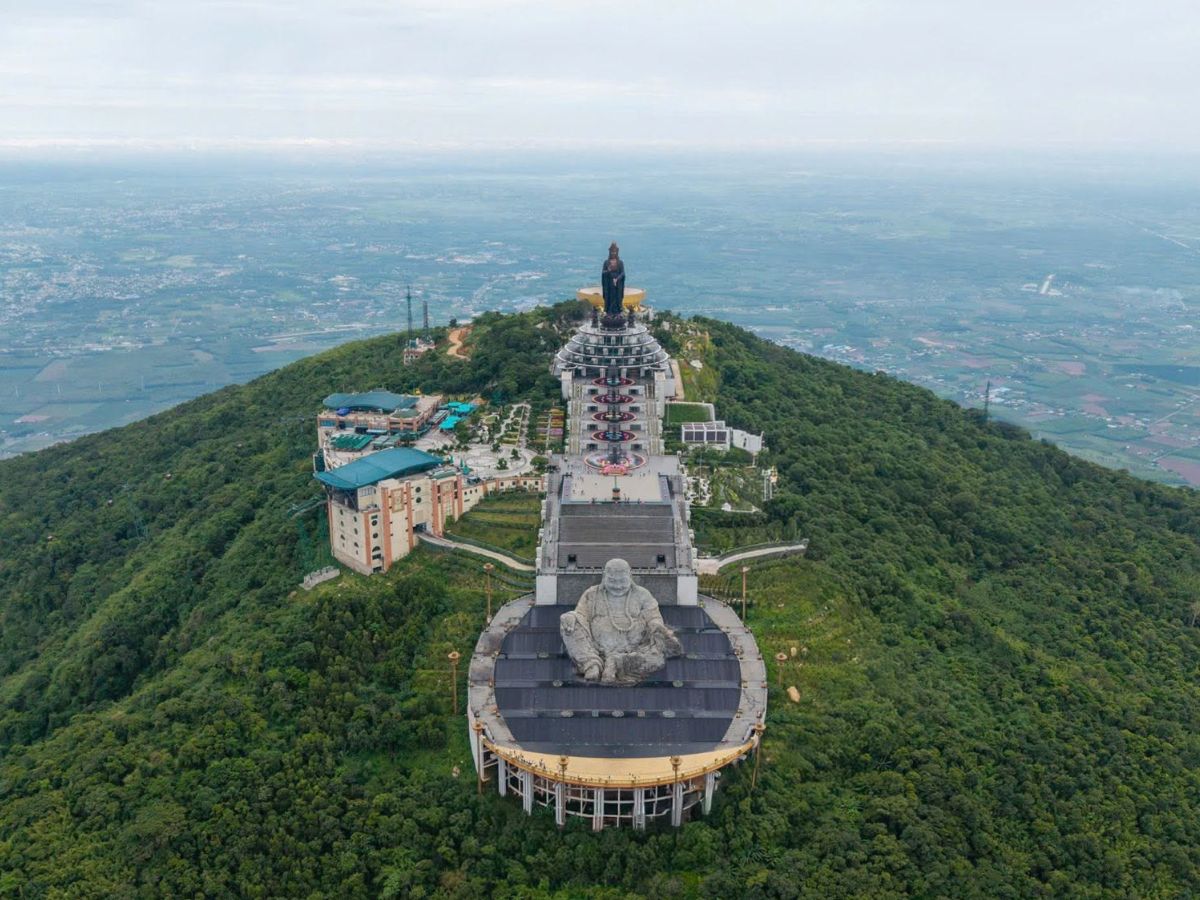
The spiritual complex on the summit of Ba Den Mountain seen from above. (Source: Collected)
The summit area offers a modern yet solemn sightseeing space. Visitors can worship the statue of Buddha Tay Bo Da Son, explore the Buddhist Exhibition Center, Bat Nha stupa, and other prominent spiritual structures. The cable car system makes travel convenient, while also taking you up to an altitude of nearly 1,000 m to admire the panoramic view of the Tay Ninh plain and Dau Tieng Lake from afar.
👉 BOOK BA DEN MOUNTAIN CABLE CAR TICKETS NOW!
4.2. Yen Tu Mountain, Quang Ninh
Yen Tu is considered the cradle of the Truc Lam Zen school and is associated with the spiritual journey of King Tran Nhan Tong. When you come here, you can visit the pagodas, hermitages, and stupas located along the mountainside. Each stop carries its own significance, helping visitors understand more about the history of Vietnamese Buddhism and the engaged Buddhism spirit of the Truc Lam school.
The pilgrimage journey at Yen Tu is also an opportunity to discover the beauty of the Northeastern mountains and forests. The space of bamboo forests, clouds, mountains, and winding paths creates a sense of tranquility throughout the trip. Visitors can combine walking with the cable car to reach Hoa Yen Pagoda, Dong Pagoda, and structures located at higher altitudes, thereby both worshipping Buddha and enjoying the expansive natural scenery.
4.3. Huong Pagoda, Hanoi
Huong Pagoda is a famous spiritual complex located amidst the Huong Son mountains, where pagodas, temples, and natural caves converge. The journey usually begins with a boat trip on Yen Stream, after which visitors continue to visit Thien Tru Pagoda and Huong Tich Cave. This mode of travel creates a unique experience, as you can worship Buddha while also enjoying the scenery of mountains, water, and the green trees on both sides.
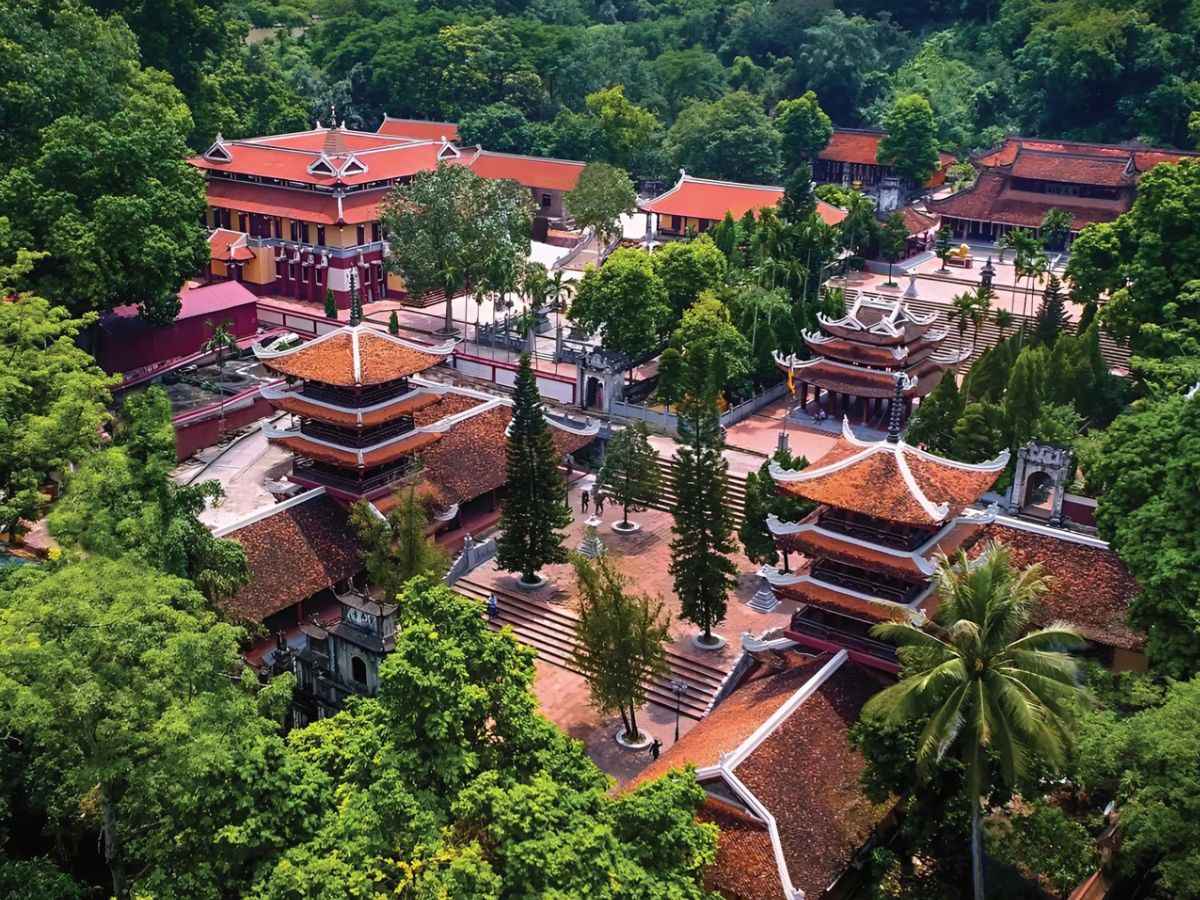
Overview of the Huong Pagoda complex amidst the lush green Huong Son mountains and forests. (Source: Collected)
The festival season is when Huong Pagoda is imbued with an atmosphere of traditional culture and beliefs. When you visit, you can offer incense, pray for peace, and learn more about the stories associated with each structure. The combination of natural landscapes and sacred spaces makes the trip emotionally rich, suitable for both pilgrims and culture-loving tourists.
4.4. Bai Dinh Pagoda and the Trang An complex, Ninh Binh
Bai Dinh Pagoda is a prominent destination in Ninh Binh, where you can combine Buddhist worship with visiting a large-scale architectural complex. The pagoda area includes many temples, corridors, and Buddha statues harmoniously arranged according to the terrain. During your visit, you can both pay homage and learn more about Buddhist architecture and the cultural values associated with the ancient capital region.
After leaving the pagoda, you can continue your journey at the Trang An complex. A boat trip through rivers, caves, and limestone mountains offers a relaxing experience, balancing the itinerary. The combination of the spiritual space at Bai Dinh and the natural landscape at Trang An creates an experience-rich trip, suitable for families, friends, and heritage explorers.
4.5. Tam Chuc Pagoda, Ninh Binh
Tam Chuc is a prominent pagoda complex amidst lakes, mountains, and open spaces. When you visit, you can explore large temples, offer incense, and learn about Buddhist stories depicted through statues, reliefs, and many architectural details. The arrangement of structures along a continuous axis makes the pilgrimage journey seamless and easy to follow.
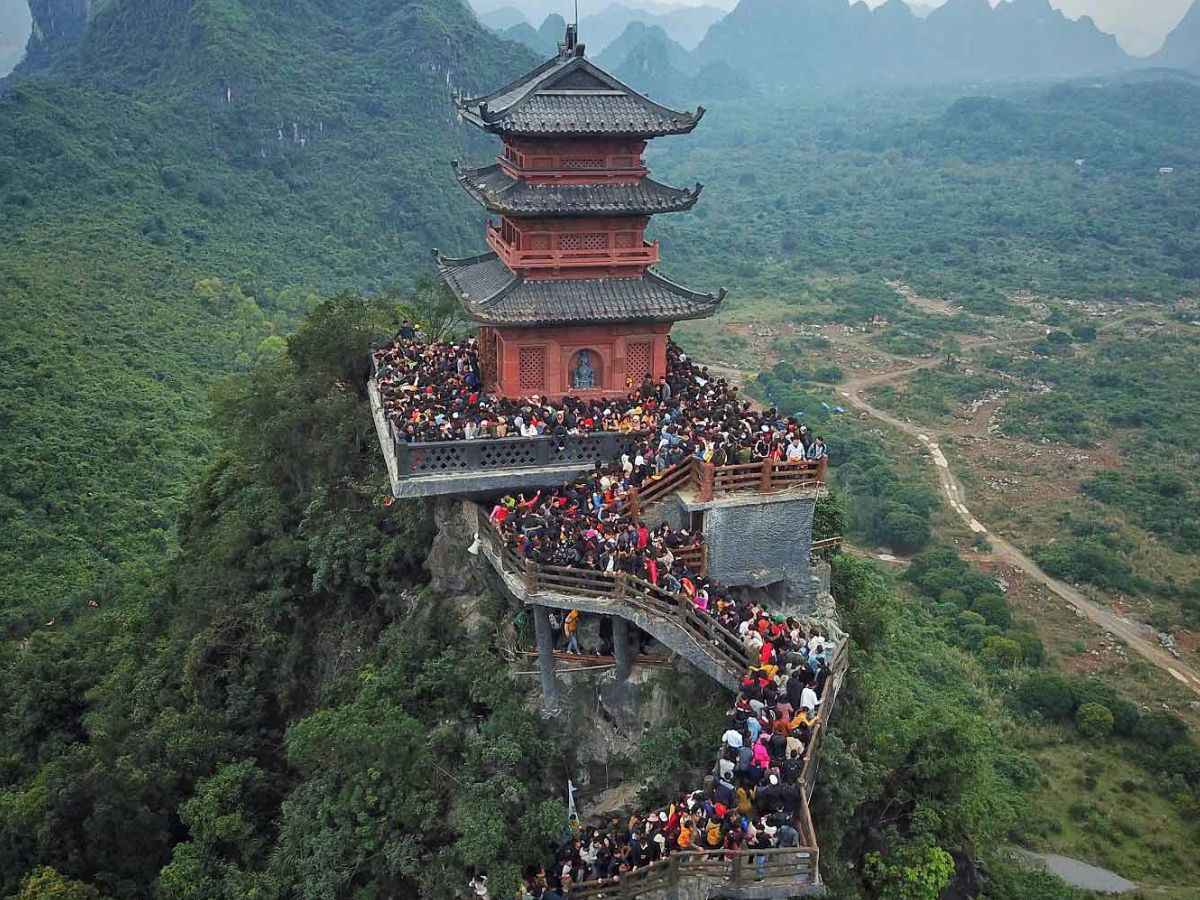
Tourists worship Ngoc Pagoda amidst the majestic Tam Chuc mountains. (Source: Collected)
After visiting the pagoda complex, tourists can spend time admiring the lake, walking, and resting amidst the peaceful scenery. The combination of large-scale architecture with the surrounding nature creates a unique charm for Tam Chuc. Therefore, the destination is suitable for those who want to worship Buddha, learn about culture, and enjoy a relaxing day trip.
Spiritual tourism is not just a journey of worship or prayer, but also an opportunity for each person to return to cultural and historical values and find balance in life. From Ba Den Mountain, Yen Tu to Huong Pagoda or Tam Chuc, each destination carries its own story, contributing to meaningful experiences. If you are looking for a trip that is both relaxing and culturally profound, spiritual tourism will be a worthwhile choice for your upcoming journey.


