




1. Overview of Linh Son Tien Thach Tu Temple and its architectural value
1.1. Location and formation history of Linh Son Tien Thach Tu Temple
Located halfway up Ba Den Mountain at an altitude of 350 m above sea level, the architecture of Linh Son Tien Thach Tu Temple has undergone over 300 years of formation and development. The pagoda is situated in Ninh Son ward, Tay Ninh city, and was founded by Zen Master Dao Trung - Thien Hieu of the Lieu Quan Zen sect in the mid-18th century.
Throughout many generations, the pagoda has undergone three major renovations. In 1857, Patriarch Phuoc Chi upgraded it from a thatched-roof, plank-walled structure to a solid construction with a main hall and lecture hall. Subsequently, from 1910 to 1919, Patriarch Tam Hoa expanded it with additional facilities such as a guesthouse and auxiliary structures. From 1992 to 2000, under the guidance of Nun Thich Nu Dieu Nghia, the pagoda was comprehensively renovated over an area of 210 m², still preserving the traditional architecture of Linh Son Tien Thach Tu Temple.
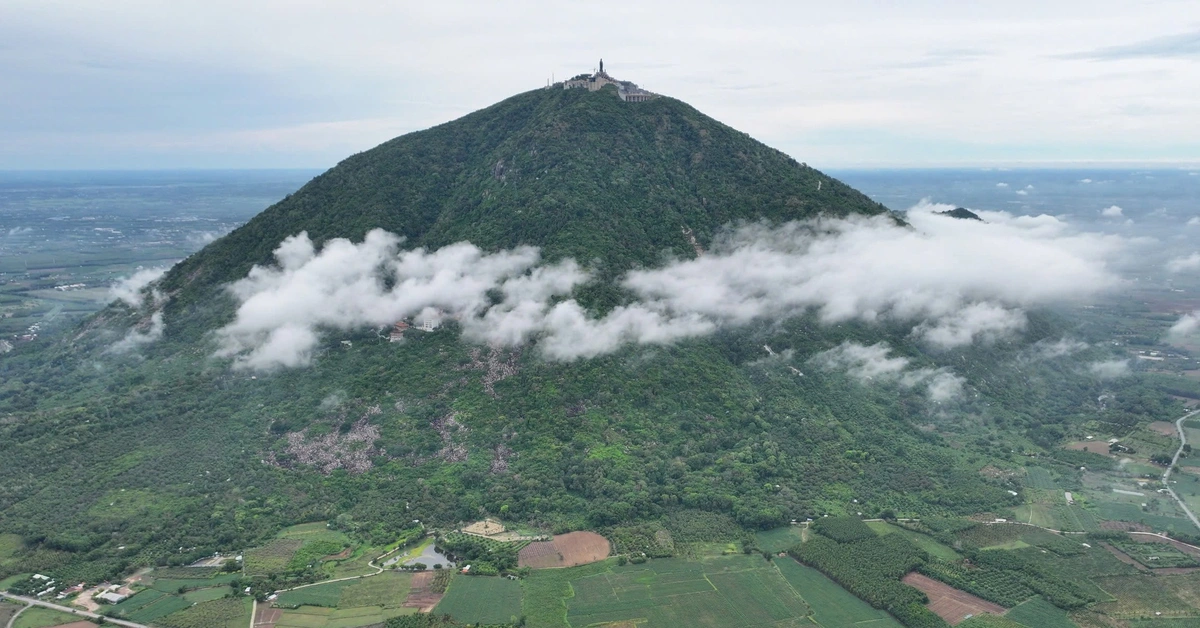
The pagoda is located at Ba Den Mountain. (Source: Collected)
1.2. Architectural Role in Southern Vietnamese Buddhism
The pagoda's space is a harmonious combination of folk beliefs and orthodox Buddhist spirit. Linh Son Tien Thach Tu architecture becomes prominent through the ritual of co-worshipping Linh Son Thanh Mau along with the Buddhas, creating a distinctive feature of Southern Buddhism with a strong community spirit.
The pagoda is a symbol of enduring belief traditions, attracting many Buddhists and pilgrims at all times of the year. During festivals, it becomes the center of spiritual and cultural activities for Tay Ninh, contributing to the rich spiritual identity of the Southern region.
2. Outstanding Features of Linh Son Tien Thach Tu Architecture
2.1. Overall Architecture and Pagoda Space Layout
Covering an area of over 210 m² (14 m × 15 m), Linh Son Tien Thach Tu architecture is built harmoniously with the natural mountain terrain. The pagoda's space follows a traditional layout, with a spacious courtyard leading to a solemn front hall, followed by a majestic main hall.
The front hall features two green stone columns carved with dragon motifs, creating a striking impression at the entrance. Behind the main hall, auxiliary structures such as the monks' quarters, the ancestral hall, the East wing, and the West wing are arranged logically according to the mountain topography. Near the main area is the Lady's Shrine with its unique natural stone roof, where Linh Son Thanh Mau is worshipped according to folk customs.
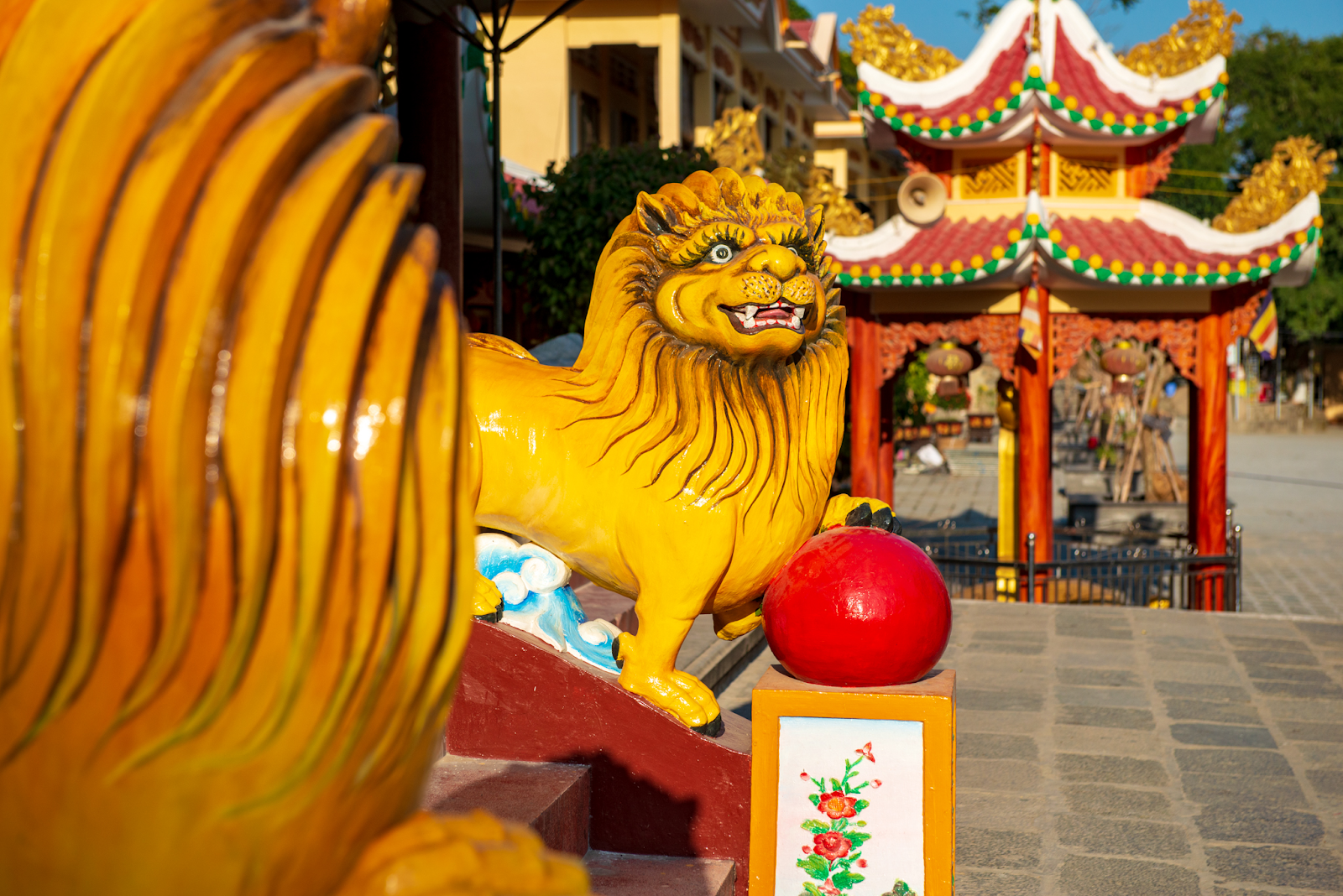
The pagoda stands out with its exquisite carving art. (Source: Collected)
2.2. Construction materials and traditional carving art
The two main materials that create the ancient charm of the Linh Son Tien Thach Tu architecture are Tay Ninh green stone and precious wood. The recent restoration process has added new materials but always focused on preserving the inherent traditional values.
A prominent artistic highlight is the two 4.5 m high, 0.45 m diameter green stone columns in the front hall, featuring vividly carved dragons. This is an artwork from the early 20th century, during the time of Patriarch Tam Hoa, reflecting the talent of ancient artisans. The bas-reliefs and patterns on wood and stone carry Buddhist themes along with mountain and forest scenery, creating a harmonious artistic whole.
2.4. Main hall, lecture hall, and auxiliary buildings
The main hall is the center of the Linh Son Tien Thach Tu architecture, where Buddhas and Bodhisattvas are worshipped in a sacred space. A distinguishing feature is the co-worship of Linh Son Thanh Mau, a characteristic symbol of mountain goddess worship, alongside the traditional altars of Mahayana Buddhism.
The auxiliary buildings include the Ancestor's house, monks' quarters, East wing, West wing, guesthouse, and kitchen, arranged logically facing the mountain, convenient for religious activities and serving pilgrims. The Bà Điện, located next to the pagoda, is built with a natural stone roof, housing the worship of Than Tai (Wealth God) and Tho Dia (Land God) according to folk customs.
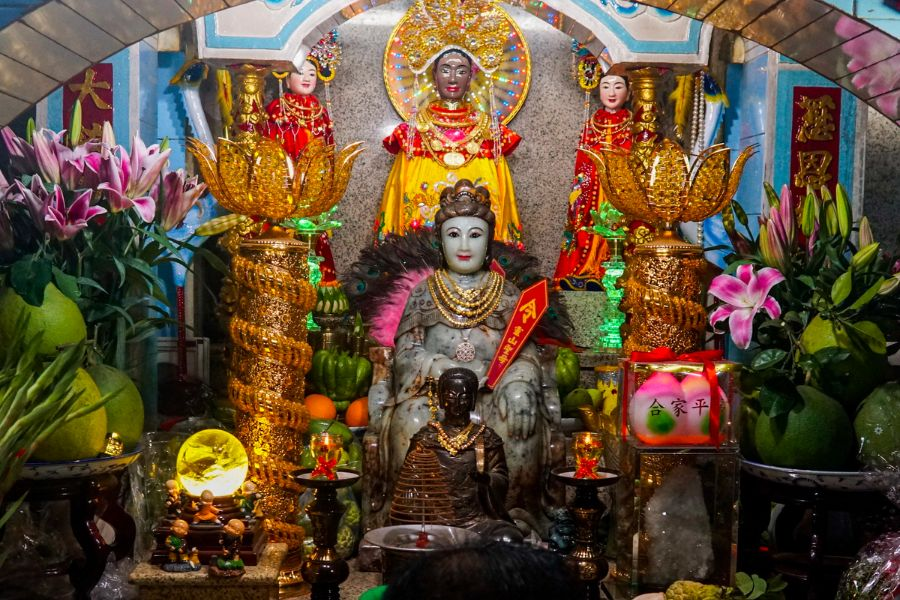
Worship area of Madam Linh Son Thanh Mau. (Source: Collected)
2.5. Temple Courtyard Landscape and Statue of Quan The Am
The spacious temple courtyard opens up an outdoor space amidst the nature of Ba Den mountain forest, creating a fresh, sacred, and peaceful atmosphere. This place is particularly suitable for meditation, worship, and seeking tranquility when visiting the architecture of Linh Son Tien Thach Tu .
The statue of Bodhisattva Quan The Am is solemnly placed in the courtyard, facing the vast natural space. The statue's location has been carefully considered, creating a connection between the spiritual structure and the mountain scenery, bringing visitors a sense of peace and serenity from the very first steps into the temple.
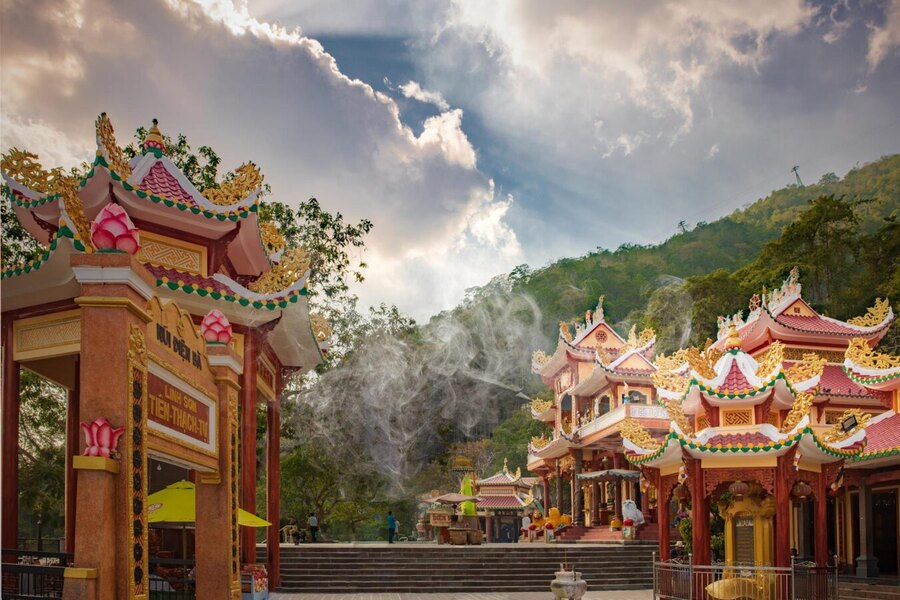
Temple courtyard landscape of Linh Son Tien Thach Tu Temple. (Source: Compilation)
3. Process of restoration and development of temple architecture
3.1. Major restoration milestones (1857, 1910 - 1919, 1992 - 2000)
The year 1857 opened a new chapter in the history of Linh Son Tien Thach Tu Temple architecture when Patriarch Phuoc Chi undertook the complete reconstruction of the temple. He built new main halls, lecture halls, and opened paths up the mountain, transforming the place from a thatched temple into a solid structure.
From 1910 to 1919, Patriarch Tam Hoa continued to expand the scale by building guesthouses, widening pathways, constructing the Ancestor House, East and West wings made of stone, and completing the Bà Điện area. Notably, the two famous bluestone pillars carved with dragon motifs were also completed during this period.
After being affected by wartime (1945-1956), the Linh Son Tien Thach Tu Temple architecture was strongly restored from 1992 to 2000 under the guidance of Nun Thich Nu Dieu Nghia. The restoration was completed in 1997, with auxiliary works finished in 2000, fully meeting the needs for practice, living, and pilgrimage for monks, nuns, Buddhists, as well as visitors.
3.2. Preserving architectural heritage at Linh Son Tien Thach Tu Temple in the new era
The preservation of the Linh Son Tien Thach Tu Temple architecture always emphasizes a harmonious combination of traditional values and modern elements. Ancient architectural details such as bluestone pillars, carved dragon motifs, and the natural stone roof of the Bà Điện are preserved intact through each restoration.
Concurrently, interior structures have been renovated to meet modern living needs while retaining their ancient charm and traditional artistic beauty. Thanks to these efforts, Linh Son Tien Thach Tu Temple continues to maintain its position as a precious Buddhist heritage site of Tay Ninh and the Southern region, attracting pilgrims and tourists who appreciate traditional cultural values.
4. Artistic and spiritual values of Linh Son Tien Thach Tu Temple architecture
4.1. The interplay between nature and human creation
A special feature of Linh Son Tien Thach Tu Temple architecture is the exquisite blend of natural rocky mountain terrain and human-made structures. The natural stone roof at Bà Điện, large rocks utilized as foundations, and the sinuous dragon lines on the bluestone pillars create a harmonious connection between traditional elements and the mountain scenery.
The temple's open space facing nature is highly suitable for the climate and distinctive vitality of Ba Den Mountain. Each area, such as the statues, gardens, and altars, is meticulously arranged to honor the pristine beauty and sacred feng shui elements. This is the result of the creativity and dedication of past generations in building a spiritual space connected with nature.
4.2. Linh Son Tien Thach Tu Temple: A typical ancient temple heritage of the Southern region
As a representative cultural and spiritual symbol of the Southern region, Linh Son Tien Thach Tu Temple architecture preserves many unique artistic and architectural values. The temple is both an important spiritual pilgrimage site and a tourist destination attracting a large number of visitors each year.
The attraction of this place comes from its ability to connect history and modernity, belief and cultural tourism. When visiting, tourists not only find a spiritual haven to pray for peace but also have the opportunity to admire ancient architecture and explore the development history of Southern Buddhism through meticulously preserved details.
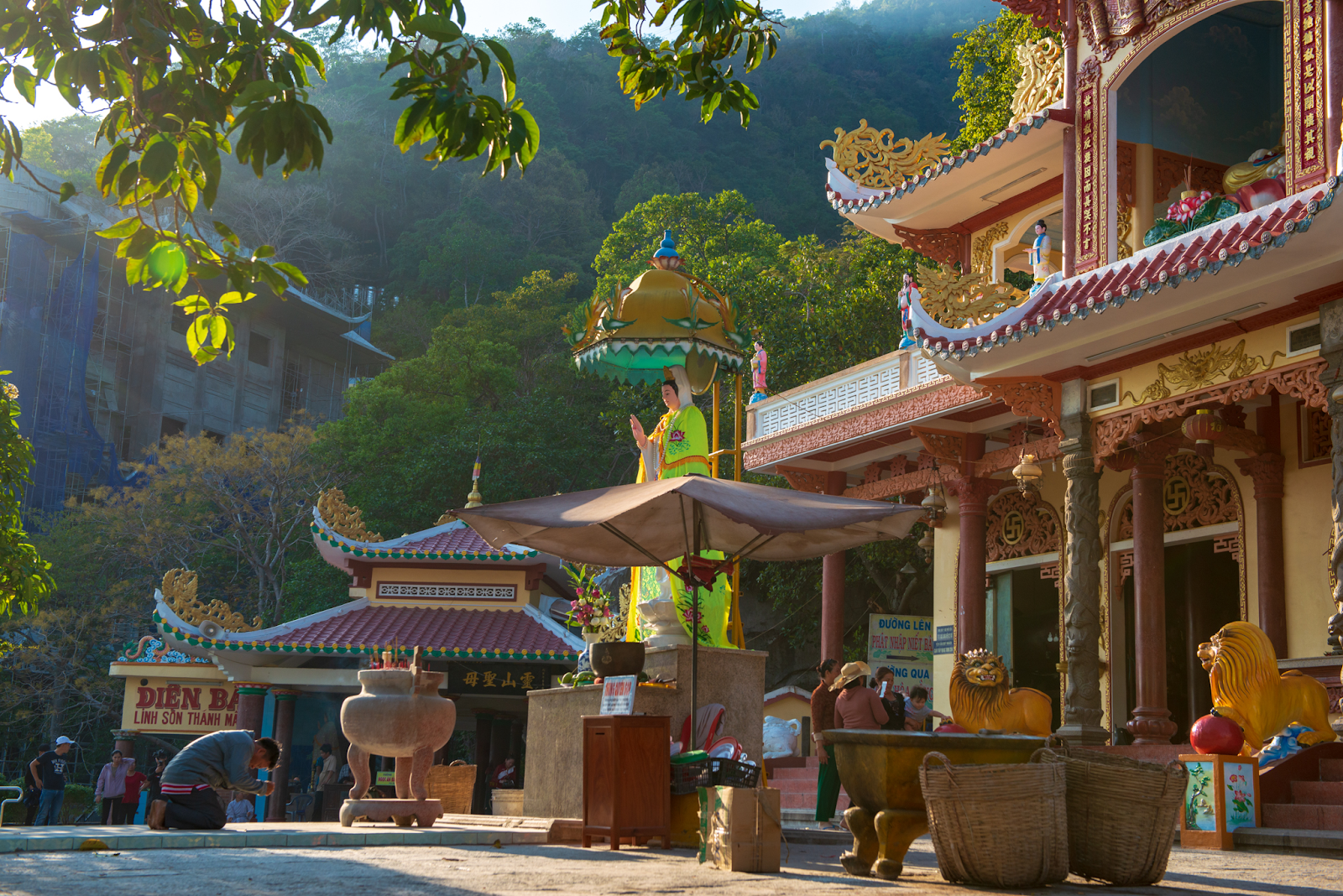
The pagoda holds many artistic values for the Ba Den Mountain tourist area. (Source: Collected)
5. Experience and notes when exploring the architecture of Linh Son Tien Thach Tu
The most suitable time to admire the architecture of Linh Son Tien Thach Tu is in the morning or late afternoon, when the weather is cool and the light is gentle. This is also a favorable time to climb the mountain and enjoy the sacred atmosphere of the ancient pagoda.
When visiting, you should choose modest and polite attire to suit the sacred space. Bring sports shoes or sandals with good grip for convenient movement on the mountain. Some beautiful photo spots include the front hall with dragon-carved green stone columns, the pagoda courtyard with the Quan Am statue and the mountain and forest background behind.
The tour will be more complete if you combine it with a cable car experience to Ba Den Mountain to admire the panoramic view of Tay Ninh from an altitude of over 900 m. After exploring, try enjoying the diverse cuisine at Sol Kitchen restaurant or Van Son buffet to experience the flavors of mountain specialties, creating a memorable highlight for your pilgrimage.
The architecture of Linh Son Tien Thach Tu is a testament to the harmony between nature and art, between spirituality and daily life. Visiting this place, you will clearly feel the serene beauty of the ancient pagoda amidst the sacred Ba Den Mountain.


