




1. Overview of the cloud-hunting seasons on Fansipan
Known as the "roof of Indochina" with an altitude of 3,143 meters, Fansipan is one of the most famous cloud-watching spots in Vietnam. Thanks to its location between the Hoang Lien Son mountain range and the characteristic high-altitude climate, it frequently features billowing white clouds, creating a majestic, fairytale-like landscape. Therefore, which season is best for cloud hunting on Fansipan is always a question of interest to many domestic and international tourists when planning a trip to Sapa.
In fact, you can go cloud hunting at Fansipan almost all year round. However, the likelihood of seeing a sea of clouds varies depending on the season and weather conditions. Generally, the period from September to April of the following year is considered the best season for cloud hunting. This is when the weather is cool, humid, and the temperature is low, and the sky is usually clear after rain or in the early morning. Thick layers of clouds cover the valleys, interwoven with the early morning sunlight, creating a spectacular scene rarely found elsewhere.
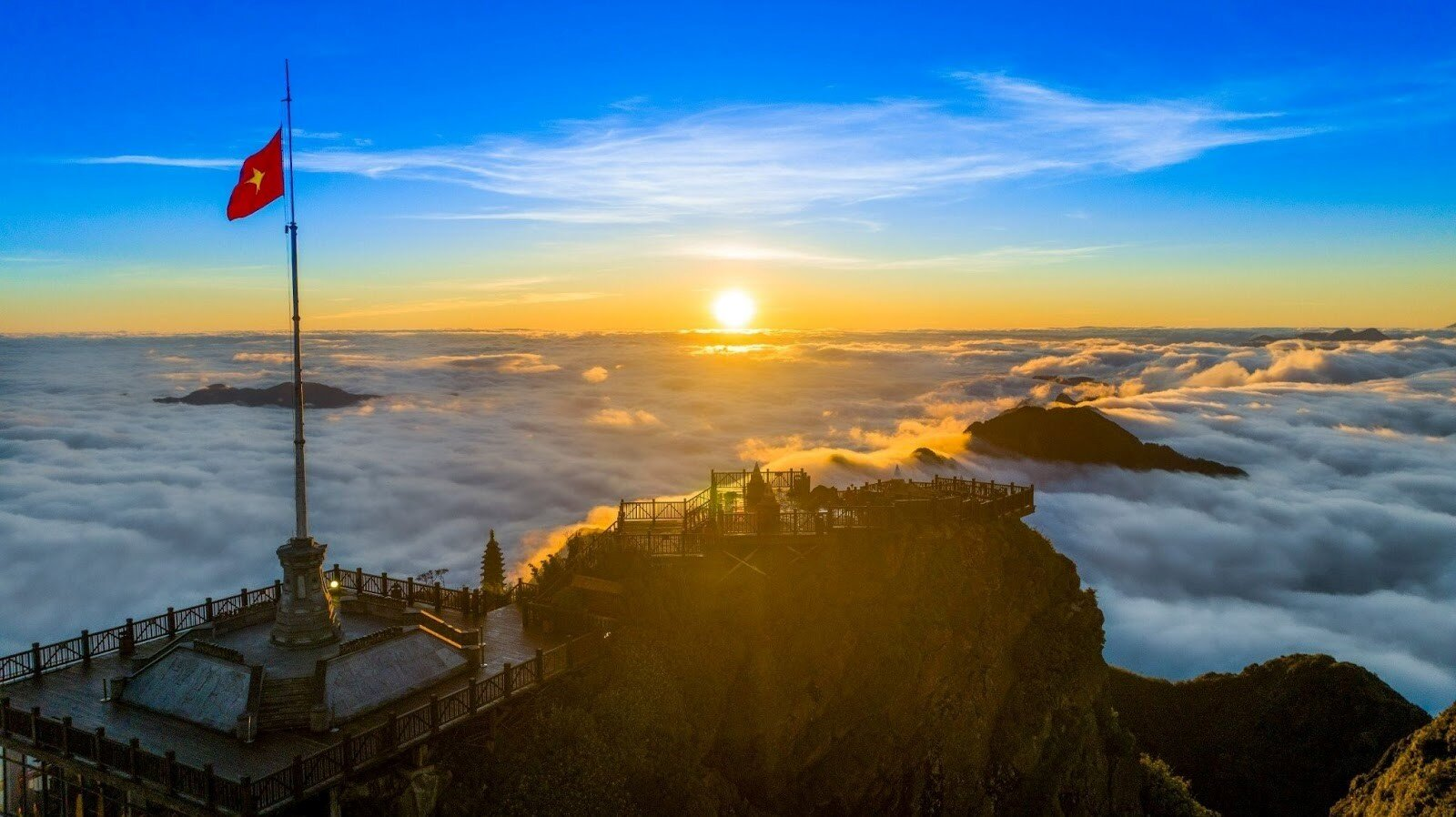
The magical sea of clouds atop Fansipan peak.
In particular, from October to December, Fansipan enters autumn and early winter with dry weather, fresh air, and expansive views. This is the ideal time to admire the sea of white clouds stretching below the mountain, while also enjoying the golden hues of the ripening rice fields in the Muong Hoa valley or watching the sunrise on the summit of Fansipan. From January to March, the sea of clouds still appears quite frequently, combined with the cool weather, the vibrant blossoms of peach and plum trees, and early spring festivals, offering a unique experience.
If you're wondering which season is best for cloud hunting on Fansipan to see the most beautiful sea of clouds, you should prioritize going to the summit in the morning from 7:00 to 10:00. This is when the clouds are still thick, the light is softer, and the weather is more stable than in the afternoon. After traveling by modern cable car, it only takes about 15 - 20 minutes to reach the summit and easily admire the majestic natural scenery, capturing impressive photos amidst the ethereal sea of clouds on Fansipan.
2. Which season to go cloud hunting on Fansipan? Discover the beauty of Fansipan through each season
2.1. Autumn (September–November)
When it comes to the question of which season is best for cloud hunting on Fansipan, autumn is always the answer chosen by many tourists and photographers. From September to November, Sapa's weather enters a dry period, with cool temperatures and clearer skies after the rainy season. The temperature difference between day and night, combined with the characteristic humidity of the high mountain region, creates favorable conditions for thick seas of clouds to appear in the early morning, covering the valleys and slopes of the Hoang Lien Son mountain range. From the cable car or the summit of Fansipan, you will feel as if you are standing in the middle of an endless ocean of white clouds.
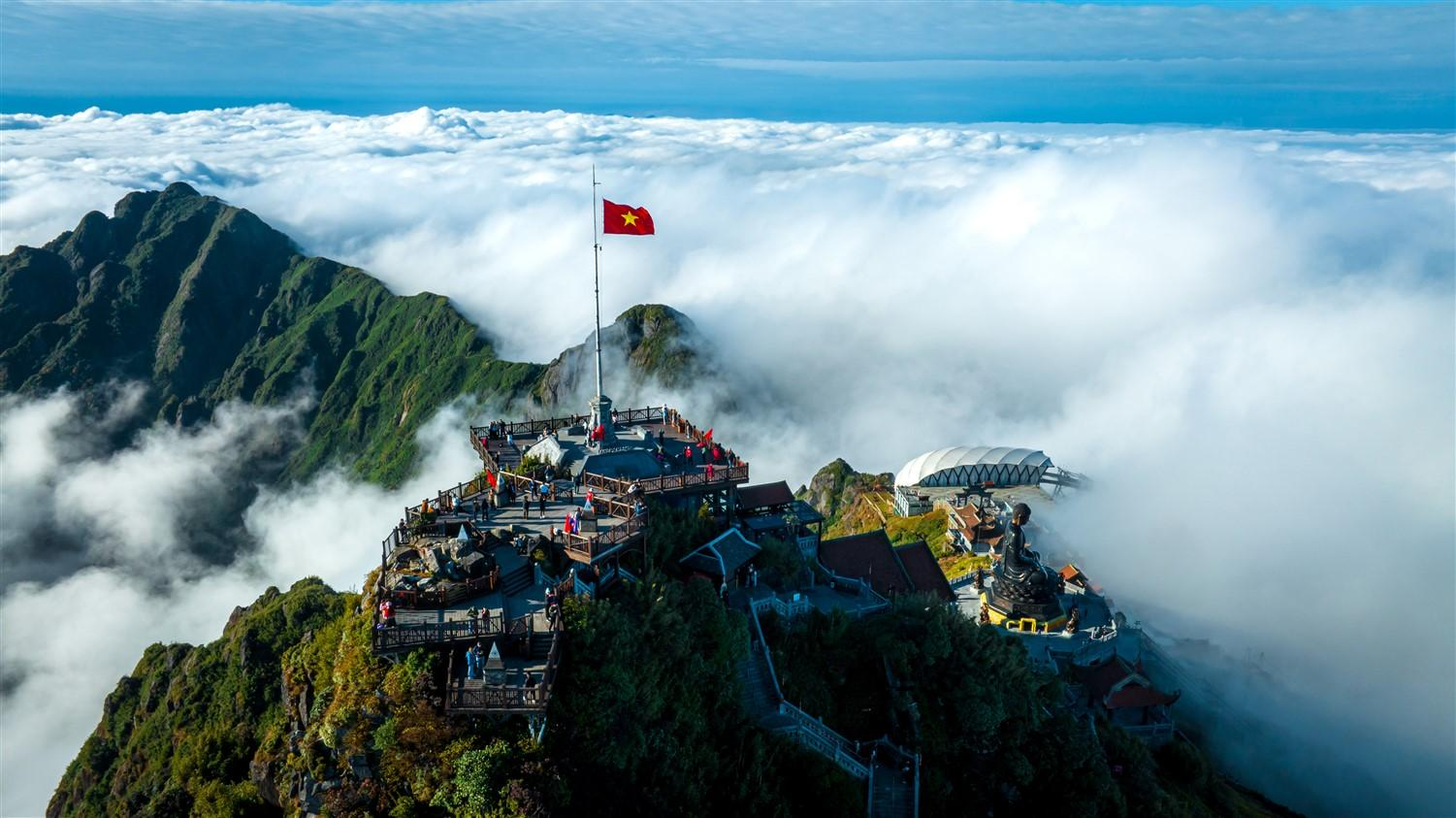
Sea of clouds on the summit of Fansipan in autumn.
Besides its famous sea of clouds, autumn in the Muong Hoa valley is also the season of ripening rice, creating a vibrant natural landscape with golden hues interspersed with the green of the mountains and forests. This is also the time when the sunlight is gentle, visibility is good, and there is little rain, making it ideal for taking photos, videos, or watching the sunrise from the "roof of Indochina". For the most beautiful photos, you should choose the first cable car ride of the day to witness the breathtaking sea of clouds under the morning sun.
2.2. Winter (December–February)
Winter is the time when Fansipan takes on a different kind of beauty, with chilly weather, fog, and thick layers of clouds covering the mountain peak. This is also the time when many tourists come to experience the feeling of standing amidst a sea of white clouds in a peaceful and majestic setting. Temperatures on the summit of Fansipan can drop below 0°C during strong cold spells, creating conditions for frost or snow – a rare phenomenon in Vietnam.
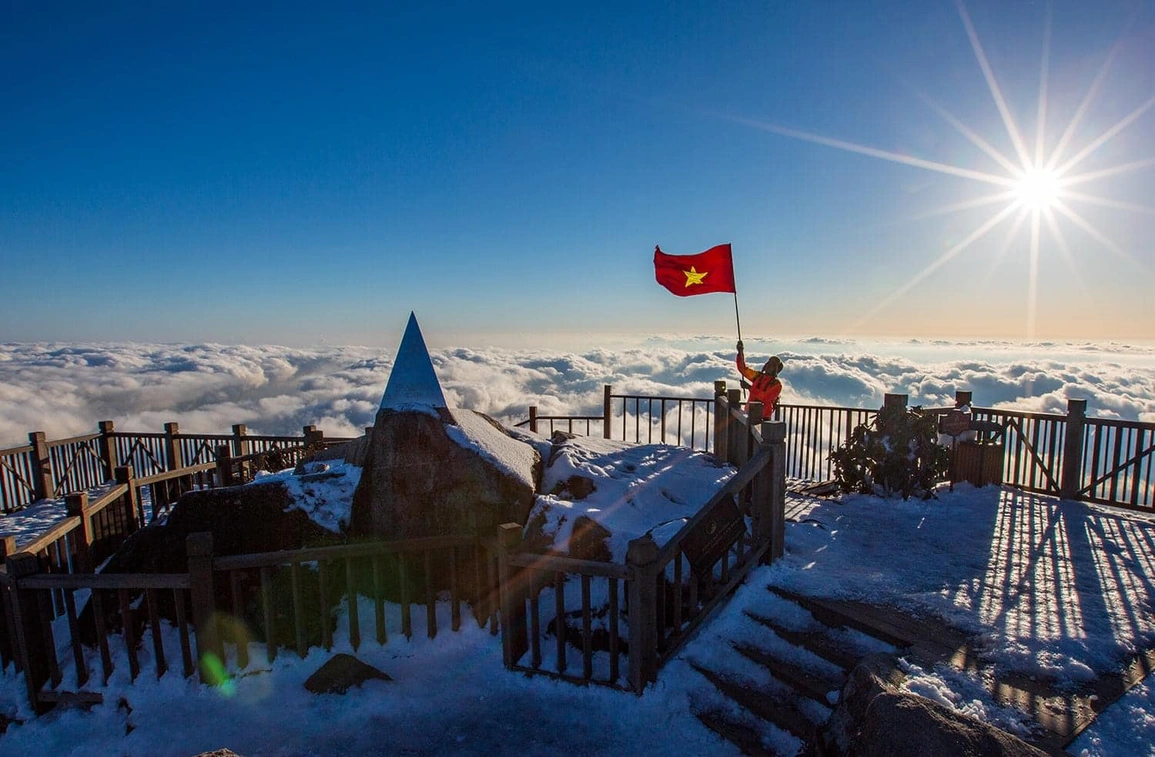
Sea of clouds and snow create a breathtaking landscape at Fansipan.
Besides cloud hunting, winter also offers stunning scenery at the spiritual and cultural complex on the summit of Fansipan. The Great Buddha Statue, Kim Son Bao Thang Pagoda, Bich Van Zen Monastery, and the stone steps leading up to the 3,143m marker all become mystical as they appear and disappear amidst the clouds and mist. For tourists who love photography or want to seek unique experiences, winter is the ideal time to capture rare moments amidst the majestic nature of Northwest Vietnam.
2.3. Spring (March–April)
After the harsh winter, Fansipan enters spring with a pleasant climate, fresh air, and vibrant scenery. Although the sea of clouds isn't as dense as in autumn or winter, this is still a time with many beautiful cloud-watching days, especially in the early morning after light rain or when the temperature drops at night. Therefore, if you're wondering which season is best for cloud hunting on Fansipan, combined with flower viewing and cultural experiences, spring is a very worthwhile option.
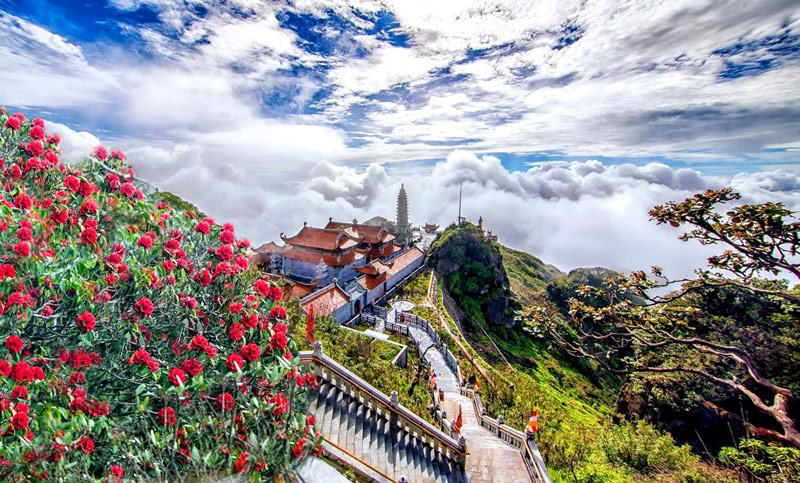
The vibrant colors of spring flowers and the sea of clouds create a colorful natural landscape.
A special feature of spring is the simultaneous blooming of a variety of flowers such as peach blossoms, plum blossoms, pear blossoms, azaleas, and many other highland flowers throughout Sapa and the Fansipan tourist area. This is also the season for many cultural festivals, New Year's prayers for peace, and spiritual activities that attract a large number of tourists. The combination of sea of clouds, blooming flowers, and festive atmosphere creates a scene that is both poetic and rich in cultural identity, offering unforgettable experiences on the journey to conquer the "roof of Indochina".
2.4. Summer (May–August)
Summer isn't the peak season for cloud watching due to increased rainfall and faster weather changes. However, a beautiful sea of clouds often appears on Fansipan in the early morning, especially after nighttime rains or on clear days following rain. By monitoring weather forecasts and choosing the right time, you can still admire the white clouds covering the mountain ranges and valleys from the cable car system or the mountaintop area.
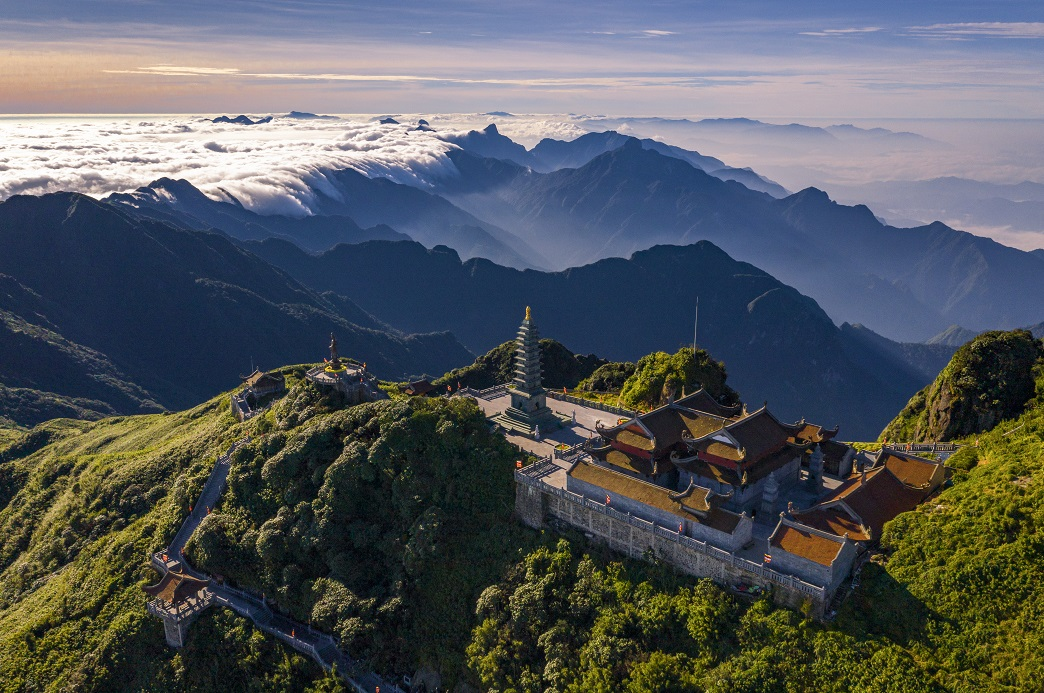
Fansipan is a popular summer destination for many tourists seeking refuge from the heat.
This is also the peak tourist season for many families thanks to the summer holidays and the much cooler climate compared to major cities. Besides cloud hunting, you can also combine your trip with exploring the lush green Muong Hoa valley, Cat Cat Village, Ban May Village, or participating in summer festivals at the Fansipan tourist area. To increase your chances of seeing the sea of clouds, you should choose a cable car ride in the early morning, bring a light jacket, and check the weather conditions before departure for the best experience.
3. Which season is best for cloud hunting on Fansipan to maximize your chances of success?
3.1. Prioritizing traveling early in the morning and monitoring the weather forecast
Regardless of the time of year, the most important factor when considering which season is best for cloud hunting on Fansipan is the weather. Sea of clouds is most common in the morning, especially between 7:00 and 10:00 AM, when temperatures are low and sunlight isn't too intense. After this time, temperatures gradually rise, causing the clouds to dissipate quickly, reducing the chances of witnessing a dense sea of clouds.
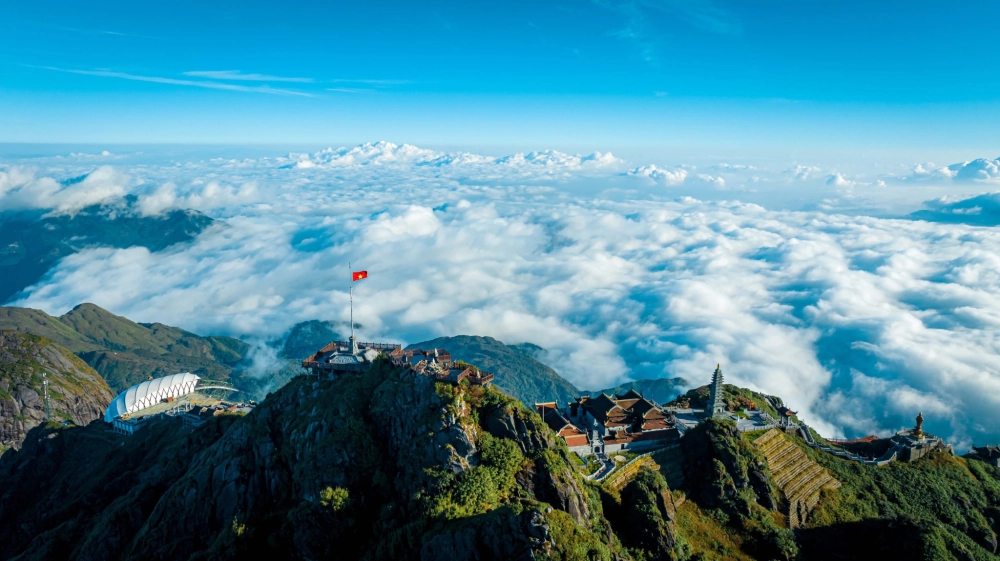
Early morning is the ideal time for tourists to hunt for the sea of clouds.
Before your trip, you should check the weather forecast 2-3 days in advance. Days after rain, with clear skies, high humidity, and little wind, are usually ideal conditions for cloud hunting. If you are flexible with your schedule, you can adjust your trip to Fansipan to increase your chances of encountering the most beautiful sea of clouds.
3.2. Preparing suitable clothing for the weather on Fansipan peak
At an altitude of 3,143 meters, the temperature on the summit of Fansipan is always about 8–10°C lower than in the center of Sapa town and can change very quickly throughout the day. Even in summer, the weather on the mountaintop remains quite cool, while in winter the temperature can drop below 0°C. Therefore, you should prepare windbreakers or thermal clothing, non-slip athletic shoes, hats, and gloves if visiting during the cold season.
For tourists planning to take photos, choose brightly colored outfits such as red, yellow, white, or blue to stand out against the backdrop of the sea of clouds and mountains. Additionally, bring a power bank, lens cleaning cloth, and a waterproof bag for your phone or camera to ensure your equipment works well in foggy and humid conditions.
3.3. Combining cloud hunting with outstanding experiences at Fansipan
Instead of just climbing Fansipan to admire the clouds and then returning, you should spend at least half a day exploring the entire tourist area. After admiring the sea of clouds and checking in at the "roof of Indochina" landmark, you can visit the cultural and spiritual sites nestled amidst the majestic mountains. In addition, the journey by the Muong Hoa funicular and the Fansipan cable car is an experience not to be missed. From the cable car cabin, you will enjoy panoramic views of the Muong Hoa valley, the terraced rice fields, and the Hoang Lien Son mountain range from above.
There's no single answer to the question of which season is best for cloud hunting on Fansipan, as each season offers different experiences and beauty. However, if you want the chance to admire the thick sea of clouds, favorable weather, and the best views, autumn and winter are still the times many tourists choose. Don't forget to check the weather forecast, prioritize departing early in the morning, and combine your trip with exploring the prominent attractions on the summit of Fansipan to make your journey to conquer the "roof of Indochina" a truly memorable experience.


