




Leaving behind the chaotic vibrating energy of Vietnam's bustling lowland metropolises, the Hoang Lien Son mountain range offers a breathtaking alpine escape that feels worlds away. For international travelers seeking a sophisticated blend of authentic cultural immersion, spectacular natural landscapes and world class architectural marvels, the northern frontier town of Sa Pa has firmly established itself as the ultimate destination.
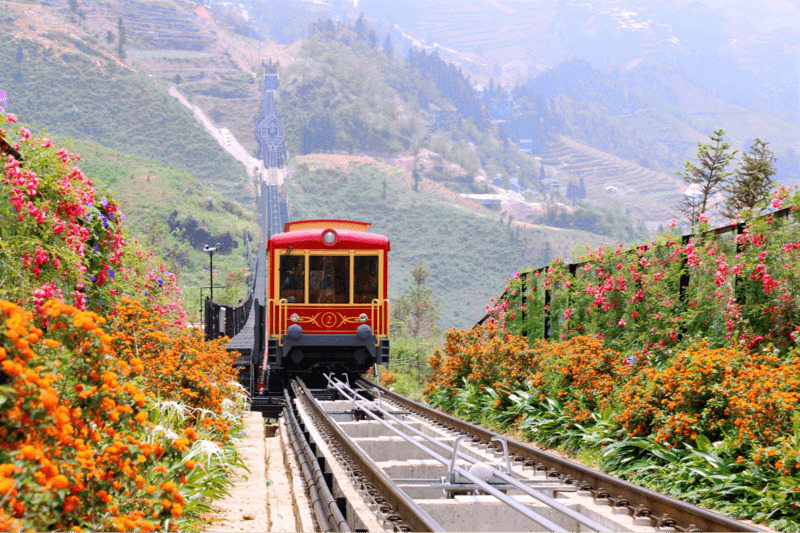
The allure of endless rows of flowers in Muong Hoa Valley (Source: Collected)
This is not just a place to hike. It is a destination where raw untamed nature meets unparalleled refinement. To help you craft the perfect unforgettable journey, here is your comprehensive deep dive guide to experiencing the region's most iconic landmarks, the pinnacles of local luxury and the pristine ancient beauty of Muong Hoa valley. Beyond the intimate rhythm of the trekking trails, the most profound way to witness this landscape is from the sky; by reserving your cable car journey and summit buffet, you can effortlessly transition from the valley’s narrow footpaths to a panoramic alpine experience that includes the region's finest culinary offerings.
1. Introduction to Muong Hoa valley: The emerald heart of the northwest
Nestled in the shadows of Lao Cai province's highest mountains, Muong Hoa valley stretches broadly across the Hau Thao, Su Pan and Ta Van communes. For centuries, the resilient Black Hmong, Red Dao and Giay ethnic minority communities have cultivated these steep slopes, transforming the rugged terrain into cascading rice terraces that seemingly defy gravity. These agricultural marvels weave a vibrant cultural tapestry that completely defines the region, drawing photographers, anthropologists and nature lovers from across the globe.
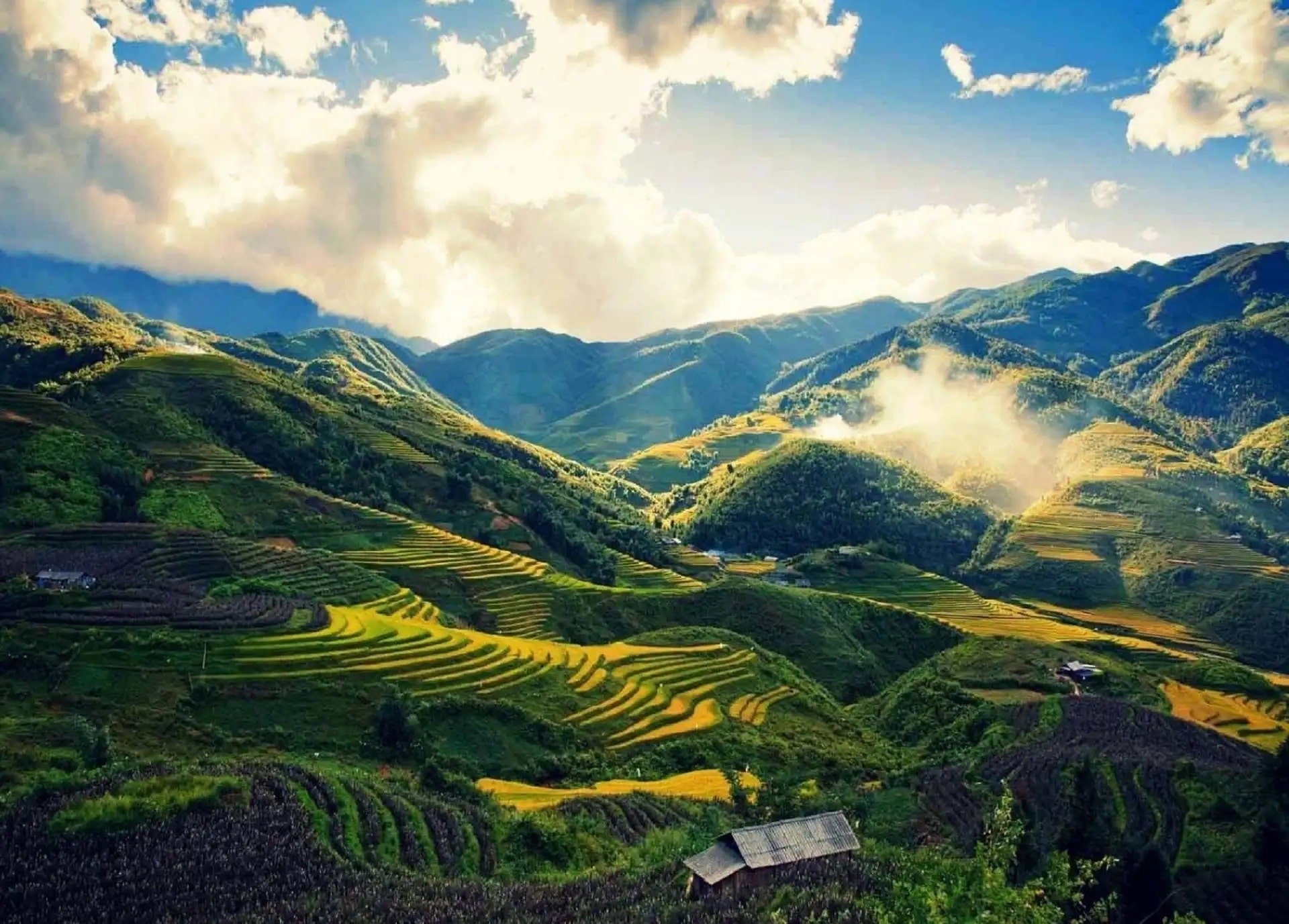
The must-visit destination of the northwestern region of Vietnam (Source: Collected)
While the valley itself offers a deeply rustic and grounding experience, modern travelers often prefer to balance this raw adventure with premium comforts. The smartest way to experience the area is to establish a luxurious base in Sa Pa town, take advantage of world class alpine transport to see the valley from the clouds, and then plunge into the terraces on foot. This striking beautiful juxtaposition allows you to spend your morning navigating muddy ancient trails alongside water buffalo and your afternoon resting in an opulent lounge.
Ready to get a panoramic aerial view of the valley before you trek it? Book your cable car ticket and begin your journey to the Roof of Indochina.
2. Crafting the perfect itinerary
For a truly unforgettable trip, your journey should not be a disjointed series of stops. It should seamlessly connect the deep cultural immersion of the valley with the premium hospitality of Sa Pa town and the record breaking alpine transport that sits between them.
2.1. Finding the right “basecamp” in Sa Pa town
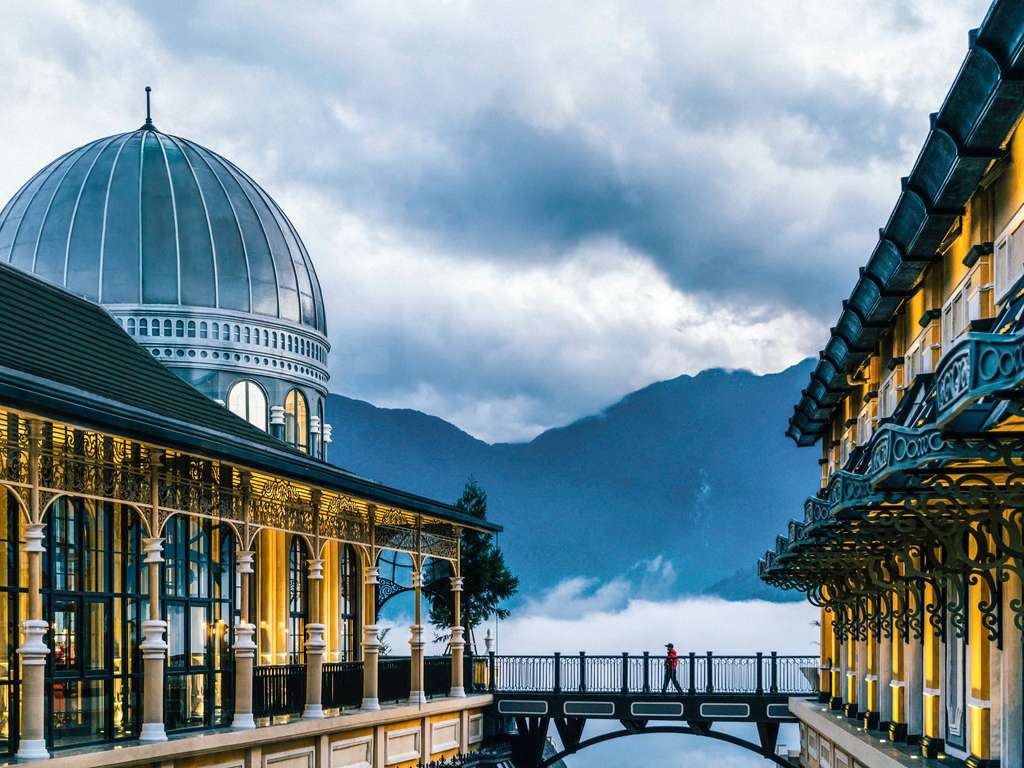
Hotel de la Coupole MGallery Sa Pa recounts the tale of the French living amongst the hill tribes in the early 1900s (Source: Collected)
Since Muong Hoa valley consists mostly of simple homestays and rural villages, international travelers seeking comfort should set up their stay in Sa Pa town. A standout choice for blending in with the region's artistic flair is the spectacular Hotel de la Coupole MGallery. Designed by the globally acclaimed visionary architect Bill Bensley, this property is a sprawling immersive visual masterpiece located right in the town center. Bensley brilliantly marries the romantic sophisticated glamour of French haute couture with the vibrant bold colors and intricate geometric patterns of the tribal communities living down in the valley. Serving as an ultimate luxury basecamp, staying in town ensures you have access to a magnificent heated indoor pool and restorative locally inspired herbal spa treatments to soothe your muscles after a long day of hiking the terraces.
2.2. Riding the Muong Hoa funicular for an aerial preview
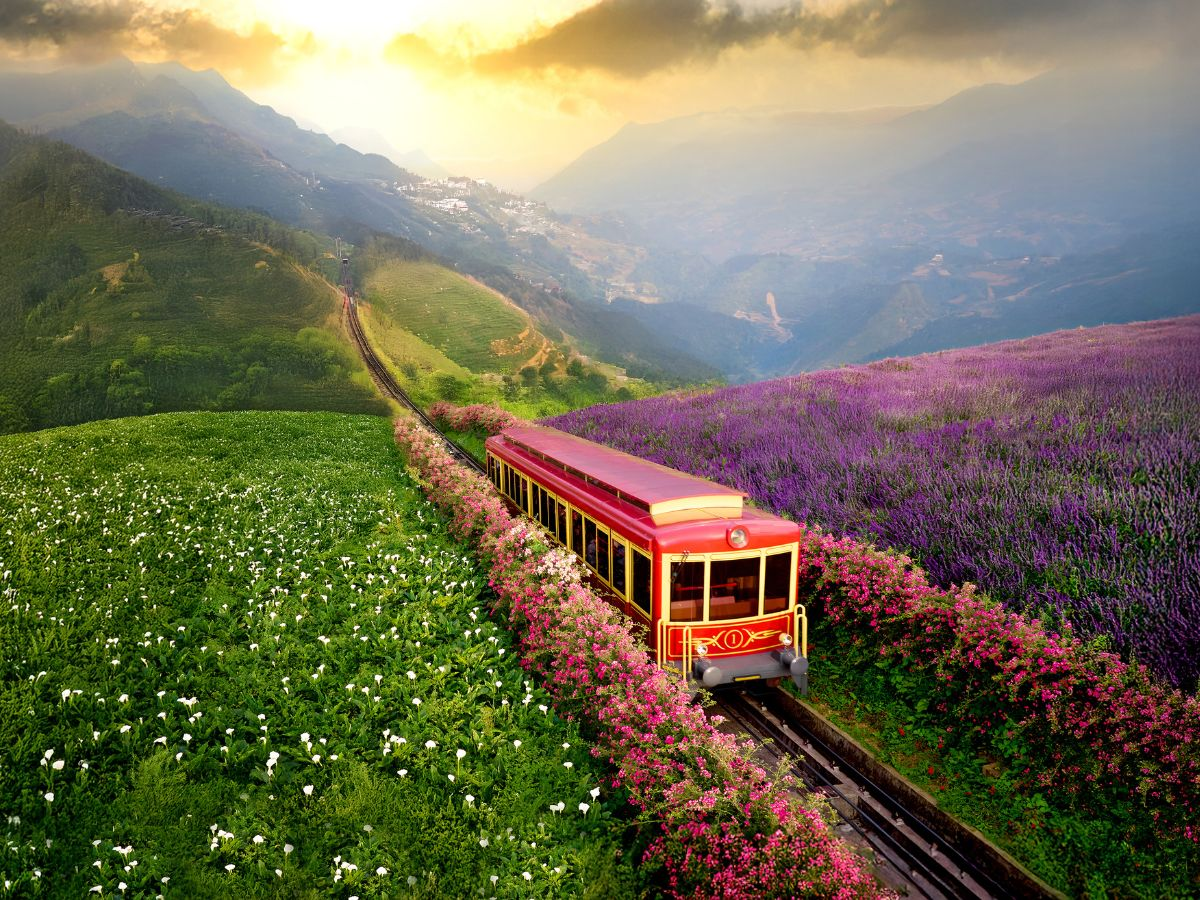
Visitors would want an aerial view first before conquering the valley by foot (Source: Collected)
Getting to the best viewing spots of the valley does not require an immediate grueling hike. Conveniently, you can catch the Muong Hoa mountain train right from the center of Sa Pa town, with the station seamlessly integrated into the MGallery hotel complex. Designed by renowned Swiss engineers, this funicular is an engineering marvel that stretches over two kilometers across towering viaducts and dark mountain tunnels. Featuring vintage European style carriages with massive floor to ceiling glass windows, the train glides gracefully over the rugged terrain. As you ascend, it offers passengers a cinematic unobstructed aerial preview of the breathtaking Muong Hoa valley below. You will clearly see the swirling silver streams cutting through the green terraces all without breaking a single sweat.
2.3. Viewing the landscape from Fansipan peak
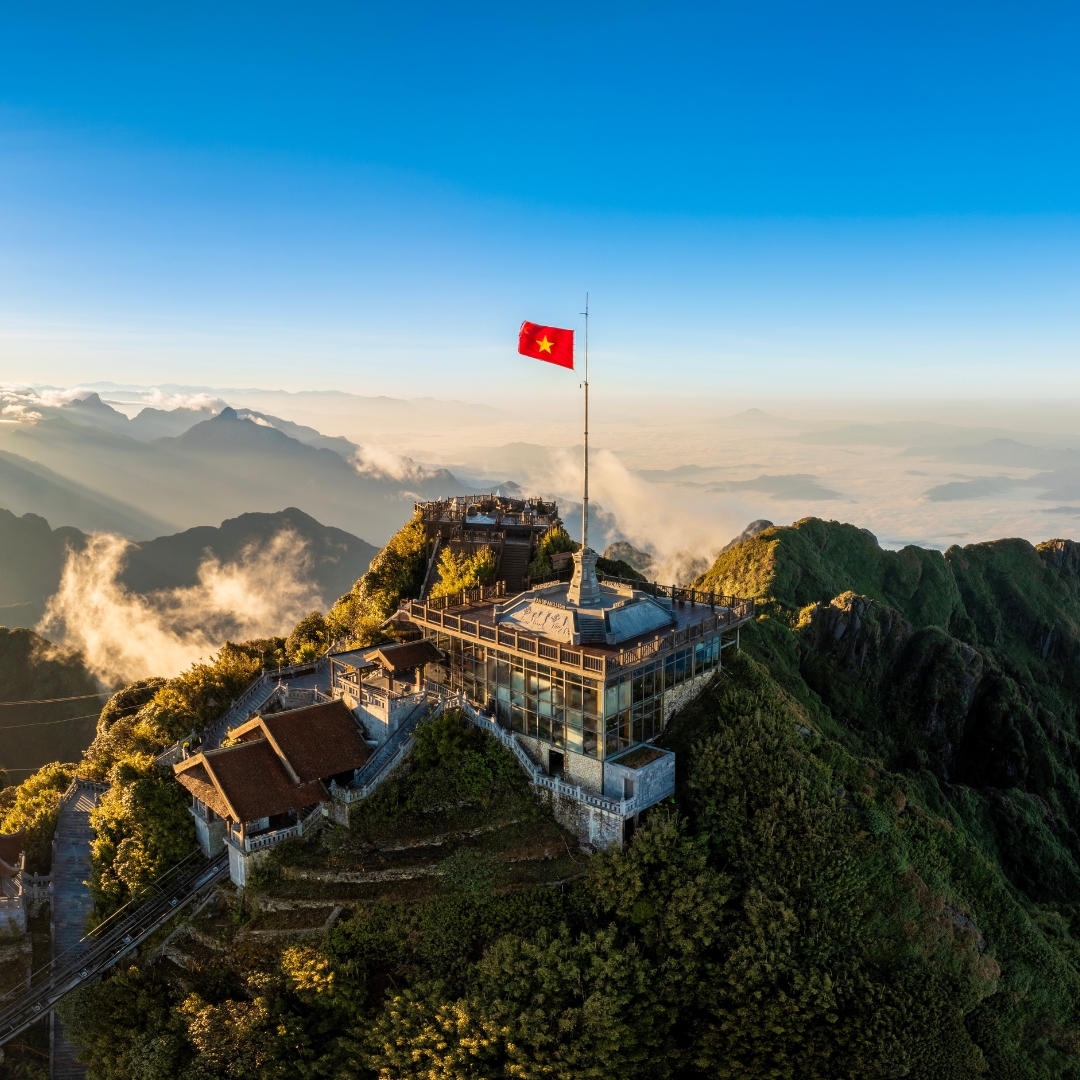
Visitors would get a grand total surrounding view atop the highest peak in Indochina (Source: Collected)
The funicular transports you directly to the lower cable car station of Sun World Fansipan Legend. Having proudly celebrated its monumental tenth anniversary of operations in February 2026, taking this cable car is an absolute necessity to fully grasp the sheer scale of the region. The Guinness World Record holding triple rope cable car system takes you high above the valley floor. The fifteen minute journey will whisk you through the thick swirling clouds, soaring over dense primary forests up to the legendary Roof of Indochina at 3143 meters. Looking down from the summit panoramic viewing decks on a clear day, the entirety of Muong Hoa valley unfolds beneath you like a textured green blanket, providing the perfect context for the trek you are about to undertake.
2.4. Into the wild trekking the valley floor
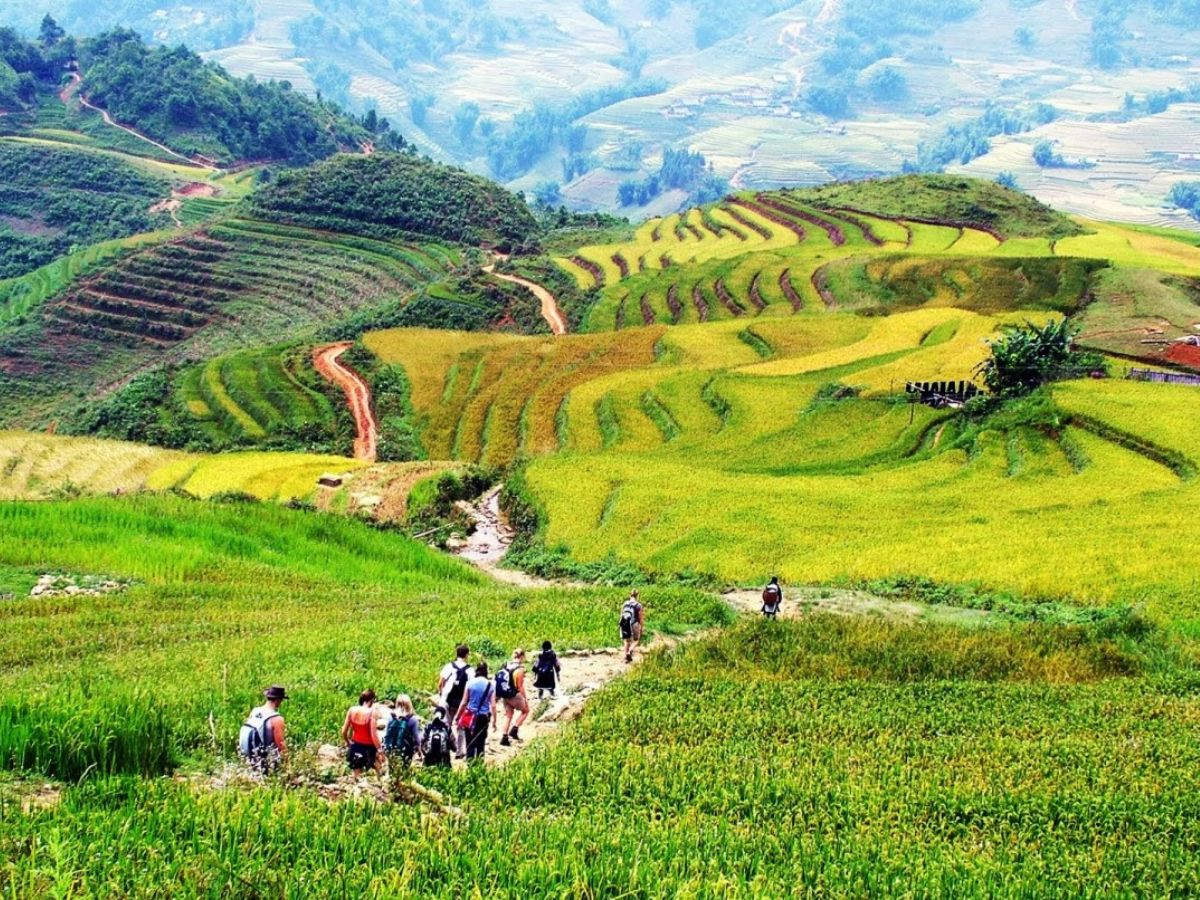
After reaching the highest peak, the visitors can now be grounded and experience the Muong Hoa valley by foot (Source: Collected)
After descending from the spiritual heights of the mountain peaks, it is time to ground yourself and venture deep into the heart of Muong Hoa valley on foot. While viewing it from the funicular and the cable car provides an incredible perspective, trekking through the terraces is the most immersive visceral way to truly experience the landscape. The trails take you away from the paved roads and plunge you into a world of vibrant green stalks, rushing irrigation streams and the earthy scent of damp soil. This is where you walk right alongside the intricate centuries old farming systems, cross wobbly bamboo suspension bridges and connect directly with the local villagers going about their daily lives.
3. Navigating Muong Hoa valley routes transport and logistics
Getting from your luxury basecamp in town into the deeper quieter parts of Muong Hoa valley is an adventure in itself. The mountain roads are spectacularly scenic but require careful planning especially for international visitors unaccustomed to Vietnamese highland driving.
3.1. Understanding admission fees
To enter the valley central trekking areas and traditional ethnic villages, all tourists are required to pay a small environmental and sightseeing fee at the official toll station located on Provincial Road 152. You should expect to pay around 80000 to 150000 VND which is approximately 3 to 6 USD per person depending on the specific route and current regulations. It is important to understand that these fees go directly toward maintaining the trails, preserving the cultural heritage sites and supporting the local infrastructure of the minority communities. Always keep your physical ticket handy in a secure pocket as you may be asked to show it by wardens at different checkpoints.
3.2. Choosing your transportation
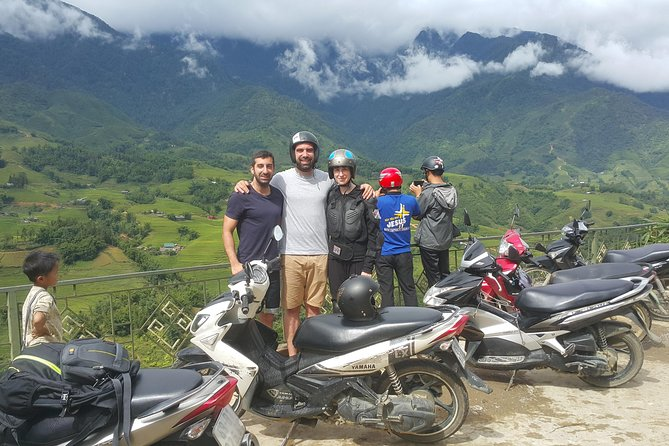
A lot of foreigners enjoy the motorbike experience (Source: Collected)
The way you traverse the valley will drastically alter your experience. First, renting an automatic scooter gives you the ultimate freedom to pull over for photos whenever you please. However, only attempt this if you are a highly confident experienced rider with a valid international driving permit. The mountain roads plunging into the valley are notoriously steep and can become incredibly slick after a brief rain shower. Second, hiring a taxi or private car is the ideal option for families or those wanting a completely smooth journey. You can easily hire a local driver through your hotel concierge to safely navigate the steep gradients. Third, guided trekking is highly recommended. The vast majority of Western visitors choose to hike down into the valley with a local ethnic minority guide. Usually women from the Hmong or Dao tribes, these guides provide the most authentic educational way to navigate the terrain and will lead you onto secret footpaths you would never find on a map.
4. The best time to visit Muong Hoa valley
The landscape of the valley is not static. It is a living breathing canvas that changes dramatically with the seasons. To optimize your photography and ensure you get the experience you are dreaming of, you must time your visit around the agricultural cycles of the rice terraces.
4.1. The water pouring season from May to June
As the summer rains begin to fall, local farmers divert water from the mountain streams to flood the dry terraced fields in preparation for planting young rice seedlings. During this time, the entire valley transforms. The terraces act like thousands of giant irregular mirrors beautifully reflecting the blue sky, the shifting clouds and the fiery hues of sunrise and sunset. It is a profoundly unique and somewhat surreal landscape that is an absolute favorite for professional landscape photographers looking to capture the valley in its most reflective state.
4.2. The green season from July to August
If you envision vibrant overwhelmingly lush landscapes, this is your time to visit. The young rice stalks shoot up rapidly, turning the entire valley into an electric emerald green. The weather is warm though you should expect heavy occasional summer downpours. The rain however brings incredible life to the region. The mountain streams and waterfalls flowing into the valley are at their most powerful and the mist rolling through the green terraces is incredibly cinematic.
4.3. The golden harvest from September to October
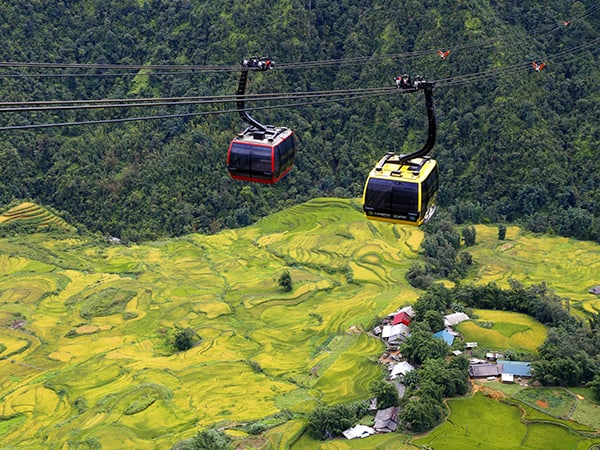
Visitors could also experience the golden harvest among the clouds in the Fansipan cable car (Source: Sun World Fansipan Legend)
This is widely considered the absolute peak season for visitors and for very good reason. As autumn approaches, the rice ripens and the terraces turn a brilliant glowing golden yellow. The visual contrast between the golden fields, the deep green of the surrounding forests and the clear crisp blue autumn sky is visually staggering. Furthermore, the entire valley smells of sweet ripening grain and the villages are bustling with the joyous communal energy of the harvest season.
5. Top cultural experiences in Muong Hoa valley
Beyond the breathtaking visual aesthetics, the valley holds deep historical anthropological and cultural significance. It is a place where ancient traditions are still very much alive and waiting to be respectfully explored.
5.1. Decoding the ancient rock field
Spread across the valley floor primarily around the Hau Thao and Ta Van communes is a sprawling mysterious megalithic site containing over 200 massive boulders carved with intricate ancient petroglyphs. Discovered in 1925 by a French archaeologist, these stones are etched with strange symbols, concentric circles, depictions of human figures and what appear to be primitive maps. To this day these symbols act as an unsolved cultural code. Some scholars believe they are the remnants of a forgotten prehistoric civilization mapping out land ownership or recording astrological events. Exploring this site is a fascinating remote stop for history lovers offering a quiet moment to ponder the deep antiquity of the Hoang Lien Son mountains.
5.2. Savoring northwest mountain cuisine
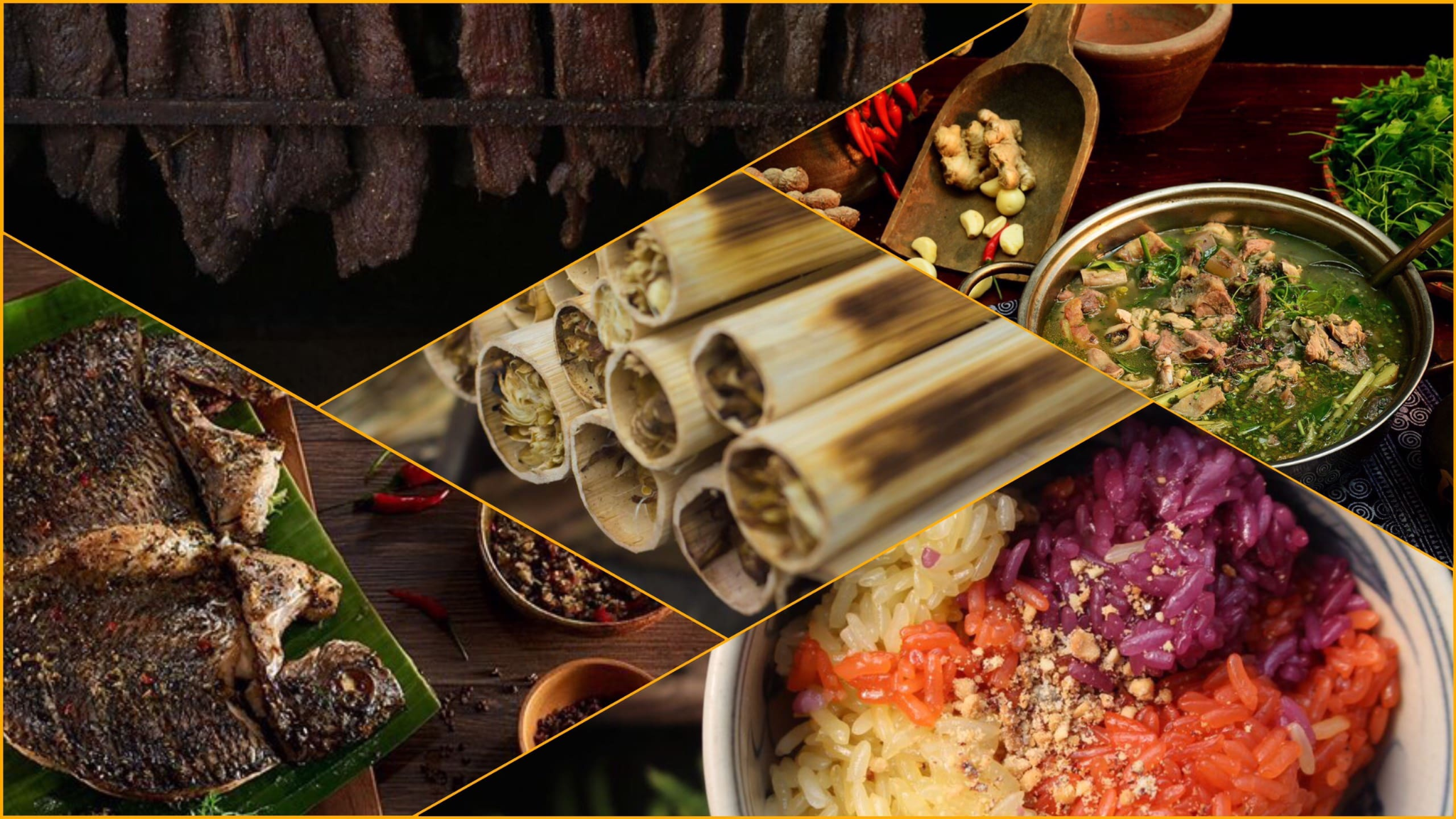
The visitors are in for a good treat with all the iconic food of the northwest (Source: Collected)
The regional cuisine found in and around the valley is distinctly different from the typical dishes found in the rest of Vietnam. It is rugged and hearty and utilizes unique locally foraged mountain spices like wild pepper known as mac khen and forest seeds with a deep smoky aroma called hat doi. After a long day of exploring, try the iconic smoky buffalo meat which is cured and dried over open wood fires in traditional tribal kitchens for several months. Another staple is the free range spit roasted mountain pig with incredibly crispy skin. Sharing a meal in the valley is not just about sustenance. It is a deeply communal experience that allows you to connect directly with the warm hospitality of the highland people.
6. Essential travel tips for international visitors exploring the valley
Traveling in the remote northern highlands requires a bit more preparation than visiting coastal resort towns. To ensure a smooth comfortable and respectful journey, keep these highly detailed practical tips in mind.
6.1. Strategic layering for unpredictable weather
The high altitude of the region means the weather is notoriously fickle. When packing, leave the heavy bulky winter coats behind and focus on a strategic layering system that you can adjust on the fly. Bring moisture absorbing tee shirts for daytime trekking in the valley where you will undoubtedly work up a sweat. Next pack a cozy fleece or a lightweight packable down jacket because the temperature plummets rapidly as soon as the sun goes down. A high quality lightweight waterproof and windproof jacket is absolutely vital to protect you from sudden downpours. Finally, you need sturdy waterproof hiking boots with excellent traction to navigate the muddy uneven trails of the rice terraces safely.
6.2. Connectivity cash and logistics
While premium establishments in town seamlessly accept international credit cards, the reality changes drastically once you descend into the valley. Cash is an absolute necessity. The small villages, homestays and local handicraft vendors operate entirely on a cash basis. Before you leave for your trek, visit an ATM and carry plenty of small Vietnamese Dong notes. Regarding power and signals, your phone or camera will run out of battery significantly faster than you anticipate due to constant photography. Always carry a fully charged high capacity power bank in your daypack.
6.3. Practicing ethical and responsible tourism
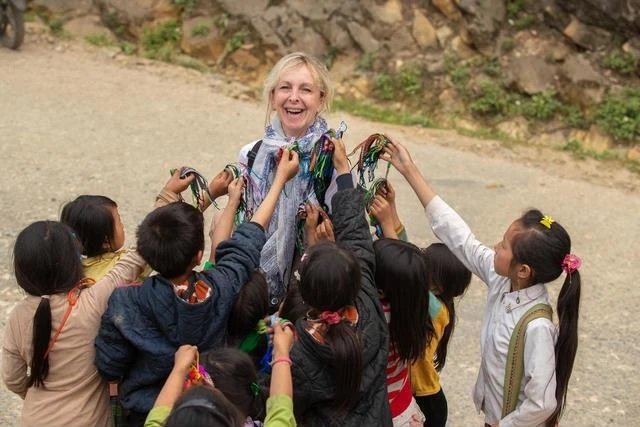
Be respectful to the villagers and make sure to leave no trash behind (Photo: Collected)
As an international visitor, navigating the cultural dynamics of ethnic minority villages requires extreme sensitivity and respect. Always politely ask for permission before taking portrait photos of the locals and gracefully accept if they decline. Finally practice Leave No Trace principles. Carry all your trash back to your hotel, stick to the marked trekking paths so you do not trample the delicate rice crops and avoid using disposable plastics whenever possible.
6.4. Mountain trekking recovery the Red Dao herbal bath
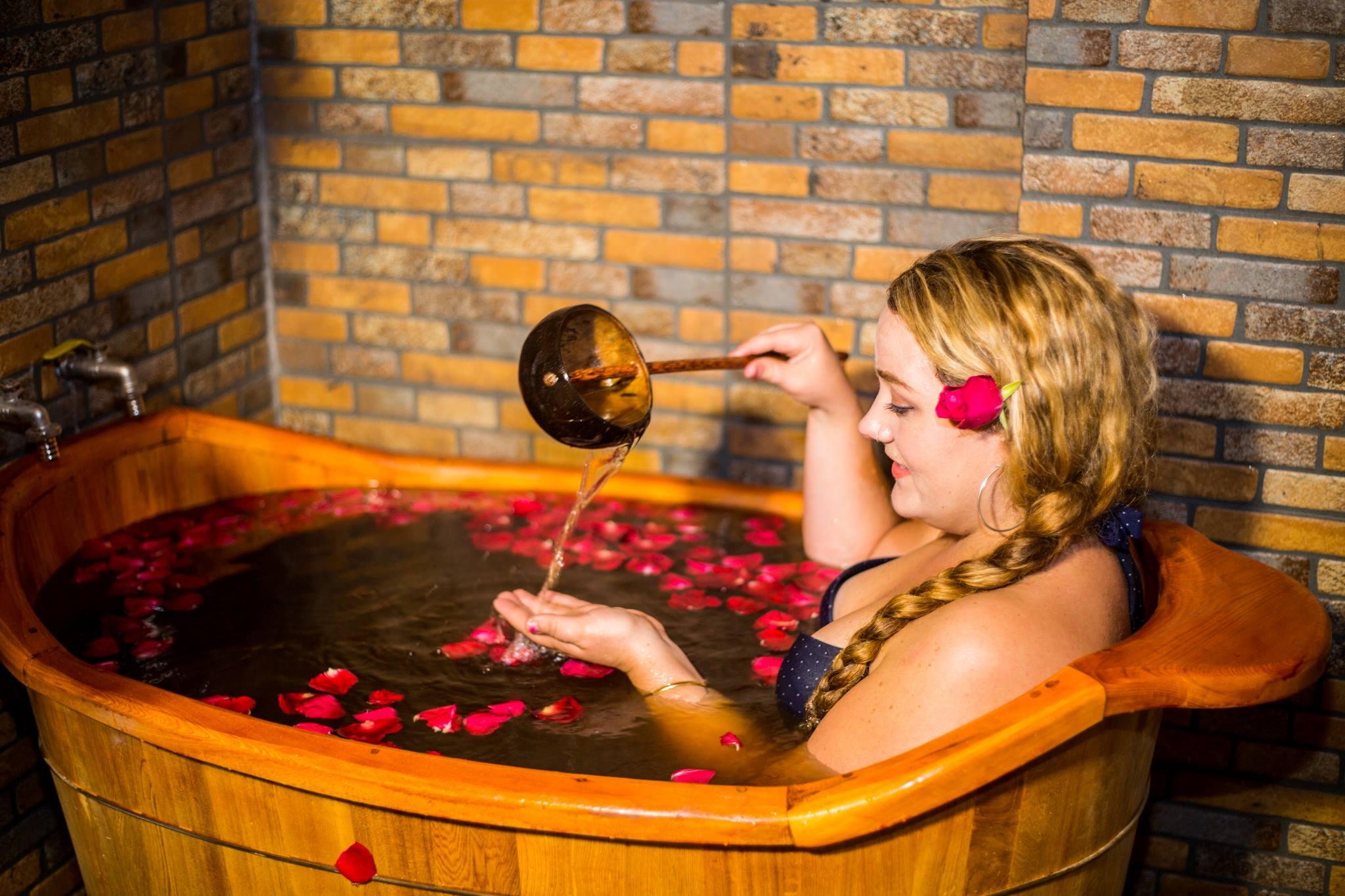
Herbal bath is a common cultural practice among Vietnamese, especially the Dao ethnic community (Source: Collected)
No trip to the region is complete without indulging in its most famous wellness tradition. After trekking miles through the terraces and conquering the alpine peaks, your muscles will undoubtedly be aching. You must seek out a traditional Red Dao herbal bath to rejuvenate your body. The Red Dao people are highly renowned for their profound extensive knowledge of forest medicine. For generations, the women of the tribe have ventured deep into the high mountains surrounding the valley to forage aromatic leaves and barks, boiling them down into a dark steaming hot tonic. Soaking in a traditional round wooden barrel filled with this deeply fragrant herbal water is an intensely relaxing experience. Many premium bathhouses and spas in Sa Pa town offer these refined experiences, allowing you to recover while still immersing yourself in the majestic cultural heritage of the region.


