


1. Discover the Signature Beauty of Sapa During the Rice Harvest Season
1.1. When Is the Best Time to Visit Sapa During the Rice Harvest Season?
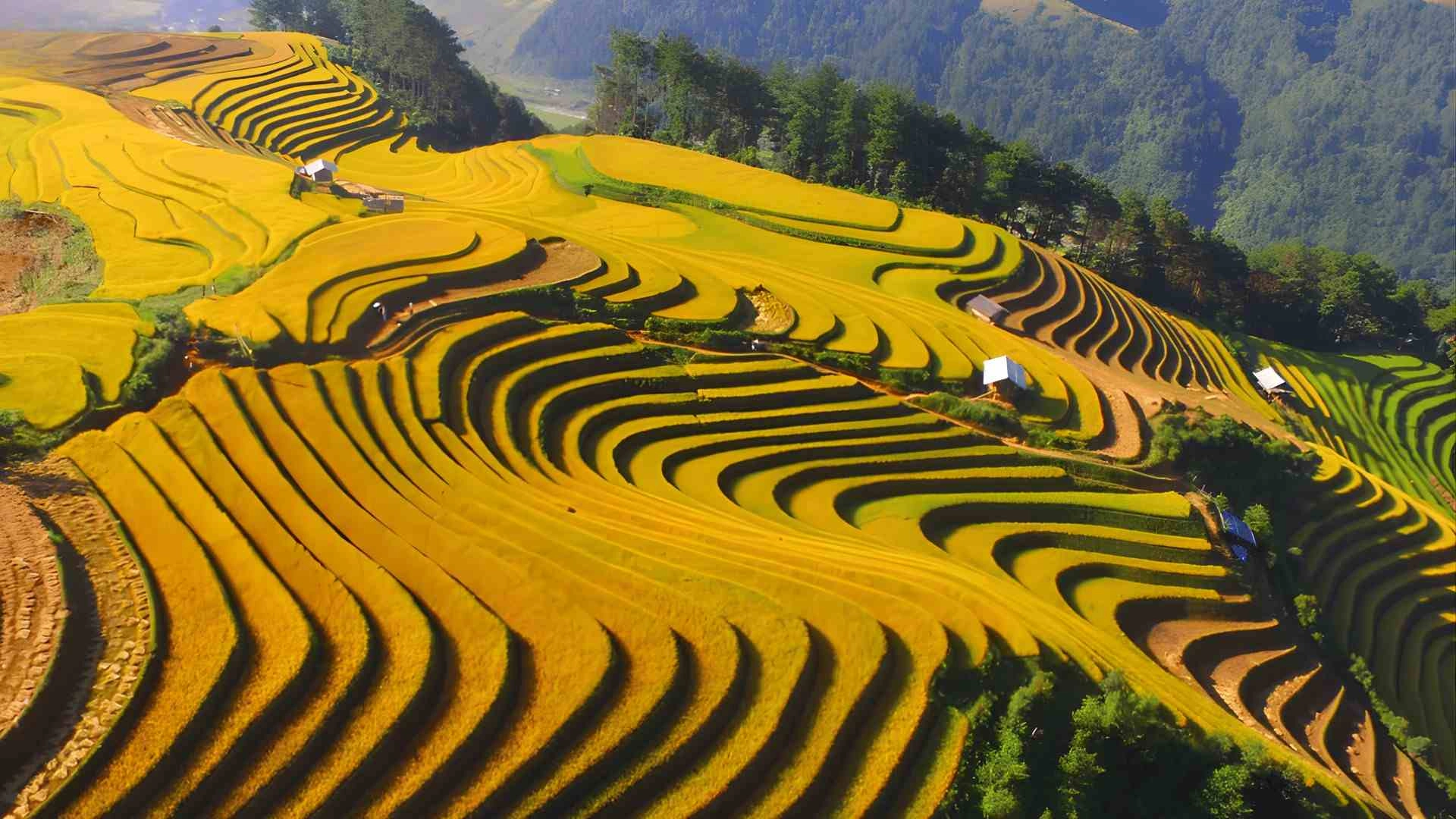
The rice harvest season in Sapa typically runs from late August through October, when terraced fields in areas such as Ta Van, Lao Chai, and Muong Hoa Valley turn brilliant shades of gold beneath the autumn sun. During this period, daytime temperatures in Sapa, Lao Cai Province, generally range from 15°C to 22°C. The relatively cool, dry weather makes it ideal for scenic walks and trekking along terraced rice fields.
At an average elevation of more than 1,500 meters above sea level, the region offers spectacular layers of golden fields cascading across the mountainous landscape. The result is a striking natural panorama that makes late autumn one of the most appealing times to visit Sapa.

Admire Sapa’s brilliant golden landscapes from late August through October. (Source: Collected references)
1.2. Golden Terraced Rice Fields: An Iconic Highlight of Sapa’s Harvest Season
The winding terraces of Muong Hoa Valley and the villages of Lao Chai and Ta Van are among the most recognizable sights during Sapa’s rice harvest season. Golden rice fields blend harmoniously with the imposing mountain scenery, creating a landscape of remarkable beauty.
These terraces reflect generations of traditional farming practices maintained by ethnic communities, including the Hmong and Red Dao people. They are an important part of the region’s agricultural heritage and cultural identity. Recognized for their scenic value, Sapa’s terraced landscapes attract visitors from Vietnam and abroad who come to admire the golden fields stretching across the Hoang Lien Son mountain range.
1.3. Village Life and Local Culture During Harvest Time
During the harvest season, visitors can witness the everyday rhythms of mountain life, from farmers gathering rice to families drying freshly harvested grain beside their fields or beneath the eaves of wooden houses.
Homestays in Ta Van and Lao Chai offer more than accommodation. They provide opportunities to experience local community life and sample regional specialties, such as grilled stream fish, Meo mustard greens, and other dishes featuring the flavors of the highlands.
These experiences reveal the close relationship between nature and local communities, adding cultural depth to a trip to Sapa during the golden rice harvest season.
2. Essential Travel Tips for an Unforgettable Sapa Rice Harvest Trip
2.1. Convenient Ways to Get to Sapa
Travelers departing from Hanoi can reach Sapa by sleeper bus or limousine, with the journey typically taking around five to six hours via the Noi Bai–Lao Cai Expressway, followed by the road to Sapa.
Another option is to take an overnight train from Hanoi to Lao Cai Railway Station. After resting on the train, travelers can continue by road for approximately 30 kilometers to reach central Sapa.
Ticket prices and journey times may vary depending on the transport provider, service type, and travel dates. Booking in advance and comparing available options can help travelers plan their Sapa rice harvest getaway more conveniently.

Take a bus or train from Hanoi to begin your journey to Sapa, with the trip typically taking around five to six hours depending on the transport option. (Source: Collected references)
2.2. Where to Stay: Choosing the Right Accommodation
Central Sapa offers a wide range of accommodation options, making it convenient for travelers who want easy access to restaurants, shopping areas, local services, and nearby attractions.
For a closer connection with nature, consider staying at a homestay in Ta Van or Lao Chai. Many properties offer views of terraced rice fields, allowing guests to admire the golden harvest landscape right from their rooms.
Whether traveling alone, with family, or with friends, visitors can choose accommodation that suits their travel style and desired level of comfort.
2.3. Clothing and Weather Tips for the Rice Harvest Season
Temperatures in Sapa can vary considerably between day and night during the harvest season. Bringing a light jacket is therefore recommended, especially when exploring the rice fields or visiting higher-altitude viewpoints.
Comfortable sports shoes or hiking shoes with good grip are essential for walking along earthen paths and narrow field trails. Early morning and sunset are particularly beautiful times for photography, so travelers should prepare suitable clothing to enjoy the scenery and capture memorable moments.
3. Must-Visit Attractions in Sapa During the Rice Harvest Season
3.1. Sun World Fansipan Legend: From Mountain Attractions to the Summit
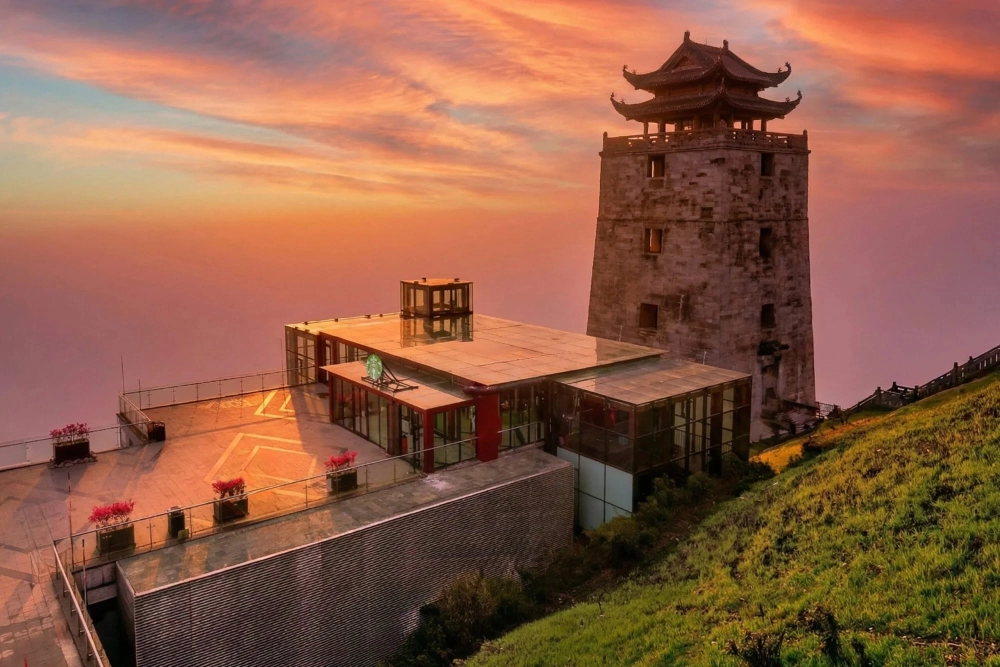
At 3,143 meters above sea level, Fansipan is the highest mountain in Vietnam and Indochina. It is a major highlight for visitors exploring Sapa during the rice harvest season, particularly those who want to experience the cable car at Sun World Fansipan Legend.
The cable car system makes reaching the summit considerably easier while offering panoramic views of the Northwest mountains and Muong Hoa Valley from above. During the harvest season, visitors may enjoy sweeping views of the golden terraced fields stretching across the valley.
The summit is also home to spiritual and cultural landmarks, creating a diverse experience that combines mountain scenery with cultural exploration.

Reach the summit of Fansipan with cable car services operating from 7:30 AM to 5:30 PM. Ticket prices start from VND 850,000. (Source: Collected references)
3.2. Muong Hoa Stream
Flowing through Muong Hoa Valley, Muong Hoa Stream adds a gentle, picturesque element to the surrounding landscape. Its clear waters wind between terraced rice fields, creating a peaceful setting for trekking and nature exploration.
During the high-water season, particularly from August to September, water flows down from the upper reaches of the Hoang Lien Son range, helping maintain the stream’s flow and enhancing the natural scenery along the valley.
The surrounding area is also known for the ancient stone field of Sapa, where numerous carved markings have attracted archaeological interest. This cultural heritage adds another dimension to a visit to Muong Hoa Valley and the wider Sapa region of Lao Cai Province.
Trekking along the stream and through nearby rice terraces allows visitors to observe how the colors of the rice change with elevation. Lighter golden shades may appear in the lower parts of the valley, while deeper tones can be seen across higher slopes, creating a layered landscape that is particularly appealing to photographers.
3.3. Tram Ton Pass
Tram Ton Pass lies along National Highway 4D, which connects Lao Cai and Lai Chau provinces. Known for its dramatic mountain scenery, the pass is a popular route among motorbike travelers and nature enthusiasts exploring the Hoang Lien Son range.
It is also a familiar starting point for expeditions to Fansipan and trekking routes around Sapa.
Situated at an elevation of approximately 1,900 meters above sea level, Tram Ton Pass offers impressive views of the surrounding terrain. Differences in climate between the eastern and western slopes can be seen in the vegetation and changing patterns of mist throughout the day.
From the pass, visitors can look toward Fansipan and the successive mountain ridges that form a dramatic horizon. Early mornings can be especially atmospheric, when temperature differences between the valleys and mountain peaks encourage the formation of seas of clouds.
Beyond its scenic appeal, National Highway 4D serves as an important transport link between Lao Cai and Lai Chau. Visitors stopping at the pass may therefore see a combination of local freight transport and tourist traffic, reflecting the region’s economic activity alongside its growing tourism industry.
3.4. Coc Ly Market
Coc Ly Market is a traditional highland market held every Tuesday beside the Chay River. Visitors can combine their Sapa rice harvest trip with an opportunity to discover the traditional trading practices and cultural diversity of ethnic communities in Lao Cai Province.
Located in Bac Ha District, Coc Ly Market brings together ethnic groups including the Flower Hmong, Dao, and Nung. The market typically features agricultural produce, brocade textiles, livestock, and handmade products exchanged directly among local residents.
After exploring the market, visitors can consider a boat trip along the Chay River to enjoy views of the surrounding mountains, hillsides, and farmland during the harvest season. This combination of market culture and riverside scenery offers a richer understanding of life in Vietnam’s northern highlands.
The market also reflects the social and cultural diversity of the region. Different communities gather in familiar areas, creating a vibrant mix of traditional clothing, spoken languages, and trading customs that brings the character of northern Vietnam’s mountain communities to life.
Visiting Sapa during the rice harvest season is more than a scenic getaway. It is an opportunity to experience the vibrant golden landscapes and everyday life of Vietnam’s northern highlands. From breathtaking terraced rice fields and peaceful ethnic villages to the adventure of reaching the summit of Fansipan, every moment offers something memorable.
For travelers seeking a destination that combines picturesque natural scenery with rich local culture, Sapa during the golden rice harvest season promises an unforgettable journey.