




1. Overview of Sa Pa rice terraces
The Sa Pa rice terraces are one of the most iconic landscapes in Northern Vietnam, formed over hundreds of years by ethnic minority communities living in the Hoang Lien Son mountain range. These terraces are not only agricultural fields but also a living cultural heritage, reflecting the close relationship between people and the mountainous environment.
Spread across valleys, hillsides, and steep mountain slopes, the rice terraces in Sa Pa create a layered “stair-like” pattern that follows the natural shape of the land. Depending on the season, the scenery changes dramatically—from fresh green young rice in summer to golden harvest fields in autumn, and reflective water-filled terraces during the planting season. This is also why travelers often search for the Sa Pa rice terraces best viewpoint to fully capture the scale and beauty of the landscape.
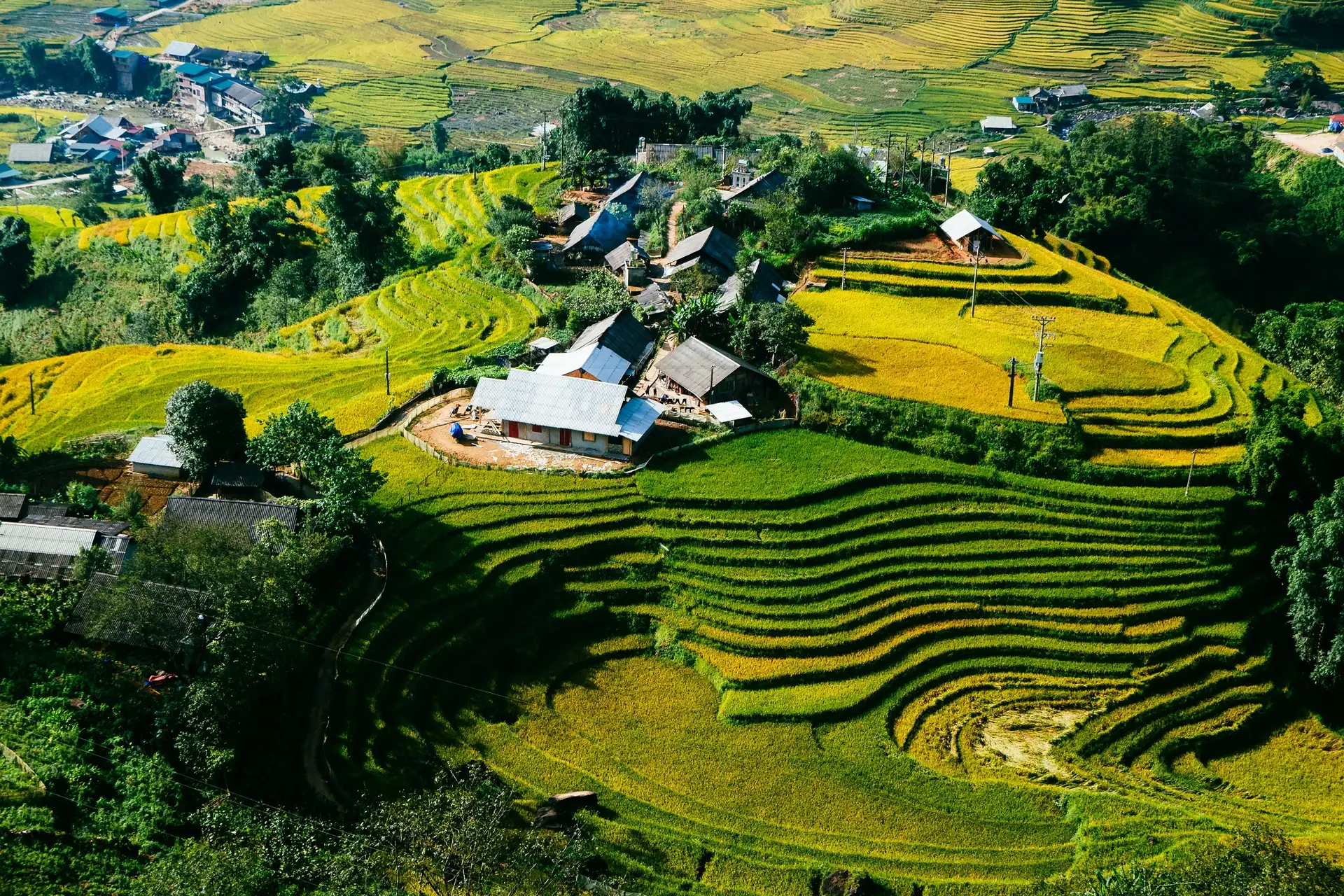
The stunning terraced rice fields in Sa Pa
One of the most remarkable features of Sa Pa rice terraces is how they interact with light, mist, and weather. Morning fog often covers the valleys, while sunlight breaking through clouds creates shifting patterns of shadow and brightness across the fields. This makes the landscape feel alive and constantly changing, rather than static, and enhances the experience at any Sa Pa rice terraces best viewpoint.
For travelers, the Sa Pa rice terraces are more than just a visual attraction—they represent a combination of natural beauty, cultural identity, and traditional farming life. Whether viewed from above or experienced up close, the scenery from a Sa Pa rice terraces best viewpoint remains one of the most unforgettable highlights of any trip to Sa Pa.
2. Best time to visit Sa Pa rice terraces
To fully enjoy the Sa Pa rice terraces best viewpoint, timing plays a crucial role because the appearance of the terraces changes significantly throughout the year. Each season offers a different color palette, lighting condition, and level of visibility, which directly affects how impressive the viewpoints will be.
The most popular period is from May to June, when the water-filled terraces reflect the sky like natural mirrors. This “flooded field” season creates a unique visual effect, especially at sunrise or sunset, when light bounces across the water surface and highlights the curved patterns of the mountainsides. It is one of the most photogenic times to visit any Sa Pa rice terraces best viewpoint.
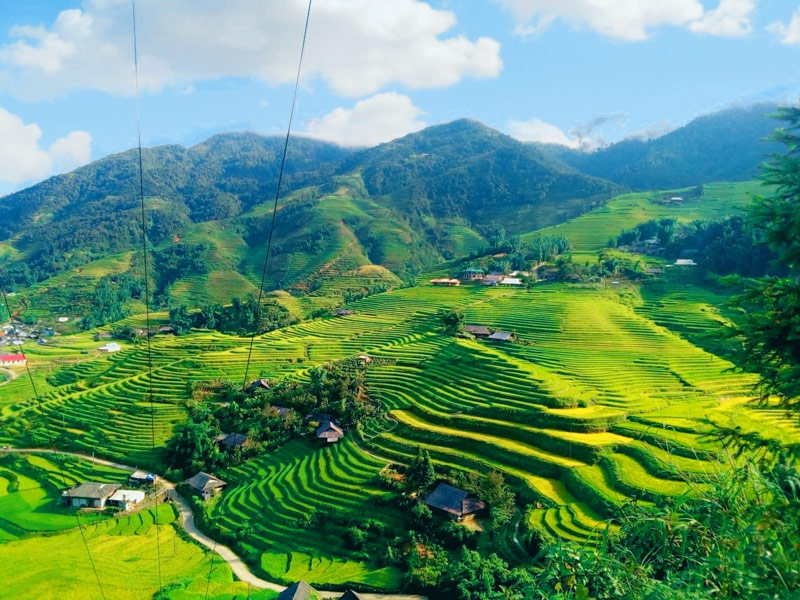
Terraced rice fields in Sa Pa during the green rice season
From July to September, the terraces turn into lush green layers as the rice grows. This is considered the peak season for greenery, when the entire valley looks vibrant and full of life. Morning mist often adds a soft, cinematic layer to the scenery, making viewpoints even more dramatic and atmospheric for photography and sightseeing.
By late September to October, the rice fields begin to turn golden during harvest season. This is when the landscape becomes the most striking in terms of color contrast, with golden terraces under clear skies. Many travelers consider this the absolute best time to experience a Sa Pa rice terraces best viewpoint, as visibility is often clearer and the scenery is at its most complete.
3. Top viewpoints to admire Sa Pa rice terraces
3.1. Fansipan cable car route & summit viewpoints
One of the most spectacular ways to experience the Sa Pa rice terraces best viewpoint is from the Fansipan cable car system. As the cabin slowly ascends above the Muong Hoa Valley, the entire landscape opens up beneath your feet. Layer after layer of terraced rice fields appears, stretching across valleys, wrapping around hills, and fading into distant mountain ranges.
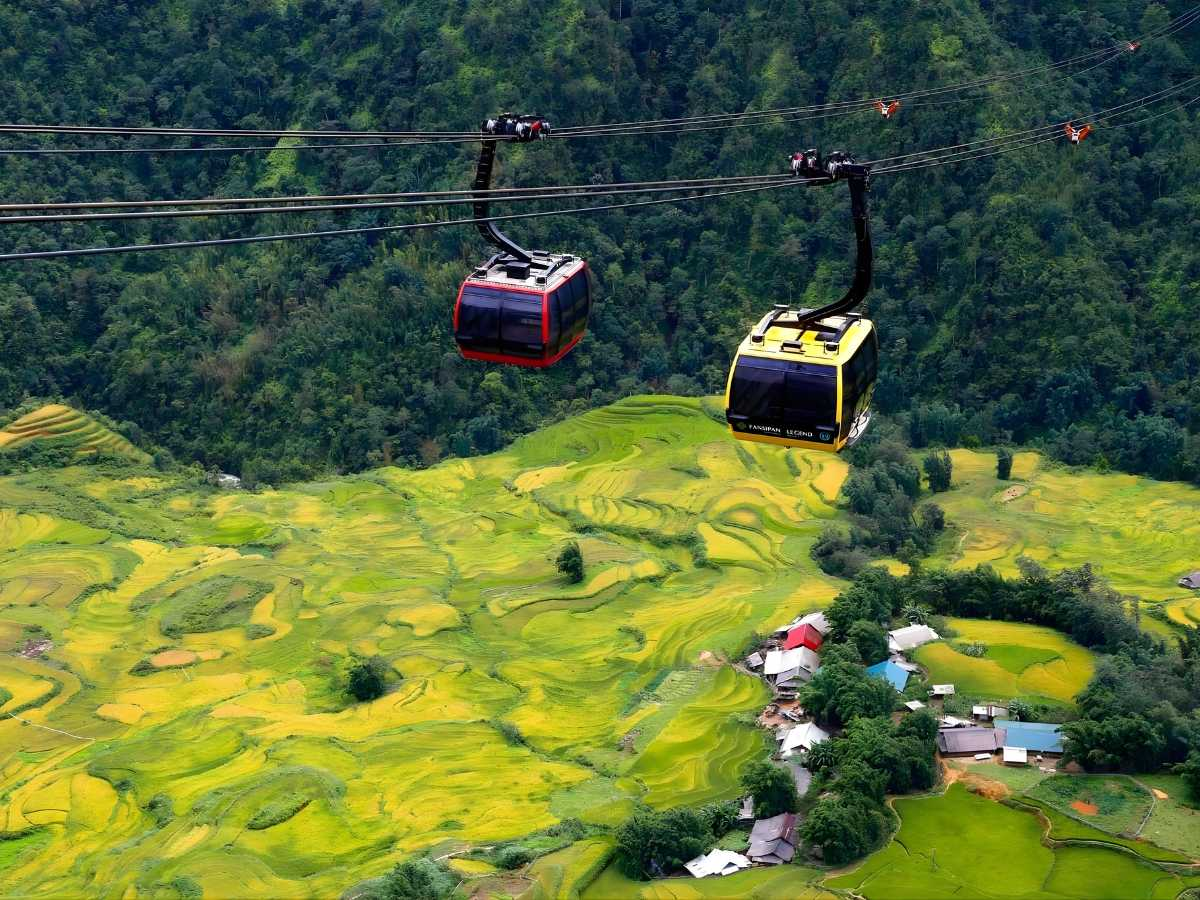
Visitors can admire the panoramic view of the terraced rice fields in Muong Hoa Valley from the Fansipan cable car
This aerial perspective is especially impressive in summer when the fields are intensely green or in harvest season when they turn golden. The changing weather in Sa Pa adds another dimension—clouds may drift below the cable car, temporarily hiding parts of the terraces before revealing them again, creating a dynamic and cinematic view.
At the upper viewpoints near the summit area, the experience becomes even more dramatic. The air is cooler, the visibility shifts quickly, and the terraces below look like miniature landscapes carved into the mountains. For many travelers, this combination of altitude, clouds, and scale makes Fansipan one of the most unforgettable Sa Pa rice terraces best viewpoint experiences.
3.2. Muong Hoa Valley panoramic viewpoints
Muong Hoa Valley is widely considered the heart of Sa Pa’s rice terrace scenery and one of the most important locations for the Sa Pa rice terraces best viewpoint experience. The valley is large, open, and filled with some of the most extensive and well-formed terraced fields in the region.
From different natural viewpoints along the valley edges, travelers can see sweeping layers of rice terraces flowing across the landscape like waves. Small rivers cut through the valley floor, connecting villages and adding contrast to the geometric patterns of the fields. The combination of water, fields, and mountains creates a balanced and visually rich panorama.
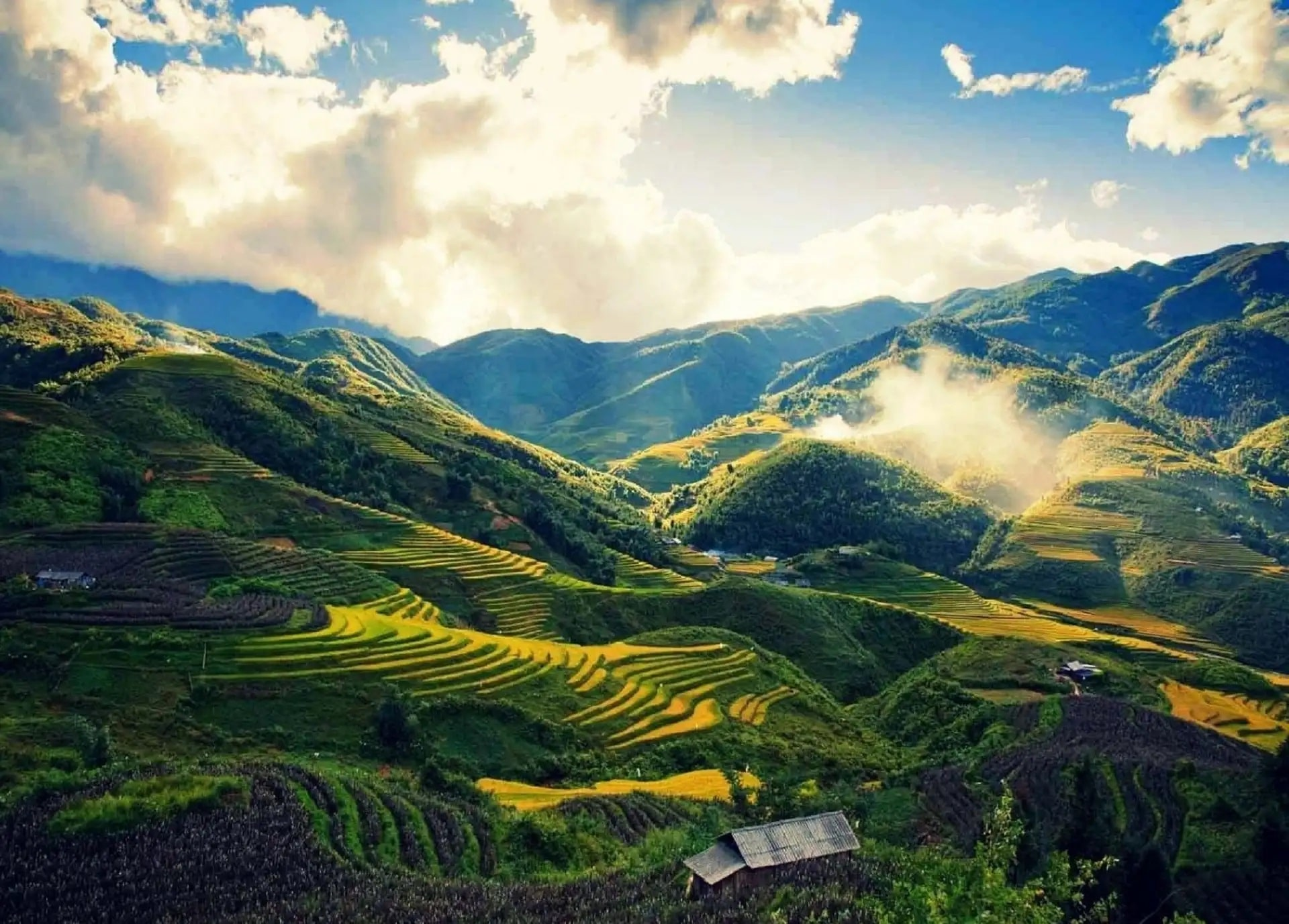
The terraced rice fields in Muong Hoa Valley are a picturesque and beautiful sight
The beauty of Muong Hoa also changes throughout the day. Early morning mist softens the entire valley, midday light highlights the structure of the terraces, and late afternoon sunlight adds warm golden tones. This constant transformation makes it one of the most reliable and rewarding Sa Pa rice terraces best viewpoint locations.
3.3. Lao Chai hillside viewpoints and trekking slopes
Lao Chai offers a more immersive and intimate perspective of the rice terraces. Instead of distant panoramic views, visitors walk directly along hillside trails where terraces are carved into steep mountain slopes just a few steps away.
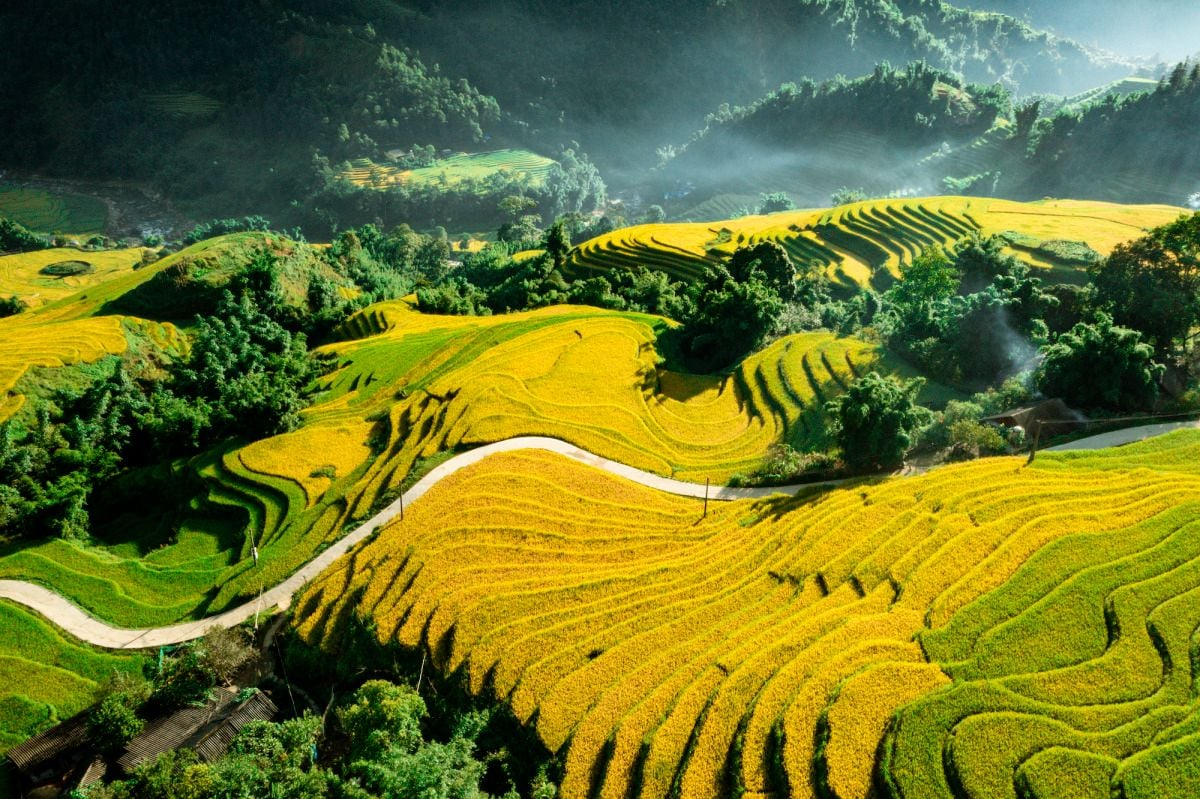
The beauty of the terraced rice fields in Lao Chai village
This creates a different kind of Sa Pa rice terraces best viewpoint experience—closer, more detailed, and more connected to local life. You can clearly see irrigation channels flowing between fields, farmers working with traditional tools, and buffalo moving slowly across the terraces.
The terrain here also changes with elevation. Some sections open up into wide valley views, while others narrow into winding paths surrounded by green steps of rice fields. This variation makes Lao Chai not only visually interesting but also physically engaging for travelers who enjoy light trekking combined with scenery.
3.4. Ta Van village river and terrace viewpoints
Ta Van village provides one of the most peaceful and balanced Sa Pa rice terraces best viewpoint experiences. The rice fields here are often located near streams, small bridges, and traditional wooden houses, creating a natural harmony between water, agriculture, and daily village life.
From river-side viewpoints, the terraces often reflect light after rain or during early morning mist, giving the landscape a soft and almost mirror-like appearance. The sound of flowing water combined with cool mountain air enhances the sense of calm and relaxation.
Unlike busier areas, Ta Van feels quieter and more spacious, making it ideal for travelers who want to slow down and observe the scenery without crowds. This makes it one of the most relaxing versions of the Sa Pa rice terraces best viewpoint experience.
3.5. Cat Cat hillside viewpoints & short scenic walks
Cat Cat village is one of the most accessible places to enjoy rice terrace scenery, especially for travelers who prefer shorter walks and easier terrain. From its hillside paths, visitors can quickly reach viewpoints overlooking layered rice fields combined with waterfalls and small streams.
Although the scale is smaller compared to Muong Hoa or Lao Chai, the composition is very scenic. Wooden houses, stone paths, and terraced slopes come together in a compact but visually rich landscape, offering a convenient Sa Pa rice terraces best viewpoint for first-time visitors.
The atmosphere here is often lively, with cultural elements, local handicrafts, and traditional performances adding context to the natural scenery. This combination of culture and landscape makes Cat Cat a well-rounded introduction to Sa Pa’s rice terrace beauty.
4. Tips to get the best photos at Sa Pa rice terraces viewpoints
4.1. Choose the right time: early morning and late afternoon light
To truly capture the beauty of the Sa Pa rice terraces best viewpoint, timing is the most important factor. Early morning is often considered the “golden window” because the sun is still low, the air is cool, and mist frequently covers the valleys. This combination creates soft lighting that naturally smooths out harsh contrasts and gives the terraces a layered, dreamy appearance.
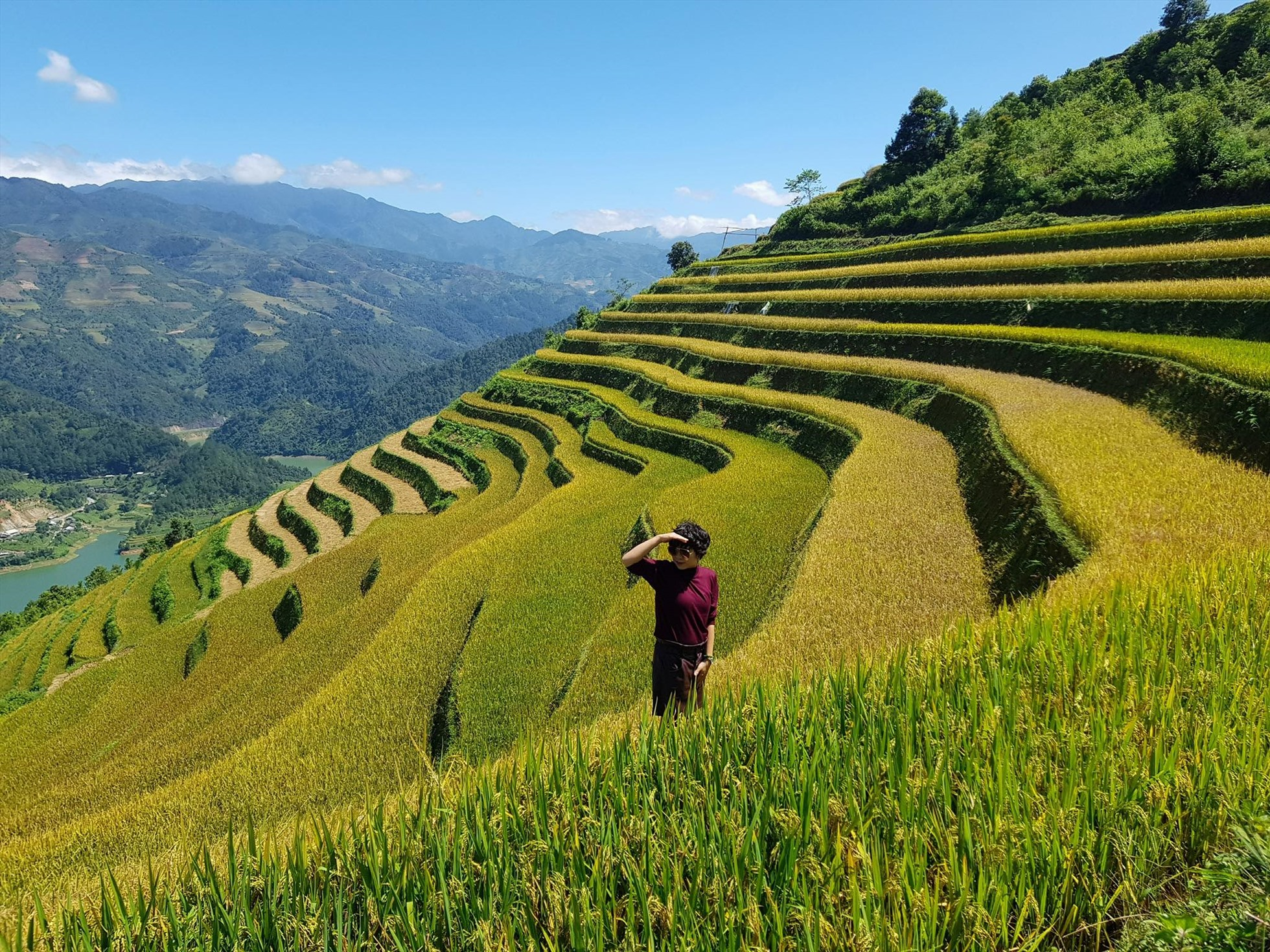
Tourists check in at the terraced rice fields in the early morning
Late afternoon is equally powerful for photography, especially when the sun begins to set behind the mountains. The rice terraces reflect warm golden tones, and long shadows emphasize the curves and geometry of the fields. Compared to midday light, which can be harsh and flat, these two time periods add depth, texture, and atmosphere to every shot taken at a Sa Pa rice terraces best viewpoint.
4.2. Visit after rain to capture mist, freshness, and vibrant colors
Rainy conditions in Sa Pa are often seen as an advantage rather than a disadvantage for photography. After rainfall, the entire landscape becomes refreshed—colors turn deeper, greens become more saturated, and the air clears dust and haze from the valley.
At a Sa Pa rice terraces best viewpoint, this post-rain moment often produces some of the most dramatic scenes. Mist begins to rise from the fields, drifting between layers of terraces and partially covering the mountains. This creates a cinematic effect where parts of the landscape appear and disappear, giving your photos a sense of motion and depth that is difficult to replicate in dry conditions.
4.3. Combine wide-angle views with close-up storytelling shots
Many travelers focus only on panoramic photos when visiting a Sa Pa rice terraces best viewpoint, but the most compelling images often come from mixing different perspectives. Wide-angle shots are essential to capture the scale of the terraces stretching across entire valleys, but they should be complemented with closer details.
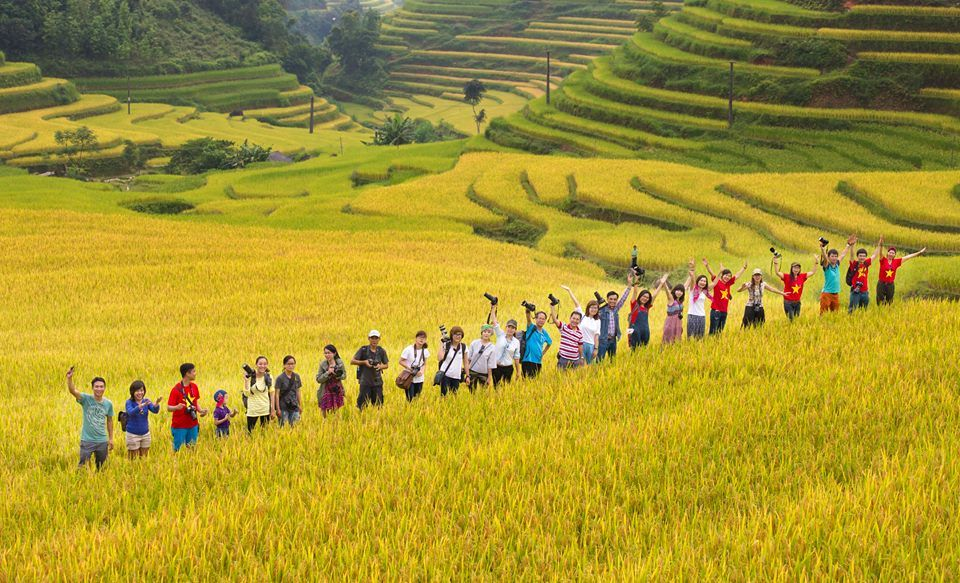
Tourists should combine shooting from different angles to get more satisfying photos
For example, you can include shots of water flowing through irrigation channels, young rice plants swaying in the wind, or farmers working in the fields. These close-up moments help tell the human and natural story behind the landscape, making your photo collection more complete and meaningful rather than purely scenic.
4.5. Stay longer and capture multiple moods in one location
One of the most overlooked photography tips in Sa Pa is patience. The weather can change dramatically within 10–20 minutes, meaning the same viewpoint can offer completely different scenes in a short time.
At a Sa Pa rice terraces best viewpoint, staying in one place longer often gives you multiple photographic opportunities: clear views, mist-covered layers, sun rays breaking through clouds, and even light rain effects. Instead of rushing between locations, allowing time for observation helps you understand the rhythm of the landscape and capture its most authentic moments.
Exploring the Sa Pa rice terraces best viewpoint is not just about finding a beautiful location, but about experiencing the harmony between nature, culture, and changing mountain weather. From panoramic valley views to close-up village landscapes, each viewpoint reveals a different layer of Sa Pa’s charm.
With the right timing, photography approach, and a bit of patience, travelers can capture unforgettable moments where mist, sunlight, and terraced fields come together in perfect balance. Sa Pa’s rice terraces are more than a destination—they are a living landscape that changes every hour, making every visit unique and memorable.


