




1. Overview of the rhododendron season
1.1. When spring arrives in the high mountains
In the northern highlands, spring doesn't arrive boisterously but always begins very subtly. After long and cold winter days, when mist still drifts lazily across the mountainsides, nature gradually changes in a way that is not immediately noticeable.
Each season of the year, these lands possess a unique beauty. There is the brilliant golden season of terraced fields, the biting cold winter with frost covering everything, and also days when seas of clouds sweep through the valleys. But when spring arrives, everything seems to soften, making way for a slow yet vibrant rhythm of life.
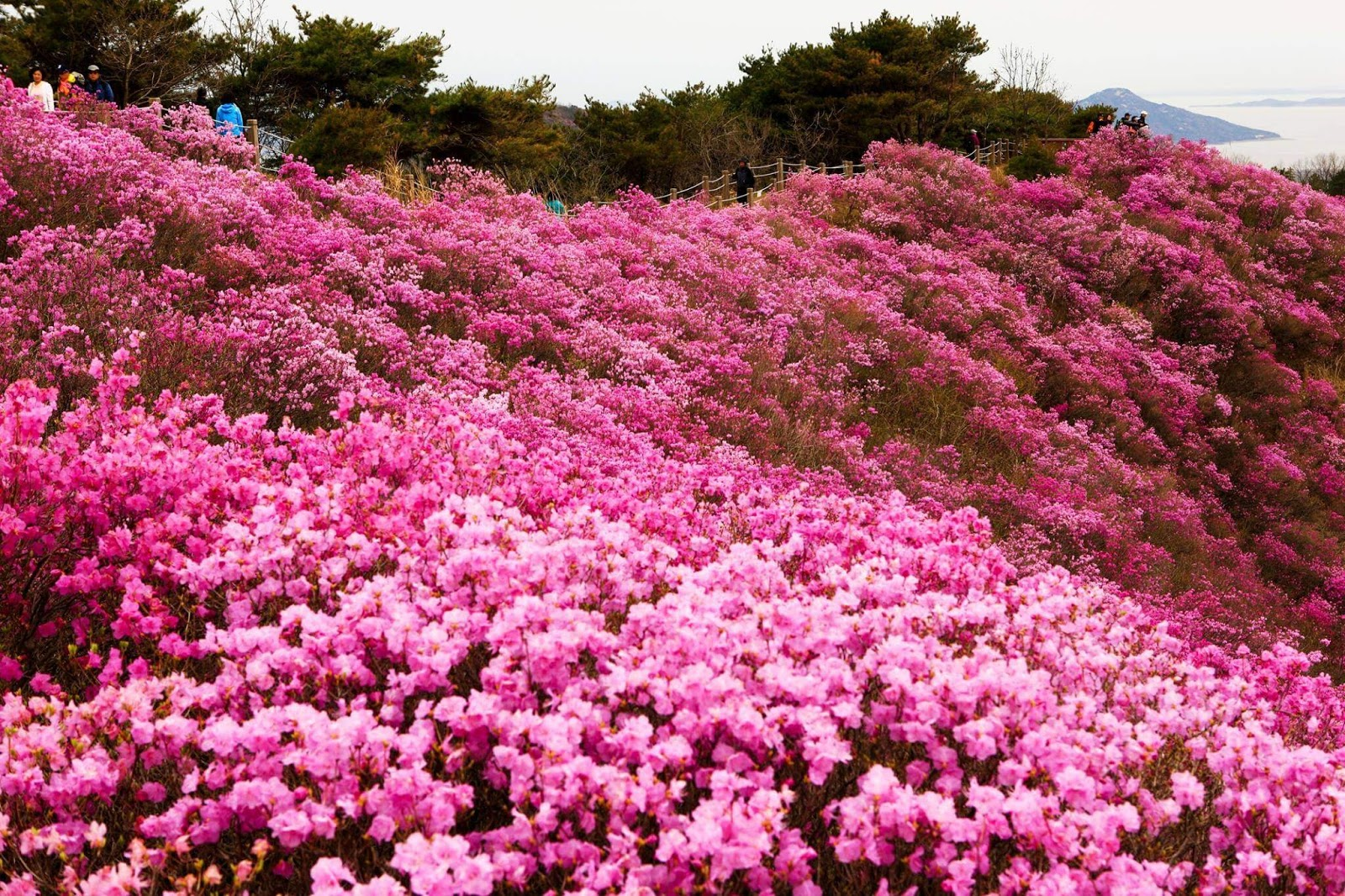
Spring arrives, the mountain slopes begin to be covered by vibrant azalea flowers. (Source: Collected)
The mountains and forests at this time are no longer cold, but are covered by a thin, lingering mist. The light becomes softer, the space seems to expand, making everything appear hazy, both near and far. Amidst that scenery, the trees begin to wake up after winter, and the first colors gradually appear.
Initially, there were only a few scattered spots of color against the green forest background, but then over time, they spread into vibrant bands of color embracing the mountain slopes. Red, pink, white, yellow… intertwined, standing out against the deep green of the old forest and the gray of the rocks, creating a picture that is both majestic and incredibly gentle.
Without noise, without haste, spring in the high mountain regions possesses a very "poetic" beauty – gentle yet full of vitality. And it is also at this time that a flower characteristic of high altitudes begins its most vibrant season, silently adorning the entire mountainside.
1.2. Azalea – the “queen” of the mountains
Azaleas have long been considered a symbol of the northern high mountain regions, especially in Sa Pa. This is a flower that only grows well at altitudes above 1,500m, where the climate is cool year-round and the primeval forest ecosystem remains almost intact.
What makes azaleas special lies in their rare diversity. Not just one color, this flower can display a full spectrum of hues: vibrant red, gentle pink, pure white, warm yellow, or deep purple. Each color possesses its own beauty, but when they appear together on a mountain slope, they blend to create an unbelievably vivid natural painting.
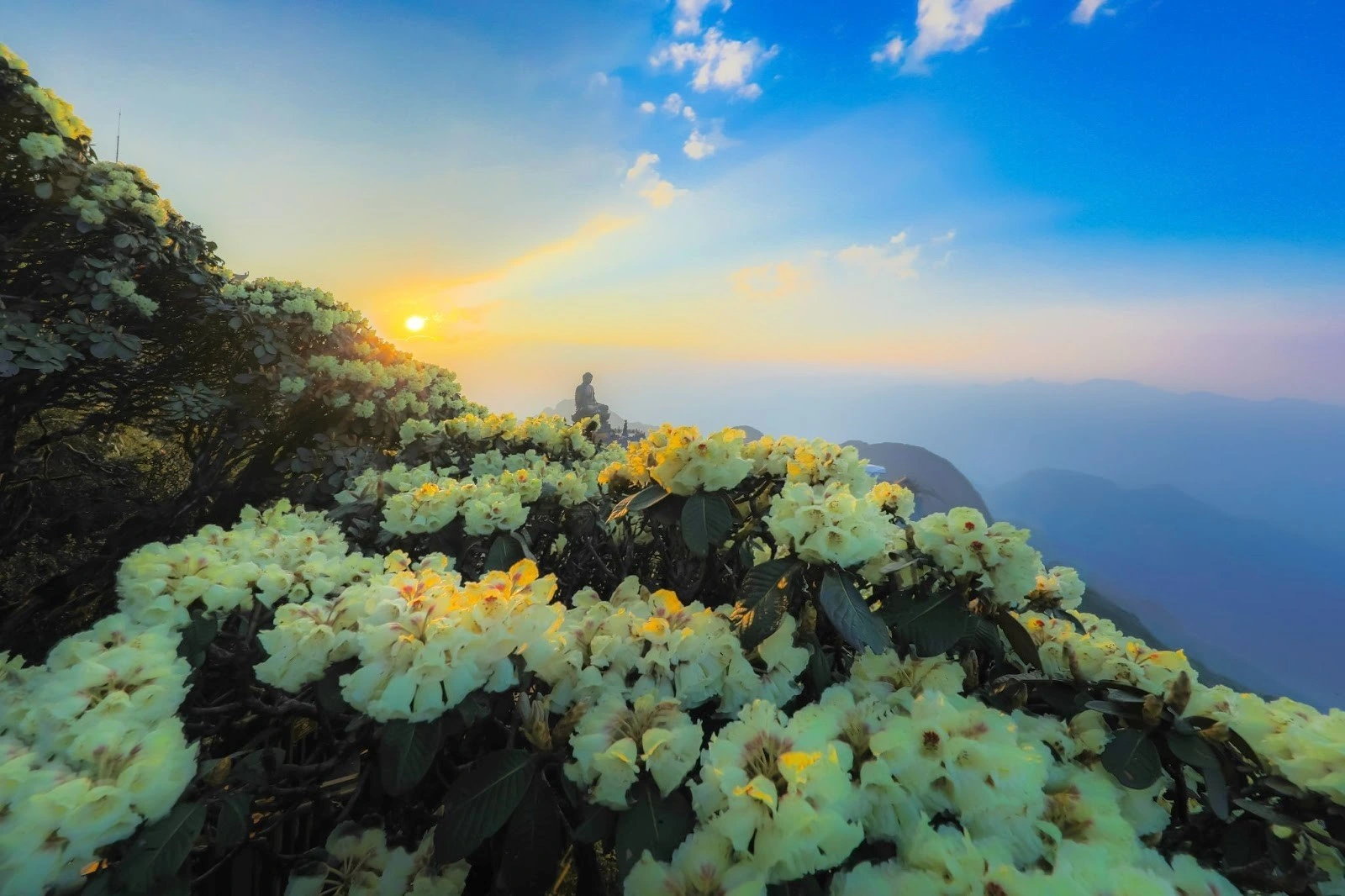
Among the sea of clouds, the color of rhododendron flowers appears both delicate and vibrant. (Source: Collected)
It is no coincidence that rhododendrons are called the "queen of the mountains." The flowers do not bloom alone but often form large clusters, clinging to ancient trees covered in moss, reaching out amidst the clouds and sky. There are rhododendron trees dozens of years old, and each blooming season, they seem to light up an entire corner of the forest.
1.3. When do rhododendron flowers bloom?
Although beautiful, not everyone who visits Sa Pa has the opportunity to admire the rhododendron flowers in their most vibrant season. Many tourists choose their itinerary based on inspiration or holidays, without thoroughly researching the flower season, leading them to arrive when the flowers have not yet bloomed or have already withered.
In reality, rhododendrons do not bloom simultaneously in all areas; their blooming changes with altitude and weather conditions. Therefore, to capture the most beautiful moments, you need to understand the blooming patterns and the ideal times of the year.
2. When do rhododendron flowers bloom, and when is the best time to visit?
2.1. When does the flower season start in Sa Pa?
In Sa Pa, rhododendron flowers do not bloom in a short burst but arrive with the unique rhythm of the mountains. The flower season typically begins gently around February and slowly extends until May, as if spring here does not arrive and leave in a hurry but stays a little longer.
However, what makes the rhododendron flower season special is not the timing but how it "shifts" with altitude. On the lower mountain slopes, the flowers bloom earlier, nestled among the forest canopies still carrying the chill. As you ascend higher, time seems to slow down, and the flowers bloom later, retaining the last vestiges of spring on the mountaintops.
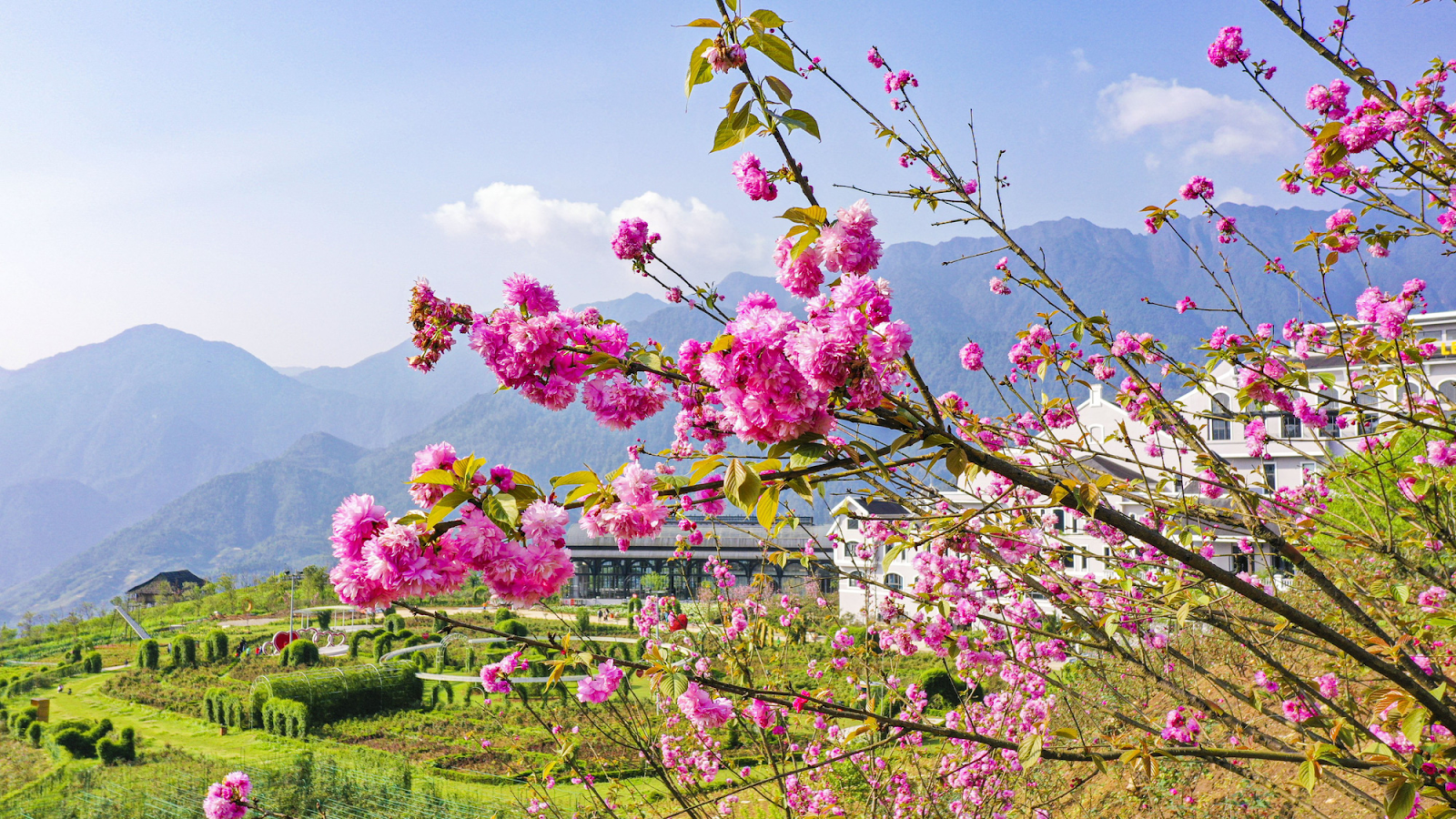
At different altitudes, azaleas will bloom at different times. (Source: Collected)
Some years the weather warms up early, and the flower clusters appear a beat faster. Other years, the cold lingers for a long time, making the flower season a little later. But whether early or late, azaleas still bloom in a very "leisurely" way, not overwhelmingly, not rushed, so that anyone who arrives at the right time can fully appreciate the transformation of the mountains and forests.
2.2. February – Early March: The first signs of the flower season
This period is like a whisper of spring. Azaleas begin to bloom in lower areas, but not many yet, only appearing sporadically amidst the deep green of the forest and the thin mist still lingering after winter.
The air in Sa Pa at this time is still cold, the cold has softened but not completely disappeared. Fog still visits in the early morning and late afternoon, making every scene softer, hazier. The azalea blossoms then are not dazzling in an immediately impressive way, but beautiful in a gentle manner, requiring one to look a little longer to fully appreciate them.
This is not the "peak" time for the flower season, but it is very suitable for those who prefer a quiet, less crowded, and somewhat tranquil Sa Pa. Visiting at this time is like standing at the boundary between winter and spring, where everything is just beginning to change.
2.3. Mid-March – April: When the entire mountainside bursts into bloom
If one had to choose the most beautiful time for the azalea season, it would be from mid-March to the end of April. The flowers are no longer scattered but cover many mountainsides, weaving into every part of the forest, clinging to ancient trees covered in moss. Patches of red, pink, white, and yellow intermingle, standing out against the green of the forest and the gray of the rocks, creating a poetic and picturesque scene.
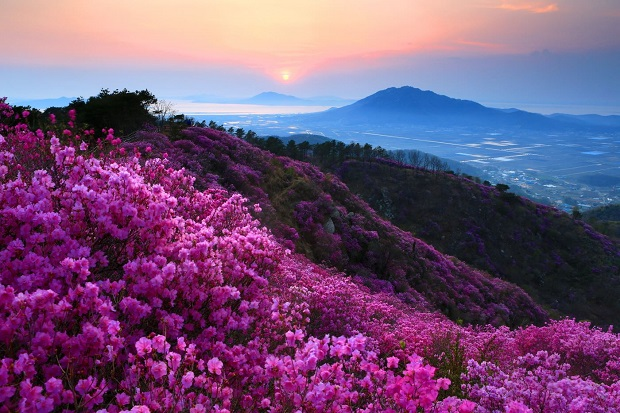
In March-April, when azaleas bloom profusely, the entire mountainside is like a vibrant carpet of flowers. (Source: Collected)
The weather is also more pleasant at this time. The sky is clearer, the light is brighter, and the fog is no longer as dense as at the beginning of the season. This is also when Sa Pa is most clearly beautiful, no longer hidden behind a layer of fog. Therefore, this is the time most people choose to go flower hunting. 2.4. Late April – May: The last flower hunting season of the year for azaleas
As the lower areas finish their flowering season, azaleas begin to bloom profusely in higher areas. This is the period when spring seems to be "preserved" on the mountaintops.
The flowers at this time often appear amidst the clouds. Not the hazy kind due to fog, but wide-open spaces where clouds drift at eye level. The azaleas stand out in this space, creating a very different feeling – both distant and intimate.
Trips during this period often have more of an exploratory feel, especially if you combine them with trekking or ascending to high-altitude areas. This is not the "most vibrant" flower season, but it is a "memorable" flower season for those who enjoy the feeling of touching what remains, quiet and deeper.
3. Admire the vibrant blooming azaleas stretching from North to South
3.1. Fansipan – Admiring flowers amidst the sky's peak It goes without saying, Fansipan remains one of the most impressive places to admire azaleas in Vietnam. But what makes this place special is not just the abundance of flowers, but how they appear in the landscape.
At an altitude of over 3,000m, the azaleas on Fansipan do not bloom all at once but are spread across different mountain tiers. As you move from low to high, you can clearly feel the change in the flowering season—as if you are passing through many different versions of spring. Some sections are in full bloom, while others still have buds, creating a very dynamic journey.
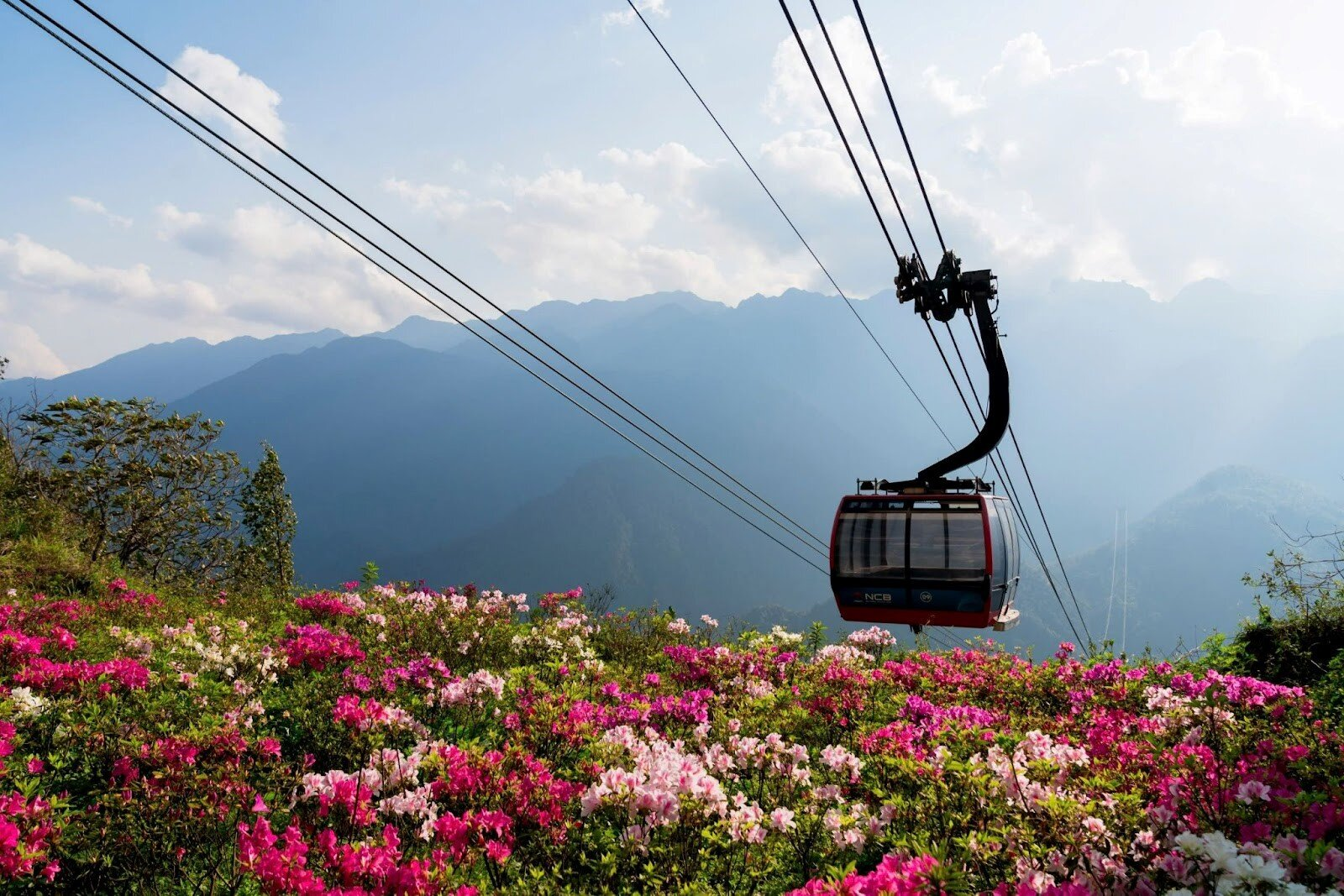
The cable car passes over mountain slopes covered with rhododendron flowers, offering a very different perspective compared to hiking. (Source: Collected)
Especially, the ancient rhododendron trees here possess an indescribable beauty. The trunks are gnarled, covered in moss, but burst forth with vibrant clusters of flowers amidst the clouds and sky. On beautiful days, when clouds drift at eye level, the flowers and clouds almost merge, creating a feeling that is both majestic and ethereal, like a fairyland.
3.2. Hoang Lien National Park – the original beauty of the mountains and forests
If Fansipan offers a feeling of “touching the sky”, then the Hoang Lien National Park area retains the true pristine beauty of rhododendrons.
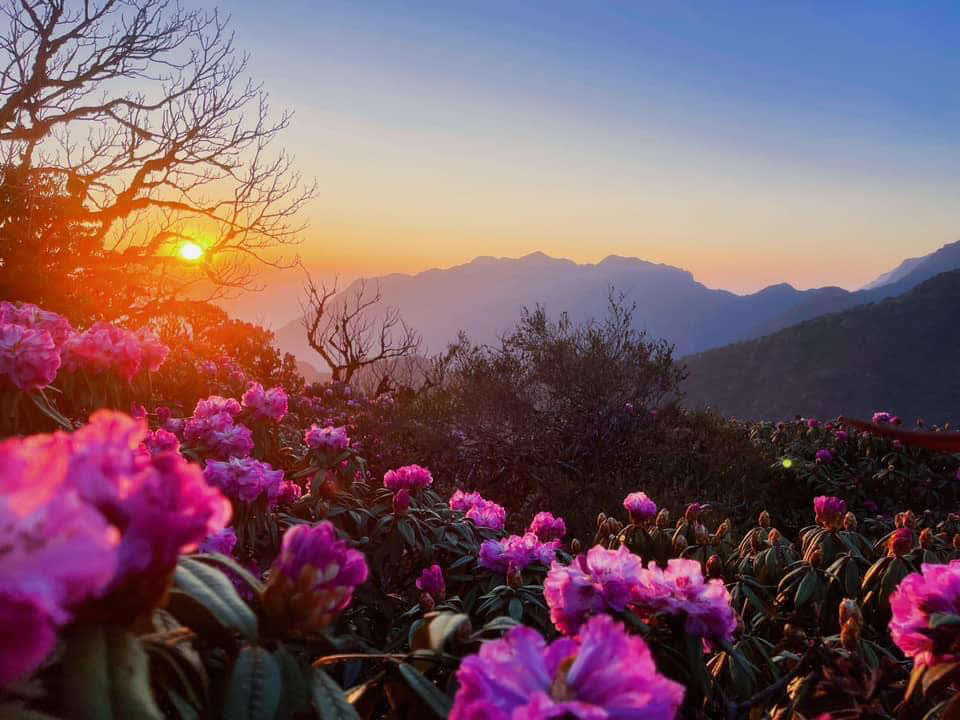
Rhododendron flowers bloom vibrantly in Hoang Lien National Park. (Source: Collected)
Here, the flowers grow naturally in the forest, without arrangement or intervention. Trekking trails lead you through the old-growth forest, where rhododendrons appear unexpectedly at a turn, on an ancient tree trunk, or in a sunlit clearing. The feeling of encountering the flowers here is not like "going to see them," but rather like a coincidence. And it is precisely this that makes the experience memorable.
3.3. Ha Giang – rhododendrons amidst the rocky plateau and the sky
In Ha Giang, rhododendrons do not appear as densely as in Sa Pa, but they possess a very different beauty. Amidst the rocky plateau, where the gray of the stone and the green of the mountains dominate, scattered clusters of rhododendrons become more prominent than ever.
The flowers here often grow on high mountain slopes or along mountain passes. They don't form "flower forests," but each encounter brings a very special feeling—like a soft accent amidst the rugged landscape of rocks. If you combine a trip to Ha Giang in spring, you can both hunt for flowers and experience the most beautiful routes in the North.
3.4. Lai Chau – flower season associated with trekking routes
Lai Chau is a less mentioned destination, but it is worth considering for those who love exploration. Rhododendrons here often appear along trekking routes, especially those conquering high mountain peaks.
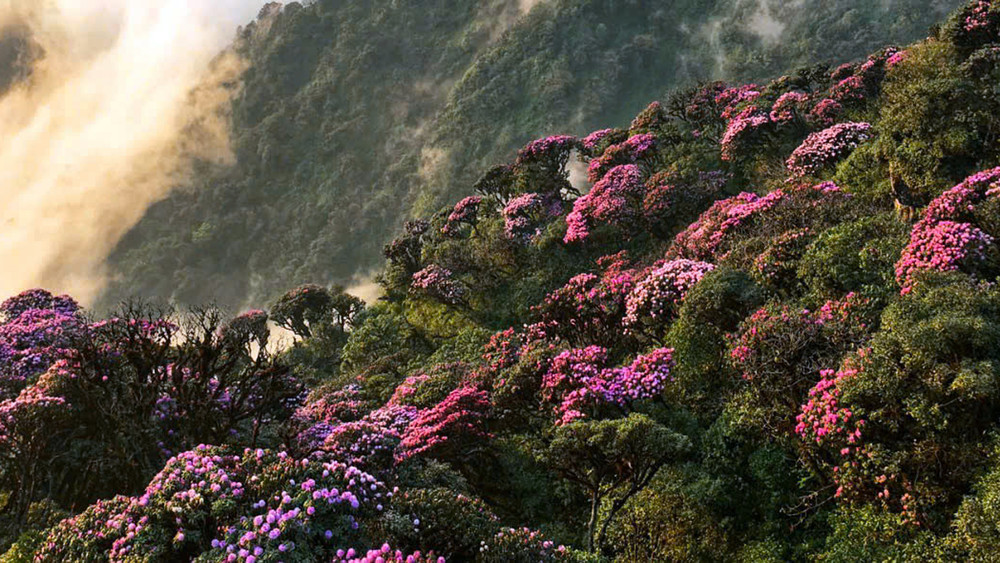
Rhododendron flowers of Lai Chau - clusters of flowers associated with trekking routes. (Source: Collected)
There aren't too many obvious "check-in" spots, but that's precisely what creates its unique charm. You don't just go to admire the flowers, but must embark on a journey to find them. Mountain climbing paths, clearings in the forest that unexpectedly open up with the color of flowers—all of this makes the experience deeper, not just seeing, but feeling.
3.5. Tay Nguyen – a season of flowers a beat later
Few people know that rhododendrons also appear in some high mountainous areas of Tay Nguyen, such as Kon Tum or Gia Lai. Although not as common and vibrant as in the North, they possess a unique charm.
Due to the climate, the flowering season here usually comes later. The environment is also different: not high mountains covered in mist, but vast forests with more sunlight, and slightly more subdued colors. This is not an ideal place to "hunt for flowers" in the popular sense, but it is suitable if you want to experience a different perspective on this flower.
3.6. Da Lat – rhododendrons in a gentle space
In Da Lat, rhododendrons are not the dominant flower, but they still appear in some areas with suitable altitude and climate. Compared to the North, the rhododendrons here are gentler, not too dense or wild. The special feature is that when they appear in Da Lat's already "gentle" space, rhododendrons become more harmonious than prominent. Not overly vibrant, but easily memorable.
4. Experience hunting for beautiful rhododendrons
4.1. Choose the right time
Hunting for rhododendrons is not just about "going in the right season," but also about choosing the right time of day. The flowering season can last for months, but the moment the flowers are most beautiful depends heavily on the weather.
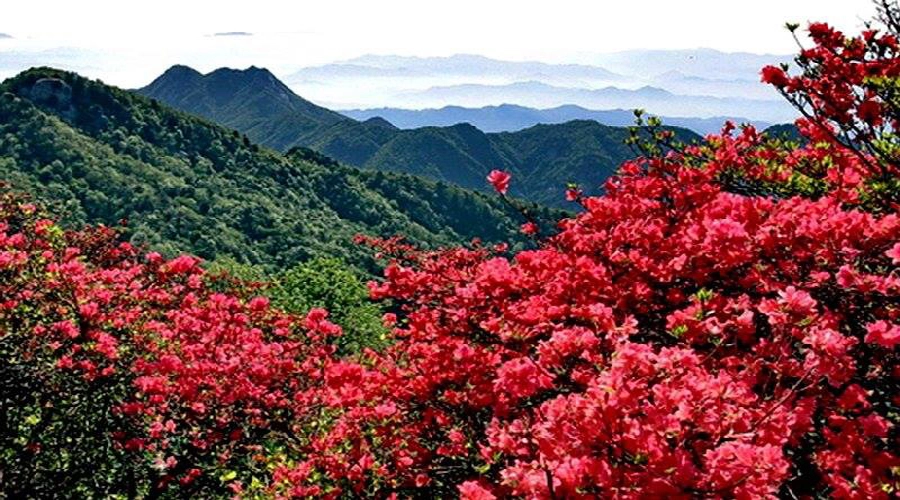
March to April is the time when rhododendron flowers bloom most beautifully in Sa Pa. (Source: Collected)
In high mountainous areas like Sa Pa, the weather changes quite quickly. A day can be sunny, but early morning may be foggy, and the afternoon might have light rain. Therefore, before your trip, you should monitor the weather forecast for several consecutive days instead of just checking one specific day. Dry days with little rain and no thick fog are usually the most ideal times to admire the flowers. When the sky is clear, the colors of the rhododendrons will be clearer and more vibrant, and the surrounding scenery will also expand, especially when viewed from high points.
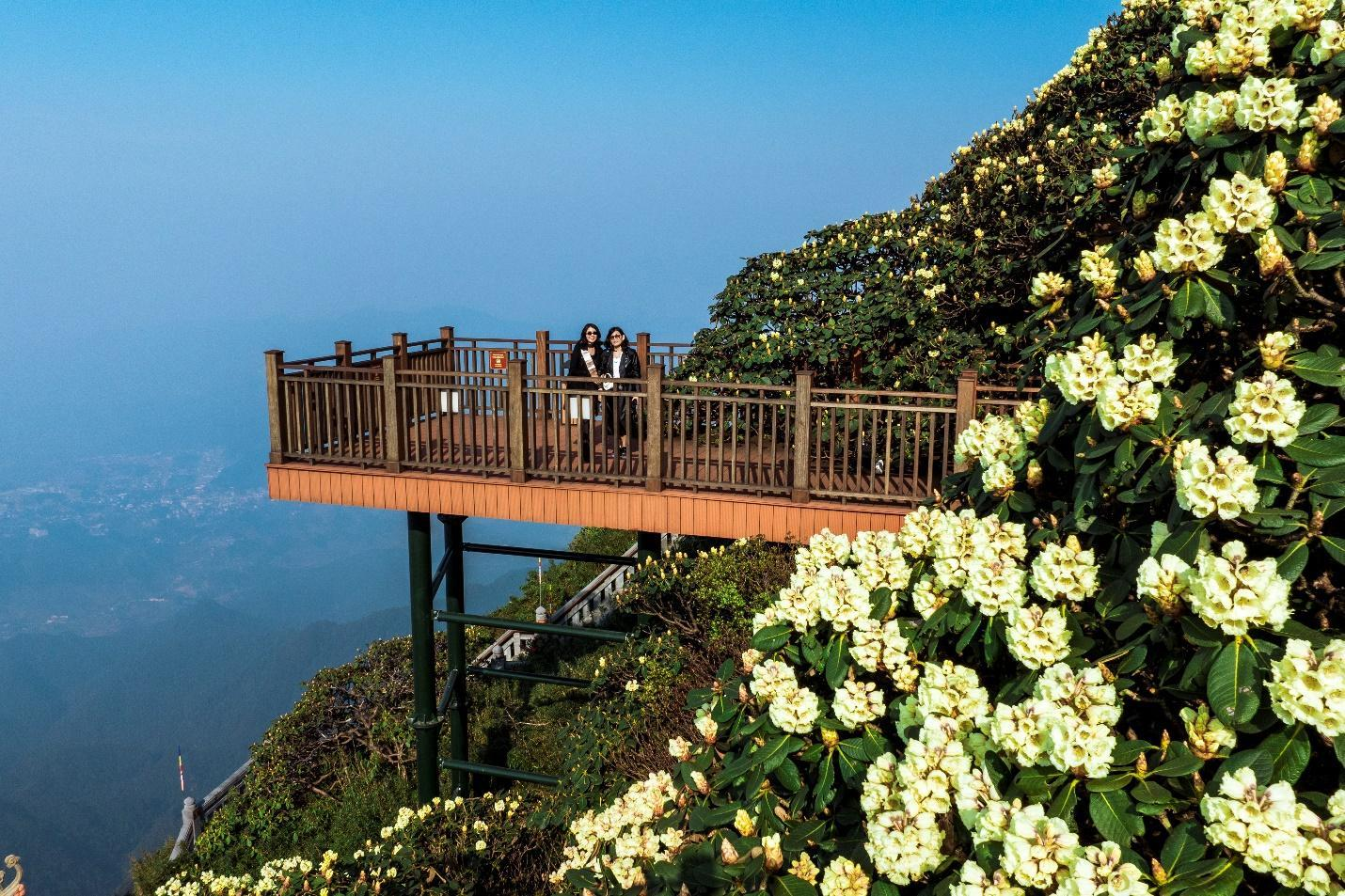
Early morning is when the flowers are at their most "gentle", a beautiful time to admire and take photos with azaleas. (Source: Collected)
Early morning is when the flowers are at their most "gentle". The light is soft, not too harsh, combined with the lingering mist, making the scenery soft and deep. This is a very suitable time if you like to take photos in a natural, gentle style.
Meanwhile, the afternoon, especially near sunset, brings a completely different beauty. The slanting sunlight makes the flower colors richer, more prominent against the backdrop of mountains and forests. If you are lucky enough to encounter clear days, you might also catch the moment when the flowers appear amidst the afternoon light and drifting clouds – one of the most memorable sights.
4.2. Prepare for a complete trip
Although long treks are not always necessary, most beautiful flower viewing spots are located on steep terrain or forest paths. Therefore, a pair of sturdy, non-slip shoes will help you move more easily and safely.
The temperature in high mountainous areas is usually lower than in the plains, especially in the early morning and late afternoon. Bringing warm clothing is essential, even if you travel in spring. Additionally, some water and snacks will be very useful if you spend a lot of time traveling or taking photos. The preparation doesn't need to be overly elaborate, but enough for you to comfortably enjoy the journey without being interrupted by minor inconveniences.
Azaleas bloom in spring, lasting from February to May, and are most beautiful from mid-March to April. But more than just a timeframe, it is a "beautiful time" for the mountains and forests – when nature undergoes its most significant transformation. A trip to Sa Pa during this season is not just about admiring flowers. It is also a journey through winding paths, layers of clouds, and moments that you can only truly feel when you are standing there. Since the flower season does not last forever, sometimes the most important thing is not where to go, but when to go. If you have the intention, plan early, choose the right time, and set off – before the flower season passes.


